Imagine three generations, ten people, exploring Florence, Italy for six days!
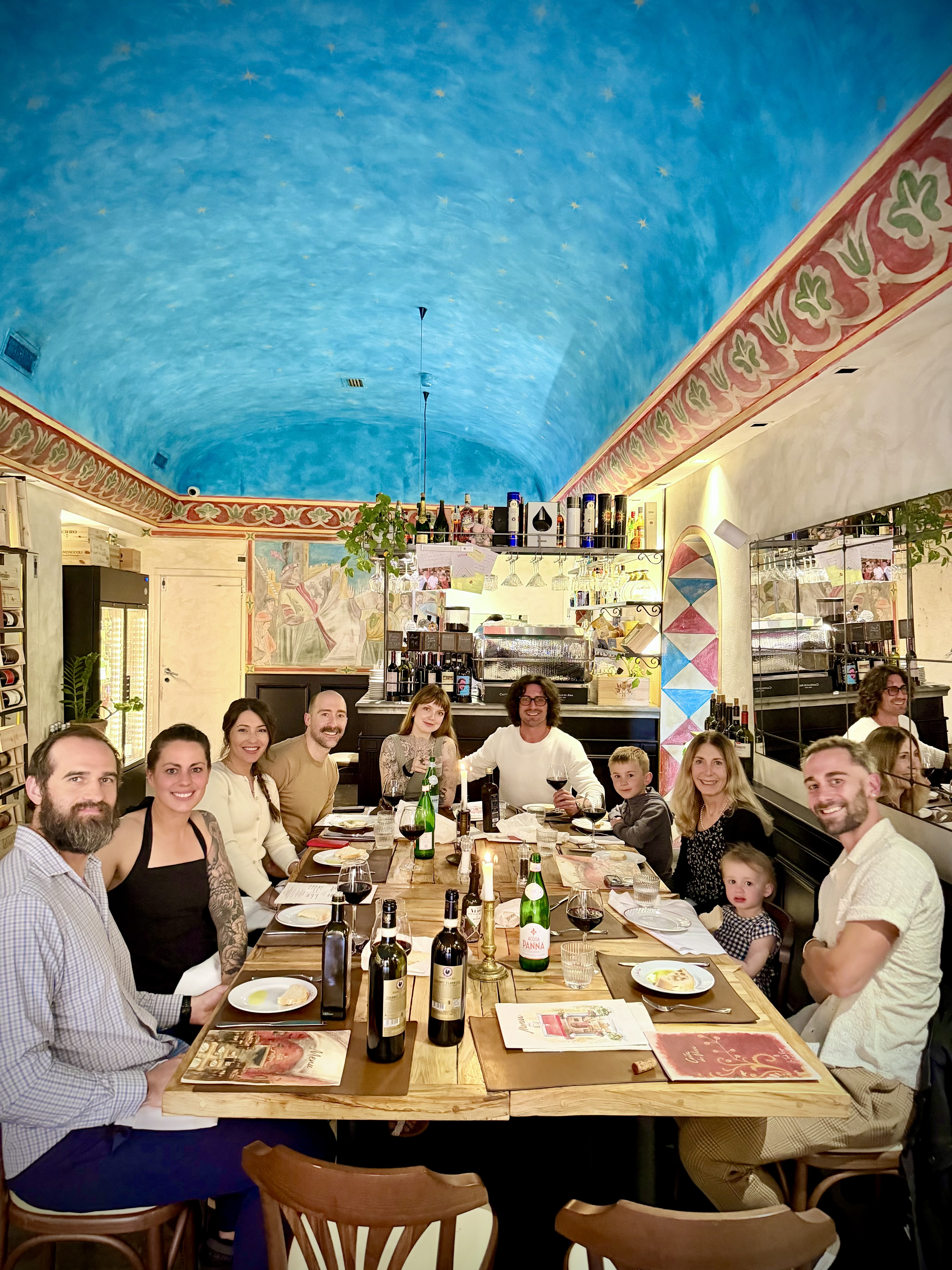
Firenze, the cradle for the birth of the Renaissance in the 14th century — we were immersed in culture, history, beauty, and love at all times. Our temporary home was a luxury AirBnB on Piazza di Santa Croce. There were shops, cafes, and residences on three sides with the Basilica of Santa Croce at the head. It’s known as the “Temple of the Italian Glories” because it houses the bodies of many of Italy’s most prominent artists, scientists and politicians including Michelangelo, Galileo, and Machiavelli.
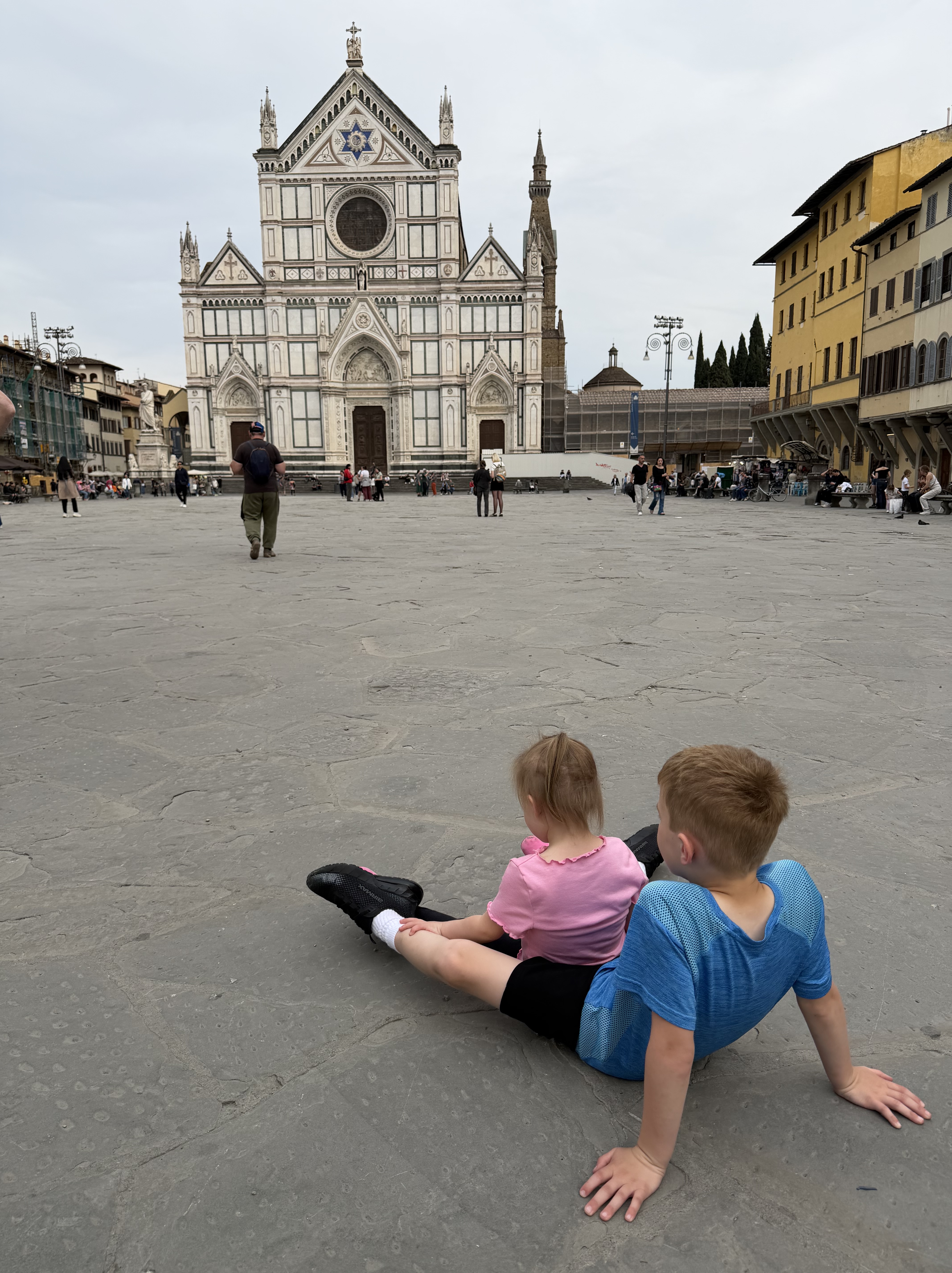
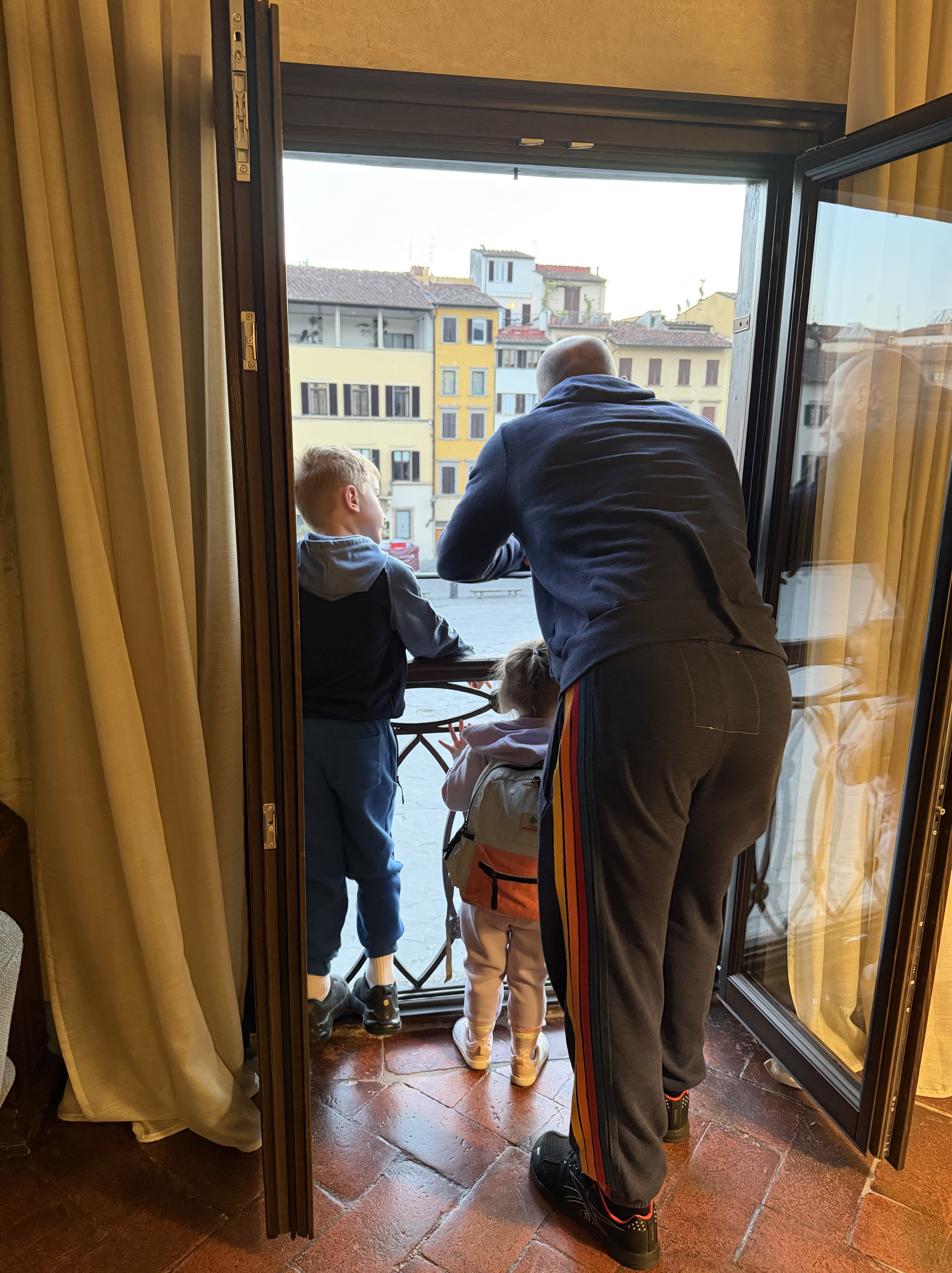
In the evenings the sounds of street performers flooded in through our open doors and windows. American music was common but a couple evenings there was a talented opera singer with a voice so full and rich it brought tears to our eyes. Listening to opera sung by an Italian while standing in Piazza di Santa Croce is an experience very different from a theater. My sweet grandchildren loved to put money in the tip jars or guitar cases of all musicians. They know, in all forms and all venues, live music is to be savored and highly valued.
Being anywhere with all four of my children at once is special but to be together in Florence is so wonderful, almost beyond description.
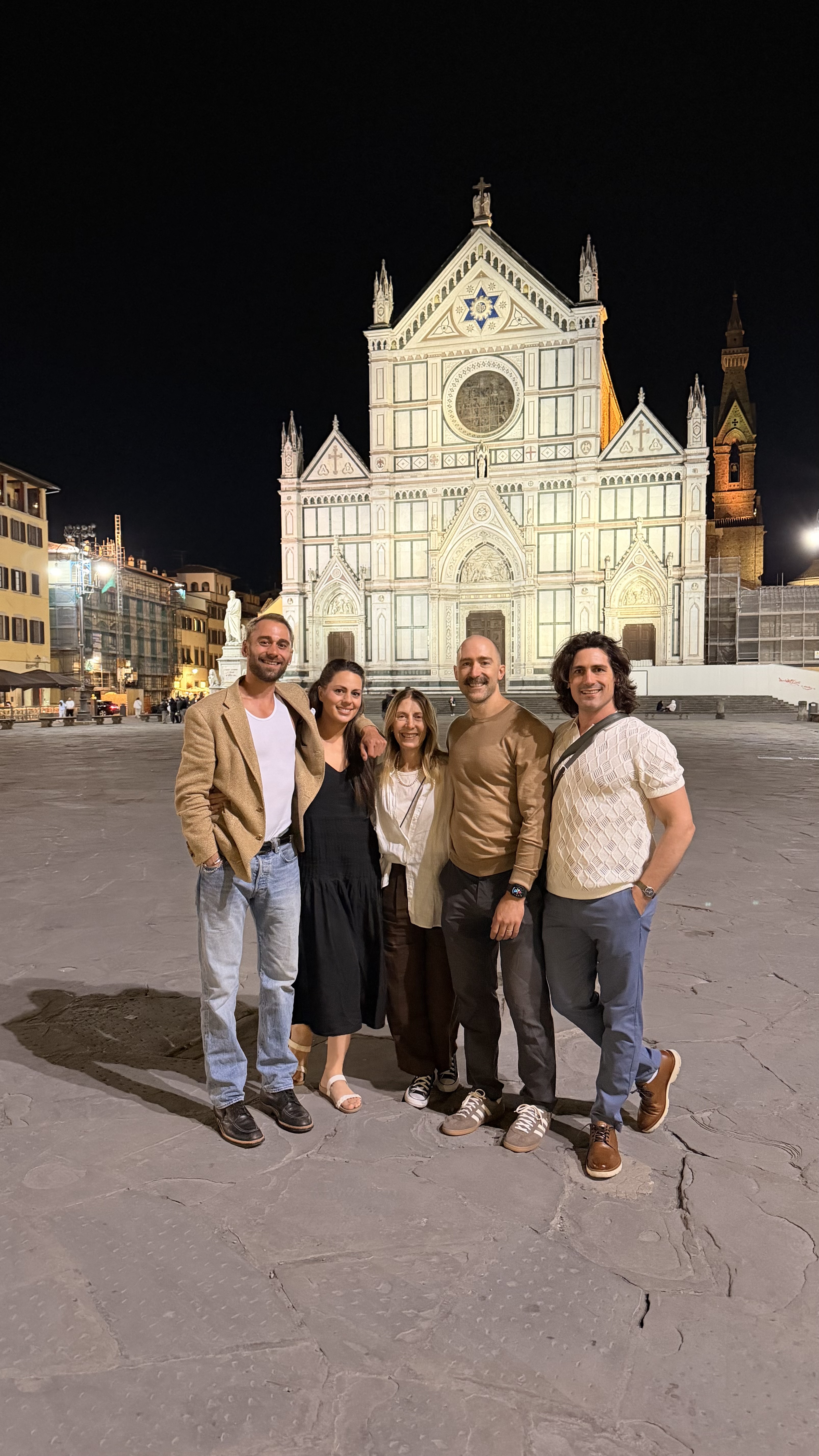
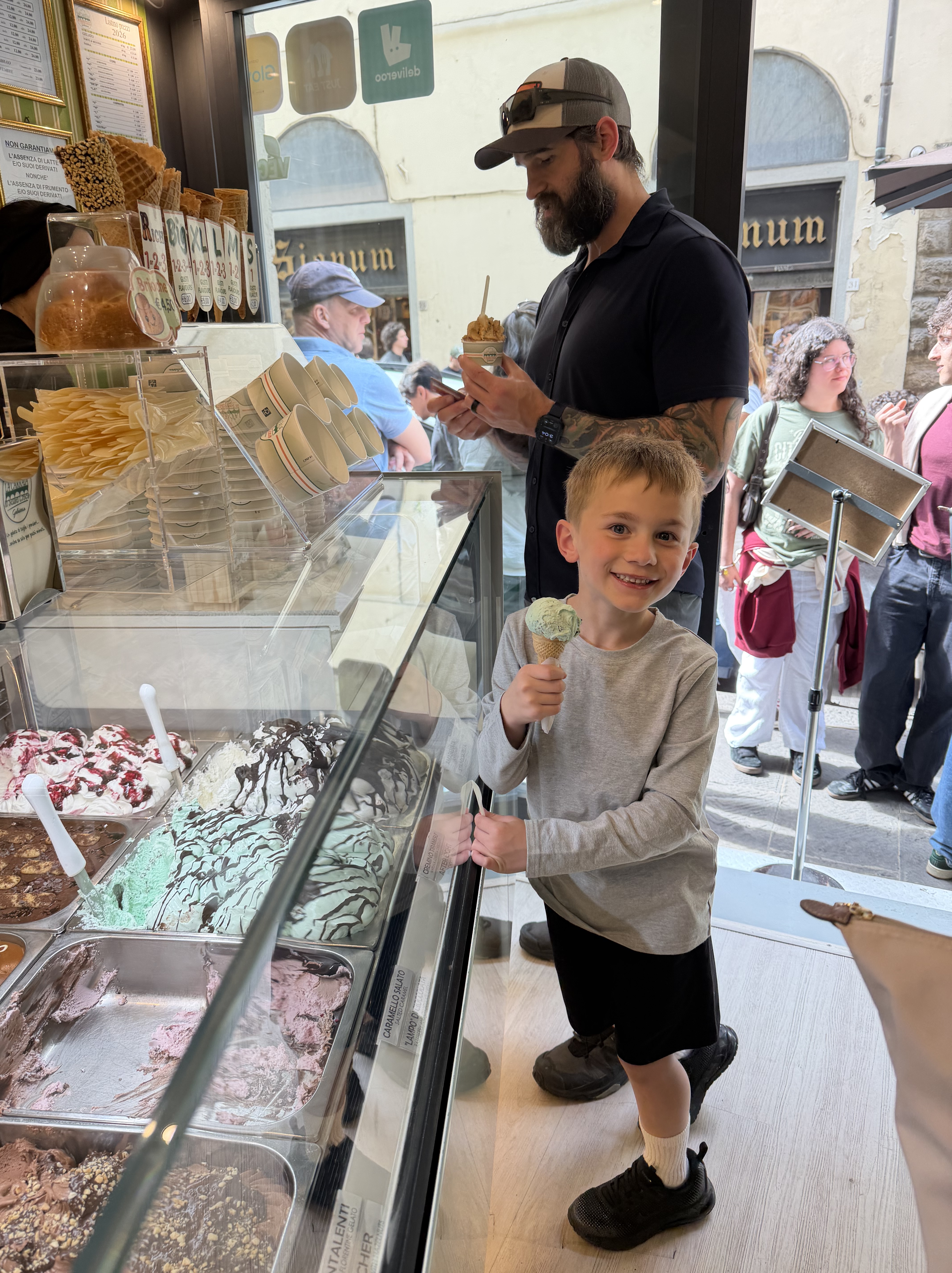
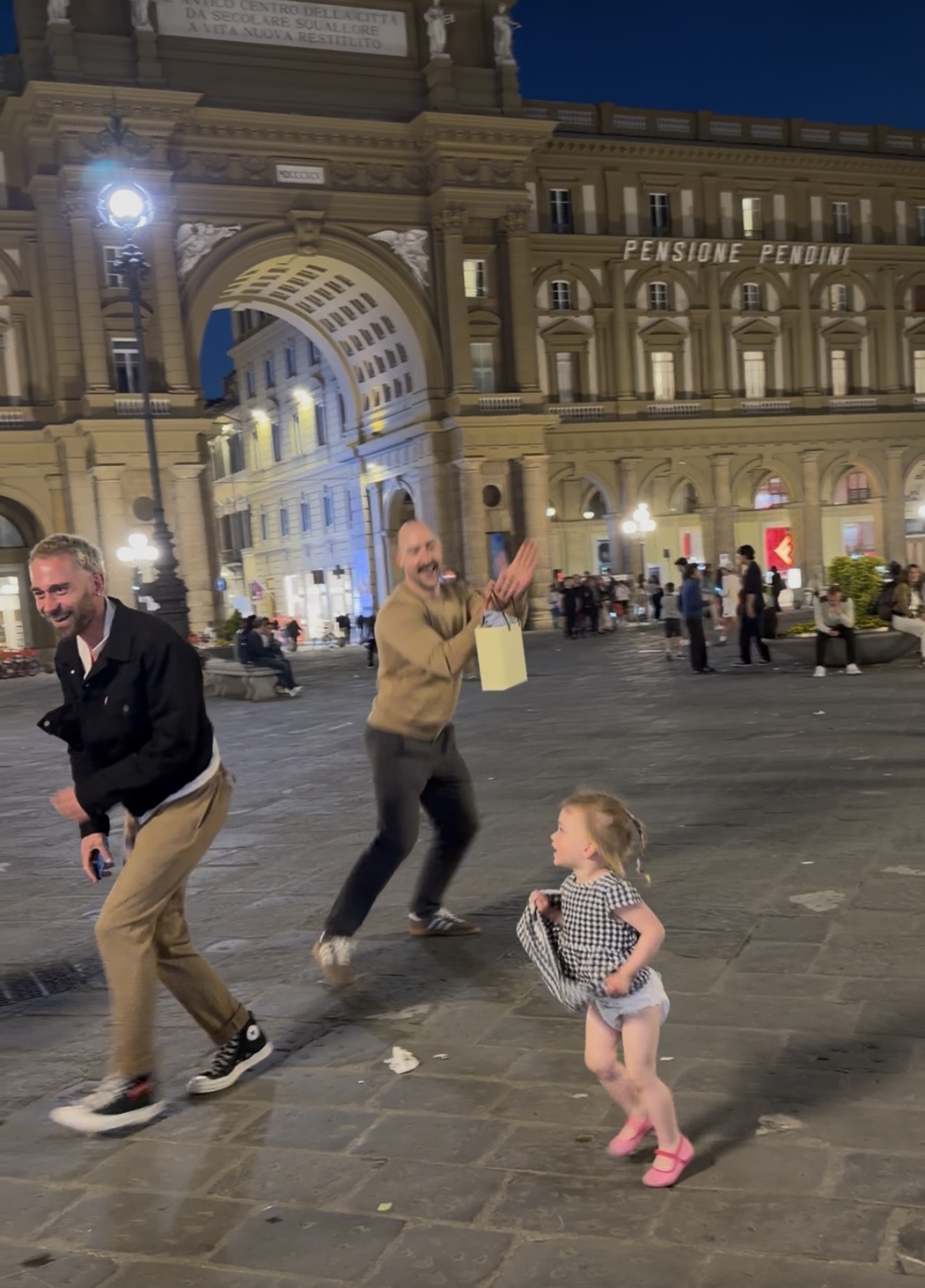
Nightime had a special feel with its own excitement. A walk around town after dark often included stopping for live music, eating gelato, and riding the carousel in Piazza della Repubblica.
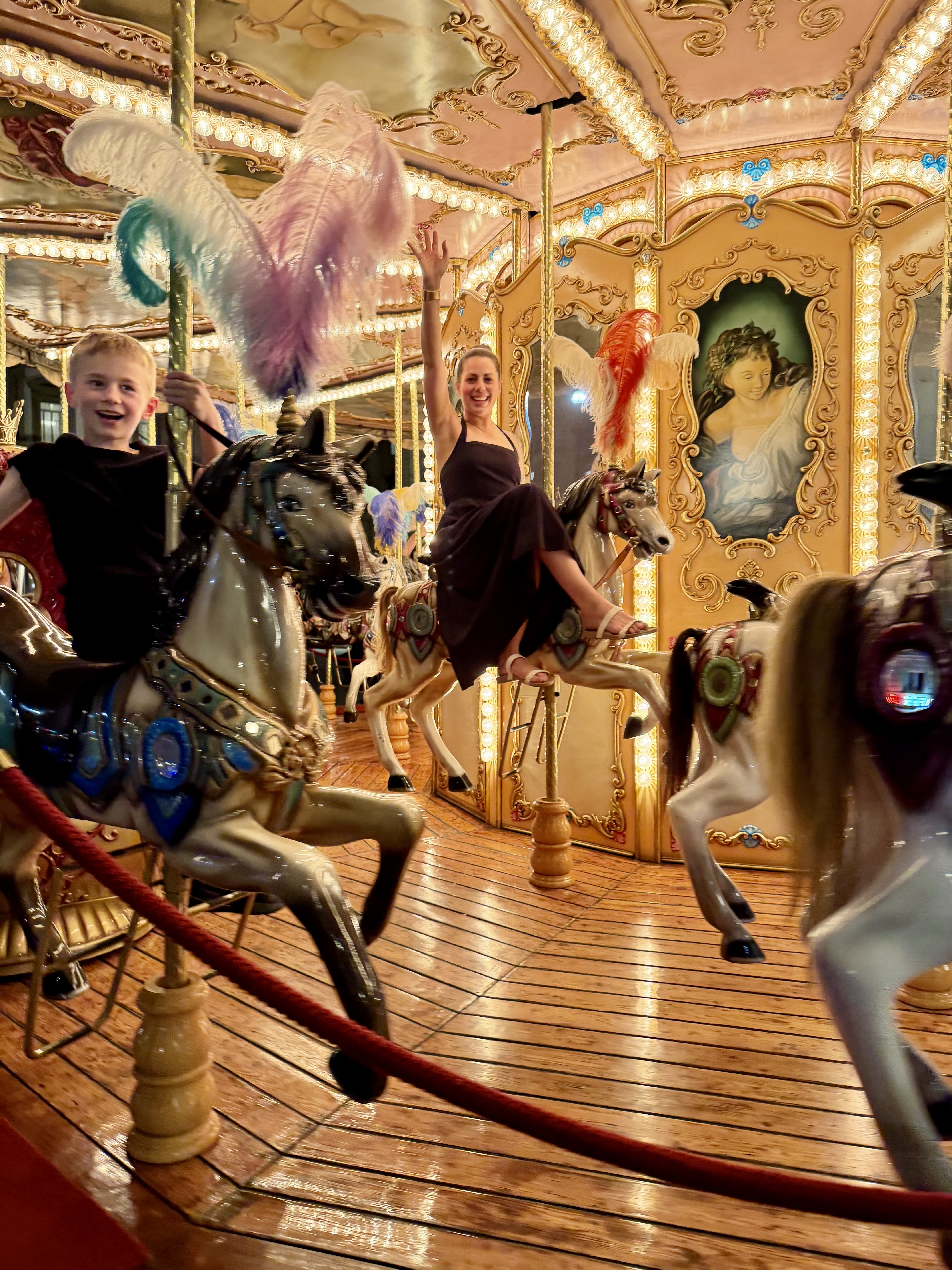
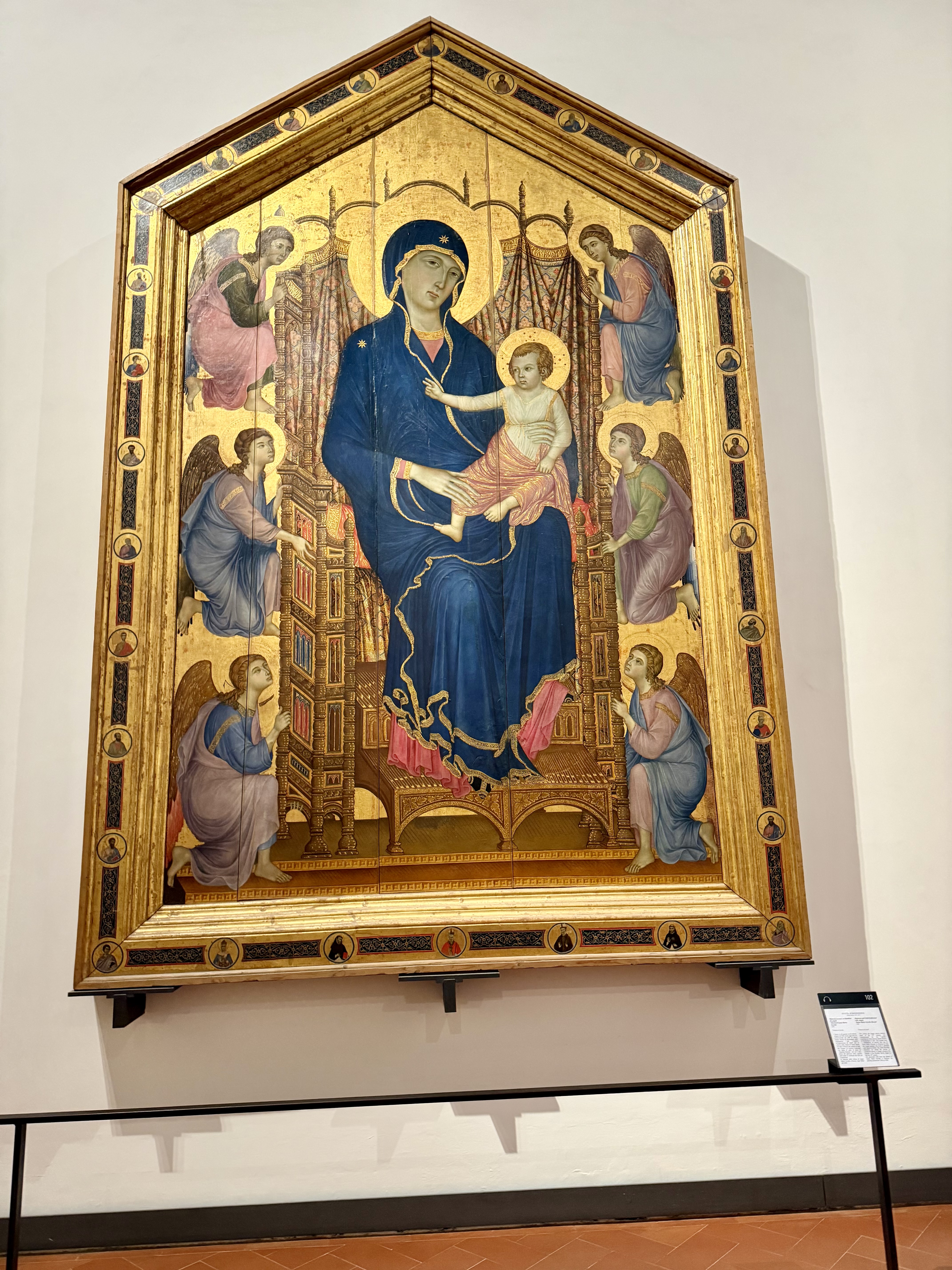
The first morning we grabbed coffees and croissants then walked to the Uffizi. What a terrific start to an epic trip! We viewed famous artwork including Medusa (with the snake hair) by Caravaggio, The Annunciation by Leonardo da Vinci, Madonna of the Goldfinch by Raphael, and, my favorite, The Birth of Venus by Bottticelli. Below is a picture of “Madonna and Child Enthroned with Angels” by Duccio di Buoninsegna.
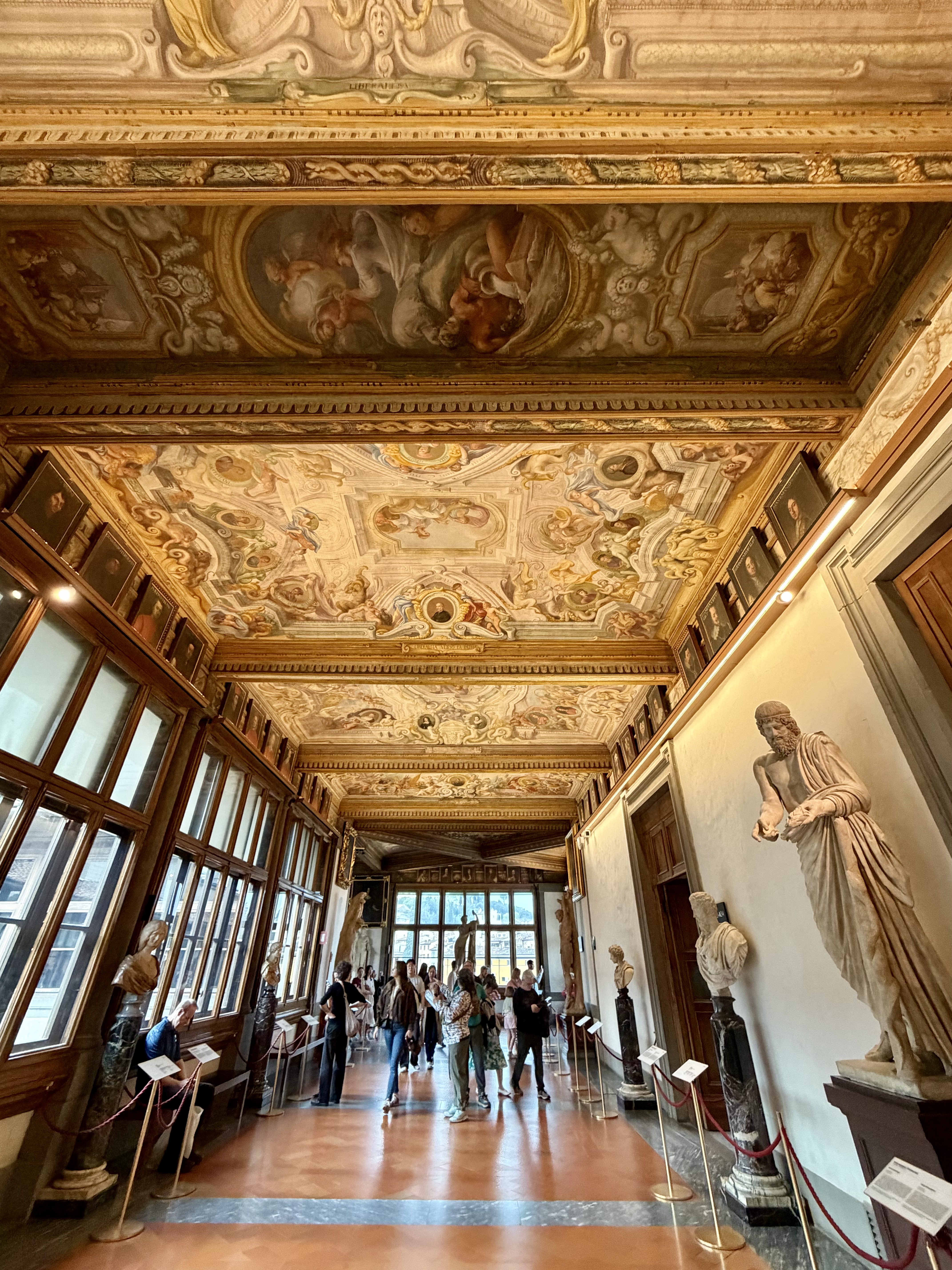
While the paintings are the main attraction, the building itself is a work of art.
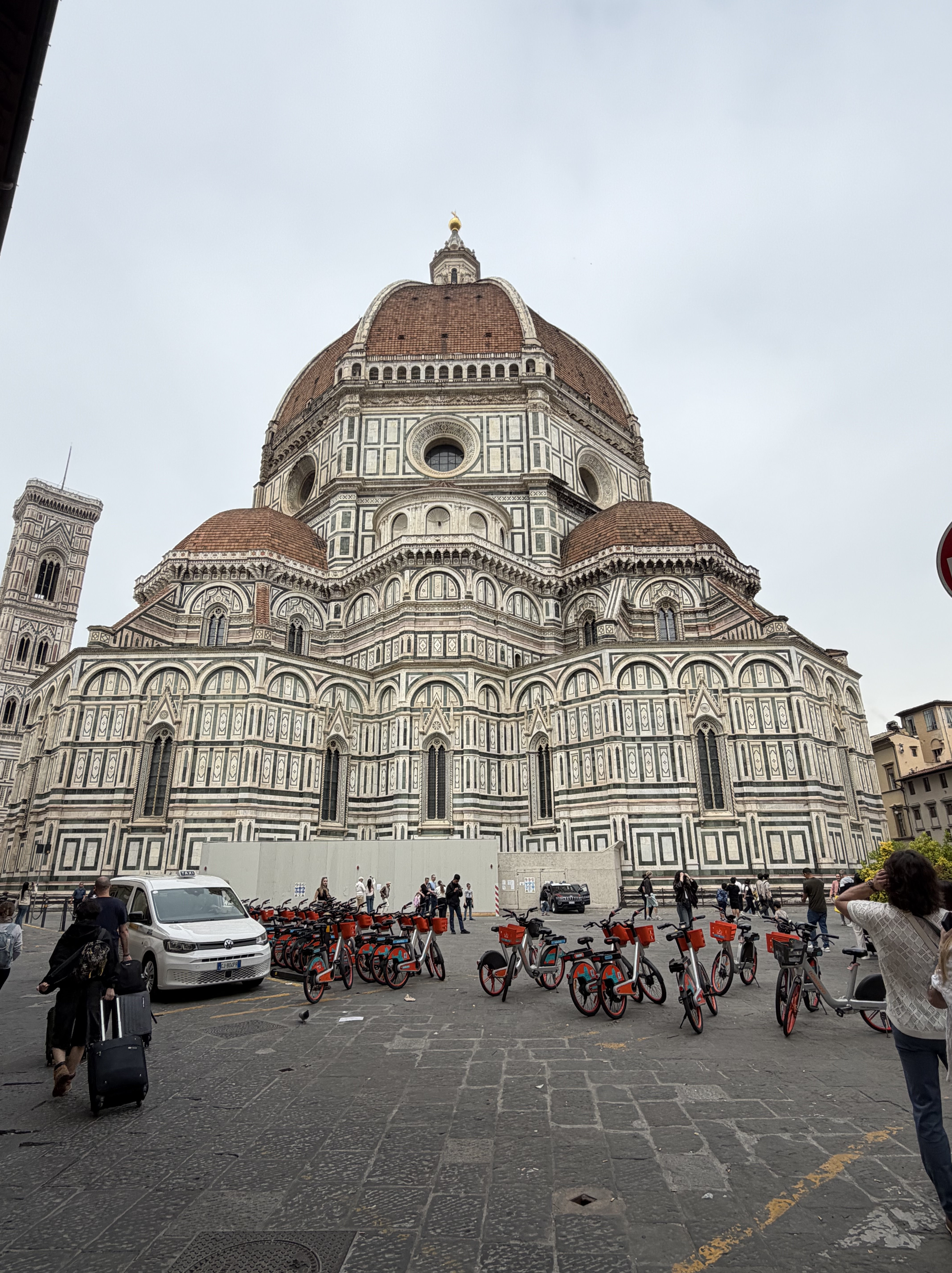
After a tour of two floors, we visited the terrace cafe with a very beautiful view of Santa Maria Cathedral with the Duomo, the largest brick dome in the world and one of the icons of Florence.
A short walking tour of the city brought us to the first of many amazing lunches and dinners. The whole dining experience cannot be overstated. I’m pretty sure we ate pasta and gelato at least once every day but I gained no weight, probably due to the healthier ingredients and the many miles of walking each day.
It’s impossible to say what was my favorite day but I have such wonderful memories of the second day we spent driving through Touscany, stopping at small towns and wineries.
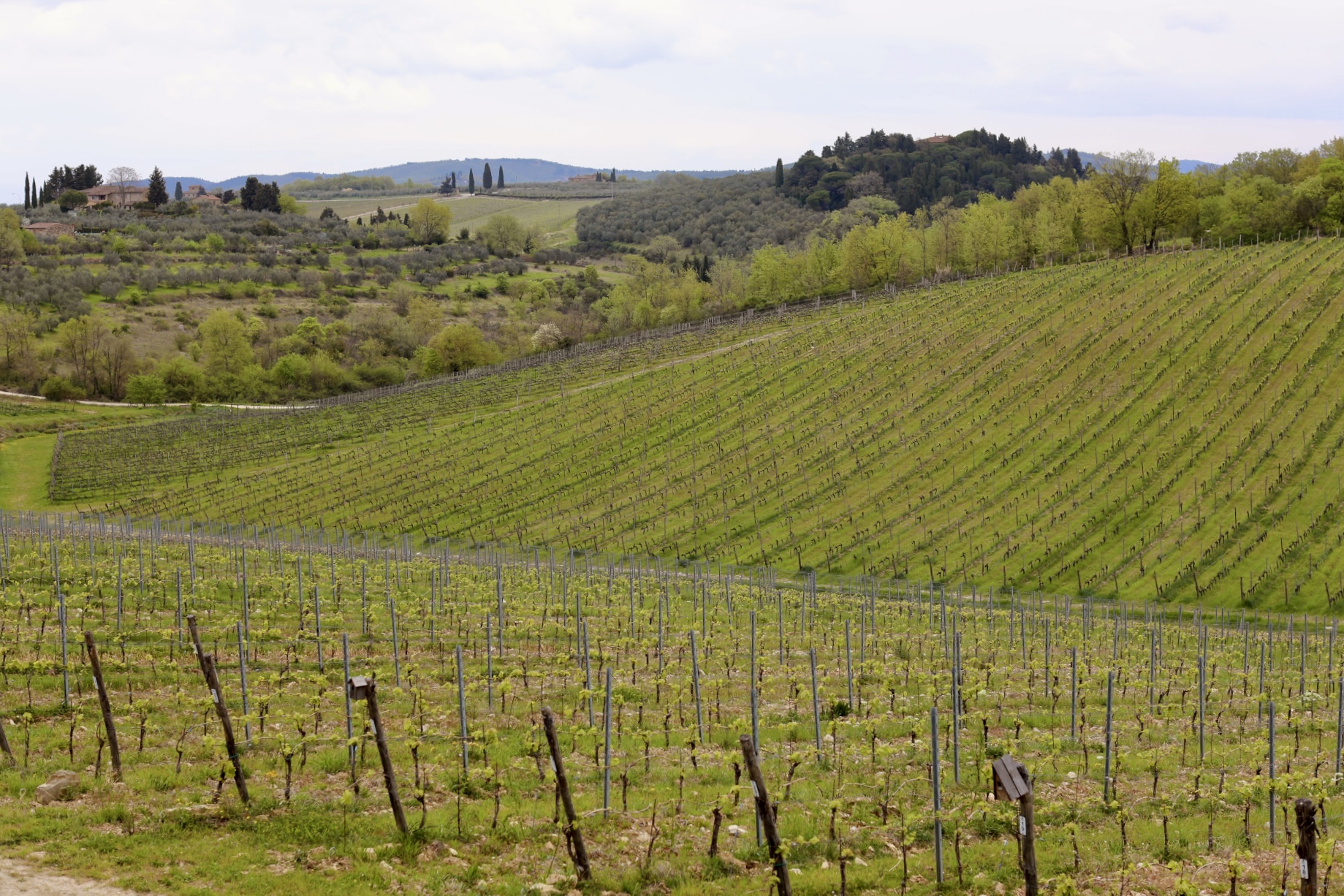
It was a bit rainy and chilly so this was the perfect option. Our first stop was Castello di Verrazzano.
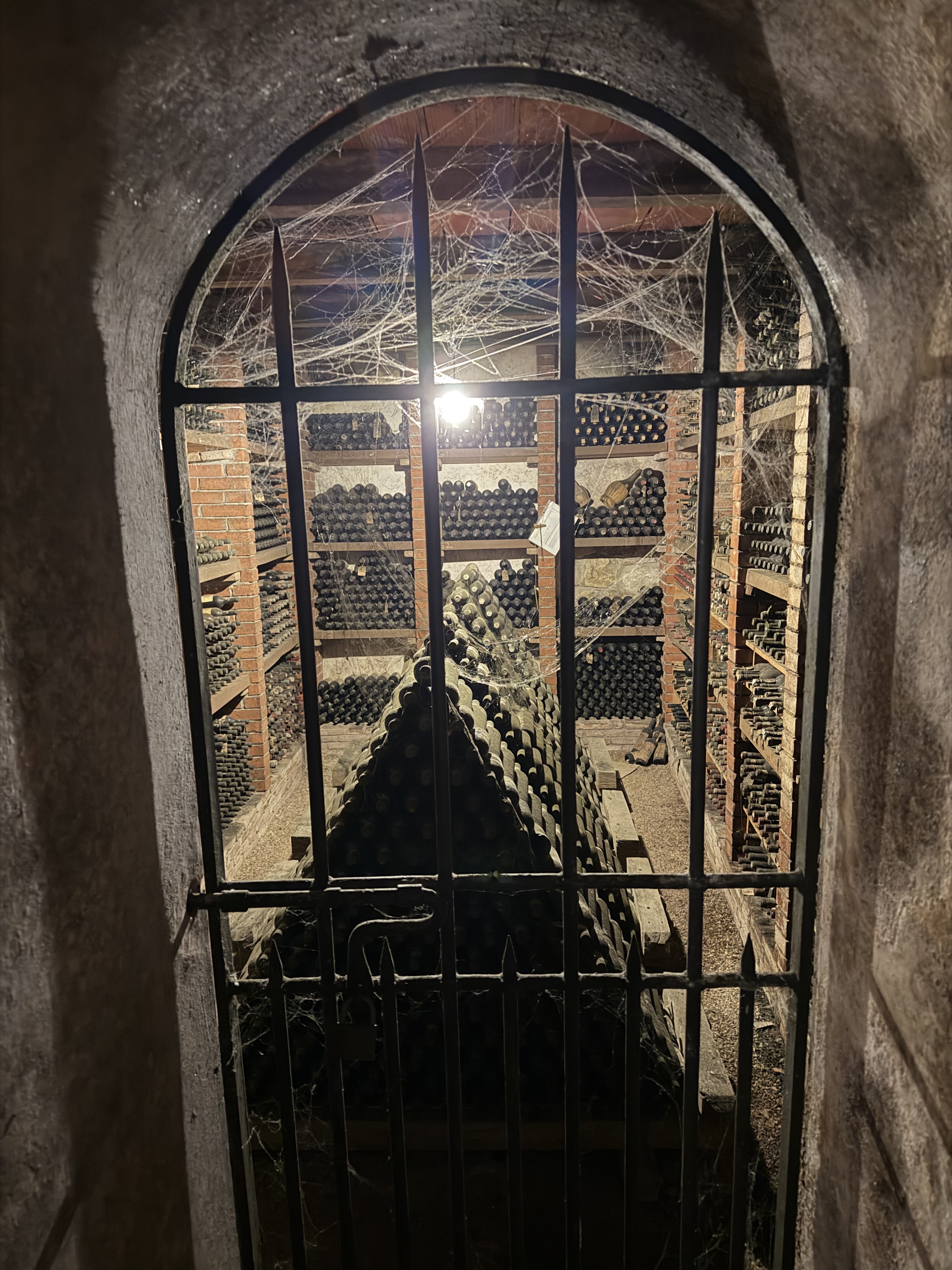
They had wines older than our country! Those are not available for sale but are drunk by the family who owns the winery. After so many years, some are still good but others have to be thrown out. You don’t know if it’s still good or not until you open the bottle and taste it which makes wine auctions very risky.
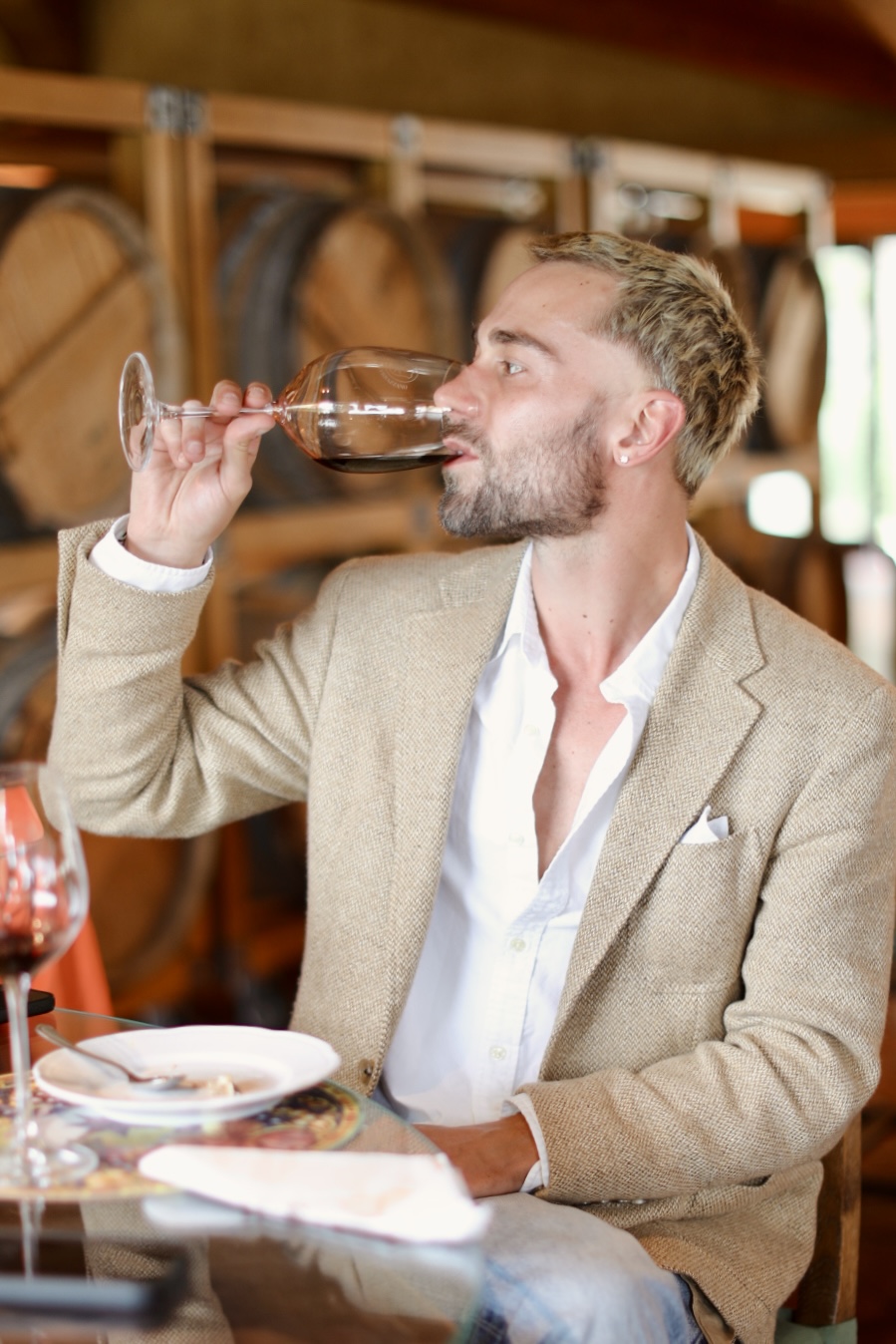
We tasted not only wine but also amazing olive oil and aged balsamic vingear that was truly delicious. Ounce for ounce, the vinegar was more expensive than the wine.
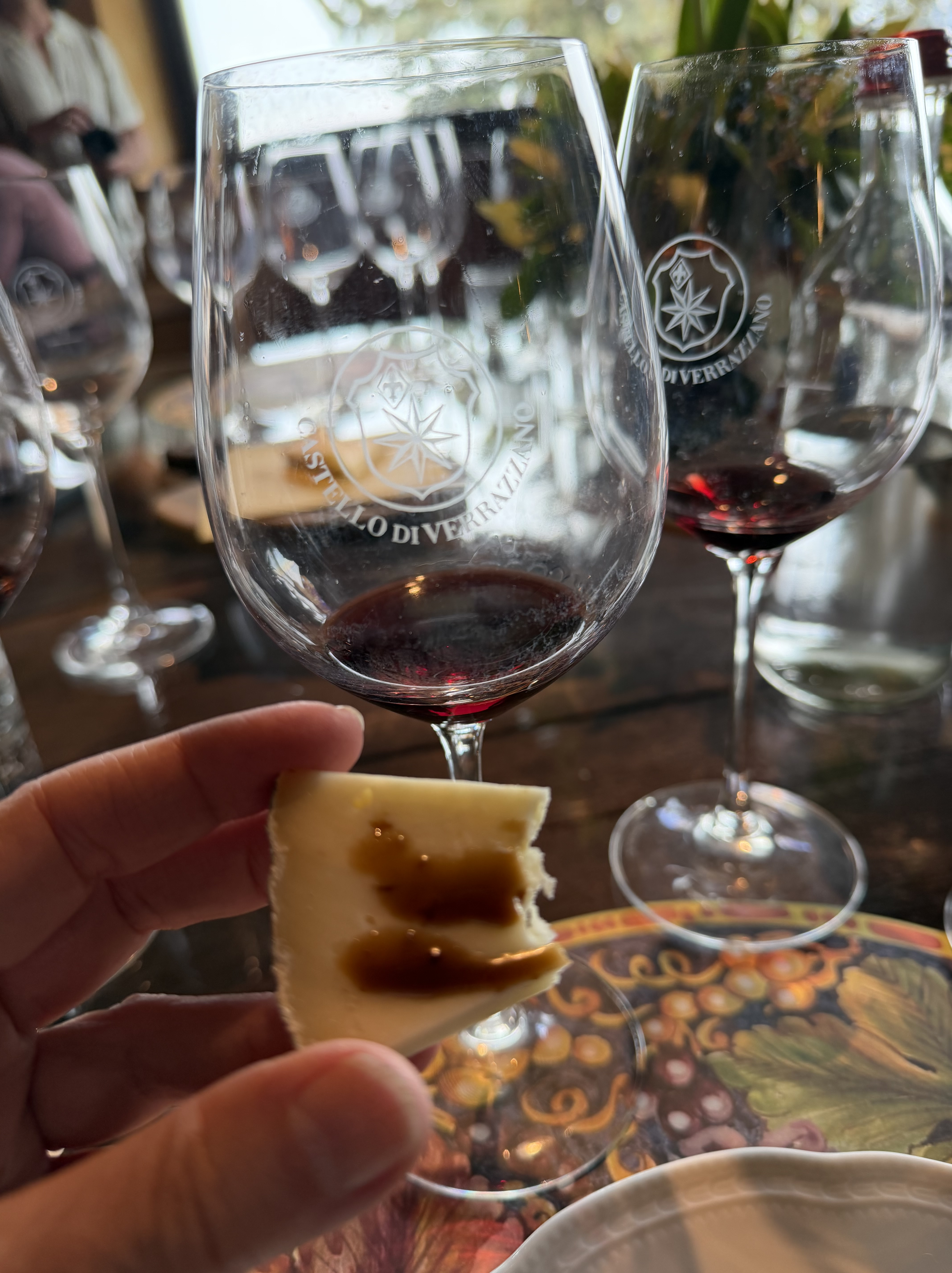
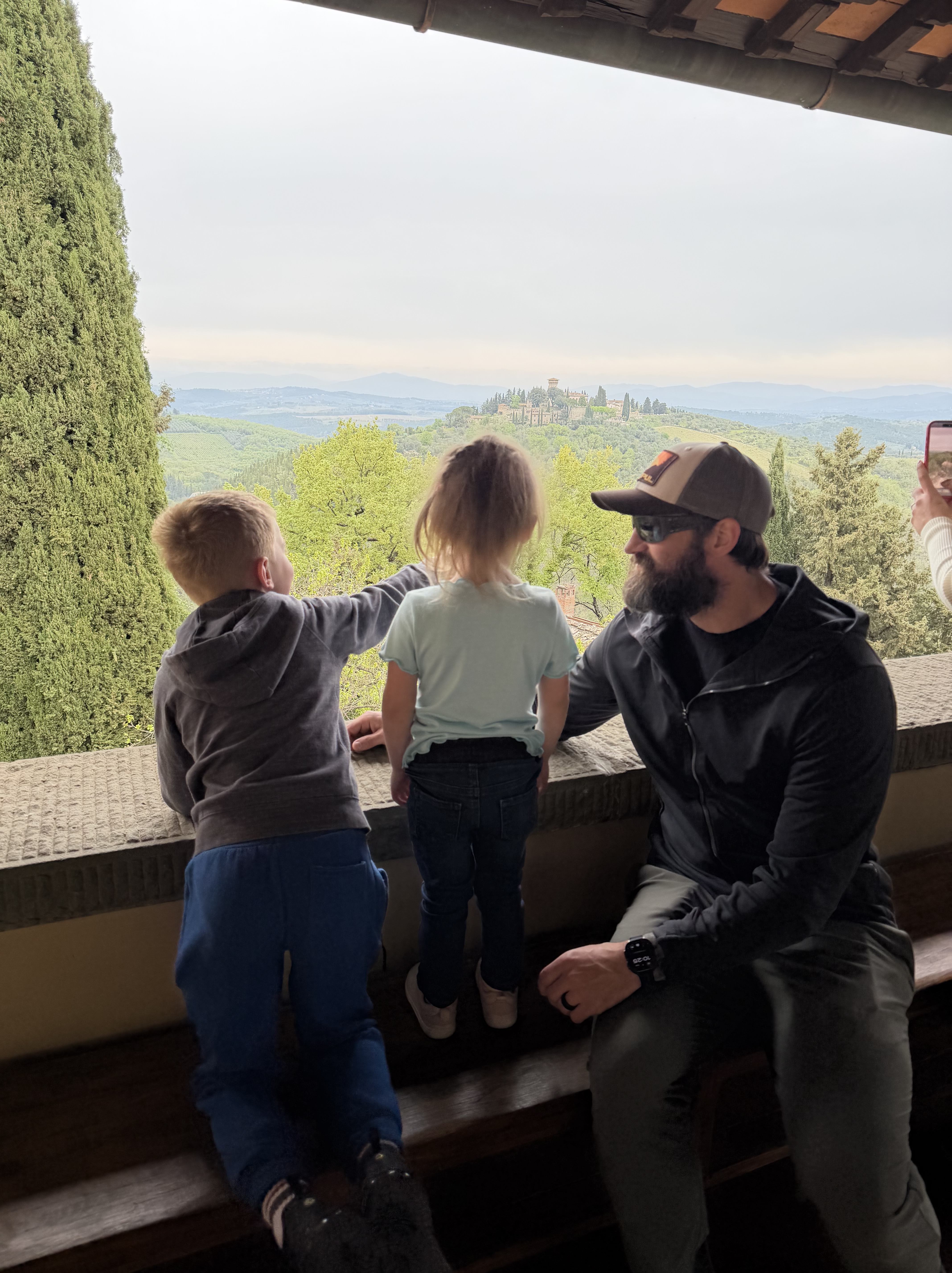
Like everything we did, it was a multi-sensory experience of beauty and joy — the food & wine combined with breathtaking views while sharing it with my favorite people.
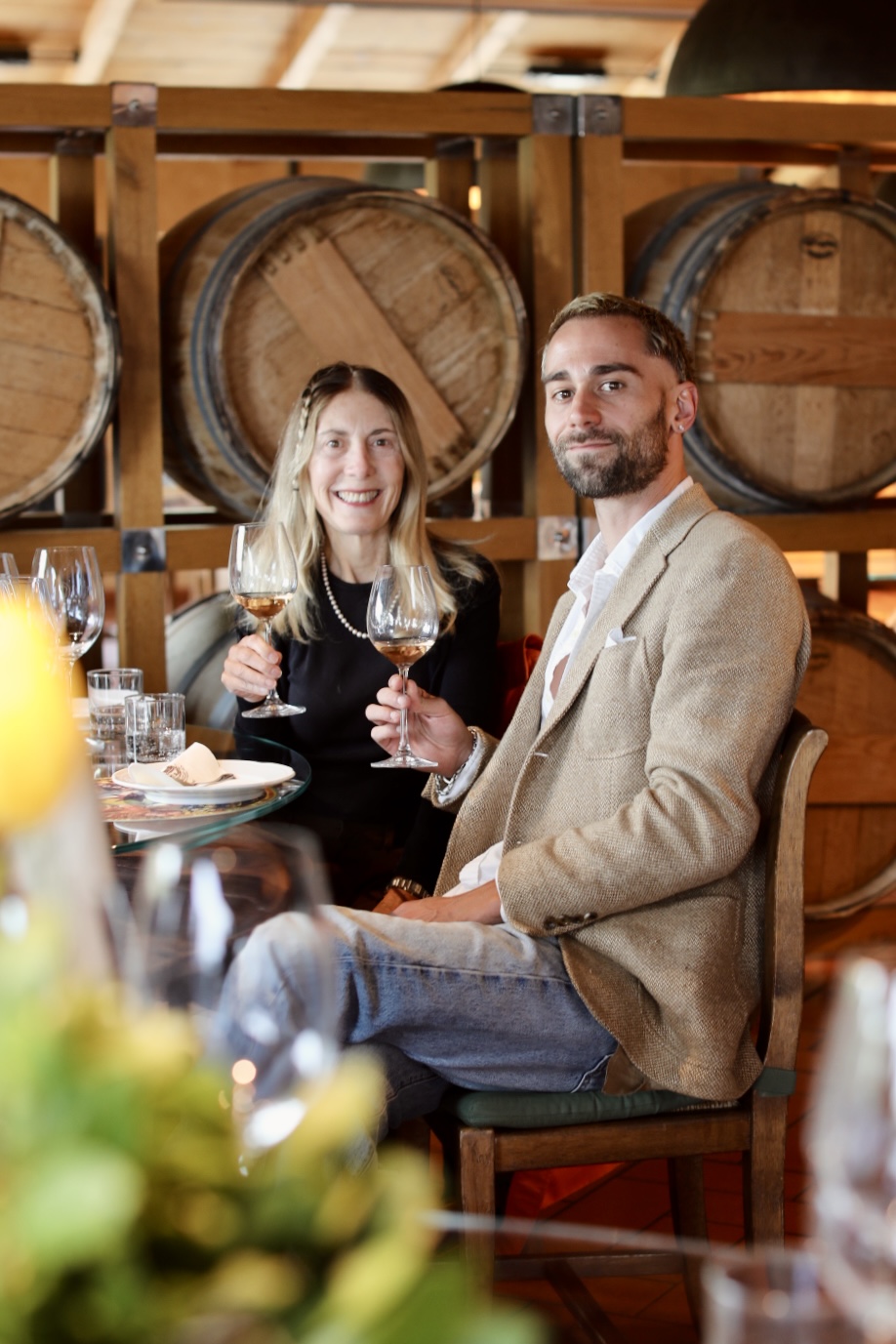
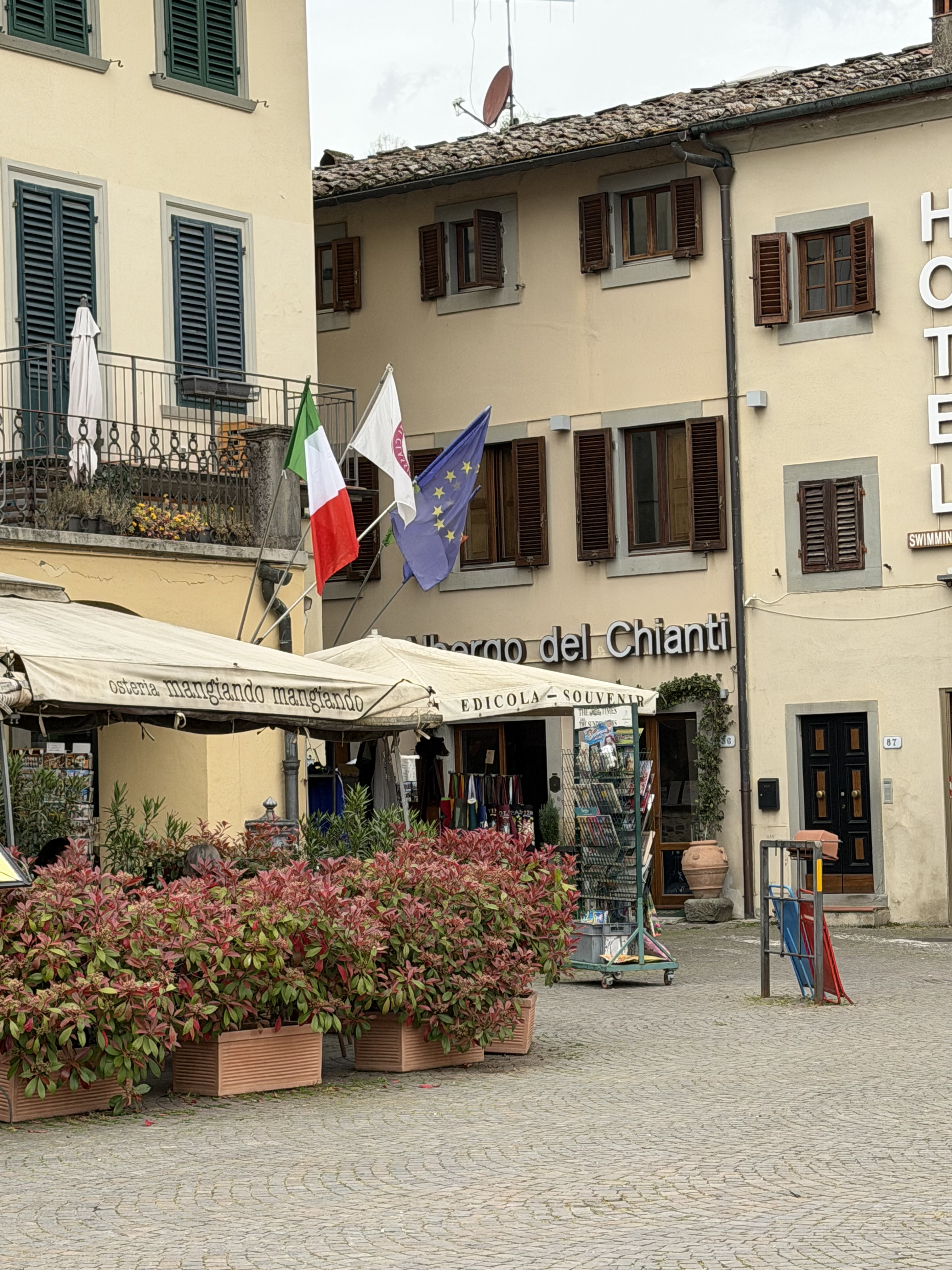
Next stop was the small, medieval town of Greve, the heart of Chianti. We bought some cute souvenirs and roamed the hilly streets.
Our second tour and tasting was at Casa Emma.
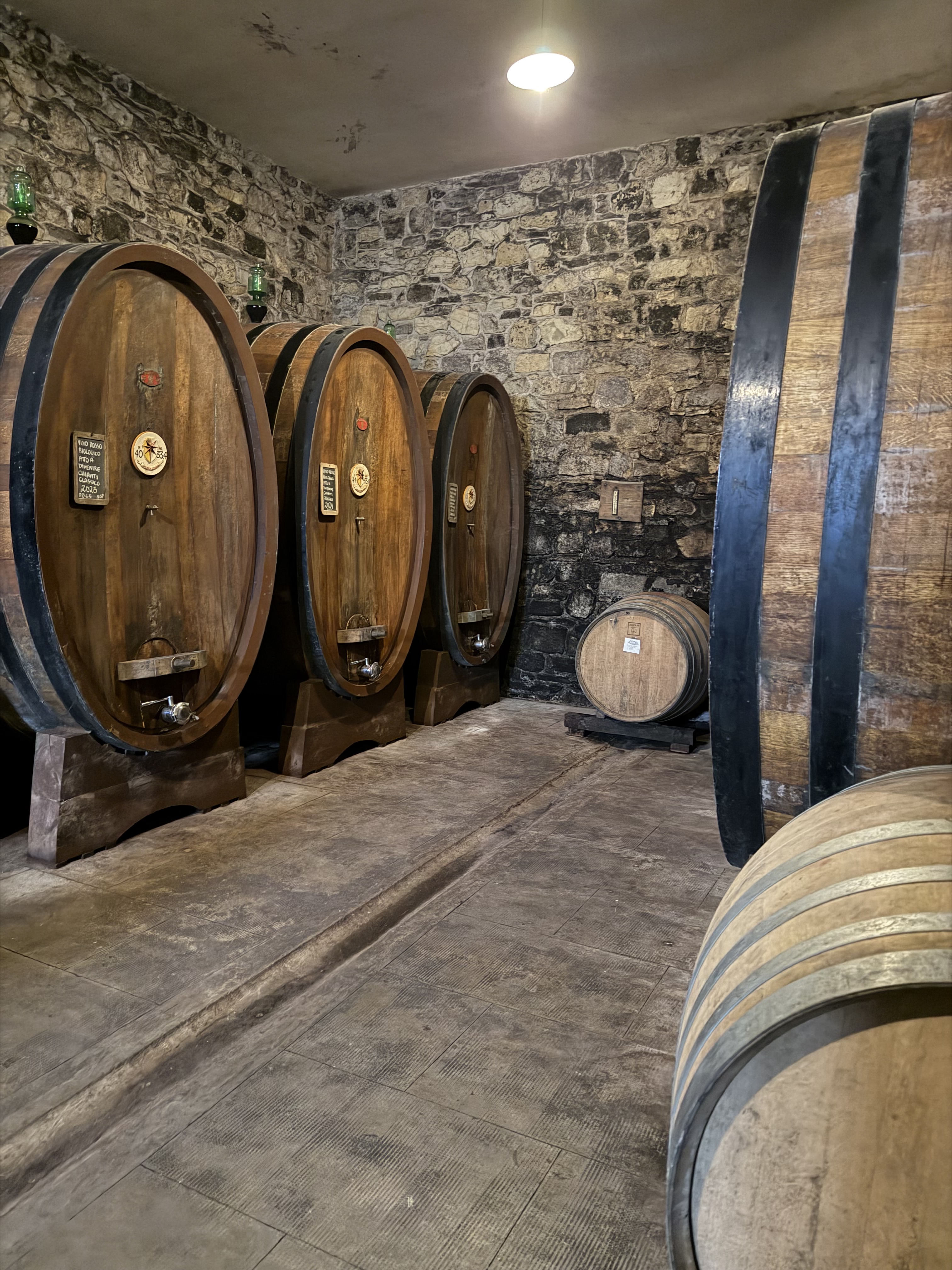
The wine tasting was pared with charcuterie, bread, olive oil, and balsamic vingear.
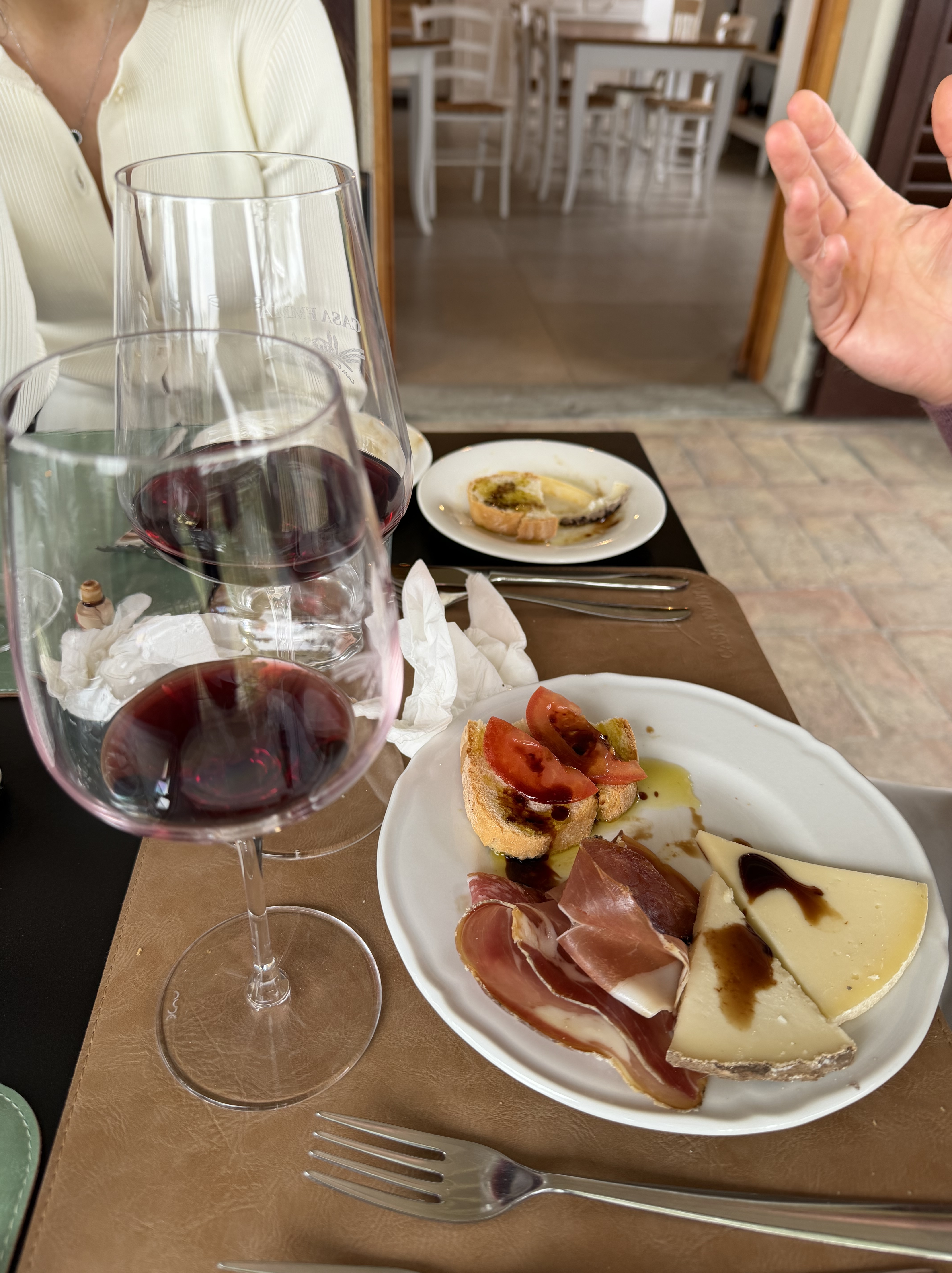
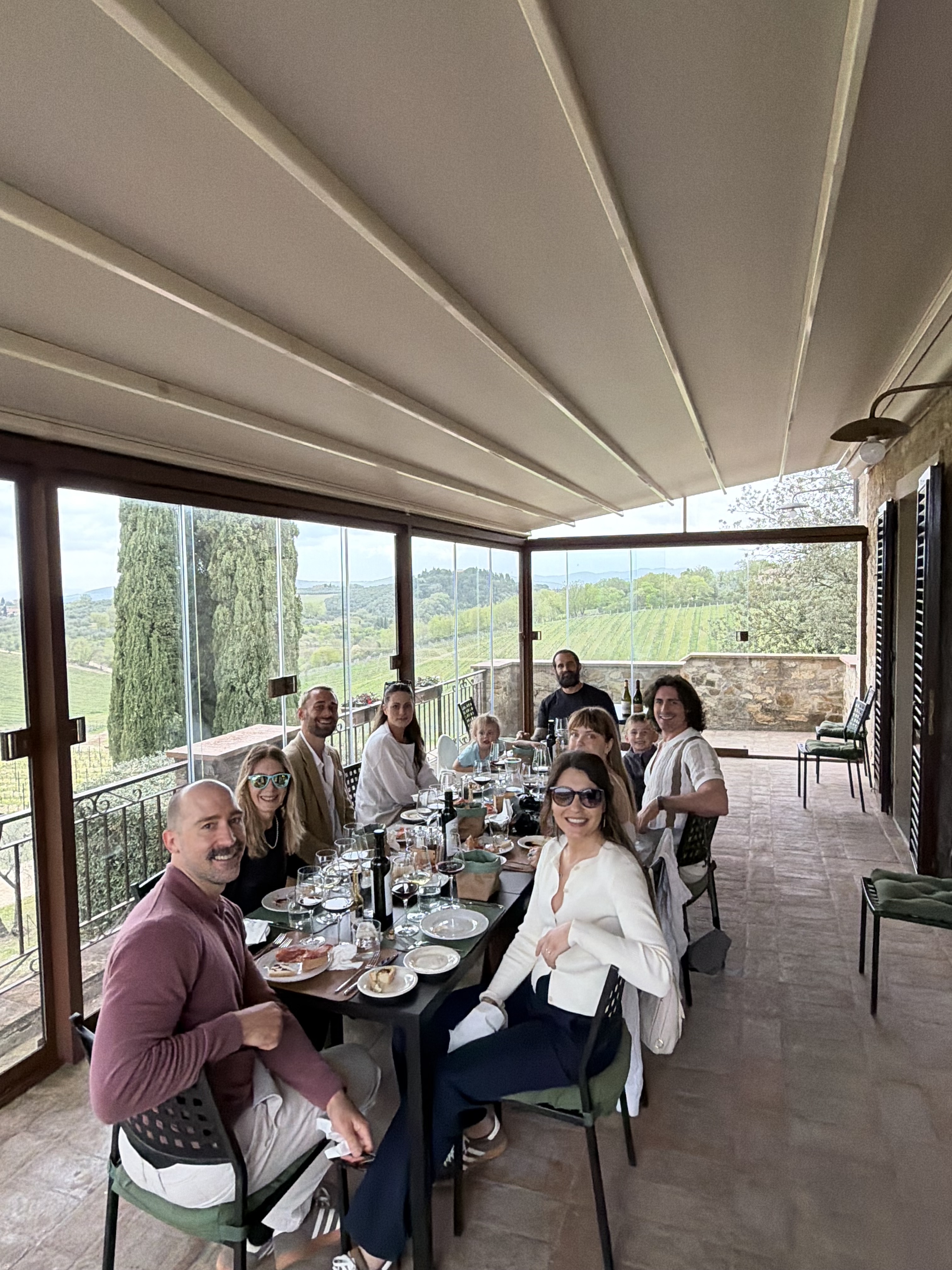
A late lunch in the private solarium was perfect; we didn’t have to be concerned that we were interrupting anyone’s romantic getaway with our noise and laughter. Such a fabulous way to spend a rainy Monday afternoon. Not everyone tasted the wines but, certainly, everyone enjoyed the day — castles, vineyards, wineries, dining, medieval towns. It was everything you dream of when you think of Tuscany.
My concern that the trip was too short was gone. Even if we had to leave immediately, the past 48 hours had made the overnight flight and all the expense worth it. But, incredibly, some of the best was still to come!
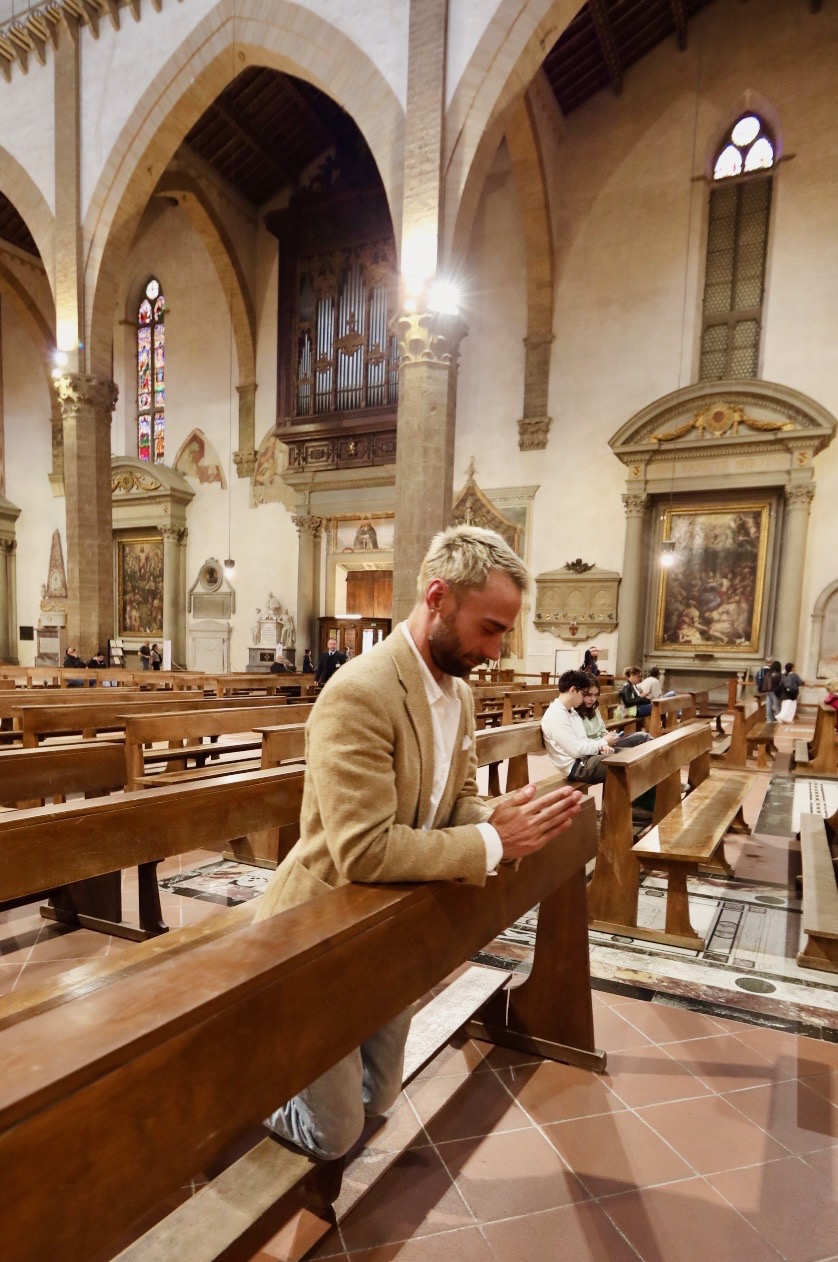
Before dinner, we popped next door to the Santa Croce Basilica.
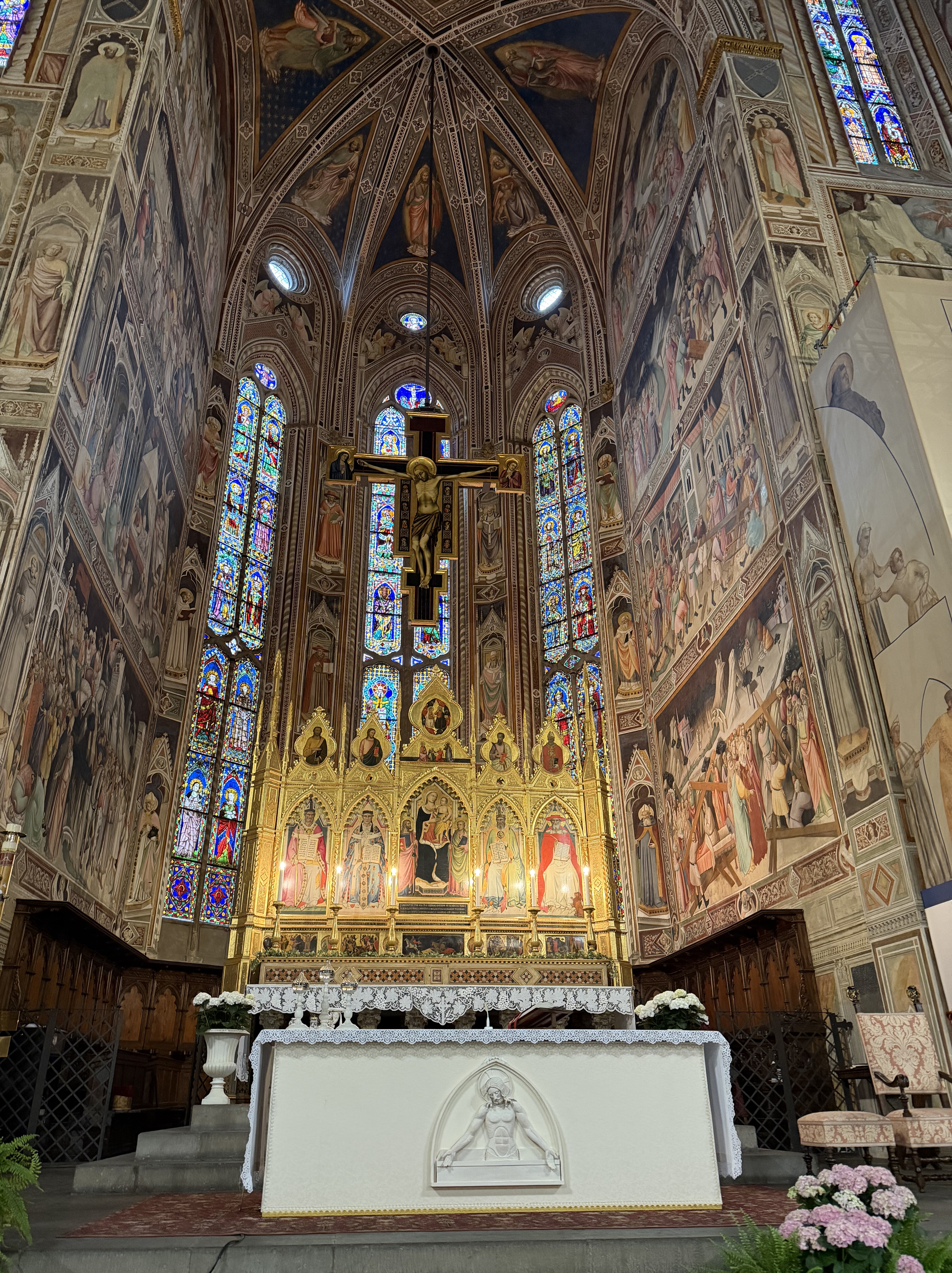
I could have spent hours there. Unlike most Italian churches, there is an entry fee because it’s also a museum. The fees go directly to support the upkeep of the cathedral. Acquiring tickets for the Uffizi, Academy Gallery, and other museums was challenging and should definitely be purchased in advance but we walked right in to Santa Croce an hour before closing time and got lucky.
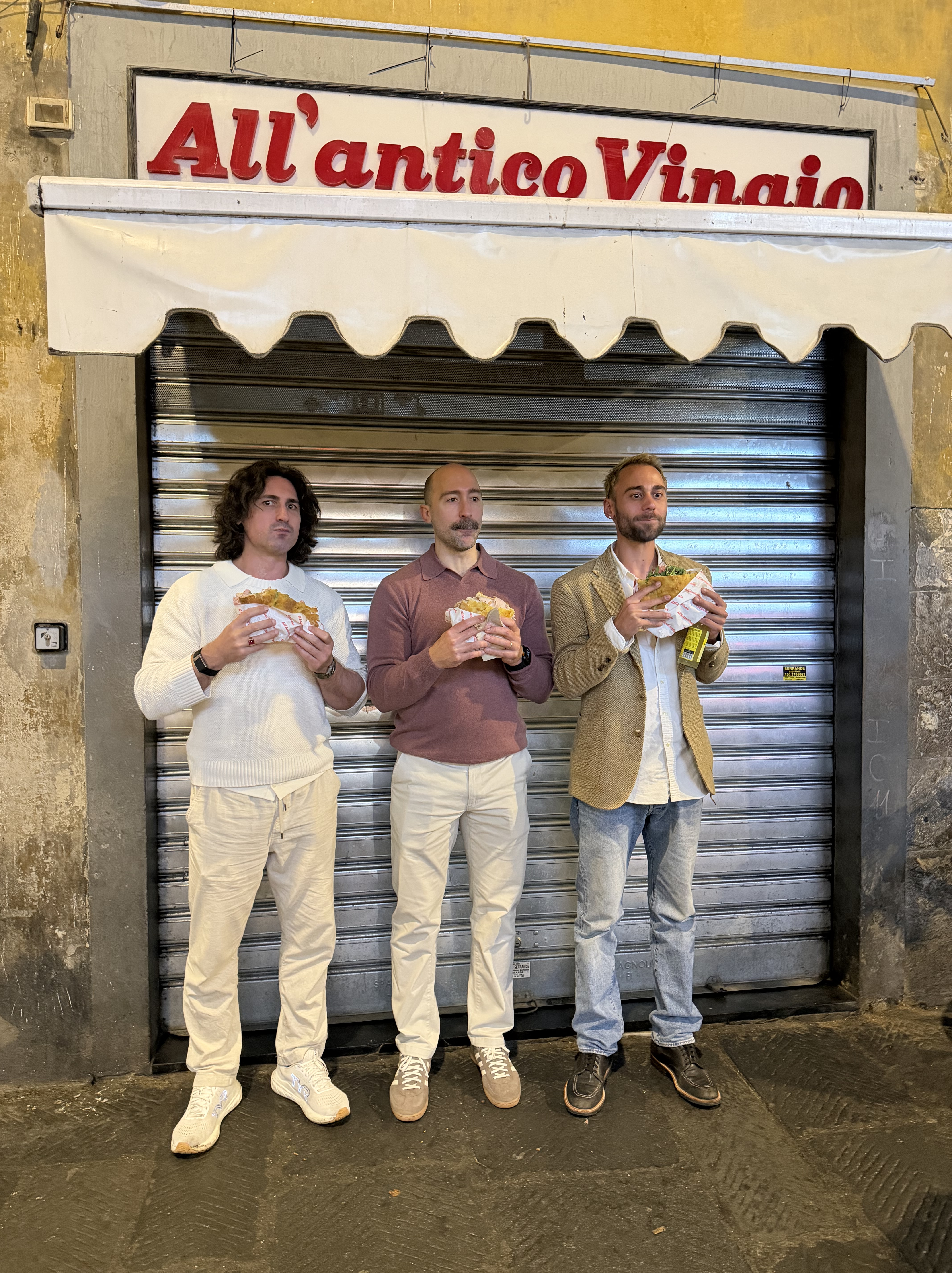
Instead of pasta or pizza for dinner, the guys opted for sandwiches. Just like the gelato, there were plenty of options but one take-out stand had a long line (in spite of the rain) which we took as an indication that it was the best. The sandwiches were served on a giant hunk of bread and packed high with meats, cheese, and salad.
The next morning we had time-sensitive tickets to the Academy Gallery (Galleria dell Academia). You truly cannot be emotionally prepared to view Michelangelo’s famous David. Patrick, my oldest son, gathered us together explaining that Michelangelo’s four unfinished Prisoners are first then the hall opens up with David on a pedestal at the far end — 17 feet of white marble.
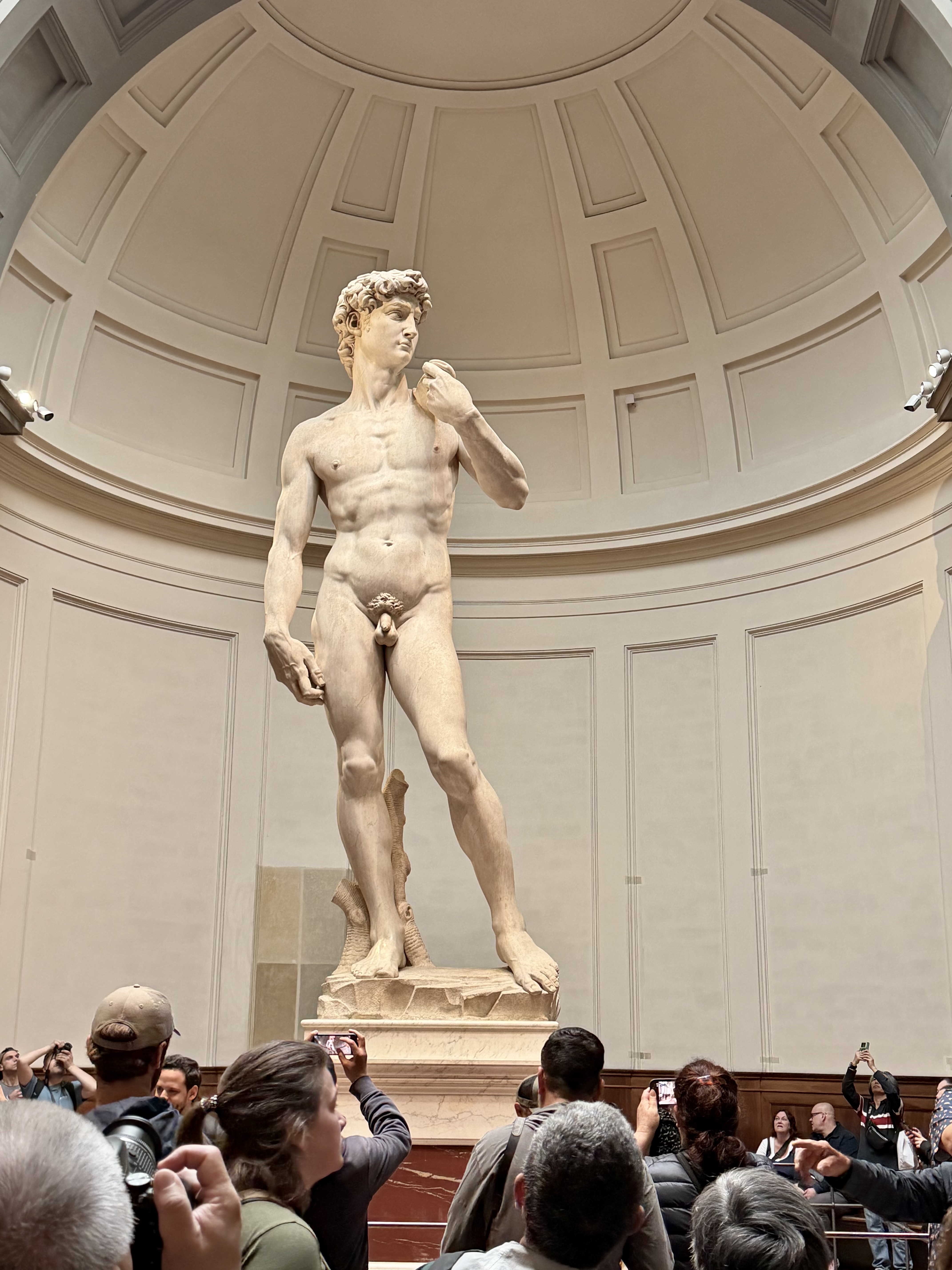
It was another moment that took my breath away and brought tears to my eyes. The beauty and impossibility of it made me feel so insignificant. From 1501 to 1504, Michelangelo carved a block of marble into this masterpiece. At 26 years old, he saw something I couldn’t imagine then he created it.
After a stroll and lunch break, we met up at the Medici Chapels. The Chapel of the Princes is a Baroque-style octagon, 30 feet wide and 60 feet tall. There was no spot in the room that wasn’t ornate — the floor, walls, and ceiling were all full of color and beauty.
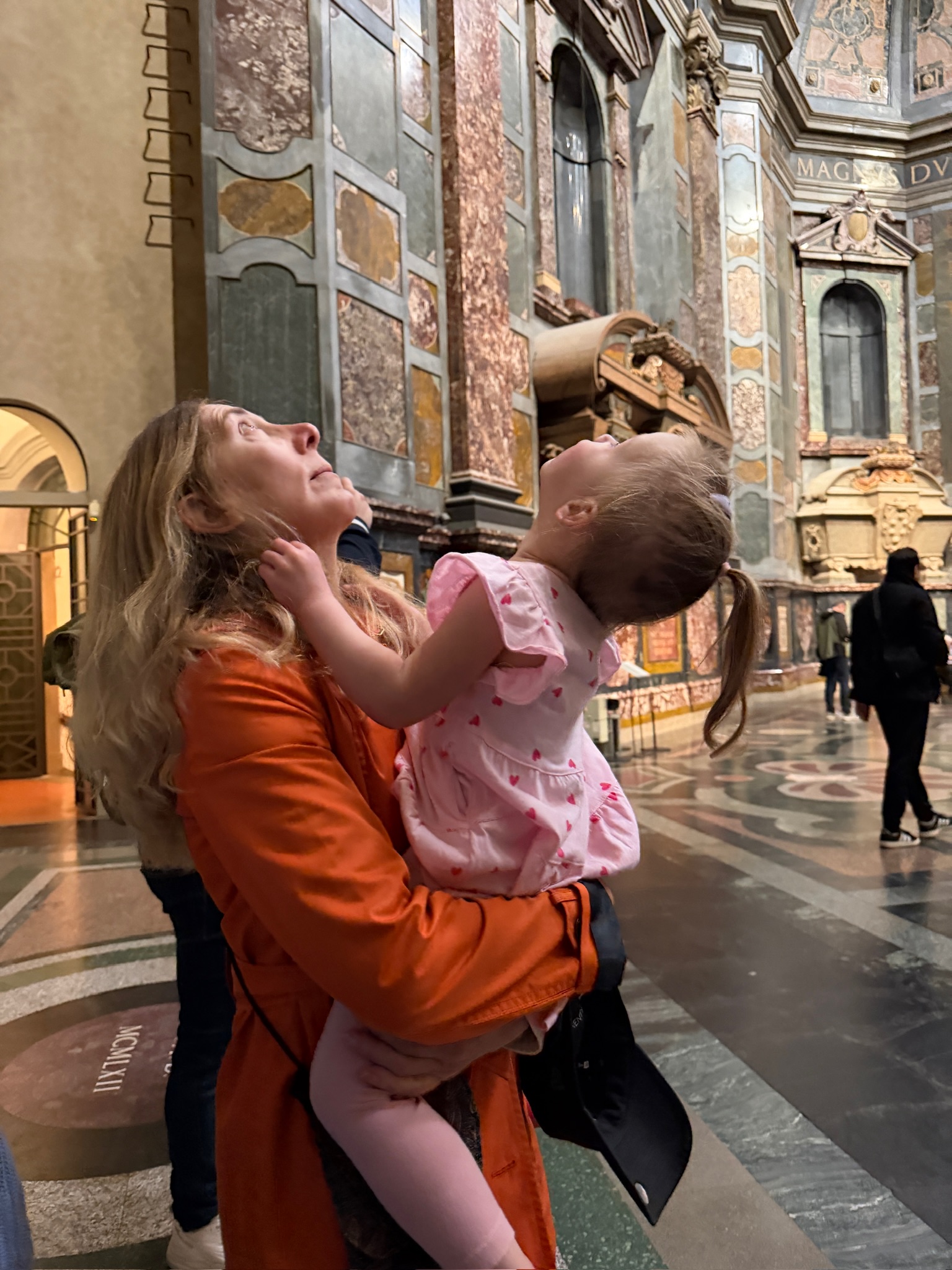
Somehow the majesty of it all is timeless and impactful to everyone in a unique way. That’s got to be one of mysteries of art — that it’s interactive with the viewer. My sweet granddaughter and I looked at the same thing and both were frozen in awe. We silently looked up until our necks were tired. What we felt or took away from it may have been very different but, for certain, it was enriching.
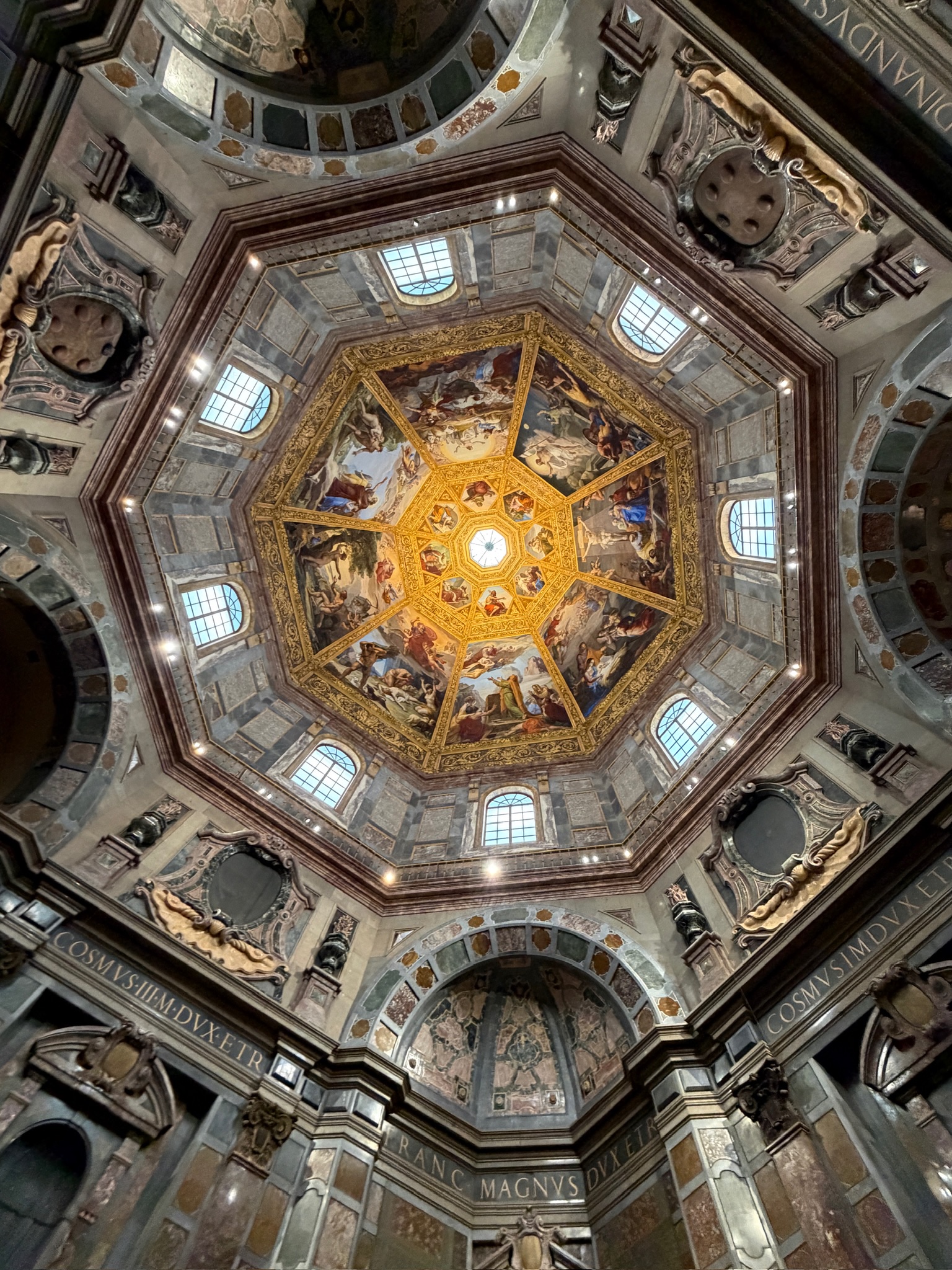
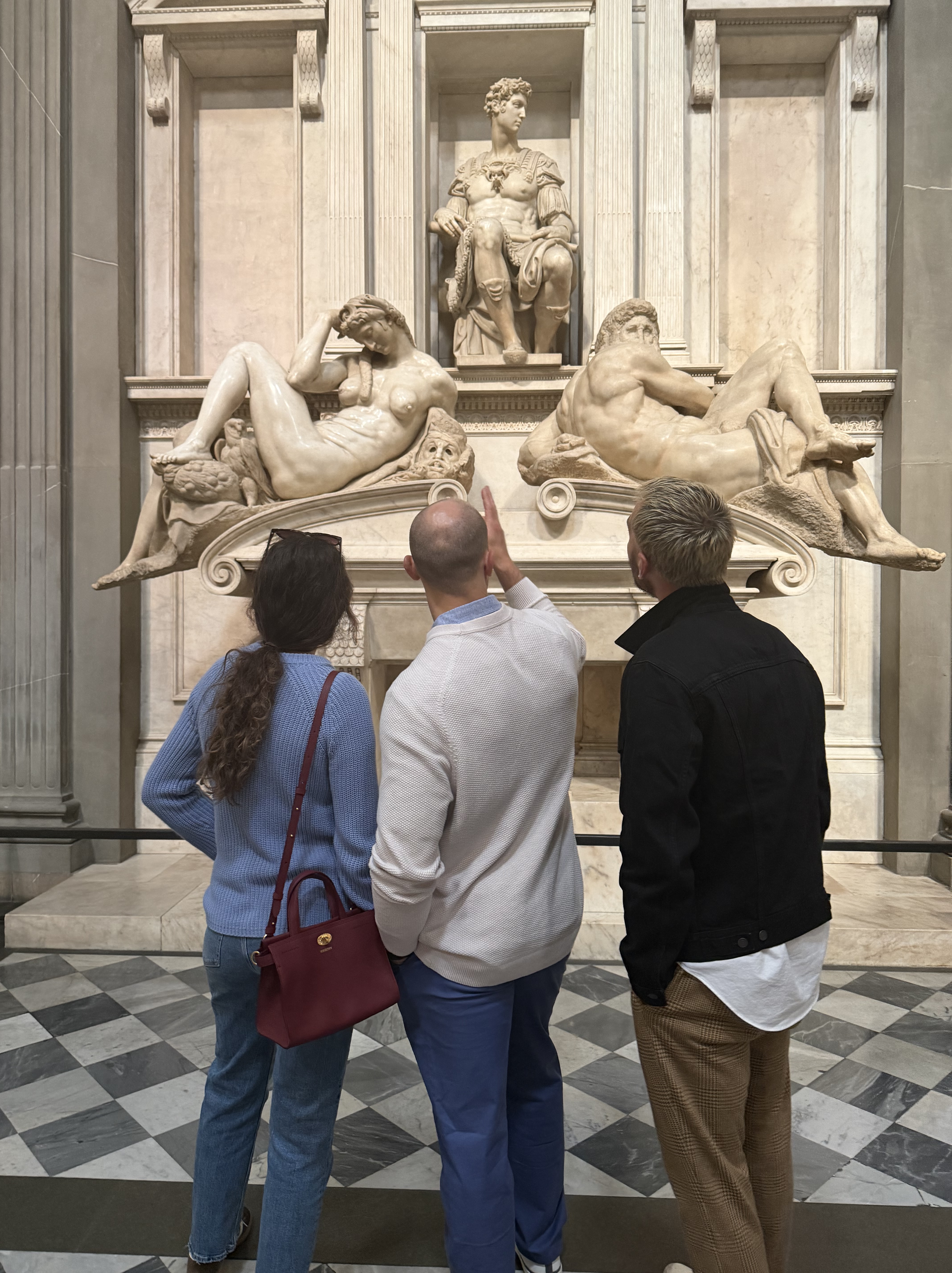
Michelangelo designed the New Sacristy, a masterpiece of Renaissance architecture and art including four sculptures — Night, Day, Dawn and Dusk. Night is a sleeping woman with an owl beneath her arm. He wrote a poem in her voice which is believed to express his sadness over the loss of Florentine liberty to the Medici. Essentially, it’s a protest poem.
“Sleep is dear to me, and more so being made of stone. While damage and shame last; not to see, not to hear is my great fortune. Therefore, do not wake me, I pray, speak softly.”
Many important members of the Medici family are entombed here. The picture below shows the tomb of Lorenzo Duke of Urbino with the statues Dawn and Dusk.
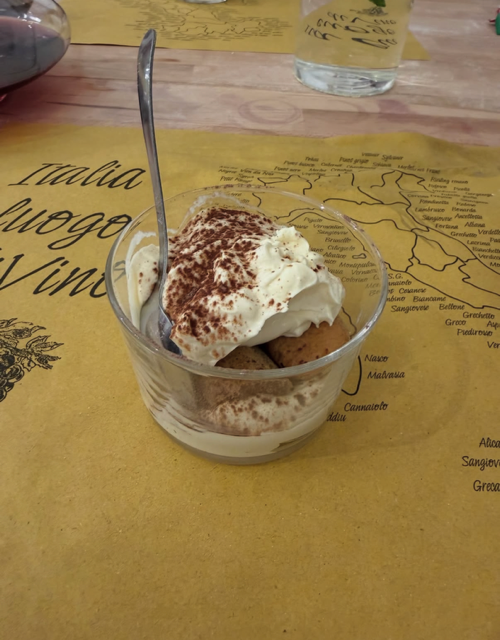
As if the day wasn’t full enough, we found our way to a cooking class from 5:00 to 8:00 PM were we made tagliatelle pasta (long, wide ribbons), spinach and cheese filled ravioli, and tiramisu then enjoyed eating it. The secret to the tiramisu is to dip the cookies in the coffee mixture for only one second so they don’t get soggy.
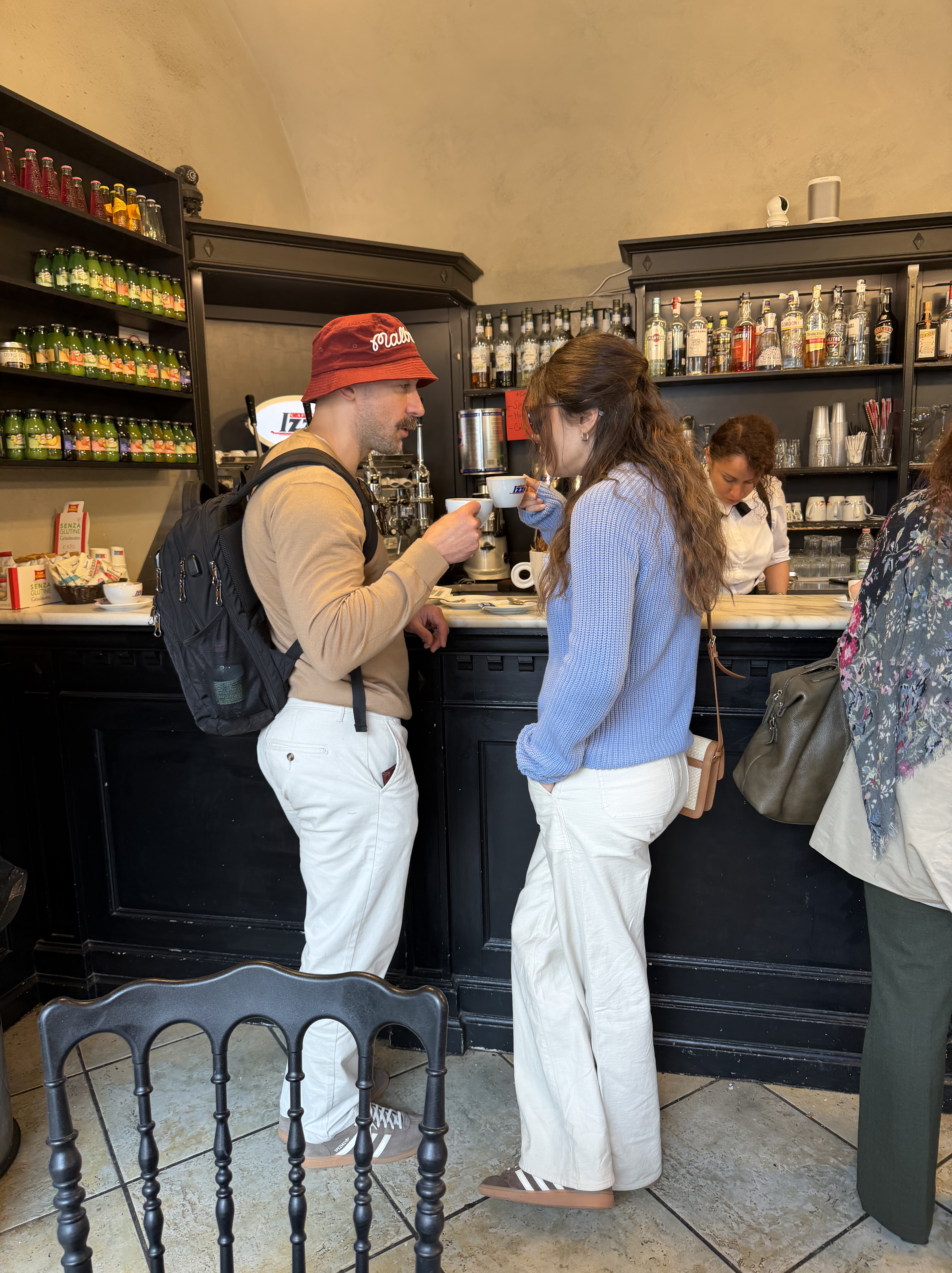
Every morning started with a quick coffee. The cups are tiny and cost half-price if you drink standing at the bar. “Coffee” is the equivalent of American espresso. I ordered cappuccino for the steamed milk. But don’t order it after 11 AM because the machines have been cleaned for the day.
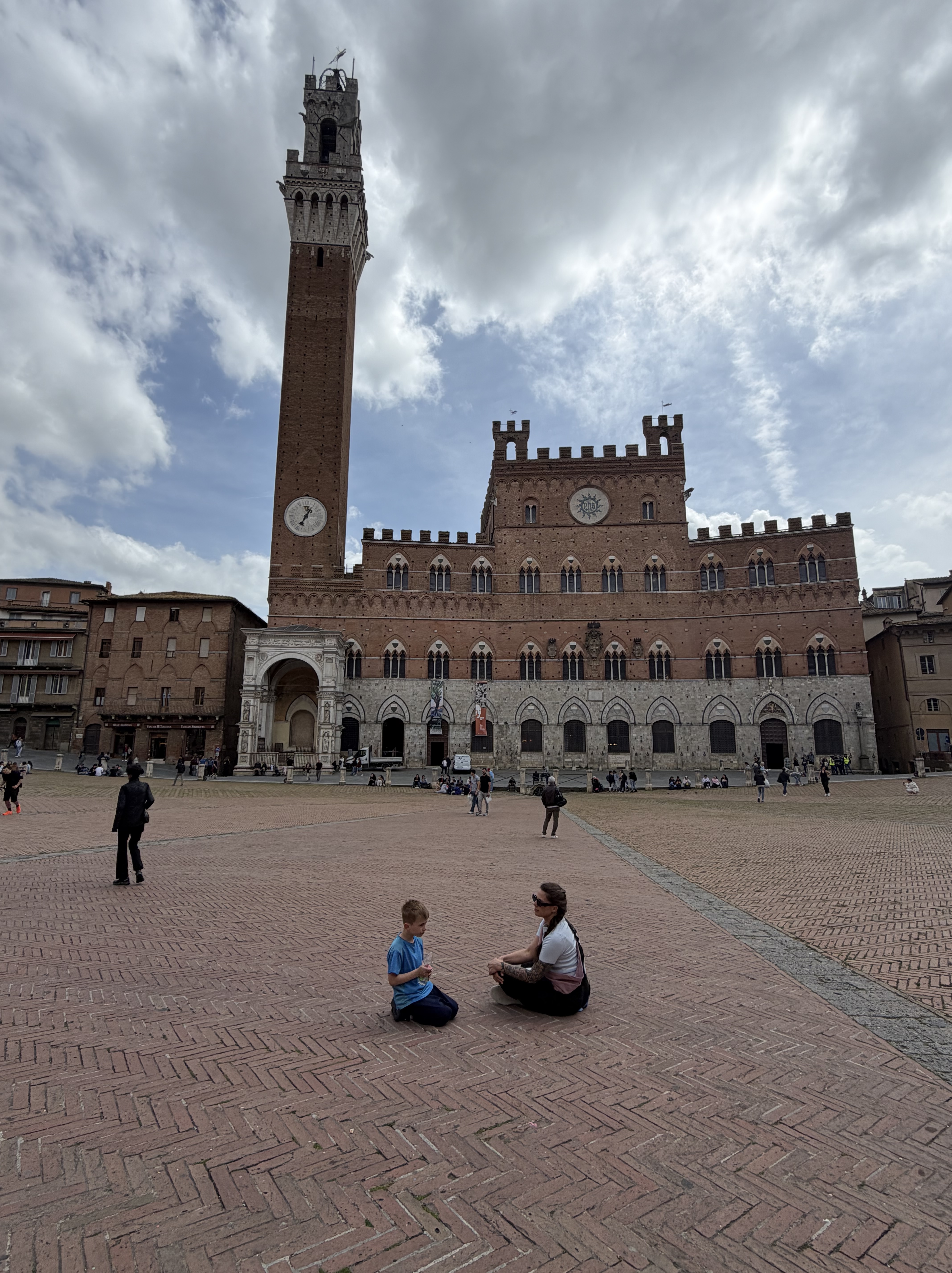
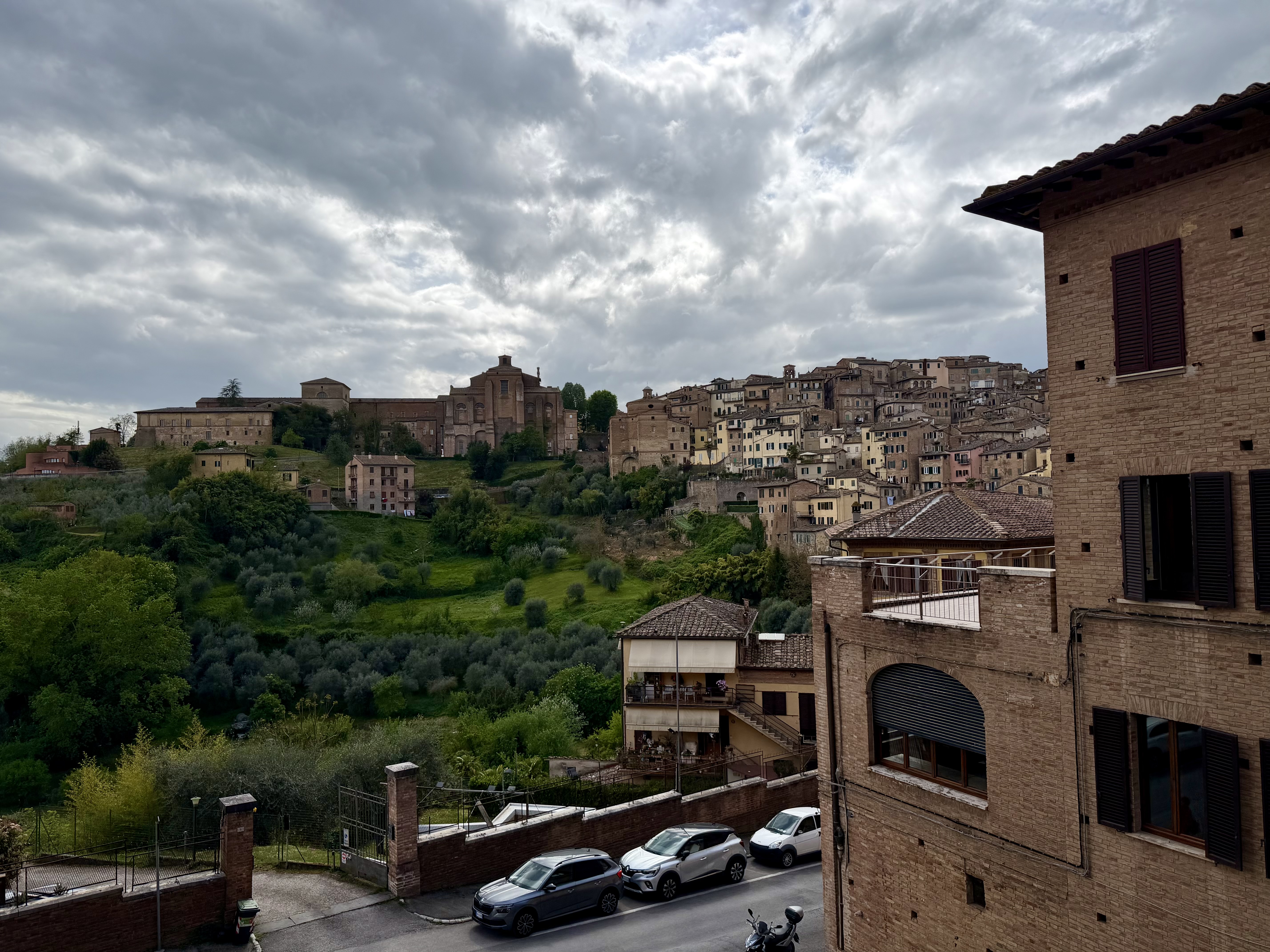
Then we jumped on a bus for the approximate hour-long drive to another UNESCO World Heritage site, Sienna. It’s well-known for the medieval architecture, narrow streets, Gothic art, and famous Piazza del Campo where the Palio horse races happen twice a year.
The piazza is a giant paved, public square in the middle of the historic area. During the races, people stand in the center and on balconies cheering for their horses. The betting and strategies seem quite unsportsmanlike but great fun as the jockeys try to knock the others off their horses and accept bribes from whomever pays the most. The first horse to complete the course is the winner, not the jockey, so even if there’s no rider, the horse can still win. It sounds wild and we saw pictures that confirm it’s a contact sport
There are 17 contrades, historic neighborhoods, with their own emblems, colors. history, and huge pride. The rivalry of the contrades during the horse races is very intense with a lot of partying and sabotage.
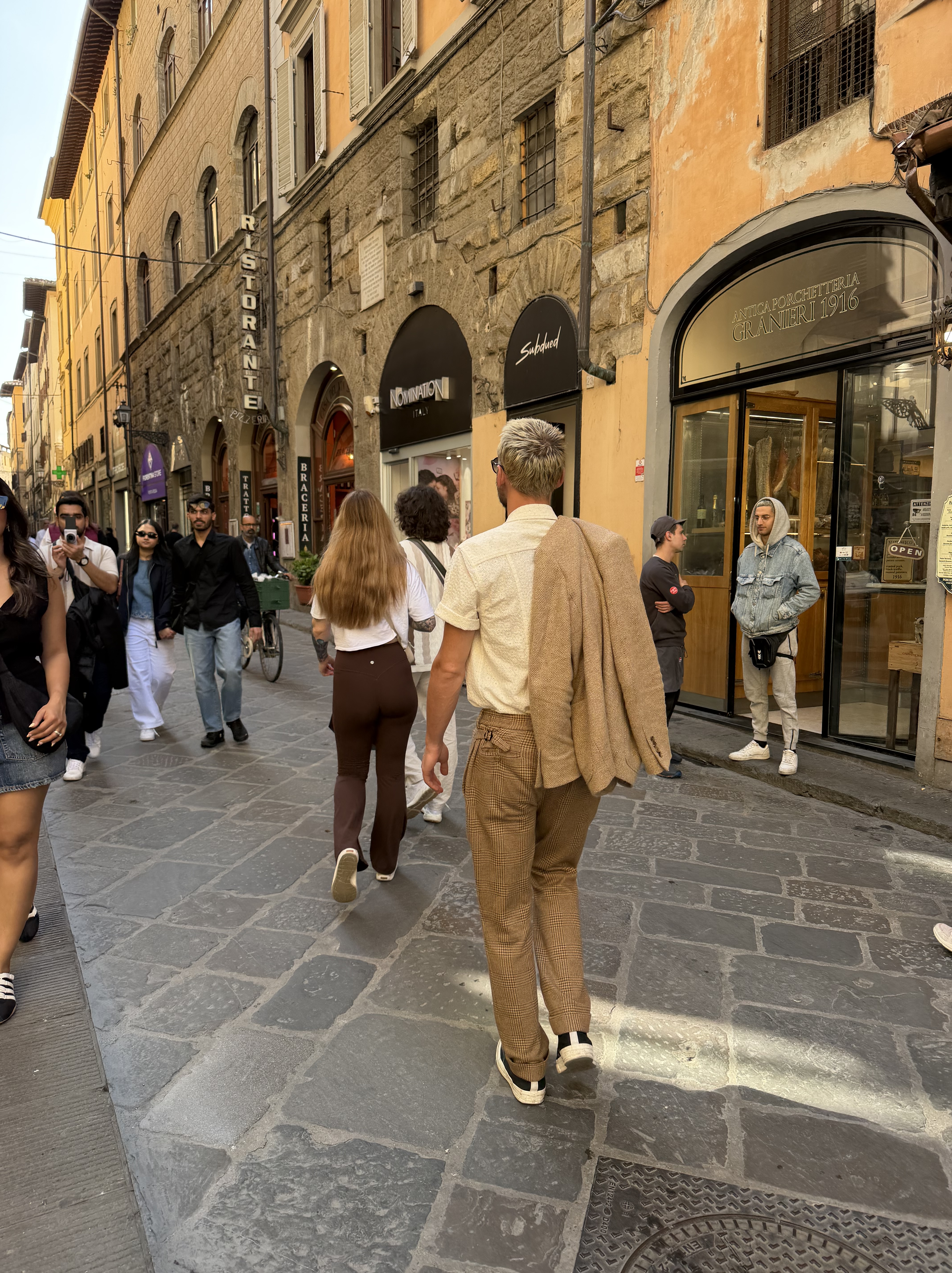
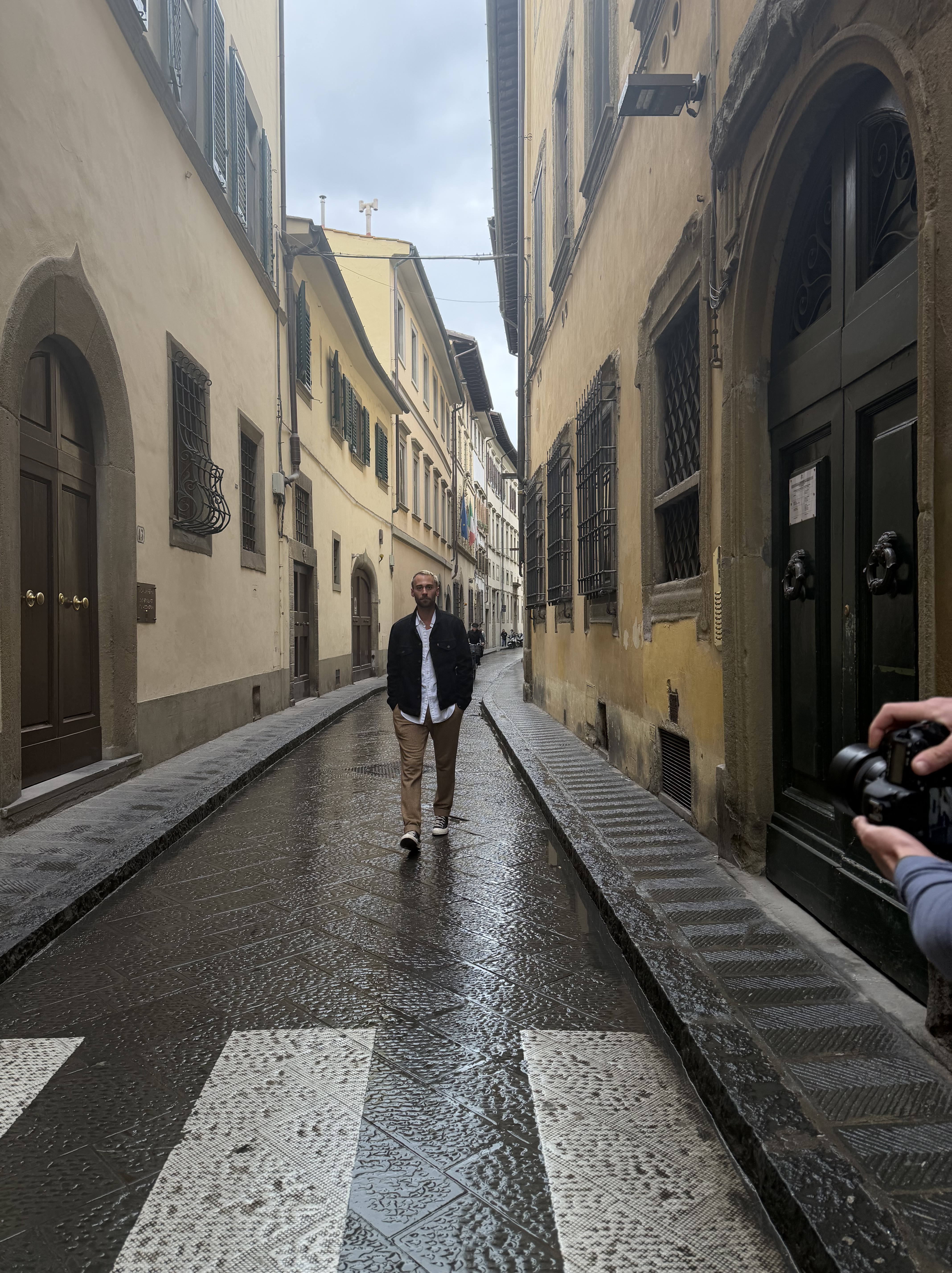
Back in Firenze, there was time for some fashion shopping. The stores offer sleek, European style with lots of attitude. My time and budget didn’t allow much shopping but there were plenty of designers stores with gorgeous clothes, accessories, and perfumes in the windows. Our AirBnB was in the area known for fine leather craftsmanship but there were imitation goods sold by street vendors out in front of the artisans.
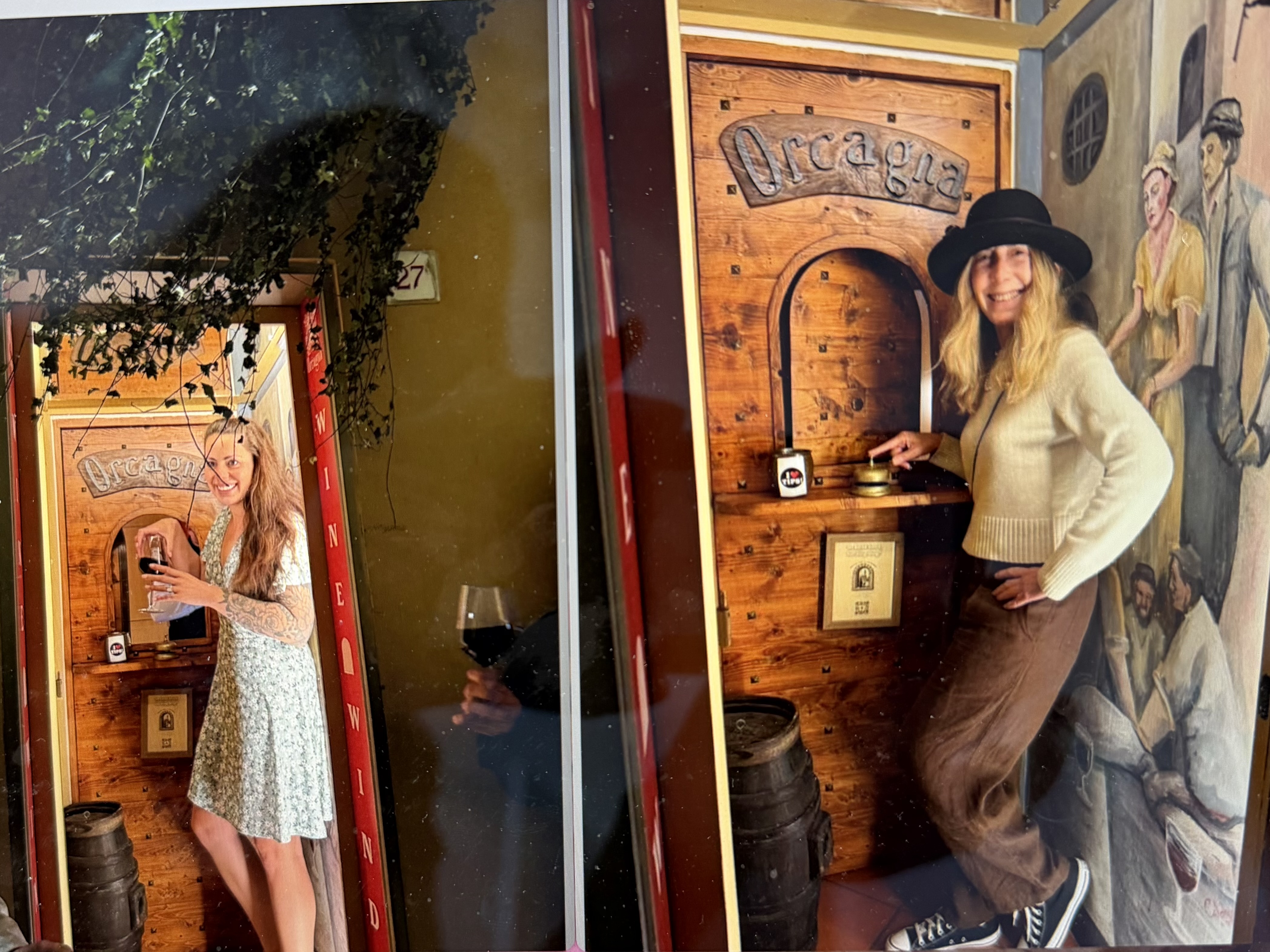
Before dinner, we stopped at one of the quirky wine windows; kind of like a speak-easy. Back in 1559 Cosimo I de Medici decreed that noble families could sell excess wine that they produced on their country estates directly from their urban palaces tax-free. Hardly noticeable as you walk down the narrow streets, the wine windows are typically 12-inch high, arched, wooden doors built into the side of buildings. Most had no signs or markings. You just knock or ring a bell and someone appears. Interestingly, they were used for contact-less transactions of all kinds during the bubonic plague (1630s) and again during COVID (2020). This one was down a dark, narrow alley but it appeared to be service by a restaurant around the corner.
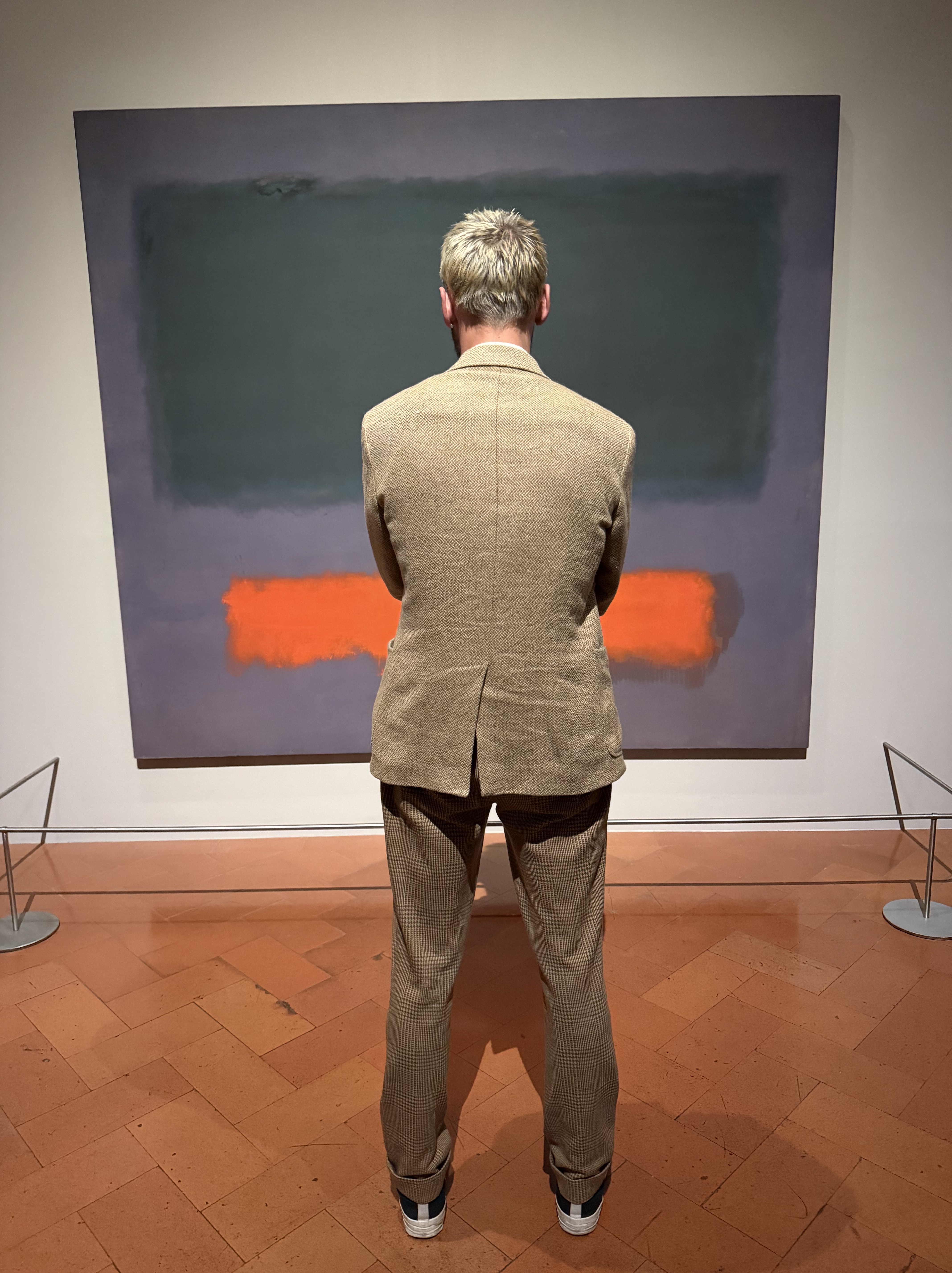
On our last day, we started at the Mark Rothko (1903 – 1970) exhibition with over 70 pieces of art on display at Palazzo Strozzi.
Almost time to leave but, finally, I could pretty well find my way around. The Duomo and the Arno River serve as landmarks.
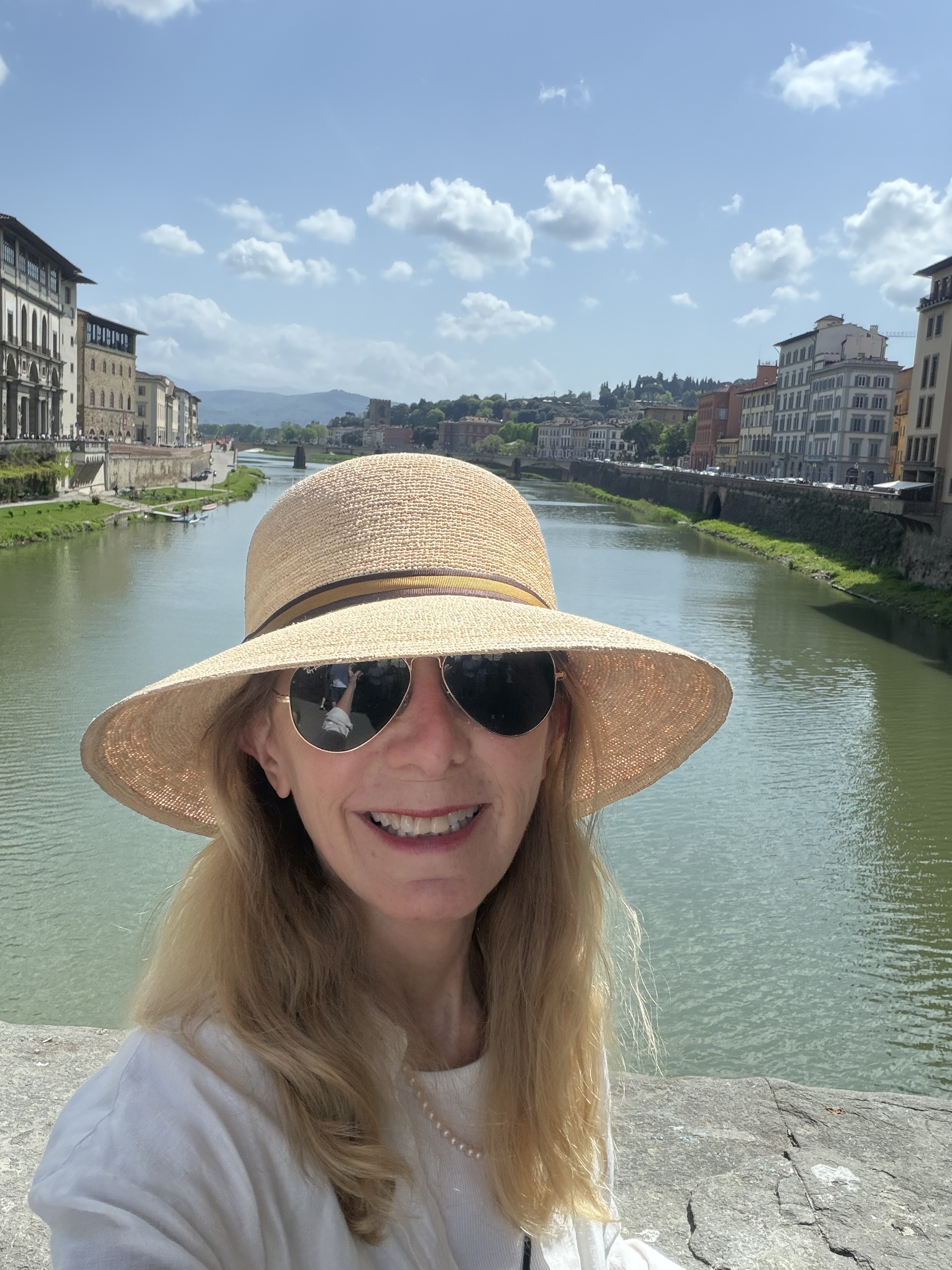
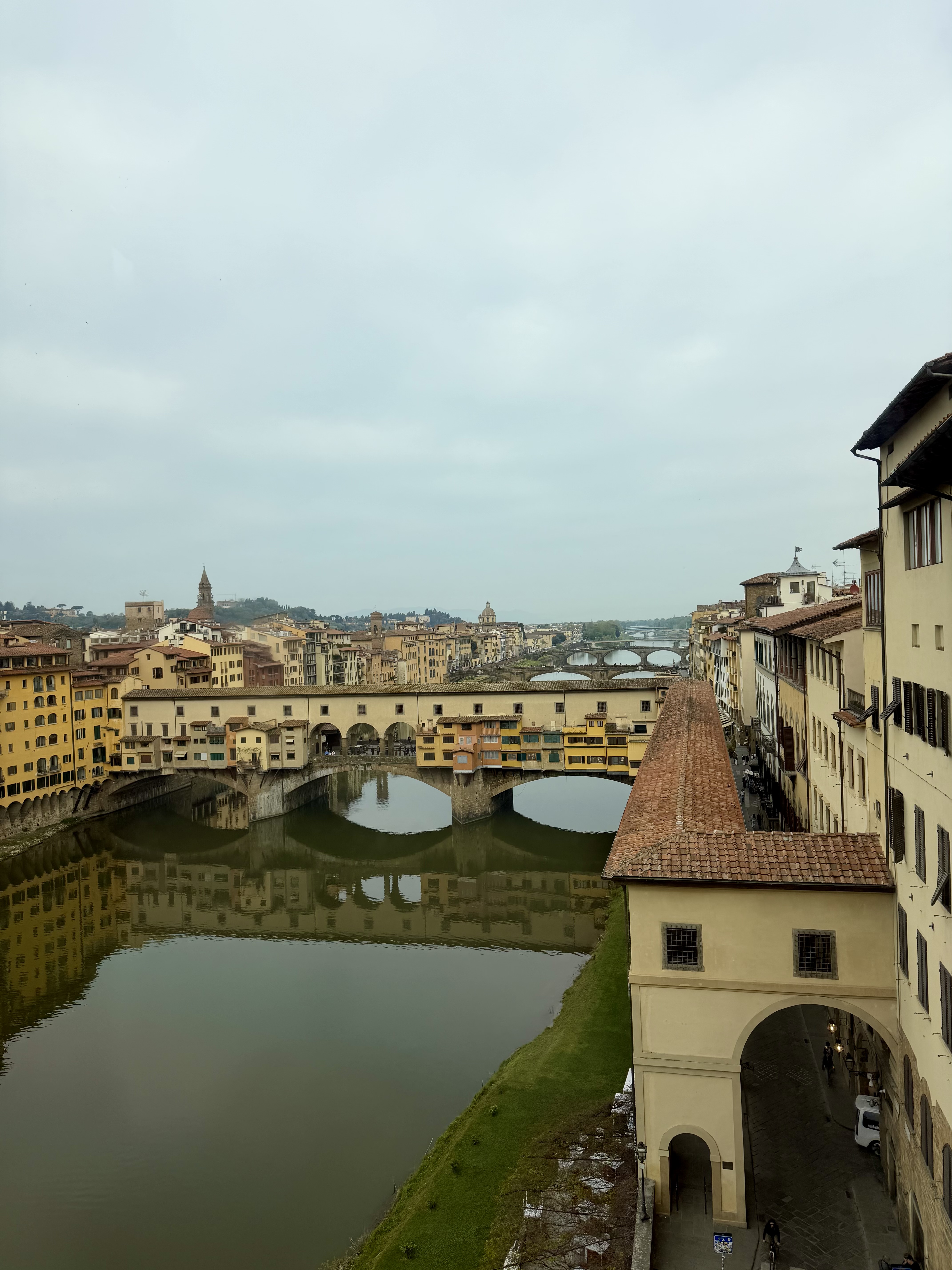
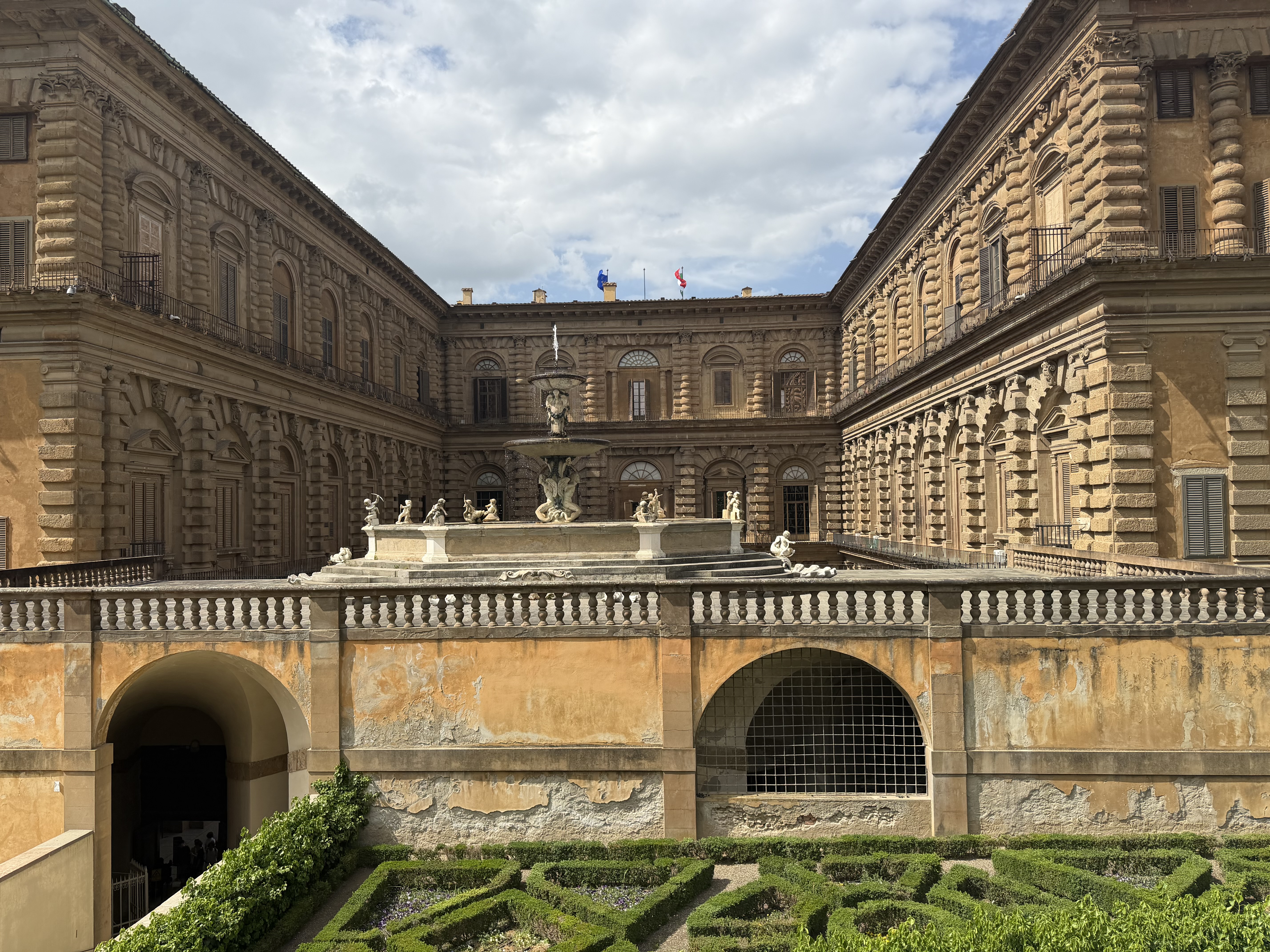
A short walk over the Ponte Vecchio brought us to our last palace/museum, Palazzo Pitti. It’s an easy walk across the river but the bridge is famously lined with jewelry shops so it takes extra time to admire the sparkling gold and precious stones along the way.
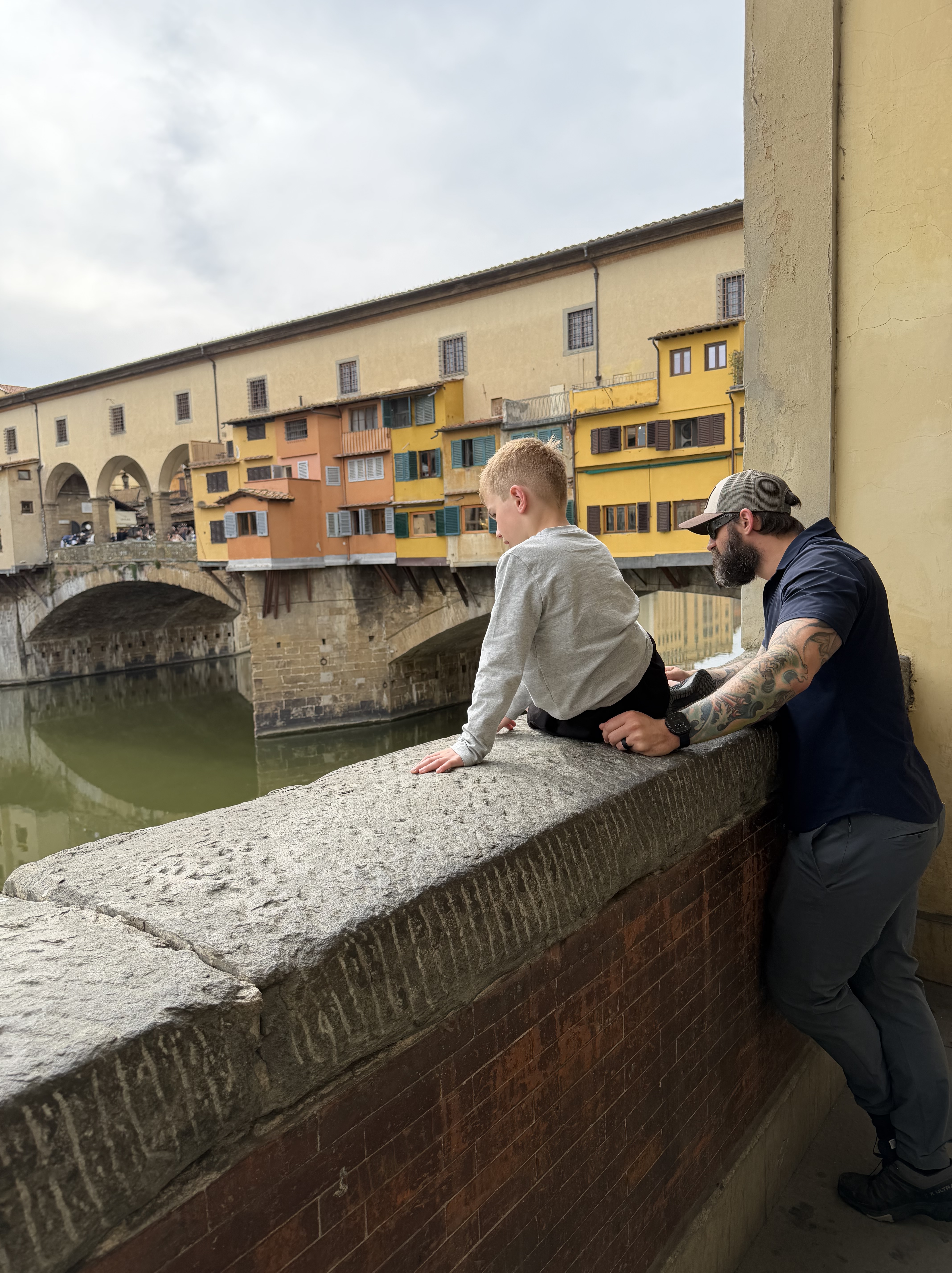
The Ponte Vecchio is the oldest of four bridges in the city and crosses the Arno at its narrowest point. The shops built across the bridge are colorful and fun giving it special character. The tunnel, Vasari Corridor, runs across the top connecting the Palazzo Pitti to Palazzo Vecchio and was built to protect royalty when crossing. It’s the only bridge not destroyed by the Germans in World War II, reportedly on the direct orders of Adolf Hitler.
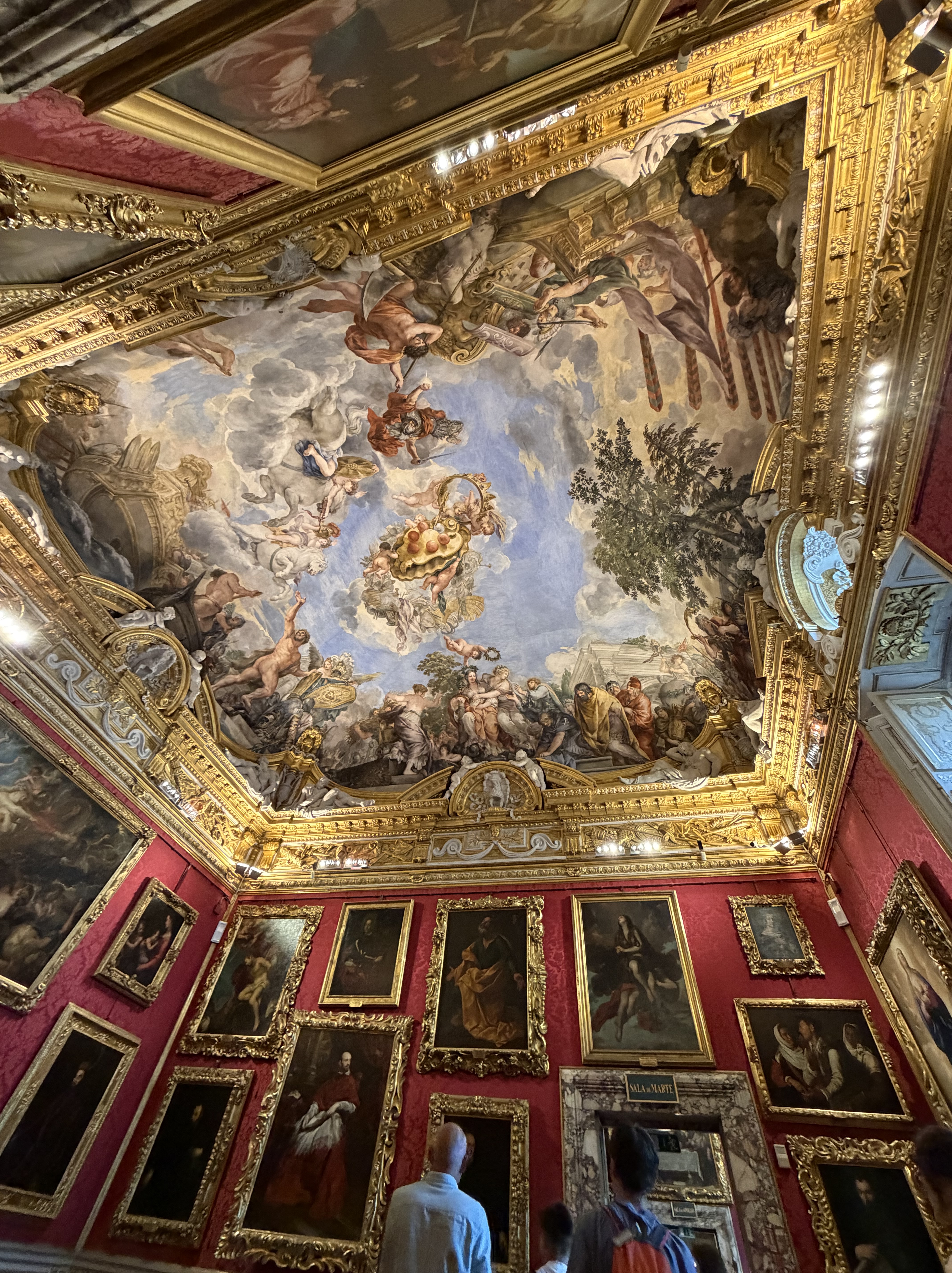
Each room of the Pitti palace is full of beautiful paintings, sculptures, and history. My grandson (6) and I had fun looking at the artwork then reading the story behind it. Most were biblical, mythical, or of royalty but you never know what you’re going to find. The painting of the favorite dwarf, front and back, was both surprising and comical.
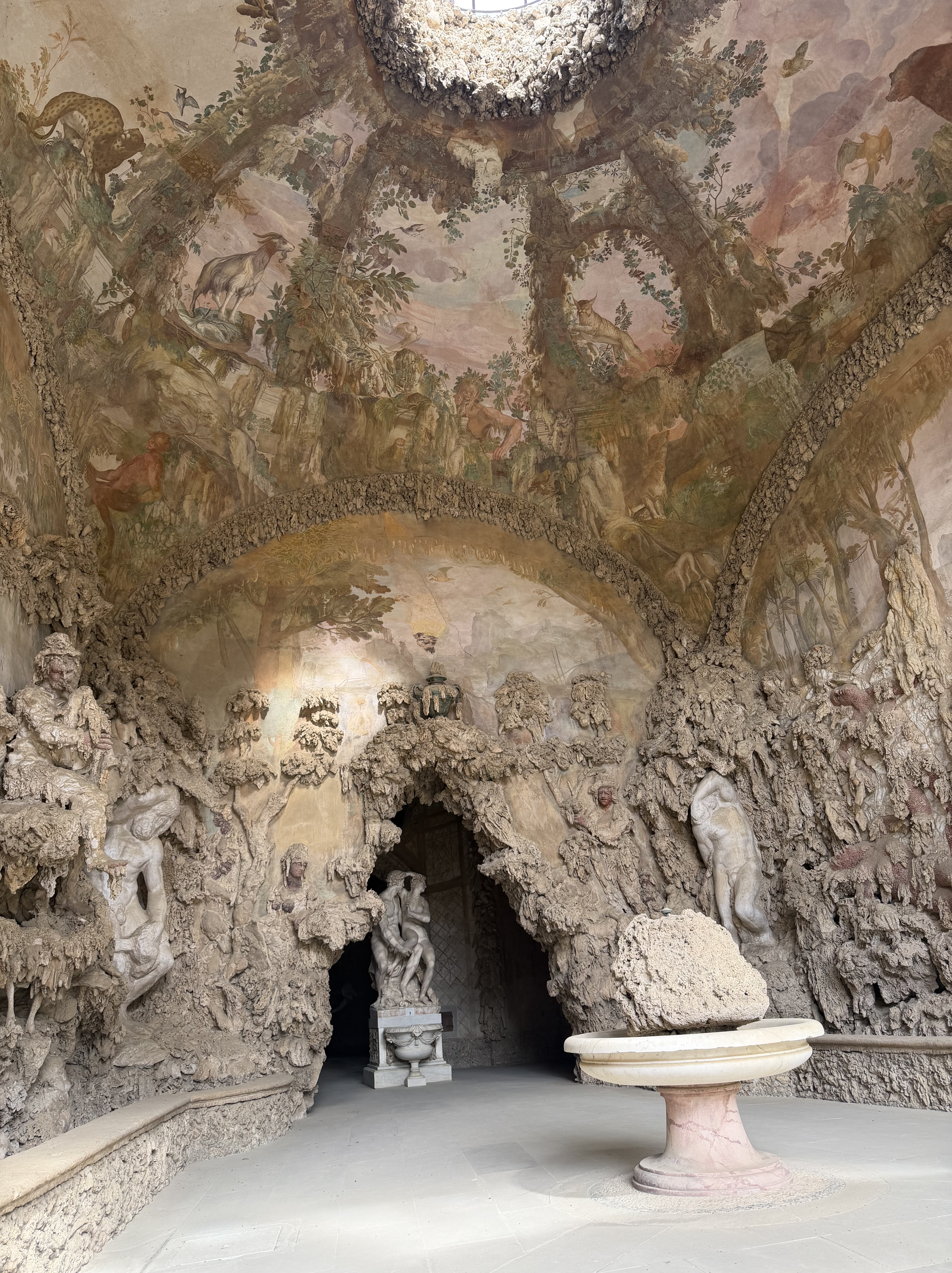
The Grotta dei Buontalenti, built between 1583 and 1593 for Francesco I de Medici is considered a masterpiece of Mannerist architecture and sculpture. Originally, it had elaborate waterworks, frescoes and limestone formations blurring the line beween art and nature. While it has diminished over the past 450 years, it still inspires the grandeur of the day and questions why modern construction isn’t built with more character.
The massive gardens rivaled Versailles. I could imagine royal picnics on the lawns amidst blooming peonies and butterflies.
In the distance, across the river, proudly stands the Duomo reminding me why Florence is widely considered one of the most beautiful cities in the world. The Duomo is simultaneously massive yet gentle; always representing the Renaissance.
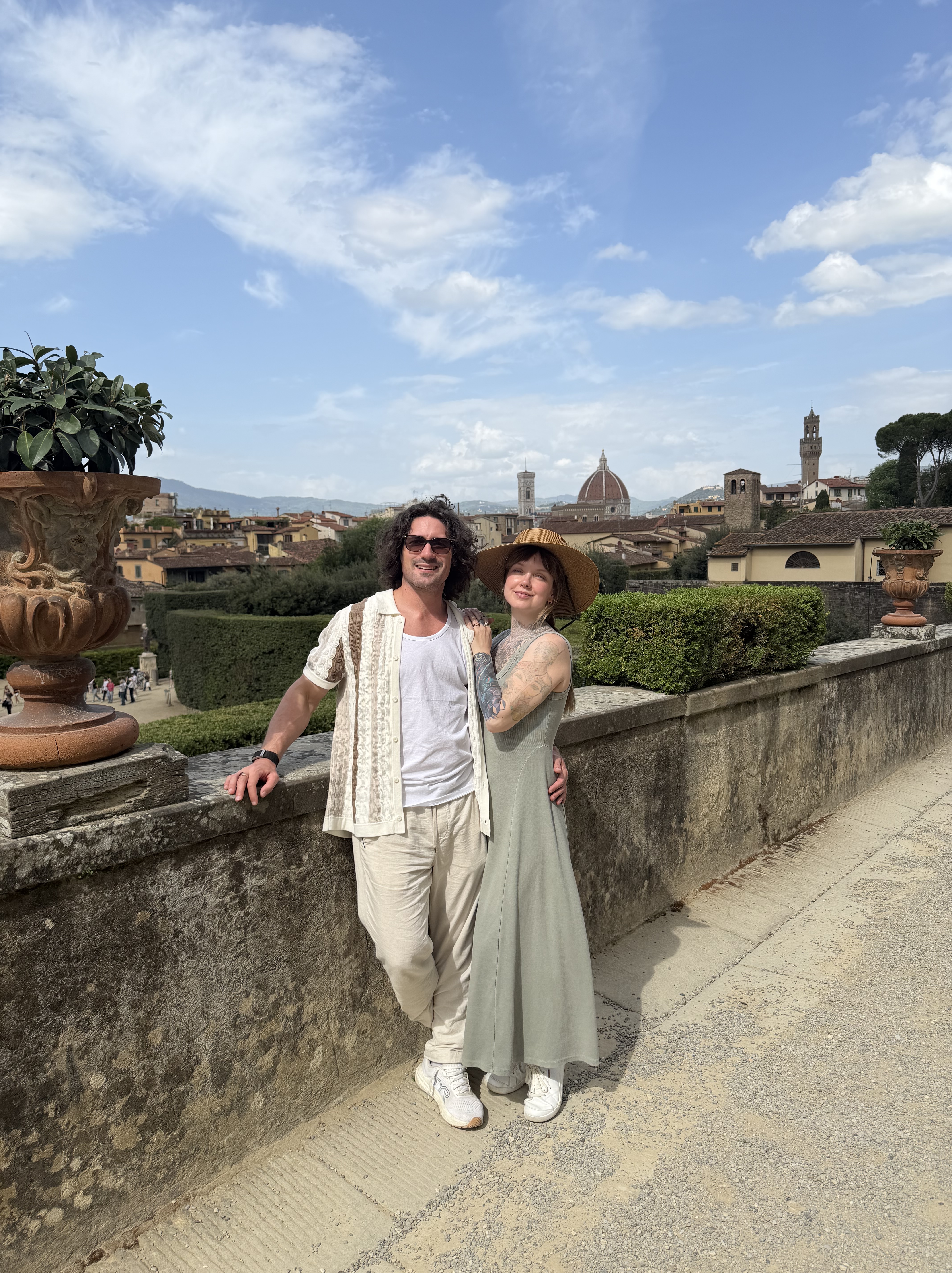
Not to be overlooked was the simple fact that we were all together with no pressure to be anywhere else. We walked hand-in-hand, played games, explored, danced and twirled, sharing an Italian experience for a week. These breaks from routine always make me question, “Which is the “real world?””
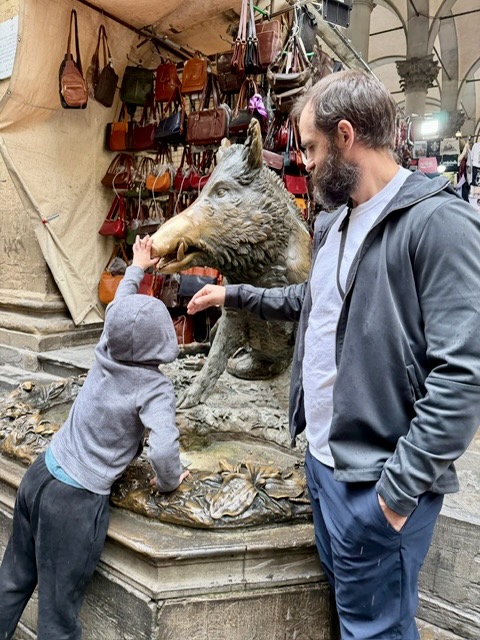
Upholding tradition, our small representative rubbed the boar’s snout, “Il porcellino” (little pig), securing good luck and a return trip to Florence.
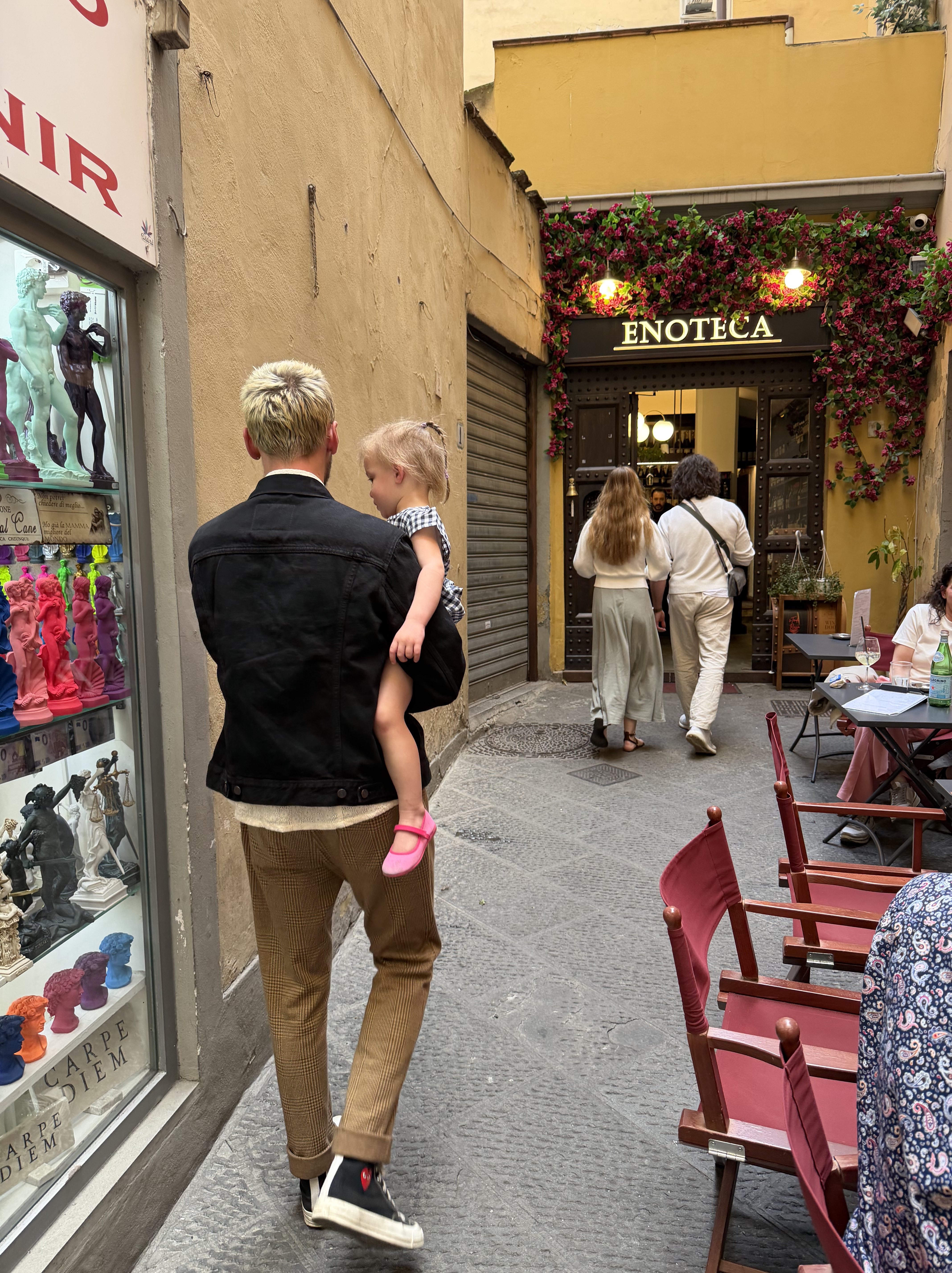
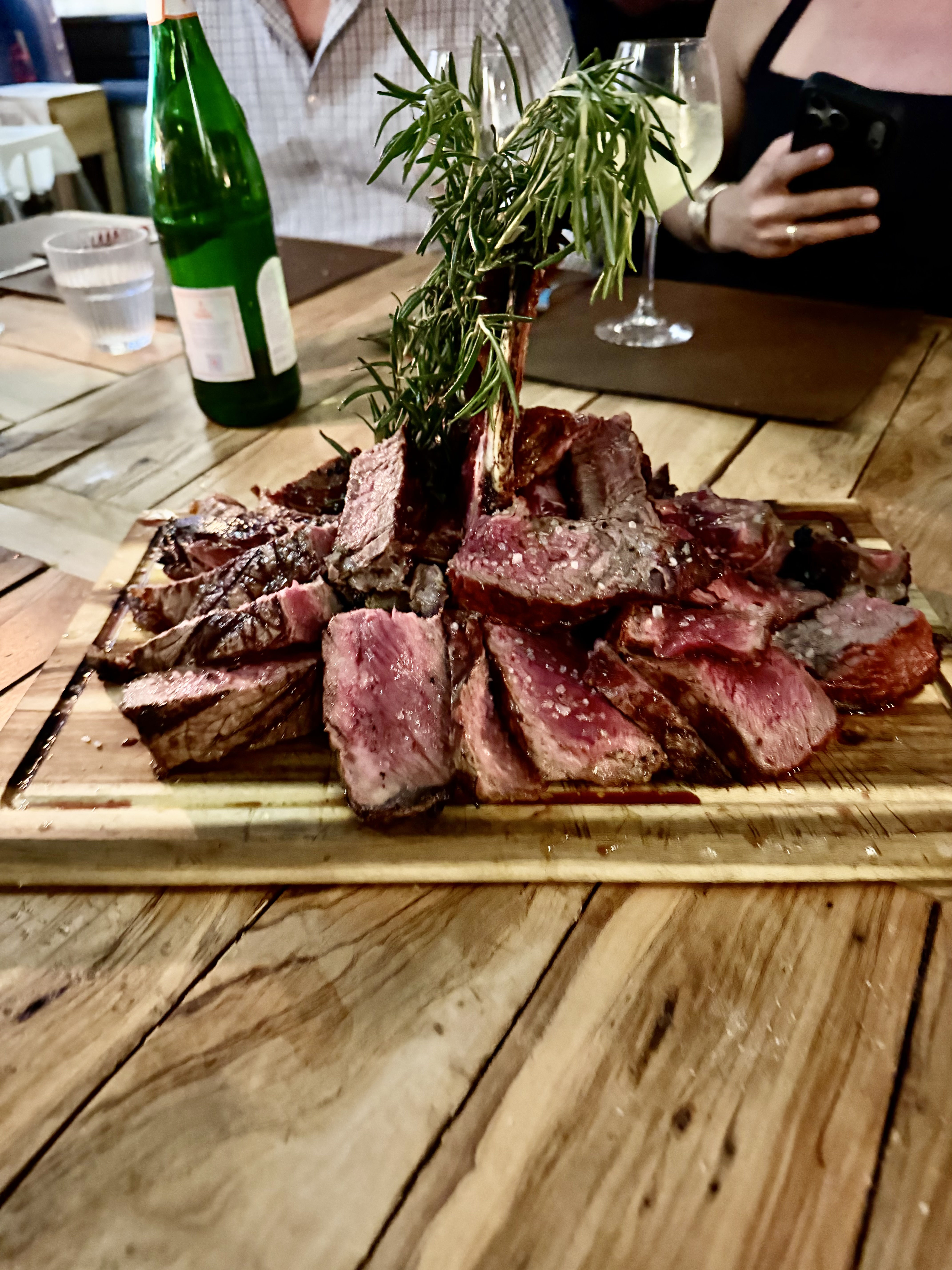
All too soon, it was time for our farewell dinner. We had reservations at Enoteca, a Michelin 3-star, family-owned restaurant, priding itself on blending the past with the future in fine, Italian cuisine.
The candlelight, baroque atmosphere, and personal service set the scene for a truly memorable experience. There were so many courses, each one beautiful and delicious, but the wild boar and steak Florentine were highlights.
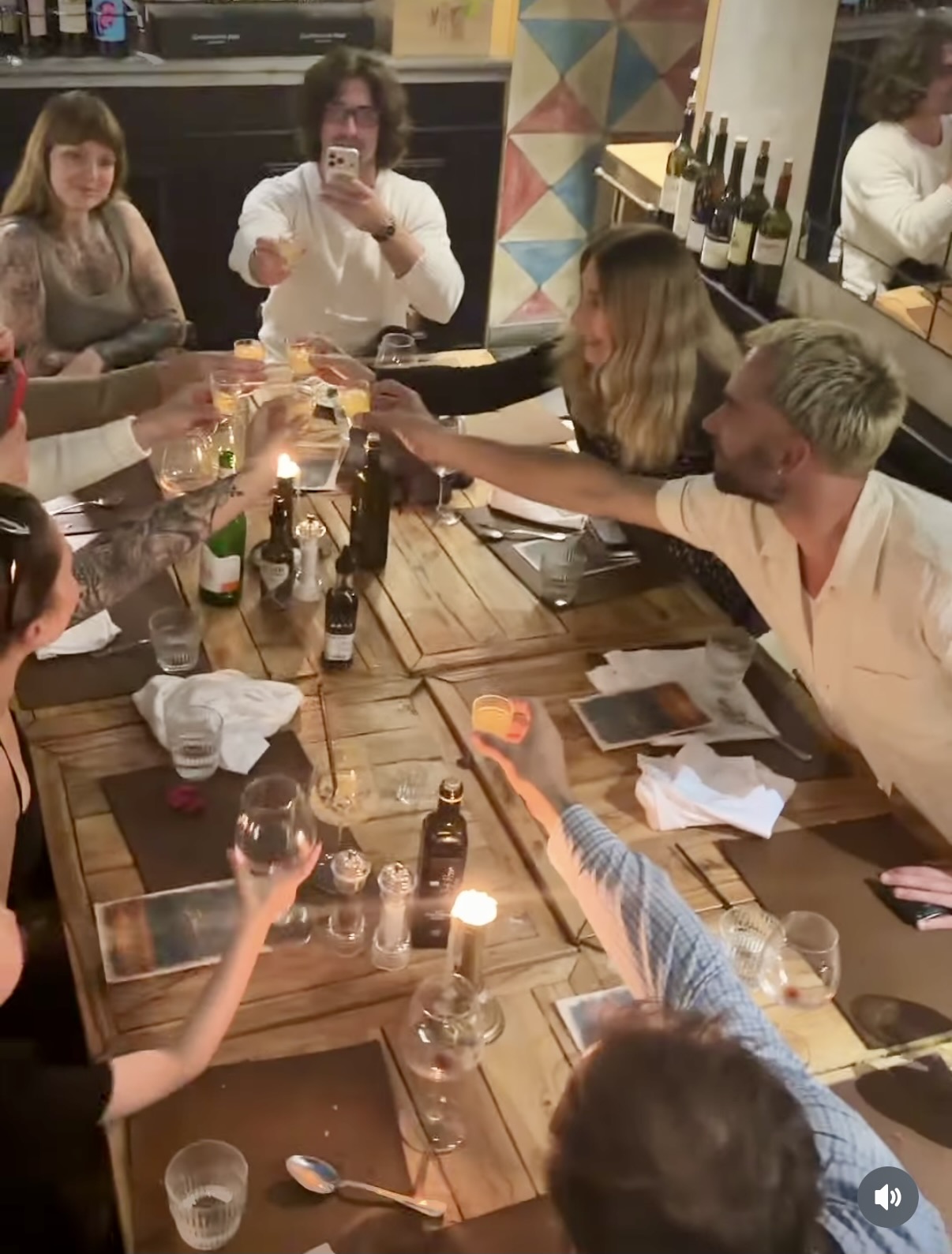
Ice-cold, limoncello shots were the perfect way to toast the end of another fabulous, family trip. Here’s to travel, culture, beauty, and good health. But, foremost, “TO FAMILY!”
“The Creator made Italy from designs by Michelangelo.” Mark Twain (1835-1910)
“Life is a combination of magic and pasta.” Federico Fellini (1920-1993)
“Hey, how lucky can one man get?” John Prine (1946 – 2020)
 Kathryn Byler, blog