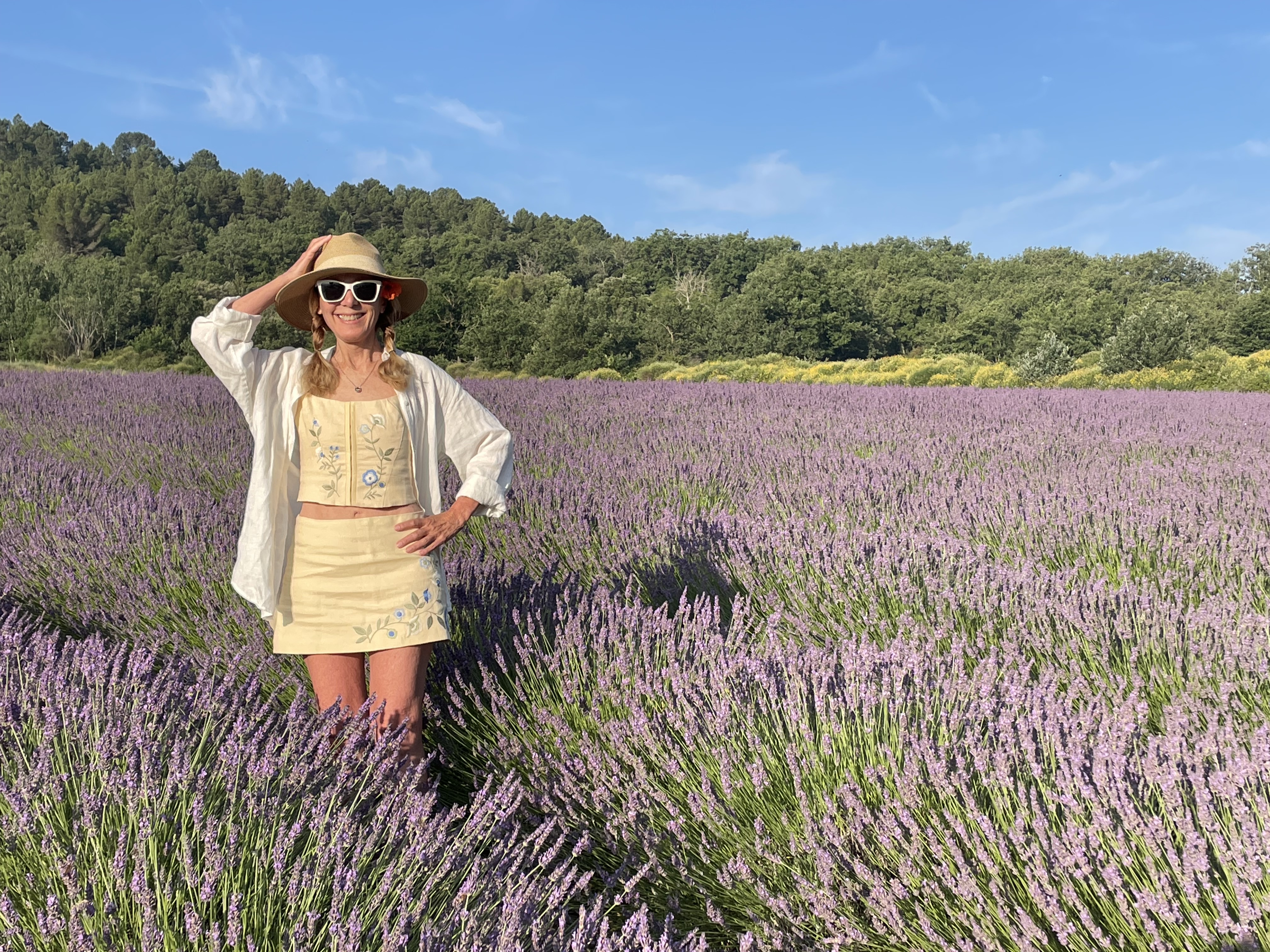
It seems my road trip through the South of France was more about a mood than an itinerary. The mood was created by baguettes, cheese, wines, rolling hills, clear blue water, tiny towns with a church in the center, fields of lavender in full bloom, narrow, winding streets, outdoor cafes, and a prevailing sense of peacefulfness.
Arriving in Paris on the overnight flight from Atlanta, my niece and I wanted to stay awake in an effort to adjust to the time difference (six hour) as much as possible. Our gracious host took us on an afternoon outing to the palace of Fontainbleau.
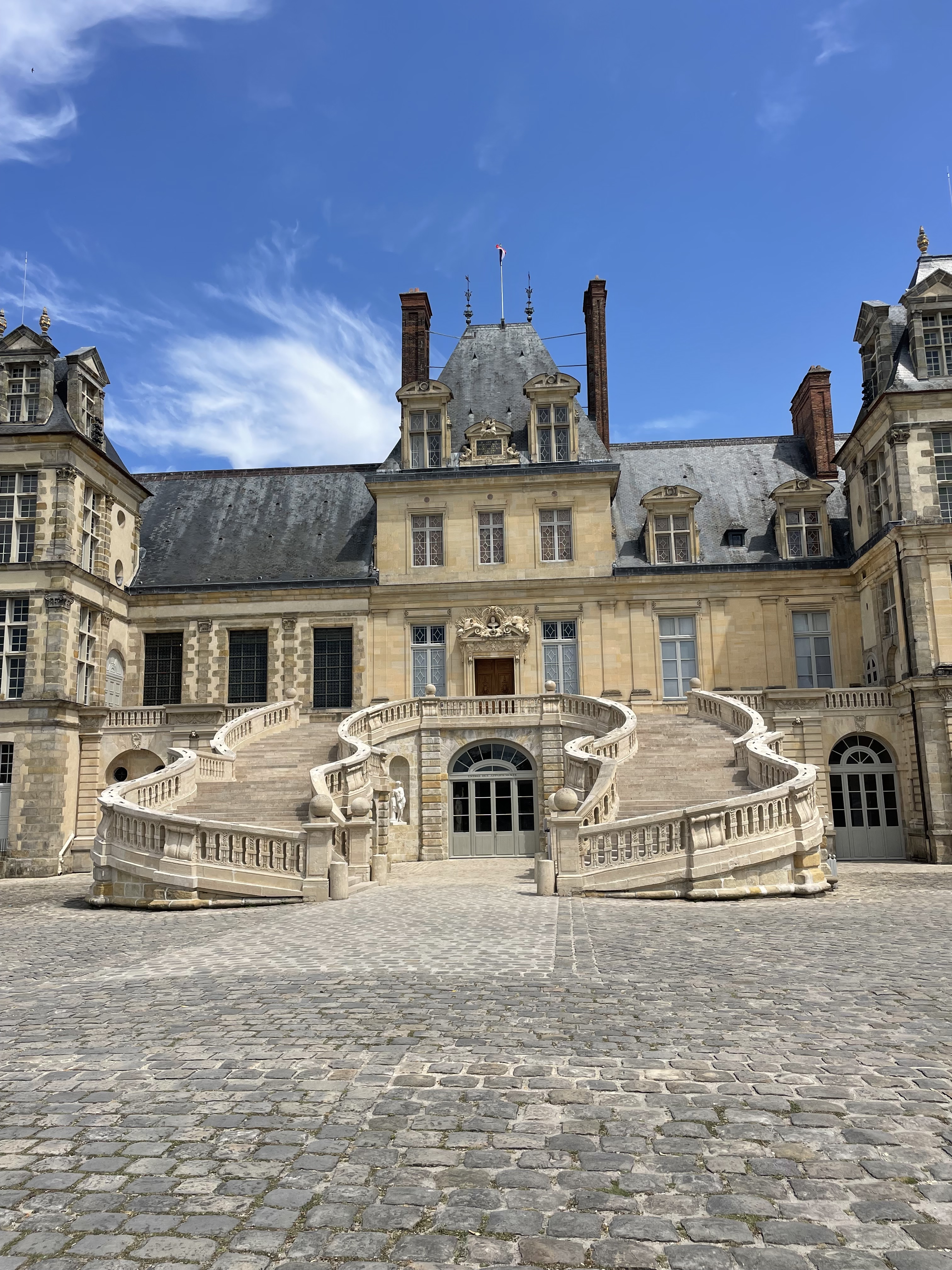
The famous horseshoe entrance known as the Baptistry Gate was designed by Primaticcio and Henry IV. It was originally a drawbridge gate and moat but over the years the chateau was enlarged and modified many times. Designated a UNESCO World Heritage site, it was originally constructed in the 12th century as a hunting lodge for the kings of France, but later became the primary home for kings and Emperor Napoleon Bonaparte (1769 — 1821). The Pope’s suite is gorgeous but unusual considering that the Pope declined an invitation to Napoleon’s coronation so he was kidnapped and brought against his will. Hearing about the various occupants and important events surrounding the chateau is a harsh reminder that the USA is so young compared to other countries throughout the world with their rich histories.

After a lovely breakfast of cafe au lait, croissants, and pieces of baguettes with homemade jam, I bid adieu to my sweet niece and left for an eight-day road trip through the South of France. My niece spent that time between Normandy and Paris with friends including French teenagers. My travel companion, Celine, and I rolled out of Paris in her hybrid Mini Cooper.
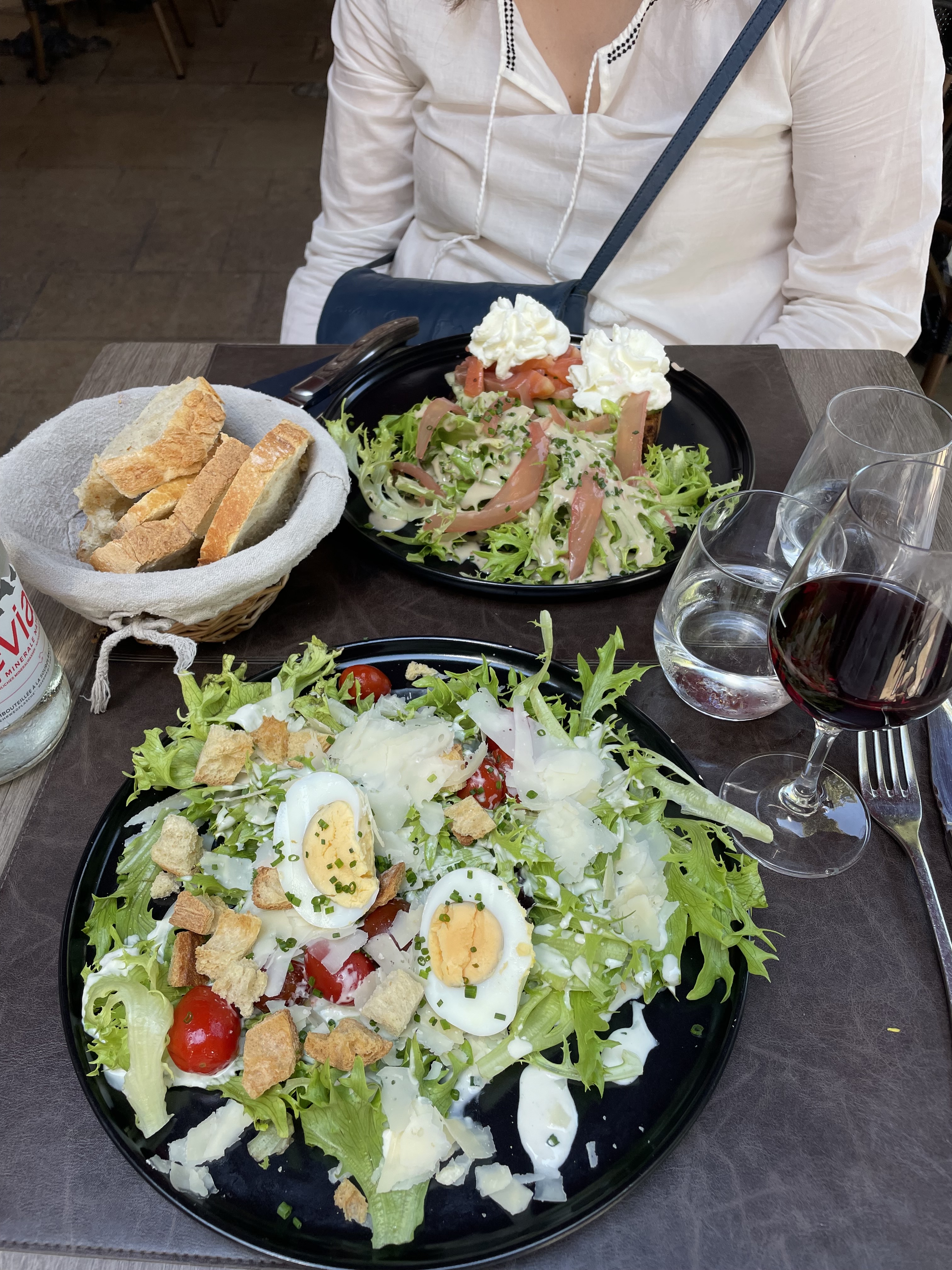
On the highway south, even the road signs sounded delicious — Dijon, Chablis, Burgundy. Our first stop was Beaune, in between Dijon and Lyon. Considered to be the wine capital of Burgundy, it was the perfect place to stroll around a while and have a delicious lunch complete with a glass of red wine. The town is well-known for the beautiful patterns on the roofs and for the annual wine auction.
Next stop was Valence, about 60 miles south of Lyon on the Rhone River. We were hoping to buy Ann-Sophie’s famous “pick of the day” treat but the shop was already closed.
Our stay for the first night was Avignon. It was Saturday, June 21st, the Summer Solstice, which is a national holiday, Fete de la Musique! All over the country, free music, bands and concerts spill out into the streets. After a delicious dinner on an elegant restaurant patio, we walked through the historic area that had a different band every block. The music may have gone on all night but we didn’t hear it through the thick walls of the Saint Louis Hotel, a former cloister, complete with a chapel and religious service on Sunday morning. Already, the trip was dreams coming true. No Holiday Inn in sight. The history, culture, and cool vibes were everywhere. Hearing the melodic French spoken all around me provided reassurance that I was in a new element, far from Virginia Beach.
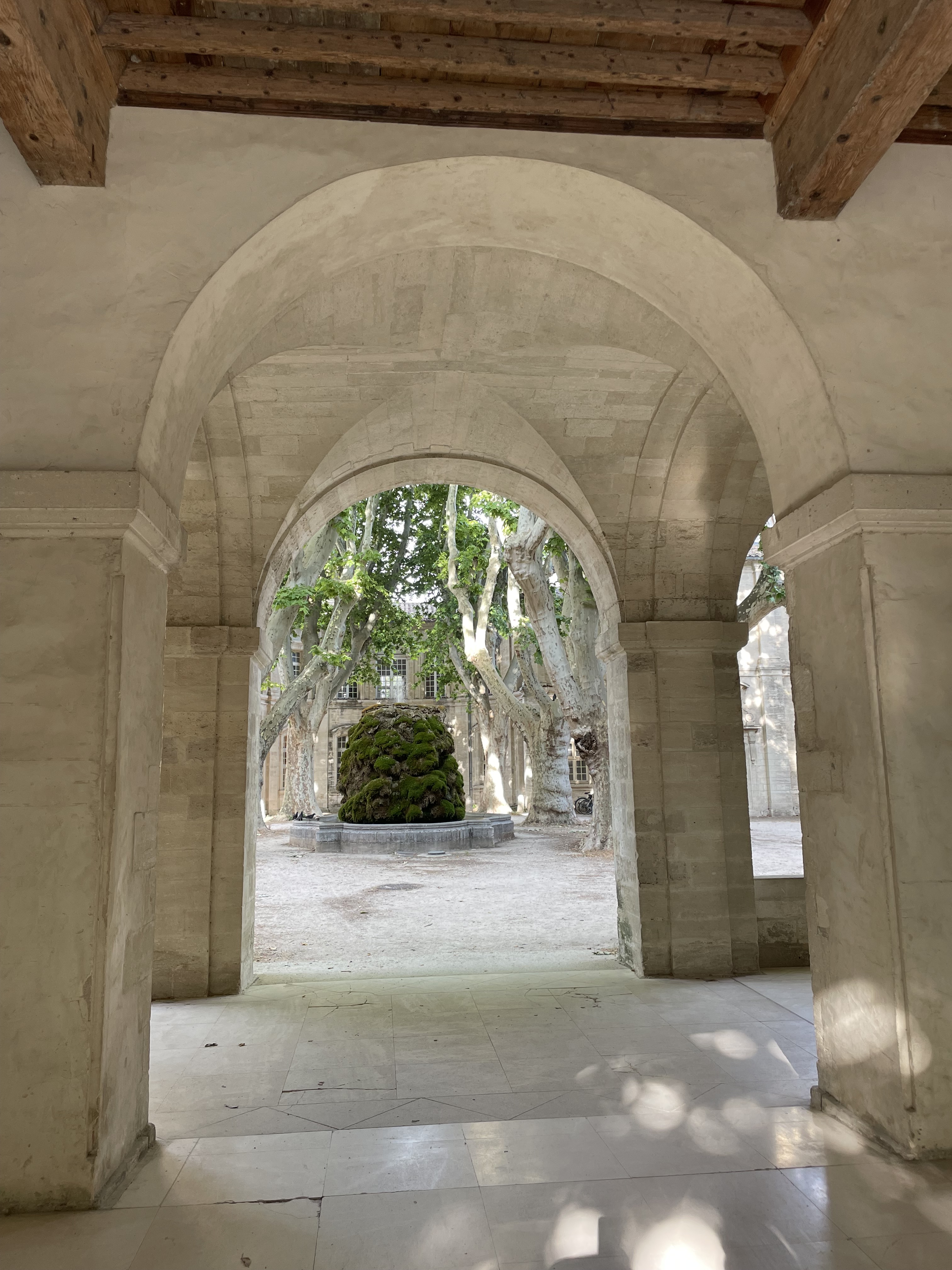
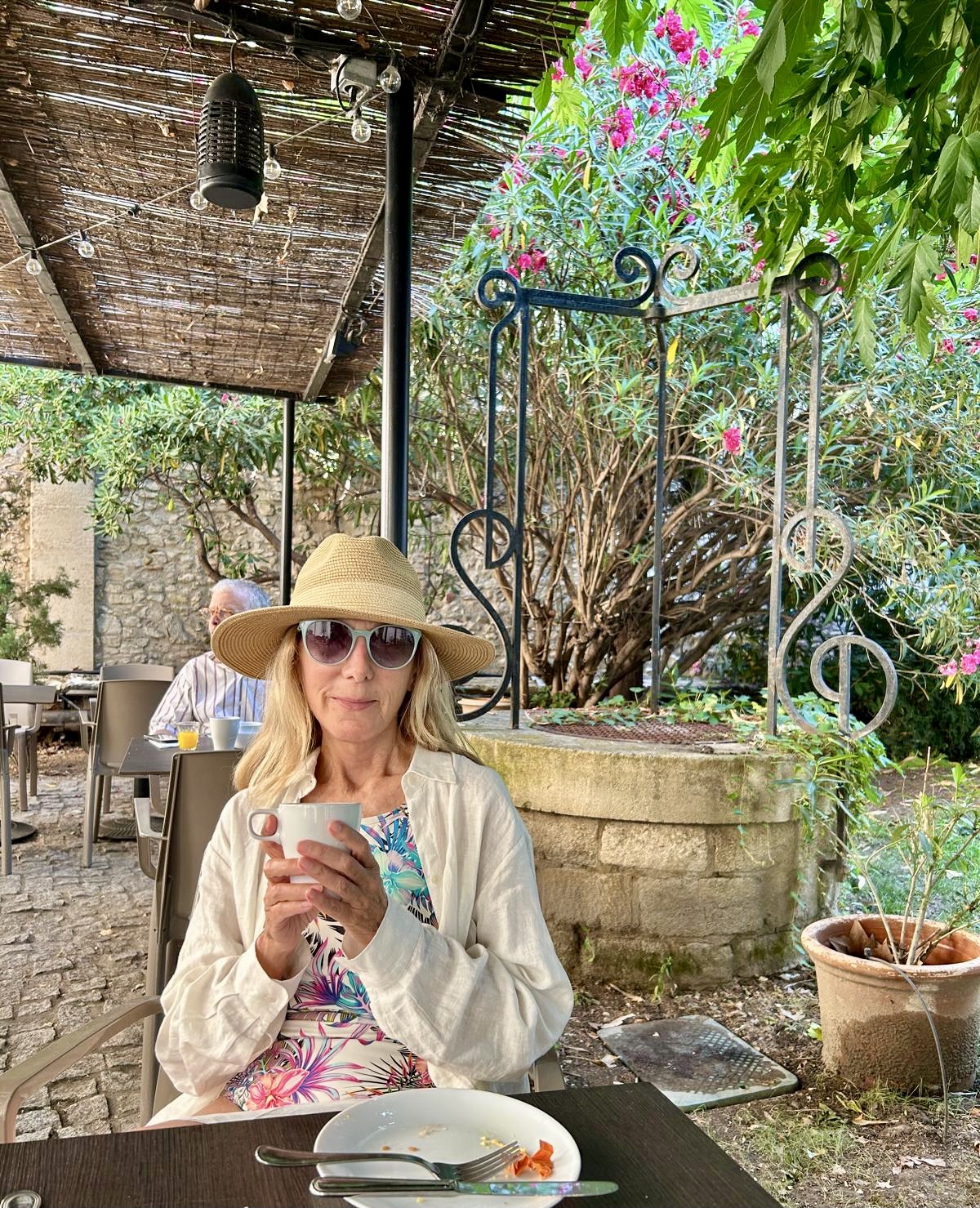
Like most of our accommodations, a lovely breakfast in a garden was included which we enjoyed before going up to the swimming pool on the roof. It was over 90 degrees Fahrenheit every day so cooling off in a pool was welcomed. Very few places had air conditioning and that suited me fine.
Avignon is celebrating the 25th anniversary of its designation as the Cultural Capital of Europe and the 30th anniversary of its UNESCO inclusion. To celebrate, the artist Othonier was hired to highlight some of the main sites.
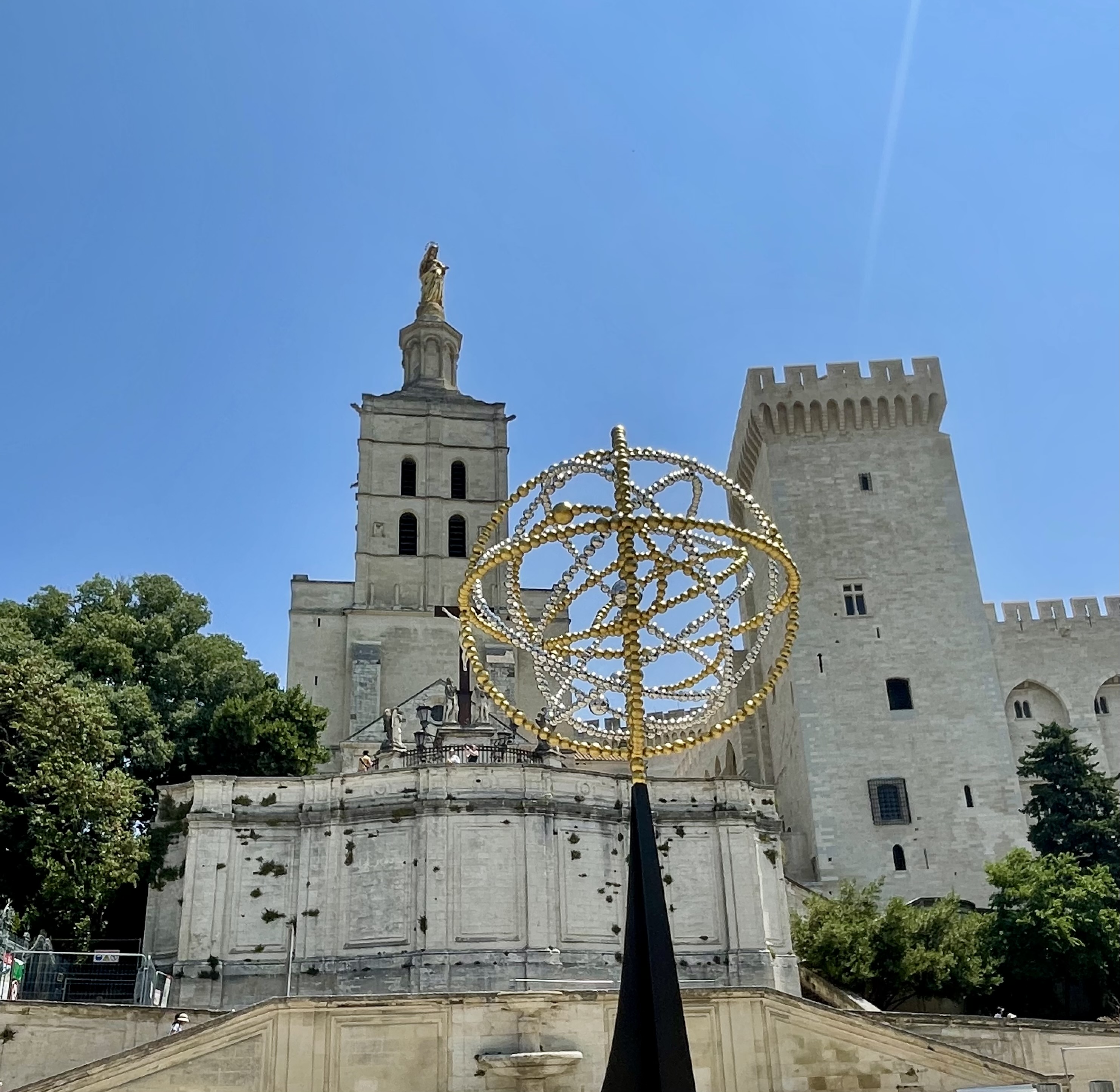
The huge castle in the middle of town is the Palais des Papes which was the home of the pope beginning with Pope Clement V in 1309 and continuing for 68 years. The museum had an interesting exhibit of Egyptian relics contrasted by bright sculptures by Othonier. That exhibit did for me what all of France does. It expertly blends the past with the present. Europe, in general, does so through art, architecture, history, customs, and cuisine.
Our next stop was in Les Baux-de-Provence for the immersive experience of Monet and Rousseau. The show was in caves way up in the mountains where the small village sits. It was the perfect way to spend some time on a hot afternoon.
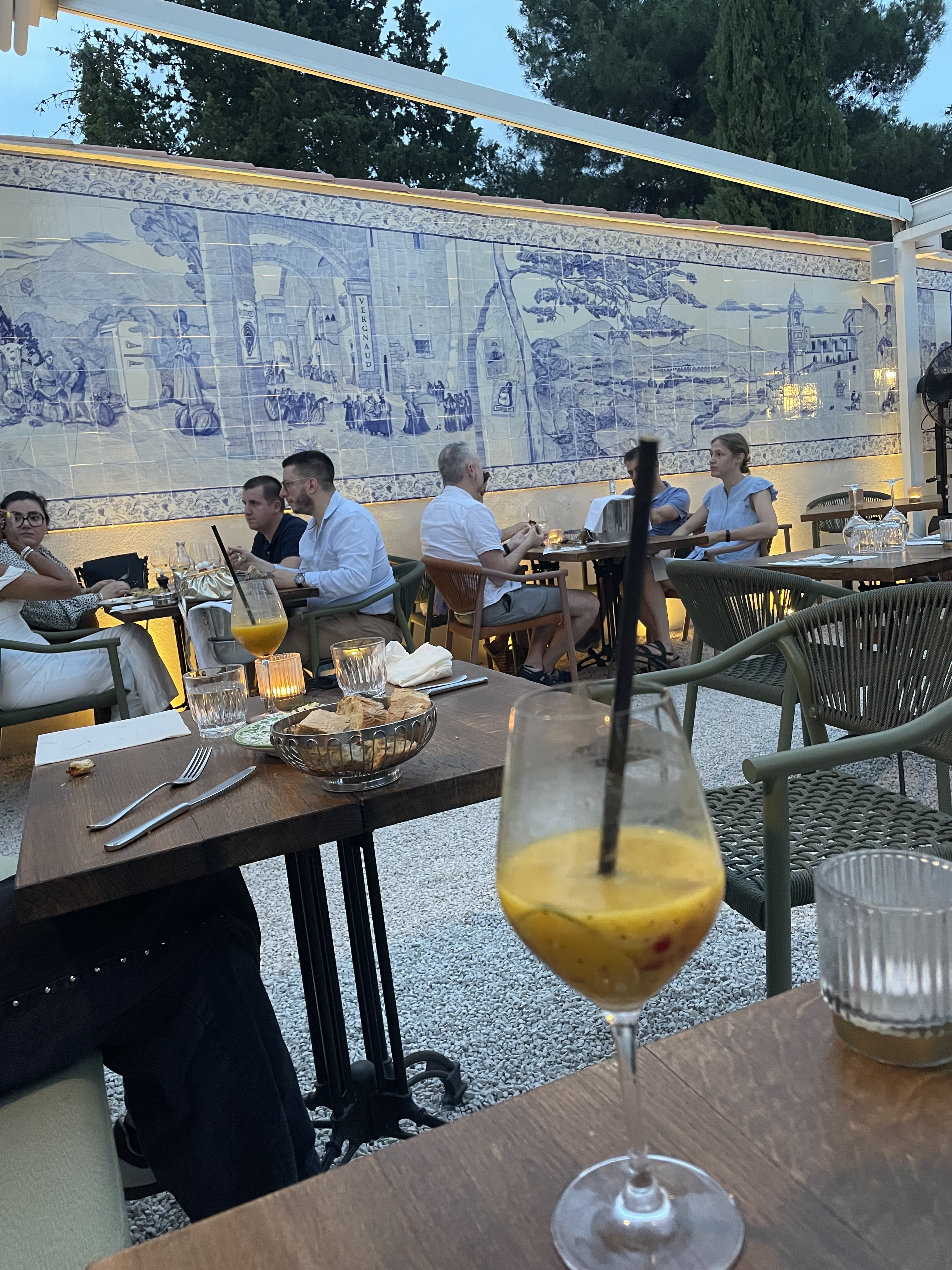
Aix-en-Provence was our second overnight stay. Dinner was absolutely delightful at a 3rd generation restaurant called “O Pere” where we enjoyed beautiful drinks and food on the patio. My frozen mango with dark rum was perfect for the warm evening.
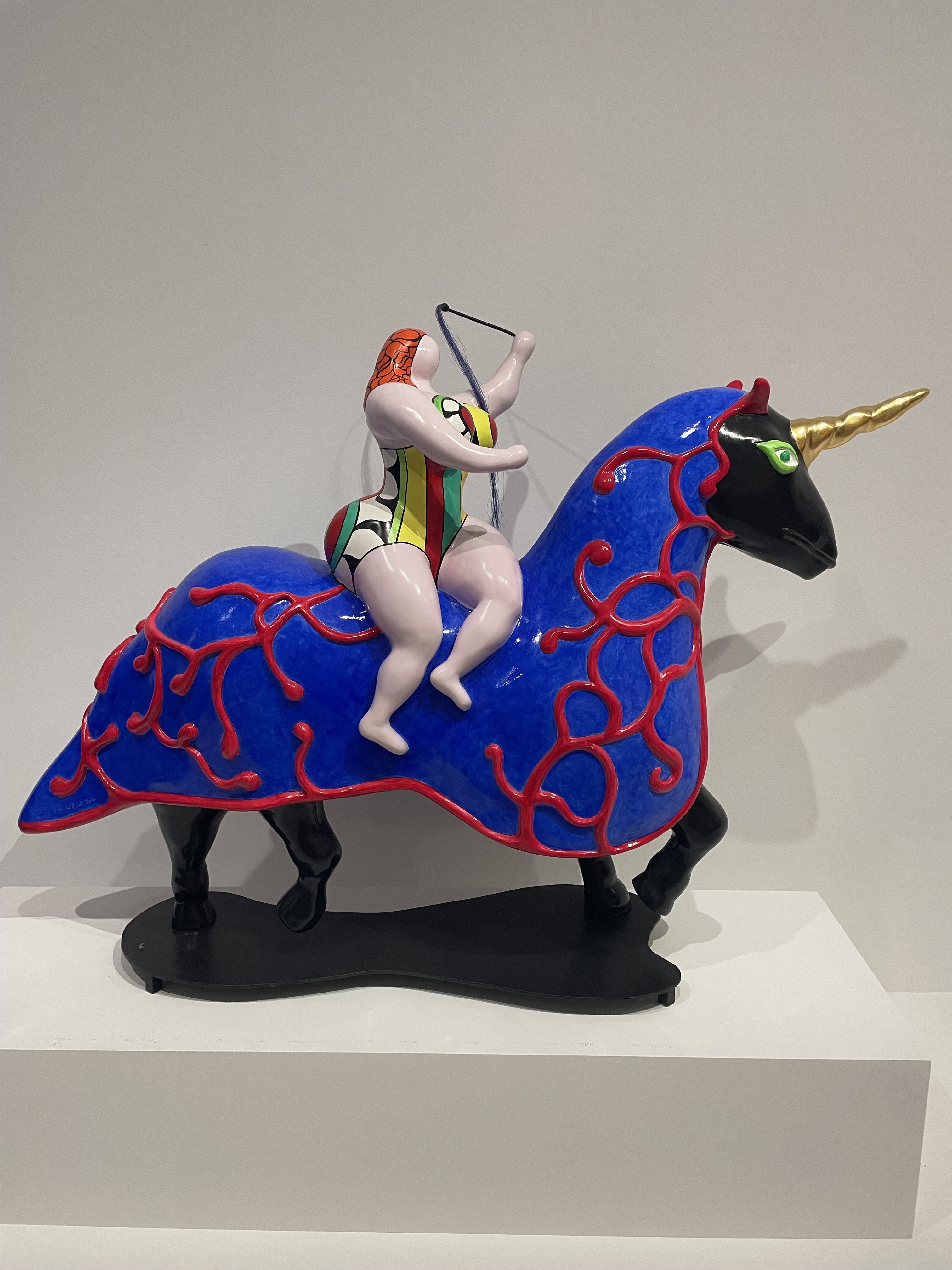
The next morning we toured an exhibition by Niki de Saint Phalle (1930 — 2002). It’s a very popular exhibit so we wisely got tickets in advance.
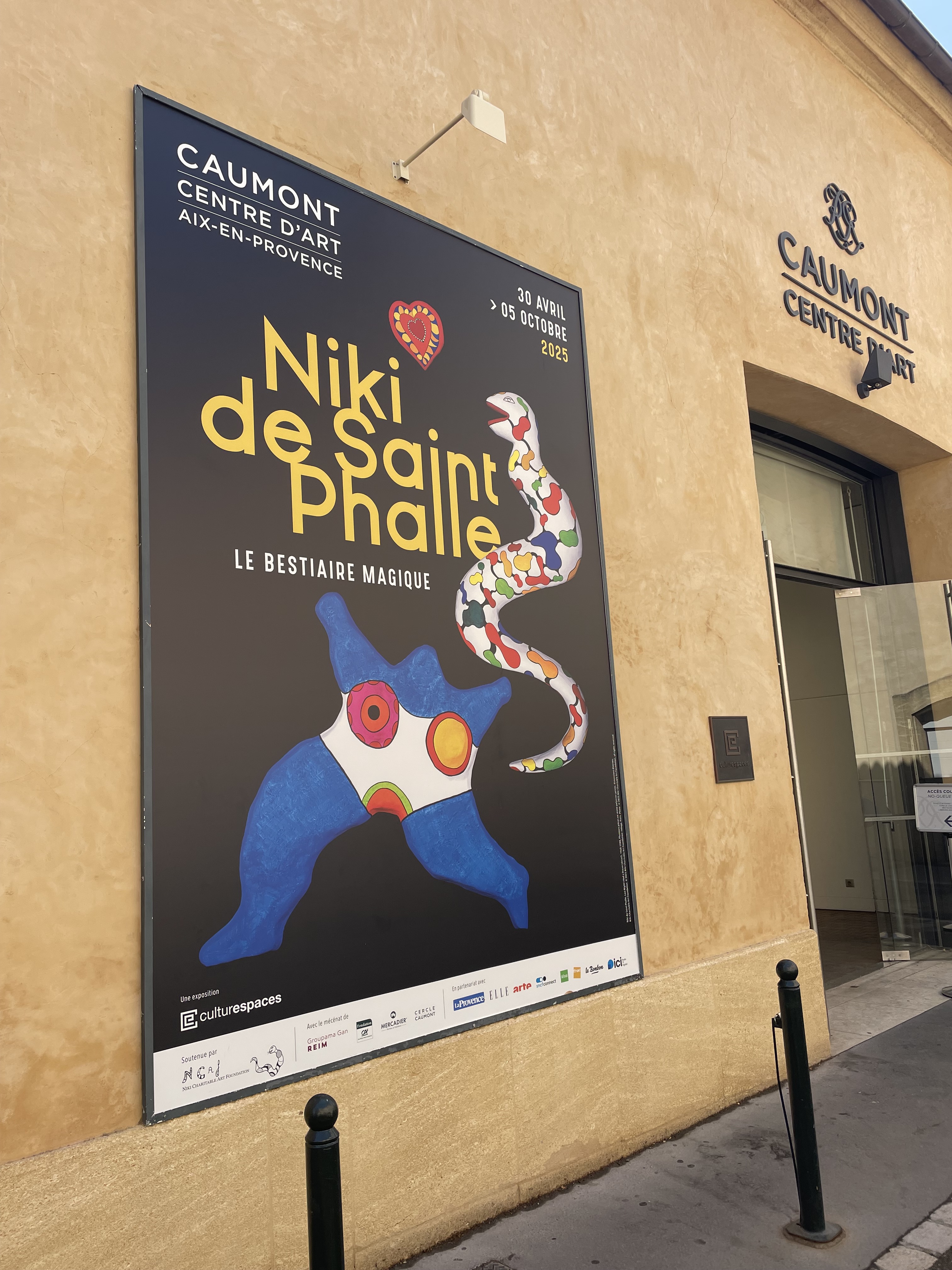
I had seen a couple pieces of her work in DC but it was really great learning about both the artist and her creative process. A French-American feminist, she wrote, “I’m not the person who can change society, except through showing some kind of vision, of this happy joyous dominating women. That’s all that I can do.”
To imagine what Aix-en-Provence is like, think of paintings by Paul Cezanne who was born there and lived there for most of his life. This particular day, June 23rd, was my birthday. Celine treated me to a fantastic lunch at Tableau Gastonomique, one of three restaurants in the Villa Galici hotel.
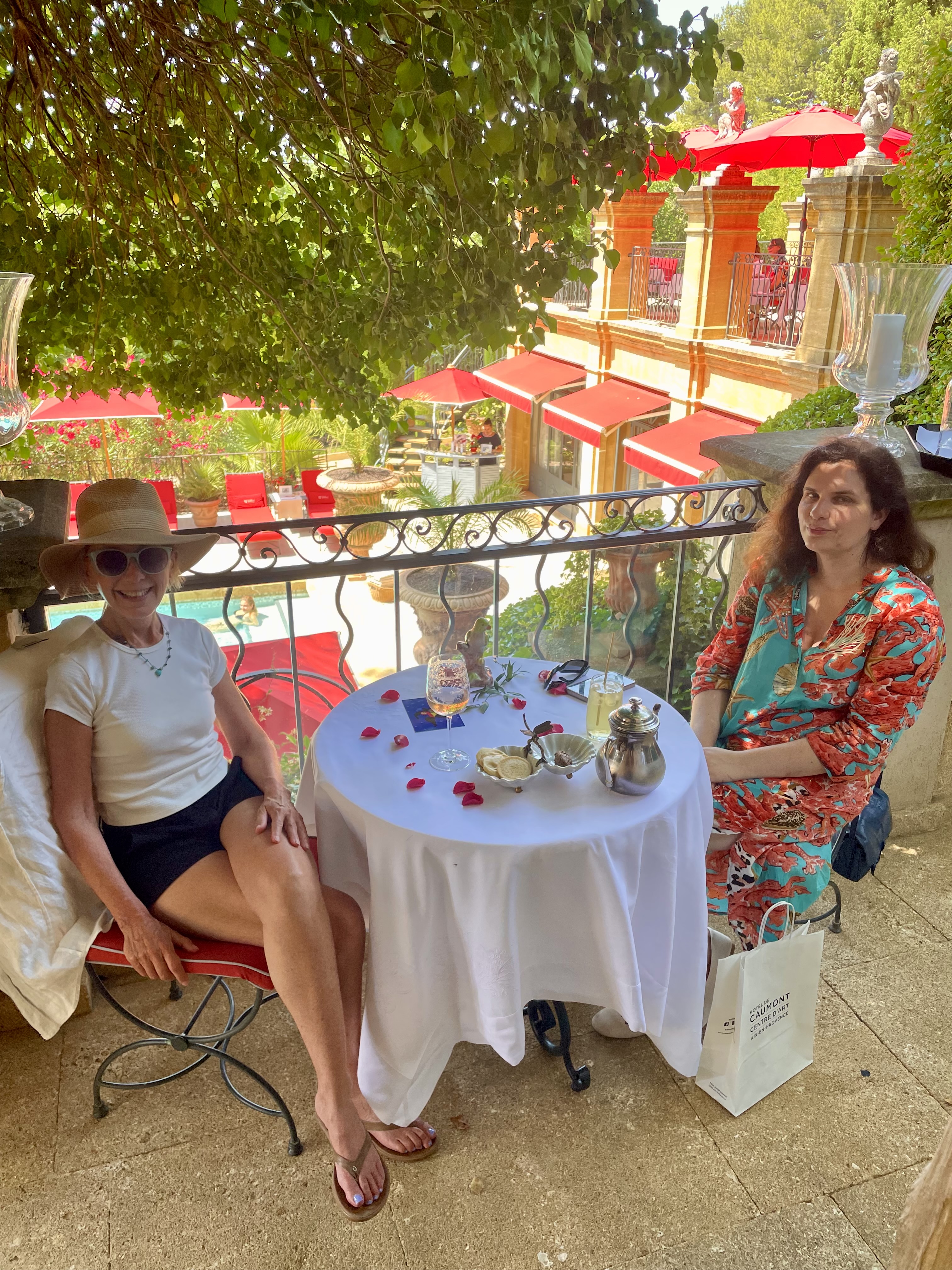
There was one table for an aperitif, chilled rose, then another for lunch; one course after another until I lost count. Each item was a treat for both the eyes and the mouth.
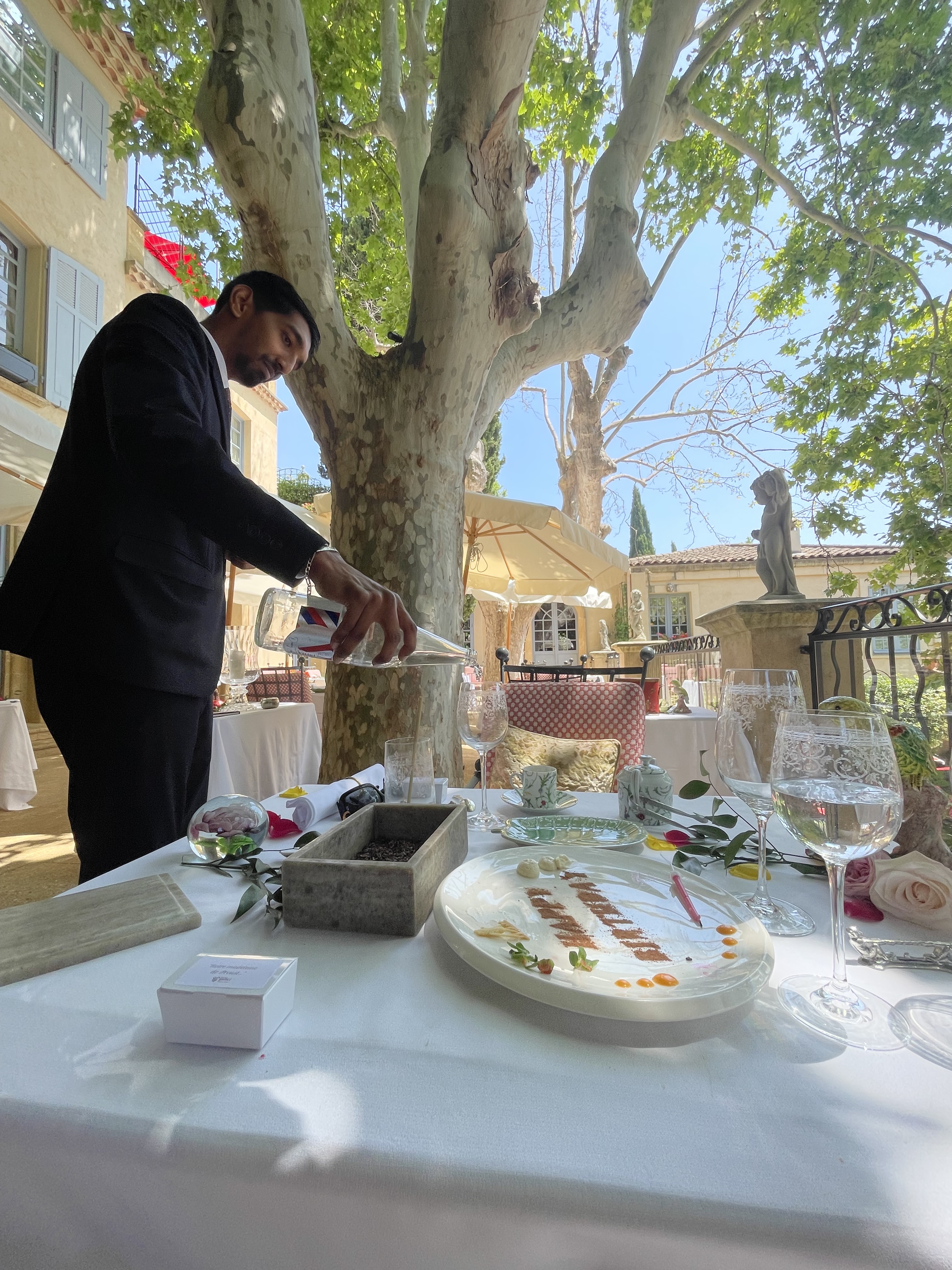
After lunch we strolled the historic area complete with designer shops and bought some callissons from Le Roi Rene. Legend has it that these delicious cookies were made by King Rene’s bakers as a gift to his wife, Queen Jeanne, on their wedding day back in the 15th century. Believed to have originated in Aix-en-Provence, the majority are still made in the South of France. The essential ingredients are ground almonds and candied fruit (melons and oranges) with a thin layer of royal icing. So delicious!

As wonderful as they are, to describe the South of France by towns seems quite unfair since the majority of it is open, completely without people or structures. The sky is so blue and the shifting light throughout the day projects beauty on the hills. It’s easy to see why so many artists were inspired here.
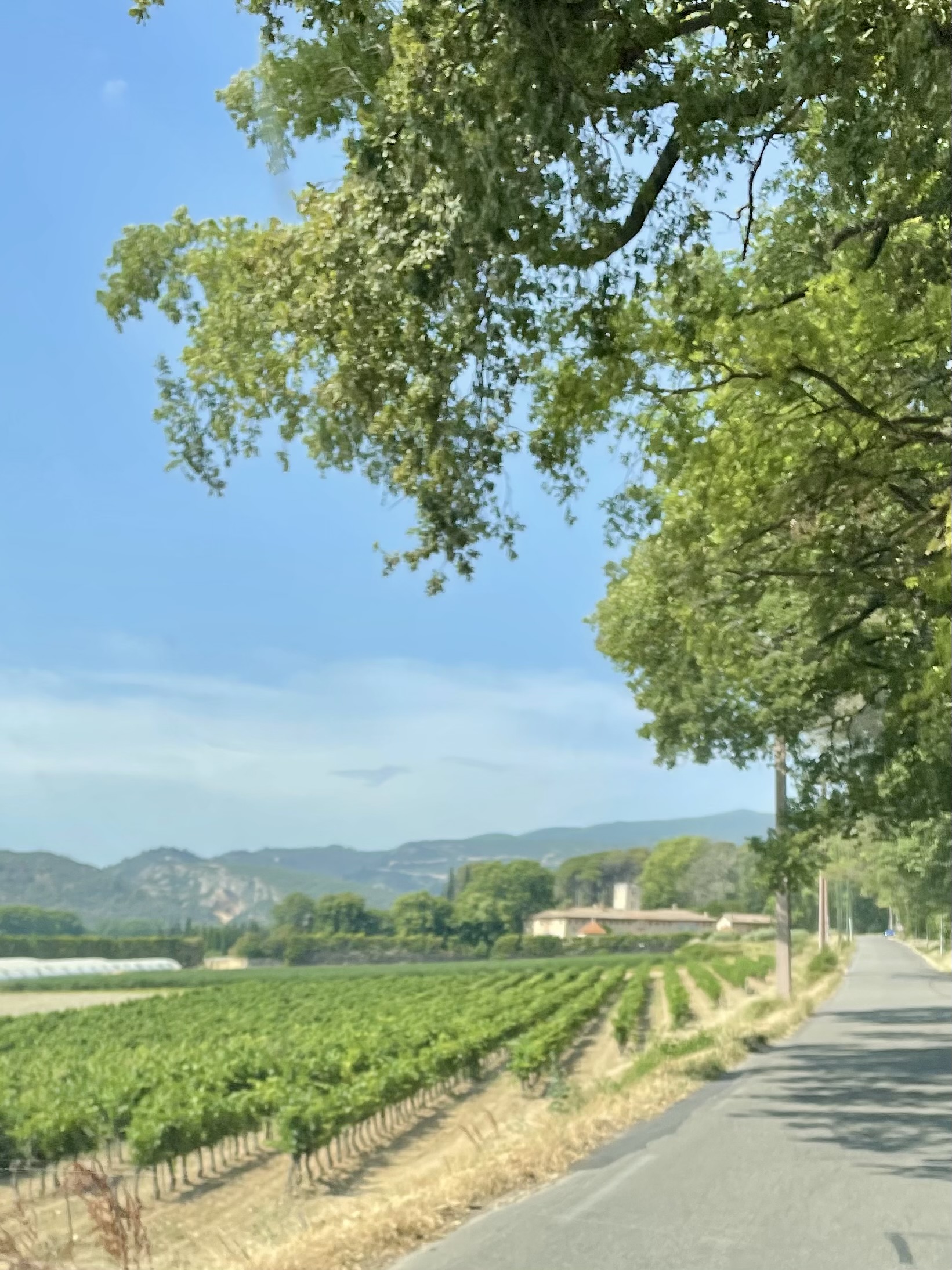
We drove through La Roque d’Antheron where there is an annual, month-long piano festival with outdoor concerts in the park of Chateau de Florans. Now on it’s 44th year, the very thought of pianos placed in a park with beautiful music filling the air sounds amazing.
The next two nights were spent with friends in the very small village of Rustrel. En route, we passed many fields of lavender — each one more beautiful than the one before.
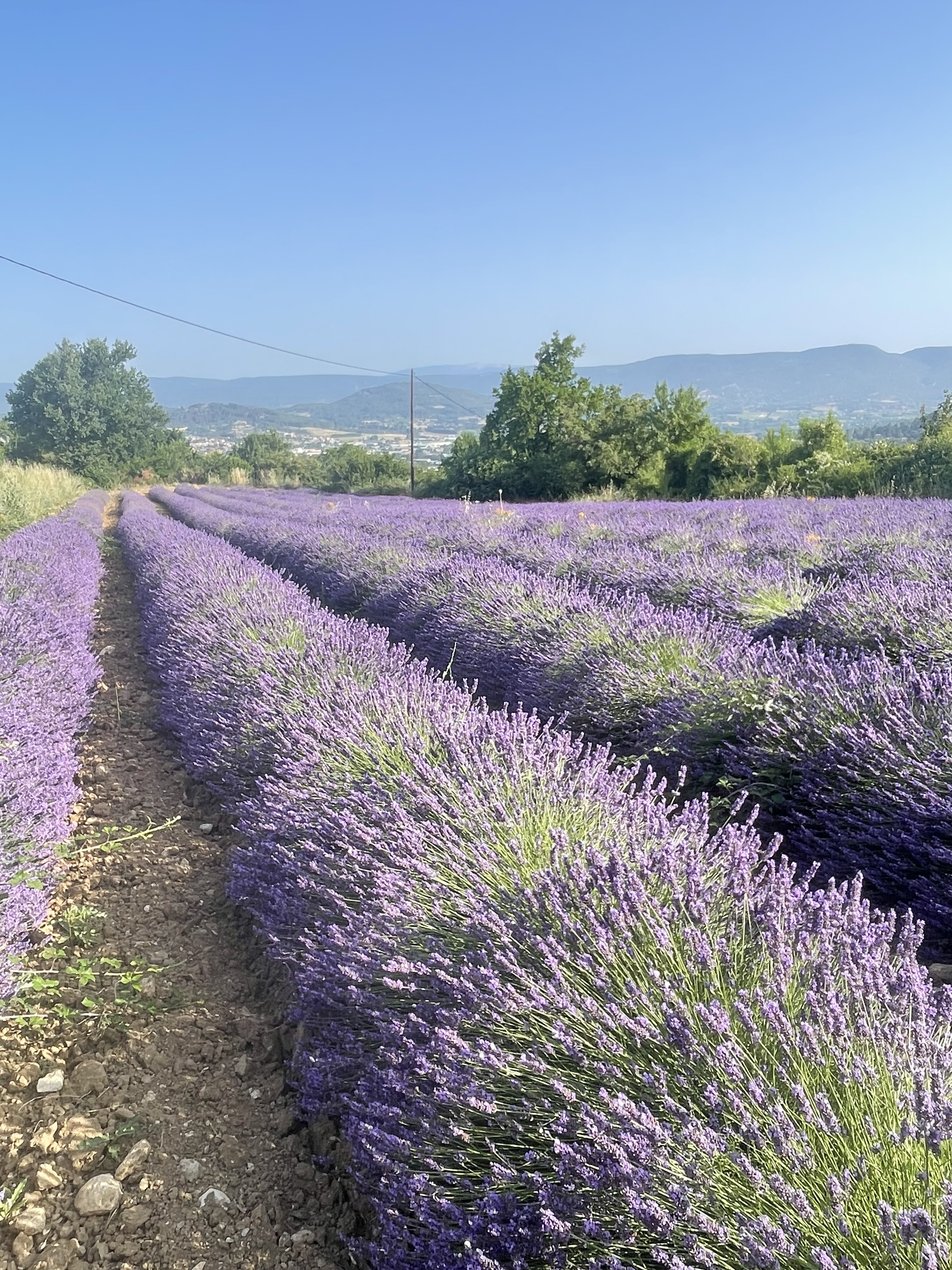
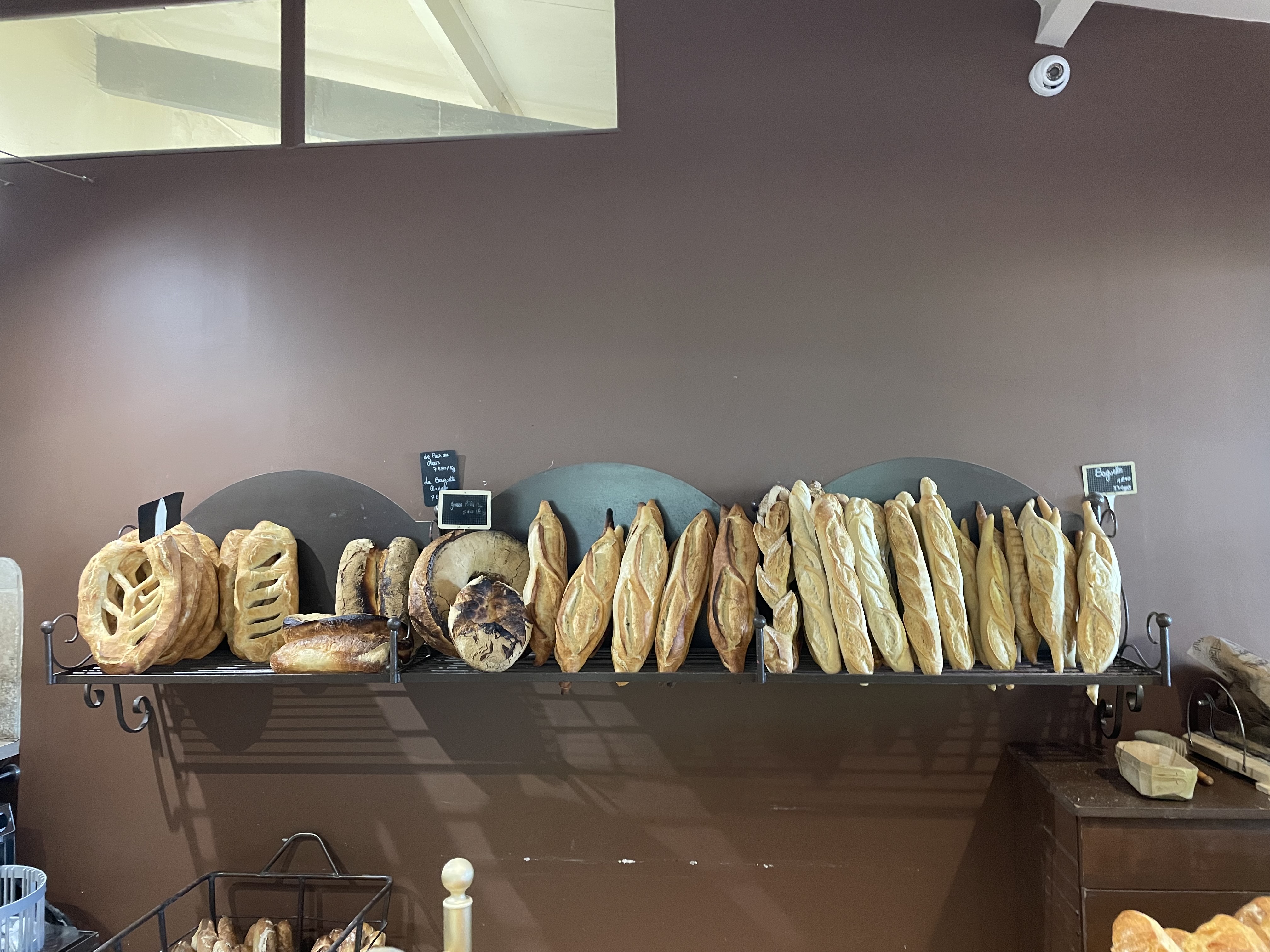
To say there was no stop-light in Rustrel is an understatement. With a population of about 600, it has little besides a church and a 17th century chateau that now serves at Town Hall. But, it does have a small cafe/bakery that serves delicious croissants and coffee every morning.
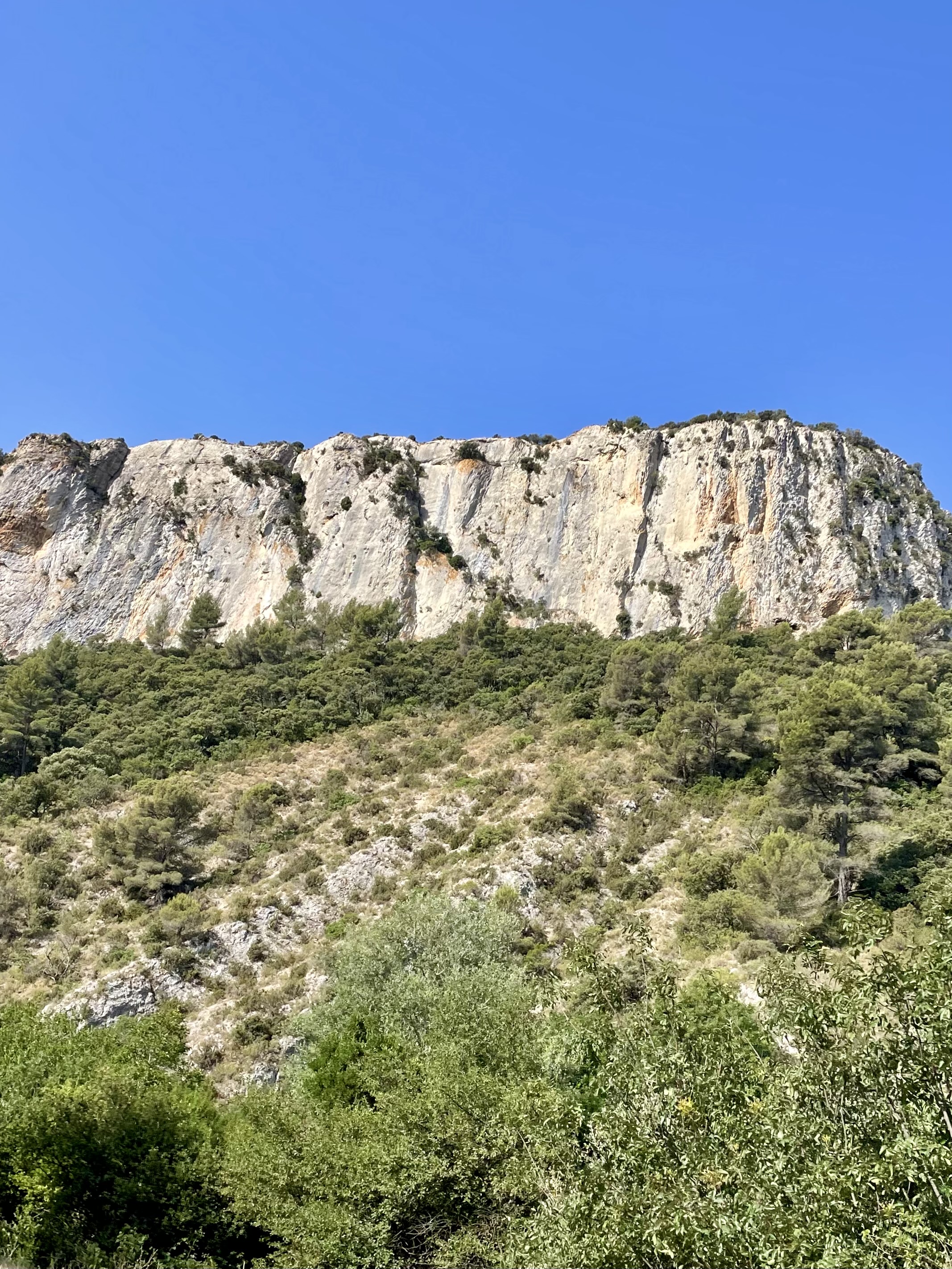
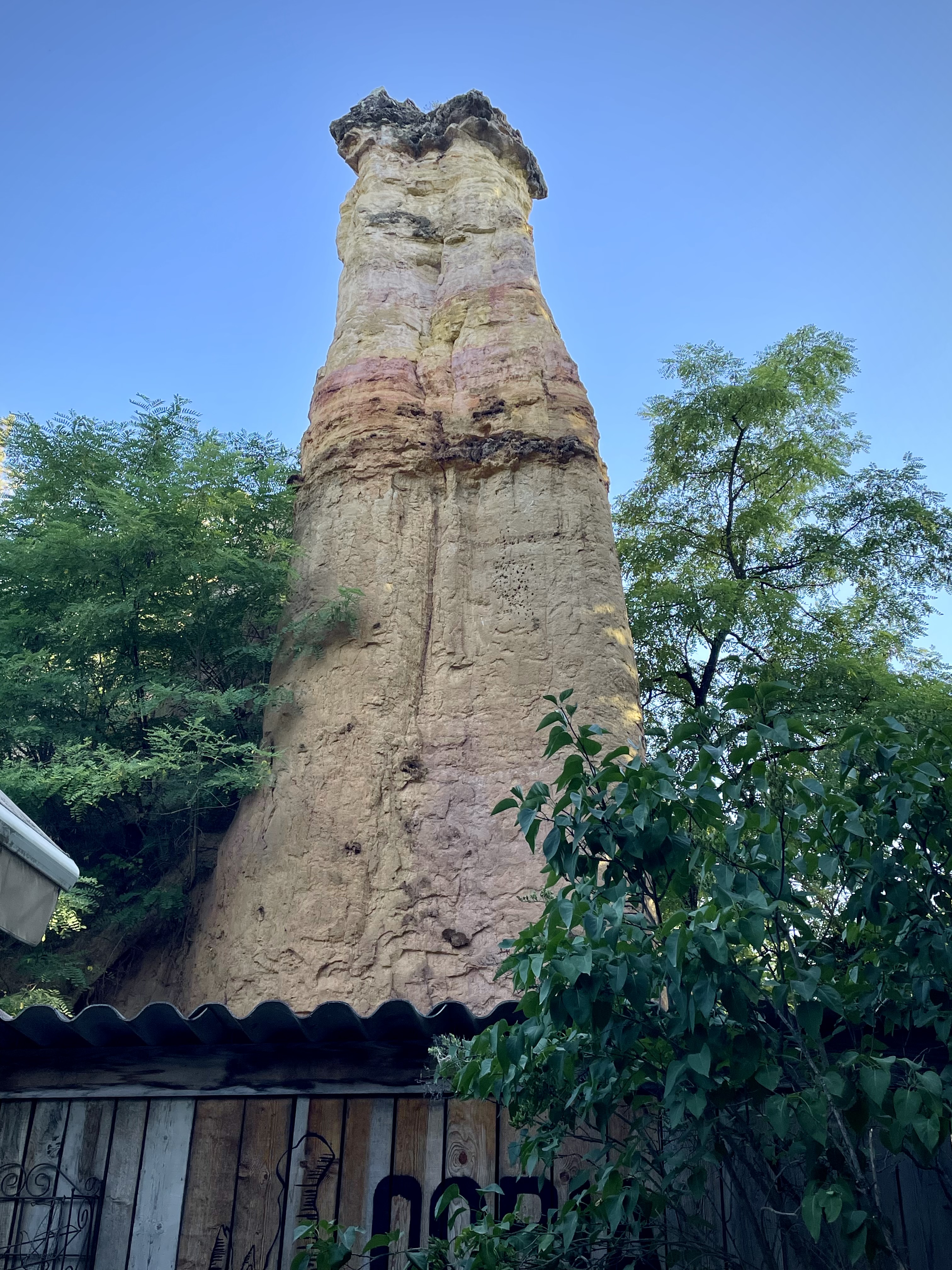
The main attraction in this area is the orche — orange mineral deposits in the cliffs. If we had more time, I would have liked to hike in Le Colorado Provencal in the nearby National Park of Luberon. These pictures don’t do it justice but some areas are as orange as Georgia clay.
The next morning we drove the short distance to Saturnin les Apt for market day. Each of the small, neighboring towns has a different market day so you don’t have to go far to get fresh food daily.
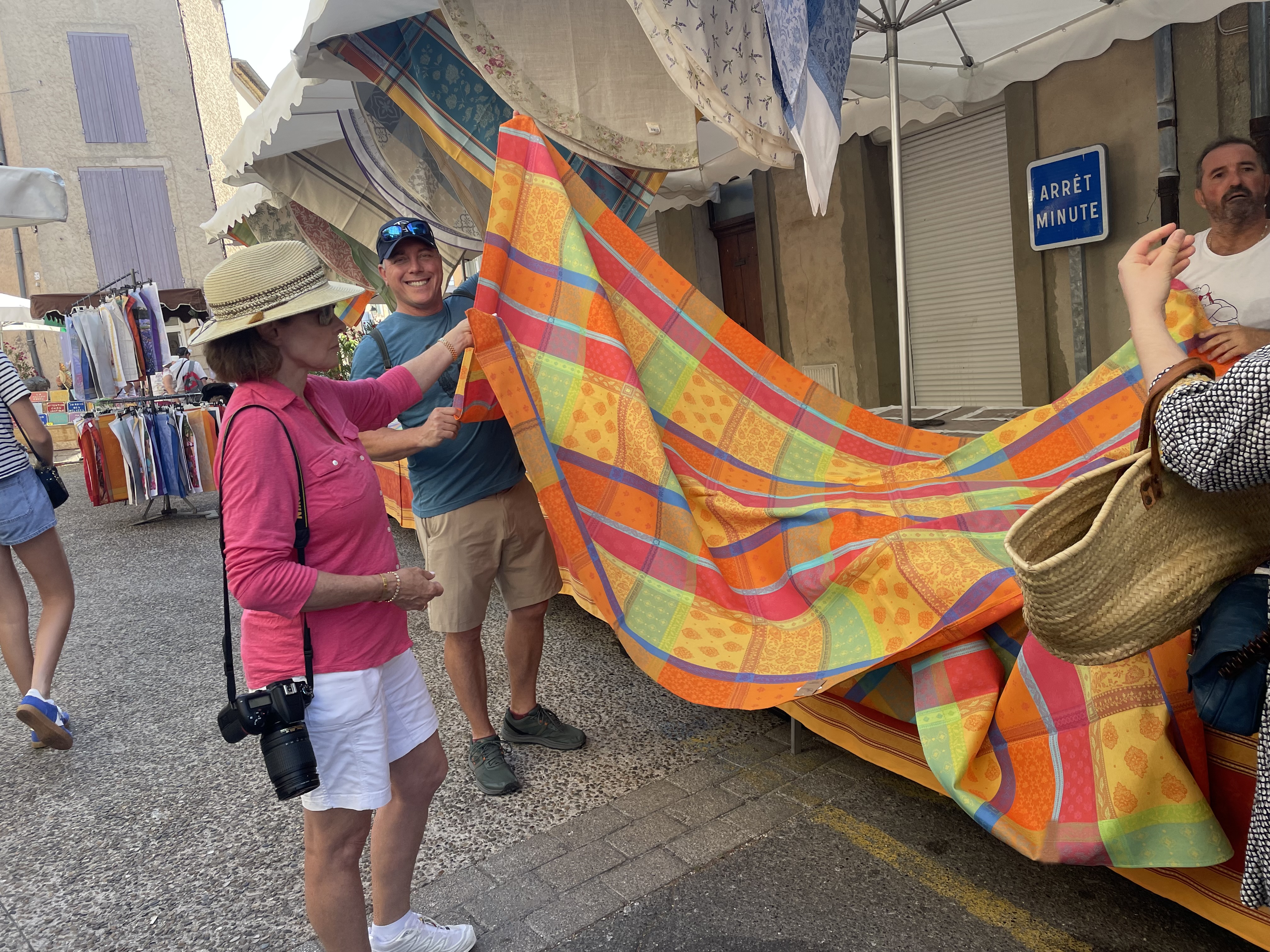
We bought beautiful table cloths, place mats, and a cornucopia of fresh cheese, bread, tapenade, and vegetables. Add prosseco and it was the perfect lunch in synch with our mood.
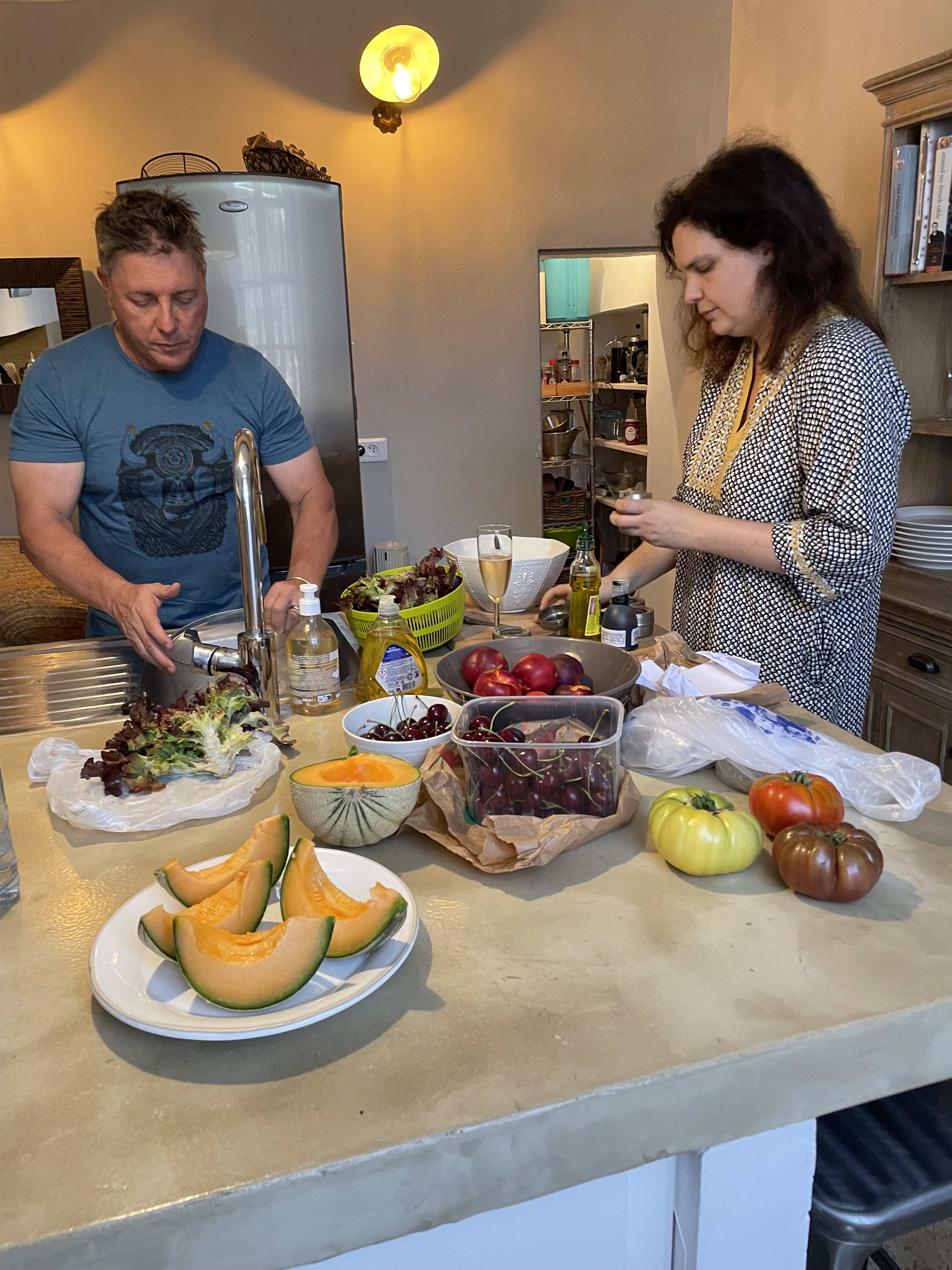
After lunch we ventured to Gordes, one of the most beautiful and best-known hilltop villages in the Luberon. Situated in the foothills of the Mont of Vaucluse, overlooks from the narrow, cobblestone streets offer breath-take views of the landscape below. It’s no wonder that Marc Chagall and other noted artists came here to paint.
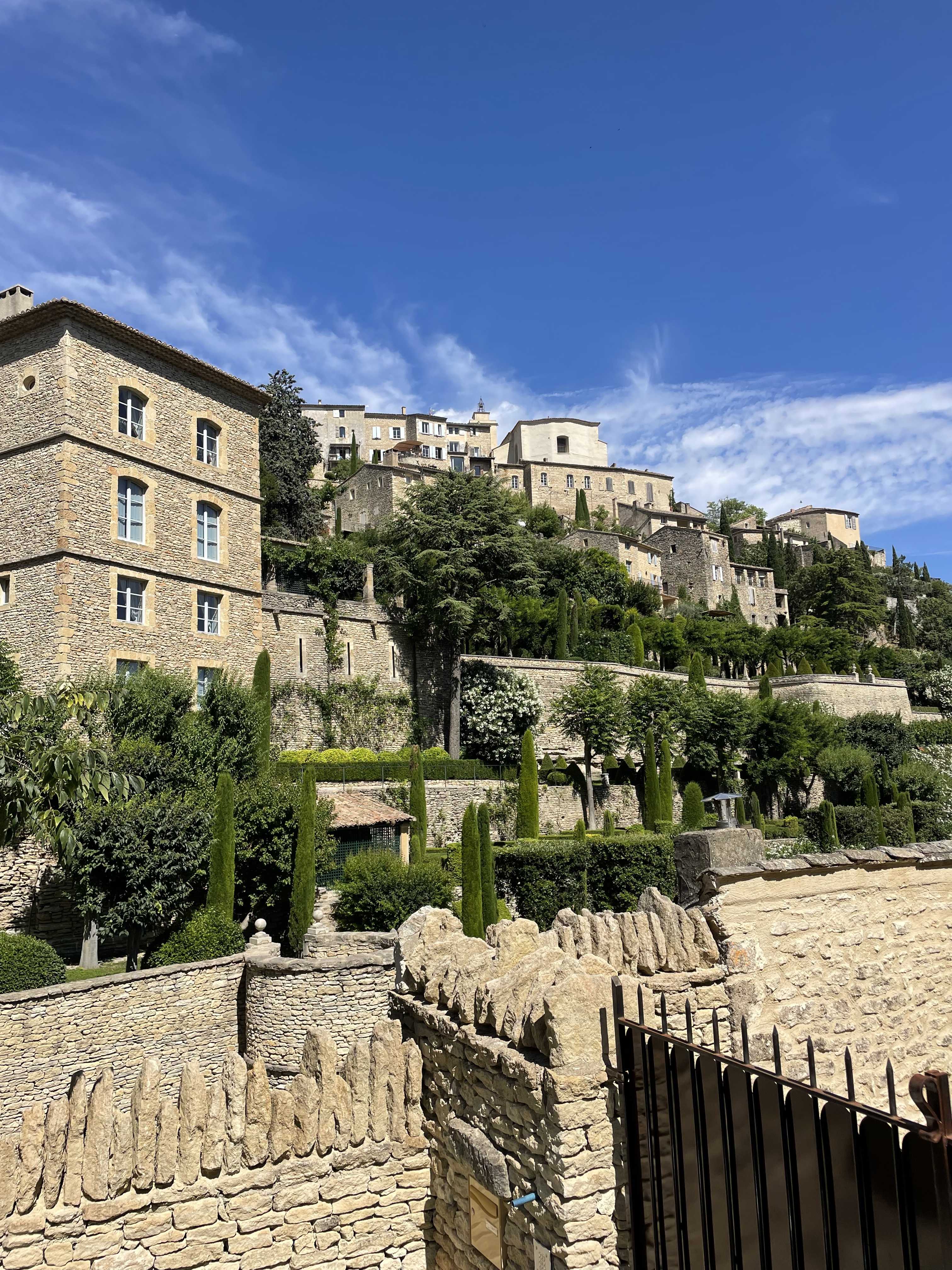
All the buildings have white stone facades and tile roofs. They blend so elegantly with each other and with the natural environment surrounding the town. Each town has it’s own rules on colors and building materials. In my humble opinion, it makes American city planning look tacky and without reason.
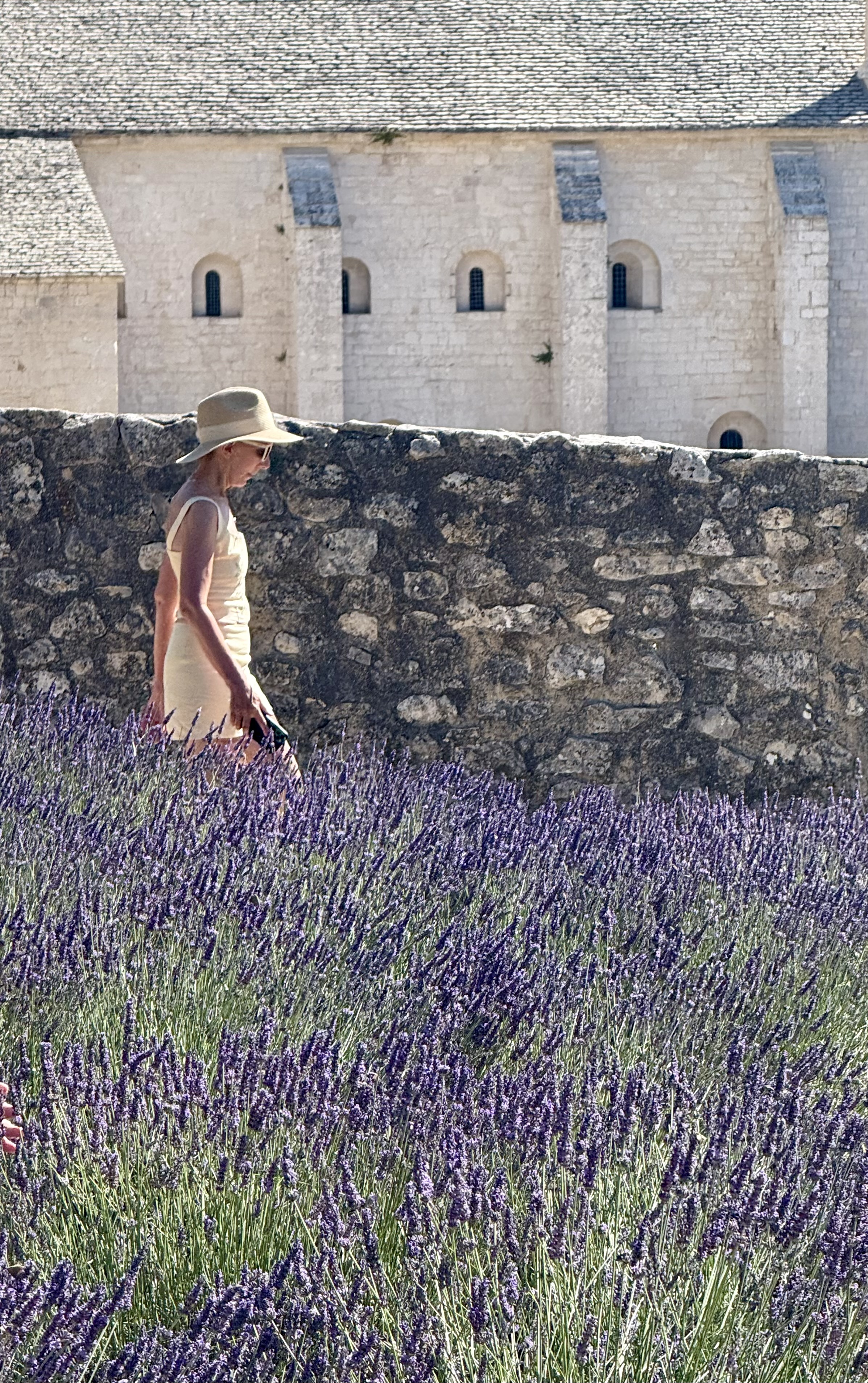
The Abbey de Senanques is the epitome of tranquility. It doesn’t shout, but rather whispers God’s glory. Founded in 1148, it’s still occupied by Cistercian monks. This was one of the many times that I felt like I was standing in a photo for a calendar or a puzzle.
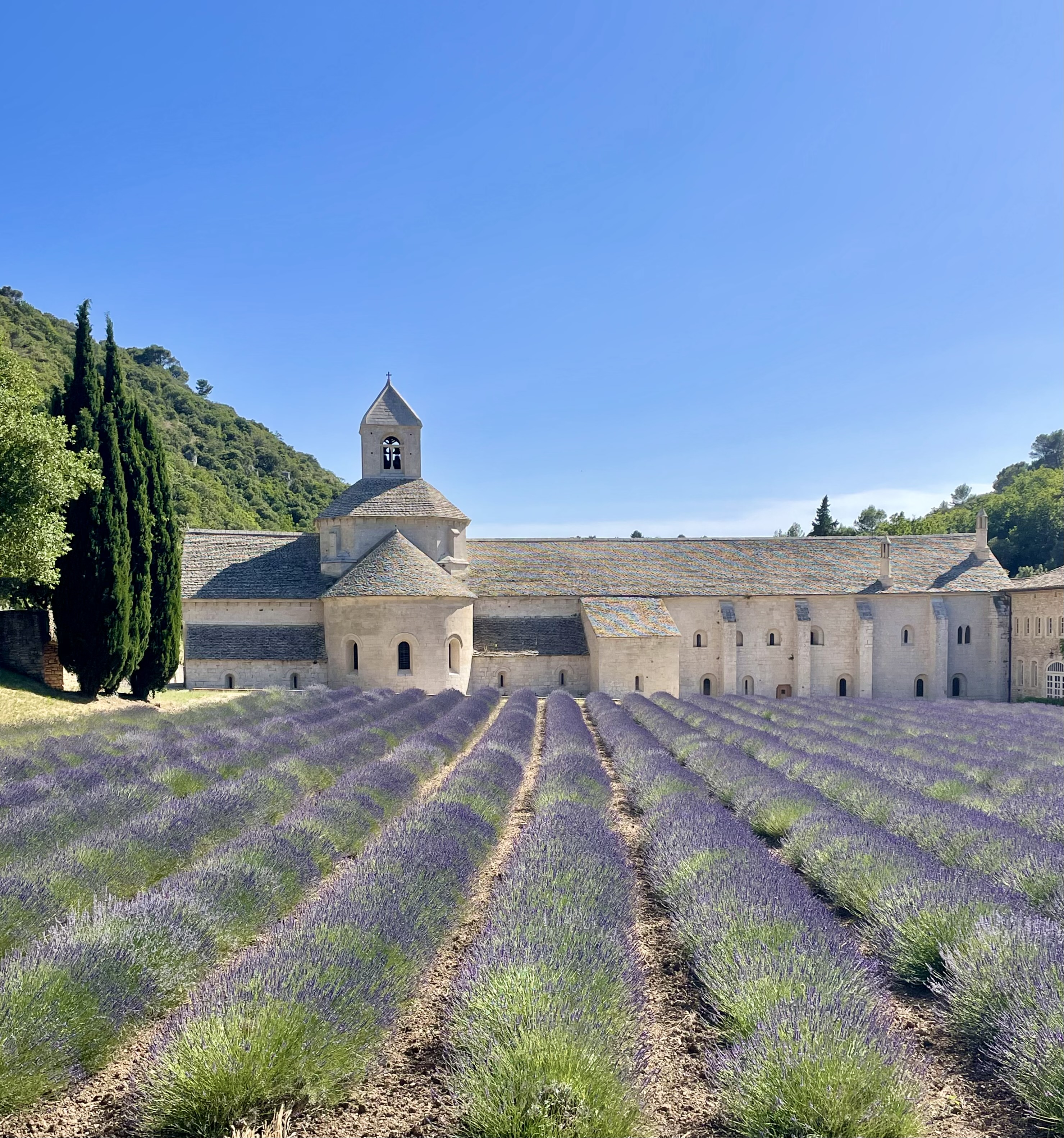
It was almost too perfect to be real, yet, there I was … lost in a dream.
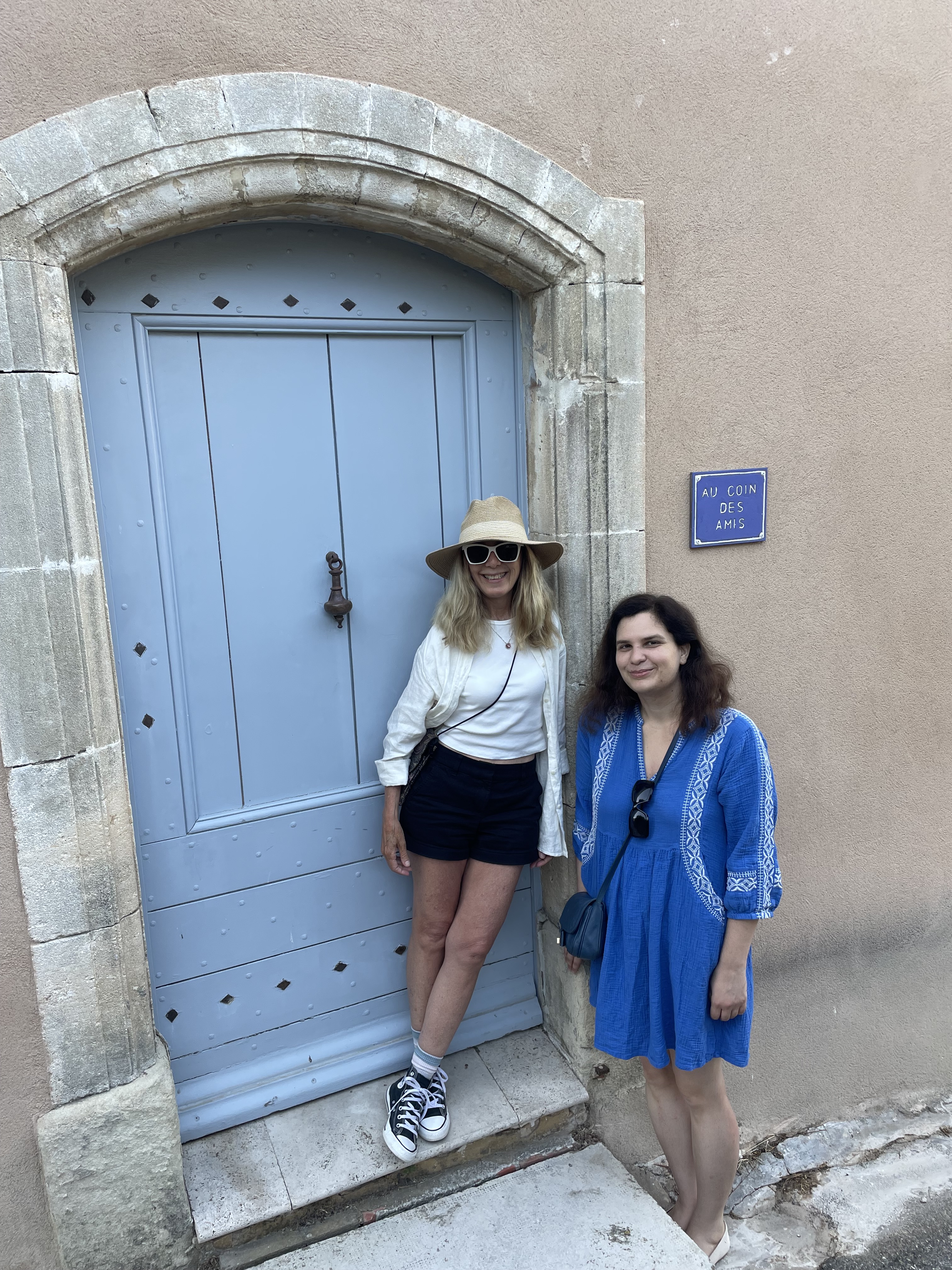
Saying goodbye to friends in Rustrel the next morning, we continued our road trip.
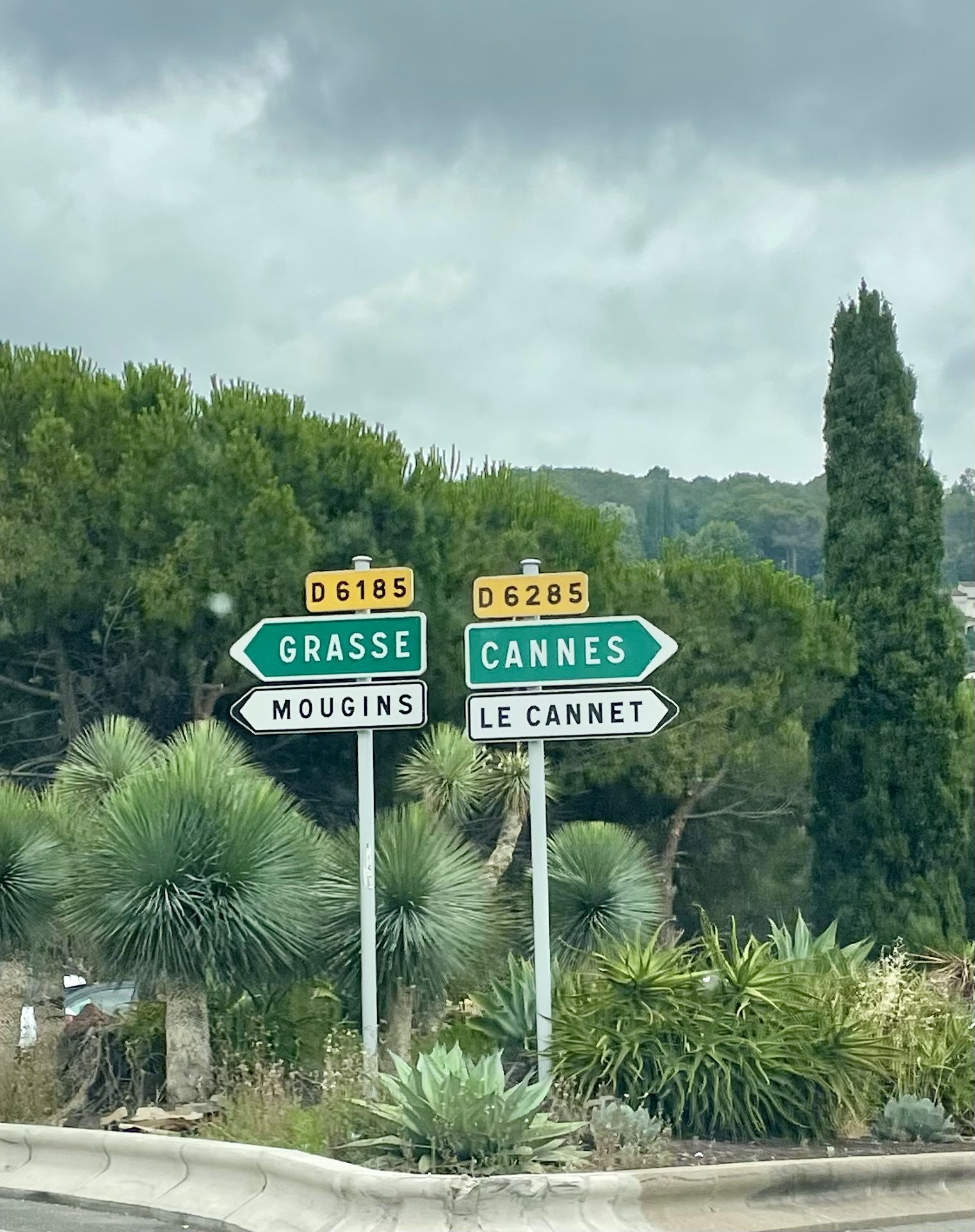
Our next stop was Grasse, a UNESCO World Heritage site and the perfume capital of the world, just 15 kilometers from Cannes.
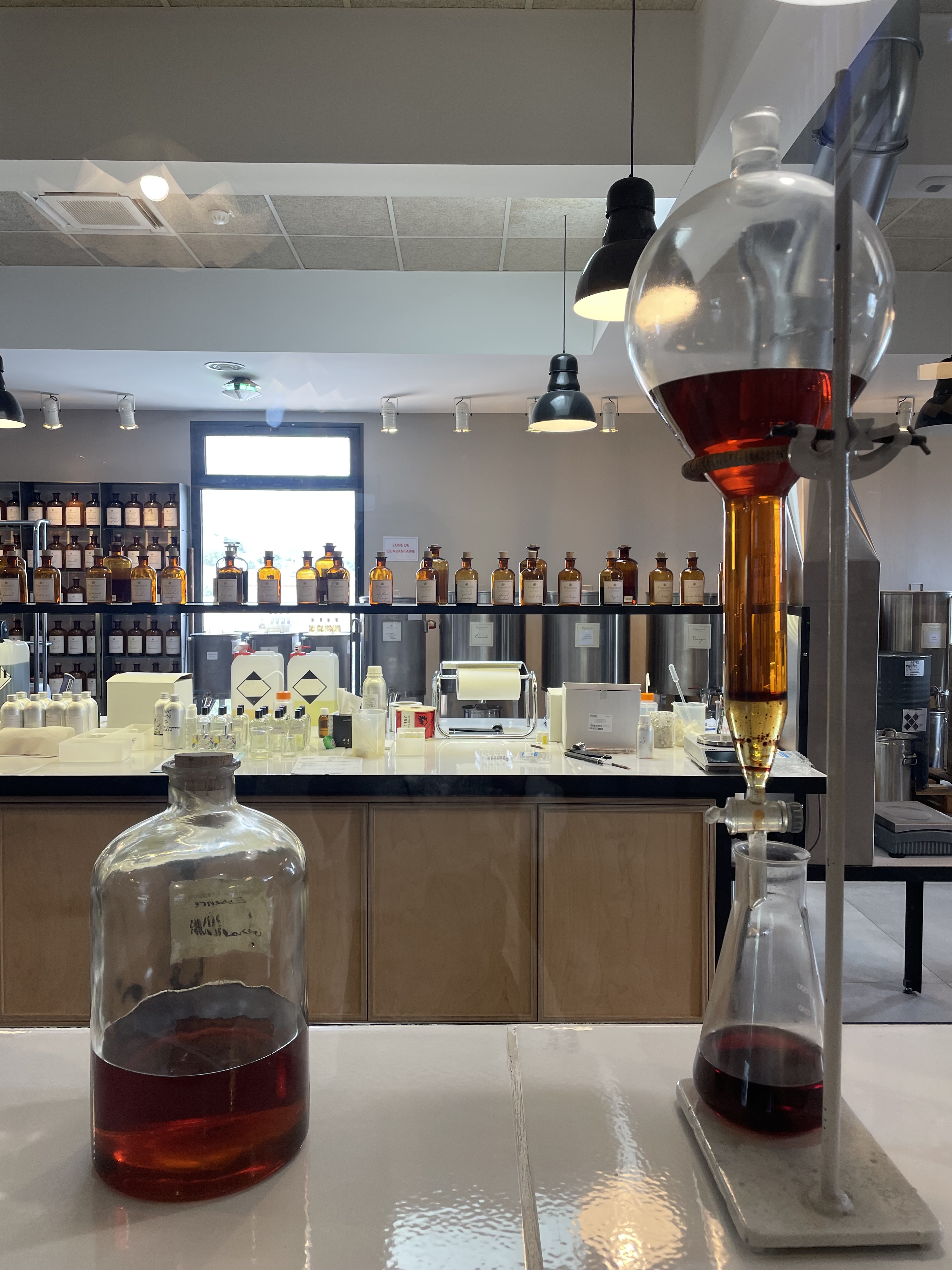
All of the major perfume companies have a presence here. We toured one of the Fragonard factories.
Perhaps, I felt that way in every small town, but walking the streets in Grasse I remember thinking that it was my favorite. Some parts were a little touristy but it was easy to overlook that to see the historic beauty.
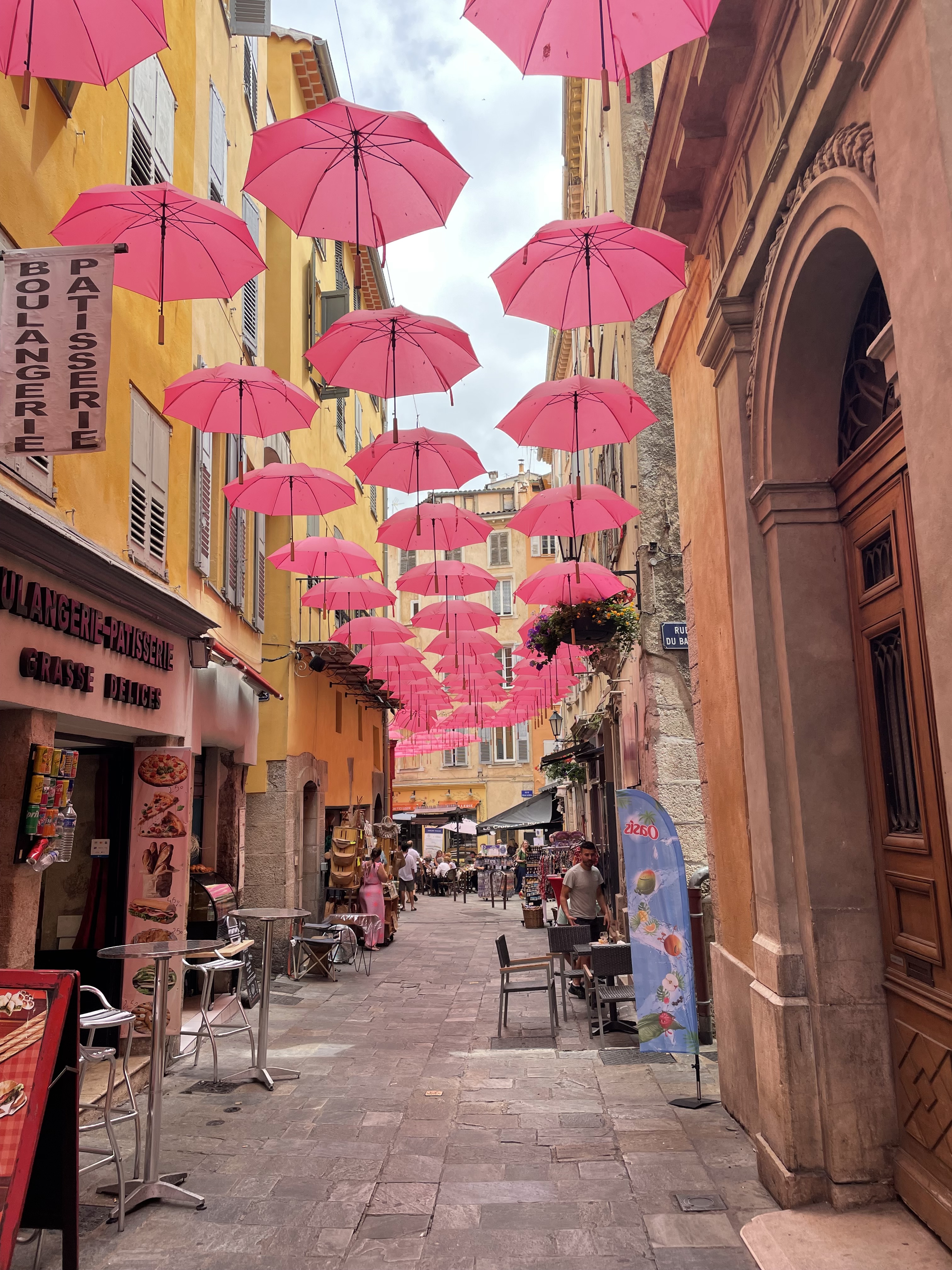
We took the free tour of the Musee de Provencal du Costume & du Bijou to see the gorgeous dresses from days gone by. There’s no question that attire is constantly changing and varies by location. After all, it’s one of the ways each generation expresses itself. But, it’s notable that I saw no one wearing jeans the entire time I was in France. There was a lot of linen and cotton, all loose fitting; no tight pants and no leggings. It may be a trend that will reach the U.S. before long but, perhaps not. Only time will tell.
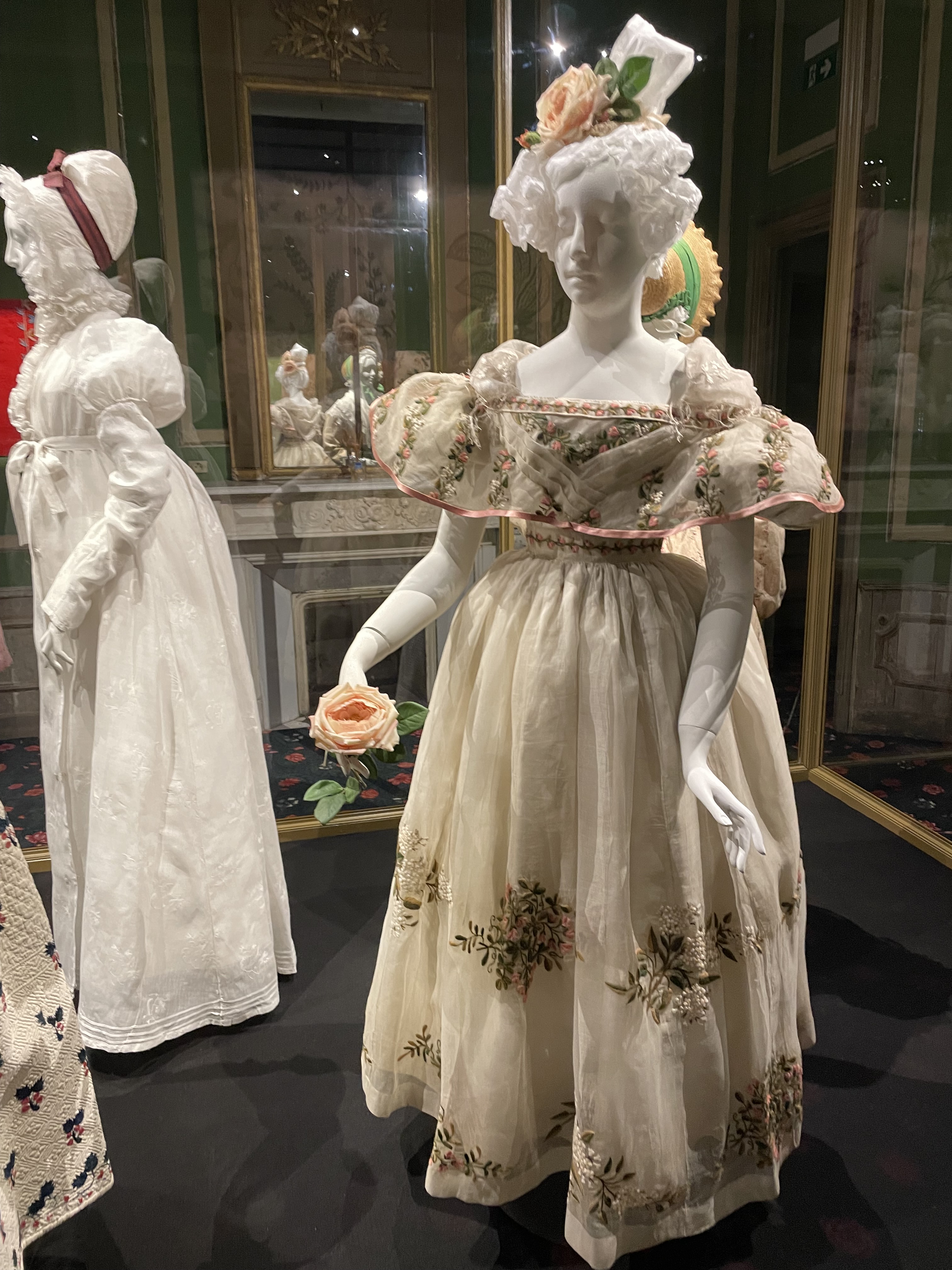
Our accommodation this night was the expansive Domaine & Jardins de la Cascade Parfumee. Once owned by a childless, wealthy couple in the perfume industry, they hid 8 Jewish children during the roundtrip when 400 local children were taken to concentration camps. Later, it was used as a Red Cross hospital for children with tuberculosis. Only recently, a local couple renovated it into a luxurious bed & breakfast with 5 guest rooms and extensive gardens for aromatic flowers and fruit trees used to make perfume. There’s a natural spring of cold water. Half of the water is used for the house and the other half is used in the garden.
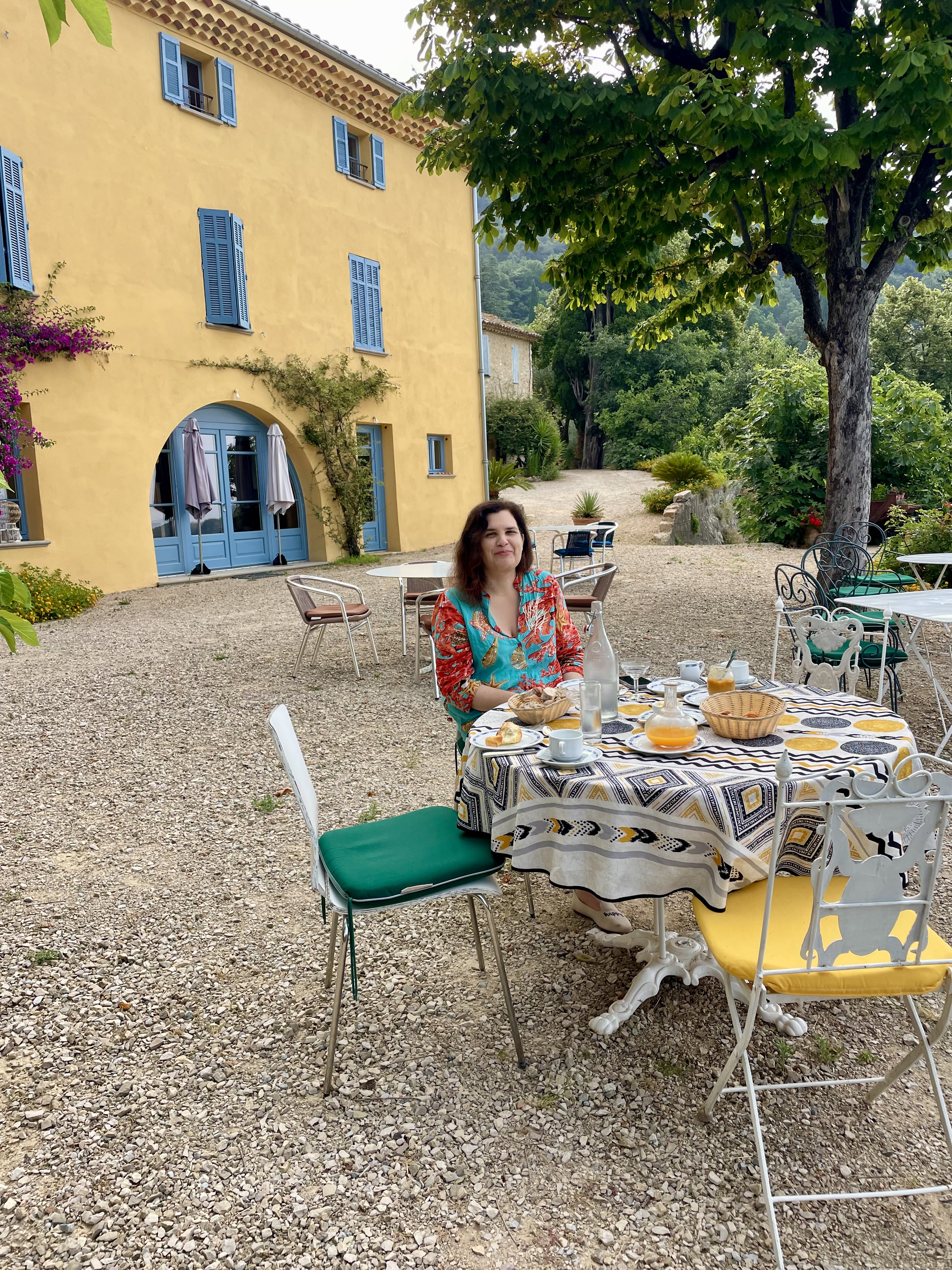
To add to the beauty, there was an infinity pool, a lap pool, and a jacuzzi pool. We took a late afternoon dip before dinner in nearby Cabris.
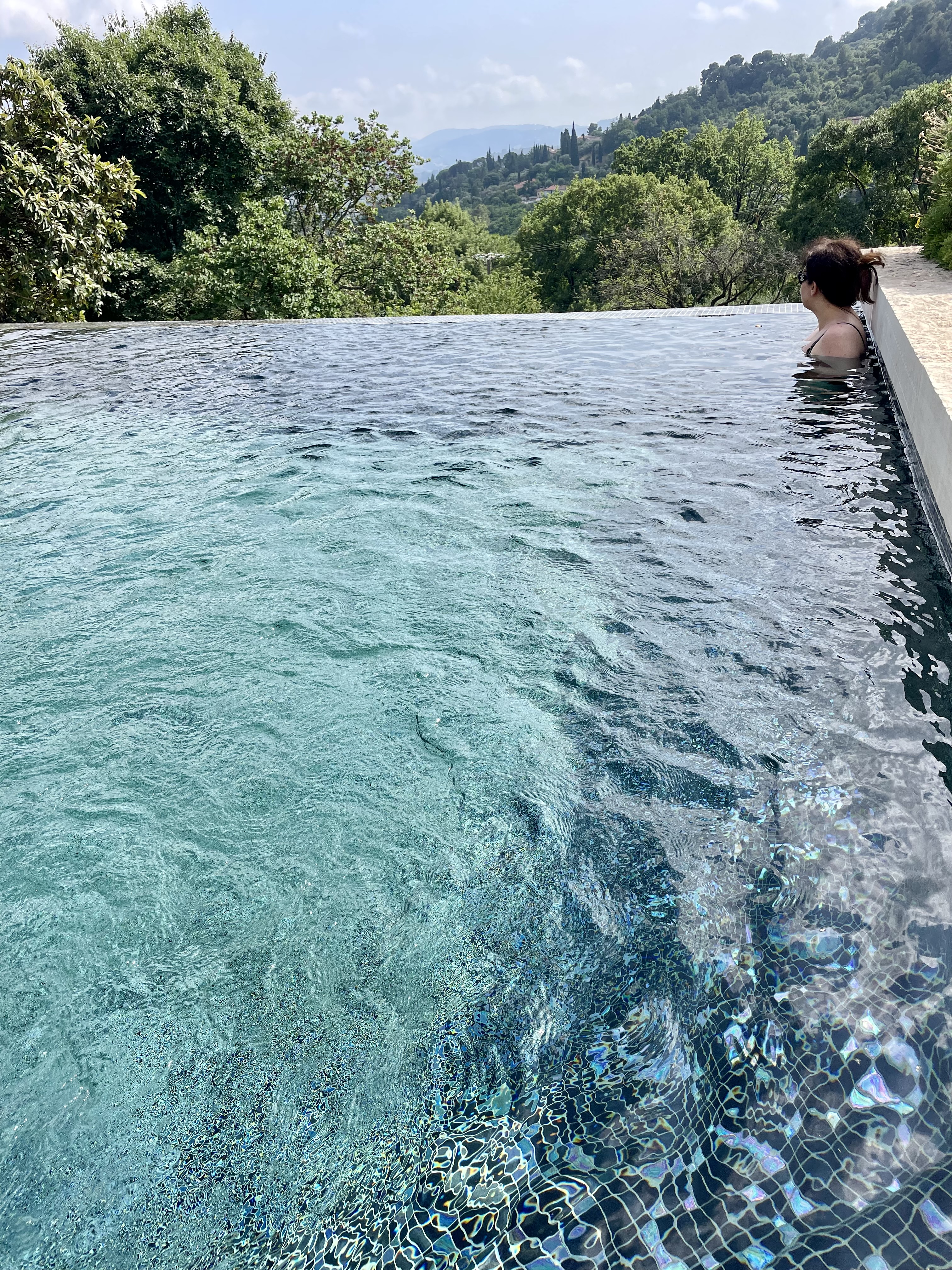
Like most places, the roads in Cabris are narrow, windy and not designed for American-size cars. Our SUVs, trucks, and even the regular cars, would be completely impractical in France as they wouldn’t fit on the roads or in the parking lots and the gas bill required to operate them would be huge.
Although we moved each day, I never felt rushed. The pace was easy with very few time commitments. Generally, we were up by about 7:30 AM and finished dinner about 9:00 PM. The objective of the trip was to explore and enjoy whatever we found in this special part of the world. As long as I kept the objective in mind, there was really nothing to worry about. The only time I turned on the news I saw that the U.S. had bombed Iran the night before. I didn’t check the news the rest of the trip.
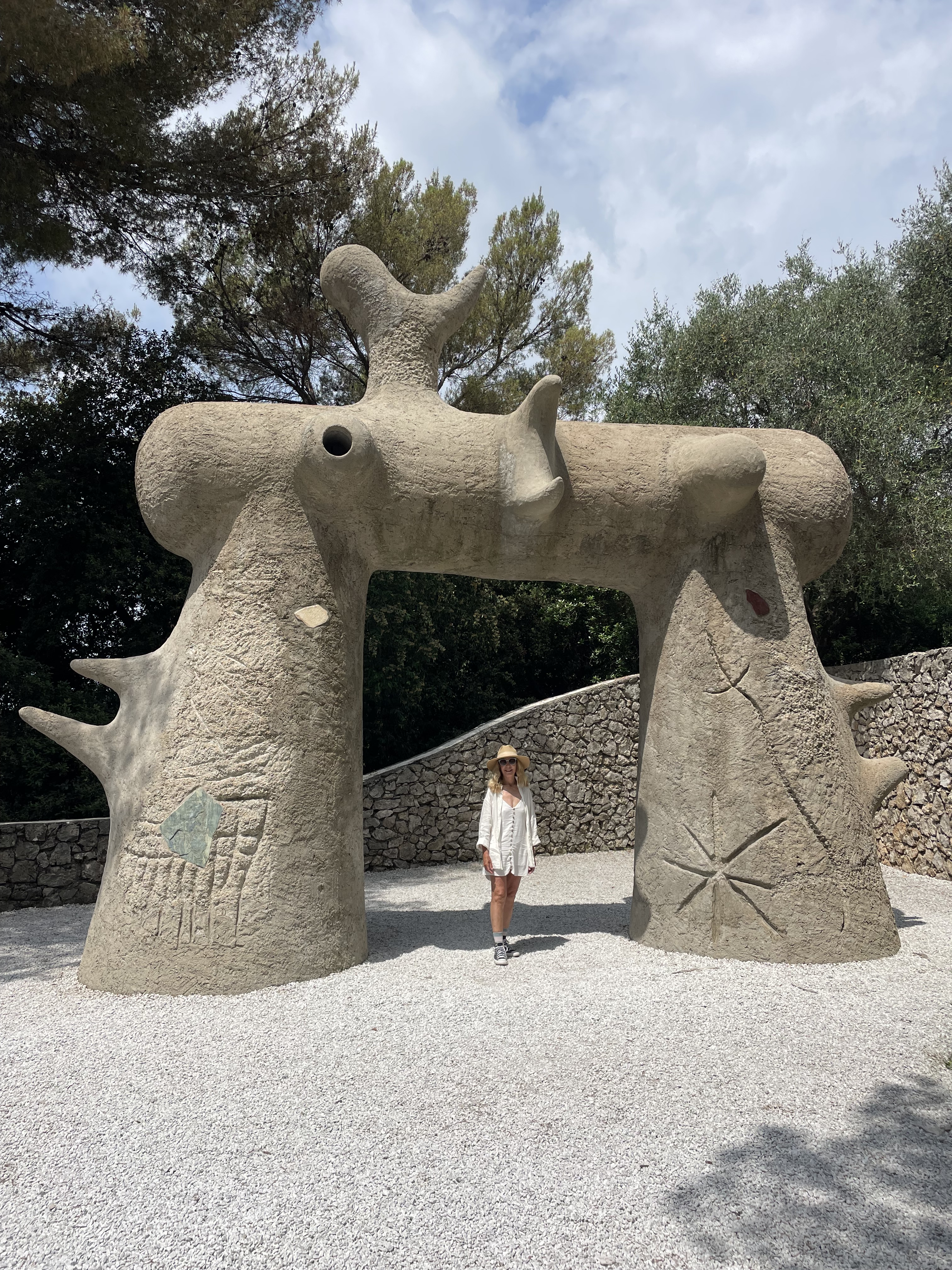
Friday morning we drove the short way to Saint-Paul de Vence to visit the Maeght Foundation Museum and Gardens, the first private art foundation in France. Modeled after the Guggenheim, there were a lot of works by Joan Miro, Chagall, Giacometti and others. Chagall spent 19 years in Saint-Paul de Vence and is buried here.
Walking around the old town of Saint-Paul de Vence I, again, felt the modern art blending with the historic. It’s everywhere — not just in museums. This sculpture of a reclining woman was hanging between two buildings with no fanfare or acknowledgement.

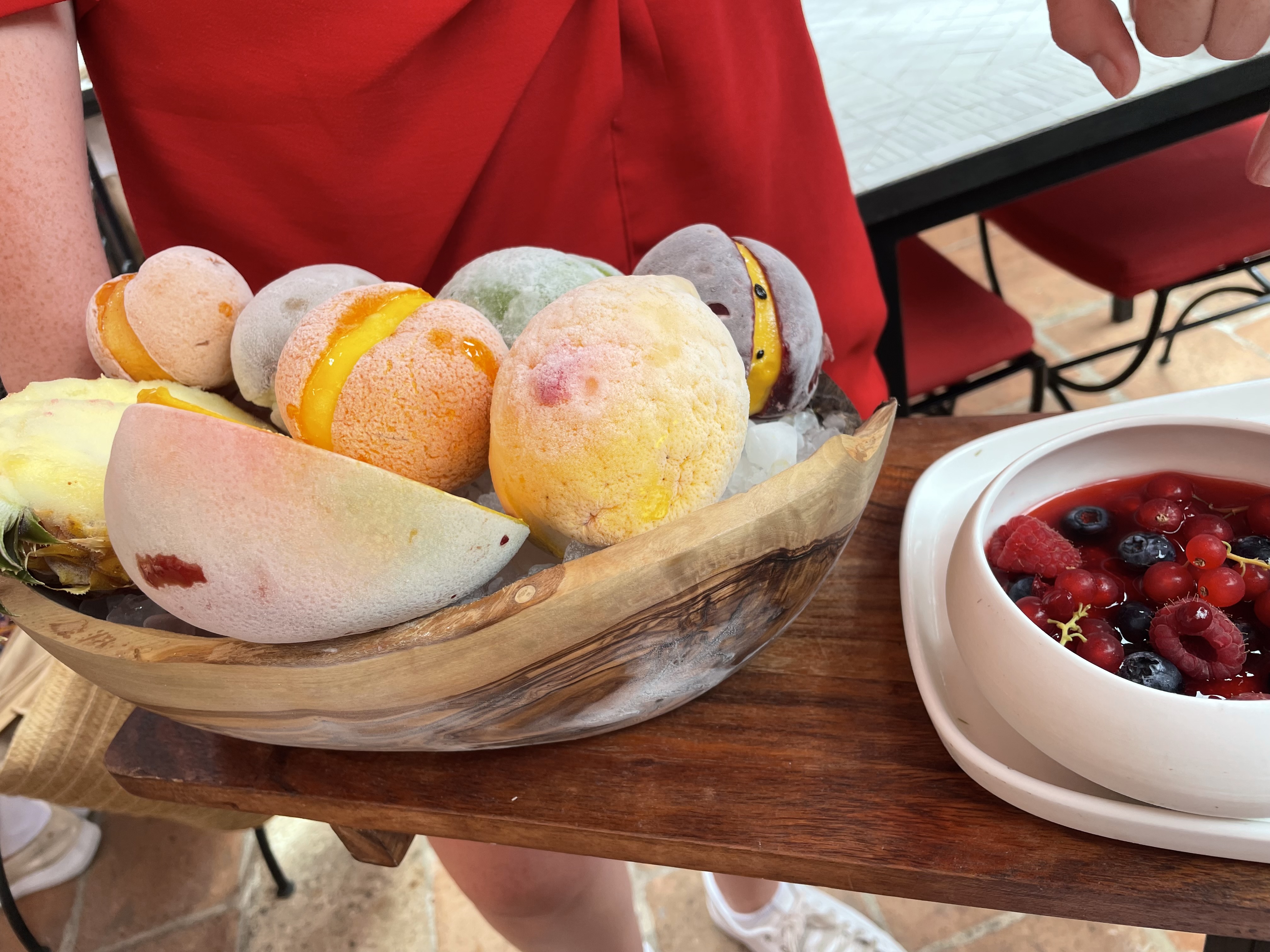
After a perfectly delightful lunch, we endulged in a treat that I’m going to try to replicate — fruit that has been split open, the pit removed and the fruit portion blended with a small amount of cream then scooped back into the skin and frozen to make the most delicious and beautiful dessert. The peach and mango were my favorites.
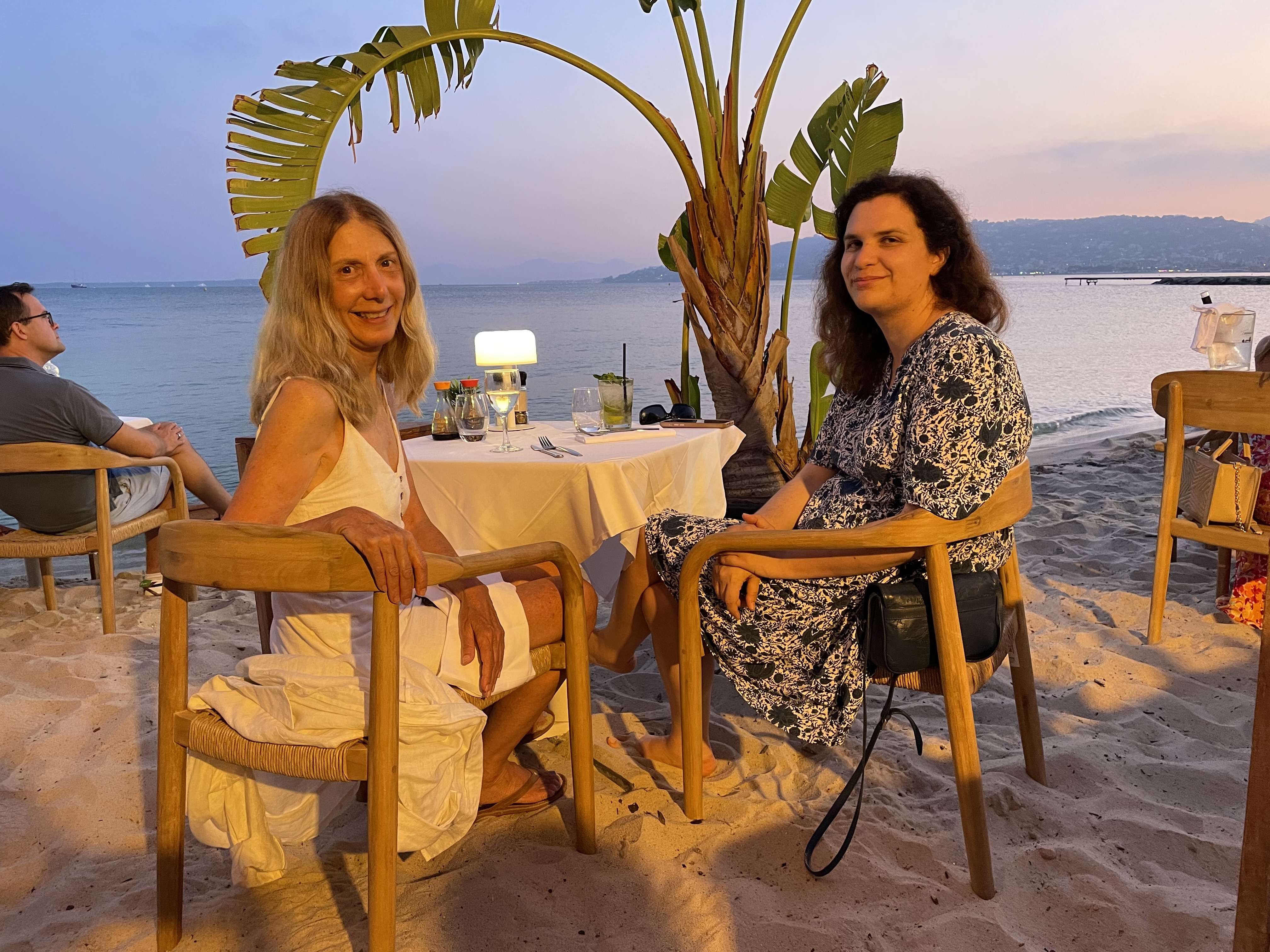
After checking in to our hotel and preparing for the evening, we went to the stylish area of Juan les Pins, directly on the beach of the French Riviera (Cote d’Azur). Sometimes, it’s good to be lucky. Without reservations, we found an open table right on the sand at YOLO and had a magical dinner that I will remember for years to come. This photo was taken about 9:45 PM. The sun sets late. Eating dinner at 8:30 or later was customary.
Every morning we enjoyed fresh bread and cafe au lait or espresso. I ate so much delicious bread but I didn’t gain a pound; probably because of all the walking.

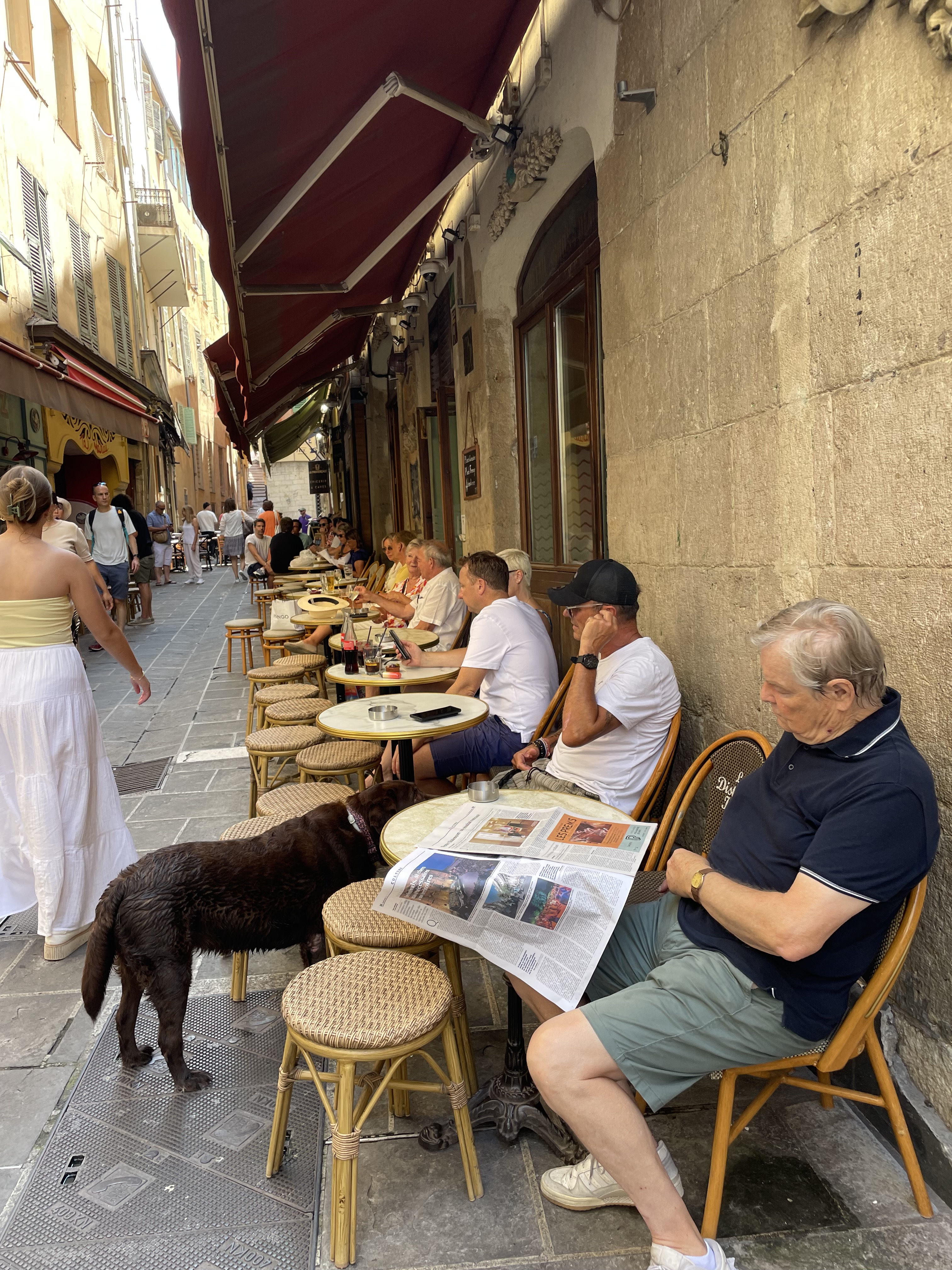
After breakfast we drove the short distance to Nice. Walking through different towns is, perhaps, my favorite part of travel. You get such a good feeling for the place and the people as they go about their day.
A hike up Castle Hill is essential. The cathedral was founded in the 11th century but the Greek settlement called Nikaia that was situated here goes back to the 4th century BC. The ruins, cemetery, and waterfall are worth the hike.
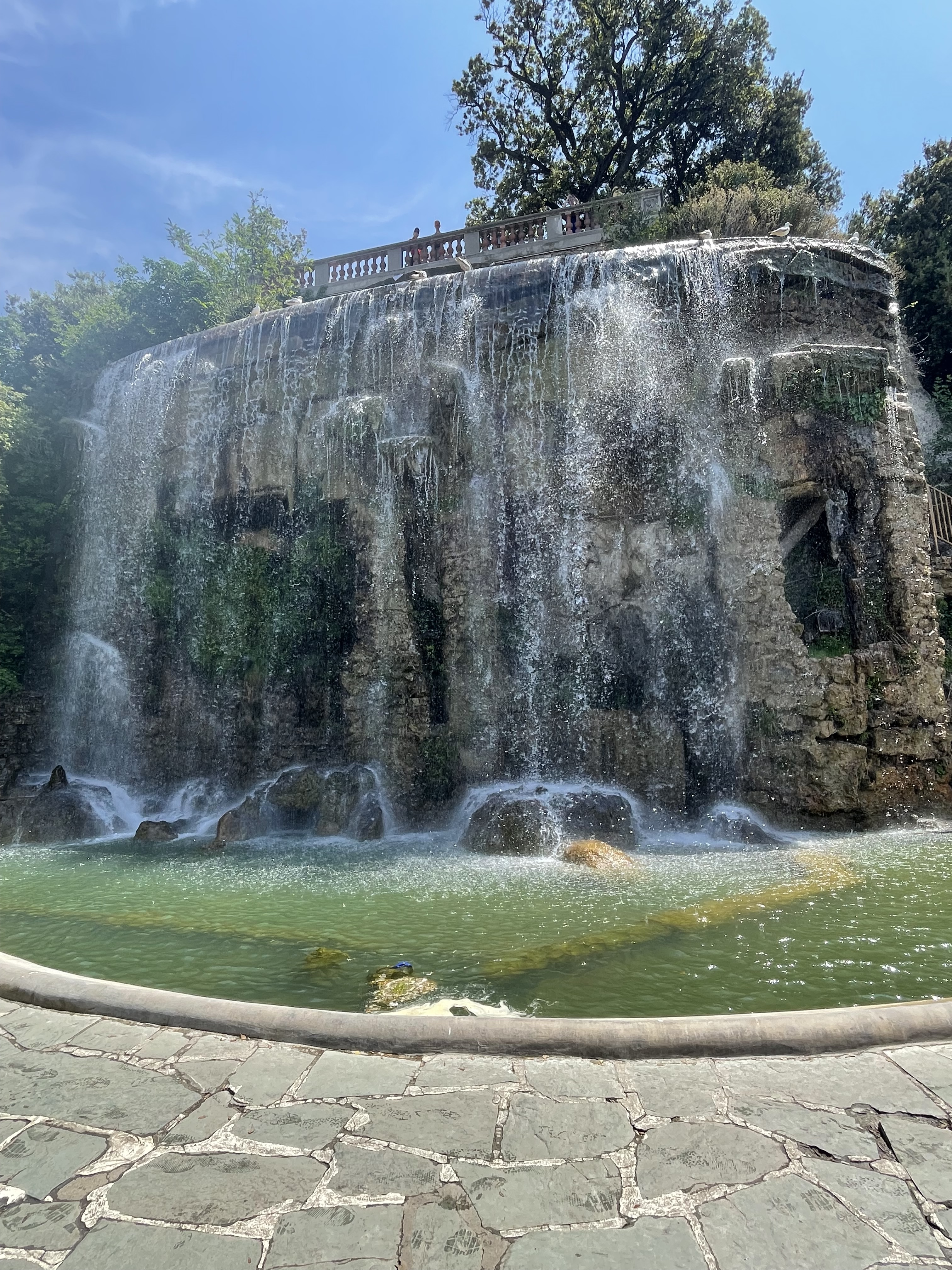
The monuments are proof that the beauty of the site was acknowledged by those inhabiting the earth way before us and will be celebrated by future generations long after we’re gone. It reminds me of our responsibility to preserve the earth for those who follow. At a minimum, we should refrain from destruction. Our time here is short.
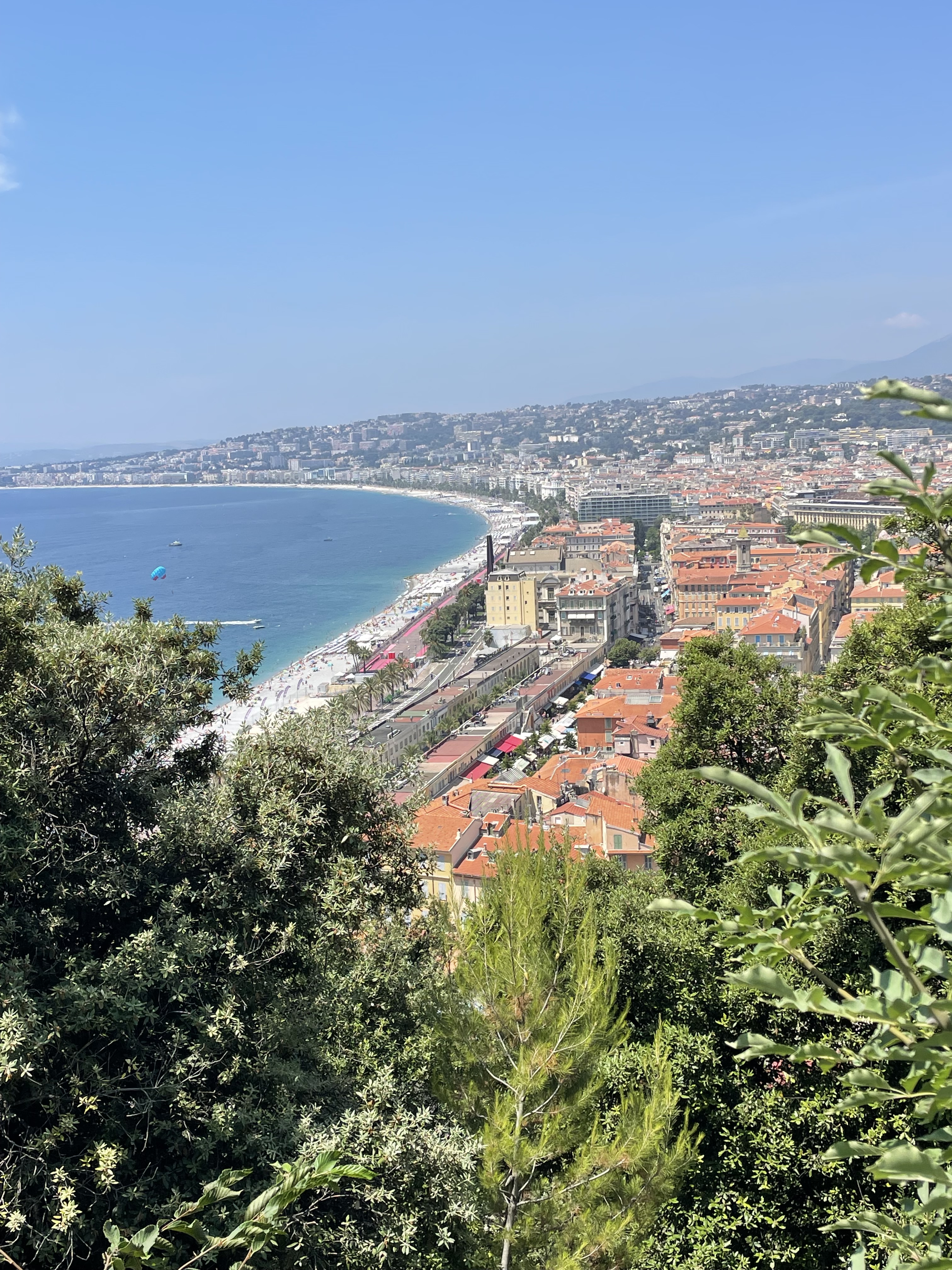
While the man-made structures are interesting, the view looking down on the Riviera is the main attraction.
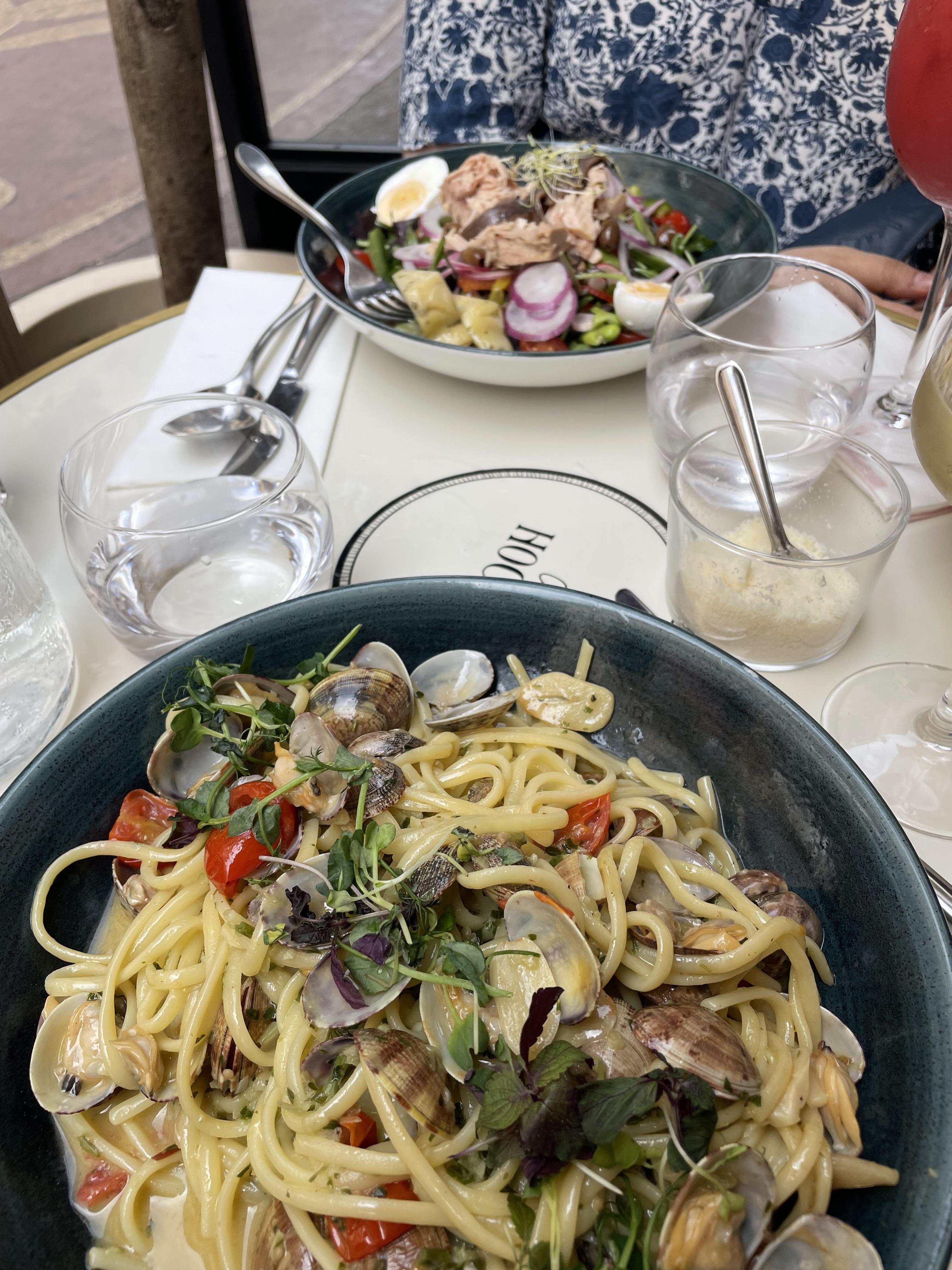
It’s only 20 kilometers from Nice to Monaco then just a hop to Italy. I took advantage of the strong Italian influence to dine on pasta with clams at a sidewalk cafe while we watched beautiful people walk by. Seriously, there were a lot of gorgeous people in stylish outfits that gave us a non-stop parade of life on the Riviera.
In Cannes we walked the cobble-stoned streets and alleys to reach the giant CANNES sign on the hill and to get a great view of the marina and beach below — so many huge yachts!
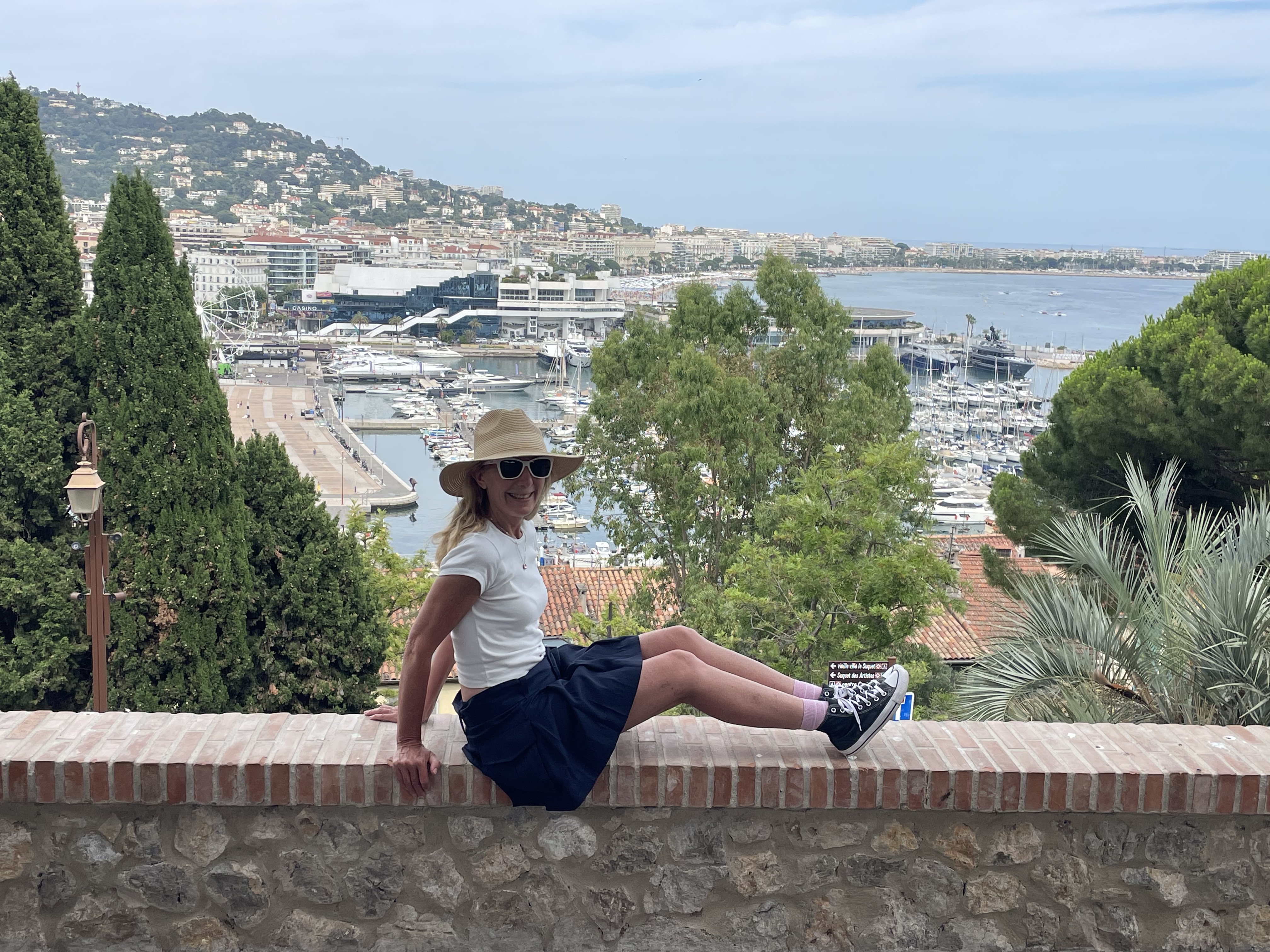
The giant CANNES sign reminded me of the HOLLYWOOD sign in Los Angeles.
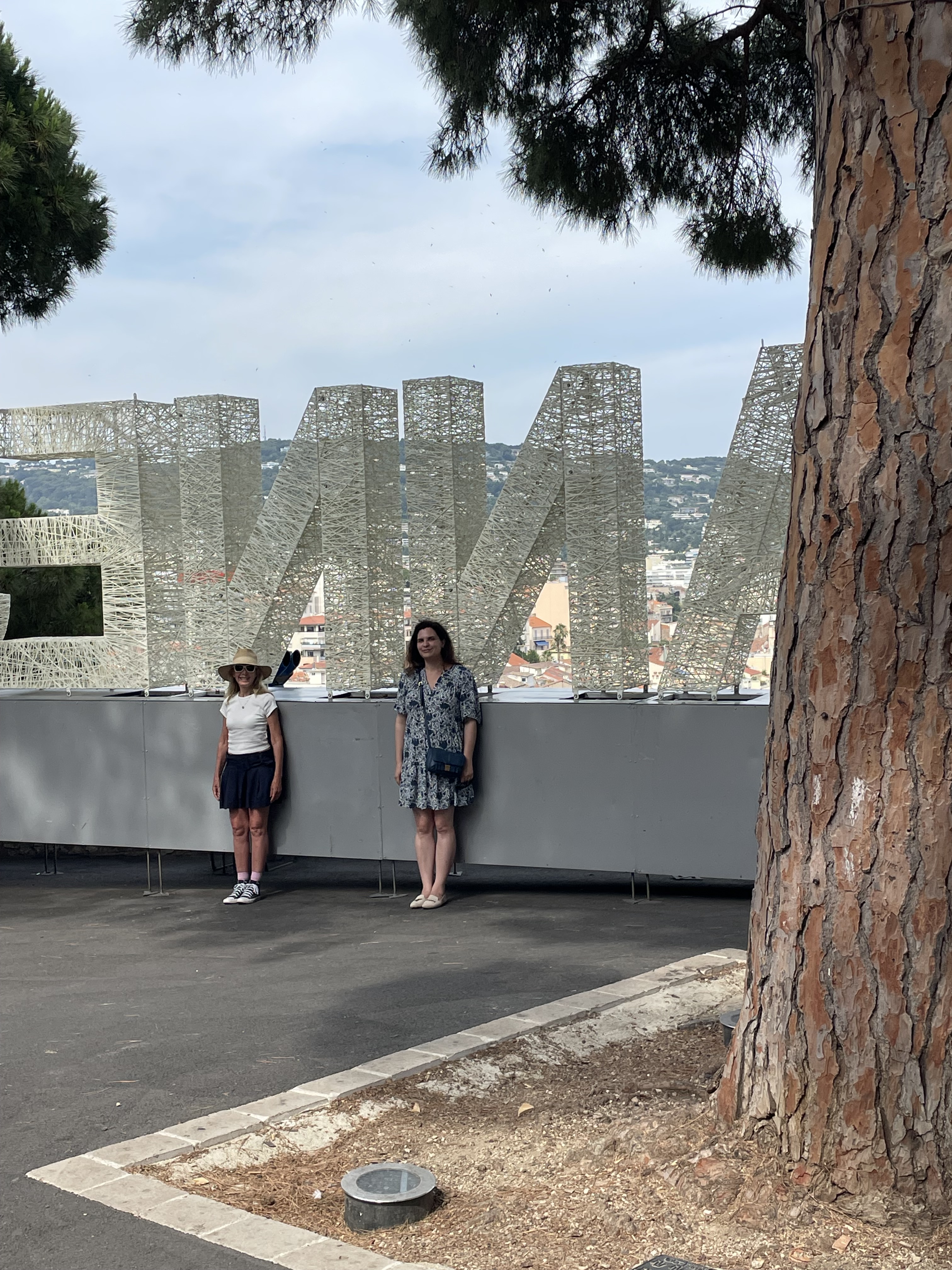
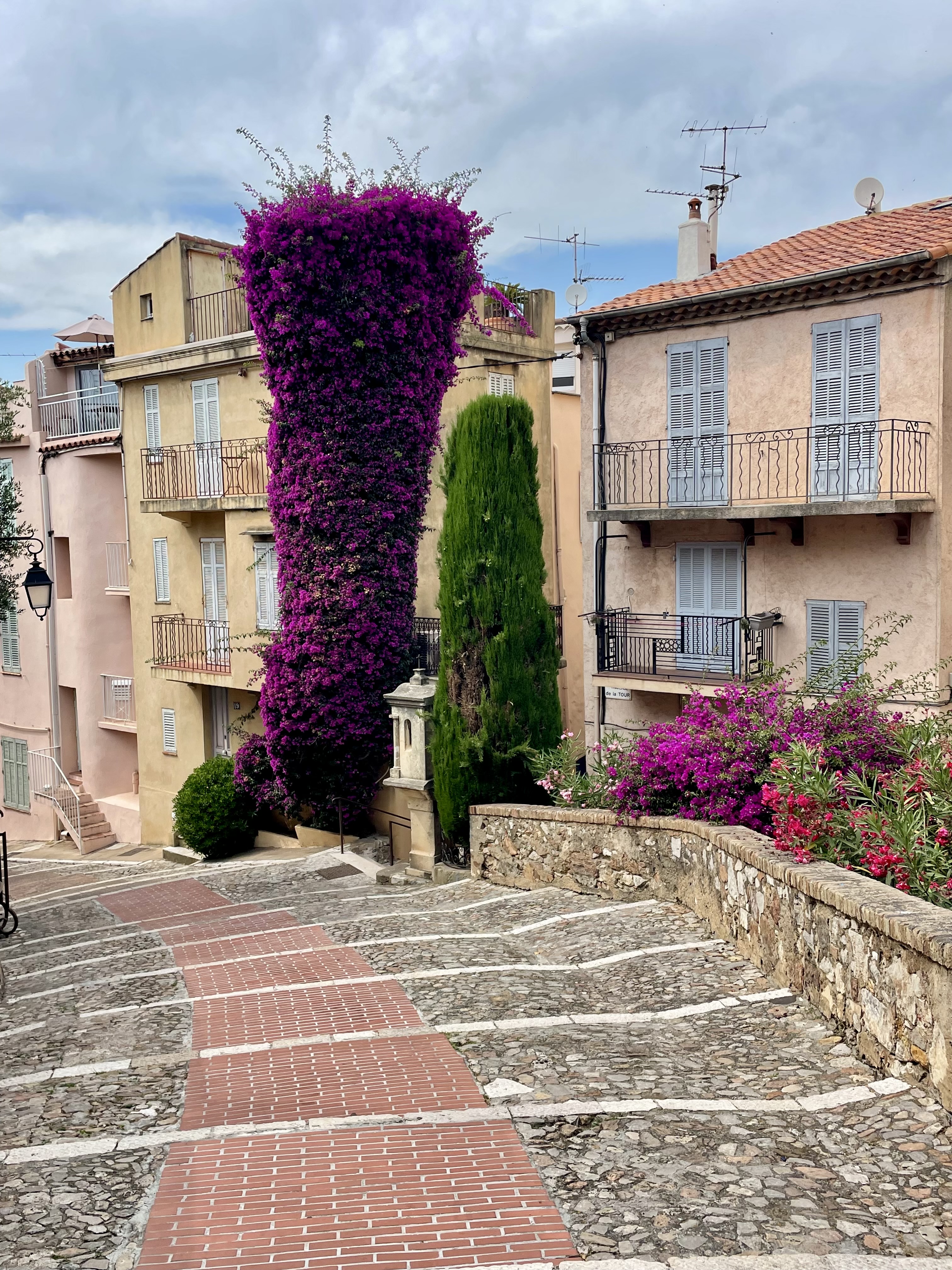
The walk down took us to an area generally referred to as fisherman’s ward where the fishermen would stay when they were in port. Today, these homes are very chic and expensive.
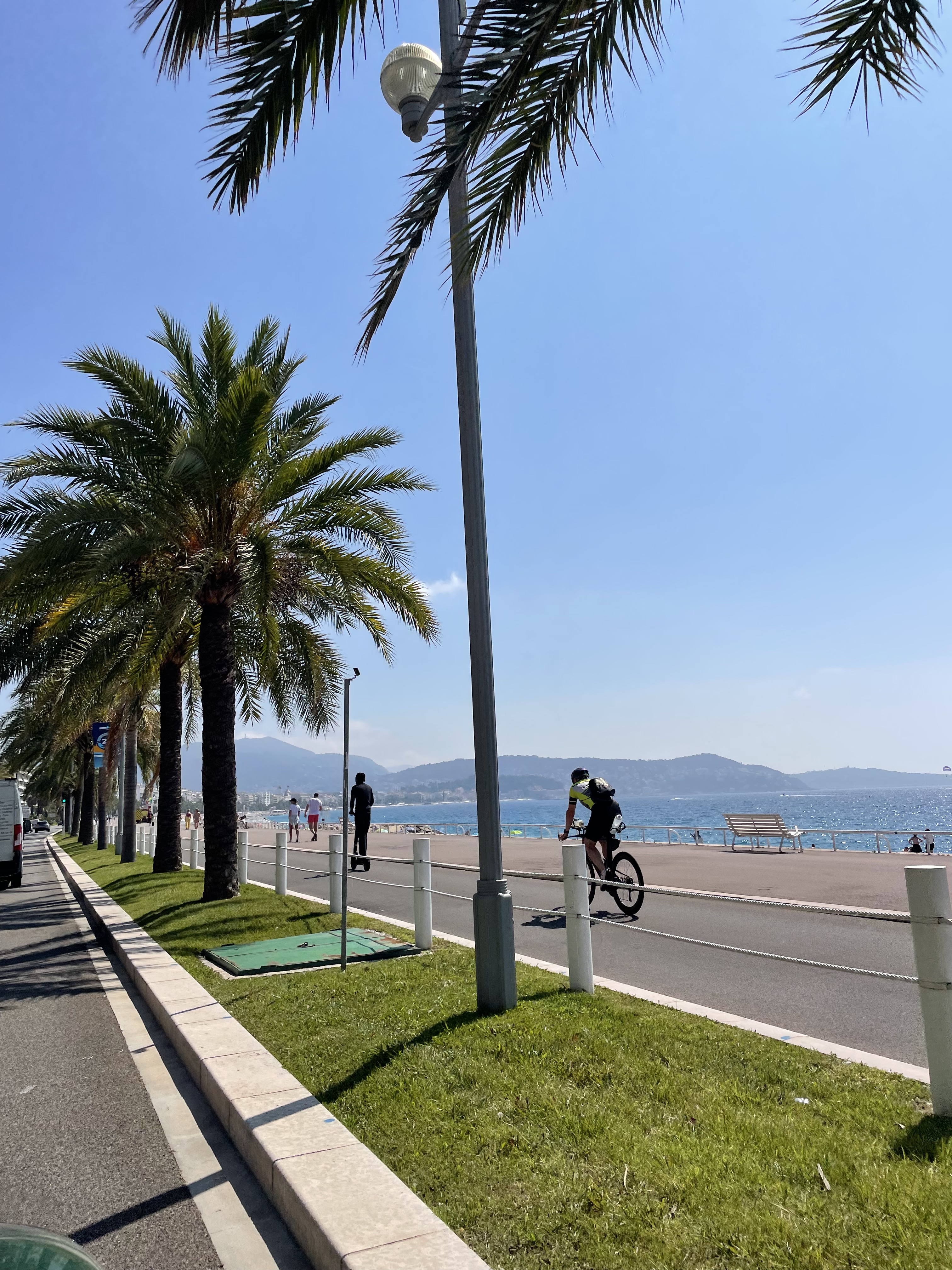
The beautiful boardwalk called the Promenade des Anglais (English Promenade) in Nice stretches 7 kilometers. They were setting up for an Ironman competition when I was there.
We spent the night in Antibes, in between Nice and Cannes. Having dinner reservations at one of the many amazing restaurants is great but I also appreciate unplanned time for spontaneity and exploration. Our last night on the Riviera, I was happy to walk through the night market and get a light dinner from one of the many cafes. The entire time I was in France, I never had anything fried. I didn’t even notice it as an option. Everything was fresh and as natural as possible. We sat outside and listened to music played by street performers and small ensembles. It’s kind of funny hearing musicians who speak no English perform American music. There’s no question that our music is one of our greatest exports.
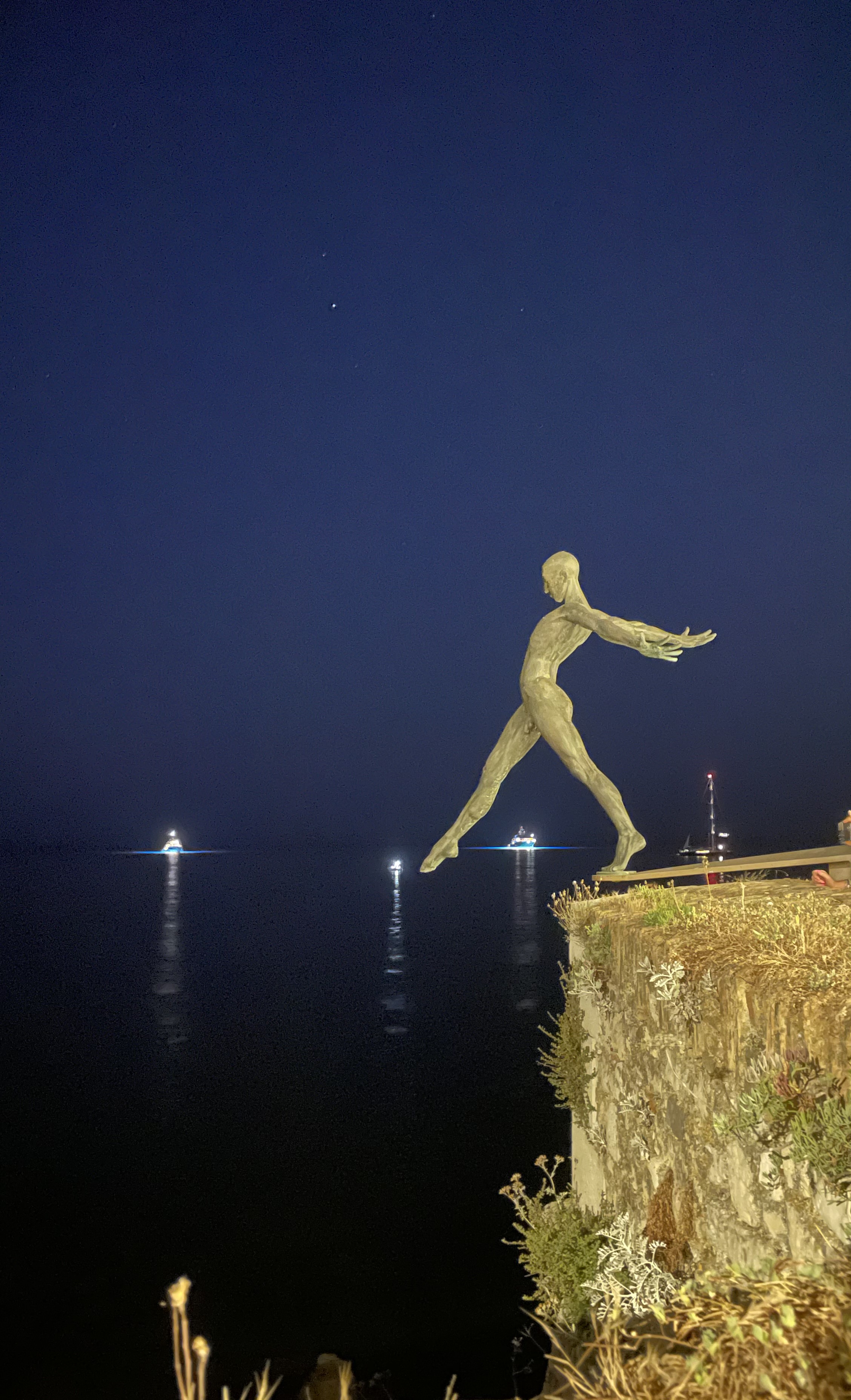
This statute really touched me. It’s a tribute to Nicolas de Stael (1914 — 1955), a Russian born artist who jumped to his death from the 11th floor of his apartment in Antibes. Although he was professionally successful, he suffered from insomnia, exhaustion, and depression. Unfortunately, we didn’t make it to the Picasso Museum at Antibes where his work is displayed along with other important artists. Making difficult decisions of what to visit and what to skip is part of traveling but always sends me home wanting to learn more about both the things I saw and the things I missed.
The drive to Lyon took us past a lot of small towns, each with its own identity. There was a demonstration in Apt to oppose the closing of the hospital. The local police acted irritated that we didn’t know about it. We had to detour around the entire town.
Among the towns that we didn’t have time to stop at this trip were Chateauneuf-du-Pape, renown for it’s expensive wine and Montelimal known for the creation of nougat candy. Also, Chauvet Cave, a World Heritage site with the world’s oldest cave paintings dating 31,000 years ago. And, Tain l’hermitage known for having good wines and superior apricots, peaches, nectarines and Valrhona chocolate favored by Parisian chefs. We passed the town of Annonay that was made famous by the invention of paper in the 17th century followed by the invention of the hot air balloon and the first hot air balloon flight by the Montgolfier brothers, the inventors. There’s so much history that goes back for centuries. It’s interesting learning how each town distinguishes itself.
Almost out of time, I took the high-speed train from Lyon to Paris, met up with my niece for a last night in France then flew home with new memories to cherish.
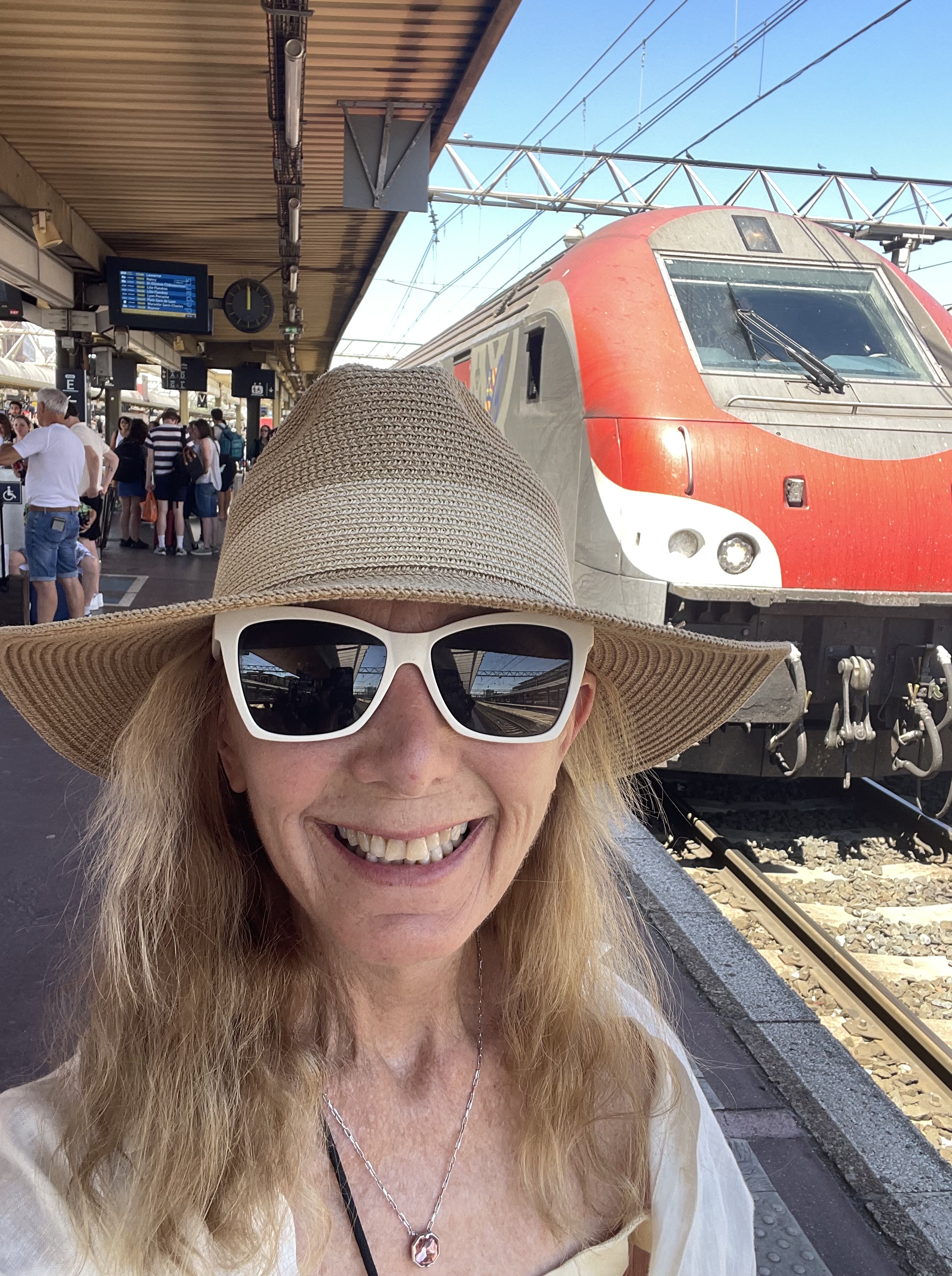
Getting on the train brought back a host of memories from my back-packing days the year after college — so long ago but still so strong in my heart. I’ve never regretted spending time or money on travel. I’m always glad to go then always glad to get back home. Travel is so important to my life and my humble attempt to understand how and where I fit in this beautiful world that I’m certain I wouldn’t be the same person without it’s influences. The experiences and friendships add immeasurable value and keep me interested in life. There’s no absolute right or wrong way for me — budget, luxury, solo, family, any version. Let me jump on a boat headed across the equator or meander through the small streets of a town I’ve never been to before. Along the way, I’ll remind myself, life is good; not perfect, but really good.
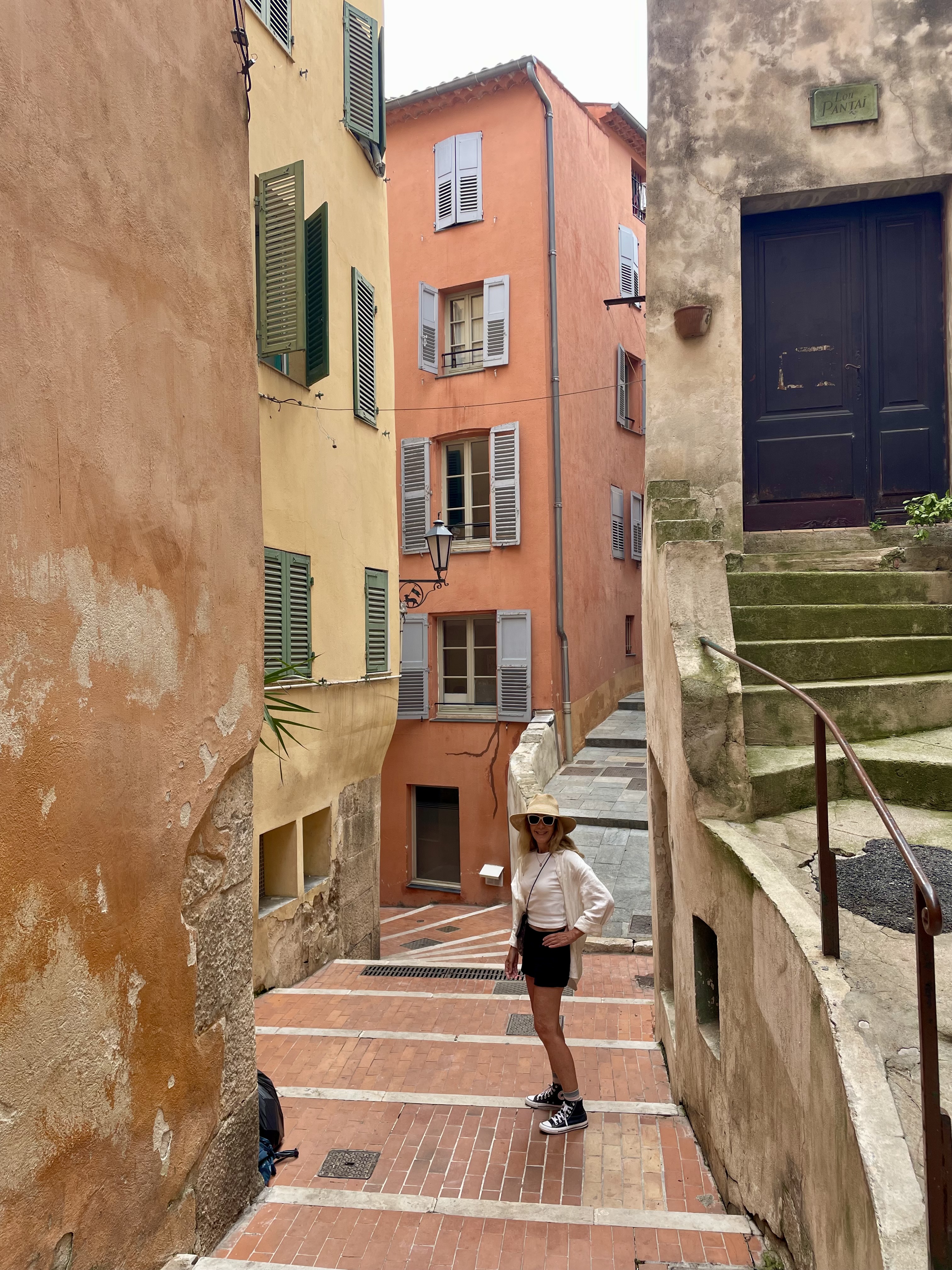
“If you want to keep your memories, you first have to live them.” Bob Dylan
“How can anyone govern a nation that has 240 different kinds of cheese?” Charles de Gaulle
“The French air clears up the brain and does good — a world of good.” Vincent Van Gogh
 Kathryn Byler, blog