Iceland is a country of extremes. The week we were there in November 2024, the temperature never rose above freezing and hovered about 20 degrees Fahrenheit (-7 degrees Celsius). The sun rose about 11:00 AM and set about 3:30 PM but never got very high in the sky.
The day after we arrived, the volcano erupted and continues to shoot out fire and lava even now, ten days since it began . The seventh eruption of the year near the Sundhnuksgigaroo crater, news reports say it’s no threat to travelers but it overtook the parking lot of the famous Blue Lagoon forcing closure of the lagoon spa and evacuation of the hotel. At 1:00 AM hotel guests were awaken by an alarm and taken to the Expedition in Reykjavik which is where we stayed. Fifty homes in Grindavik were also evacuated. Here’s a photo taken from the highway on the way to the airport on November 25th. Drone views of the flowing lava crossing highways remind me of the power of nature that cannot be contained by man. Volcanoes formed Iceland and continue to shape it today. While the power to cross barriers and ignite homes is terrifying, it’s somehow simultaneously energizing.

I flew direct from Washington, DC and my son, Daniel, flew direct from Chicago; both were overnight flights on Iceland Air. We landed just 5 minutes apart and headed out to pick up our 4 x 4 Toyota Highlander from Hertz. That first rush of cold wind combined with the pitch dark at 7:30 AM was a real wake-up call. While not very far from the main terminal, there are very few signs and no shuttles. Thankfully, we always travel light with just a carry-on bag but right from the start I got the impression that this country is made for hardy people; sissies cannot survive these conditions. Trying to navigate the parking lots and walkways to the rental car office in darkness, cold, and wind was not a great welcome and begged the question, “Why does anyone live here?” It didn’t take long to find the answer. The next 6 days were filled with natural beauty and happy, friendly people.
The drive from the airport to Reykjavik is about an hour. We dropped our bags off at the hotel, got a coffee and croissant then went to Sky Lagoon about 10 minutes away. Again, everything was done in darkness which takes some getting used to and reinforced the thought that my body is strongly guided by solar rhythms. It takes faith to put on a bathing suit and walk outside but the new geothermal spa on the edge of the ocean was lovely once we convinced ourselves to do it. We got the 7-step Saman ritual that includes salt scrub, sauna, ice bath, and extras.
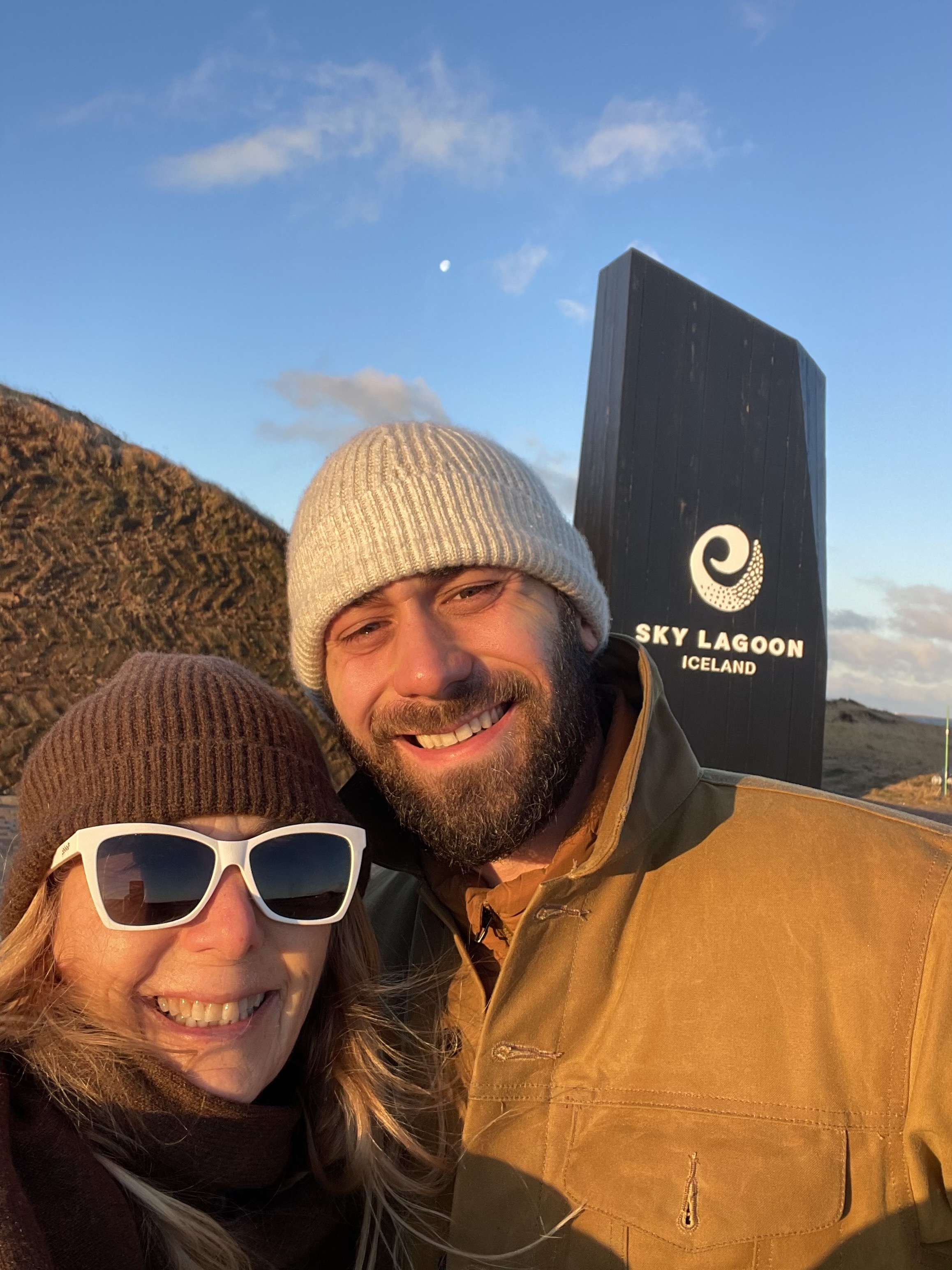
The only big city in Iceland, Reykjavik is 105 square miles with 300,000 people. The entire country is 39,768 square miles, about the size of Ohio, with a total population just under 400,000.
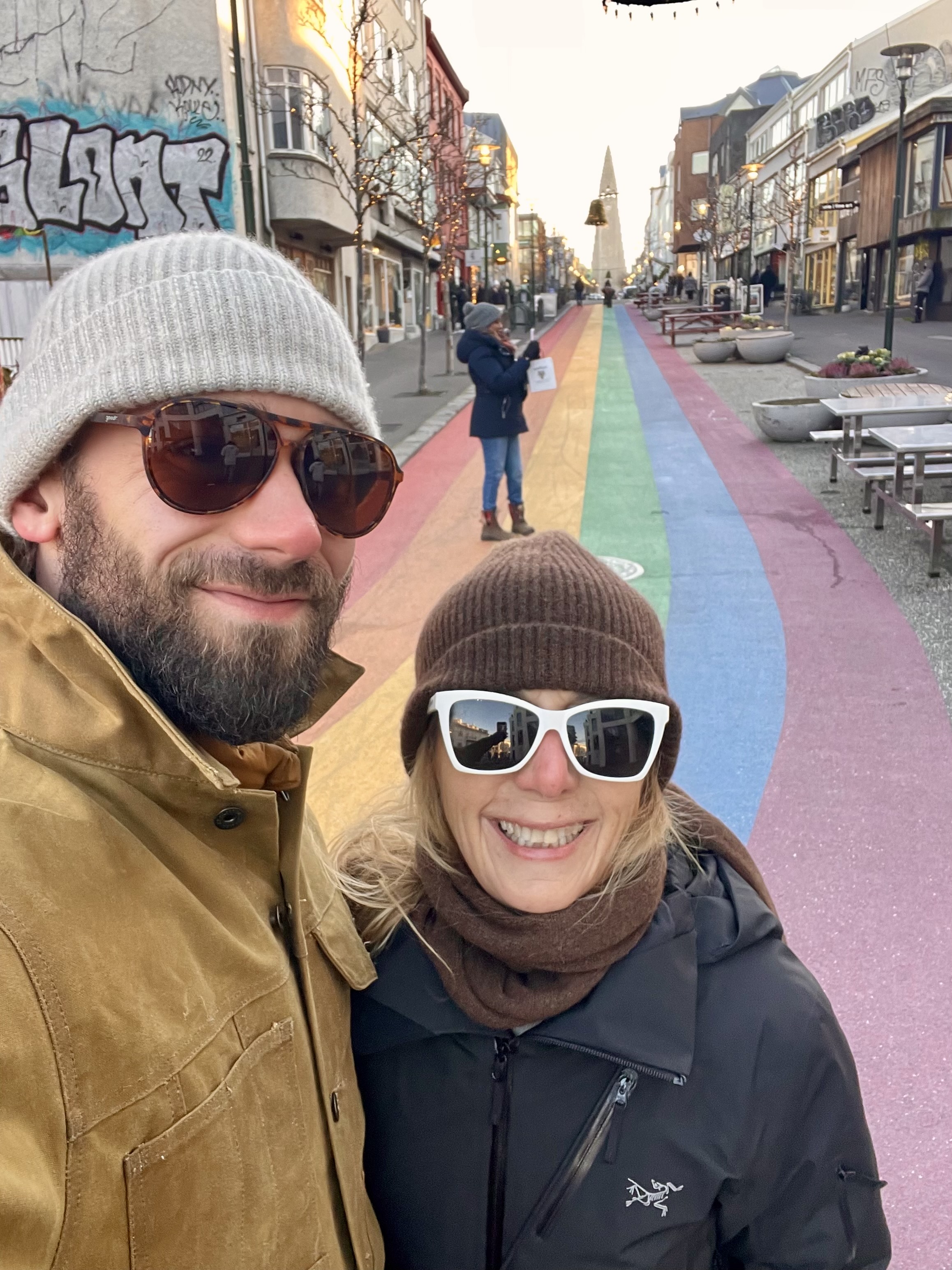
Locals seem very proud of their rainbow streets and welcoming attitude towards LGBTQ diversity. Reykjavik has hosted an annual Rainbow Pride Festival since 1999. It attracts up to 100,000 people from all over the world. I laugh looking at this photo when I see how red our noses are. The joy of exploring a new country was so poignant that even the cold was exciting.
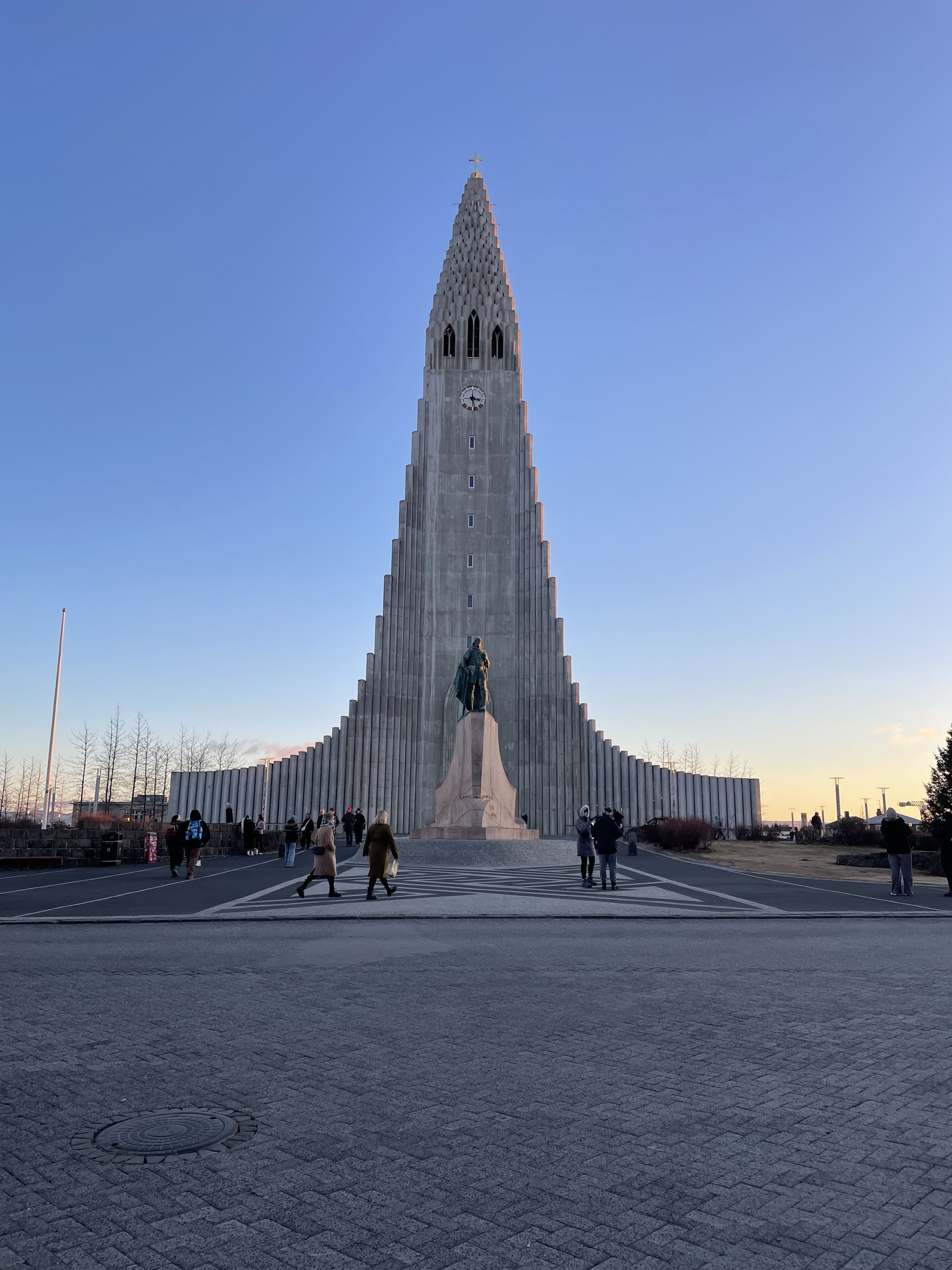
The towering Hallgrimskirkja Lutheran Parish is the largest church and one of the tallest structures in the country. It provides the backdrop to Rainbow Street (aka Skólavörðustígur).
The first day seemed like two. The combination of time difference (5 hours from my home in Virginia and 6 hours from Texas), sleepless night en route, and limited hours of sun made the days seemed so odd; a strange kind of jet lag. We had to continually orient to know what day it was. The second day was spent on the Golden Circle. The drive time isn’t overwhelming and there are interesting stops about every 30 minutes or so. The full circle is about a 4 1/2 hour drive then add in however much time you take at various stops.
Our first significant stop on the Golden Circle was Pingvellir National Park, a recognized UNESCO World Heritage site. It has a trail that goes by the historic parliamentary sites where laws were made during the Commonwealth Era (930 – 1262). There’s an area where two tectonic plates come together to form a 7 km rift valley plus it has the country’s largest lake, Lake Pingvallavatn.
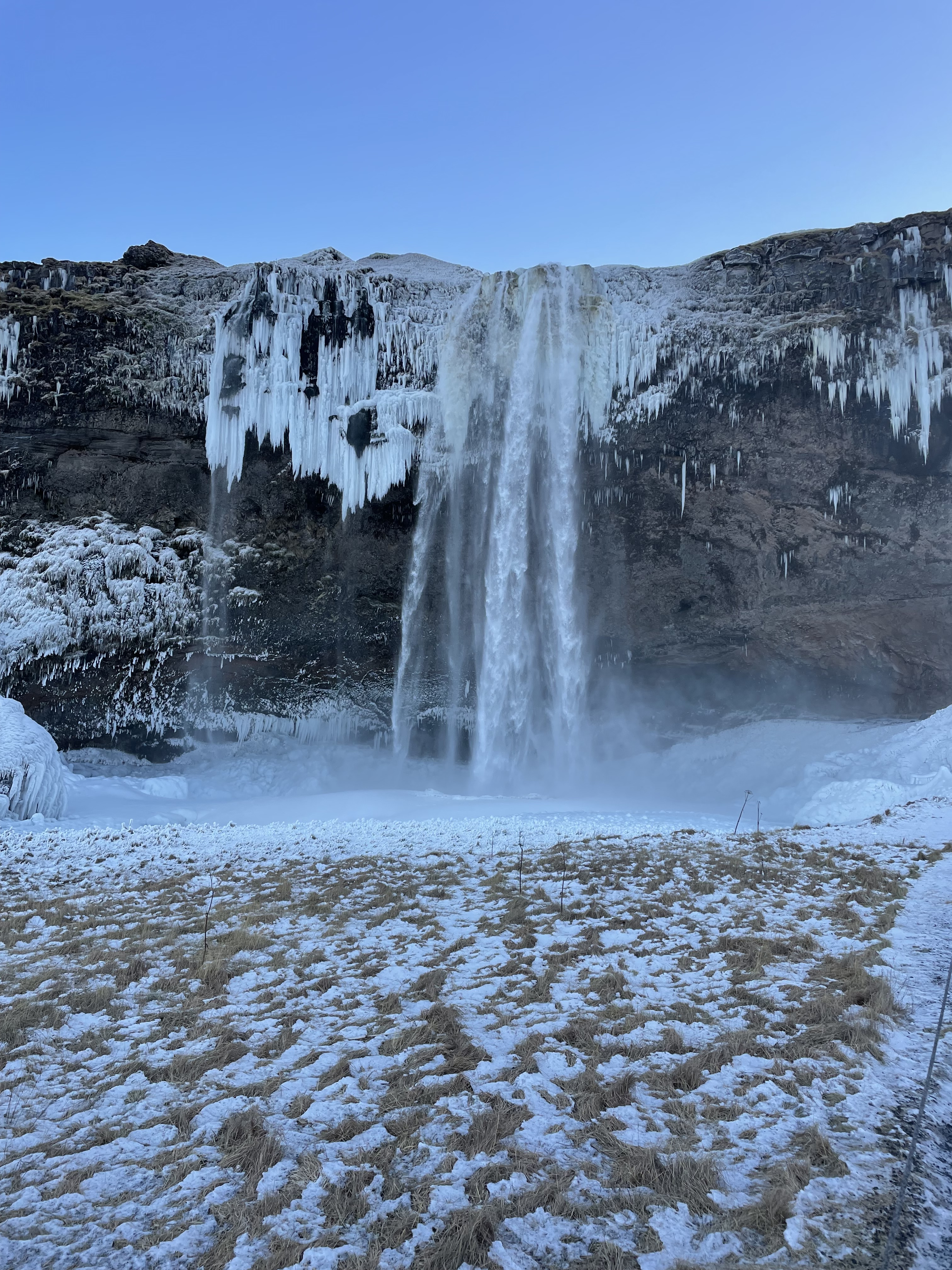
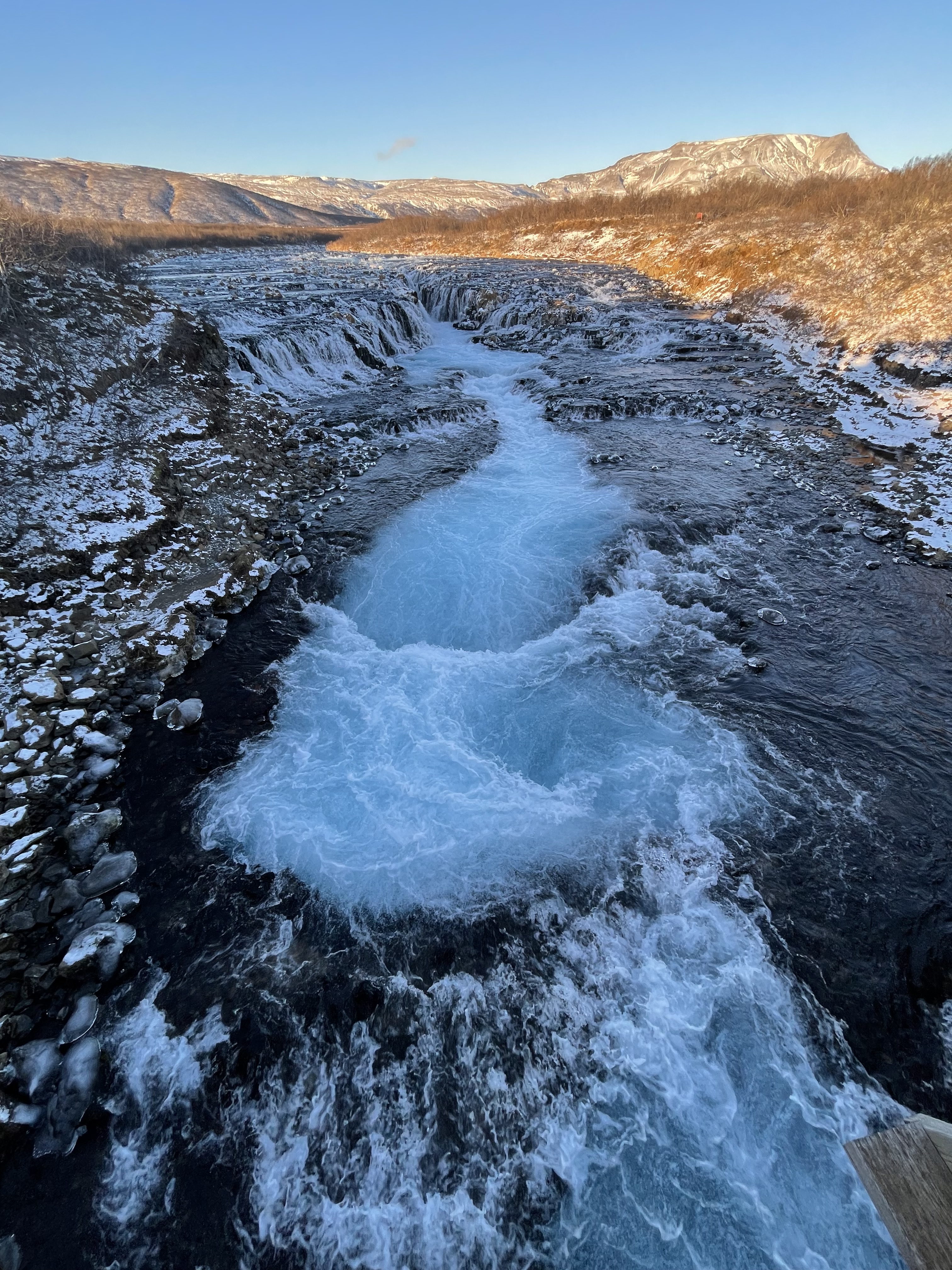
Further along the Golden Circle we stopped for the first of many waterfalls, crater lakes, and geysers. None of these photos have been color enhanced. The water is truly that clear and blue.
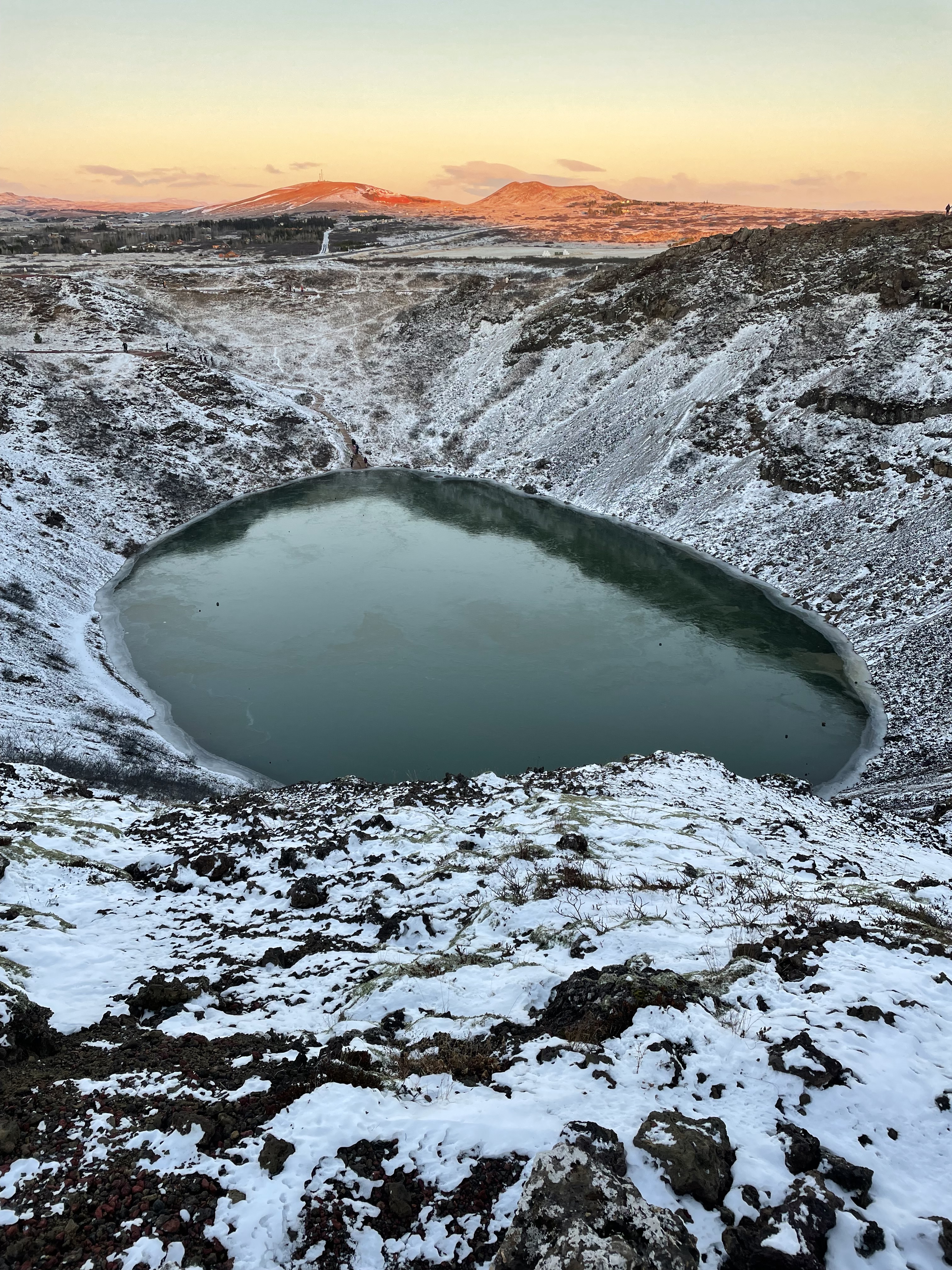
Below is a picture of the Kerid volcanic crater lake. There’s a walking path around the rim and another that goes down to the frozen lake.
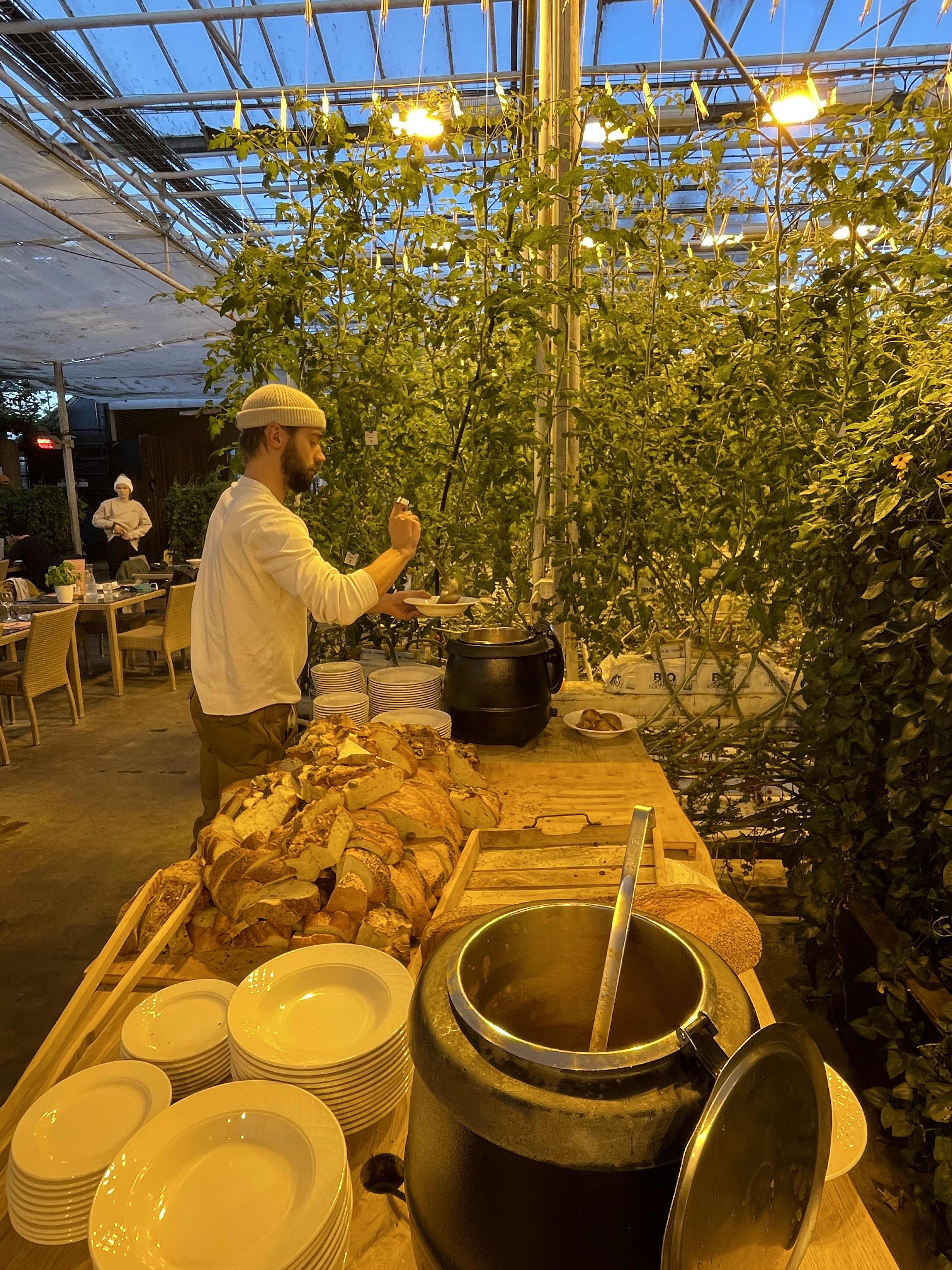
For lunch we stopped at the tomato restaurant inside a huge greenhouse. The nursery and restaurant are owned and operated by a local family. Since the weather doesn’t allow fruits or vegetable farms without greenhouses this is both valuable produce and a tourist attraction. Tomatoes grown at this nursery provide approximately 2/3 of the tomatoes consumed in the country. It was interesting and inspirational but, in my humble opinion, the tomatoes lacked much flavor. Like John Denver said, “Only two things money can’t buy; that’s true love and home grown tomatoes.”
With daylight limited to about 4 hours each day, we tried to make the most of it and generally planned to get to our hotel by nightfall. The roads are quite good but I highly recommend getting a 4-wheel drive vehicle. I heard multiple stories about people getting charged by rental companies for windshield dings from flying rocks.
We spent the second night at the Ion Adventure Hotel which is near a geothermal energy plant. Most all of the architecture and decor throughout the country seems minimalist and blends well with the environment.
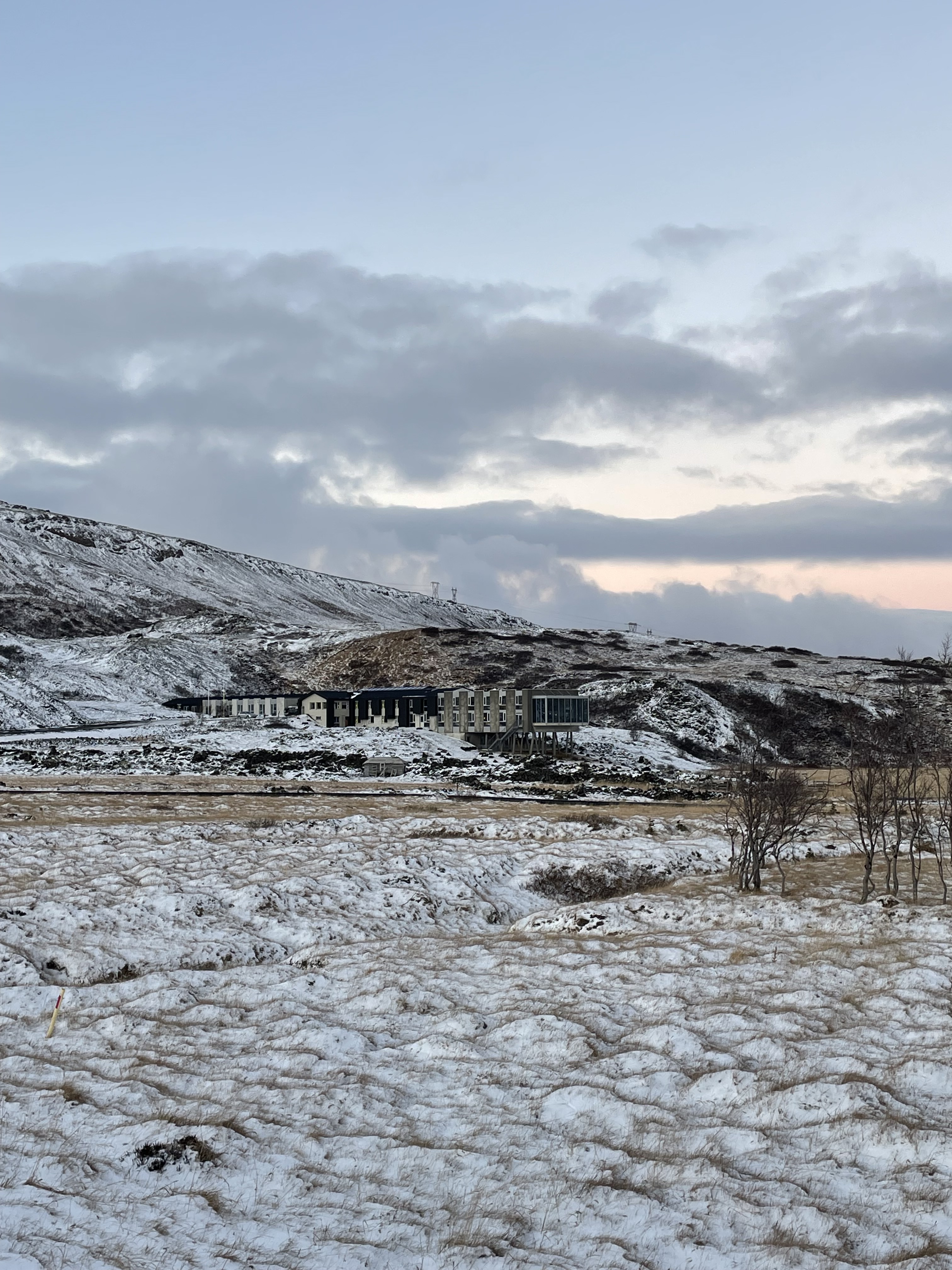
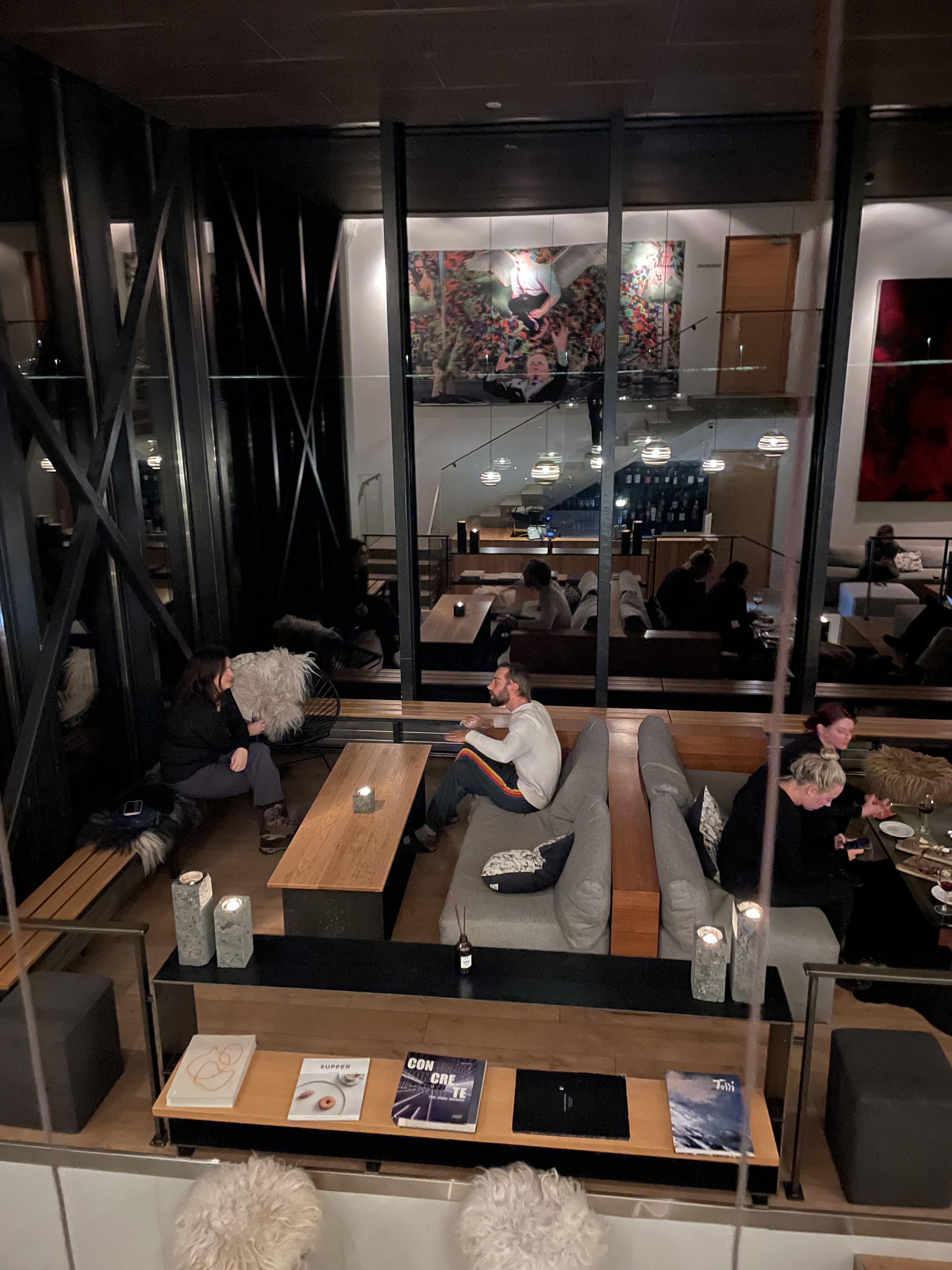
Geothermal energy is used to heat 85% of Icelandic homes and geothermal power plants generate 25% of Iceland’s electricity. We were cozy inside all buildings so the geothermal heating is definitely warmer than the heat pumps we use where I live. The Ion Hotel is terrific! We were met with a flute of champagne and a friendly host. There’s an outdoor, heated pool with a sauna plus a glass-walled lounge for viewing the Aurora Borealis (the Northern Lights). Typical of traveling, we met fun people in the pool who shared travel tips and laughs. The couple from Denmark told us they visit a couple times every year. So many people we met fell in love with Iceland and either relocated or keep returning. Truly, there’s something alluring about the land and the people.
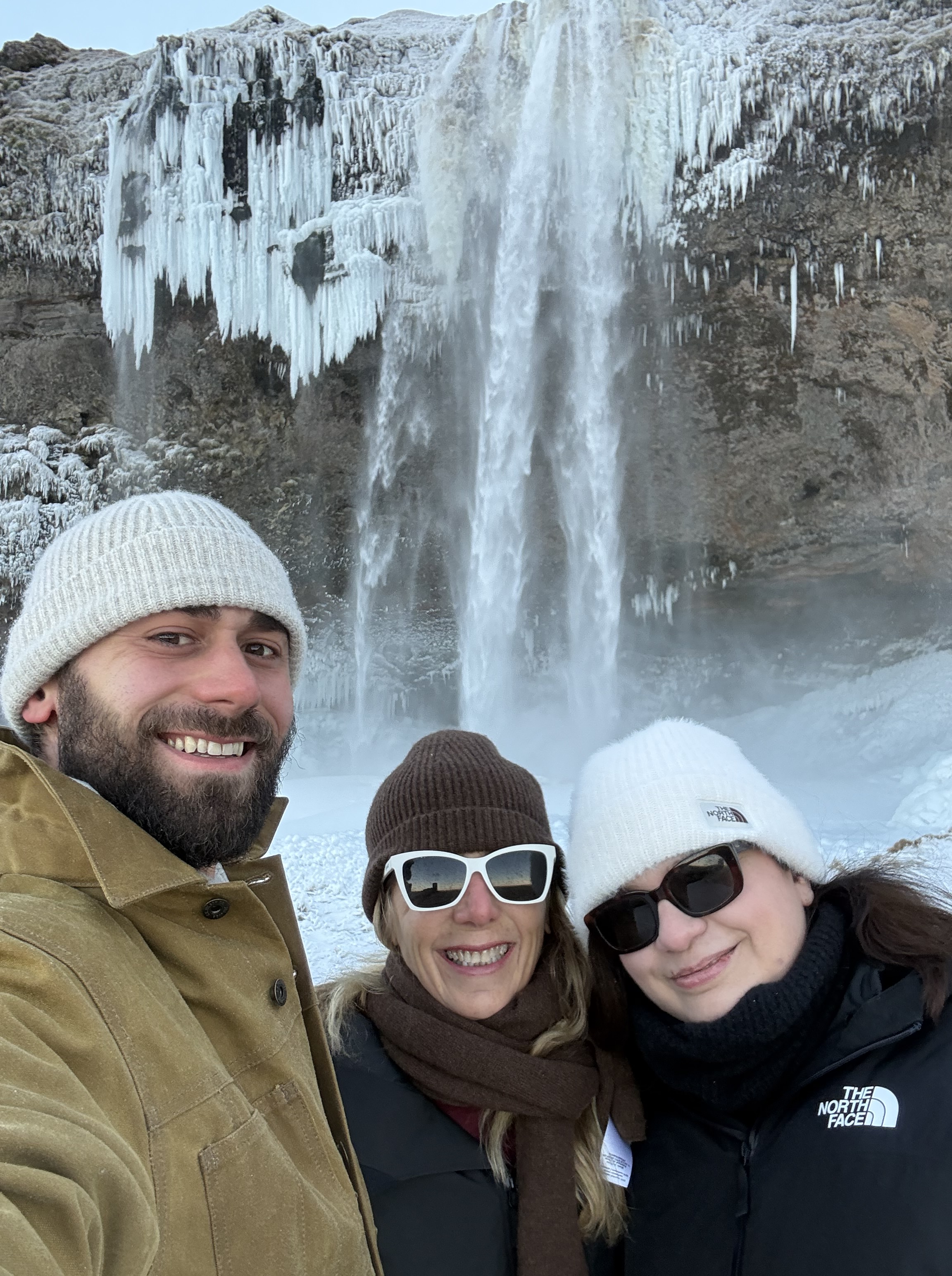
Our French friend, Celine, joined us for the next few days as we headed to the South Coast.
The drive from the Golden Circle to the South Coast is easy enough and very scenic. This is Seljalandsfoss waterfall. If you don’t mind getting wet, you can walk behind it. There’s a faint rainbow in it but sometimes it gets a bright, double rainbow.
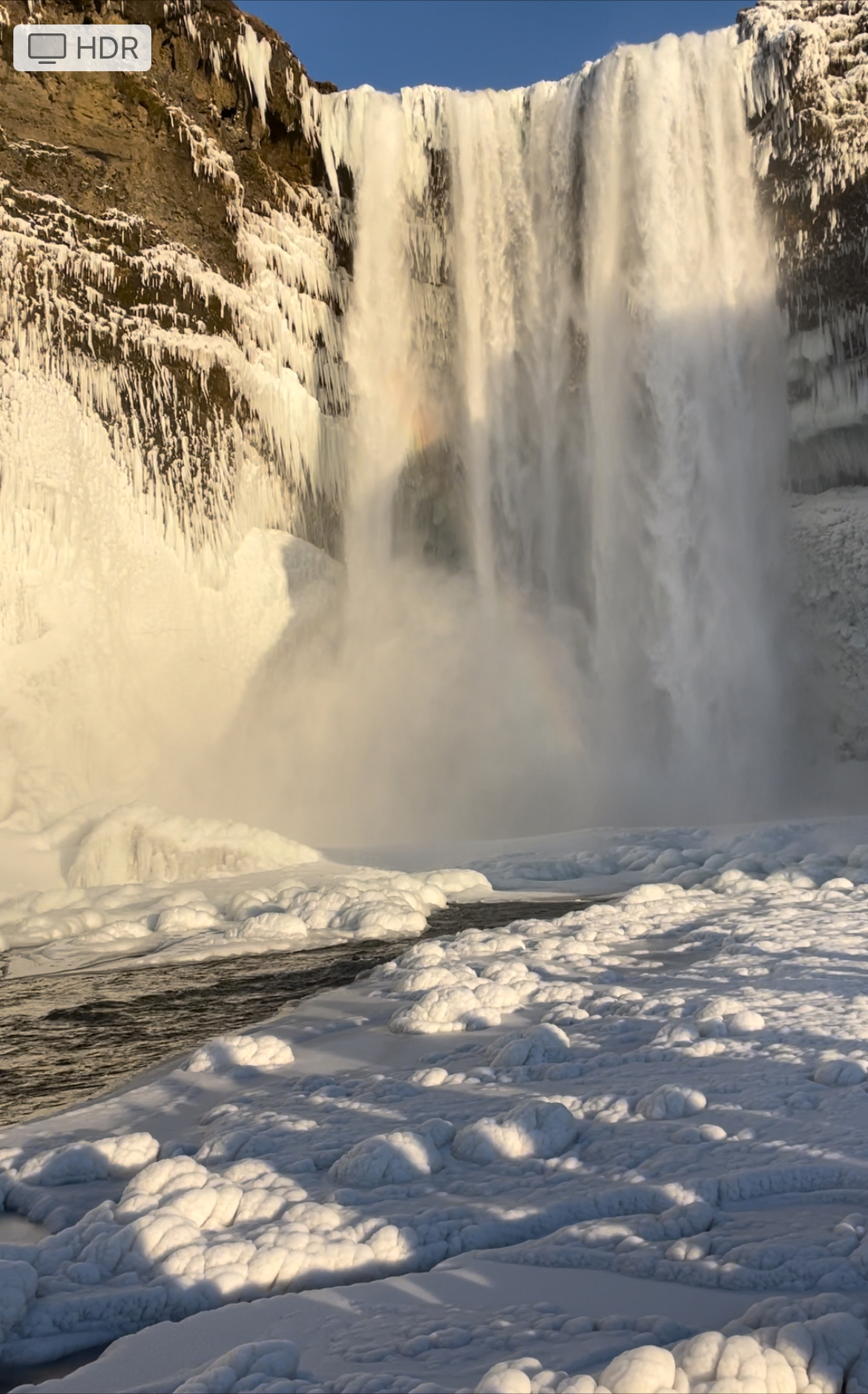
A little farther east is the Skogafoss waterfall, one of biggest waterfalls in the country. It has a 200 foot drop and is about 82 feet wide.
We continued further east to the small town of Vik where we enjoyed a lovely lunch in an old home converted to a cafe, Sudar-Vik, then checked in to our hotel, Black Beach Suites. The hotel is a combination of small efficiency apartments on the beach with a main building for a hostel. We walked out on the black sand for sunset.
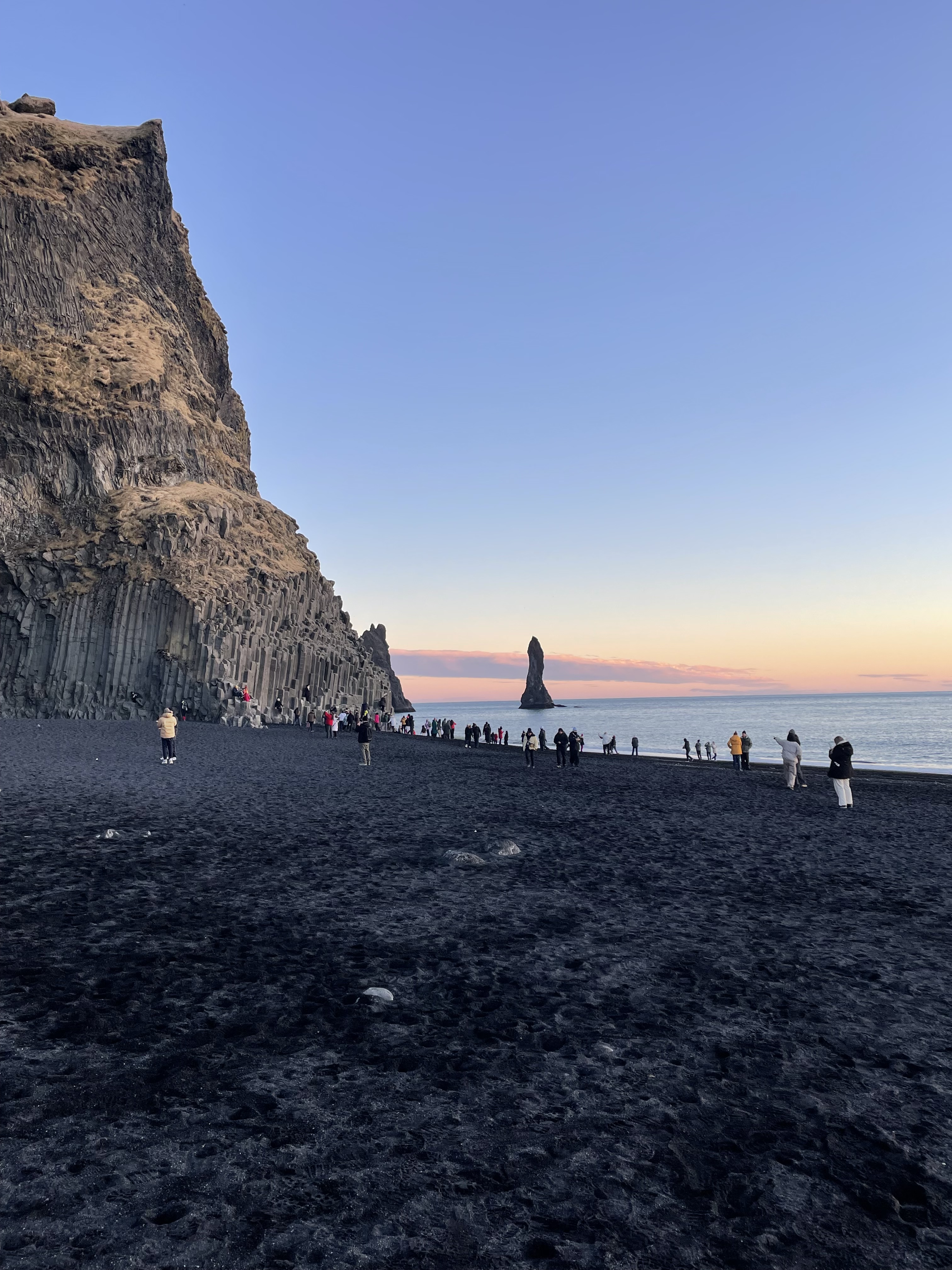
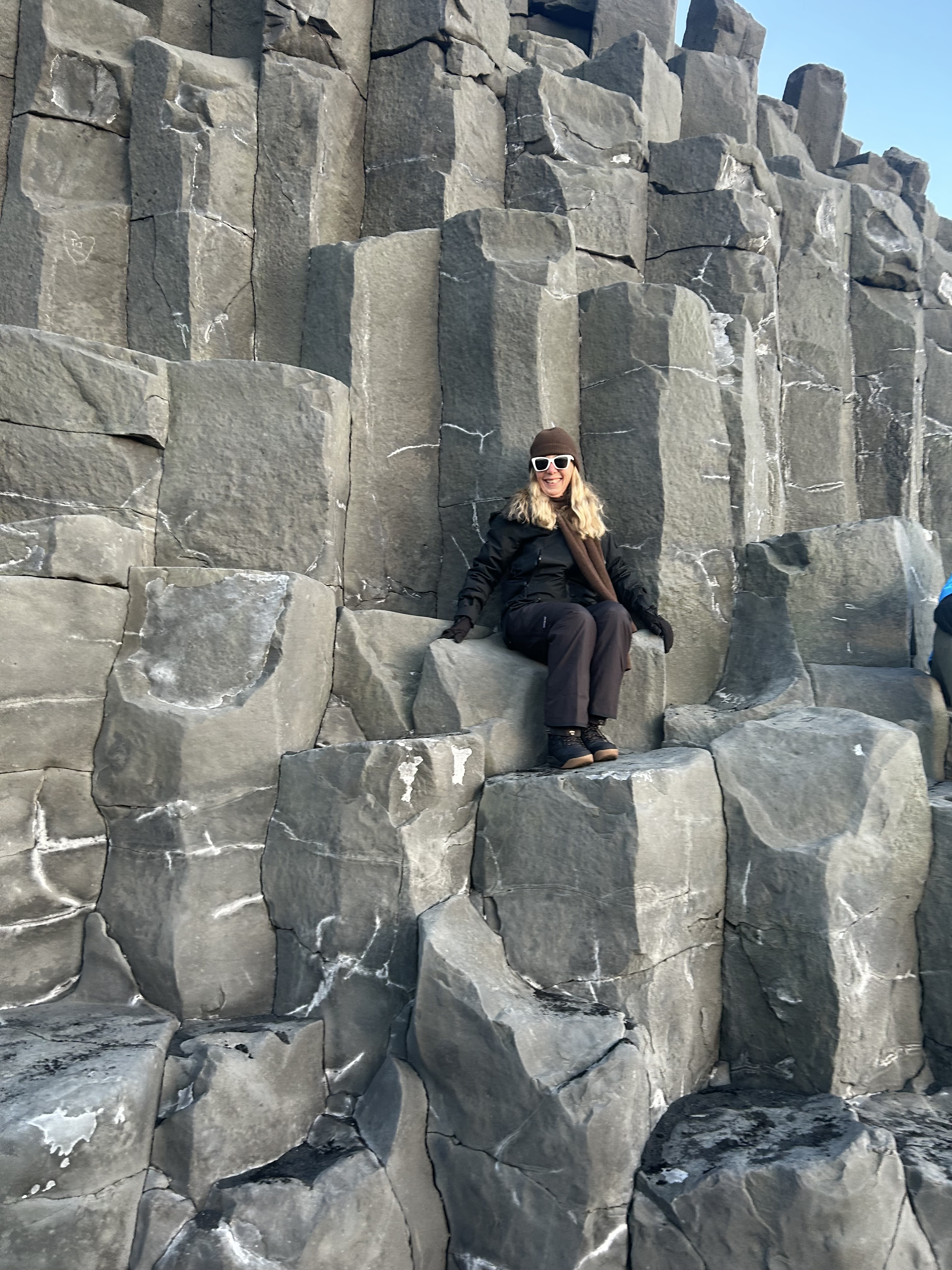
Those cliffs are completely natural and great for climbing.
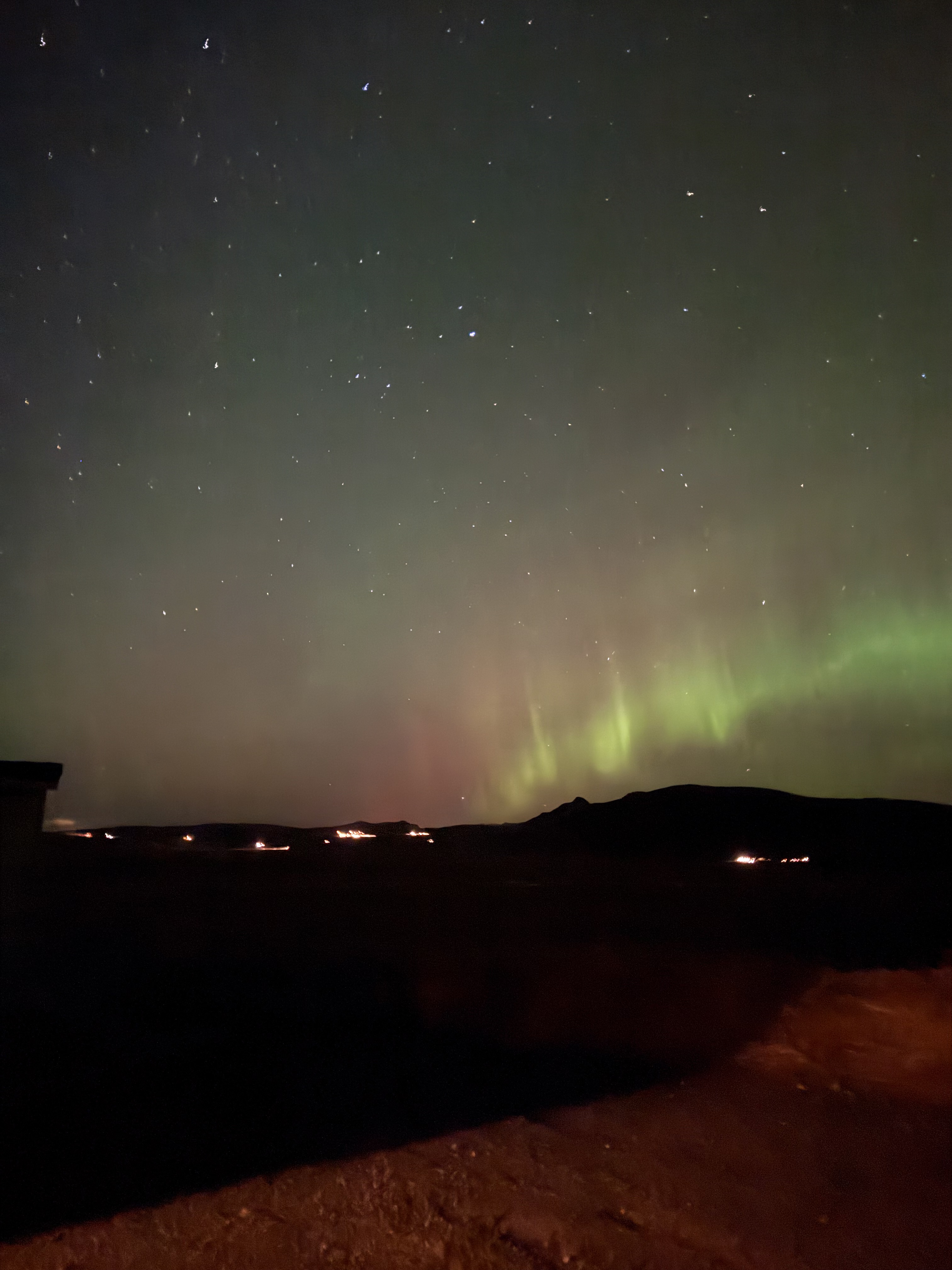
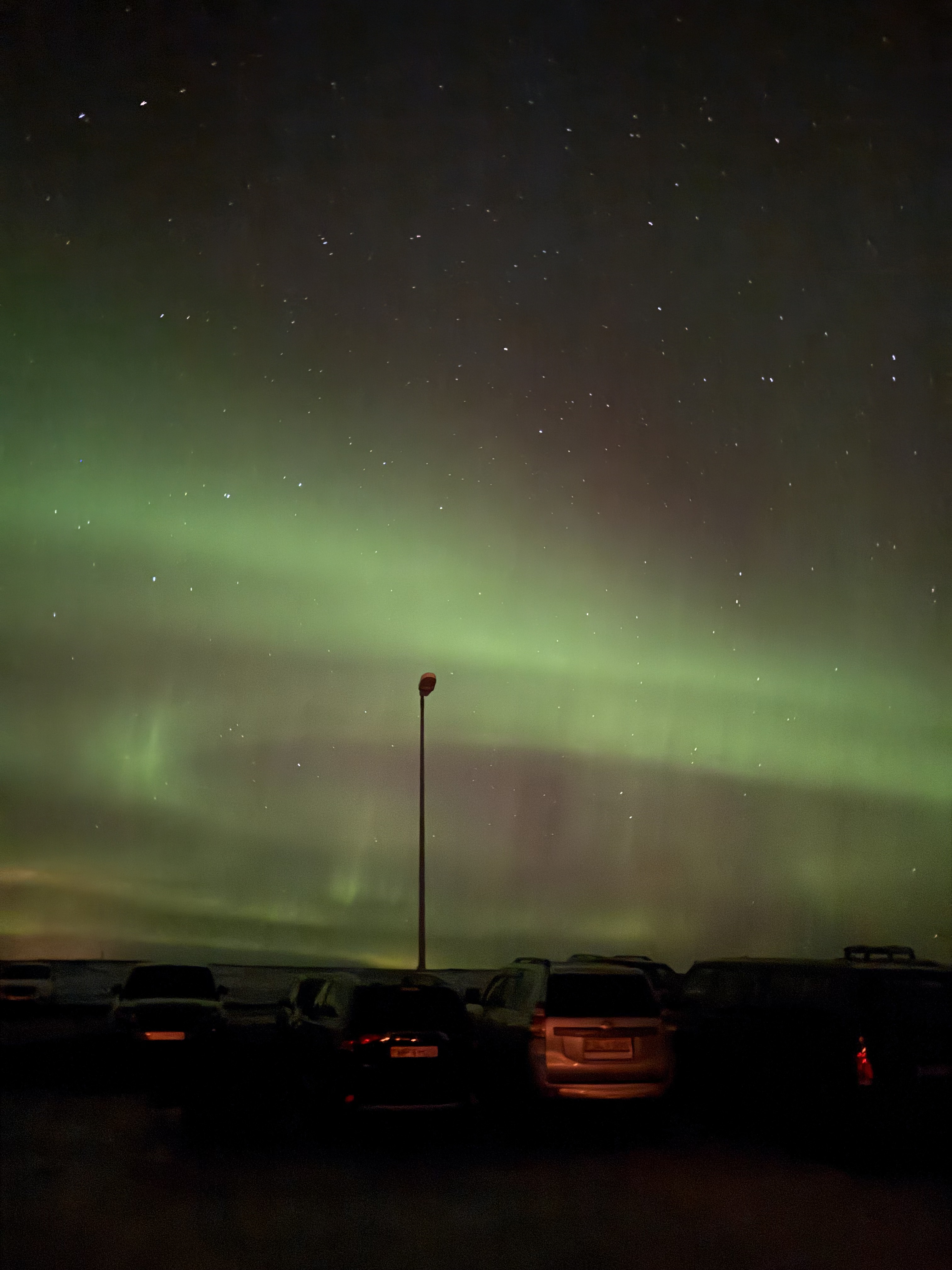
After dinner, we got our first view of the Aurora Borealis! There was no guarantee we’d see the Aurora but we planned 4 nights away from city lights and we got lucky. Don’t know that I have a “bucket list” but if I do, this was on it.
The next day we met up with a guide before sunrise (not that it’s early) and drove off-road to a glacier. Watching the sunrise over a glacier was a unique and magical experience. The landscape is unlike anything I’ve ever seen — the product of time and weather working together to create something special. It’s just another reminder of the force of nature. So crazy that the entire country was made by volcanic eruptions yet it’s covered with ice and glaciers. It’s extreme and contradictory but as real as it gets!
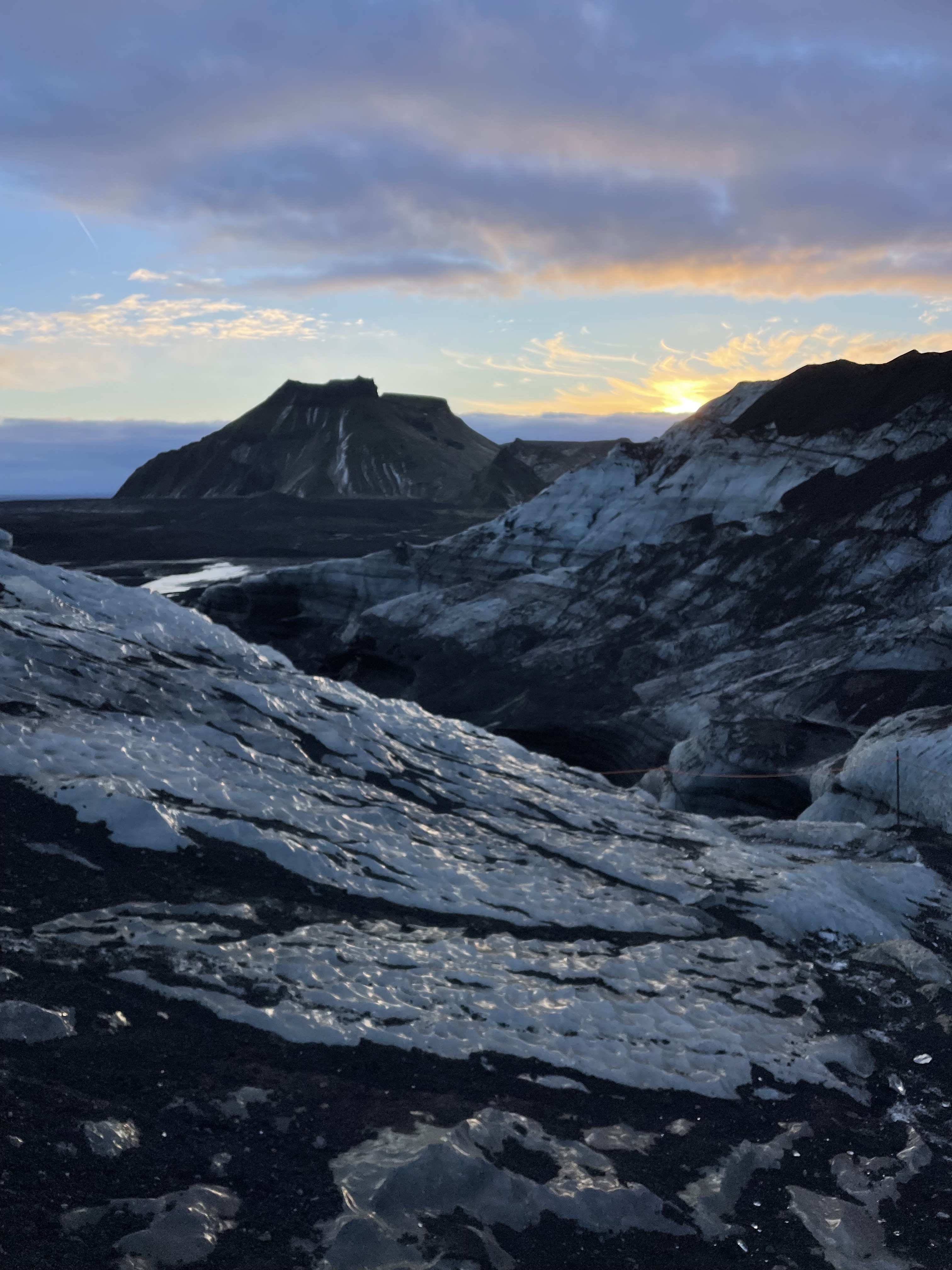
The compressed ice layered with volcanic ash gives it a striped look.
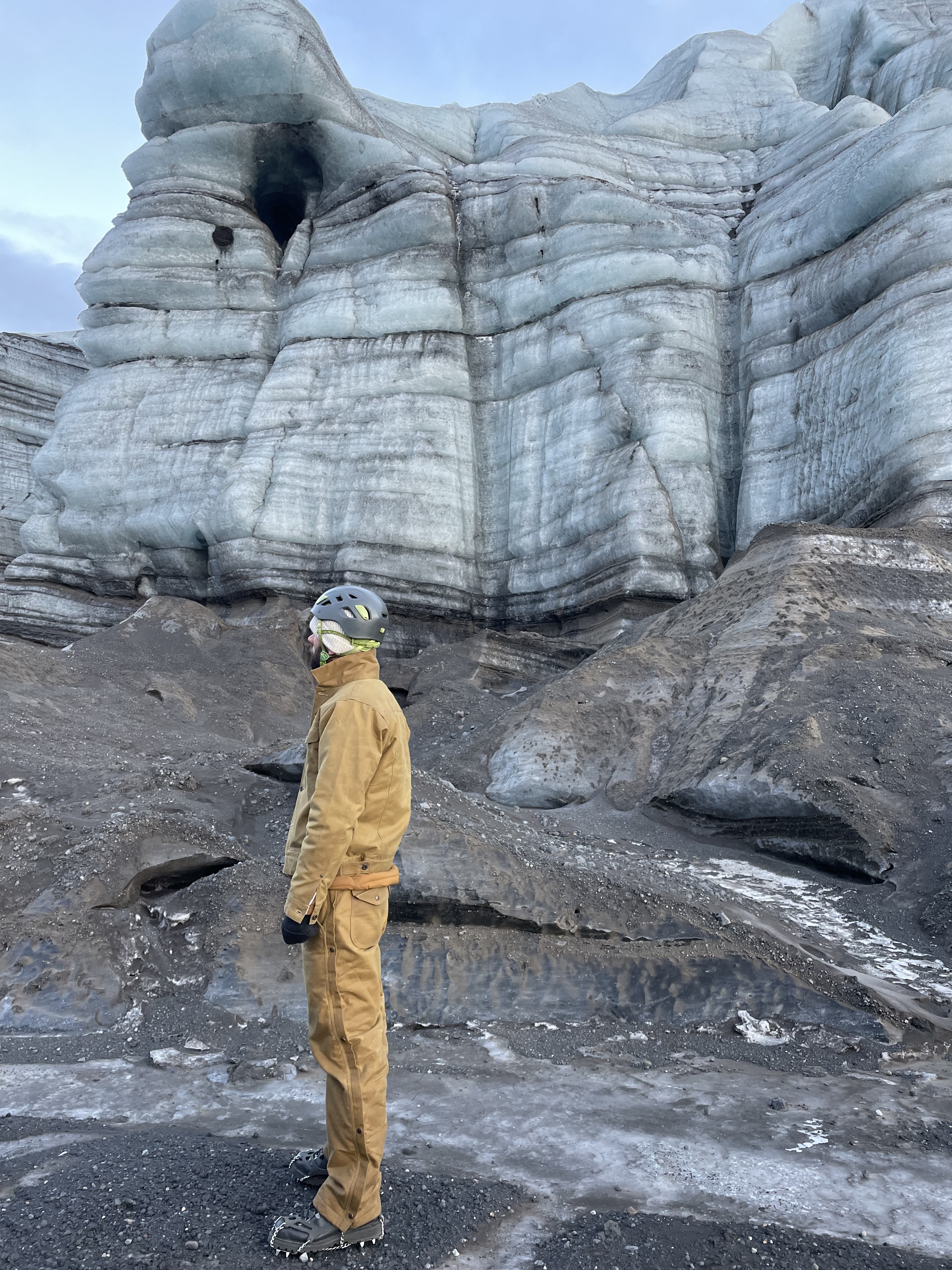
Our guide provided helmets and spikes for our shoes so we could walk on the glacier and hike into ice caves. As long as it wasn’t windy, we were quite comfortable in our layered clothes.
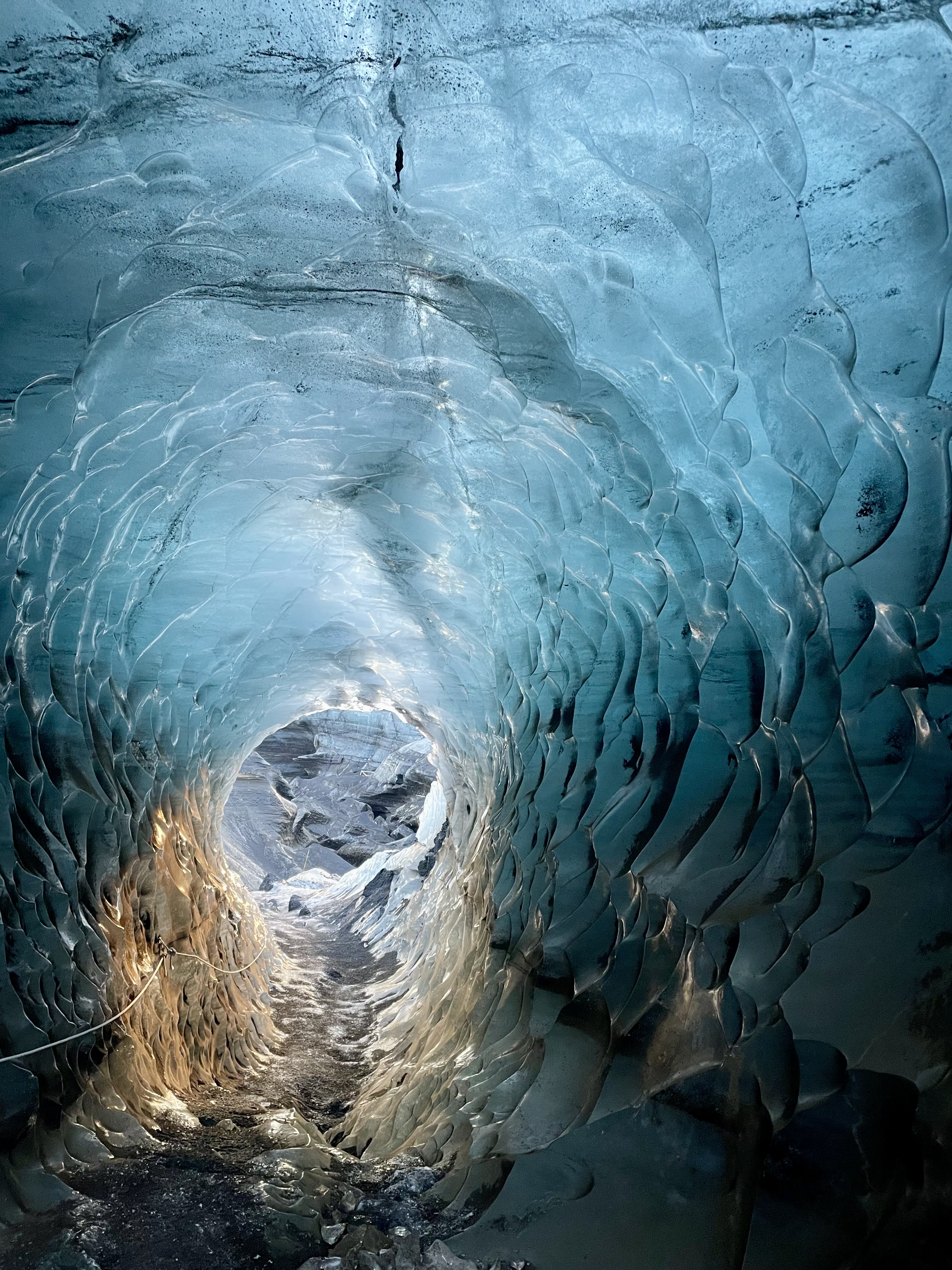
Lunch was tasty fish or lamb stew in a black bread bowl. We had uniformly delicious breads throughout the country and all of it was fresh-baked. I don’t think we were ever offered anything with preservatives. This drink was called a grape cocktail but turned out to be grapefruit. So funny!
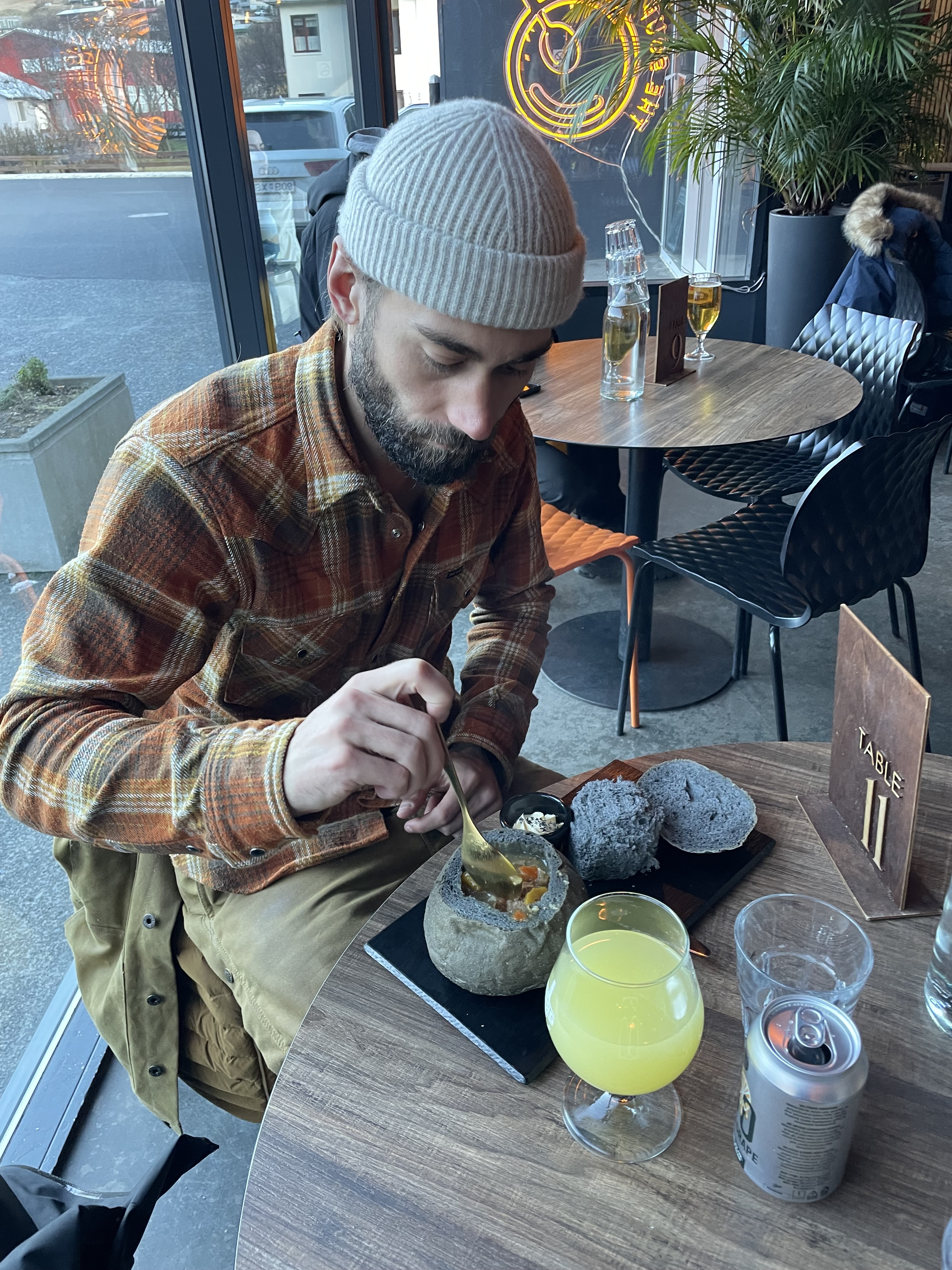
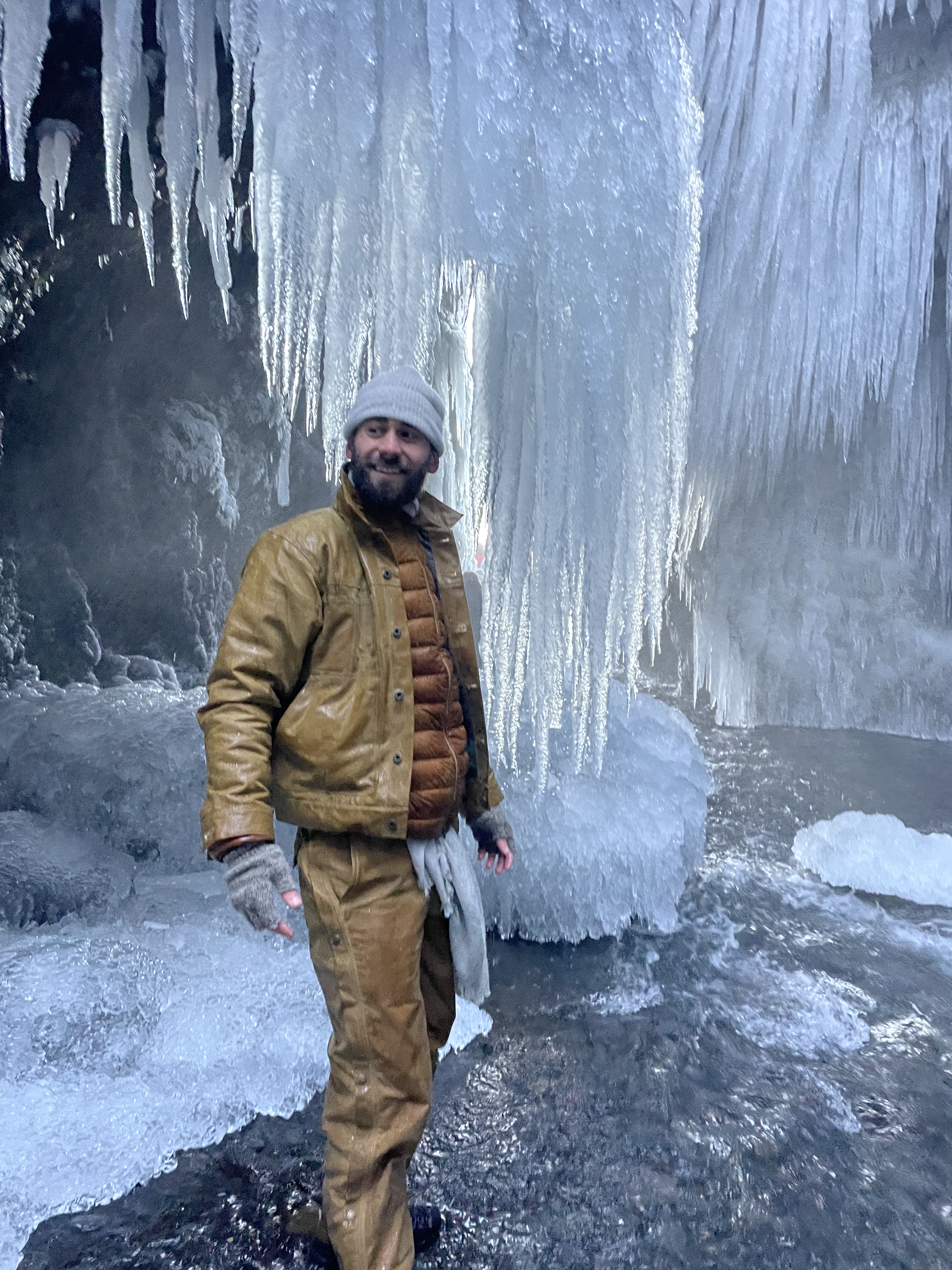
On the way to our next hotel, we stopped again at Seljalandsfoss but this time we walked past the first, big waterfall to another that, while tall, is smaller than the first and not many people took the effort to reach.
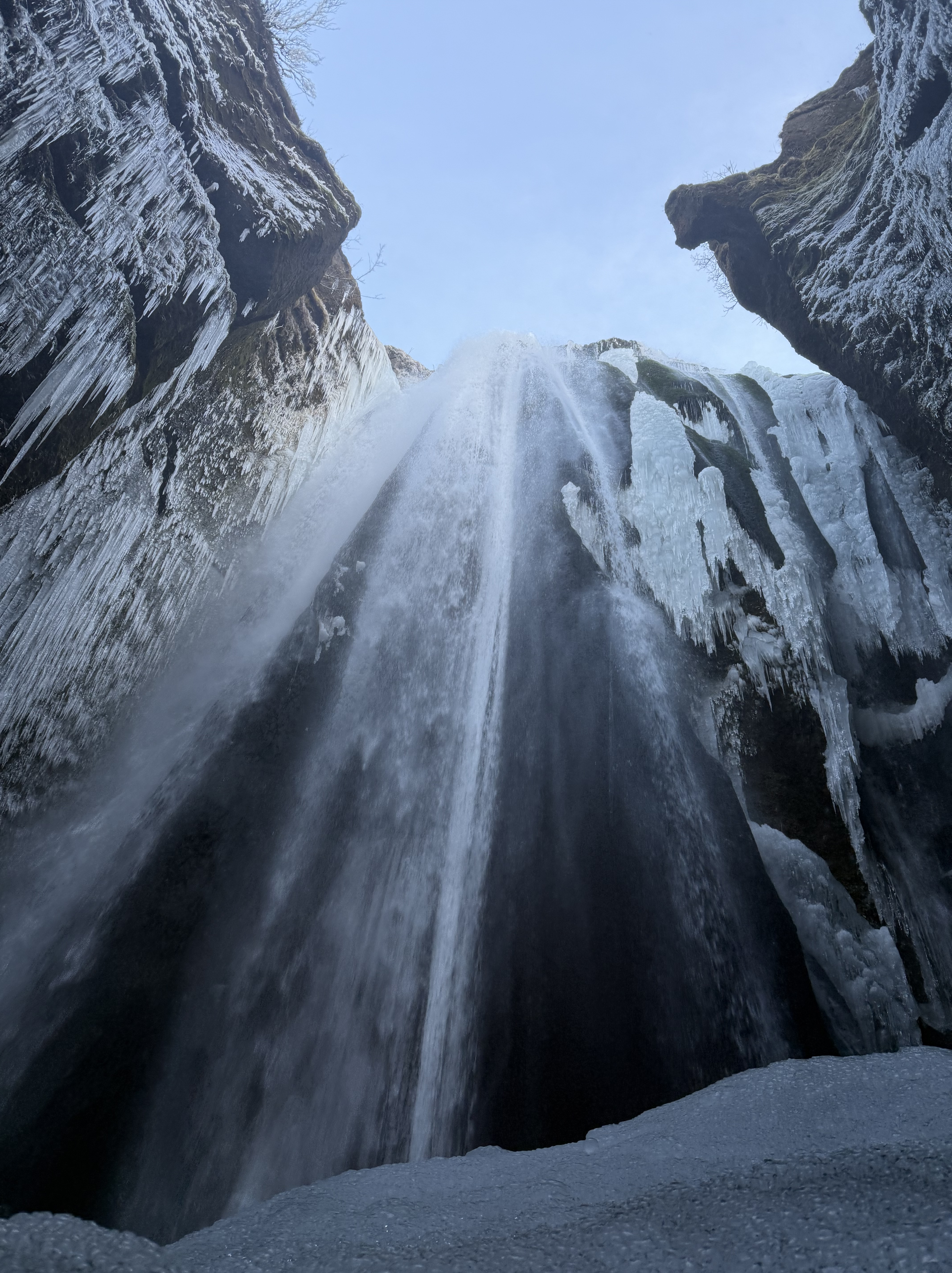
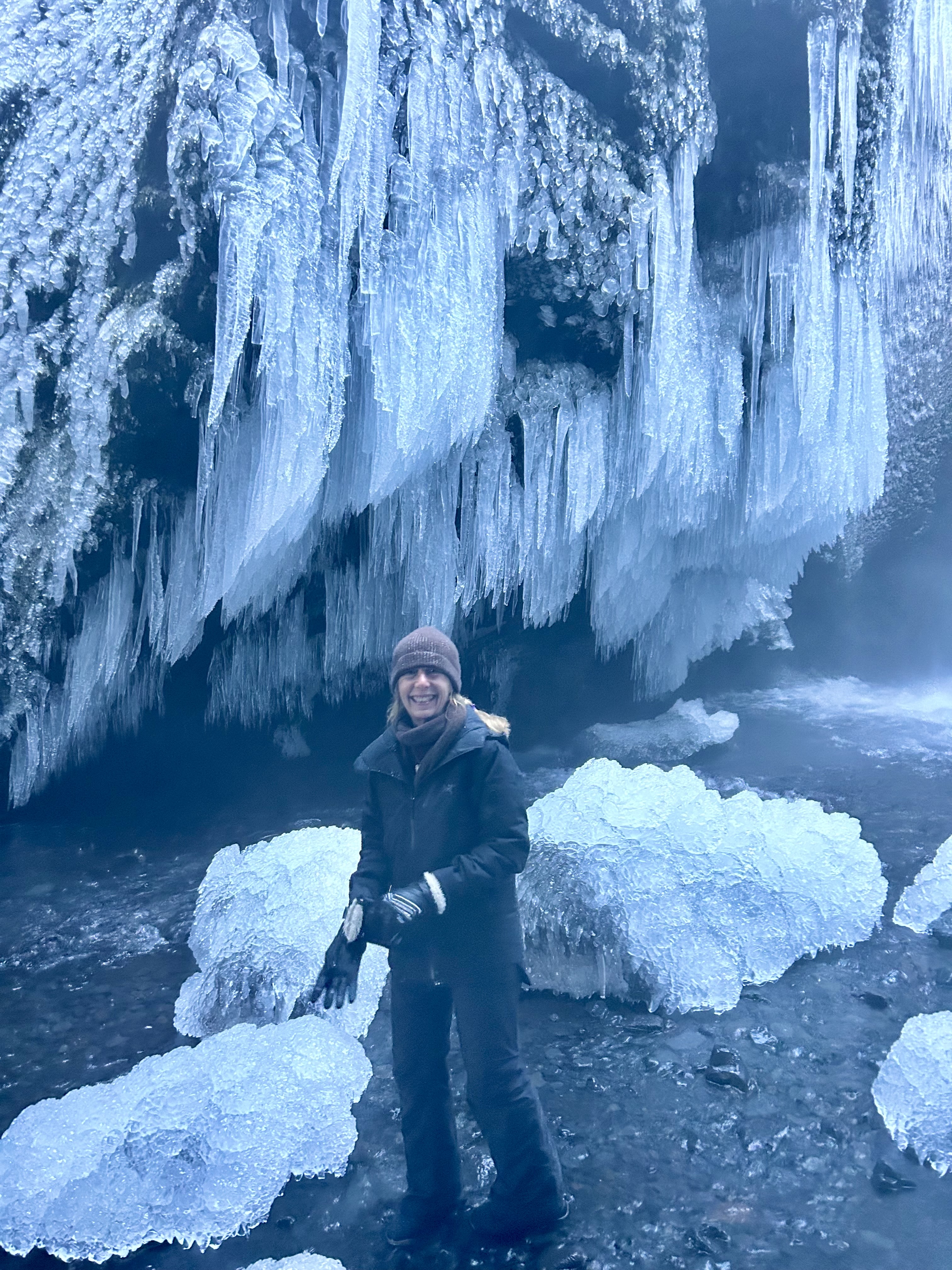
The super cool thing about it was walking under and behind the falls to an area like a cave full of ice cycles!
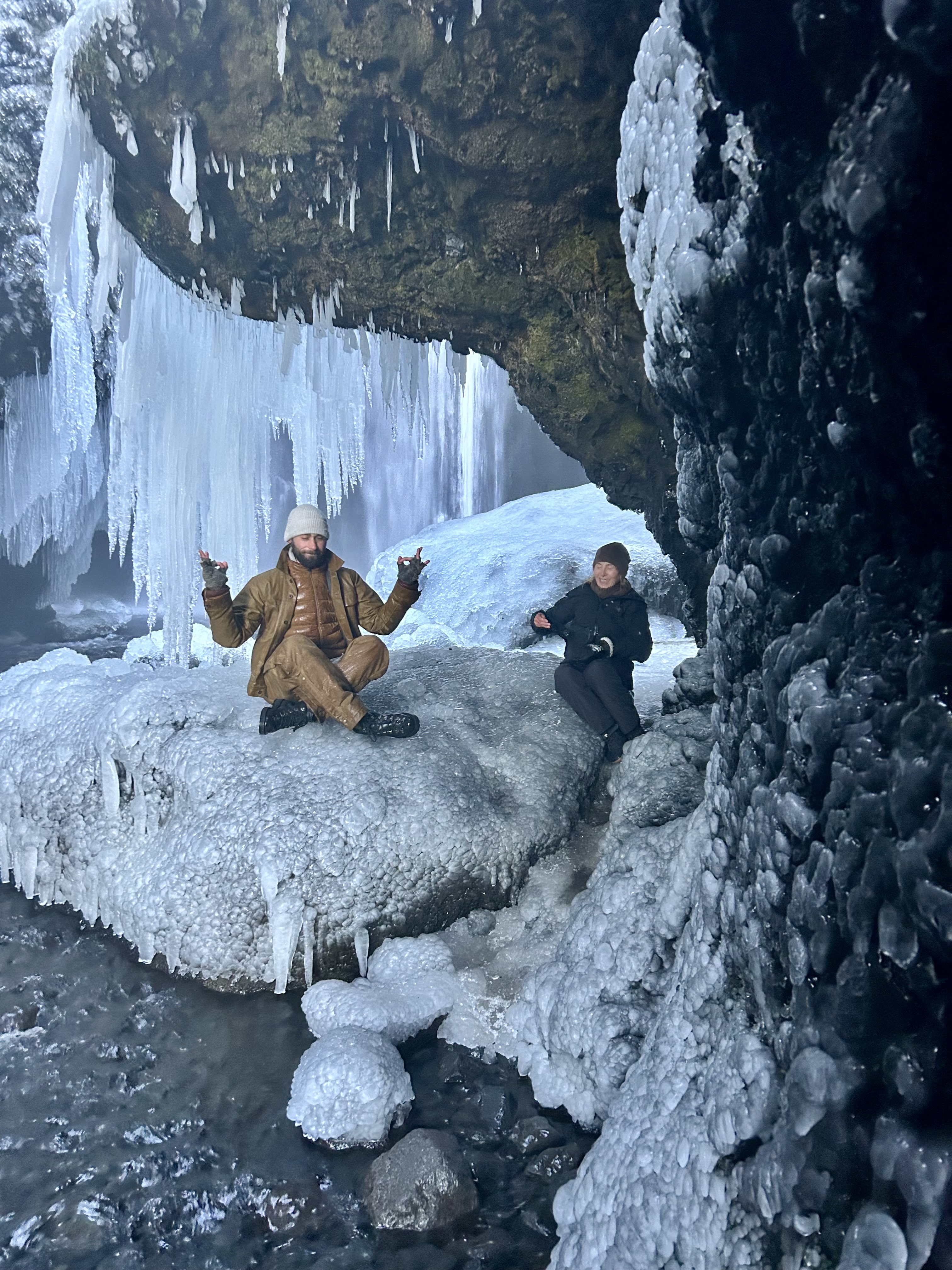
Just so magical! Yes, our feet got wet but we wore waterproof boots with warm, smart-wool socks and I really didn’t care. So worth it!
The fourth night we stayed at the Ranga Hotel which is highly-rated and was greatly anticipated. Like most places, they have a wake-up option to call when/if the Aurora Borealis begins but we also consulted an app that alerted us to the probability and the time of a light show. The hotel has hot tubs which were just perfect after a day on the ice. We shared ours with an interesting couple from Ireland. Happy hour in a hot tub, sharing travel stories, and reflecting on the day’s events was so fun it was tempting to stay in too long but I almost passed out after the heated pool at Ion so I was careful to get out while I could still navigate the icy path back to my room.
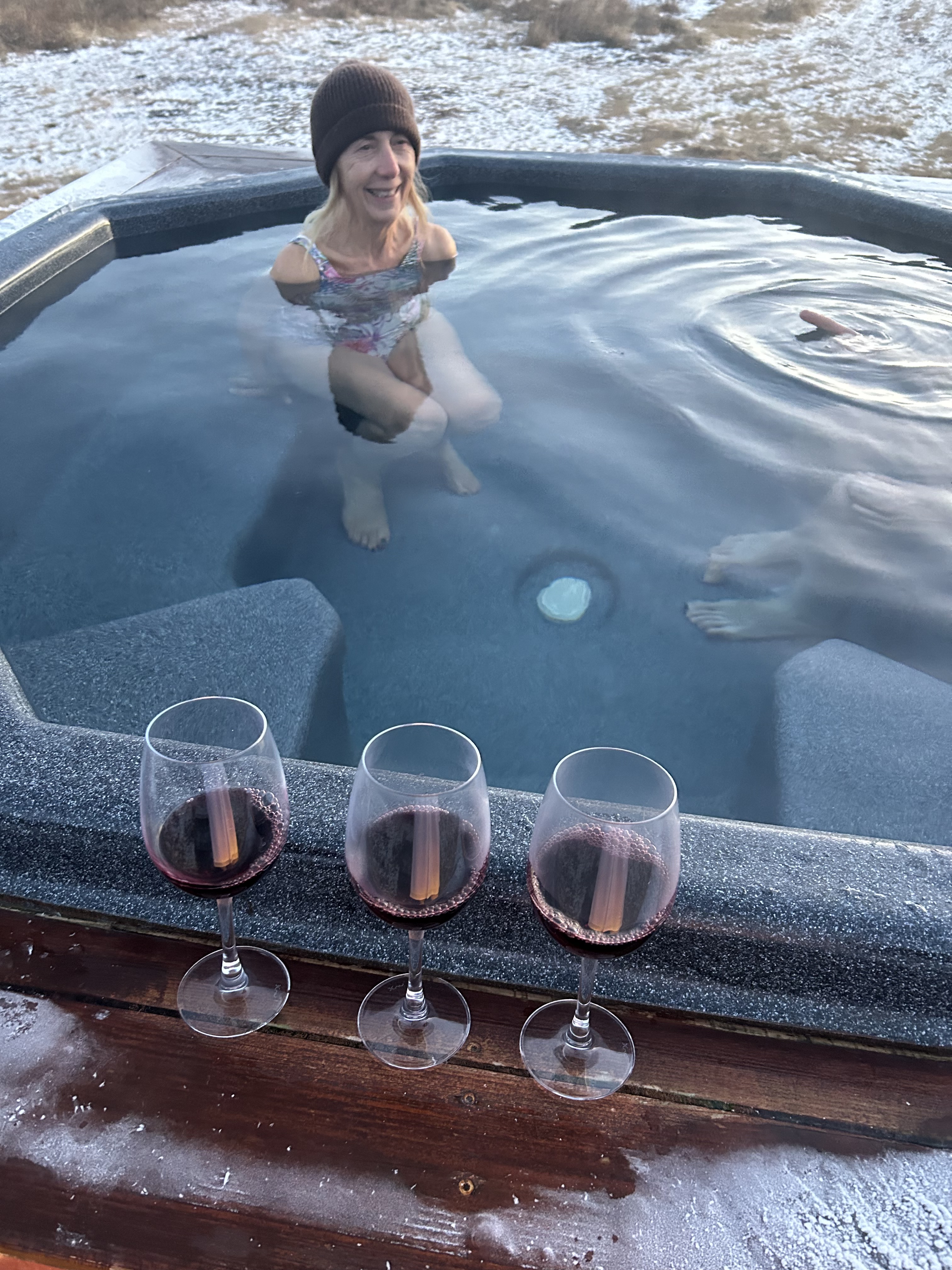
The complimentary bottle of Spanish wine was in appreciation for booking directly instead of through a third-party. Several places we stayed made similar gestures. After a delicious dinner in the hotel restaurant, we put our cold-weather clothes back on and went out in hopes of a light show. The hotel had insulated overalls to slip on as an option.

We were not disappointed!
Morning again and we used our daylight to visit another waterfall and some ancient man-made caves. It was cold and windy but no precipitation.
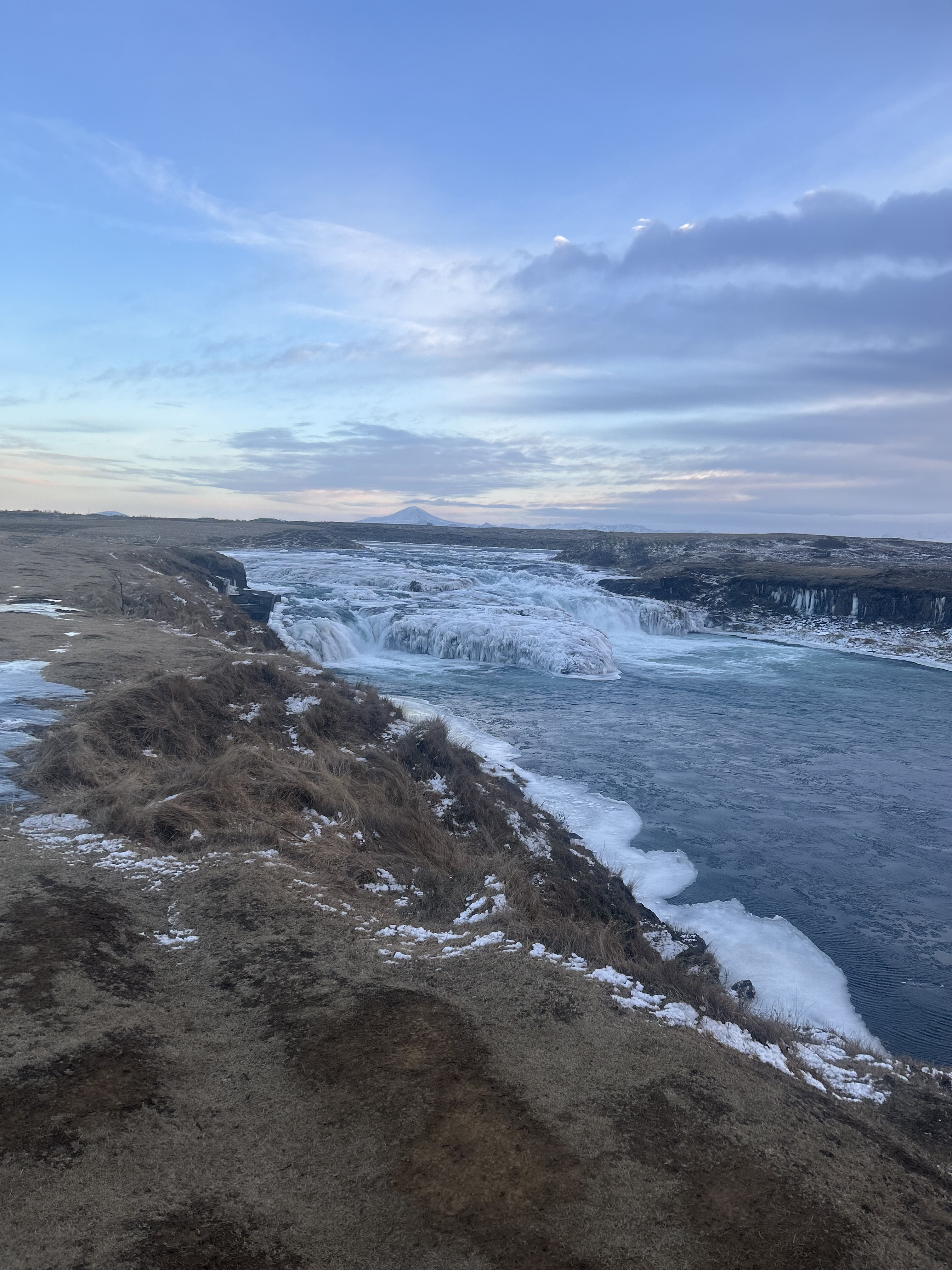
This was a beautiful area but it was very windy so we didn’t spend much time here. When the wind died down, the cold temperature was fine but hiking with the wind howling was another story.
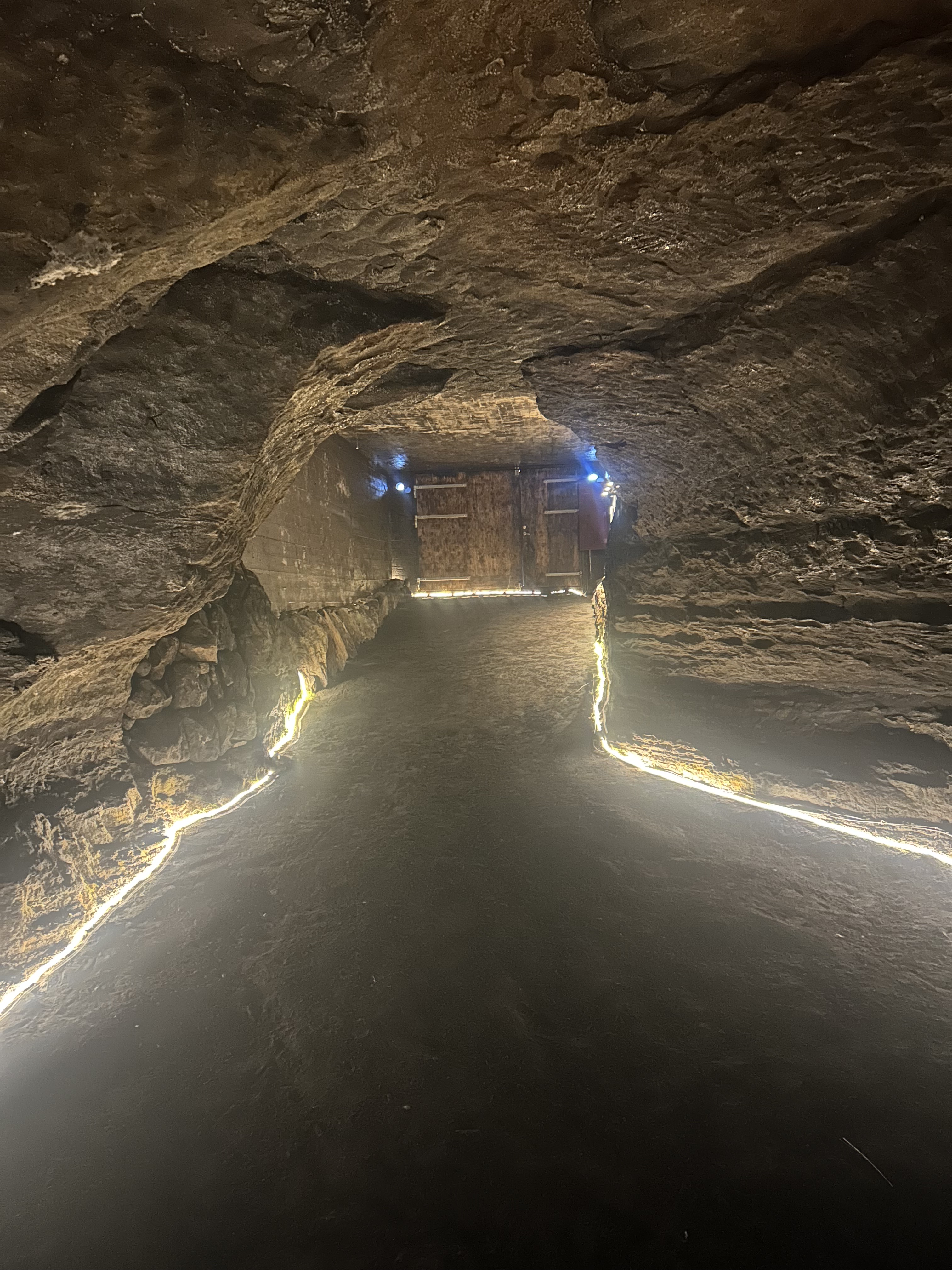
The history of these caves is sketchy and seemed to be mostly speculation but, pretty sure, they were used for shelter and storage for people, animals and harvests. Just driving through the countryside was time well-spent. We passed mile after mile of gorgeous landscapes with very few buildings of any kind.
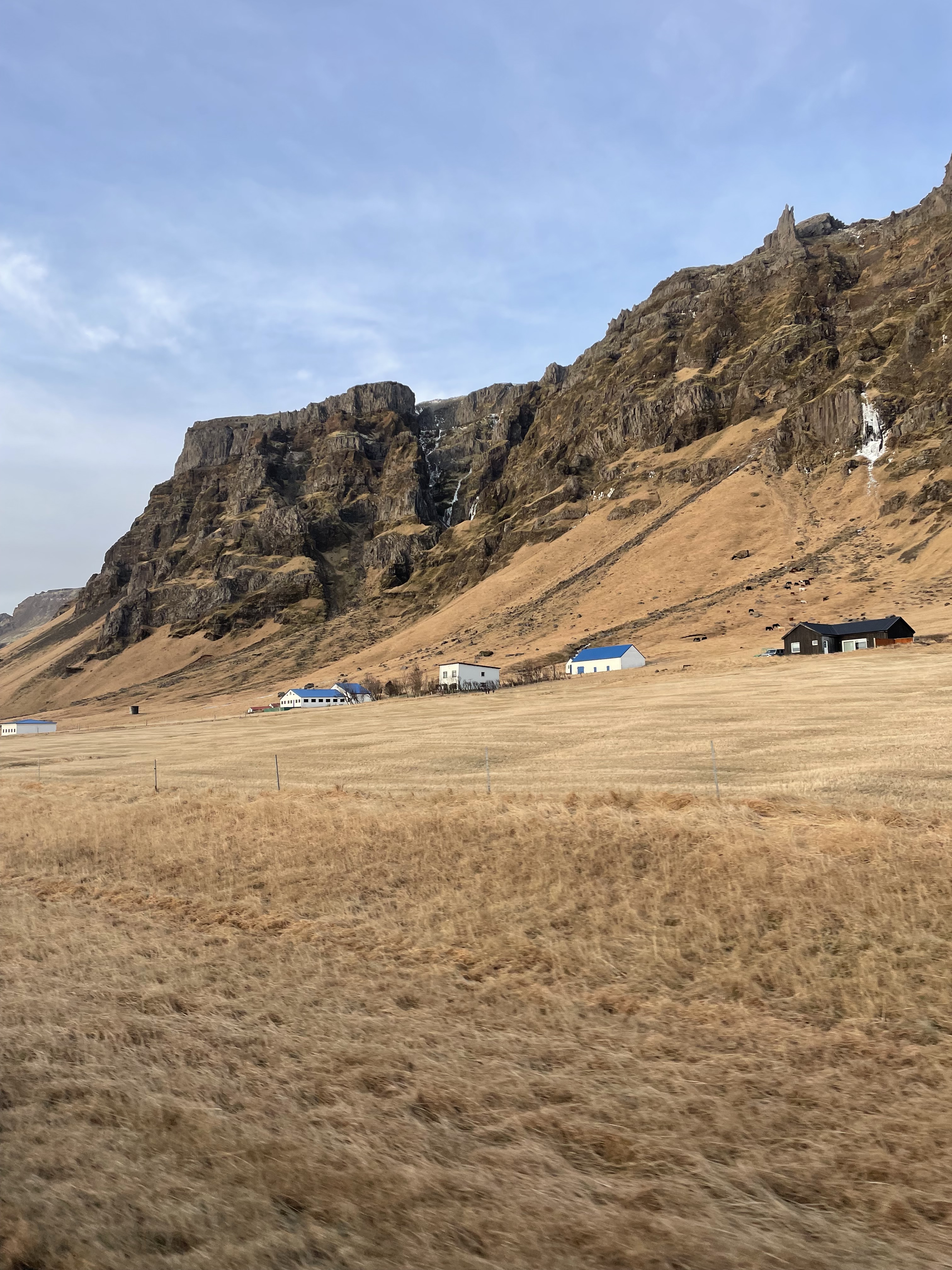
Our next hotel was Umi and it turned out to be one of our favorites. We enjoyed a couple games of backgammon in the lovely lobby/lounge and a fine dinner in the hotel restaurant. Although we went out for lunch every day, dinner was almost always at the hotel. Remember, these hotels are quite isolated and definitely not within walking distance of anything except nature. Happily, I never saw a fast-food franchise or any chain restaurant. The dining options offered a lot of local character with European influence. I’m pescatarian and that was no problem since fresh haddock, salmon, char, and cod were on most menus.
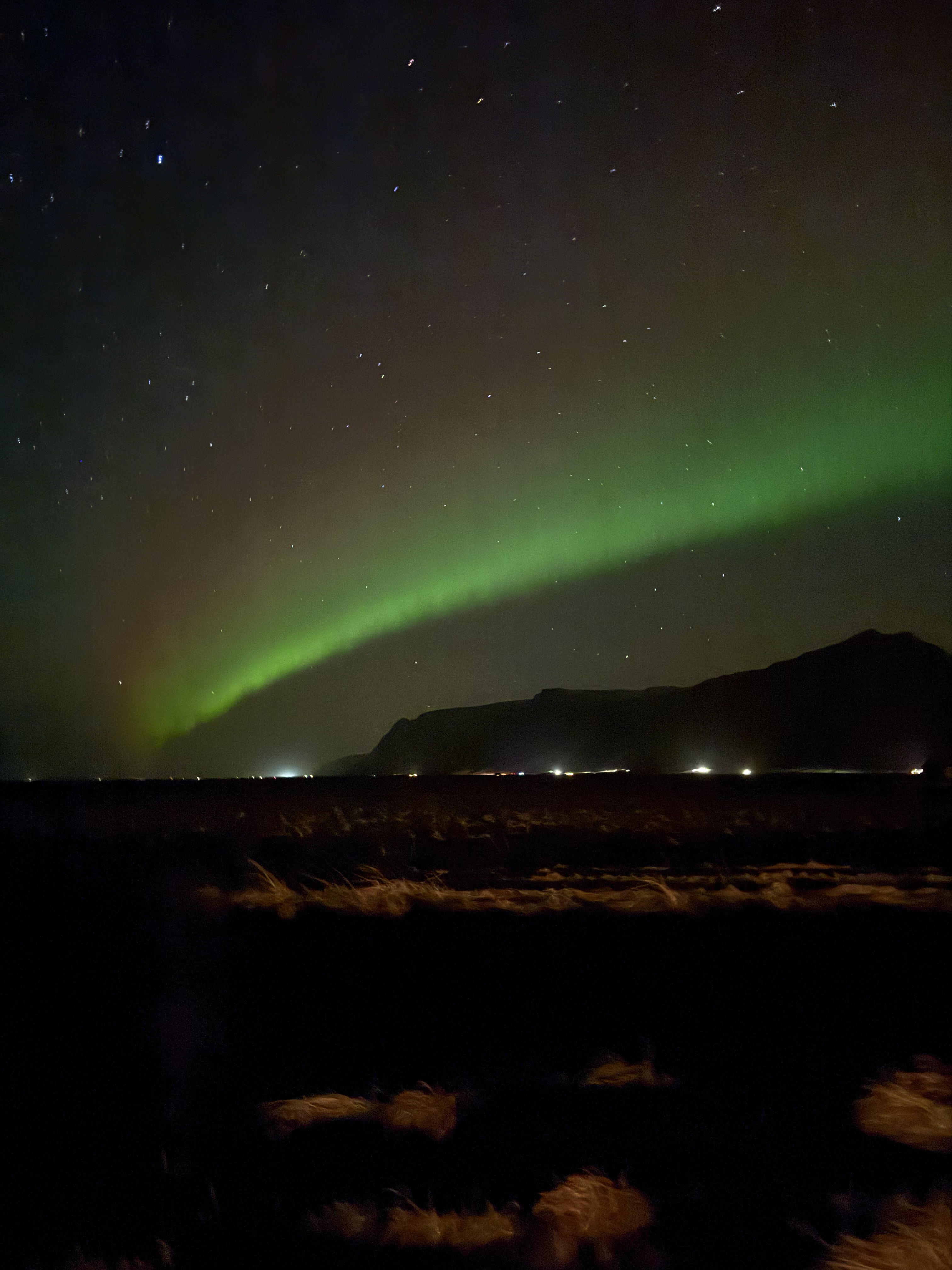
After dinner, we checked the app and waited for optimal time for a light show. Precisely as predicted, at 9:00 PM we were honored by yet another display of greens, yellows and pinks across the northern sky.
To top it off, a couple dozen Icelandic horses walked up to us! They were super furry and very docile. They even tried to walk into the hotel lobby when the automatic doors opened which was quite funny to us, if not to the hotel staff.
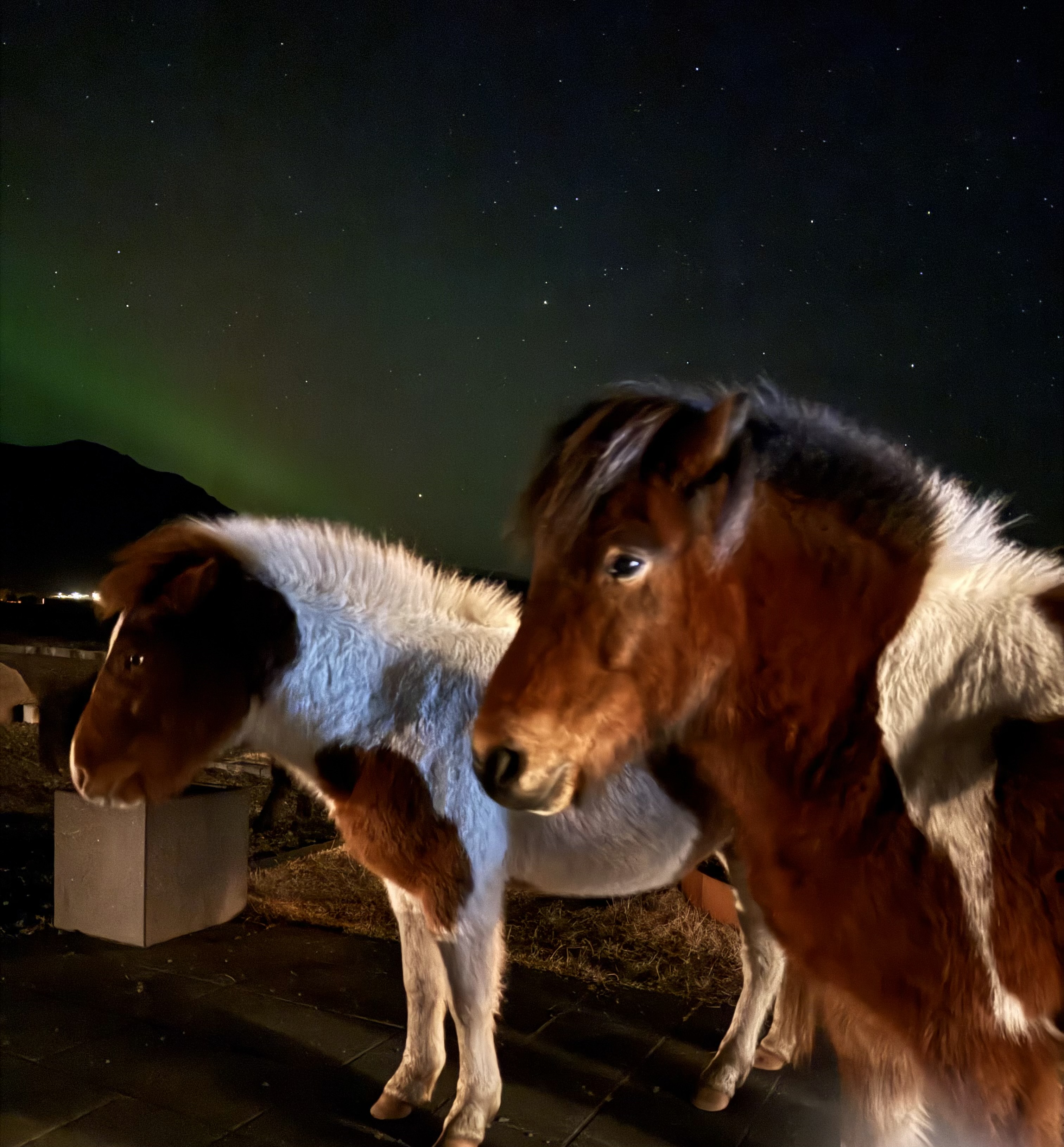
You can’t make this up! Friendly horses joining our sky viewing was super exciting and completely unexpected.
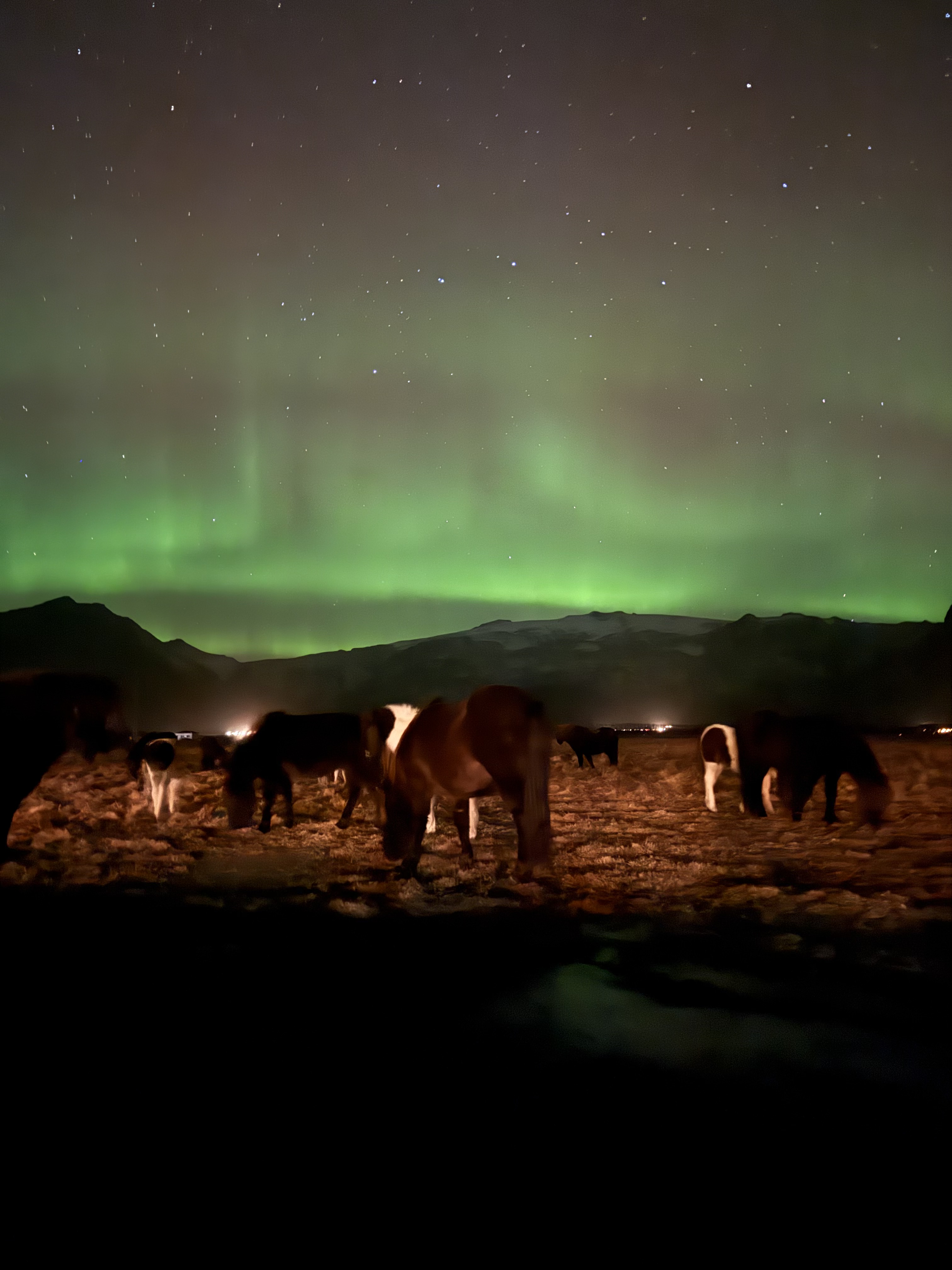
Our last morning on the South Coast was shared with the sweet horses.
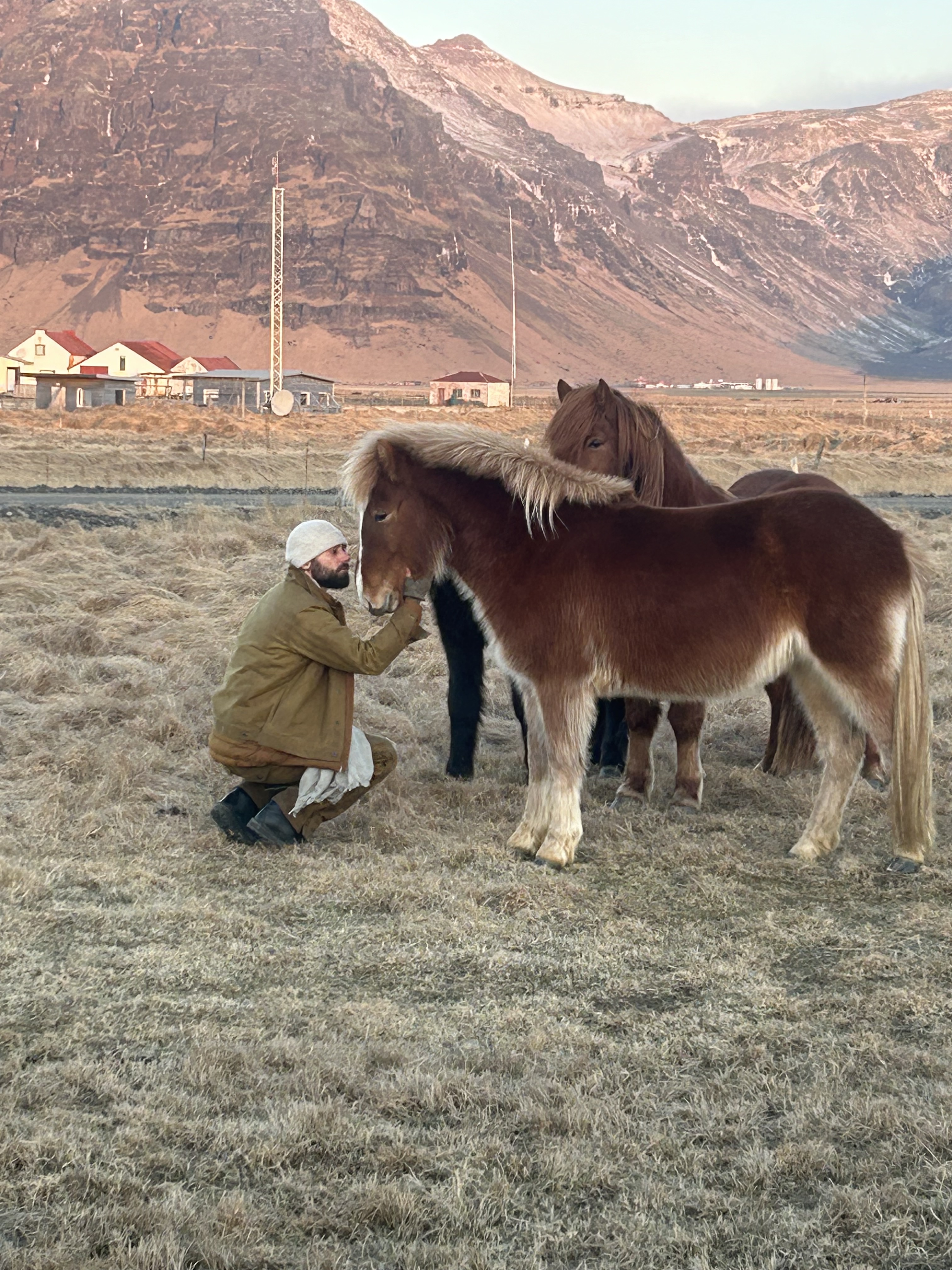
I assume they have owners but they were definitely not fenced in.
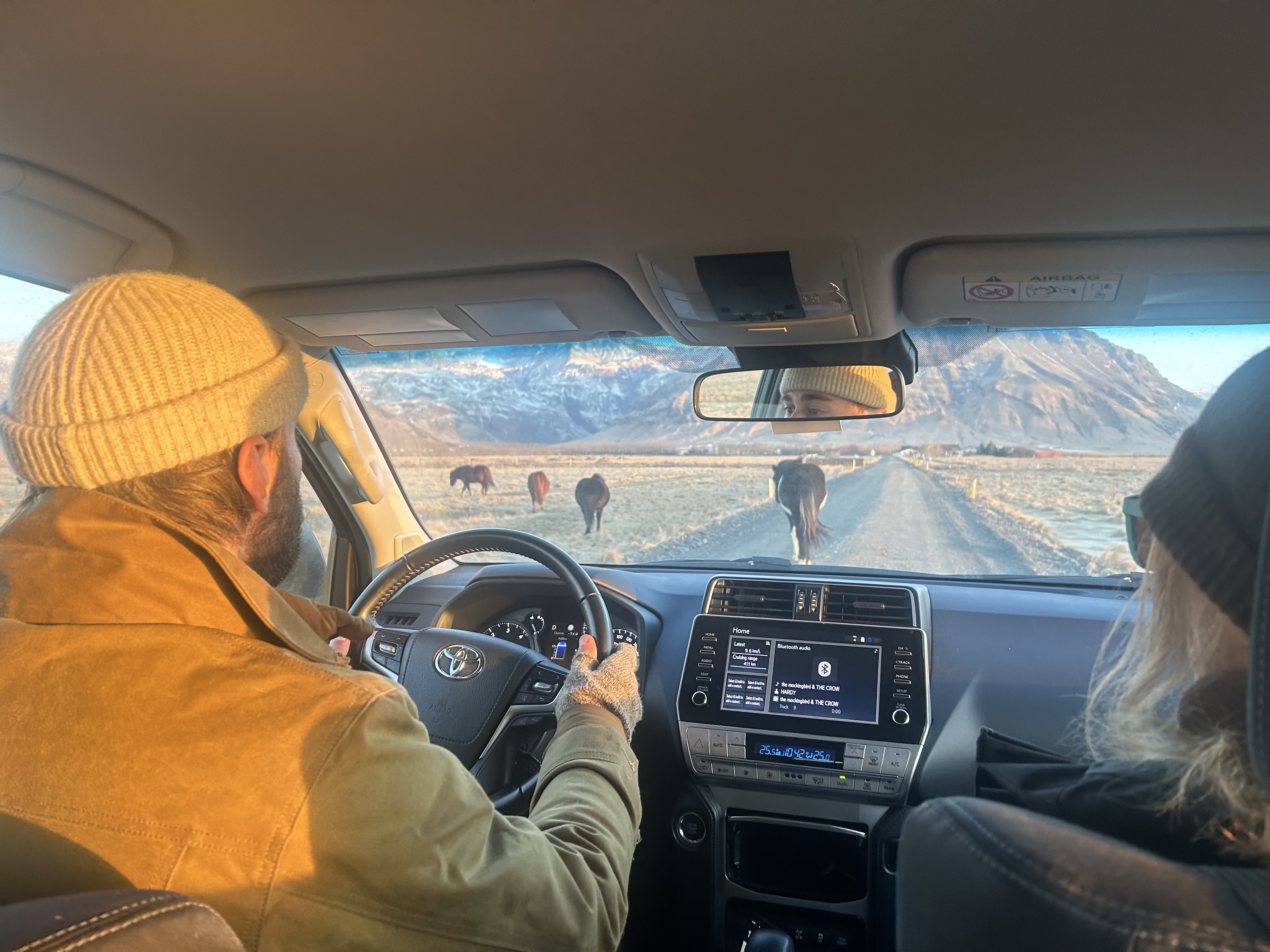
Back in Reykjavik for our last night, we popped into one of the many little pubs/cafes.
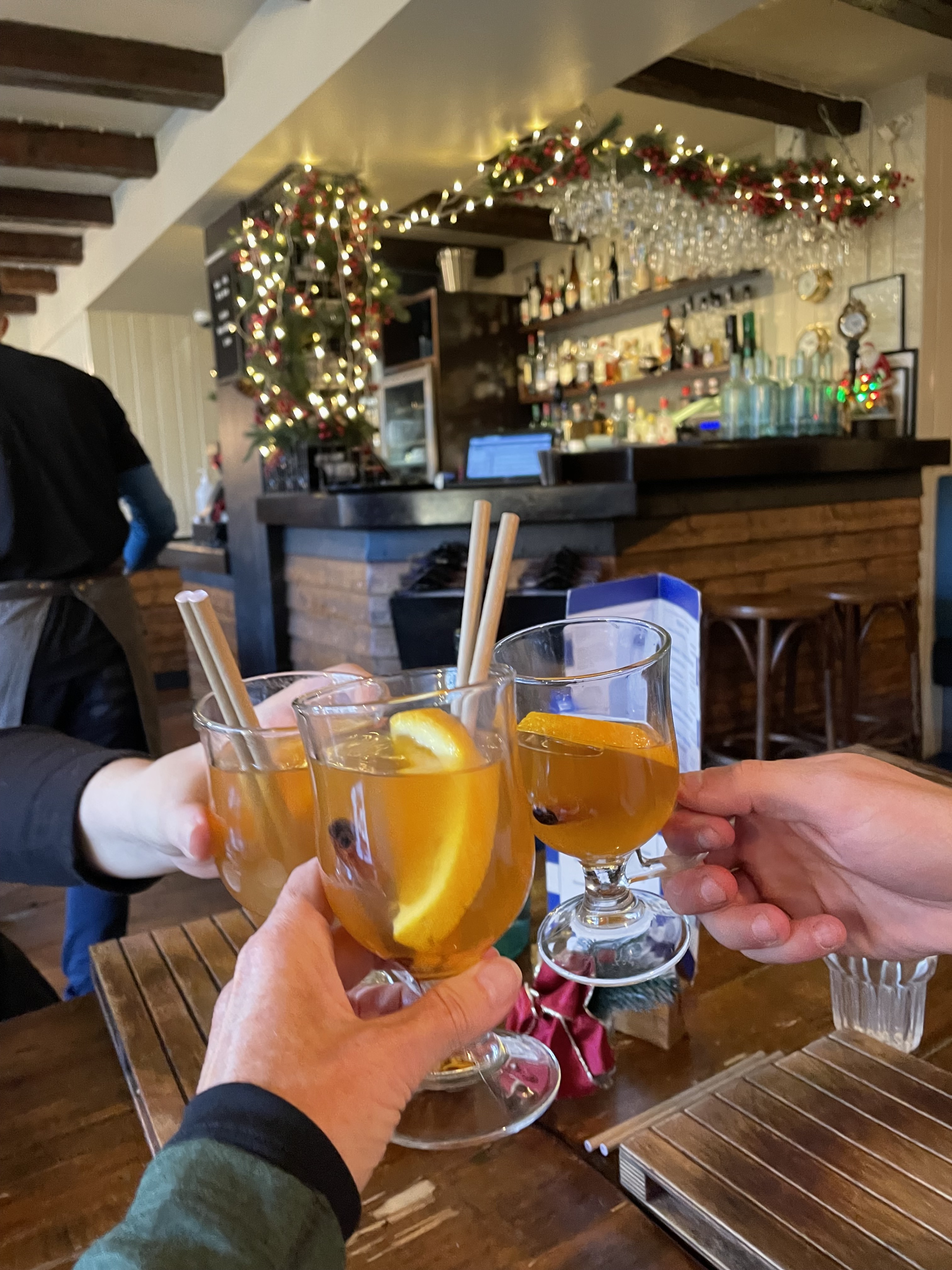
The hot cider was just right to warm us but the cold, clear water was equally good. We were often told that Iceland has the best water in the world. It’s all glacier water and, I’ll admit, it really is superior to any water I’ve had before. No plastic bottles; straight from the tap. I ordered a typical cod stew with potatoes and cheese. Served with fresh, rye bread, it was more than I could eat and very tasty.
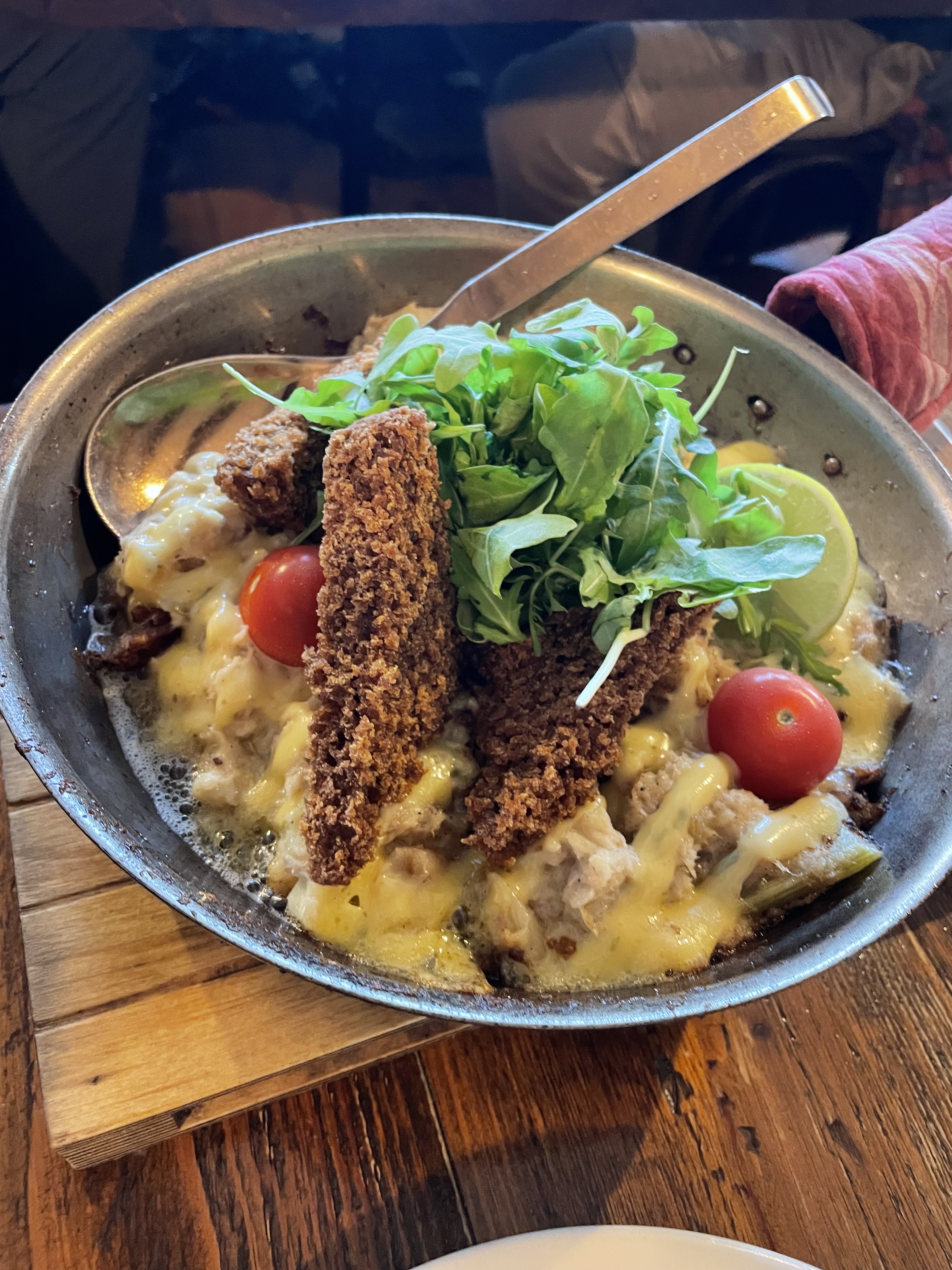
We saw a lot of potatoes and beets on menus but not many other vegetables and almost no fruit as it all must be imported. But there was no end to fresh fish, lamb and homemade breads.
Our first and last nights were both spent at the Expedition Marriott. It has a lobby fire pit with lots of chairs around it plus a spa that is complimentary for hotel guests. Both offer nice opportunities to warm up and relax with other hotel guests. The roof top bar that opens most nights could have been good but the cold wind made it impossible to stay outside long. Anyway, there were too many lights so no chance of seeing the Northern Lights.
On our last day we drove to Keflavik for lunch at a waterside restaurant that was recommended by our hotel concierge. While there, we watched a well-dressed woman with a baby carriage leave the carriage with the baby in it outside alone while she came in the warm restaurant for lunch with friends! This seems crazy to me but, apparently, it’s customary to leave babies outside so they get used to the cold. I was told that minus 5 degrees Celsius (23 degrees F) is considered optimal for babies but they don’t leave them out below minus 10 C (14 degrees F).
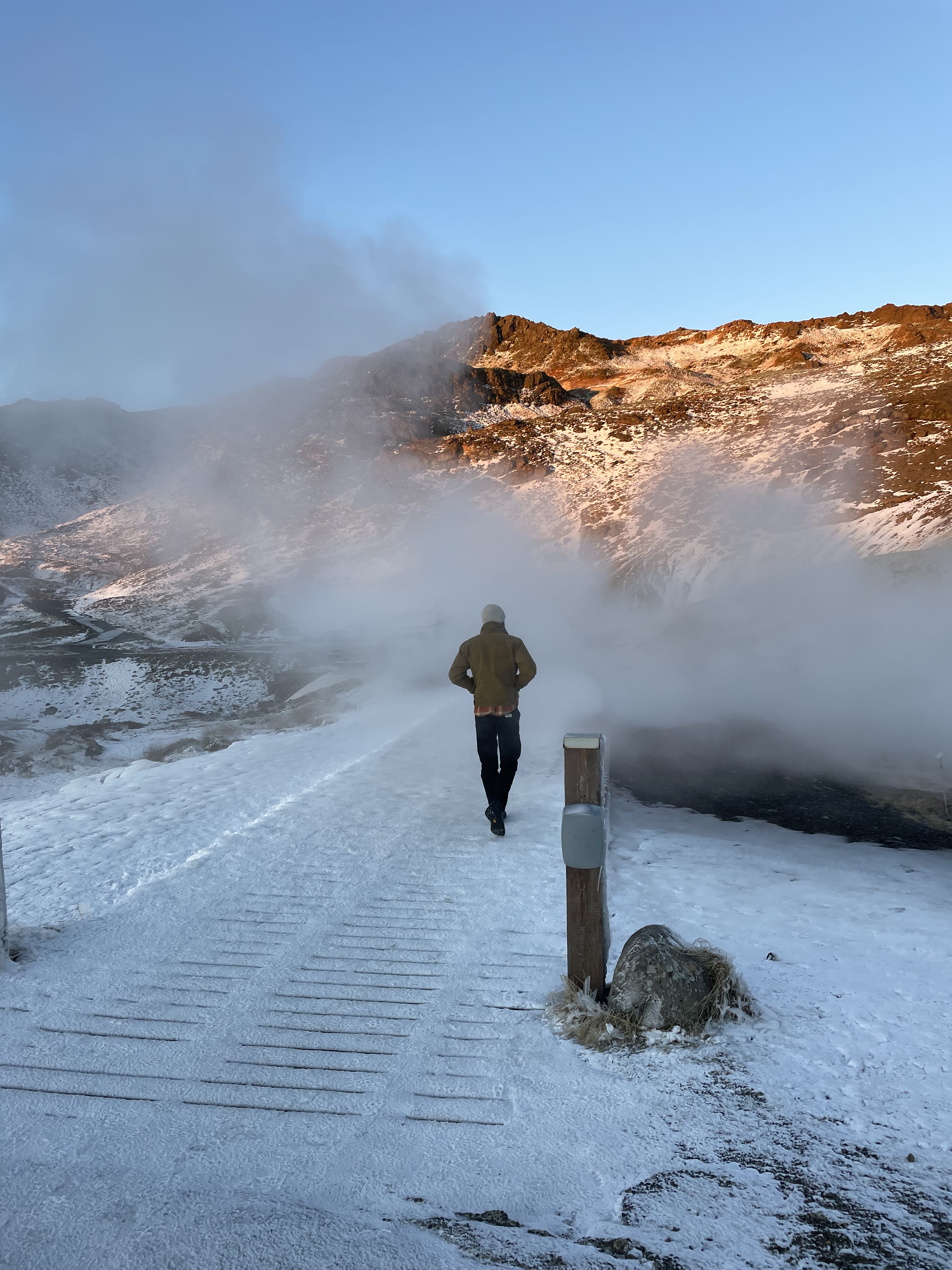
Before returning the car and checking in for our flights, we drove out to Gunnuhver, a nature park with wooden walkways passing through steam. Unlike the geysers on the Golden Circle, the steam shoots up continuously … a reminder of the heat just below the surface.
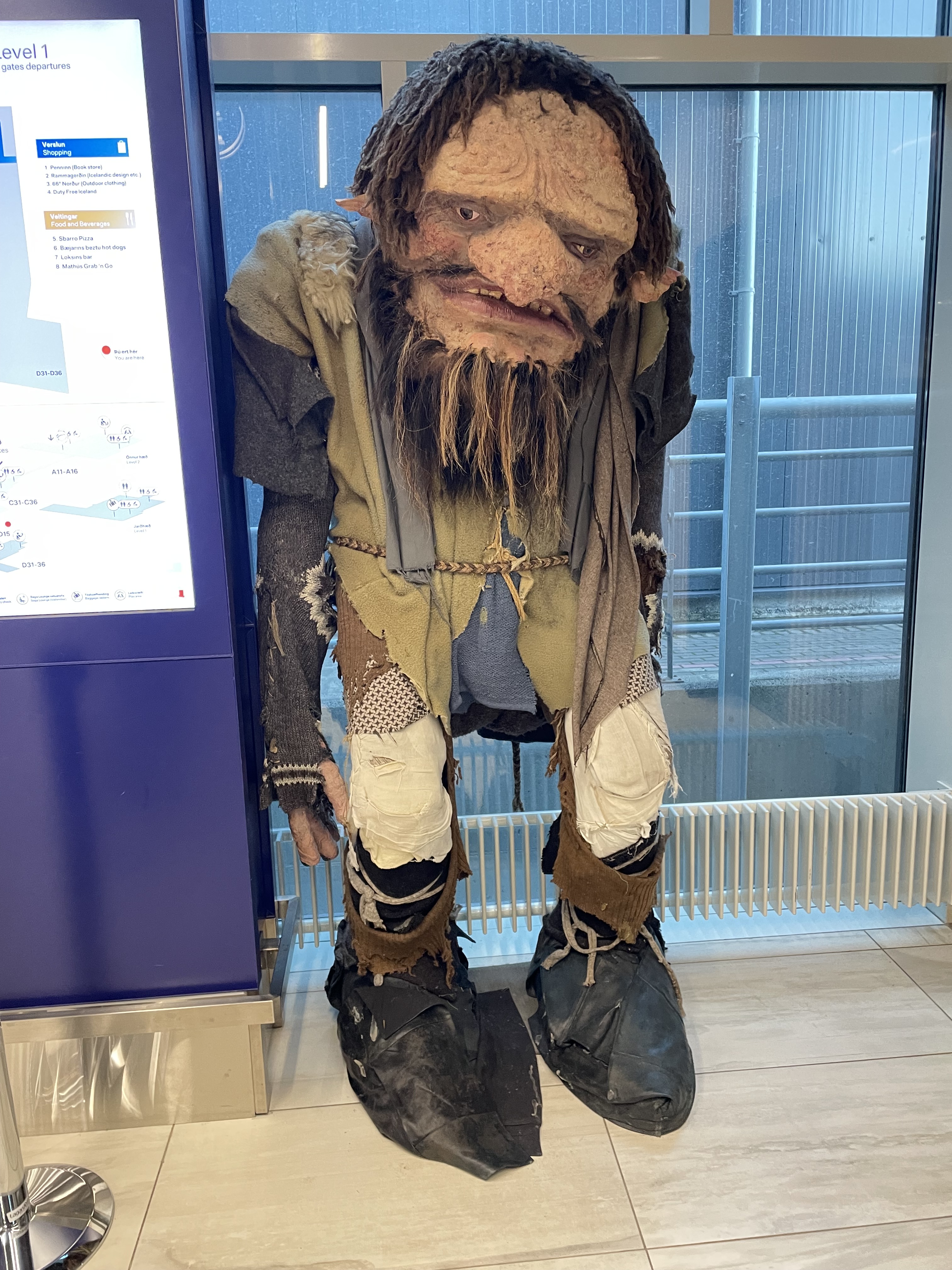
At the airport we were greeted by Krampus, the legendary character who steals bad children at Christmastime. I’m glad this European tradition hasn’t caught on in the States.
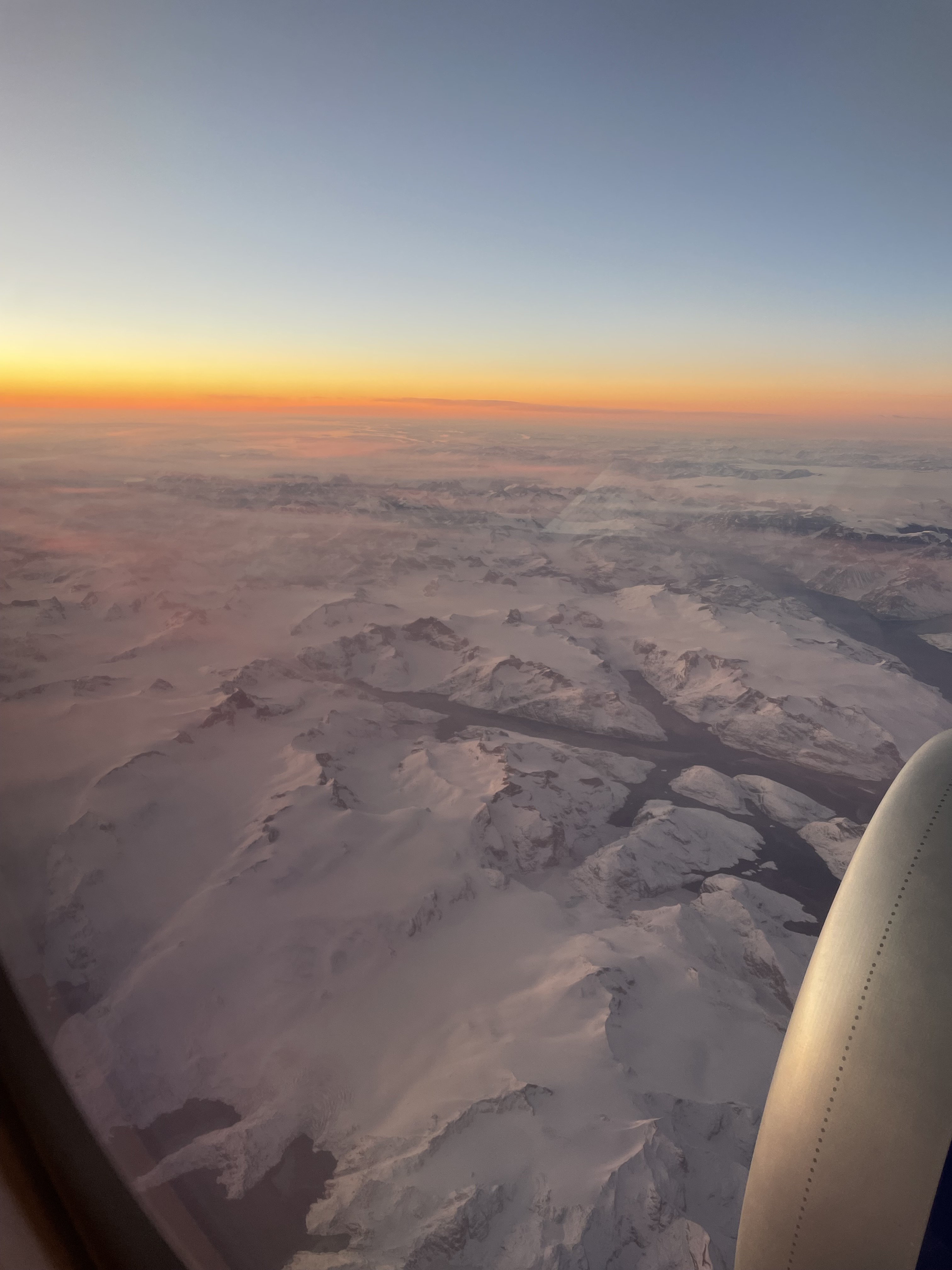
The flight path over the Atlantic Ocean passes over the southern tip of Greenland and offers a chilling view of the snowy mountains below.
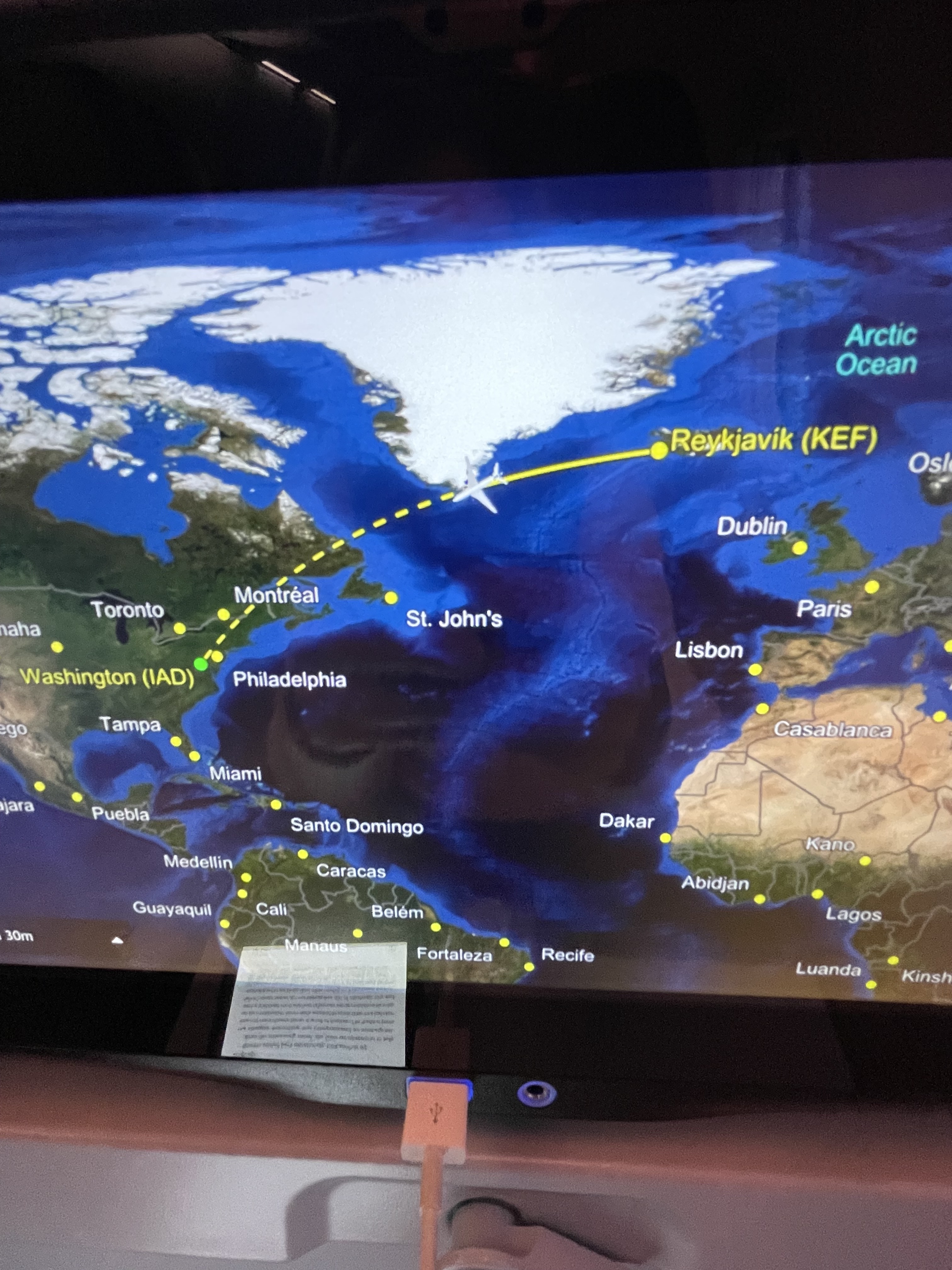
Because we were flying west with the sun, it was dusk/sunset almost the entire 6 hour flight.
Here’s my brief commentary on Icelandic society: Everyone and everything projected an image of extreme health. But things are rarely completely as they look. There is very little diversity as expected given that Iceland was settled by Norwegians who brought in slaves from Ireland and Scotland. Immigration was expanded about 25 years ago when tourism created a need for people to take low-wage jobs. I didn’t see people of color but we met a relatively large number of immigrants from Eastern Europe. Thanks to laws that prohibit paying men more than women for doing the same job, liberal maternity leave (six months paid leave for both parents), and women’s political involvement, Iceland has been “the best place in the world to be a woman” since 2009 according to the World Economic Forum’s Gender Gap Index and is widely known as the safest country on earth. Yet the “Nordic paradox” phenomenon persists. Women are victims of domestic violence and sexual abuse at an alarmingly high rate. Twenty-five percent of women in Iceland have reported domestic violence in contrast to 10% in Europe overall. There is currently a #MeToo movement that sheds light on misogynistic actions by powerful men. I’m an advocate of solo travel and have confidence in my ability to travel the world safely as I’ve always done. But, while I hate to admit it, I’m glad I had a male travel companion. Still, I wouldn’t let that stop me from going if I was solo. The benefits hugely outweigh the risks. Just be smart.
Reflecting on my experience in Iceland, I recall the natural character of everything — the land, food, activities, and people. If I ever make it back to Iceland, I’d like to explore the Northwest and maybe drive the ring road around the whole island. It could be fun to go in summer with the midnight sun and 22 hours of daylight. We never experienced crowding or problems with too many tourists but that could an issue in warmer weather. Returning in winter for more Aurora and to go snowmobiling, horseback riding, and do some of the things we missed this trip would also be great. The possibilities are endless. Until then, I’ll hold the memories of this adventure close to my heart.
“If you think adventure is dangerous, try routine; it is lethal.” Paulo Coelho
“It seems that the more places I see and experience, the bigger I realize the world to be. The more I become aware of, the more I realize how relatively little I know of it, how many places I have still to go, how much more there is to learn.” Anthony Bourdain
“Twenty years from now you will be more disappointed by the things that you didn’t do than by the ones you did do. So throw off the bowlines. Sail away from the safe harbor. Catch the trade winds in your sails. Explore. Dream. Discover.” Mark Twain
 Kathryn Byler, blog