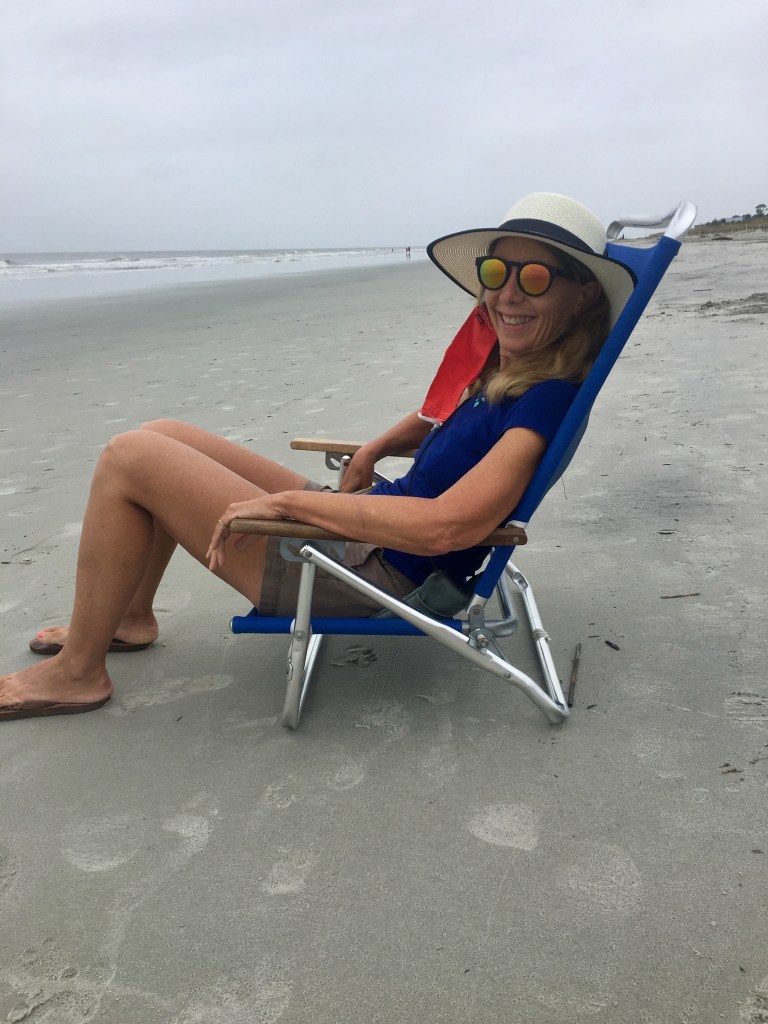
Charleston, SC is the perfect get-away. It holds charm of days before technology –tree-lined streets, interesting architecture, historical importance, and some of the best cuisine in the country.
It’s been 7 months since my last trip. COVID-19 kept me inside all spring and socially isolated all summer. Now, it’s September and we’re still being careful to avoid dangerous situations but it’s time for a road trip; hand-sanitizer, mask and all. Charleston is an easy 7-hour drive from home (Virginia Beach, VA, USA) and I’ve never visited the SC barrier islands so it seems a worthy destination. Our plan was to spent two nights in Charleston, two nights in Hilton Head and two nights on Kiawah Island.
By 8:00 AM Saturday morning (9/12/2020) my girlfriend and I were in the car. By 9:00 AM we were out of Virginia and into North Carolina.

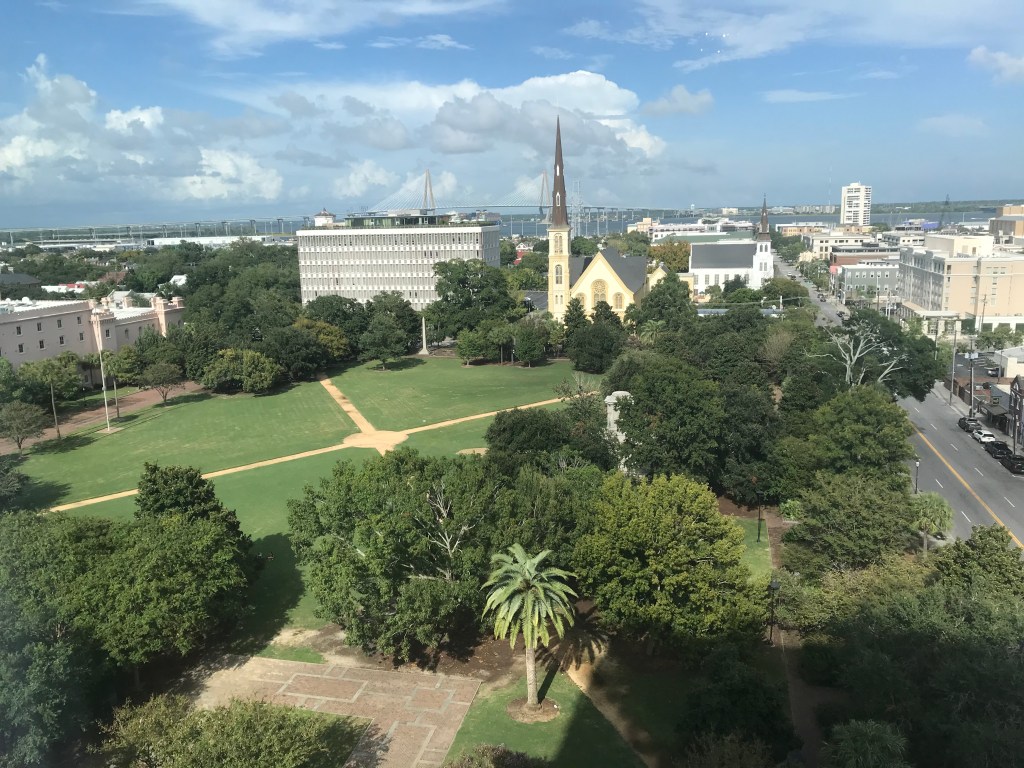
Even with a lunch break, we rolled in to Charleston about 3:30 PM. Our hotel, the Francis Marion, was in the historic area, convenient to walking everywhere, and our room overlooked this beautiful park and the waterfront.
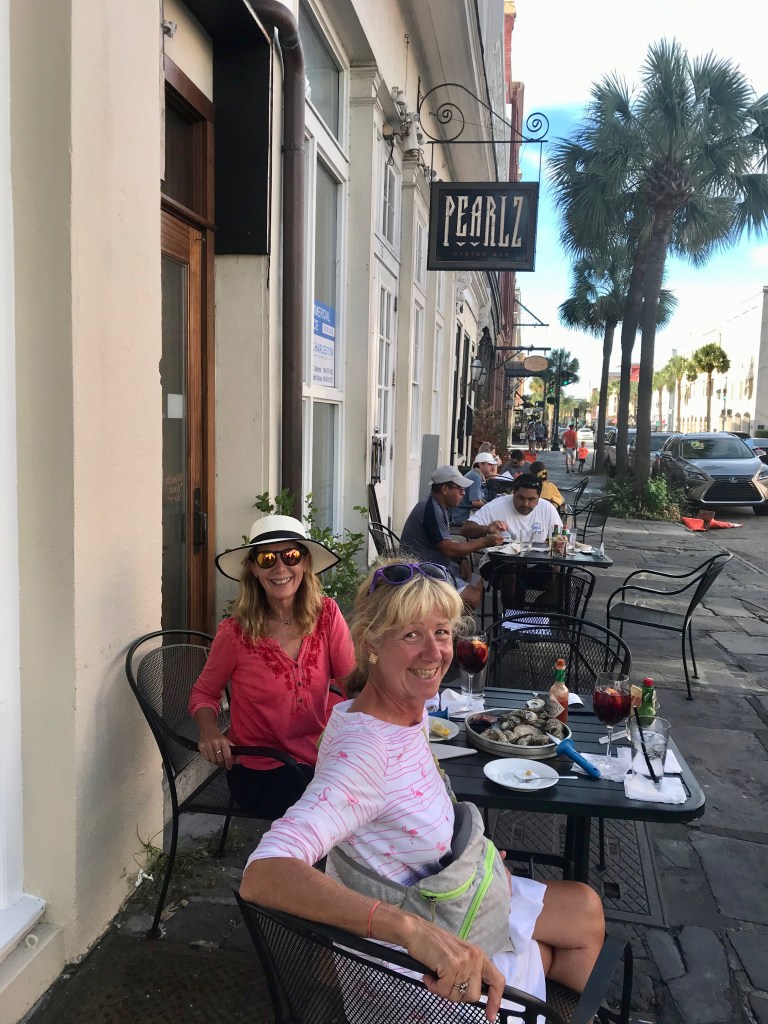
We dropped our bags off and headed out for a stroll. By 5:00 PM we were ready for happy hour, Charleston-style, with steamed oysters and sangria at Pearlz, one of the many small cafes. I never saw mint julep on the menu but there were versions of mojitos that may have replaced the iconic Southern cocktail.
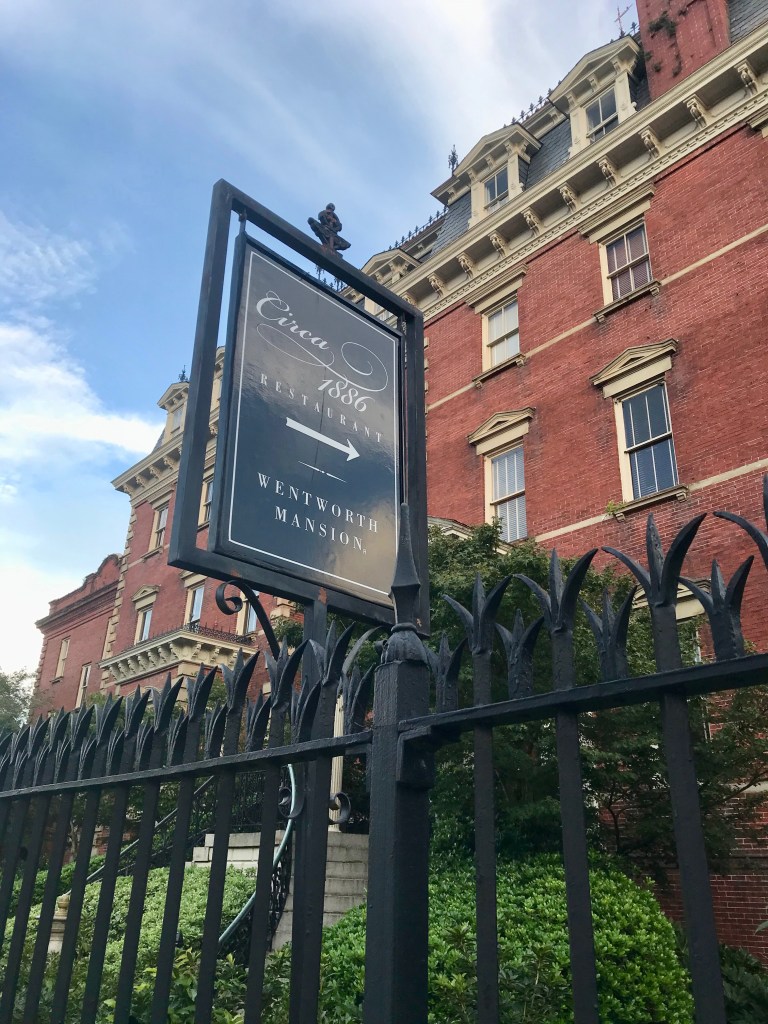
Time to walk back to our hotel, shower, and change for an elegant dinner at Circa 1886 at the Wentworth Mansion.
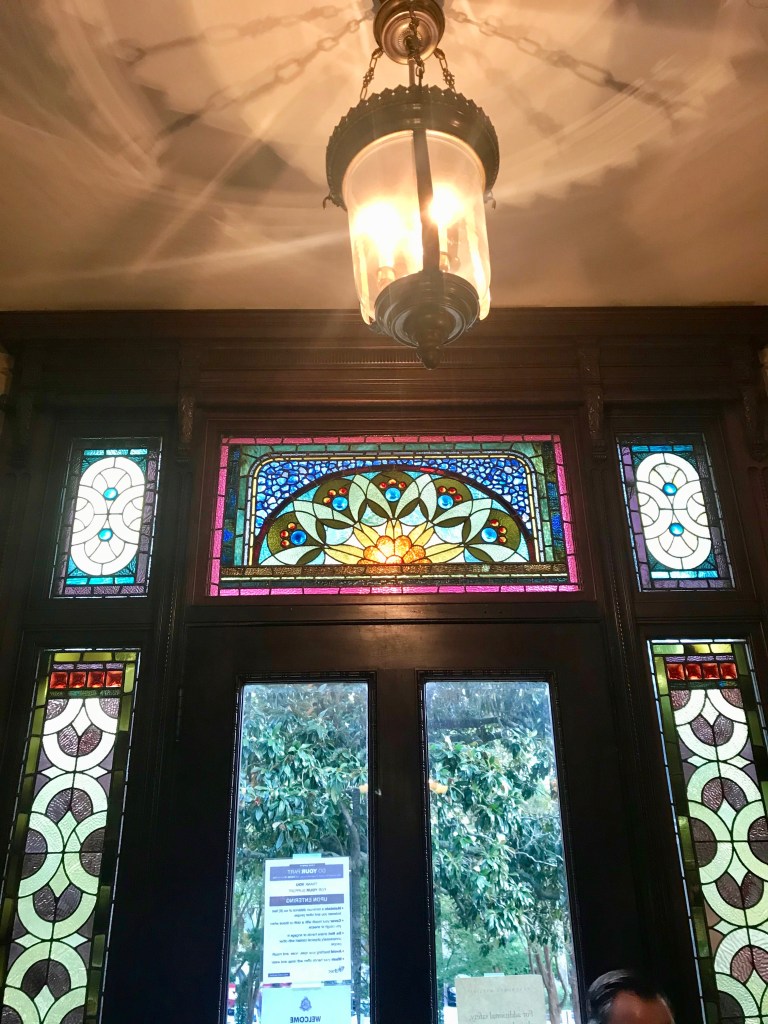
Day Two, Sunday–We walked about 12 miles up and down the beautiful streets of historic Charleston. The architecture with window boxes and second floor balconies give it a New Orleans aura.
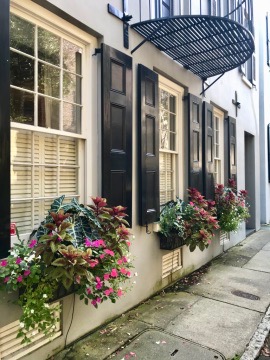
Strolling along, peeking into courtyards, and exploring alleys was truly my favorite activity in Charleston. Our first destination of the day was the pineapple fountain in Waterfront Park.
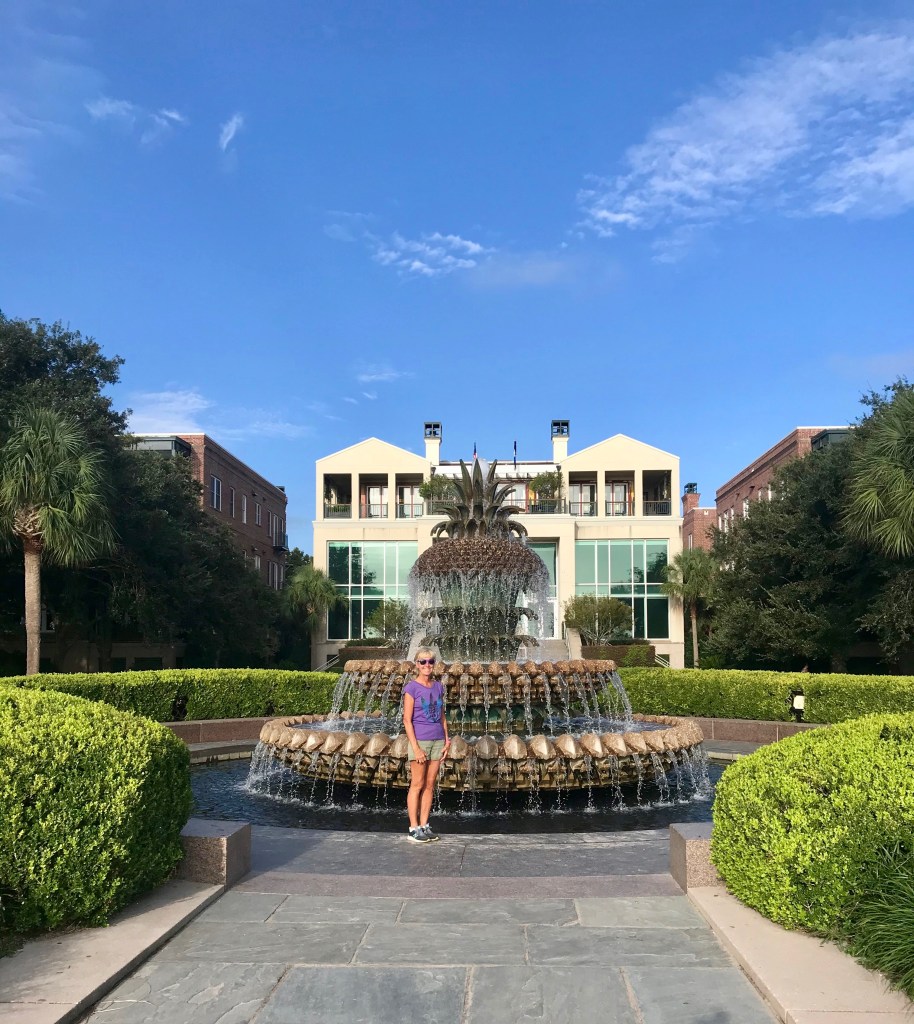
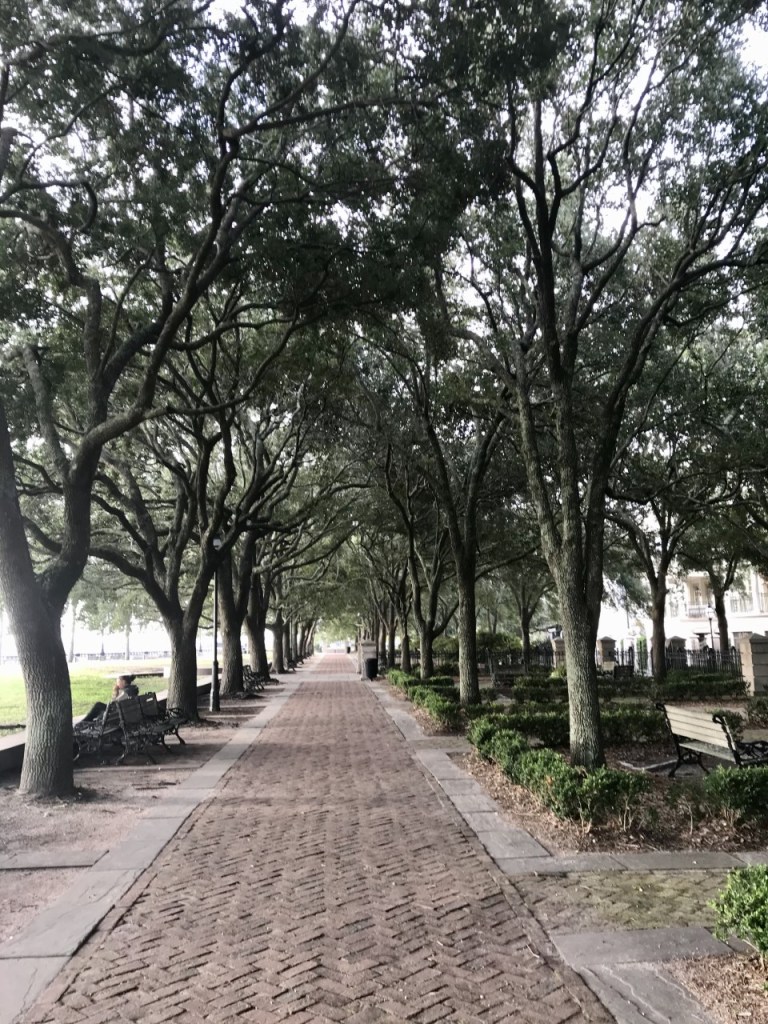
The walk from the fountain down to the Battery is lined with giant oak trees and tends to transform those strolling back two hundred years in time.
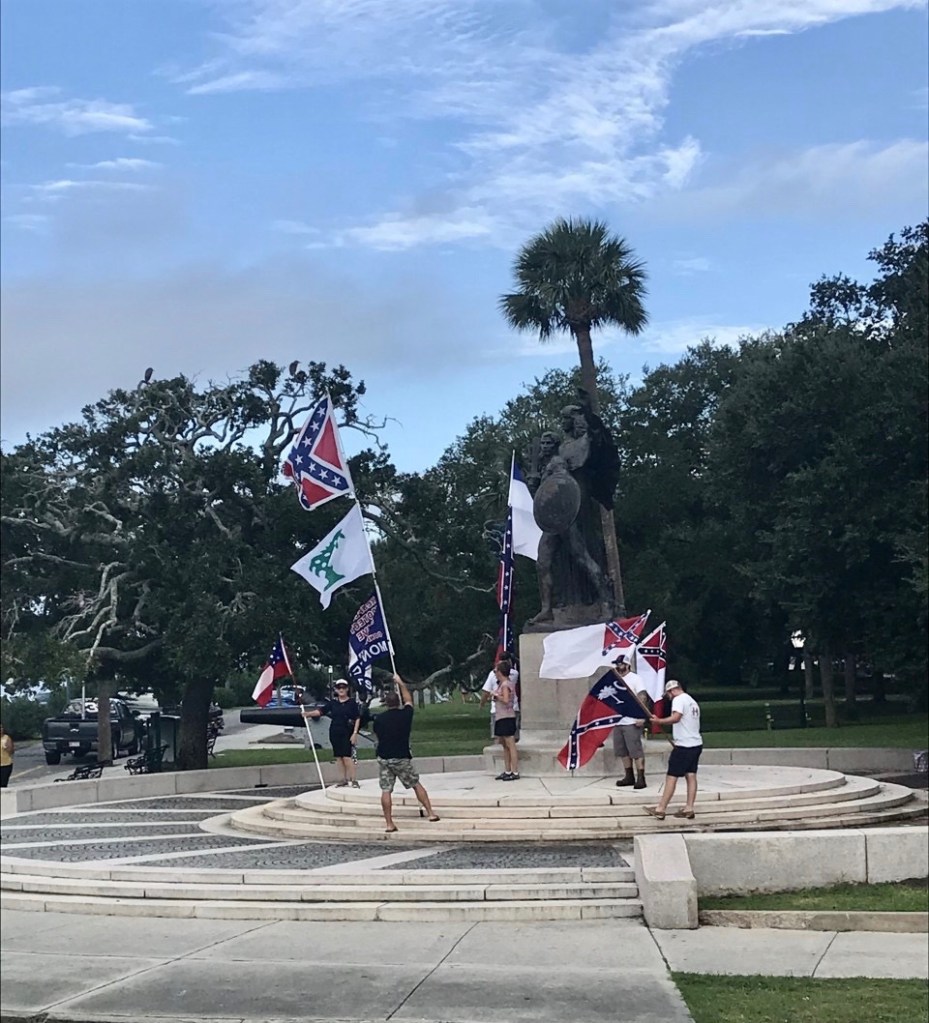
It’s important to remember that life was not good for everyone back in the day. Charleston was a major port for slaves arriving from Africa. The lovely plantations and booming economy were created through the ownership and trade of human lives. And, while the business of slavery ended 157 years ago, its effects are still present. Arriving at White Point Gardens we saw a demonstration with Confederate flags. The racial division in America is very much an important social and political issue today.
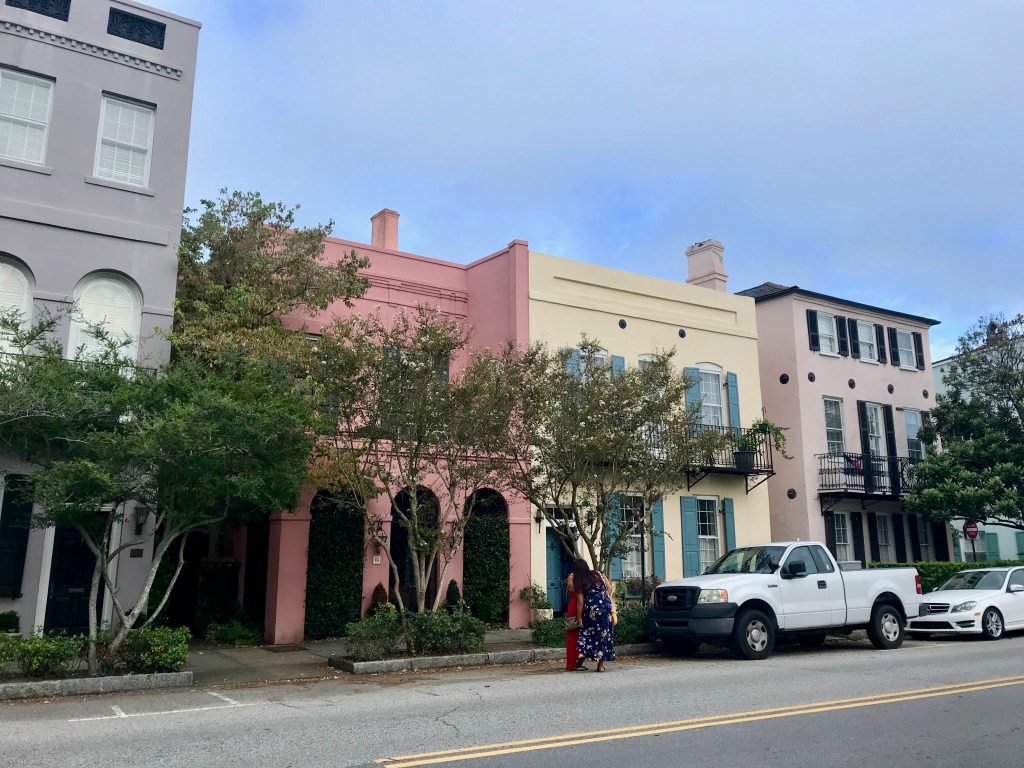
Rainbow Row runs parallel to the water on East Bay Street and boasts 13 pastel-colored Georgian townhomes.
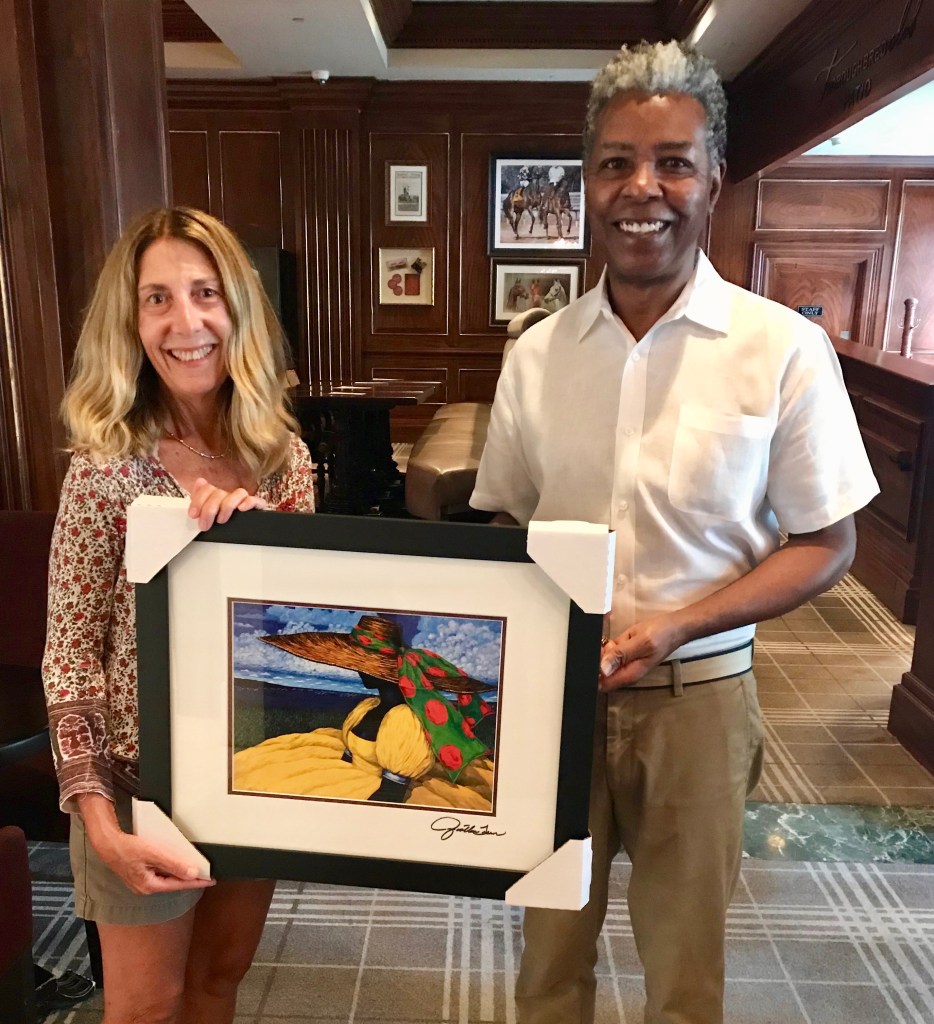
No trip to Charleston is complete without a walk through the market. We bought several small items custom greeting cards and fresh spices but my favorite was something I’ve wanted for many years — a beautiful print by Jonathan Green, nationally acclaimed artist from SC. On our walk back to the hotel, we decided to go through the beautiful Belmond Charleston Place hotel to admire the chandelier and flowers and to take some daytime pictures of the magnificent horse sculpture at the back entrance. Imagine my delight when I spotted Jonathan sitting in the lounge! Having had the opportunity to meet Jonathan previously, I hesitantly approached him to say “hello” and show him the print I had just bought. In characteristic fashion, Jonathan graciously greeted me, shared a happy memory of our dancing at our friends’ wedding, and posed for this picture. What a great artist, awesome humanitarian and generally, warm person; plus, a great dinner companion and dancer!
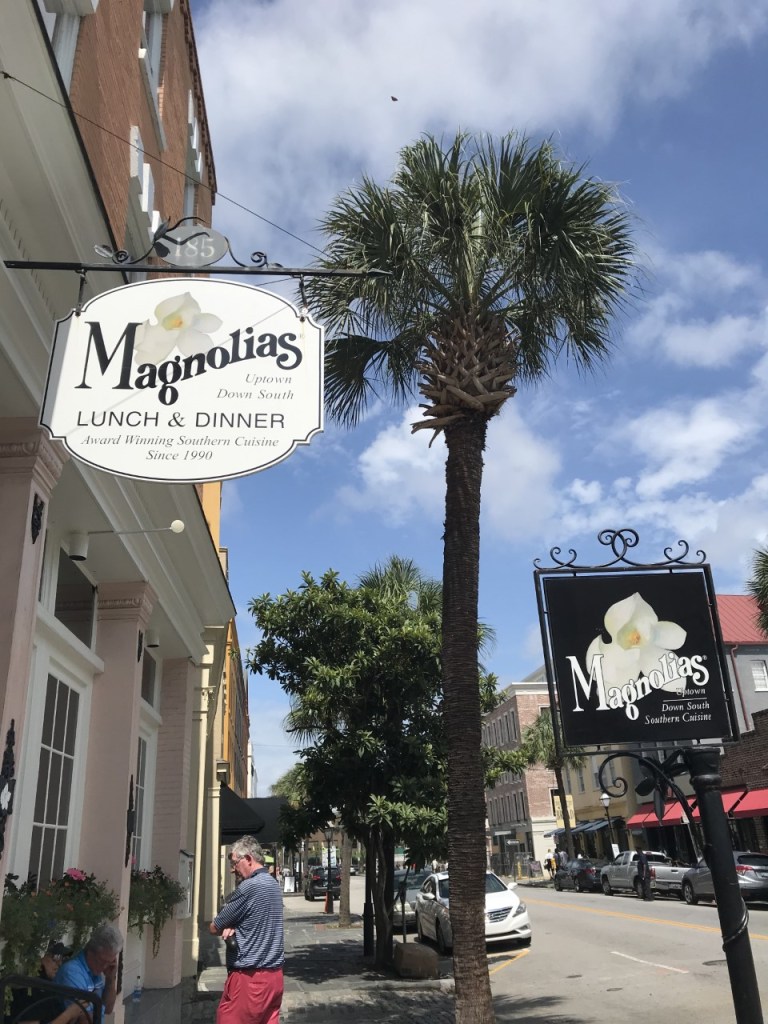
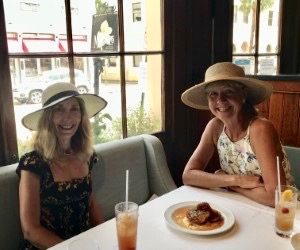
Time to shower and dress for brunch at the renowned Magnolias. Hands down, they serve the best fried green tomatoes I’ve ever tasted!
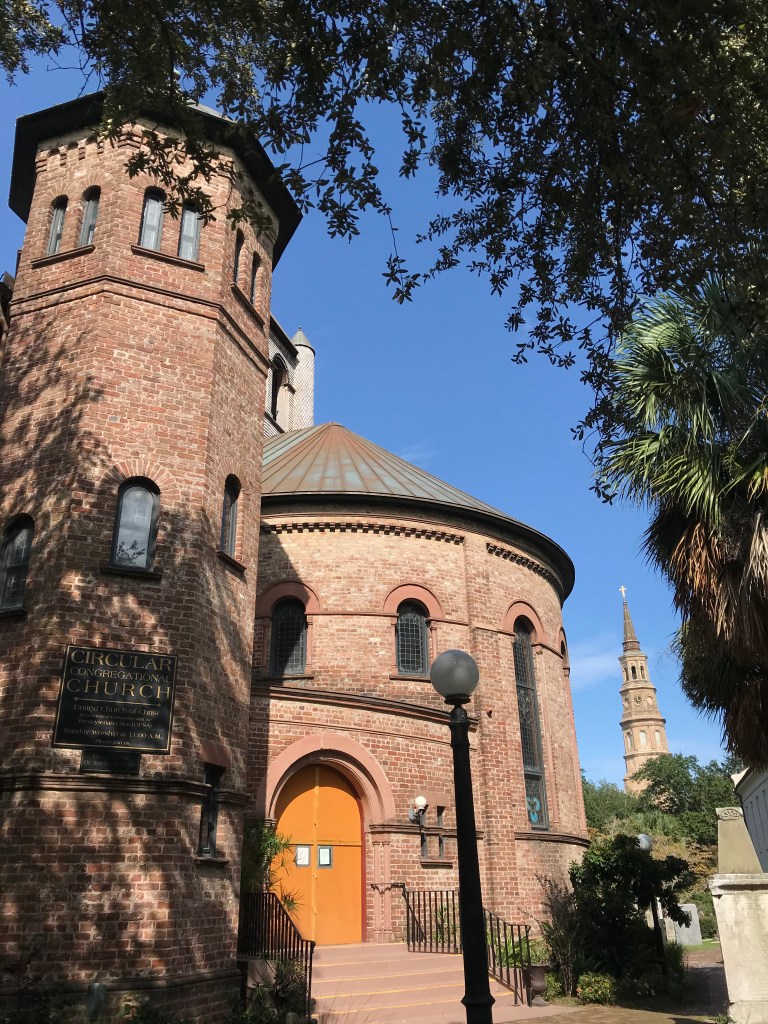
I don’t remember seeing a town with more churches. Each has its own style and some boast graves of famous people (John C. Calhoun, U.S. Senator and Vice President; Edward Rutledge, signer of the Declaration of Independence; Charles Pinckney, signer of the U. S. Constitution).
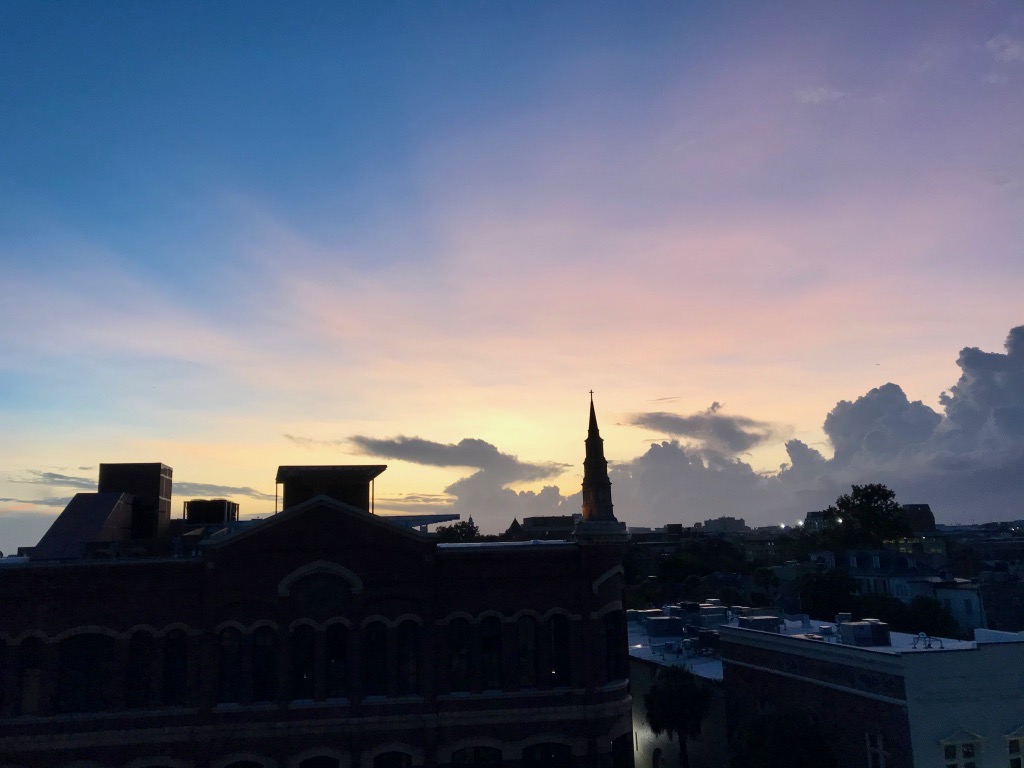
It’s hard to find a fitting end for such a great day but, after a couple failed attempts, we found a rooftop bar with a beautiful view of the sunset. I recommend a visit to the Vendue rooftop at sunset or after dark. When COVID-19 restrictions end and people are allowed to gather again it will be lively with music and laughter. For us it was peaceful and quite beautiful. From the rooftop, I took this picture of one of the many regal, church steeples just after sunset.
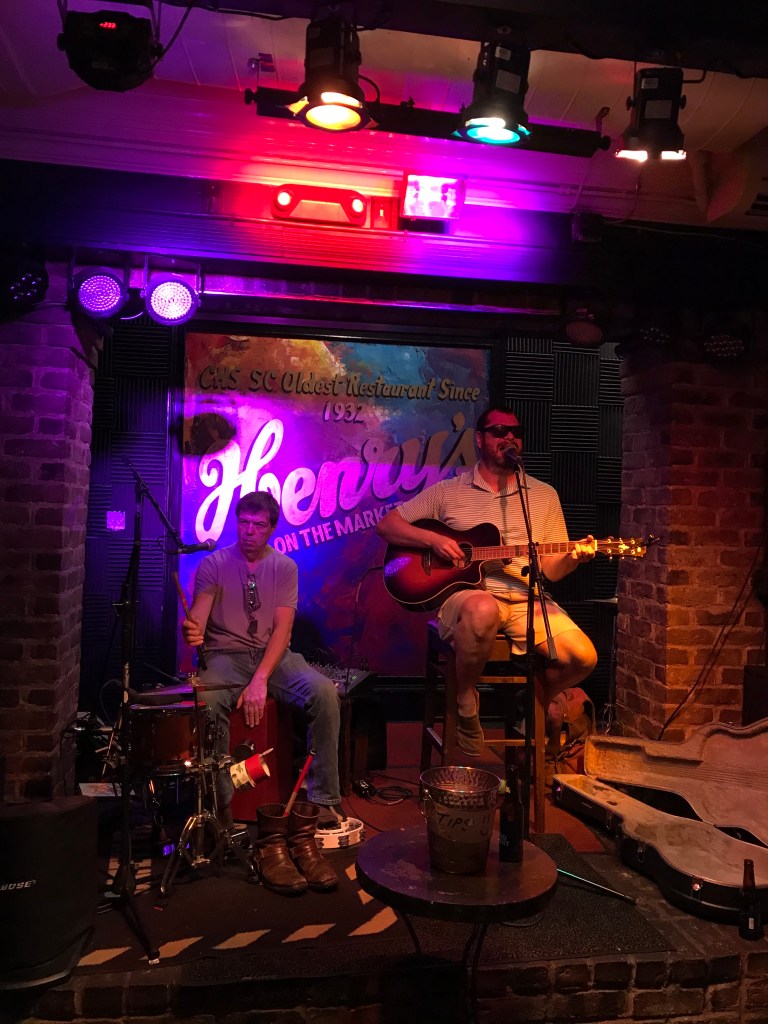
As if the day wasn’t full enough, we made one last stop at “Henry’s on the Market” where talented performers were offering a heavy dose of country interspersed with a little John Prine and folk music. Henry’s contends their rooftop lounge offers the best sunset view but that will have to wait for another trip to be tested.
Monday morning we drove out of Charleston headed for Hilton Head Island. A barrier island in Beaufort County, Hilton Head is 20 miles northeast of Savannah and 95 miles southwest of Charleston; about 12 miles long with one main road and offsets named for former plantations. Our hotel was on Shipyard in the southend of the island (about 800 acres with a Property Owners’ Association). It’s a 2 1/2 hour drive through scenic undeveloped, low-lying ground from Charleston. Hilton Head isn’t cheap but there are many hotels so the rates are quite reasonable. We stayed at the Sonesta Resort which is right on the beach for about $185/night.

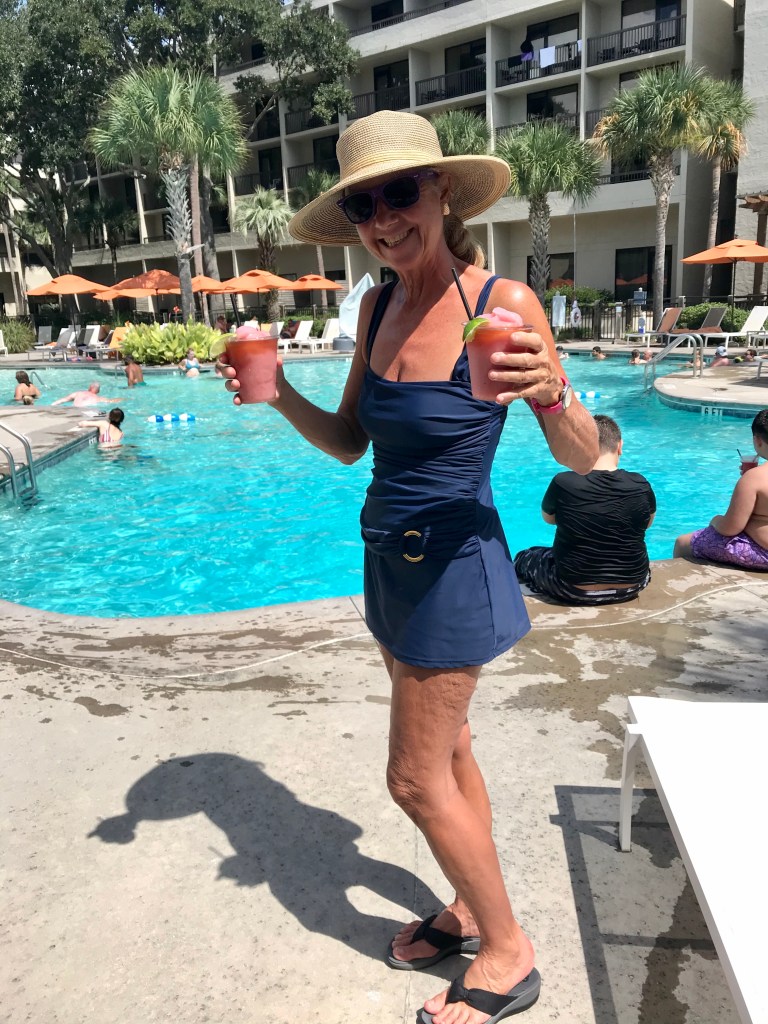
First stop, lunch by the pool. My sweet friend and travel companion brought us frozen drinks to set the mood.
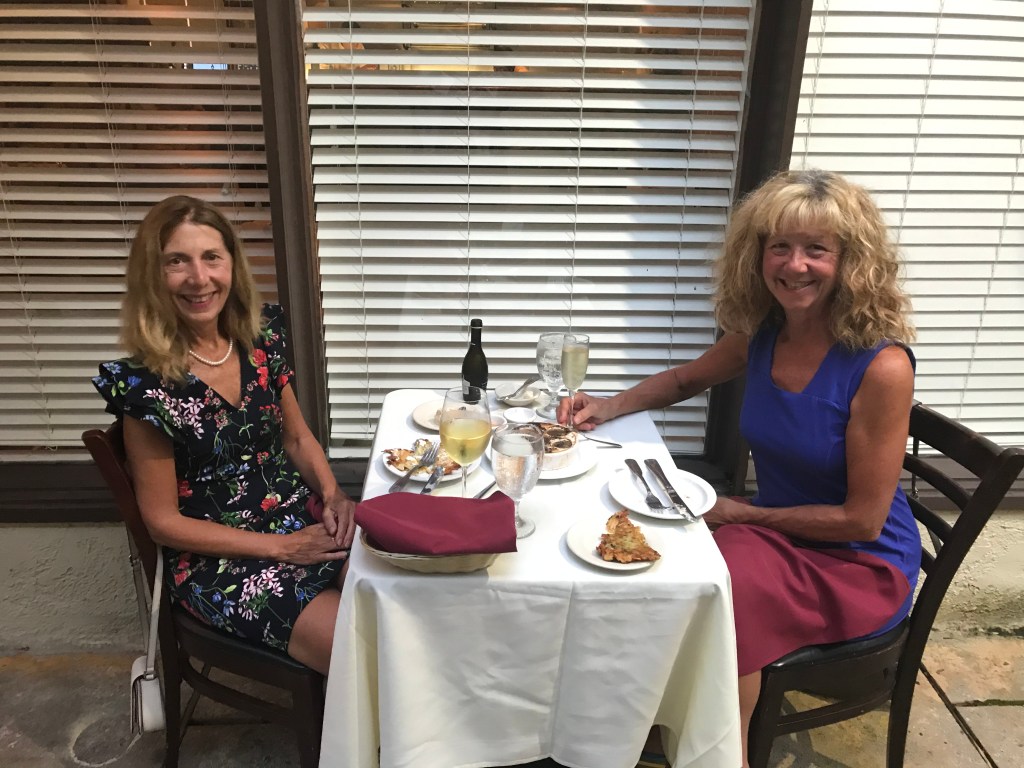
After a lazy day by the pool and beach, we enjoyed a very delicious dinner served by Linda, the owner of Alfred’s, a fine dining restaurant hidden in the back of an unassuming shopping strip. We’ve been really fortunate to find outdoor dining. Everywhere we go we find small business owners creating virus-safe options and they seem to appreciate their customers as much as we appreciate their efforts to stay open in difficult times.
Tuesday was spent off the beach visiting several of the nature reserves.

We took a picnic to enjoy at the Coastal Discovery Museum. There were very few people there with many acres to enjoy. The butterflies and hanging moss add such beauty to the wetlands. Supposedly, there are alligators all around, and I don’t doubt it, but we didn’t see any.
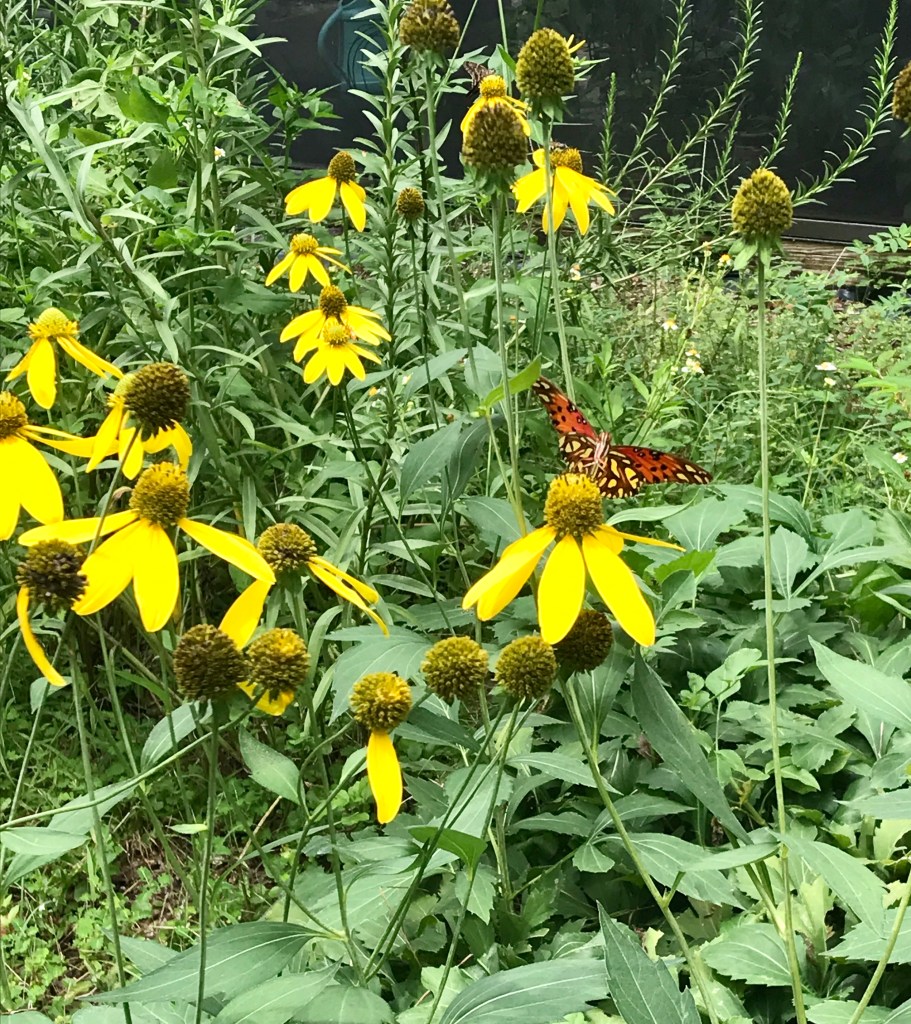
The Pinckney Island National Wildlife Refuge is pure nature with some information posts but no museum or other features. Like everywhere, it’s all flat and is perfect for a long hike or a bike ride.
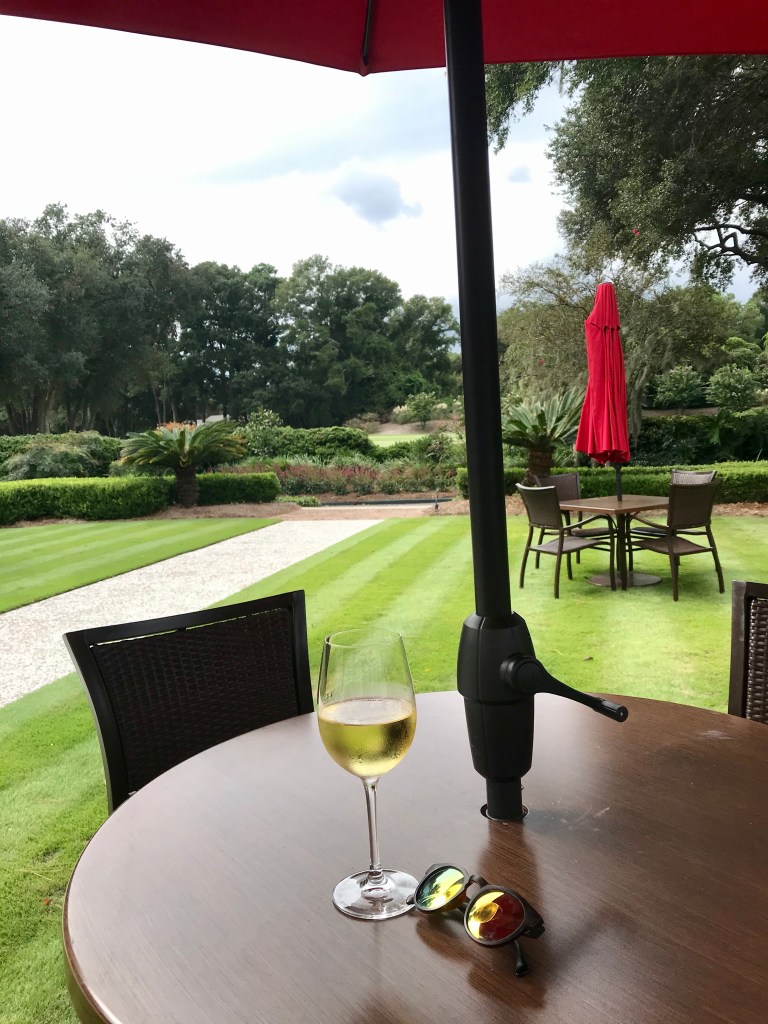
No visit to Hilton Head would be complete without stopping by one or more golf course. My travel companion golfs so I got to enjoy the clubhouse and beautiful landscaping while she hit a bucket of balls.
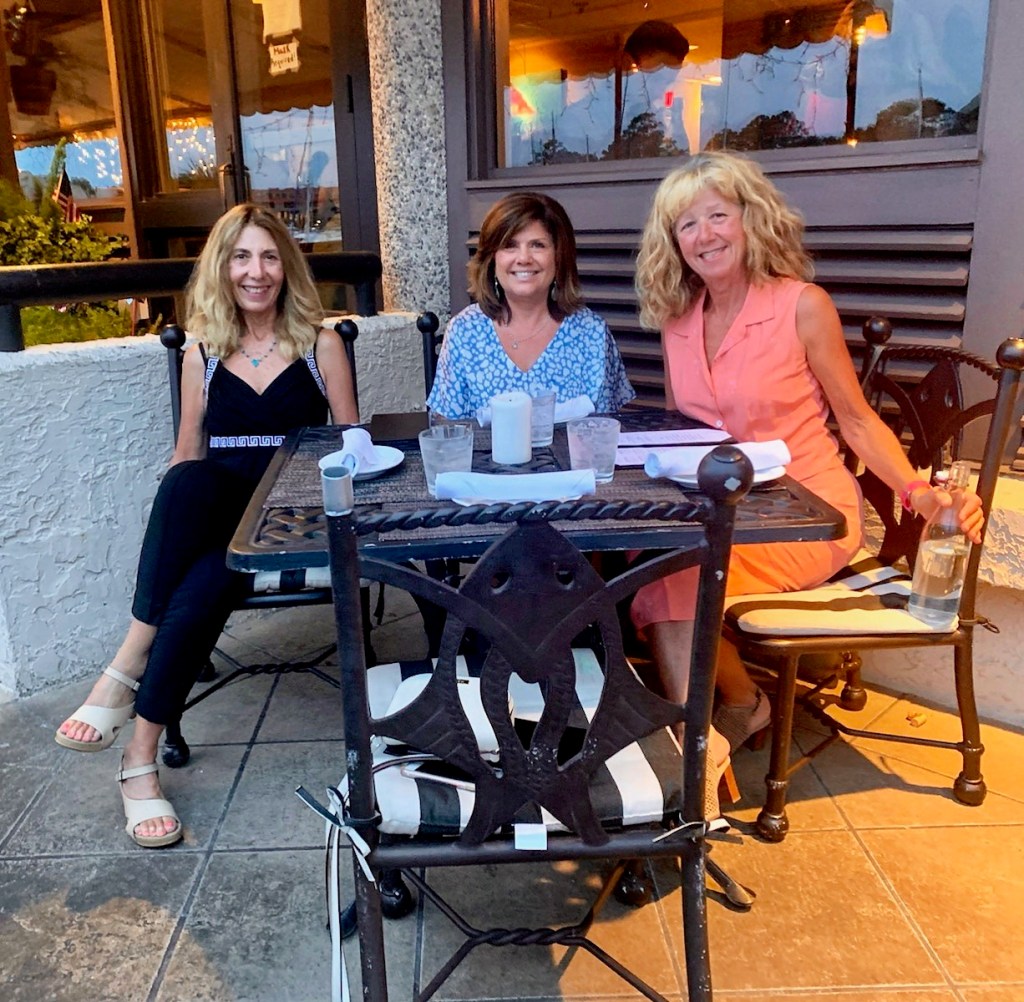
While traveling it’s always great to talk with locals. We were fortunate that my travel companion knows someone in the area who joined us for another lovely dinner–this time at Ela’s On the Water which sits on a marina.
There’s no question that Hilton Head is a destination for the wealthy. There are signs of money all around. For example, the yachts at the marina were much bigger than what I’m used to seeing in Virginia Beach.
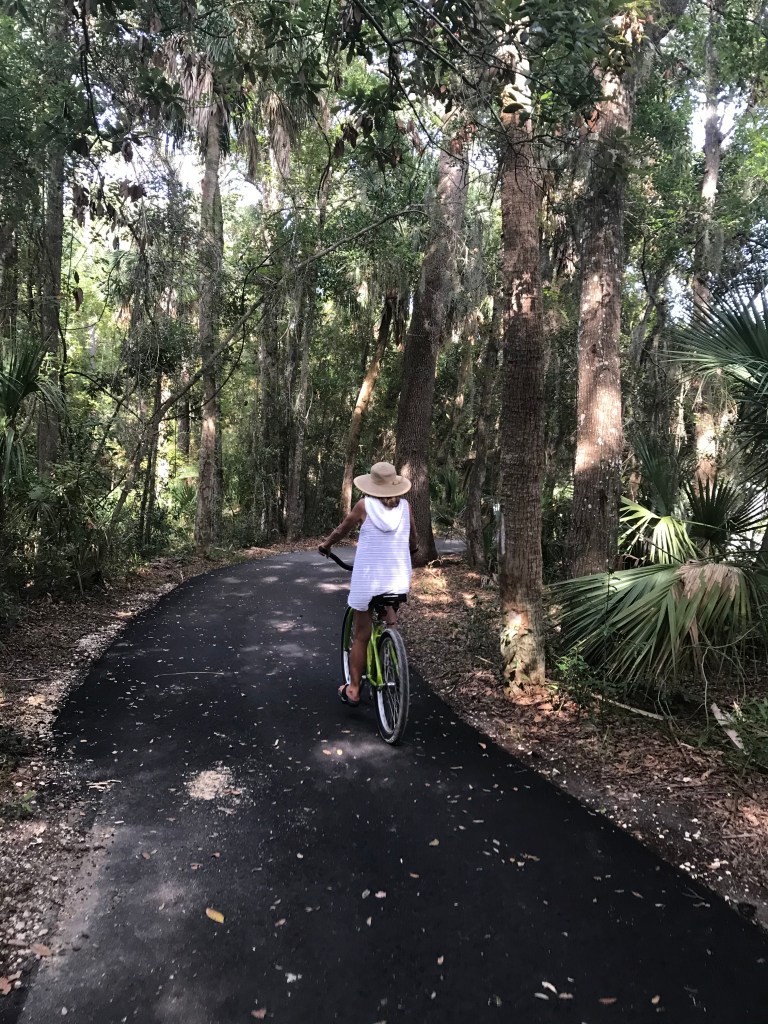
Wednesday morning–We’ve been so fortunate to have good weather in spite of Hurricane Sally coming up from Alabama. We took some time for one more bicycle ride before leaving Hilton Head Island. Perhaps we were pushing our luck because we got soaked on the ride back to the hotel. Next stop, Kiawah Island, another of the SC barrier islands. Named after the first inhabitants, the island has been occupied by Native Indians, pirates, plantation owners & enslaved people, lumberman, Kuwaiti investors, and now super wealthy islanders. The homes are amazing! It really makes you wonder where so much money comes from. Even the landscaping along the road leading to the Sanctuary and out to the Ryder Cup Grill by the Oceans Course 18th hole is gorgeous. Thanks to all those who suggested we go for dinner there.
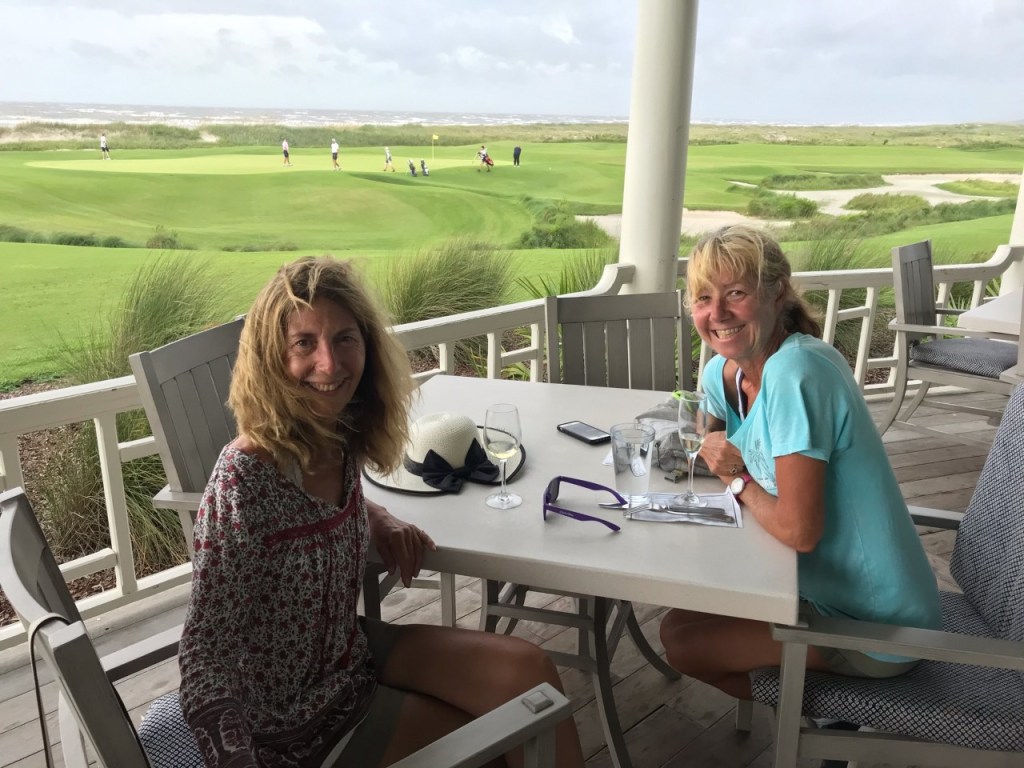
The Ocean Course offers 10 seaside holes, more than any course in the Northern Hemisphere. Home of a former Ryder Cup tournament, it will host the PGA Championship in 2021 for the second time.
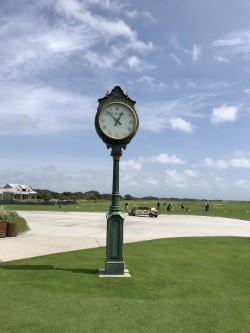
Sitting outside by the 18th hole with a clear view of the ocean made the Atlantic and Ryder Cup restaurants my favorite, but I’m glad we went to the Sanctuary for dinner in their fine dining Ocean Room one evening.

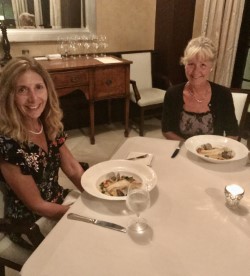
This was one of the very few times we dined inside but I didn’t feel at high risk for COVID-19 germs. Temperatures were taken, masks were worn by all wait-staff and patrons unless they were seated. Generally, as much precaution as possible was taken everywhere we went.
As they say, all good things must come to an end. Back home, I hung my treasured, new artwork that will serve as a reminder of South Carolina.
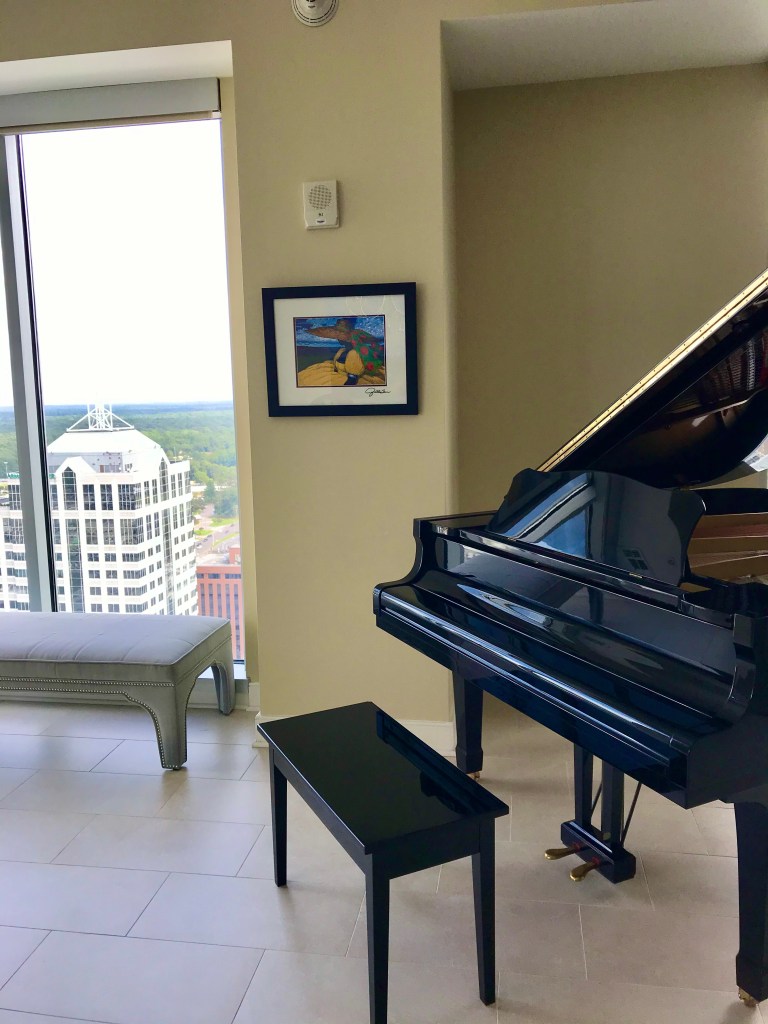
“Once you have travelled, the voyage never ends, but is played out over and over again in the quietest chambers. The mind can never break off from the journey.” Pat Conroy (American author who lived in the SC barrier islands)
“It’s a matter of common knowledge that the government of South Carolina is under domination of a small ring of cunning, conniving men.” Strom Thurmond (U.S. Senator from SC for 48 years from 1924-1964)
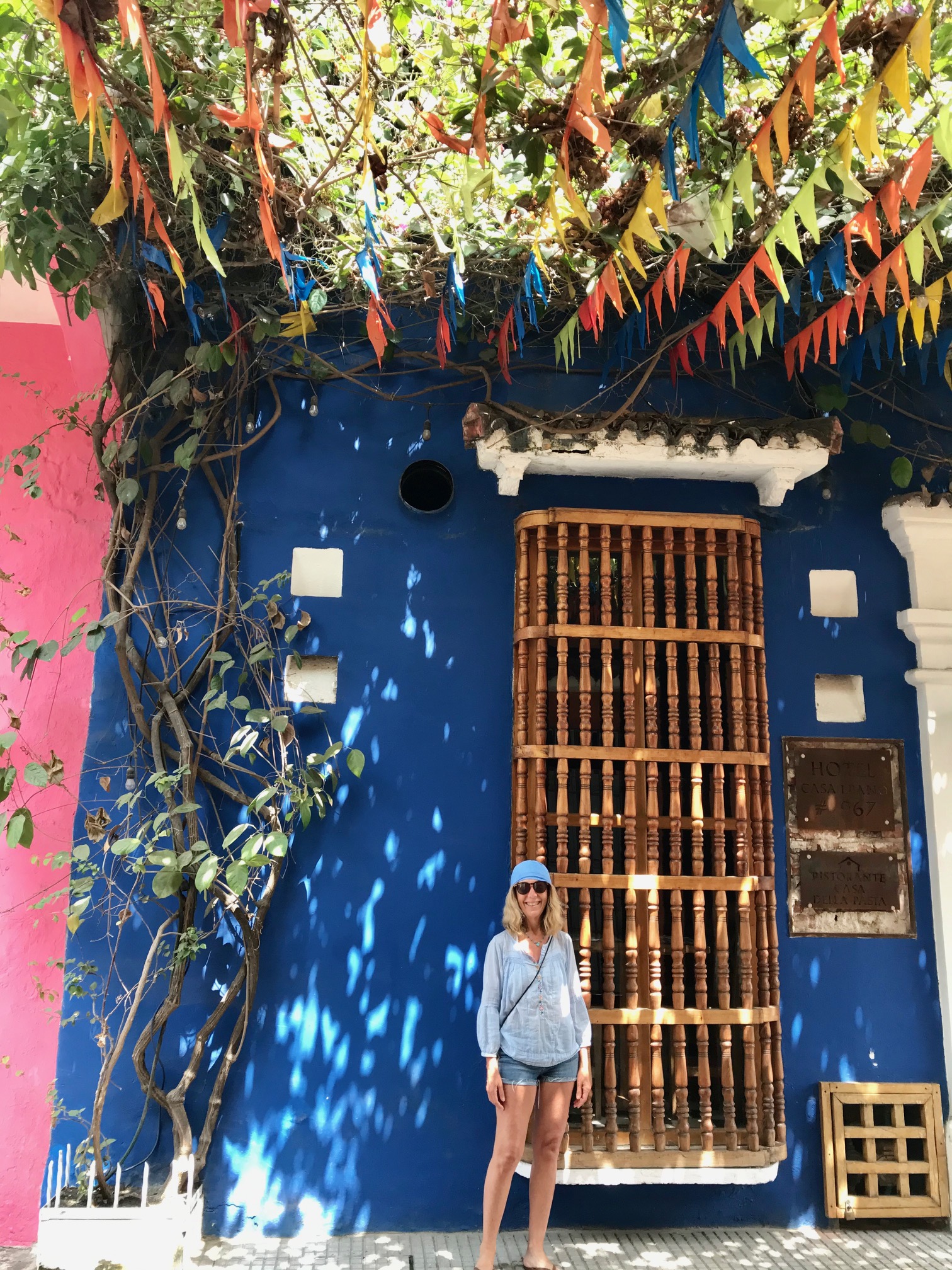 Don’t let safety concerns stop you from experiencing the explosion of colors, music, culture, and cuisine in Cartagena!
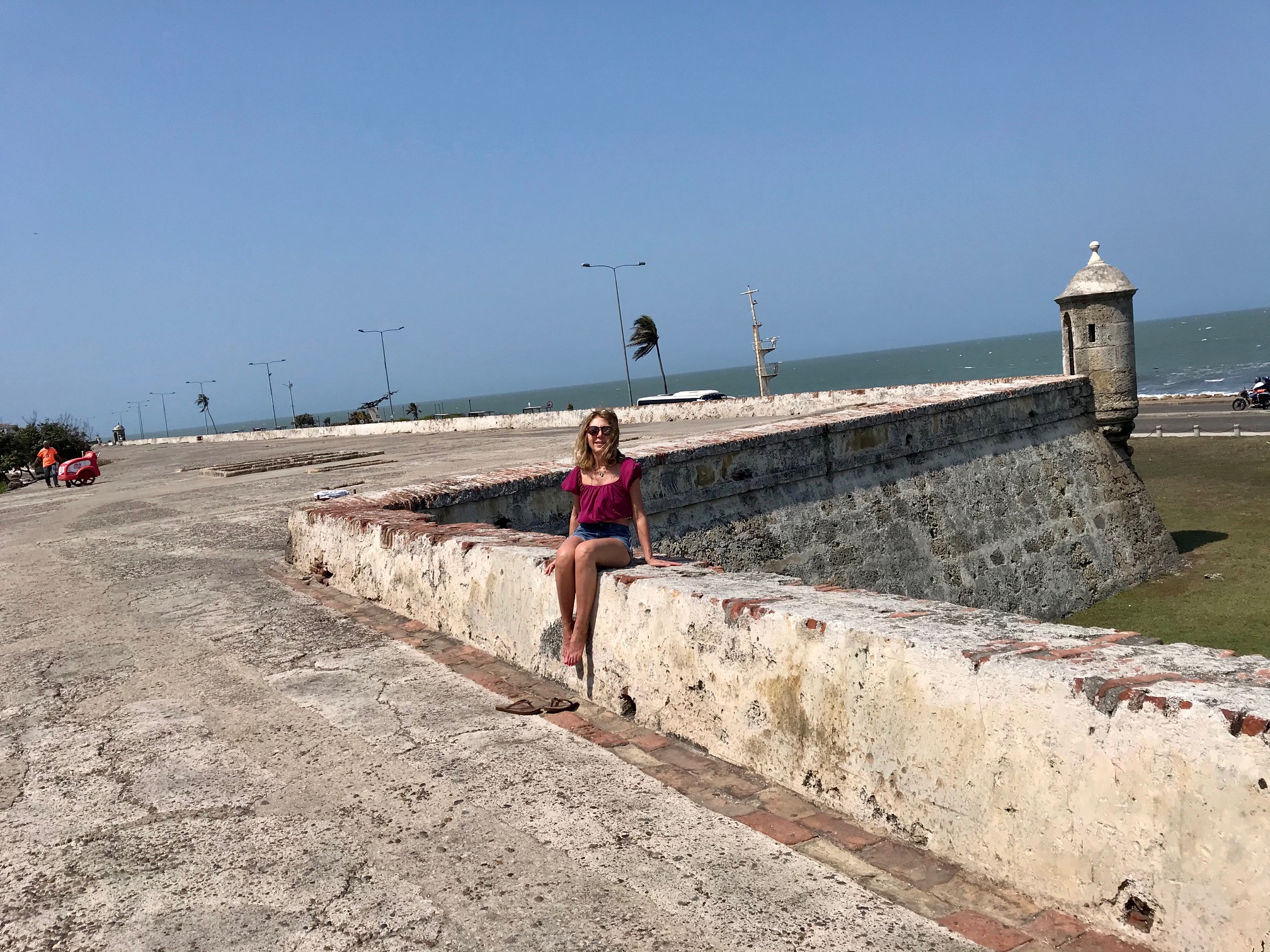
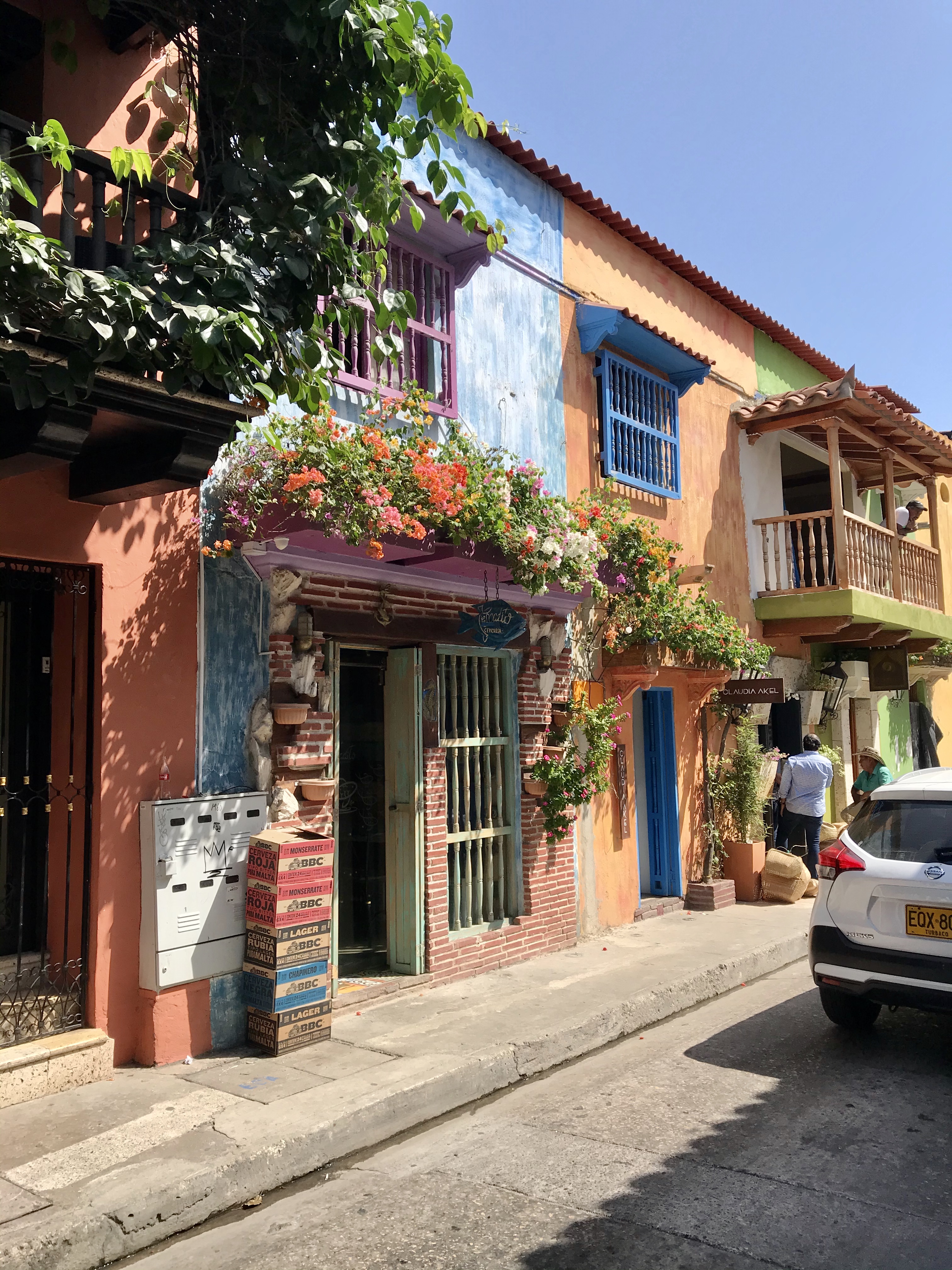 Four nights of our 8-day stay were spent inside the walls of this historic area.
  It was easy to fly from Virginia; ORF direct to MIA then Miami direct to Cartagena. And, there’s no time difference so no jet lag. Just make sure to factor in the hour + that it takes to clear immigration upon return to Miami. (Note: Global Entry is worth it.) Also, the electrical outlets are the same as US so I didn’t need an adapter.
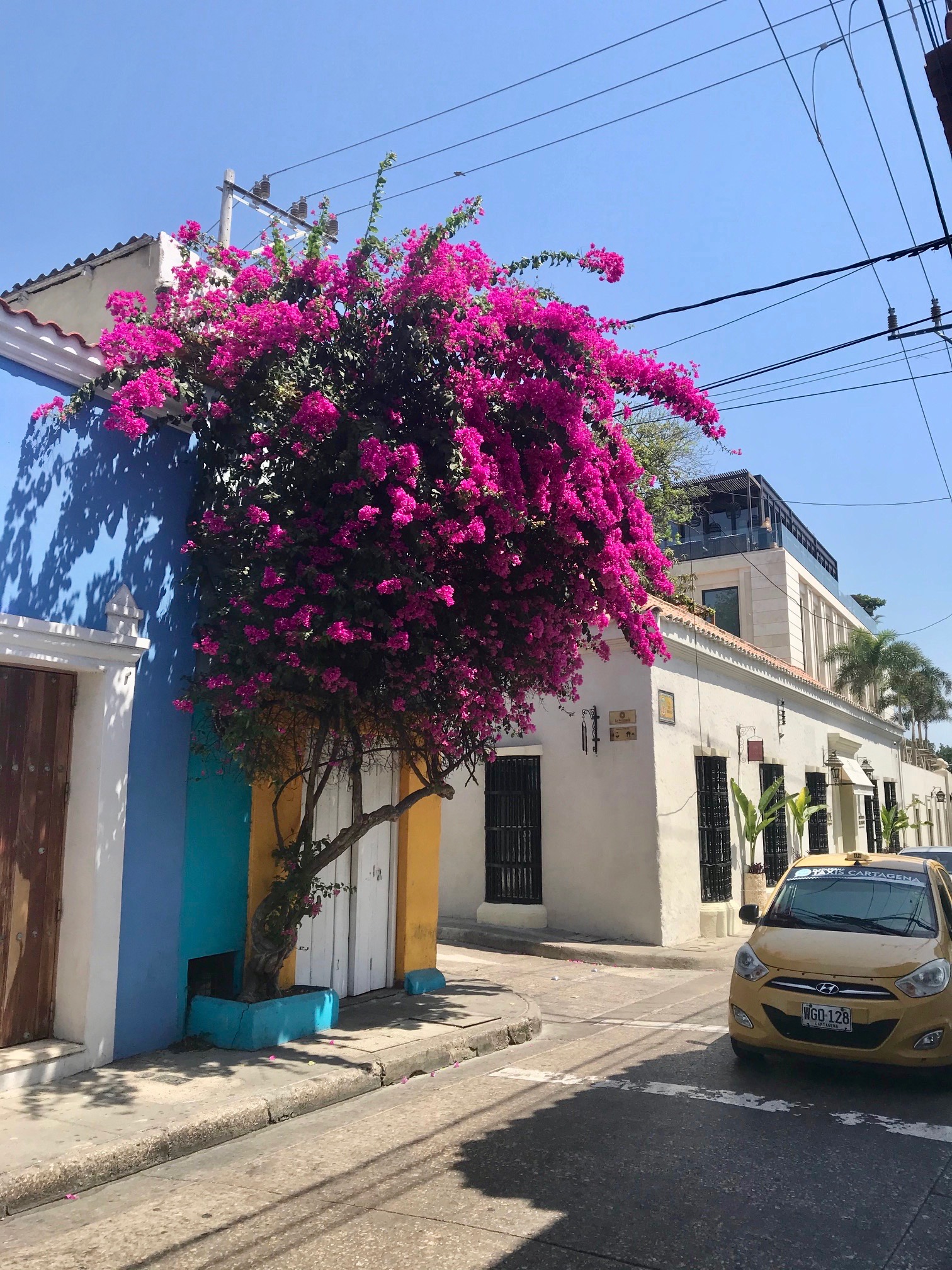
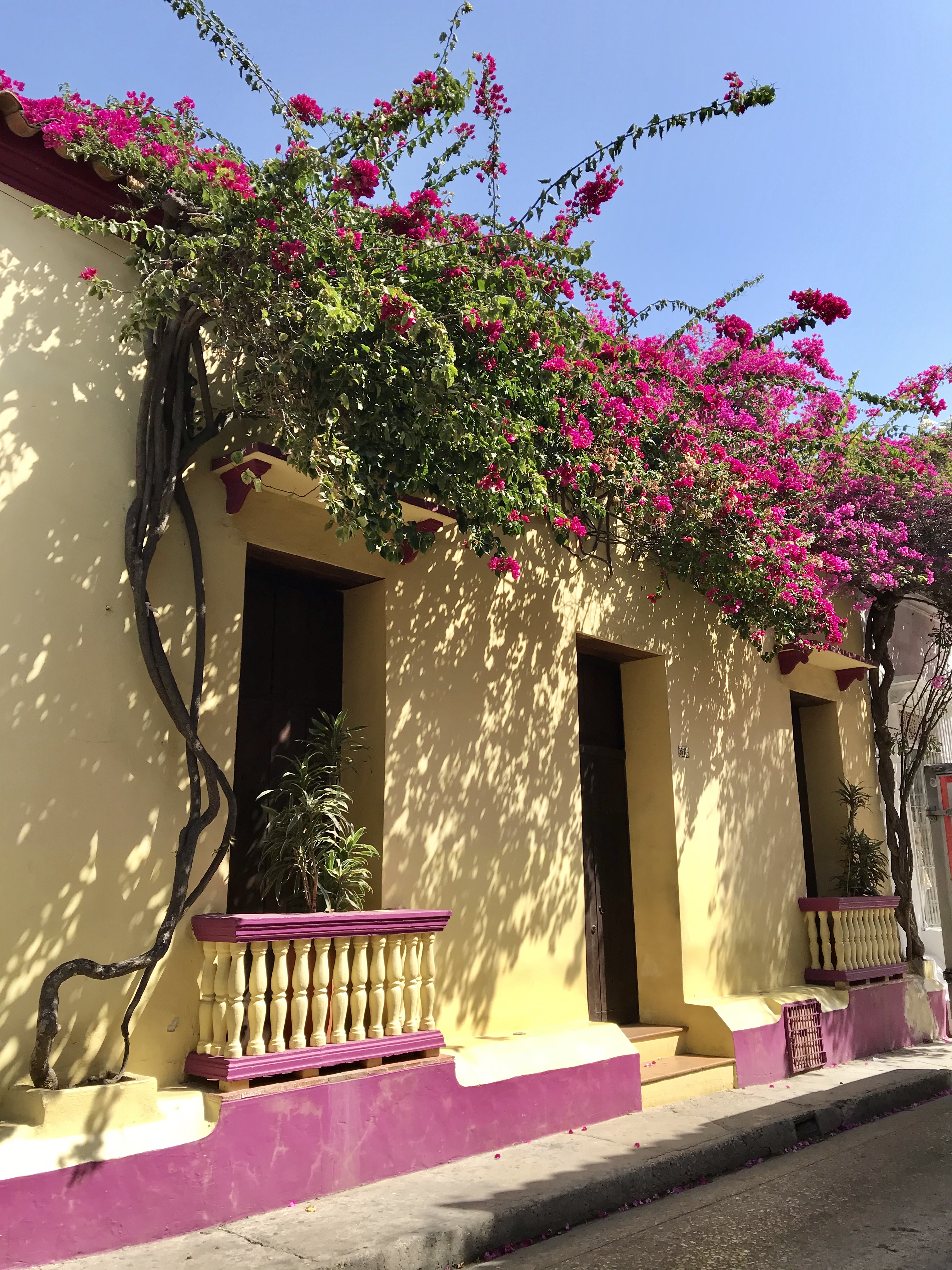 By early afternoon on the first day we were at one of countless boutique hotels, Casa Quero in the San Diego district. The entire old city can be walked and I pretty much walked it every day and night. I never felt unsafe. I don’t recall seeing any police but locals told me the old city is virtually crime-free. Funny, but it’s also pet-free. No animals are allowed.
  Every morning we were served a delicious breakfast of fruit, pastries, Colombian coffee, fresh-squeezed juices, and bright yellow eggs.
 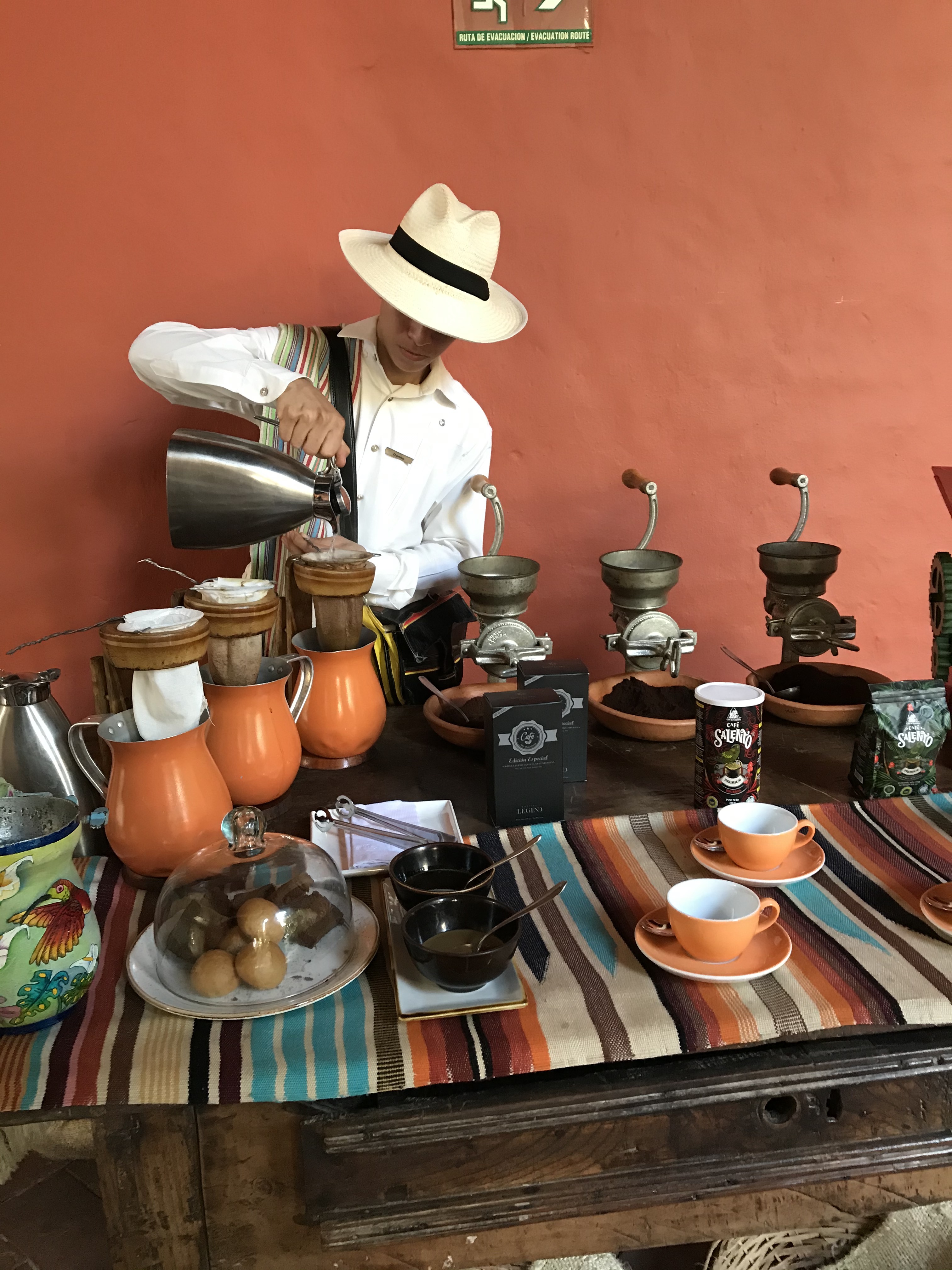 Follow that with a walk on the old wall and you’ve got the start to a wonderful day.
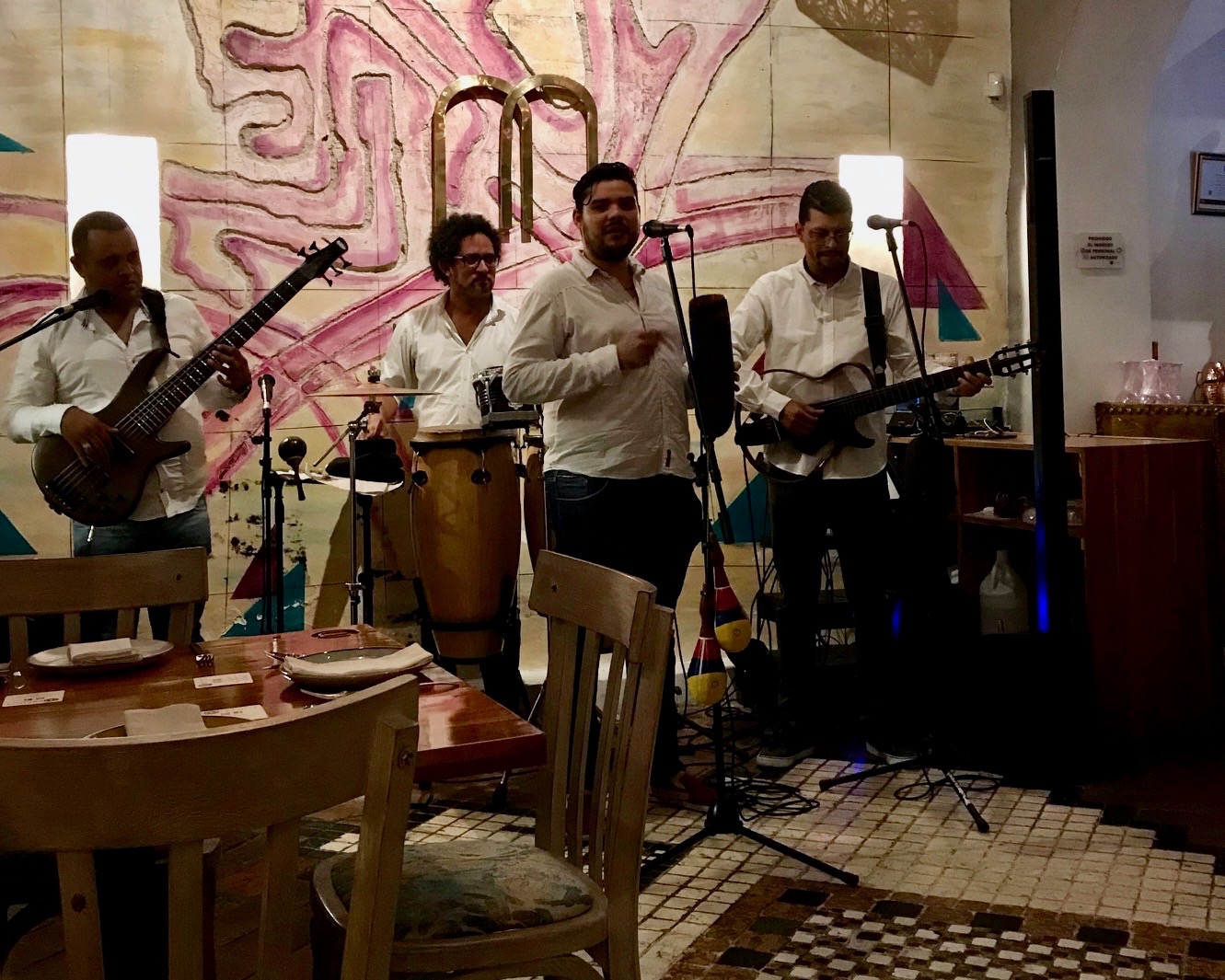
  We made reservations for dinner occasionally but, mostly, we preferred to walk around and stumble into cafes with live music. “Champeta” is a fun style of dance music with electric guitar, bass, conga drums, and vocals that originated in Cartagena in the 70’s. It’s perfect for the Caribbean-party atmosphere.
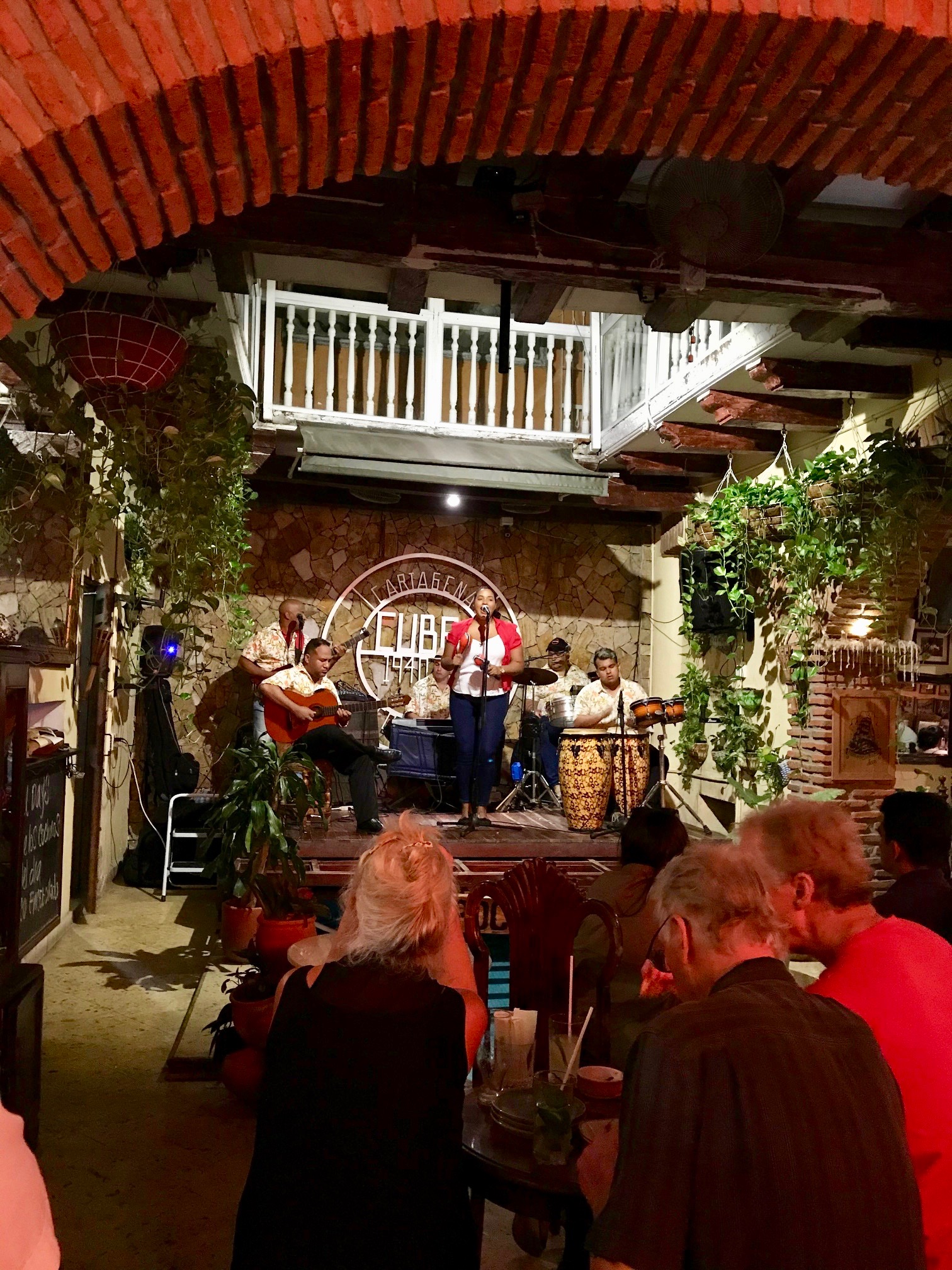
  And there is a vivid Cuban influence in the music, food, and cigar sales.
 Several evenings we walked to “Cafe del Mar” for sunset-viewing. The cafe is situated right on the old wall at its western-most point and is open from 4:30 PM to 1:00 AM daily. It features contemporary, live music and is packed with both locals and tourists creating a festive atmosphere. Arrive early if you want a seat and don’t be shy to ask if you can join others at table that has empty seats. We met a lovely couple from Brazil that way.
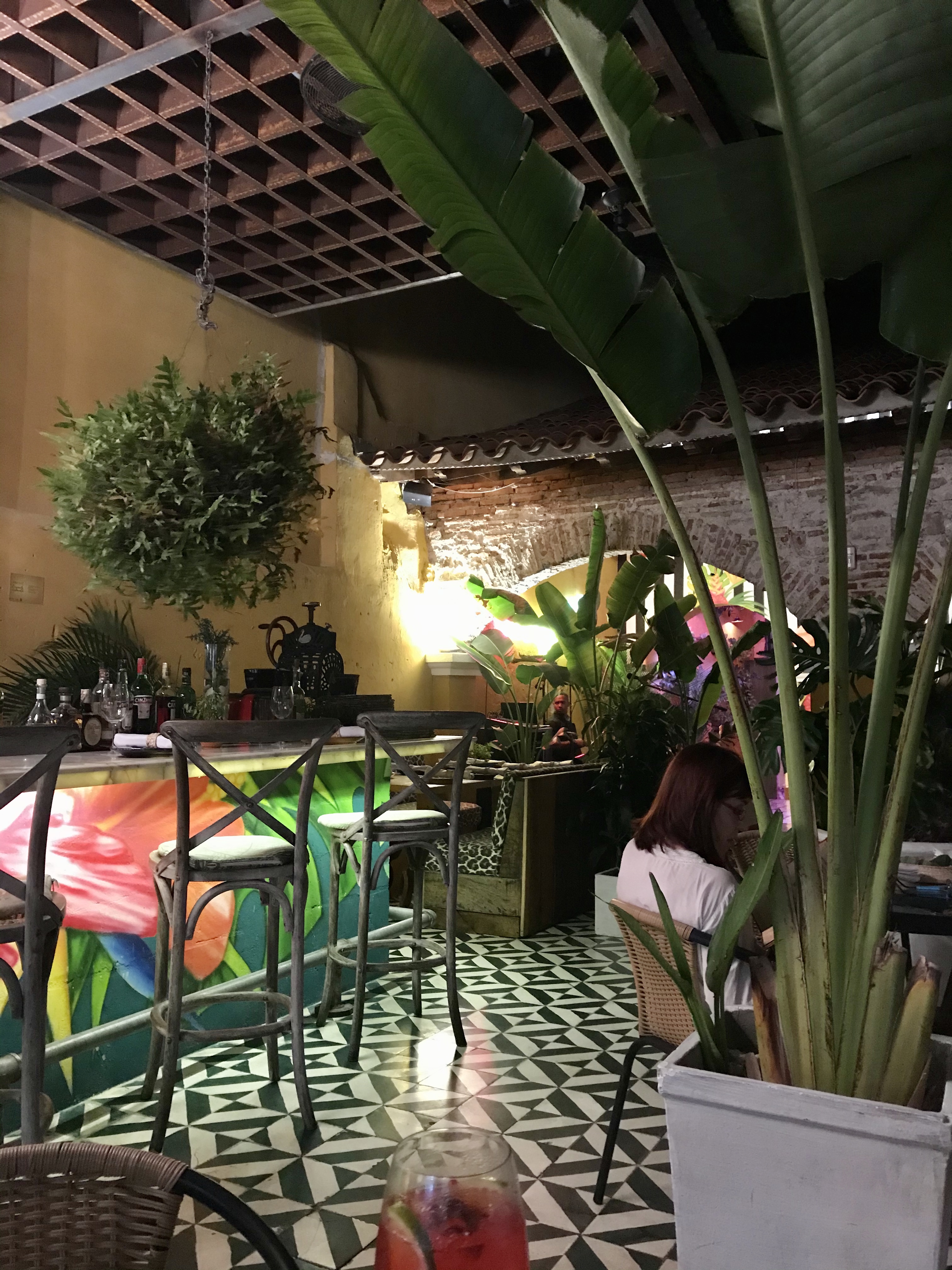
 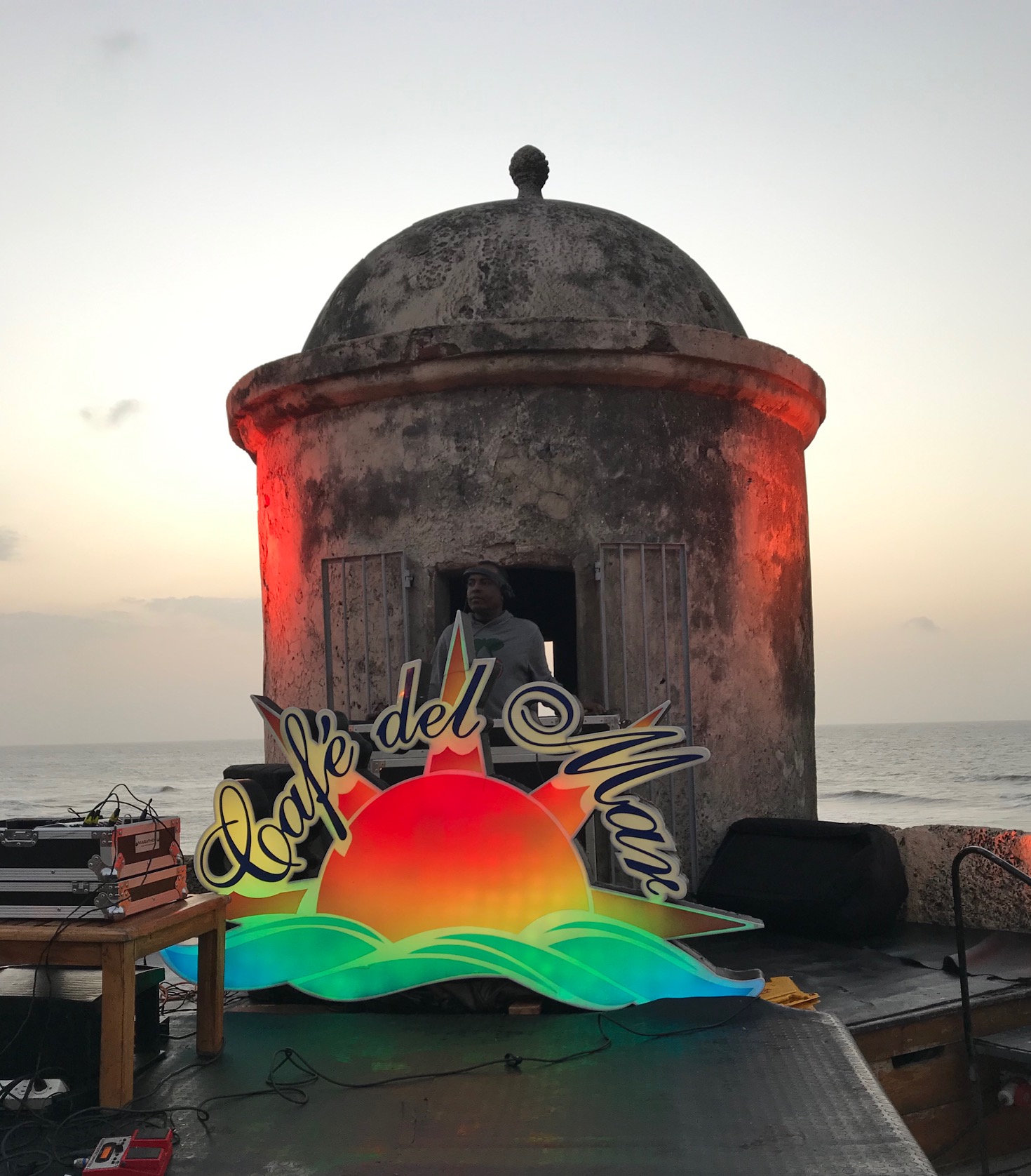 One of our favorite restaurants, “Mardeleva”, had a Cuban band 7 nights a week. Most all restaurants serve fresh fish and ceviche. Being a pescatarian was no problem.
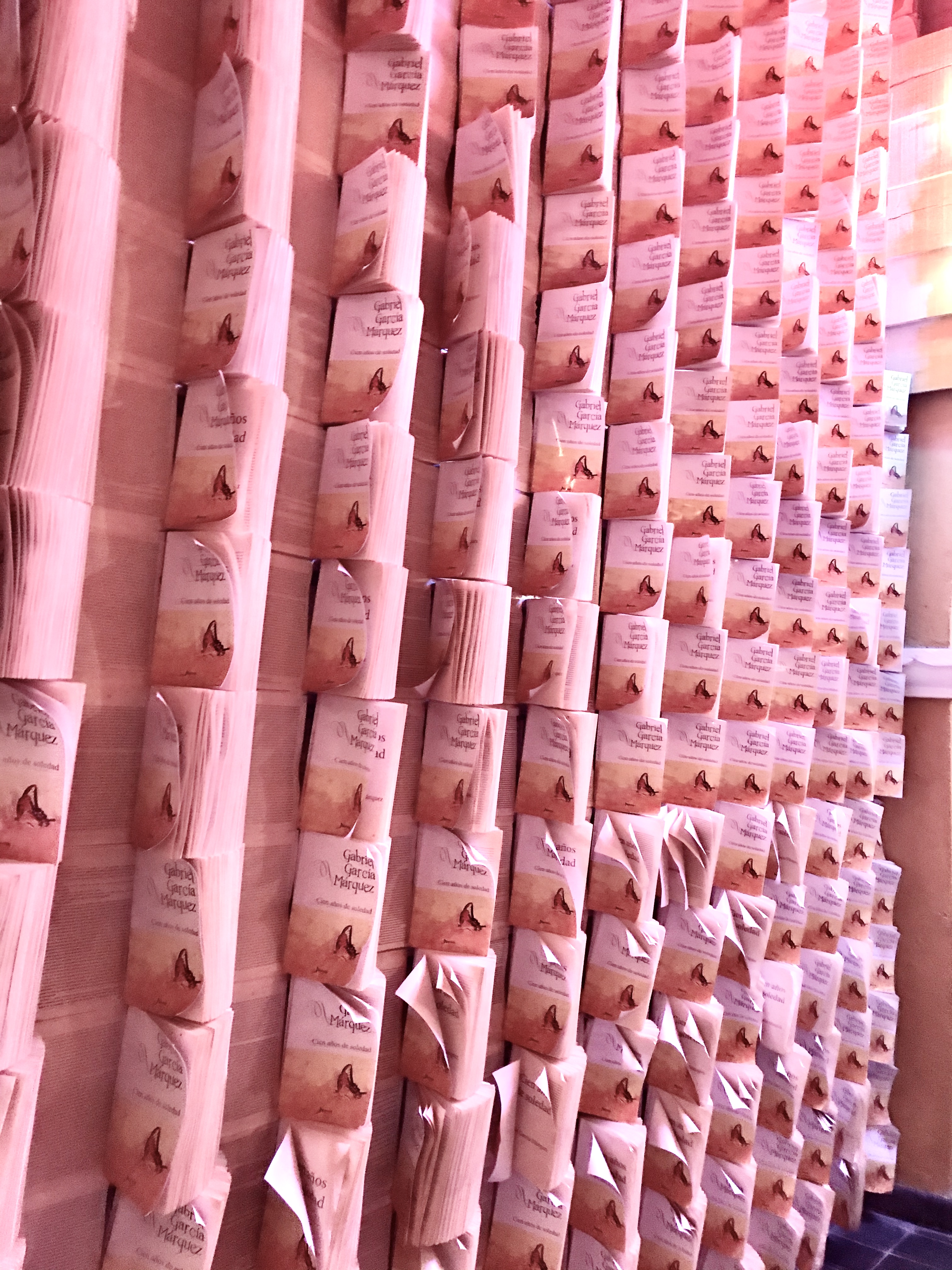
  Perhaps, the most celebrated Colombian author is Gabriel Garcia Marquez who wrote “A Hundred Years of Solitude.” One entire wall of the “Mardeleva” was covered in the novel.
  The weather was consistently low-90’s in the day and mid-70’s at night–perfect in my book. The mornings were still but a strong breeze began everyday about noon and continued after midnight.
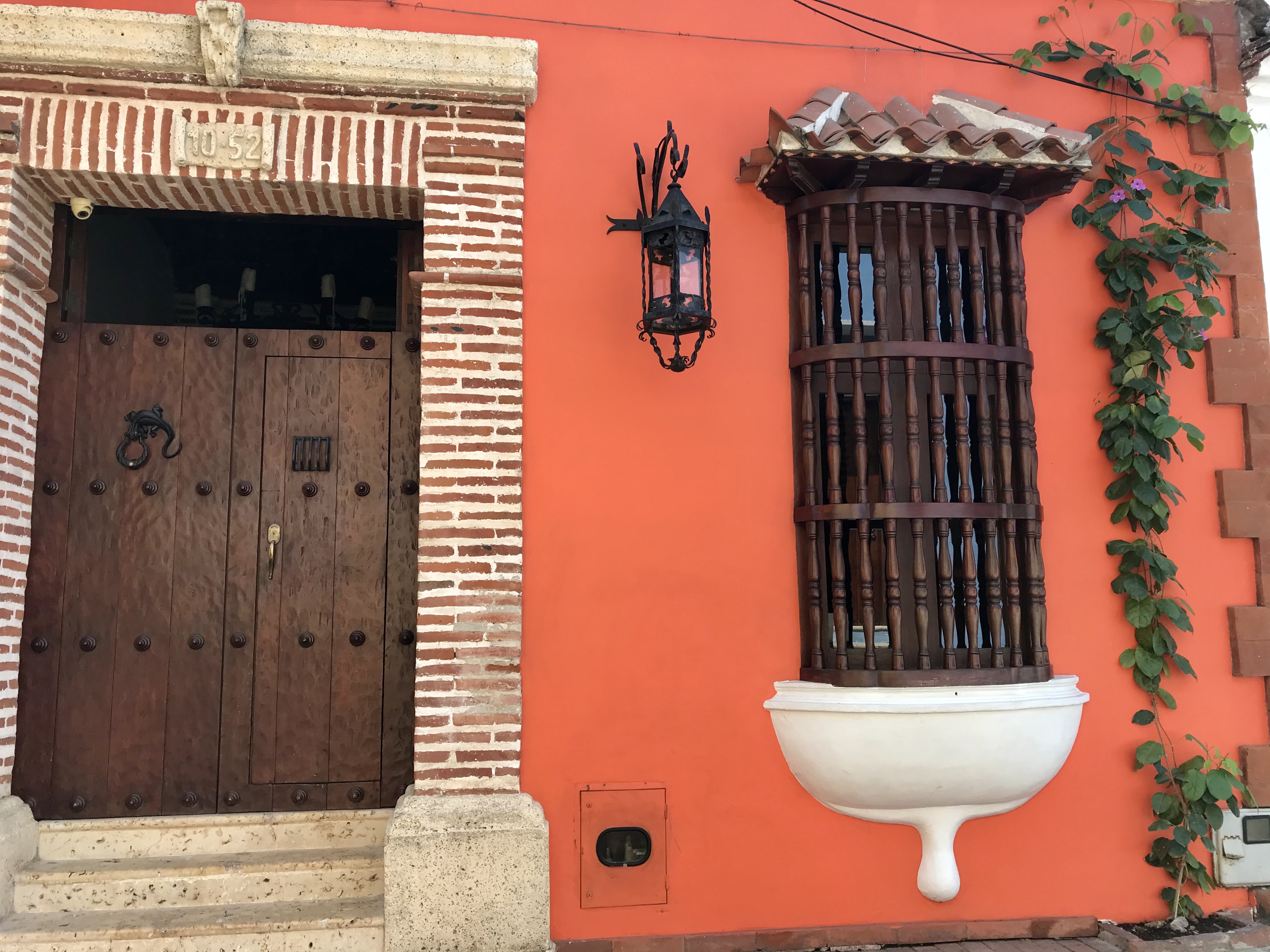
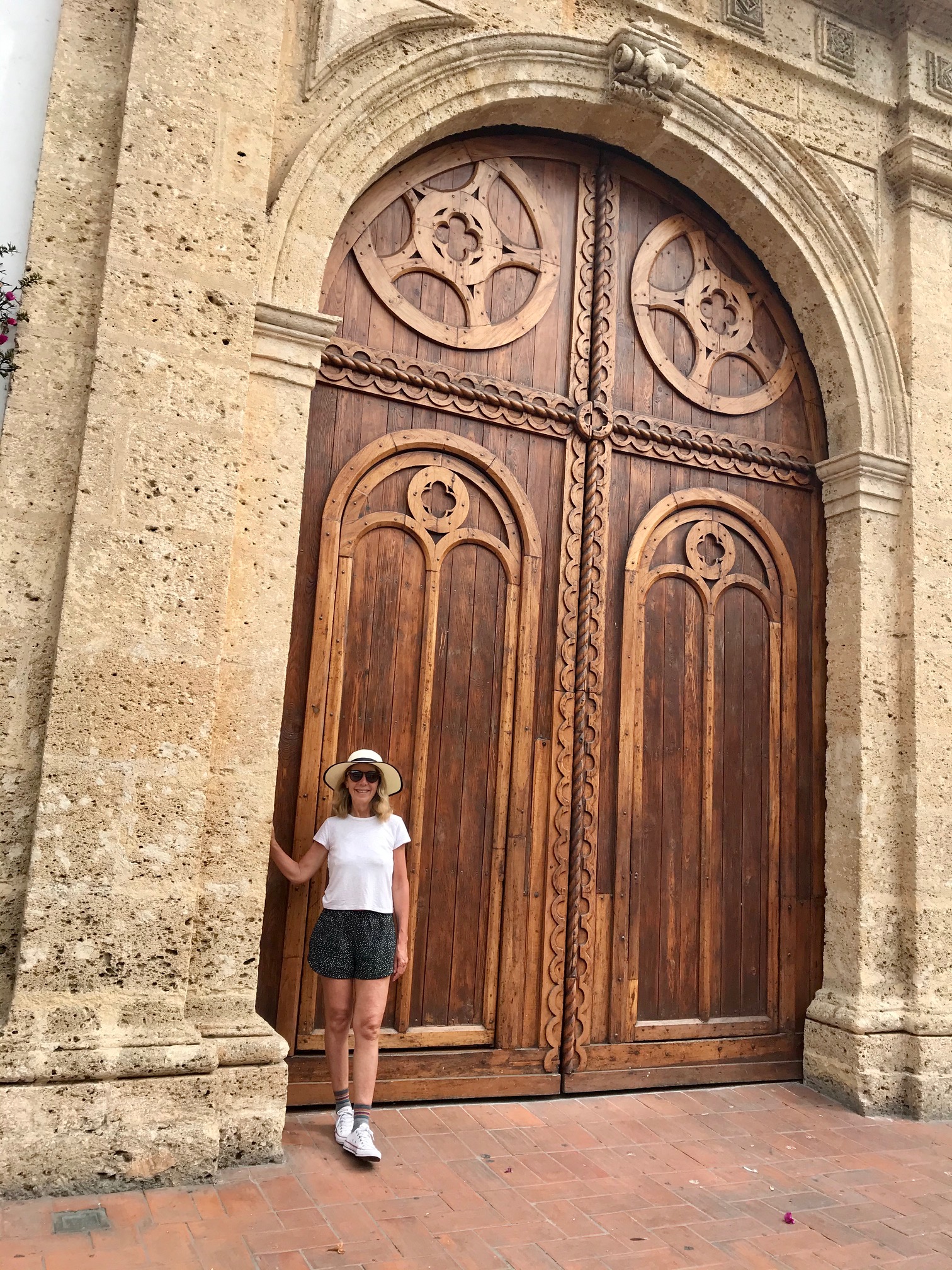
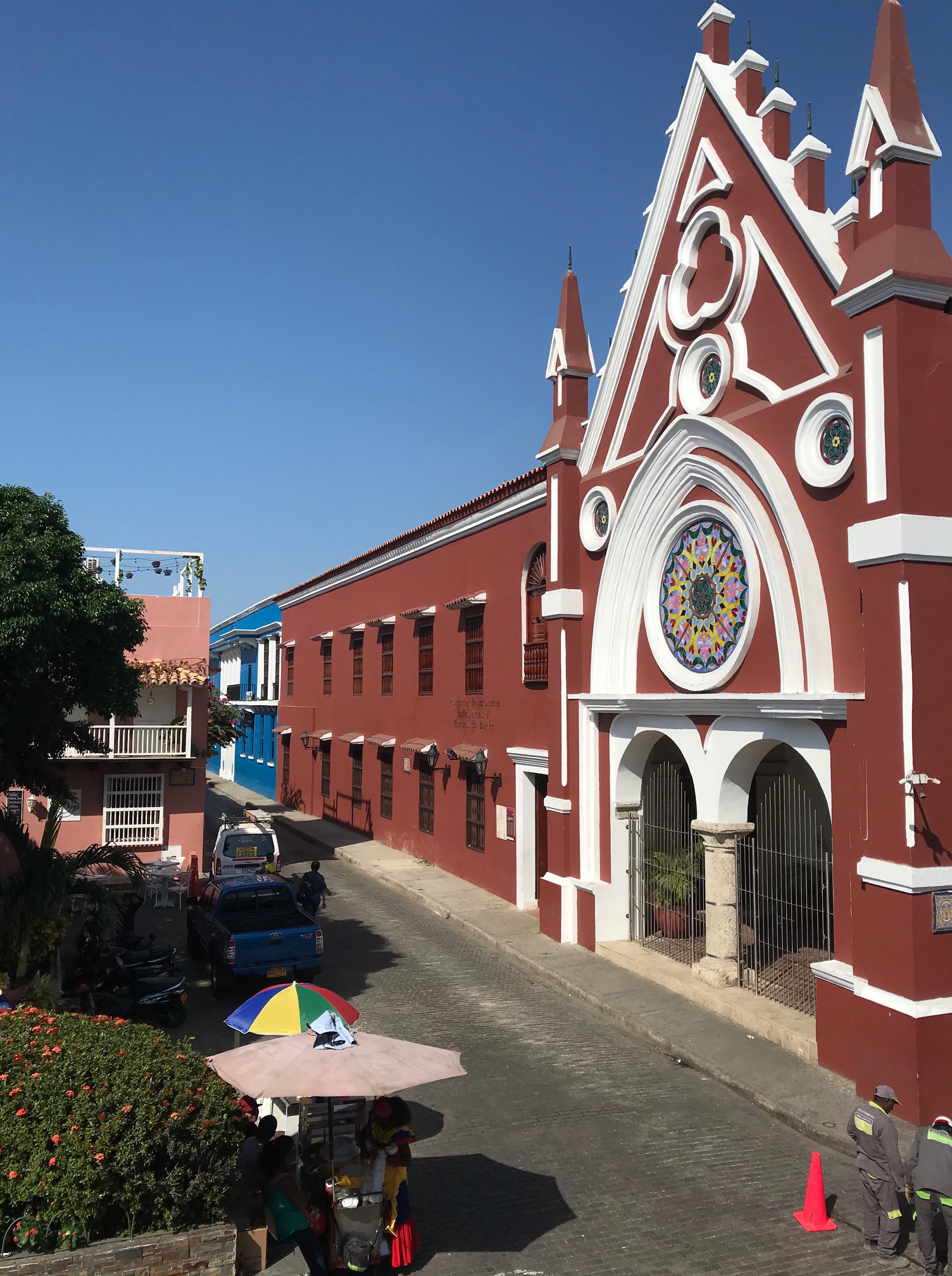 And so many gorgeous doors.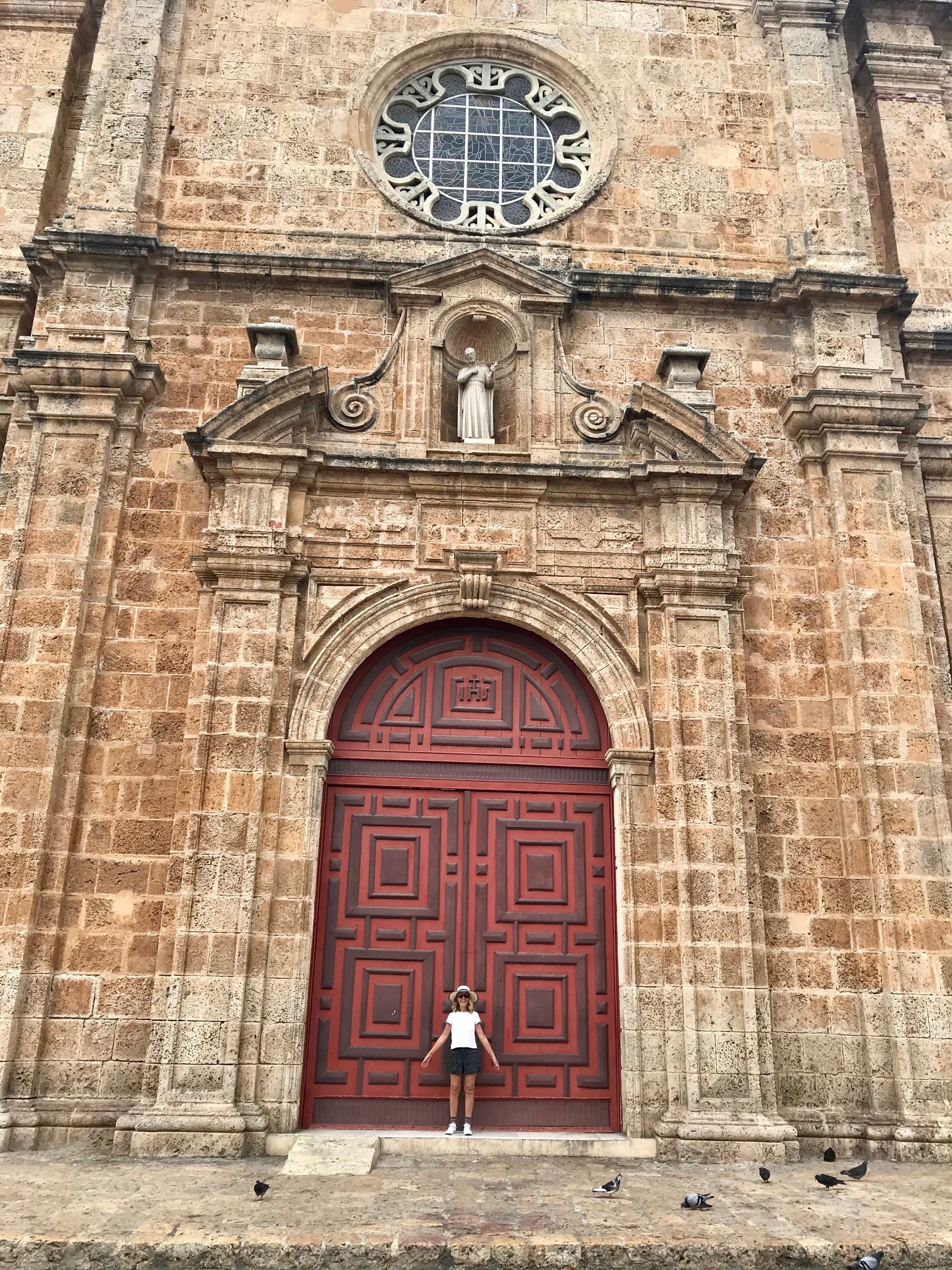
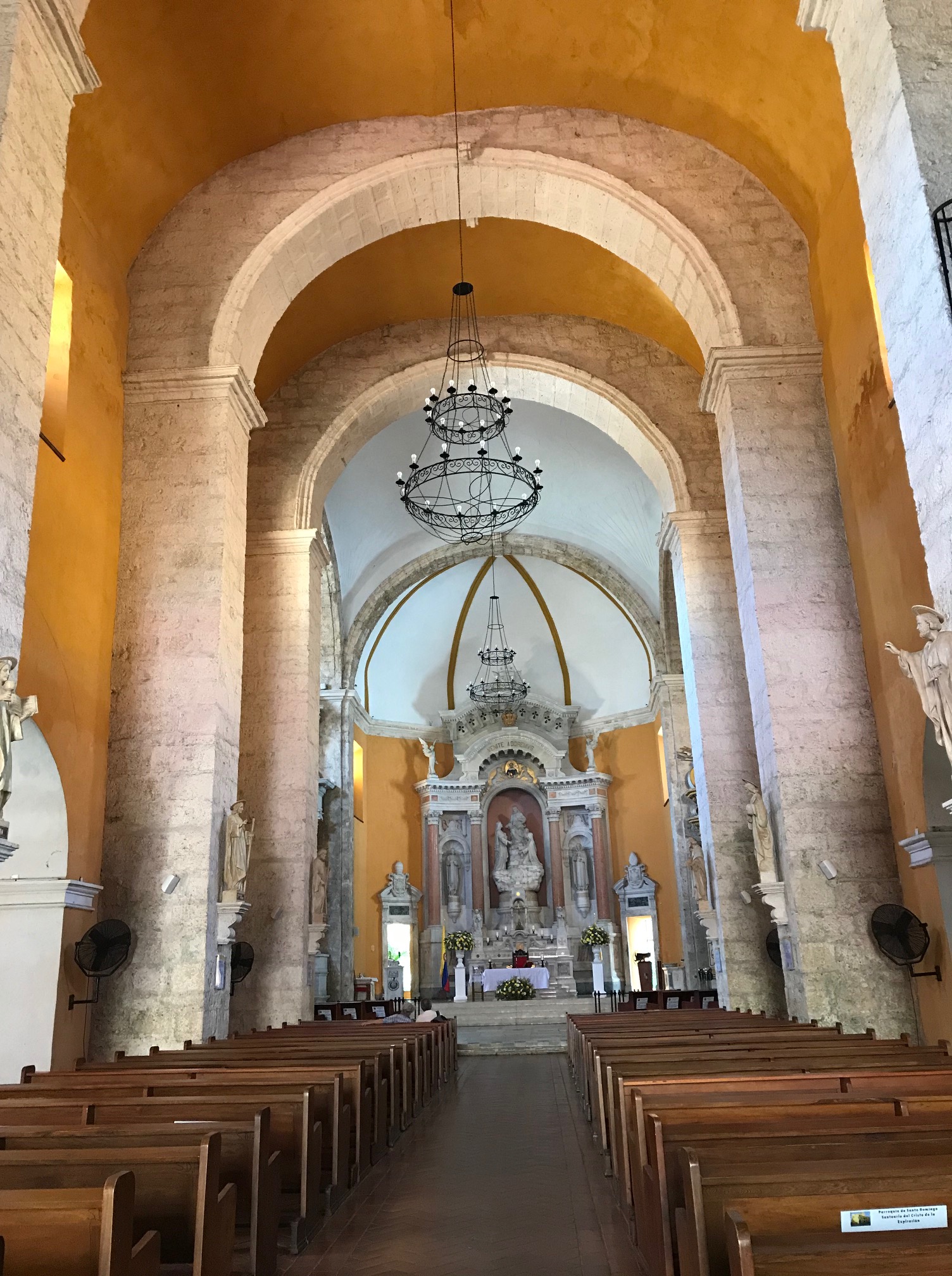
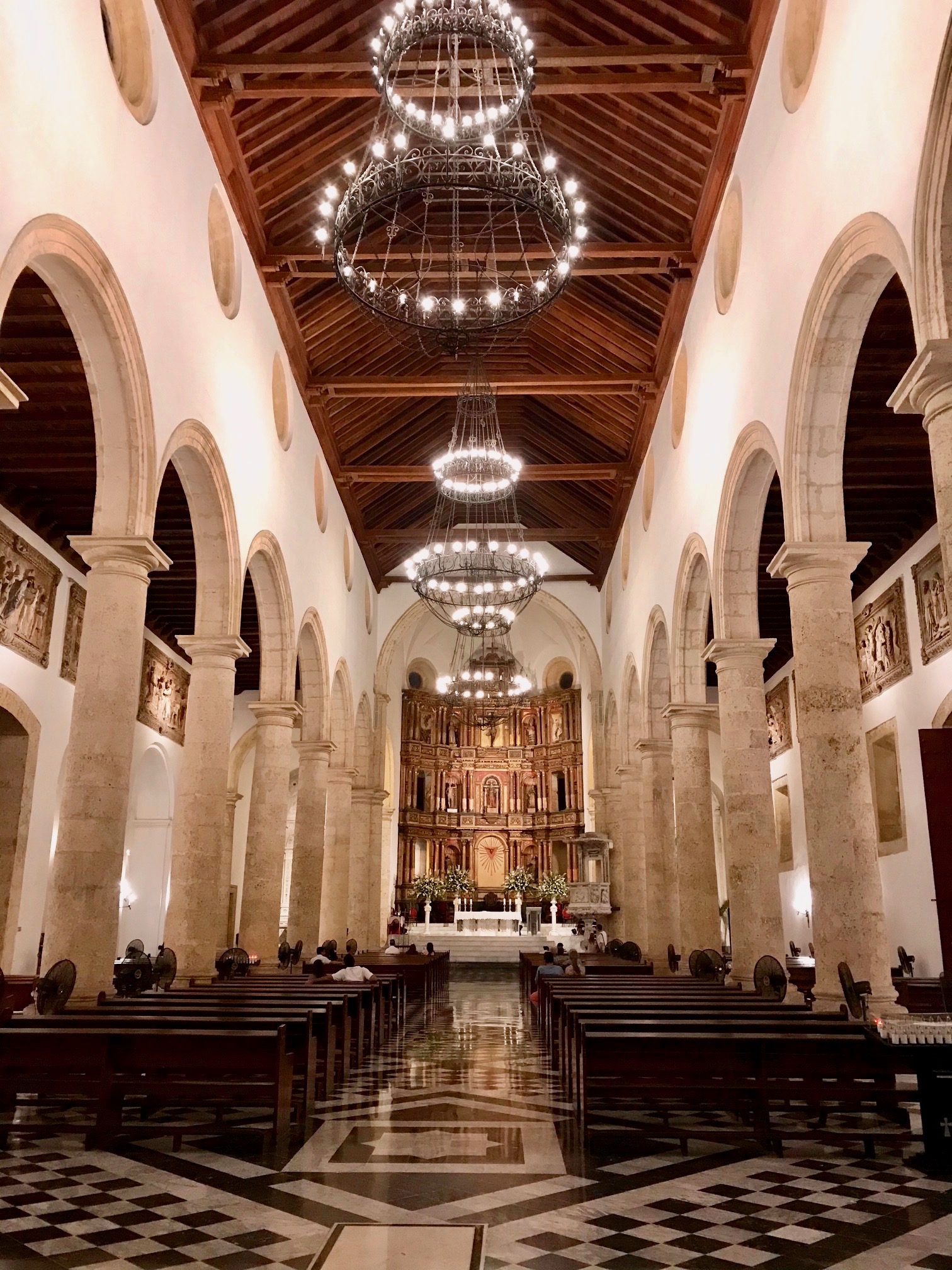
 Going inside the churches is always free.
 I saw a lot of bridal parties including a couple riding in a horse-driven carriage and a big group from the US.
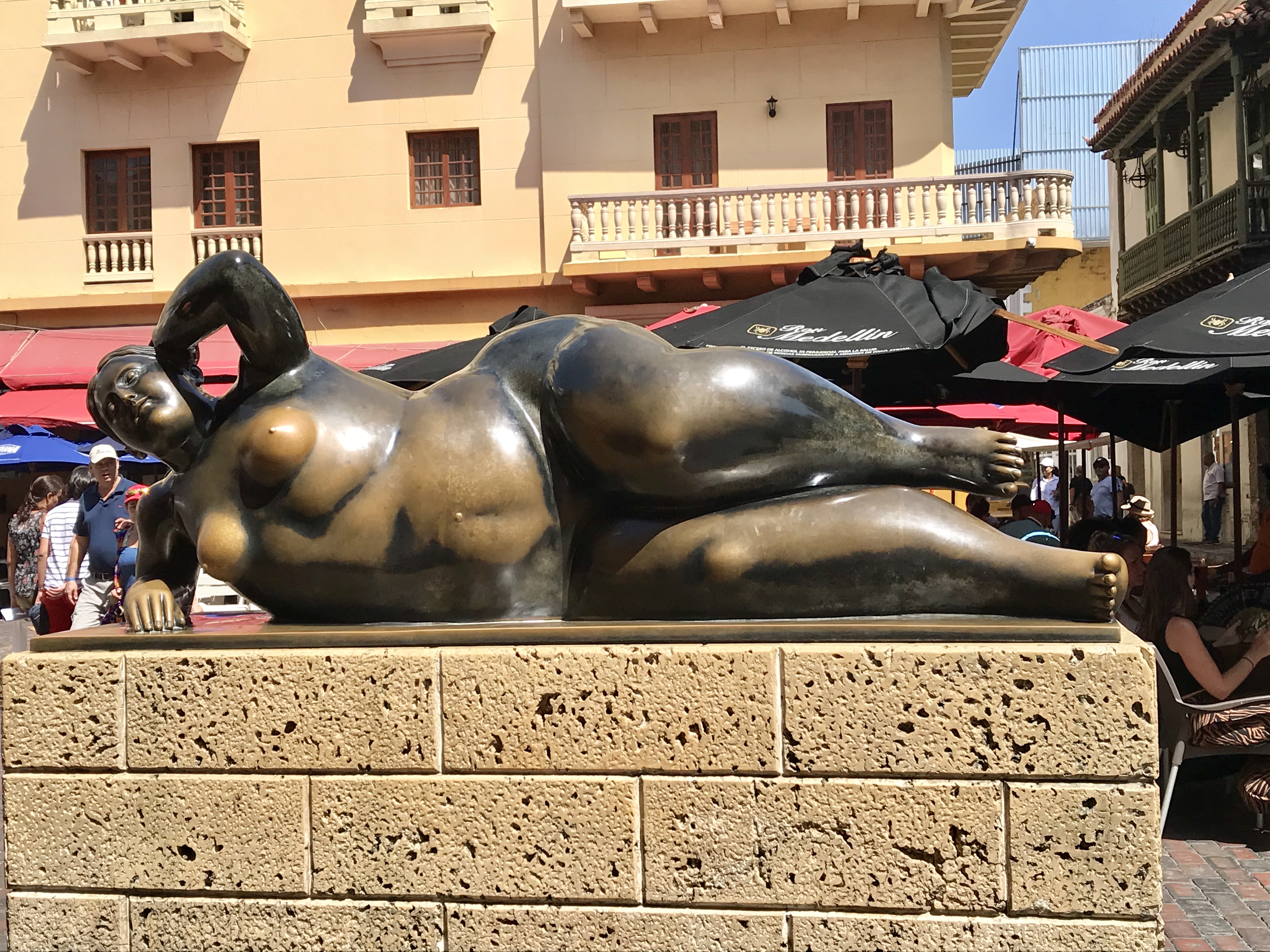
  Sculptures are common in the plazas. This sculpture by renowned Colombian artist/sculptor, Fernando Botero, is in Plaza San de Santo Domingo. His signature style depicts people and animals in exaggerated size.
  Leaving Cartagena temporarily, we took an hour and a half boat ride to the Rosario Islands. Many people go to the islands for a day trip to enjoy the white sand beaches, azure blue water, and diving/snorkeling but we opted for a two-day stay at Las Islas, an upscale eco-lodge with treehouses.
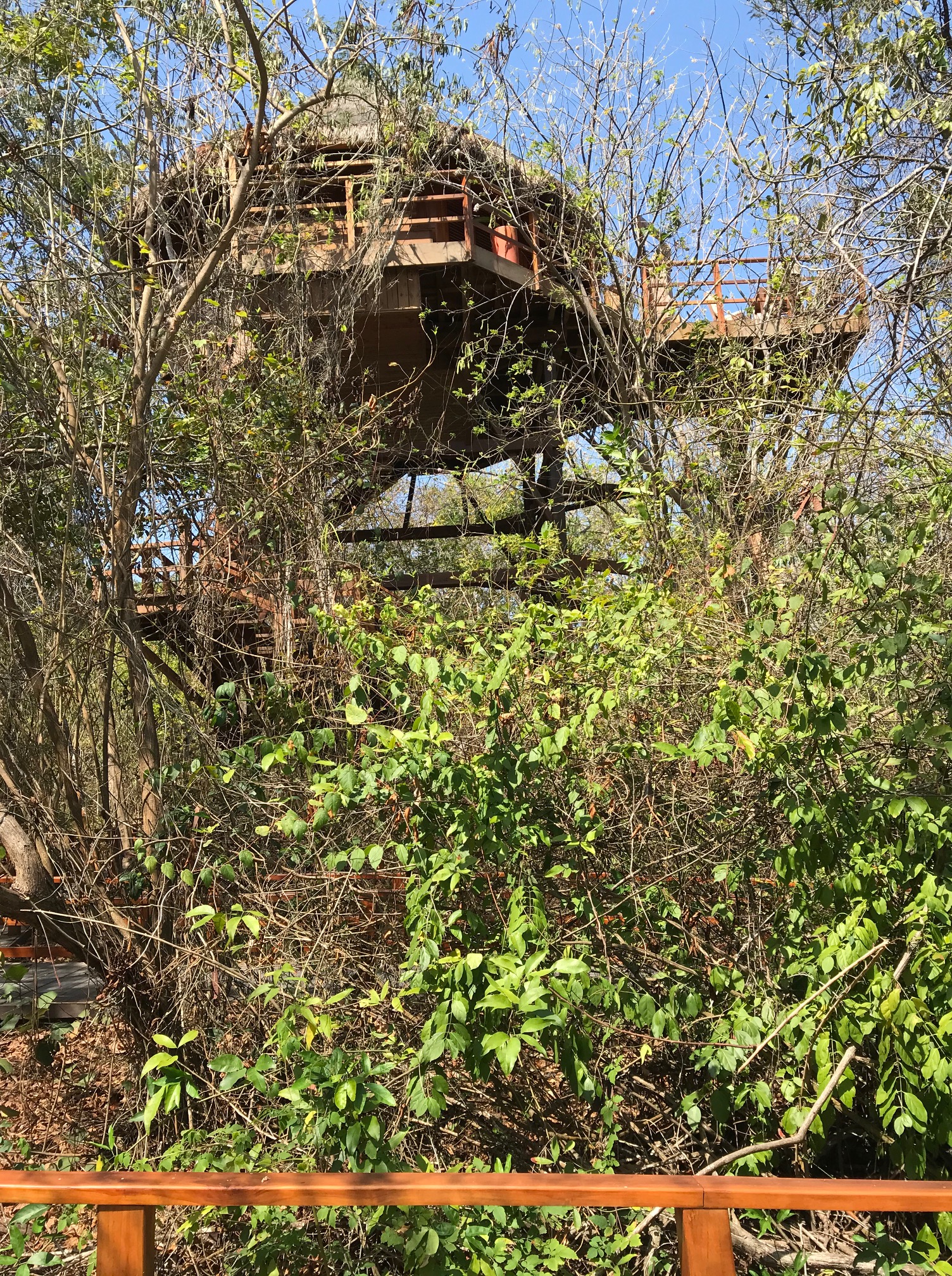 The treehouse architects/engineers created a masterpiece that is beautiful, functional and very fun.
 Each treehouse features a private shower and jacuzzi, air conditioning, wifi, and all the luxuries you might want. The most impressive part was the tranquility created by the merging of nature and structure, a constant breeze, an amazing view, complete privacy, and the sound of the waves all day and night.
 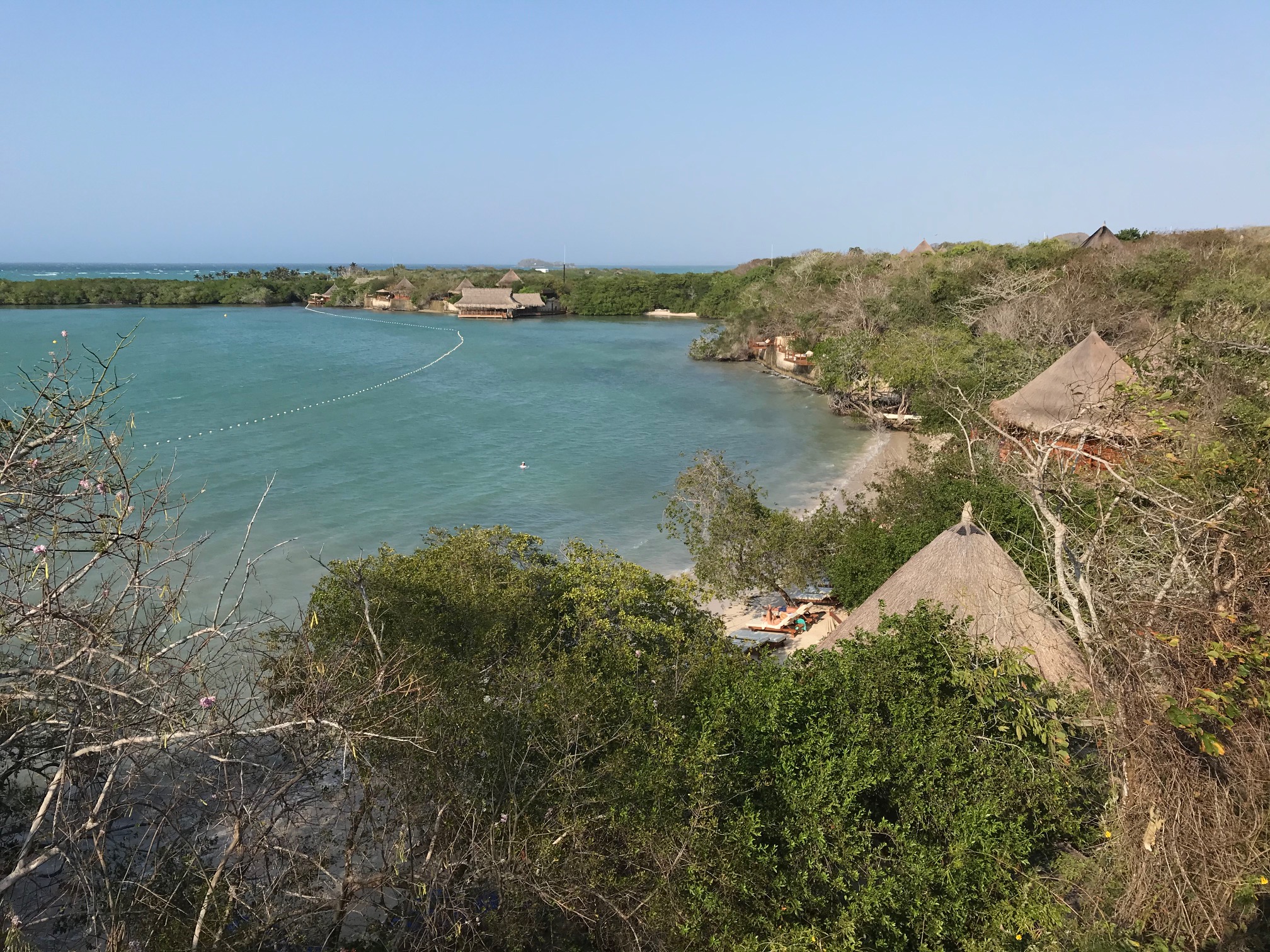 The resort includes a private island that’s about a 5-minute boat ride away plus three restaurants, each with its own character. Breakfast is on this pier,
 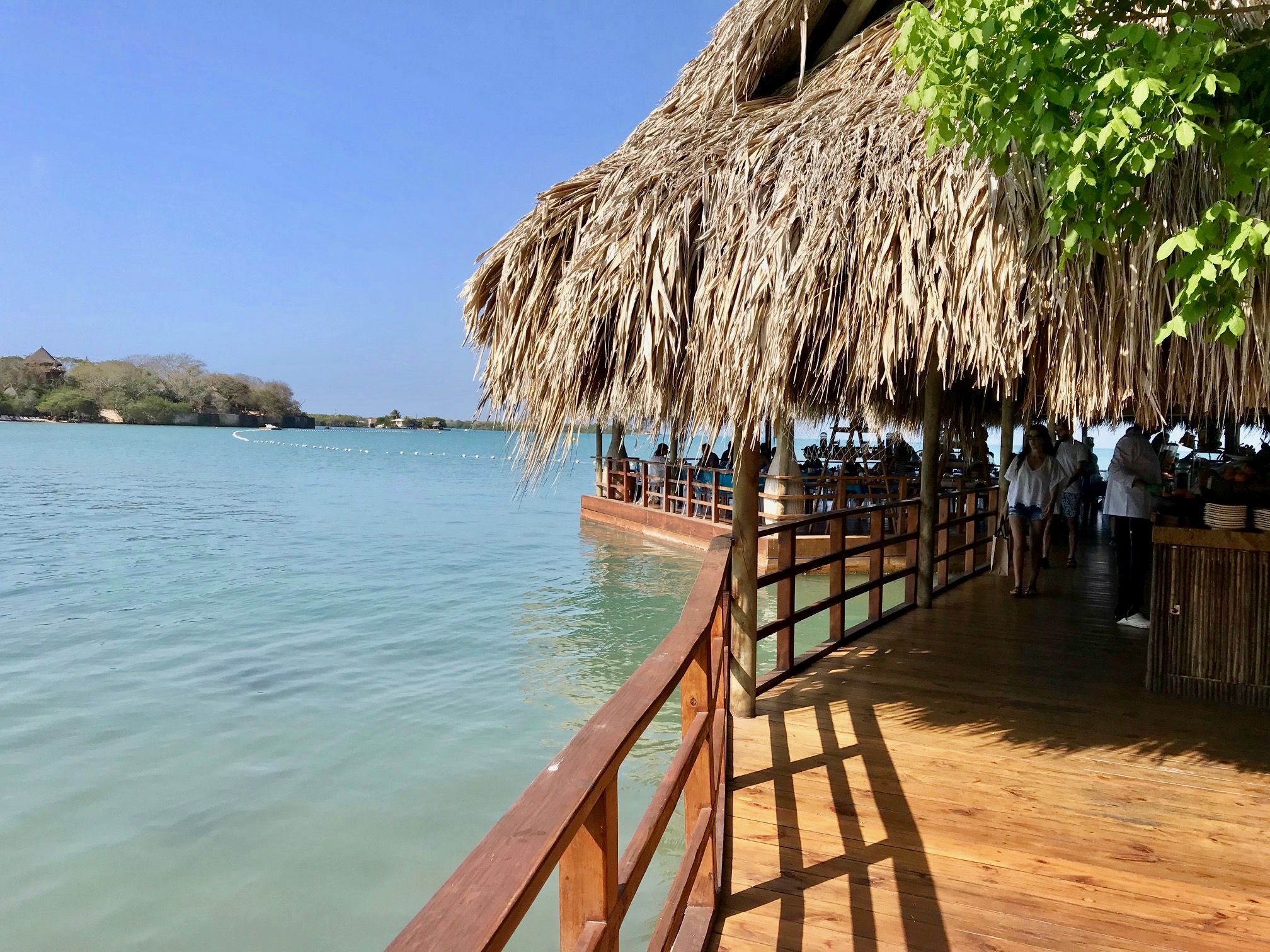 lunch is at a beach cafe on the sand, and dinner is at a very elegant restaurant up on a hill.
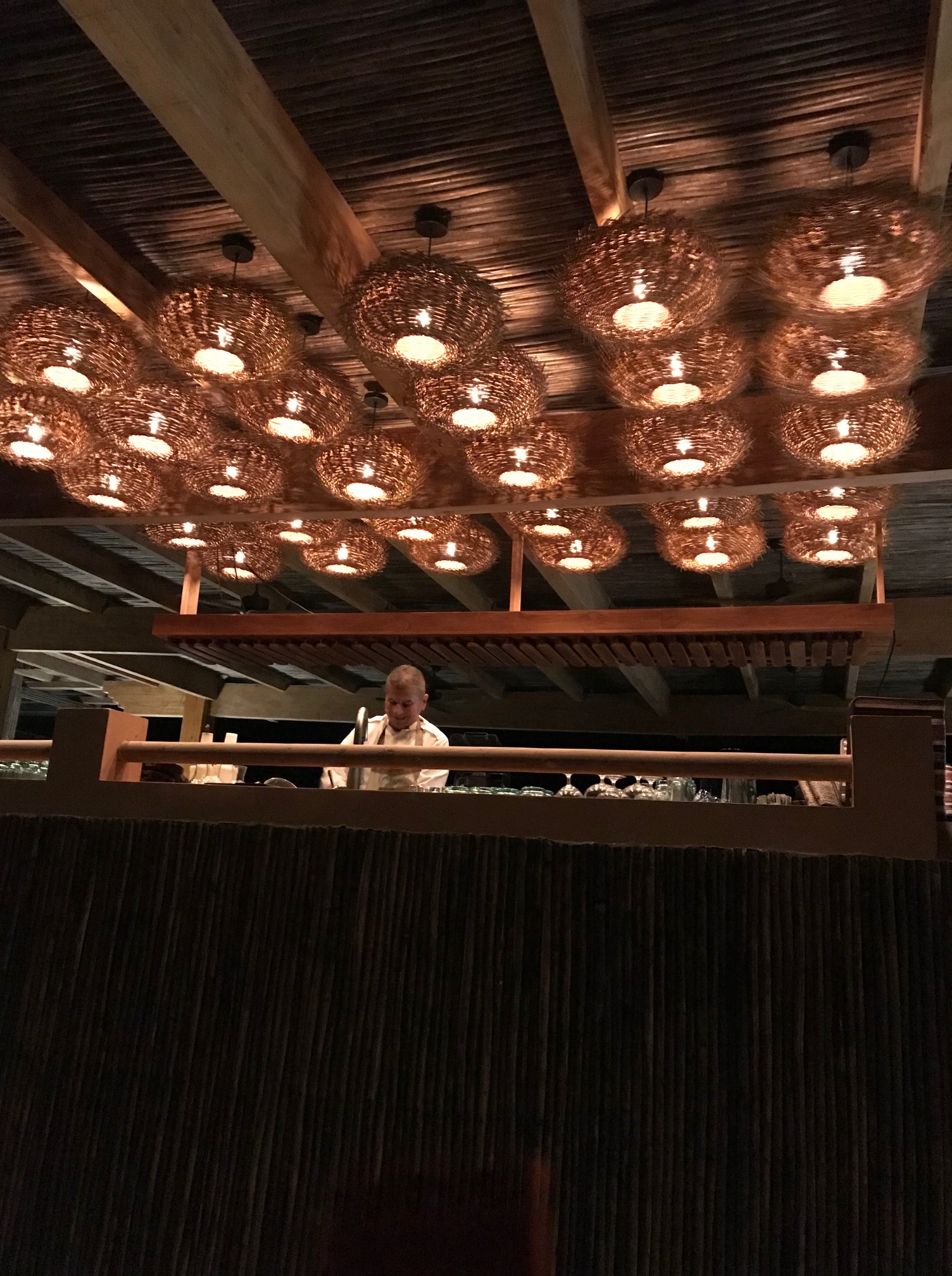 All the construction materials blend with the natural environment.
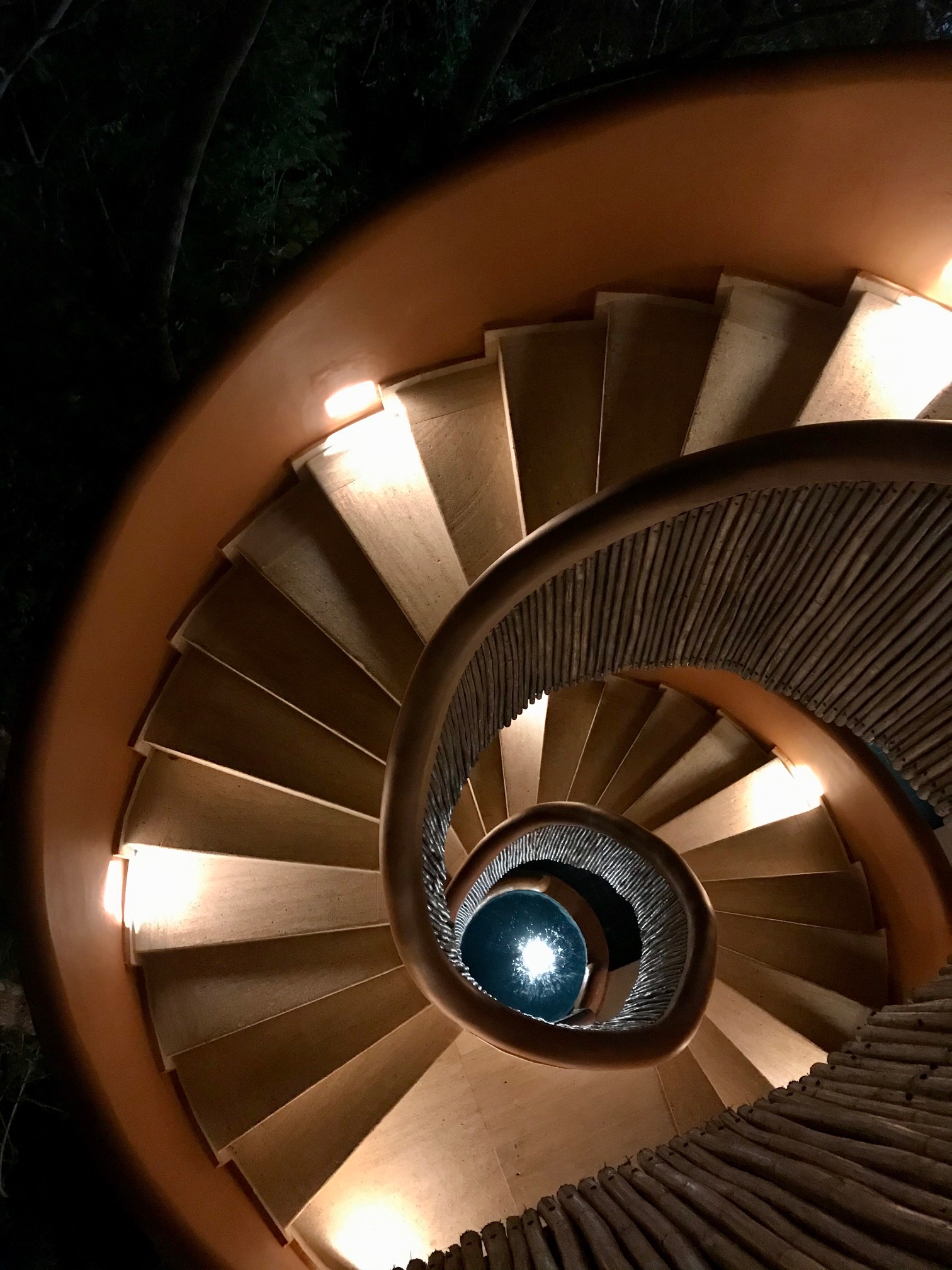
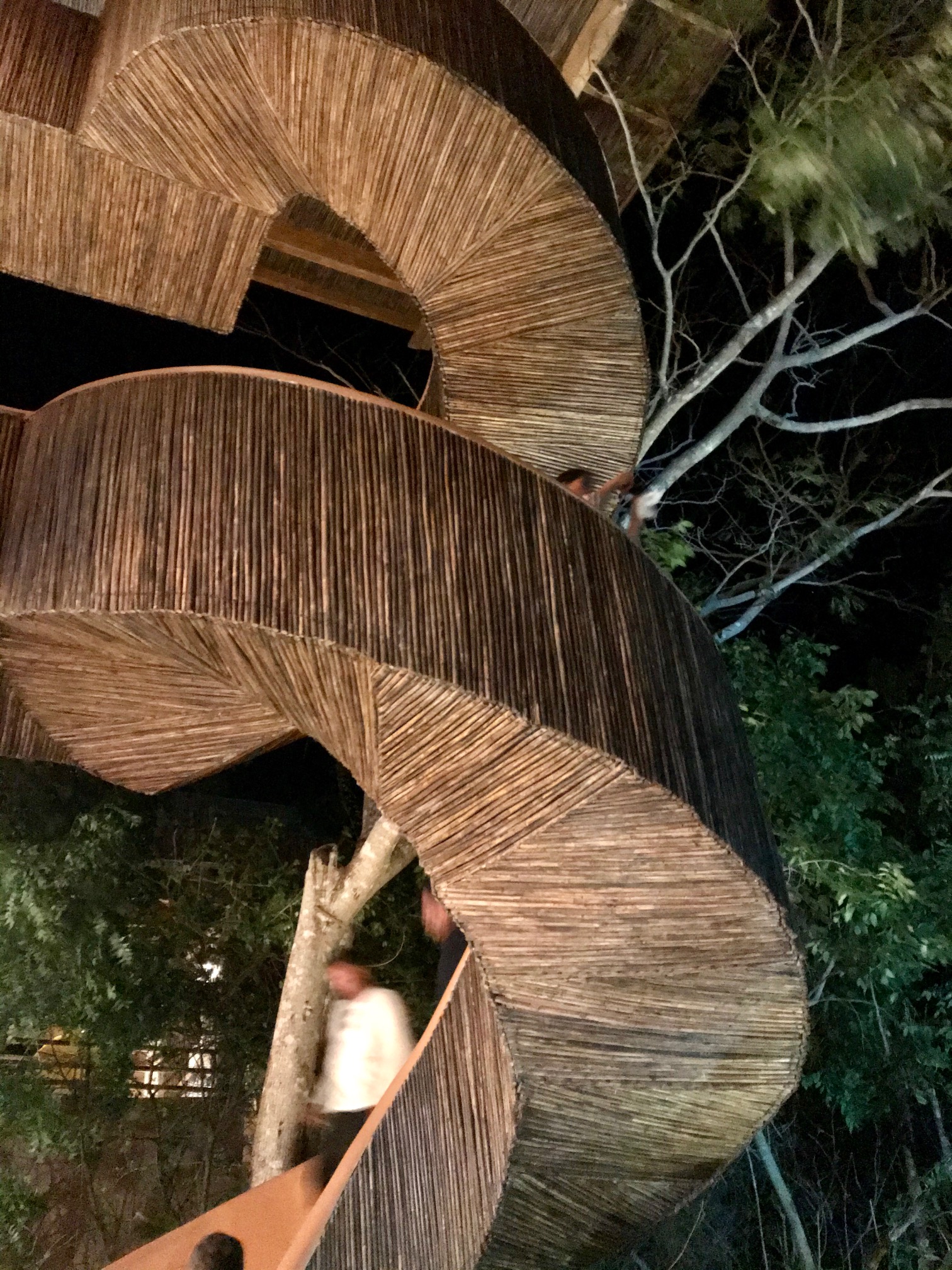 And the dramatic lighting adds to the atmosphere. So many of the buildings have walls but no roofs or vice-versa, roofs but no walls, so that it’s questionable whether you’re sitting inside or outside.
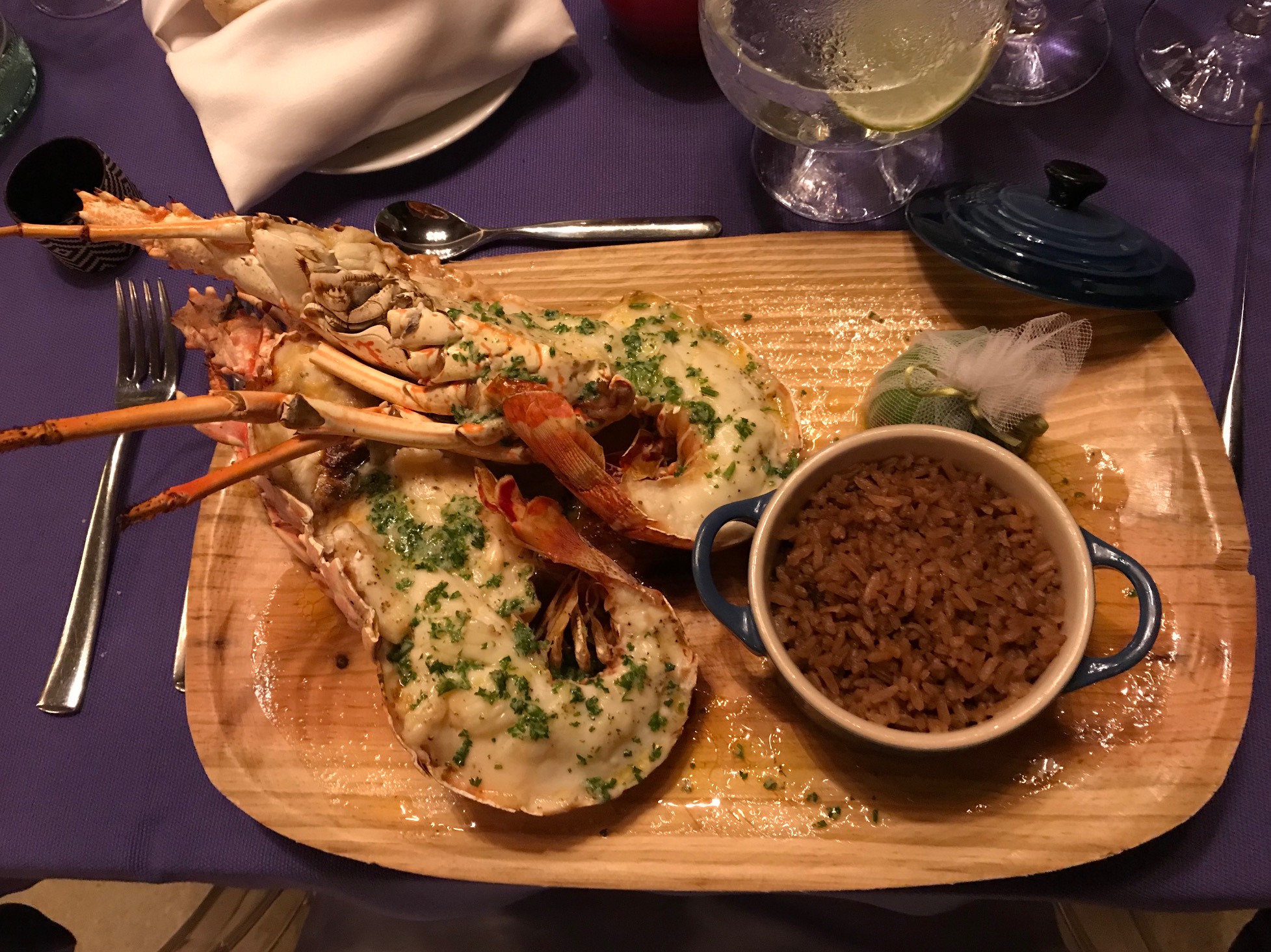
  My grilled lobster with coconut rice cost about $30 US.
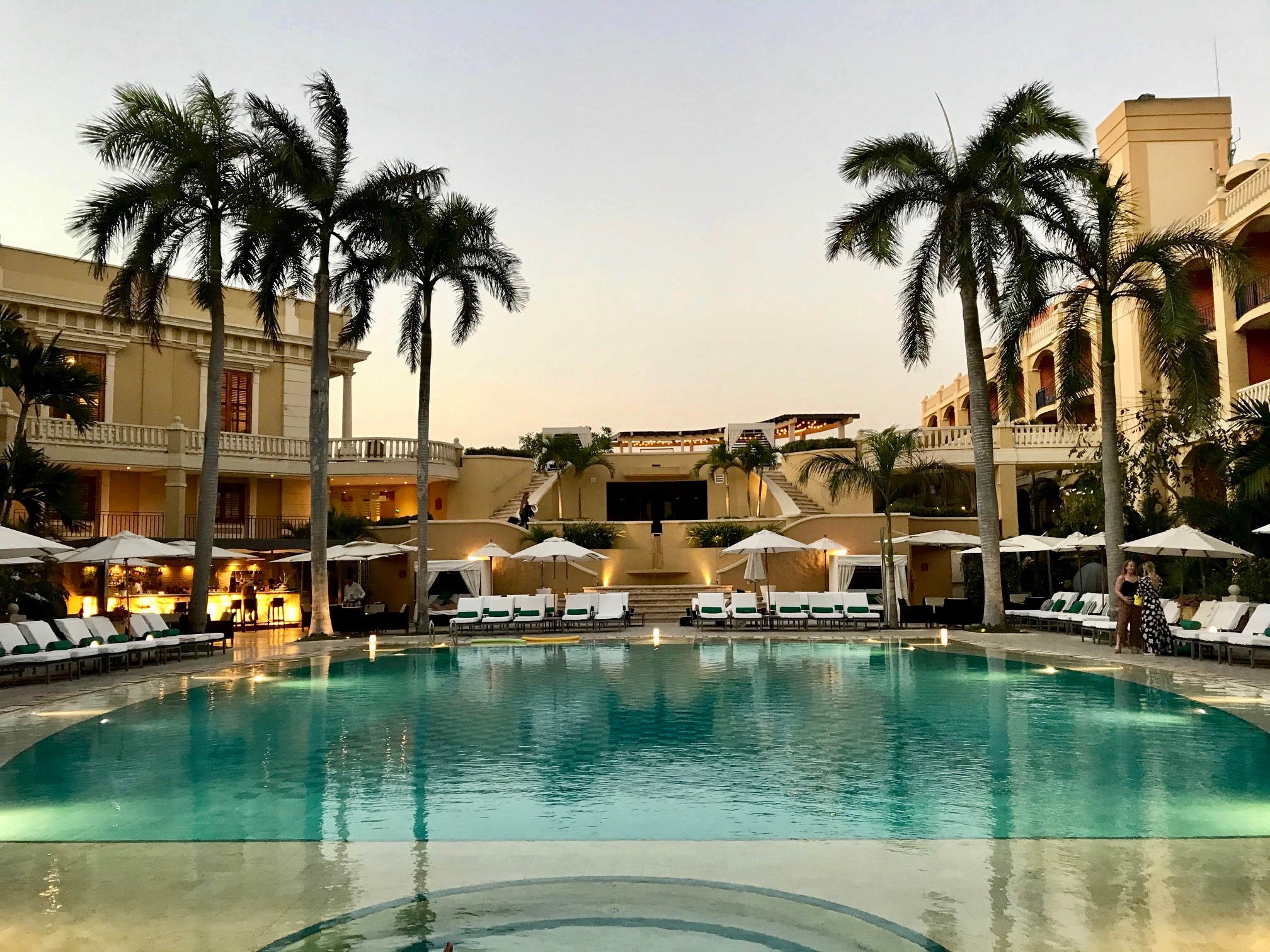
  Back in Cartagena, we spent the next two nights at the Hotel Santa Clara (Sofitel). It’s definitely one of the nicest hotels I’ve ever stayed at.
 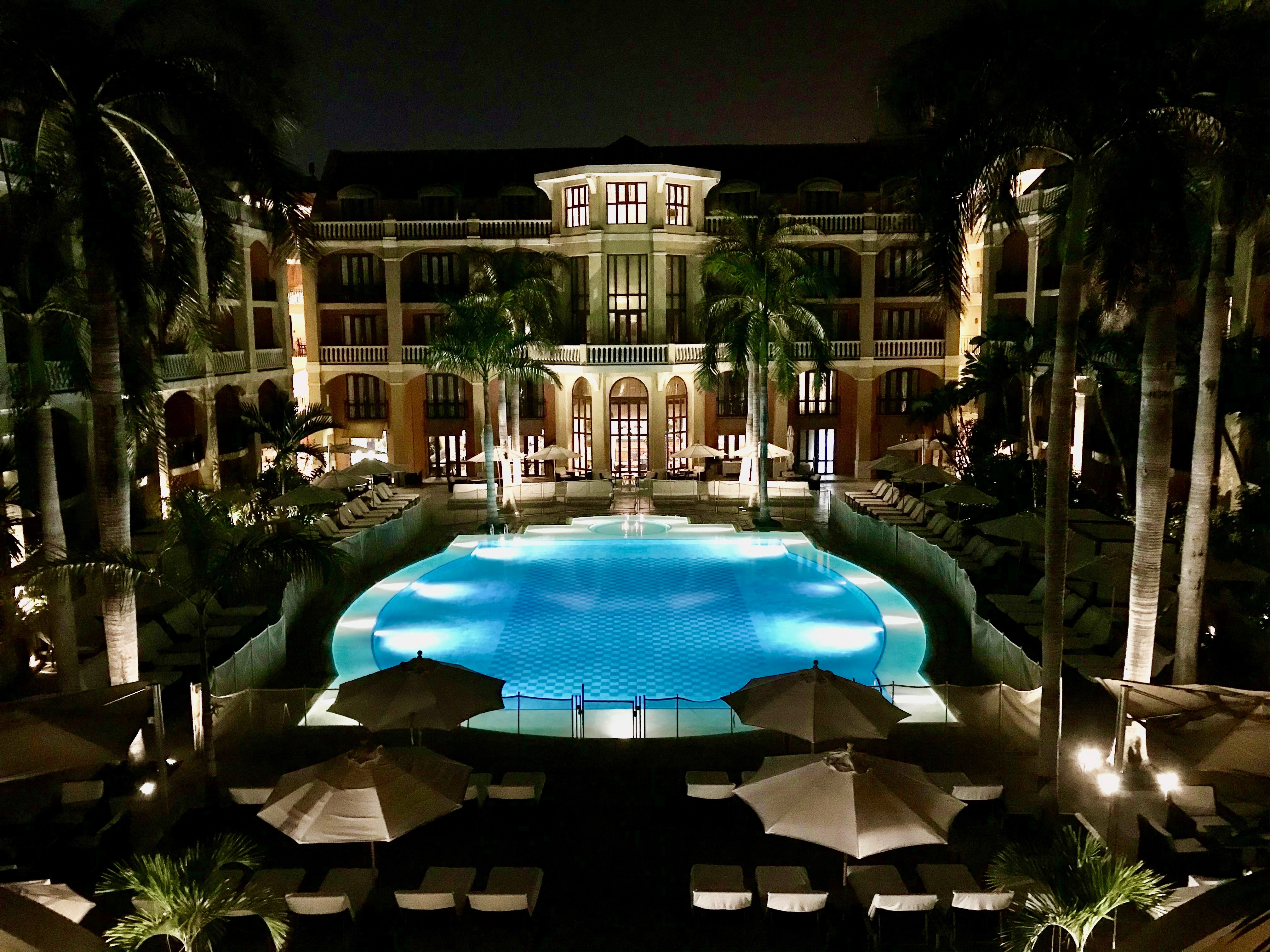 Built on the site of an old convent, the walls of the former structure are still standing. Every evening at sunset three monks in long, brown robes with hoods covering their faces walk through the lobby and pool area ringing bells.
  The last two nights of the trip were spent at Hotel Monaguillo de Getsemani. It’s technically right outside the old city but many years ago it was inside before part of the wall fell apart. Our small hotel was just two blocks from the old wall at the clock tour and cost about $105 per night which included a big breakfast. When you enter the Getsemani area, you notice that it’s less gentrified and less affluent than inside the historic area.
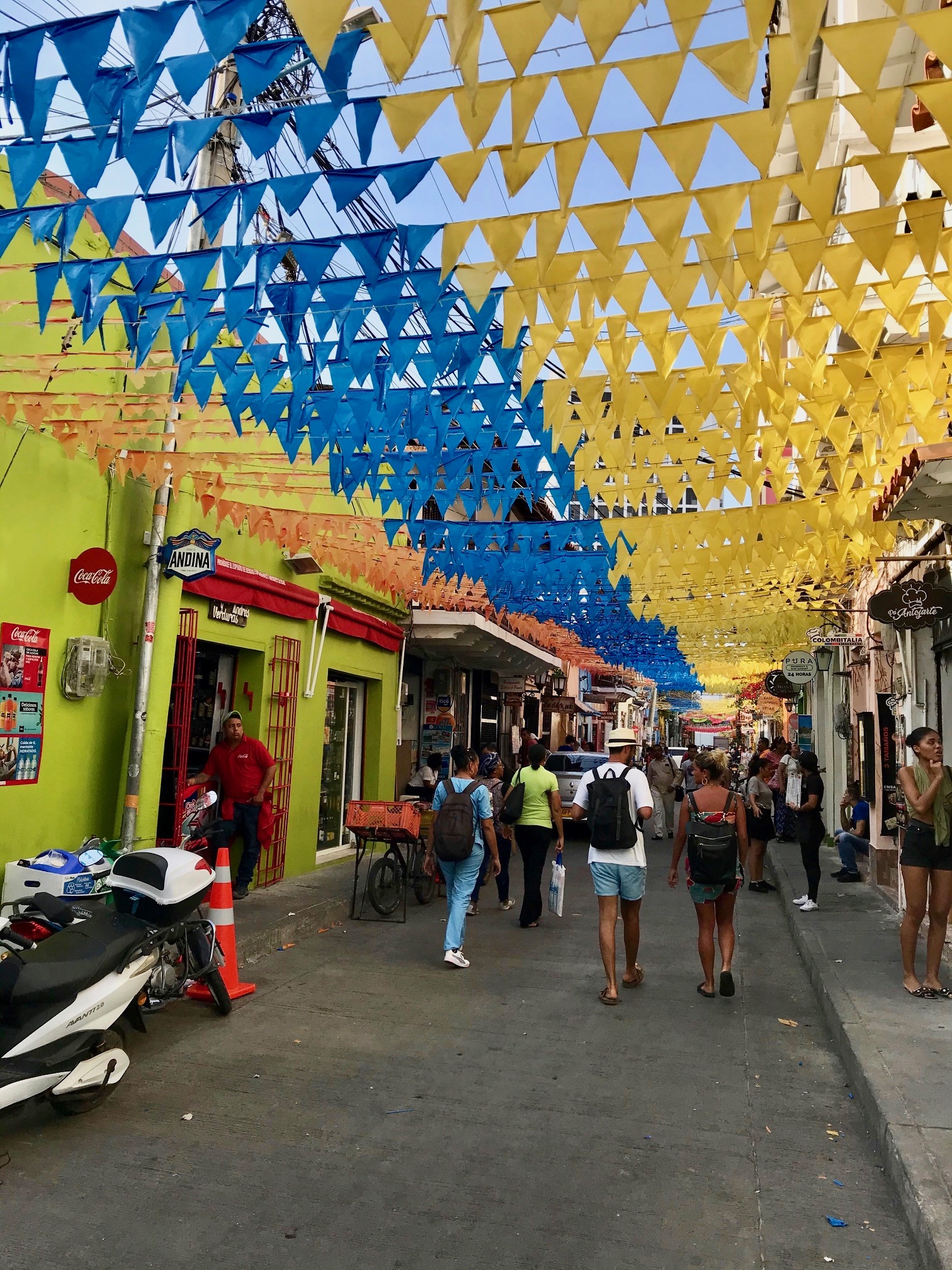 It’s full of hostels, street art, and a young, lively vibe. At night backpackers hang out in the streets and eat from the food stands.
 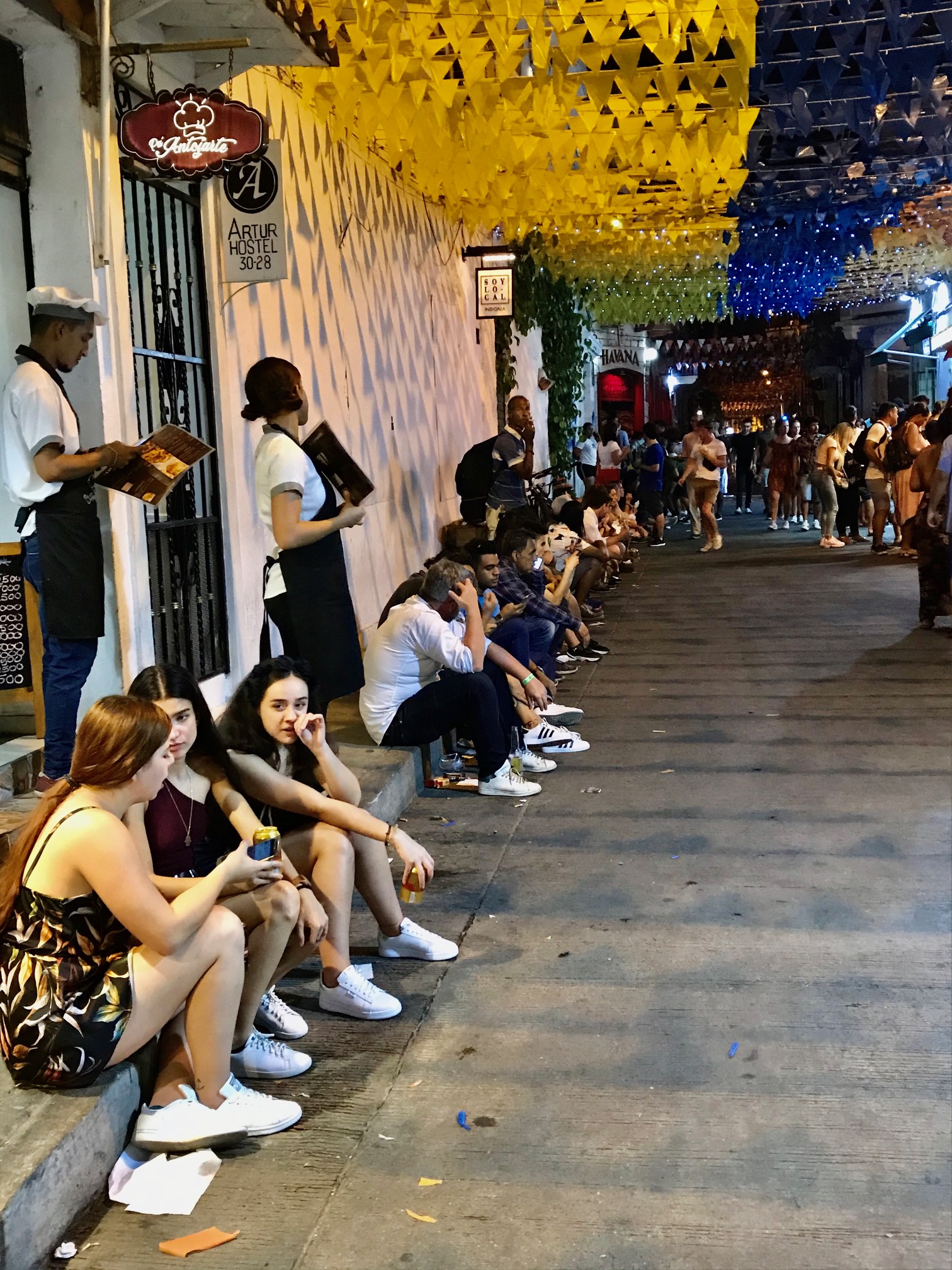 There’s a popular dance spot called “Havana” that has a live band and dancing every night. Although it was the only place I saw that charged a cover, there was a line down the block waiting to get in.
 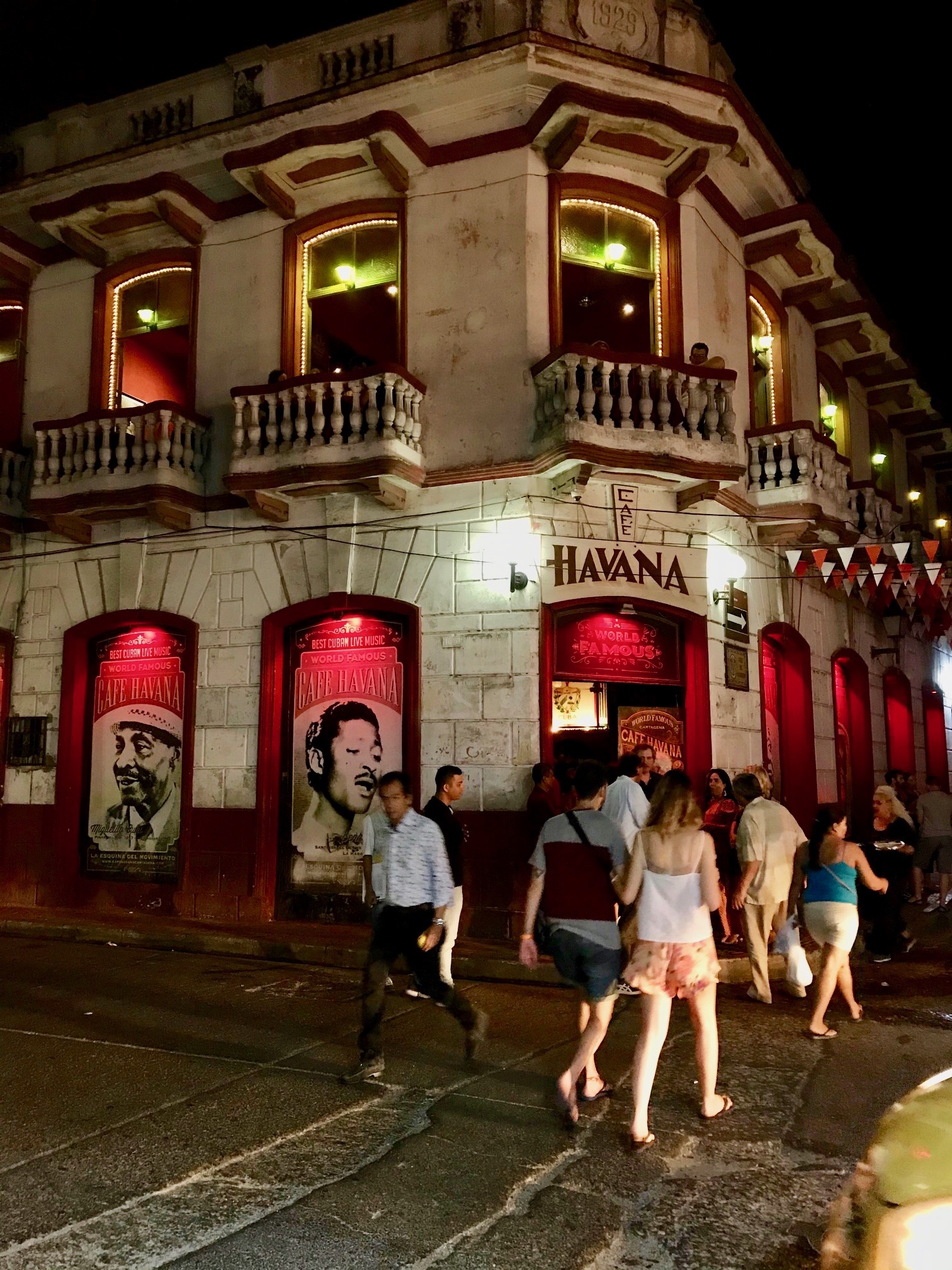 After a long day of walking and site-seeing in 90 degree weather, we passed on the dancing and opted for dinner at “La Casa Della Pasta” where a delicious pasta dinner and a glass of red wine cost about $9 per person total. The tab always includes tax and a 10% tip. The 10% tip is technically voluntary but it’s easy and no additional tip is expected. I actually liked it better than the US system of adding whatever you think is appropriate.
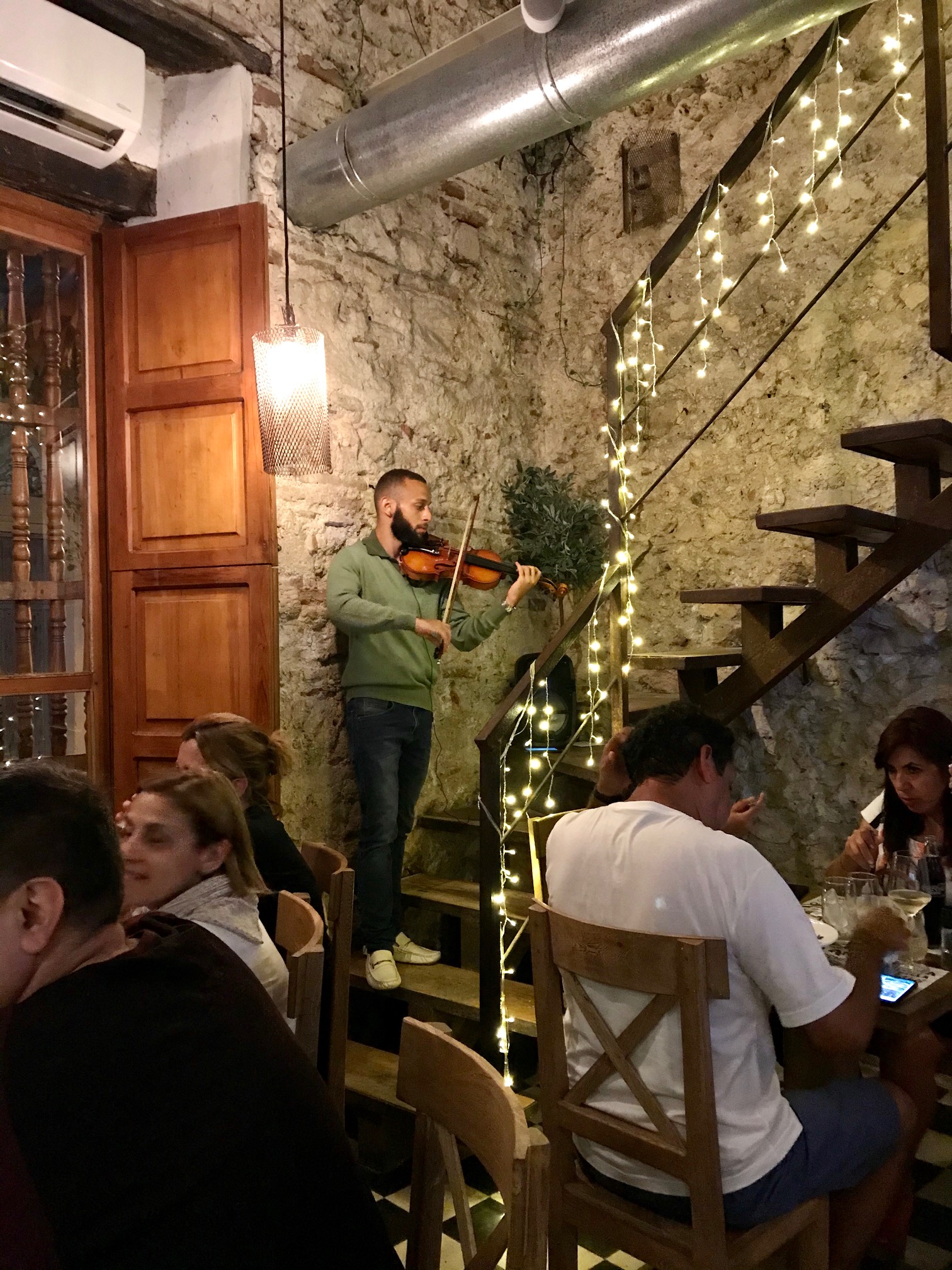 The street art is terrific!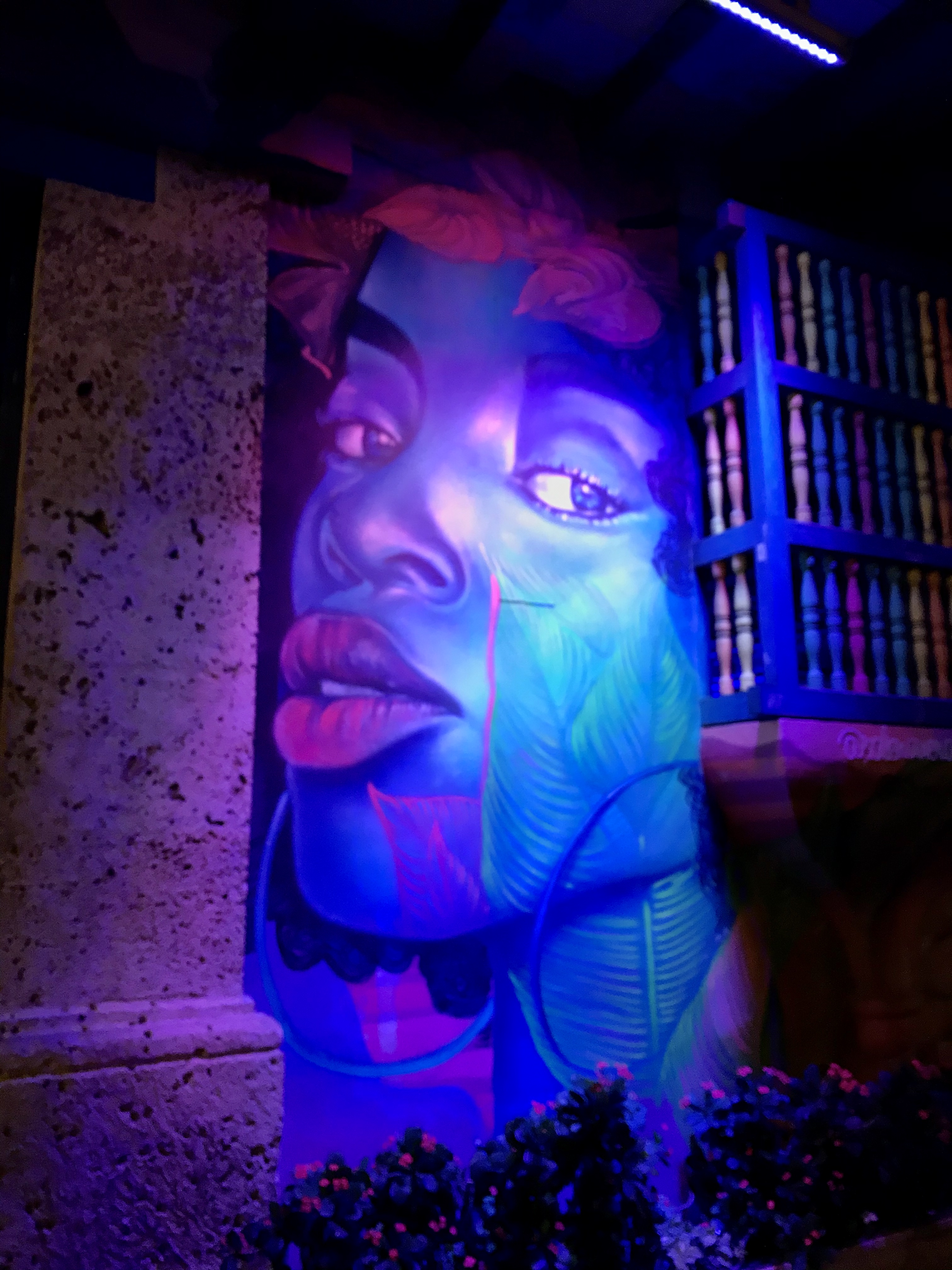
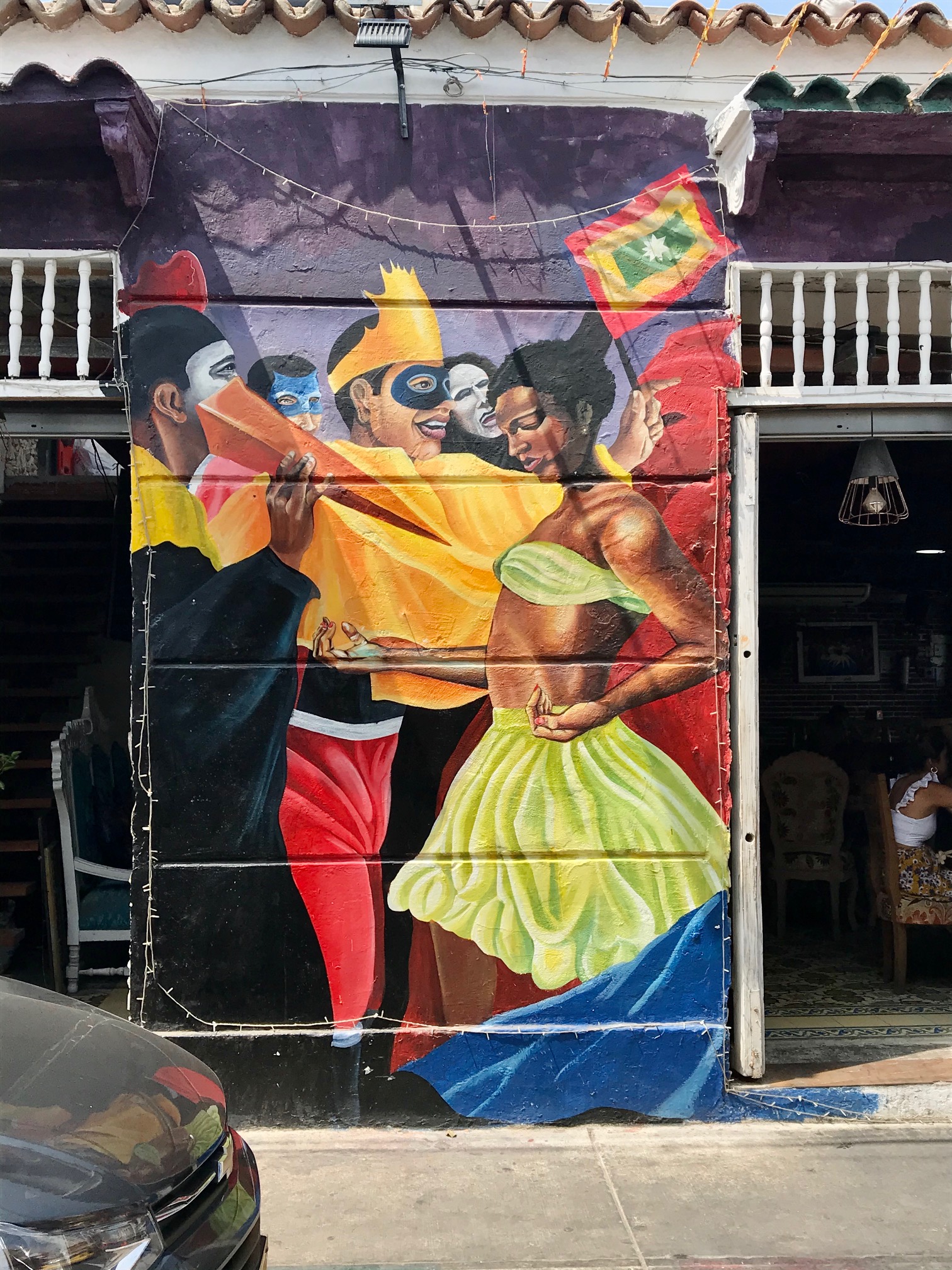 I saw at 4 or 5 artists working on pieces that seemed far too beautiful to have been done largely with spray paint on bumpy, old walls but they came alive over the course of the two days.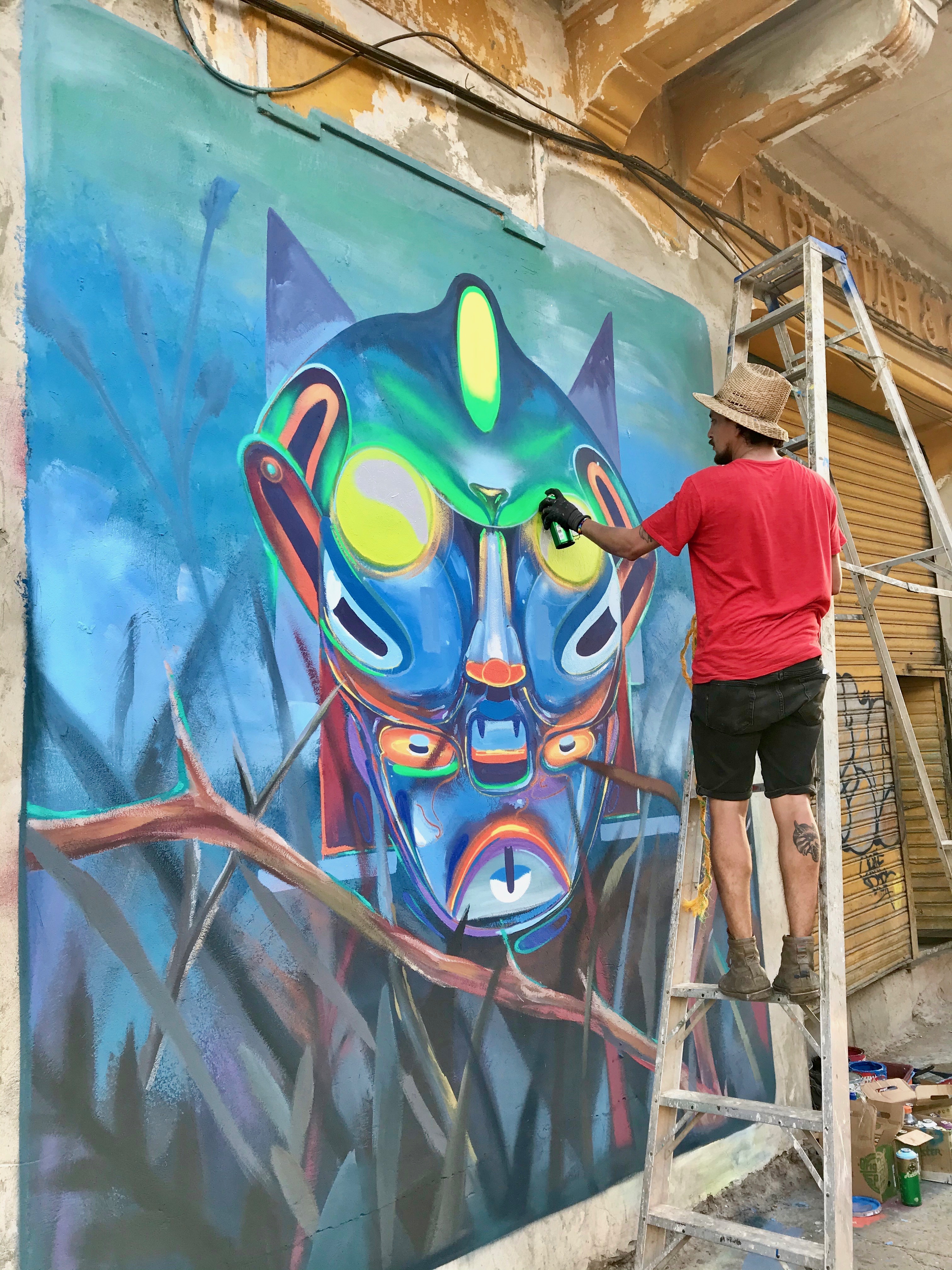
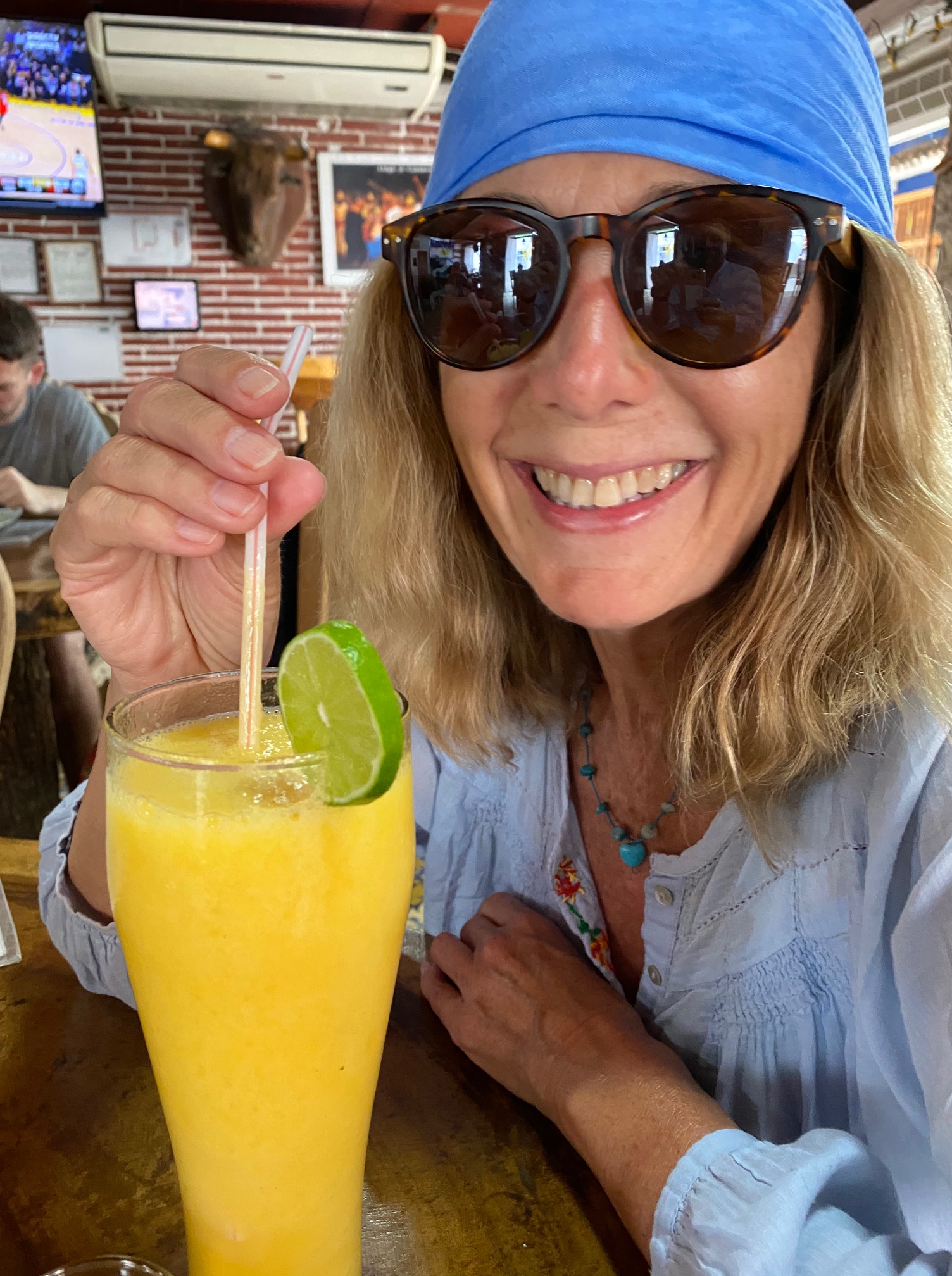
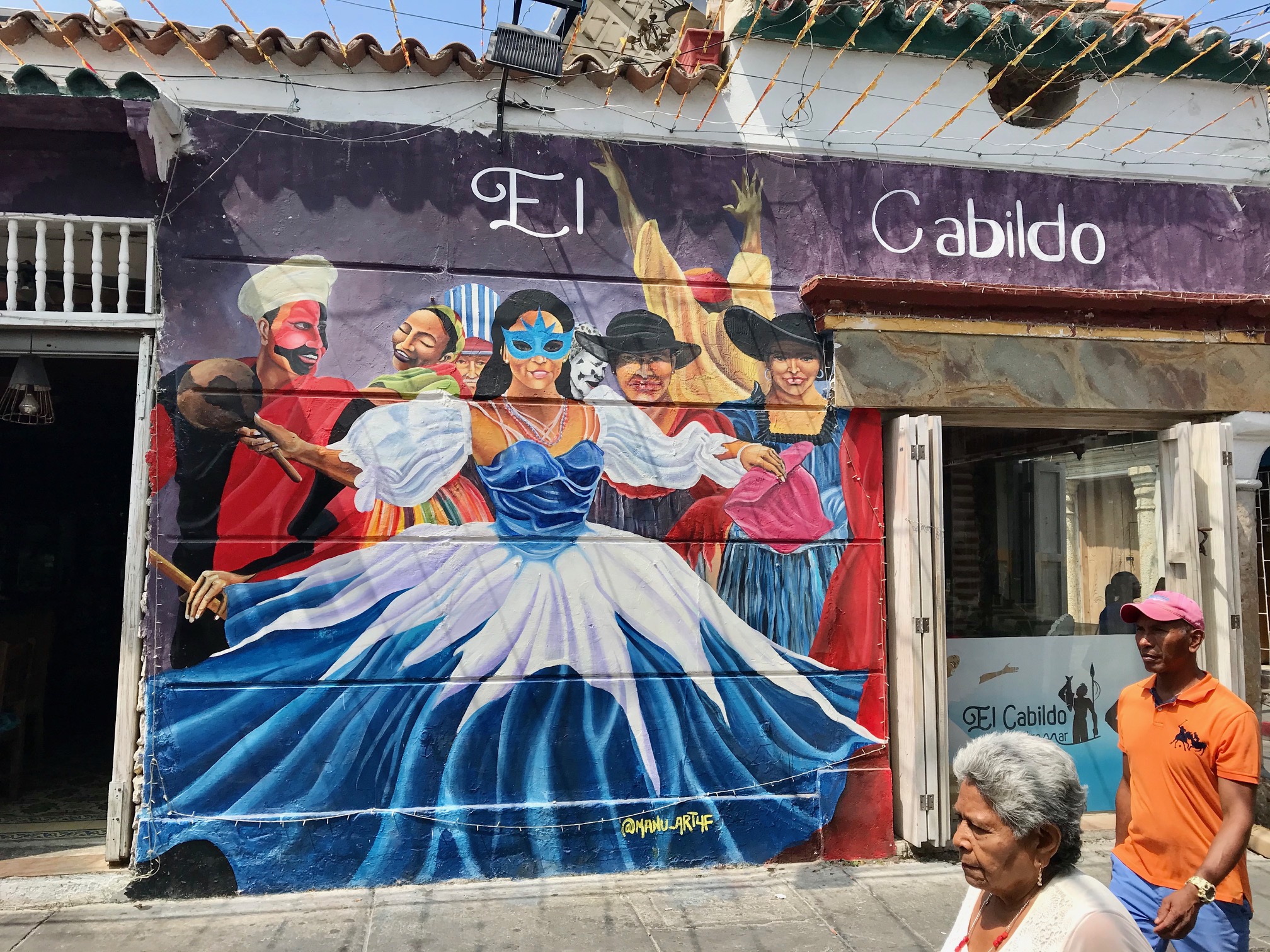 This gorgeous painting was on the wall of one of my favorite cafes, “El Cabildo.” I loved the delicious frozen drink called “mango limonada” that is available with or without amber rum.
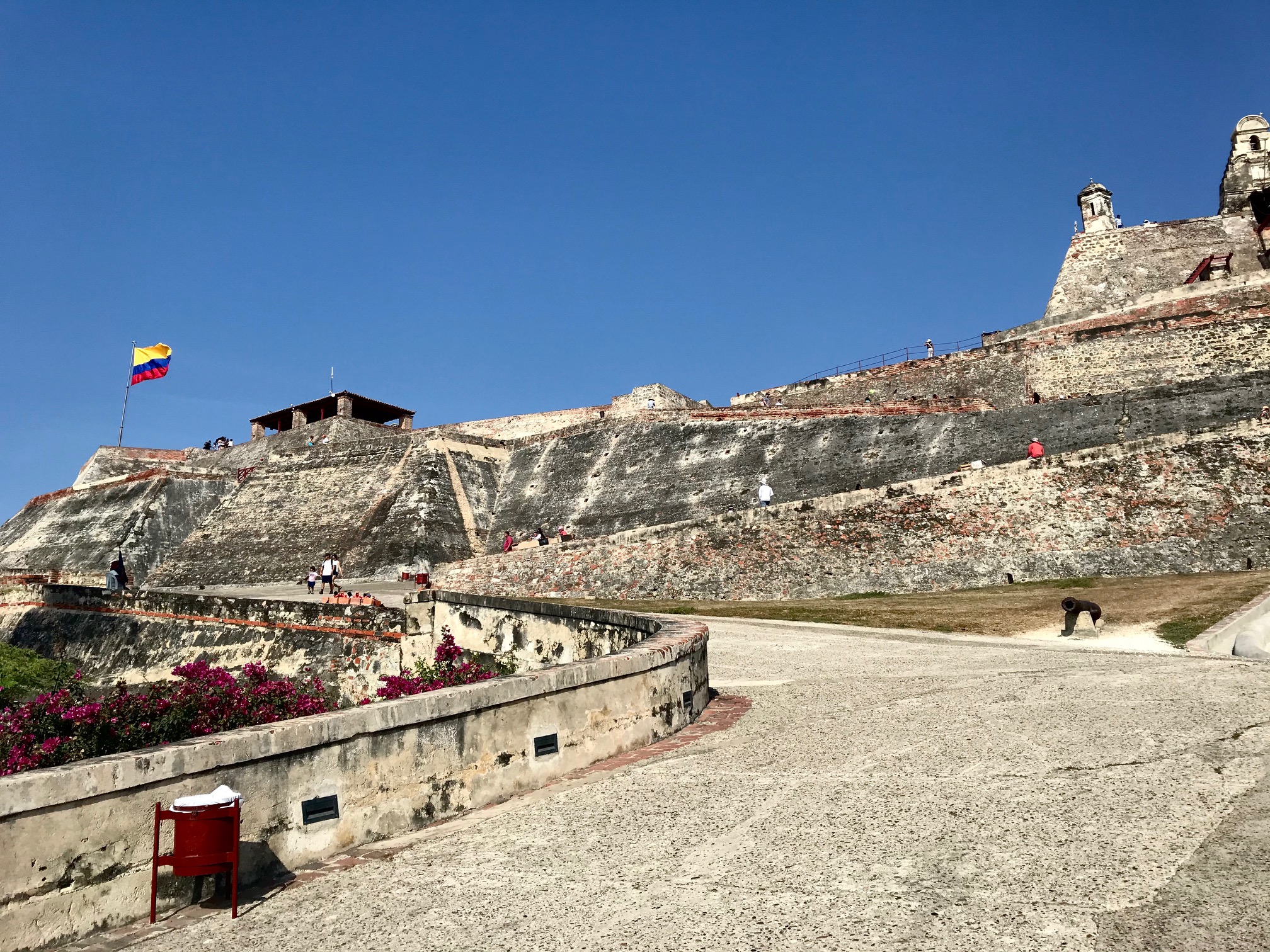
  Just outside of town sits a huge fort called Castillo de San Felipe. A cab ride from the old city to the castillo is just $3 US. Construction of the fort was started in the sixteenth century then fortified over many years to withstand sieges from the British, French, and other invaders.
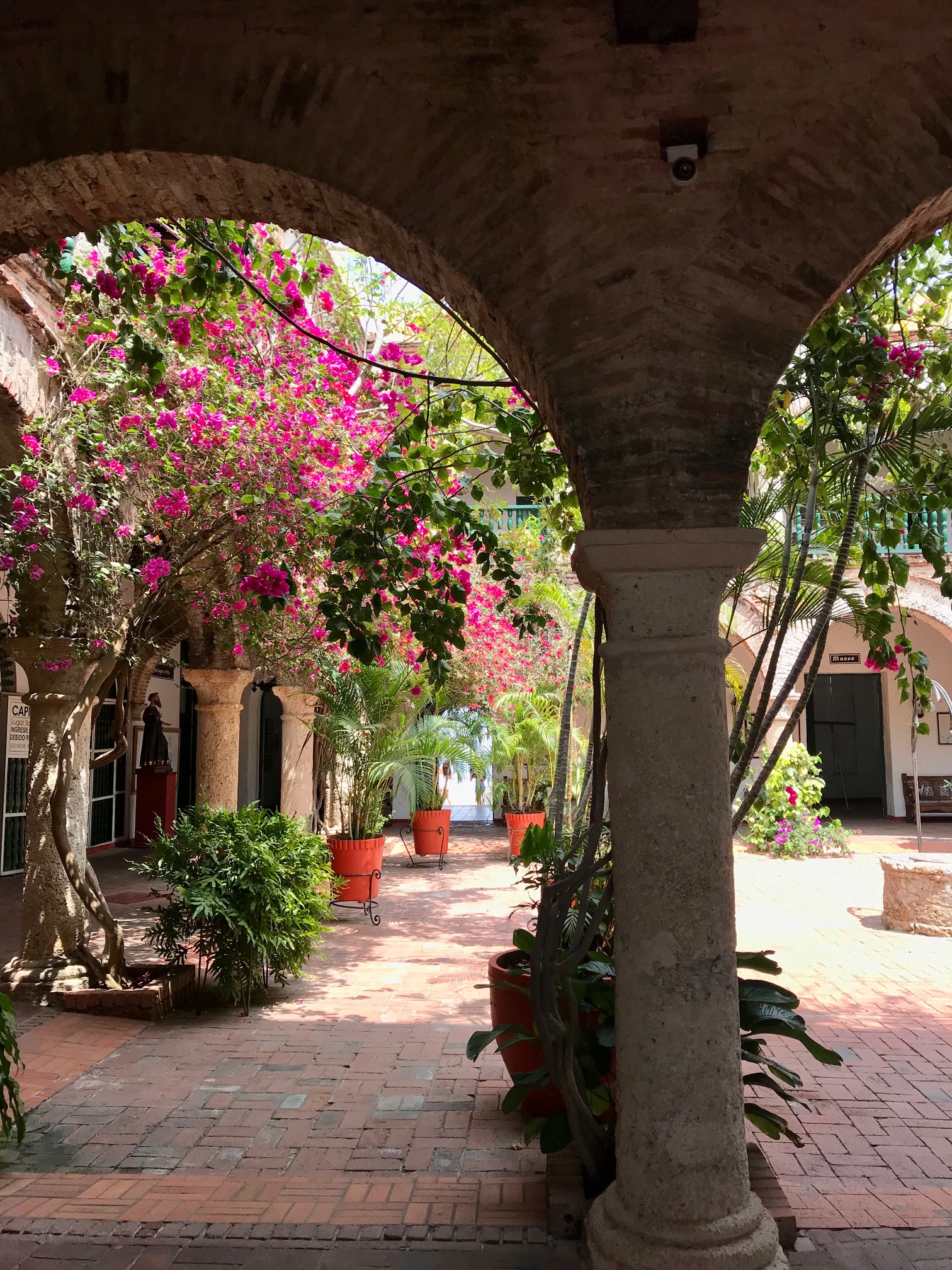
 Way up on a hill just outside of town is a former convent (Convento de la Popa; the cloister and chapel of Nuestra Señora de la Candelaria de la Popa) which dates back to 1607.
 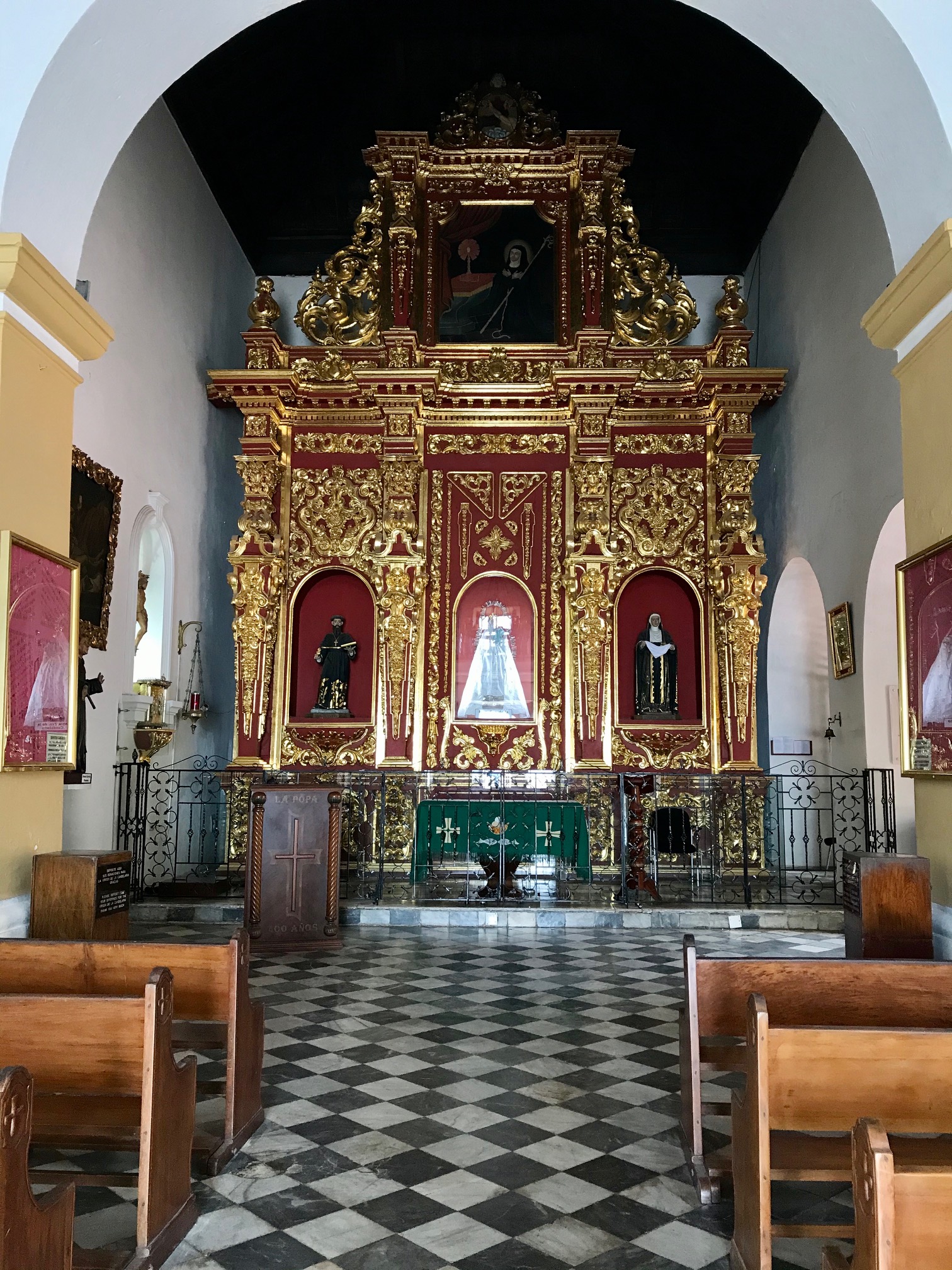 The view of Cartagena from the top of the hill is worth the trip, plus the chapel and grounds are very nice.
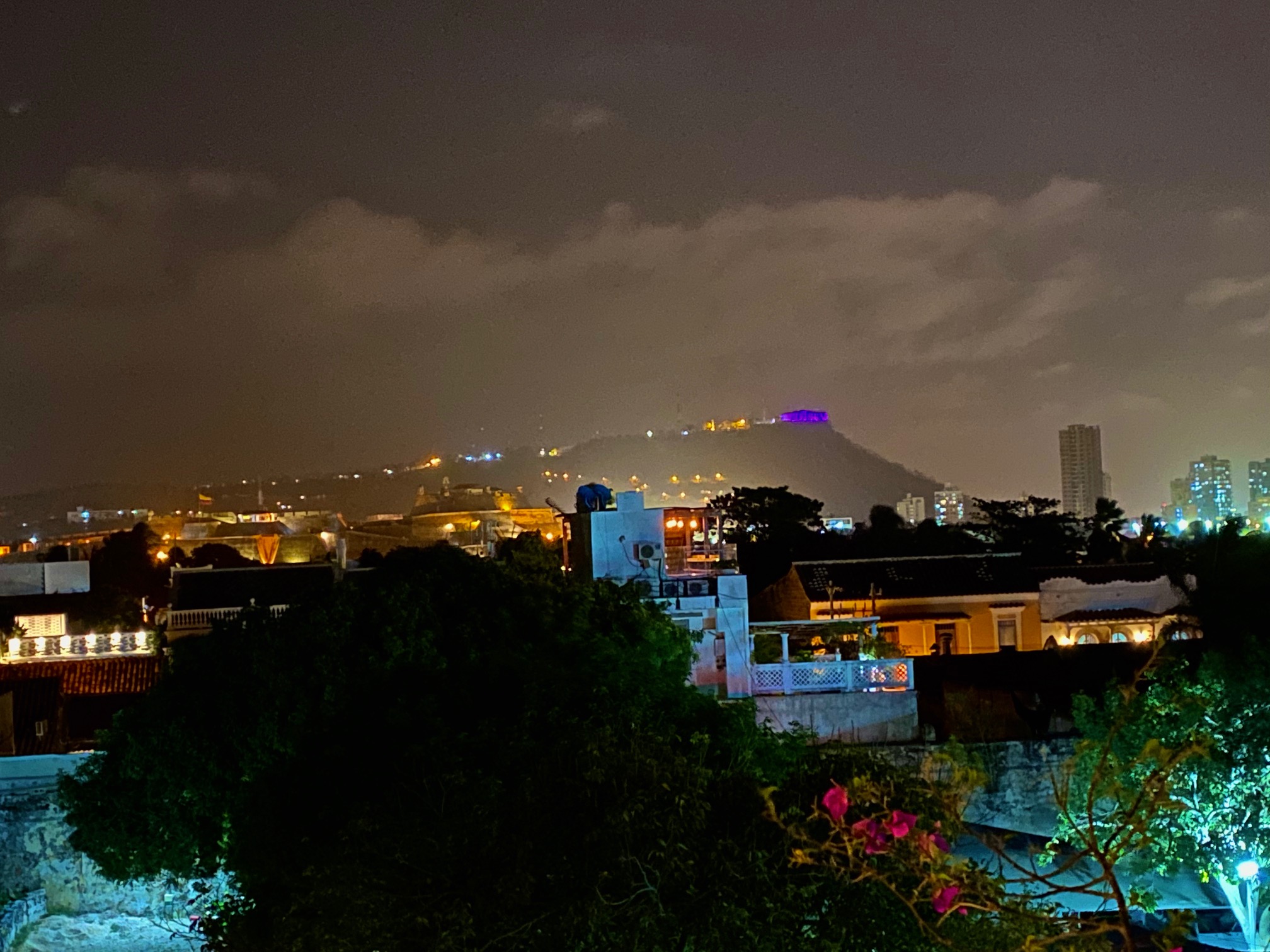
  At night the convent is lit up in purple and can easily be seen from the old city. I took this picture of La Popa in the distance from a rooftop bar on a warm, breezy night.
  What I don’t have are pictures of the beautiful women. There’s definitely something uniquely attractive about Colombian women–their style, shape, coloring, all come together in such a lovely way; think of Shakira.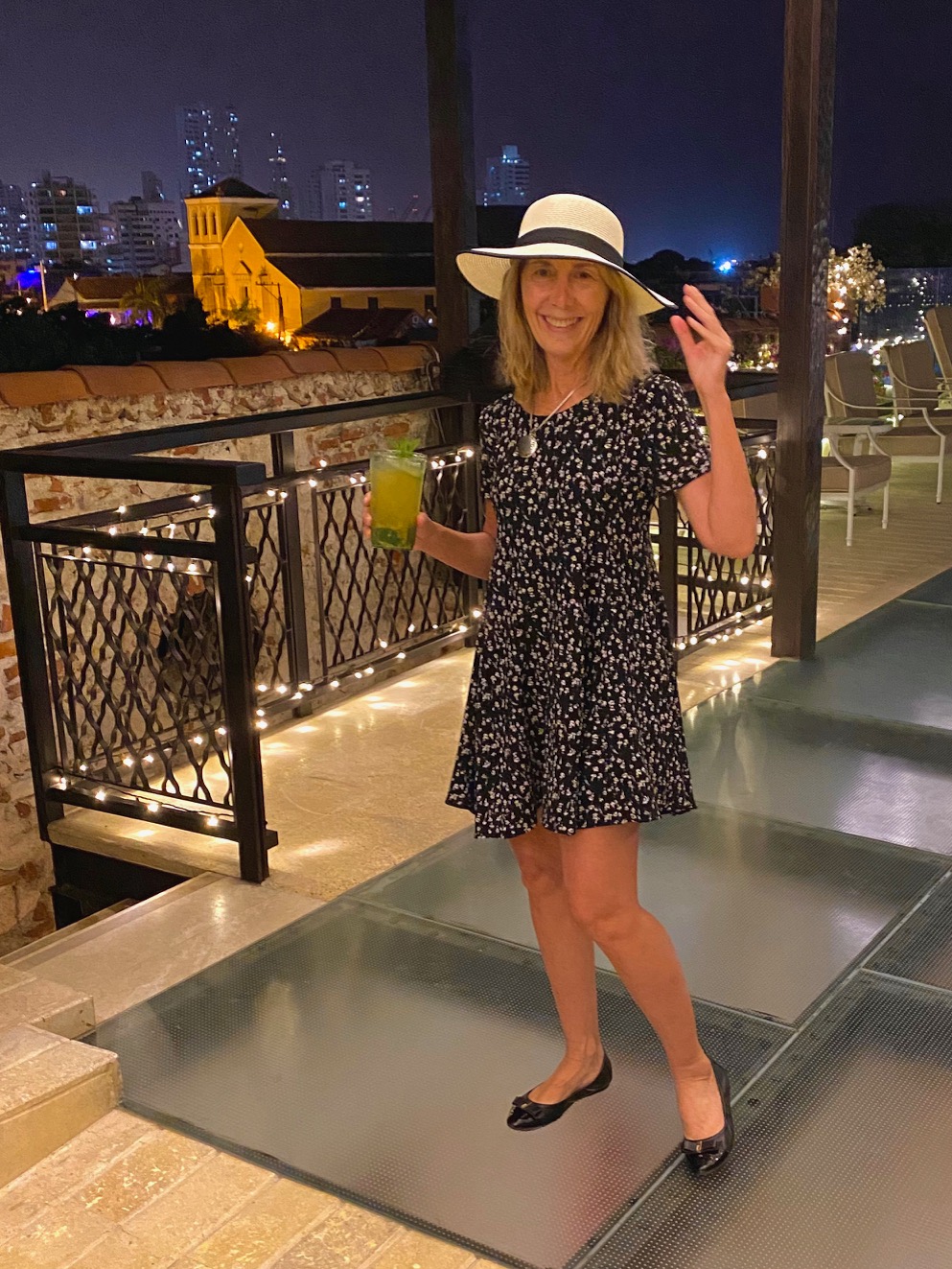
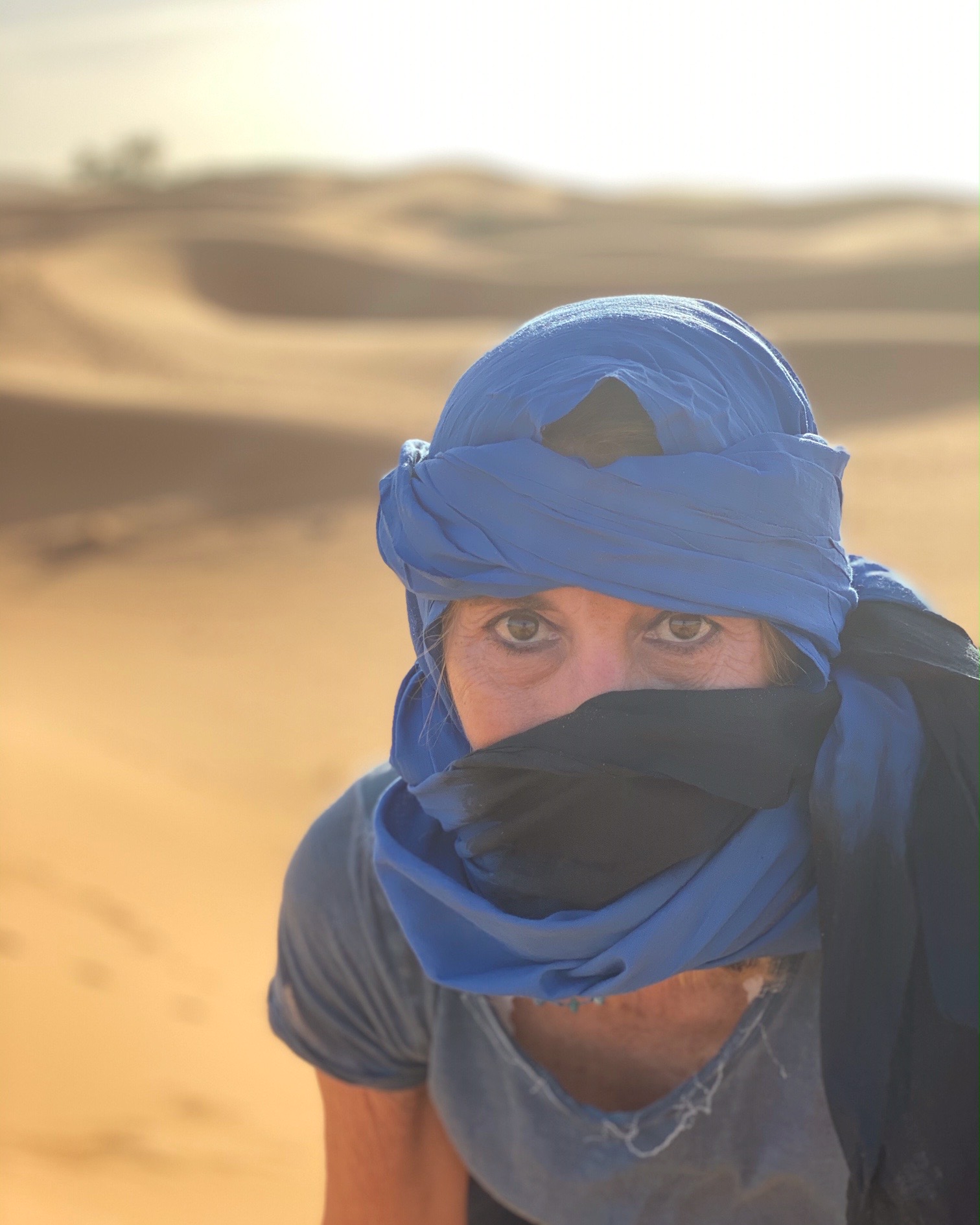
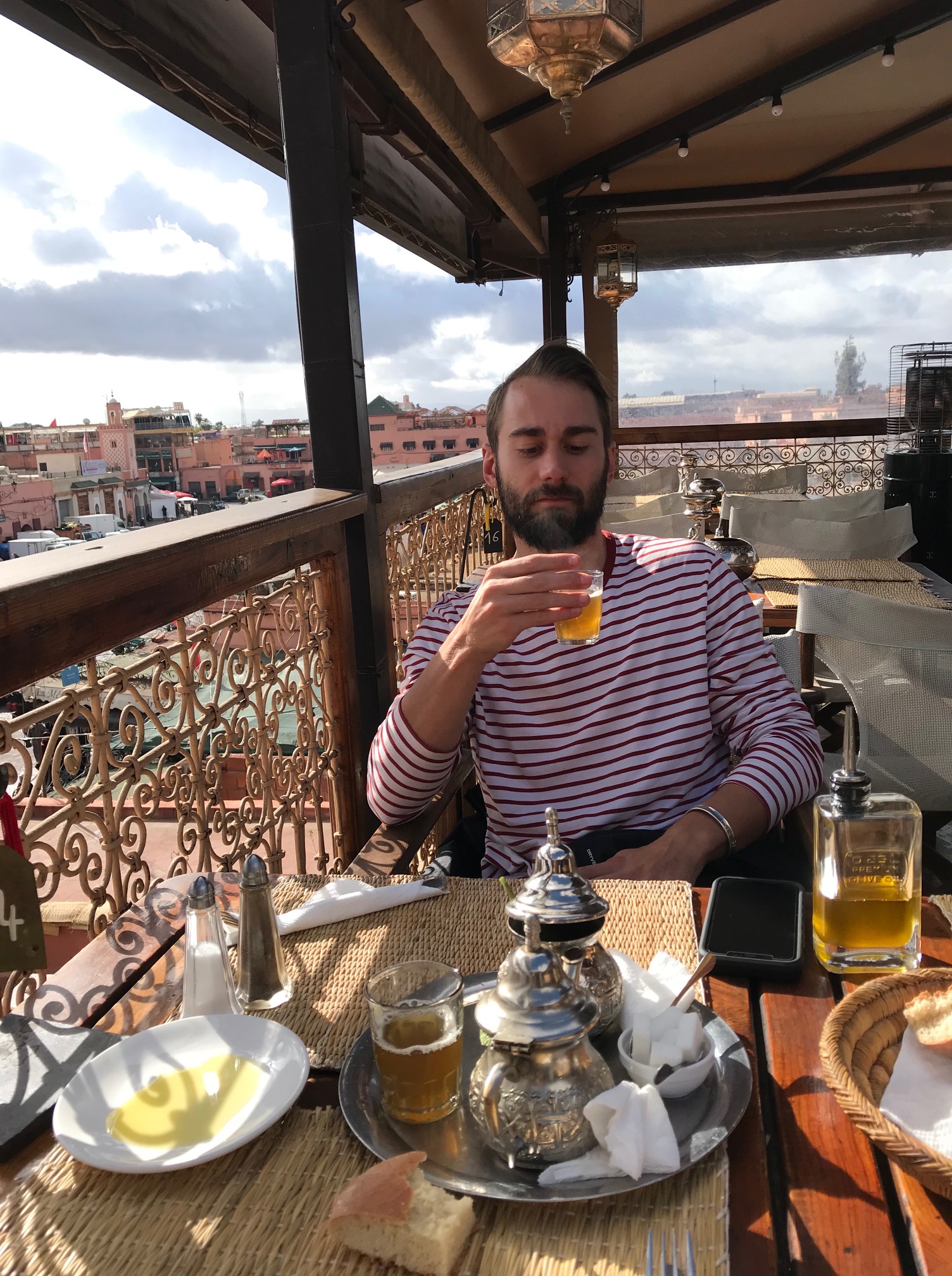
 On our last night, Daniel opted for a watermelon-flavored hookah pipe.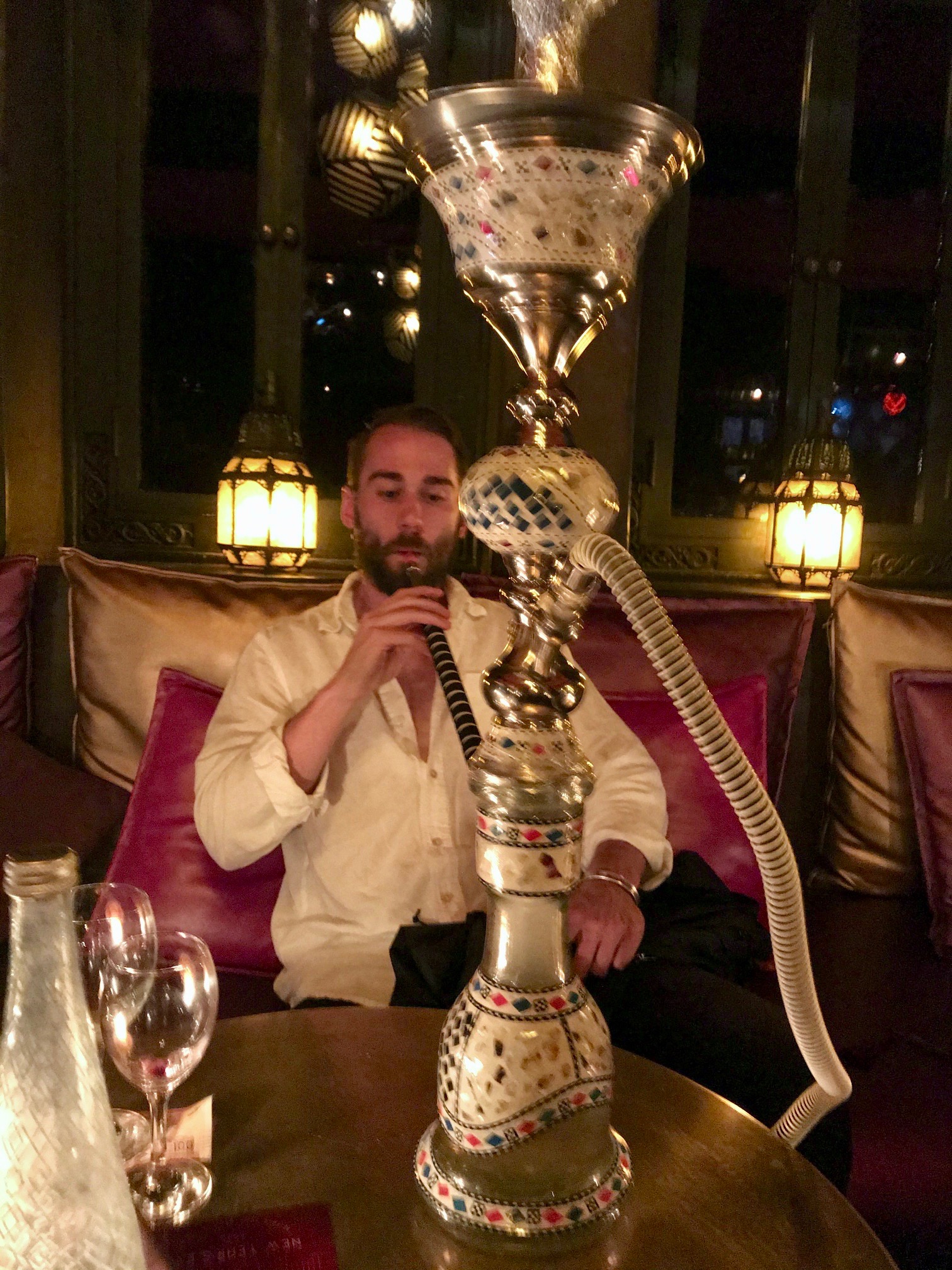
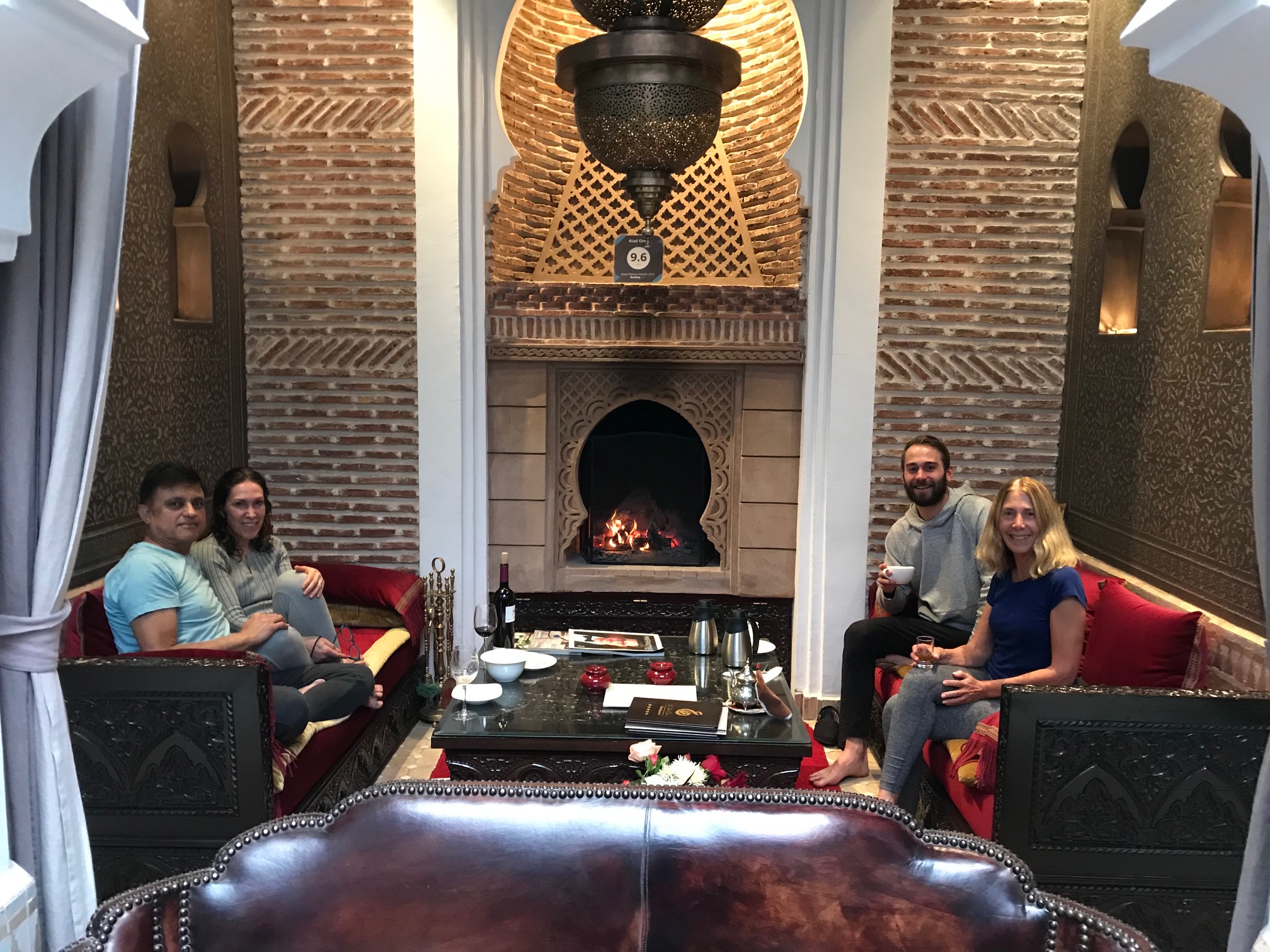
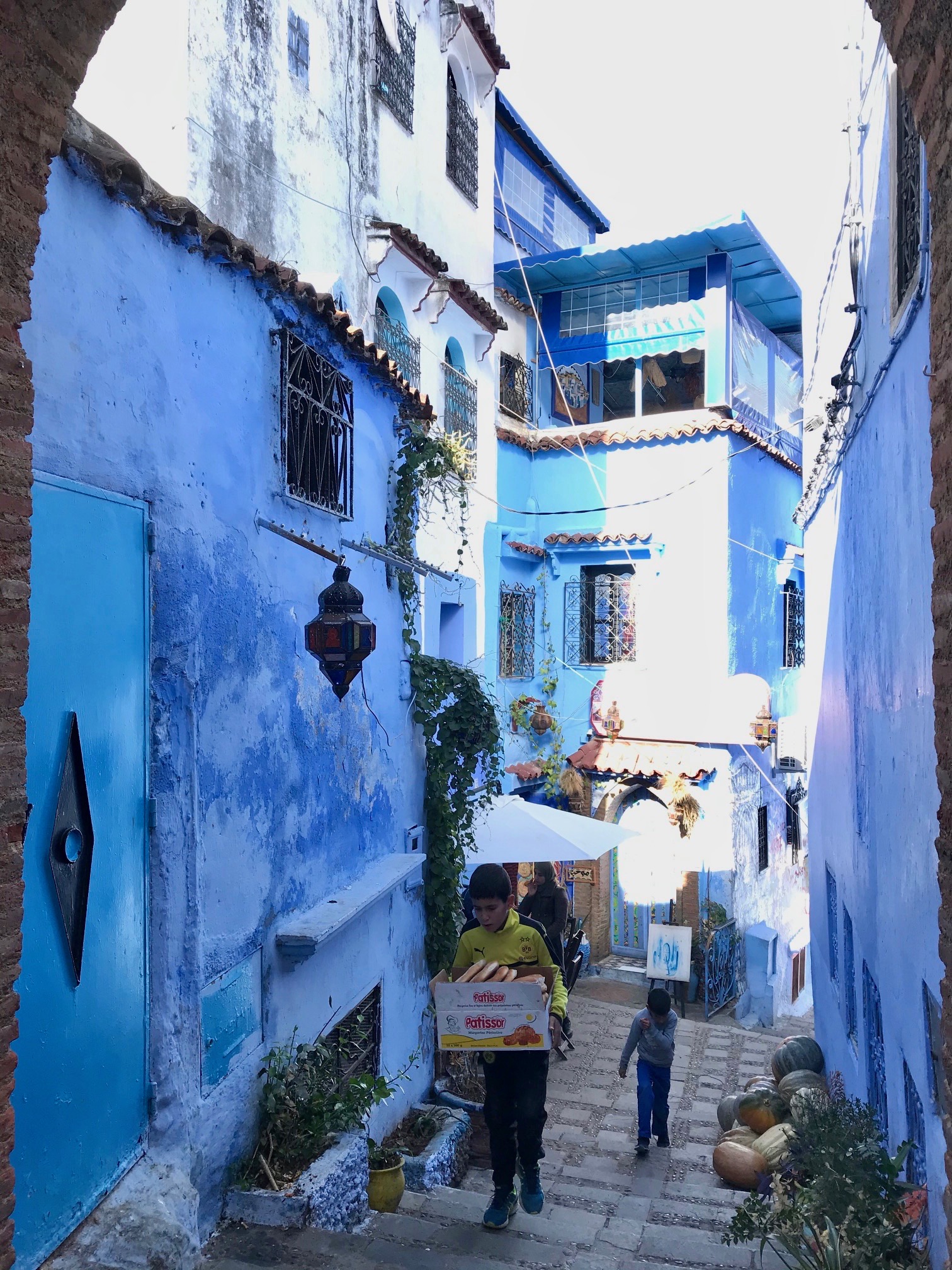
 It’s always great going somewhere new but, yes, I will likely return to Morocco. In a world of globalization and homogenization, Morocco retains its character. It’s affordable, safe, and so beautifully unique.
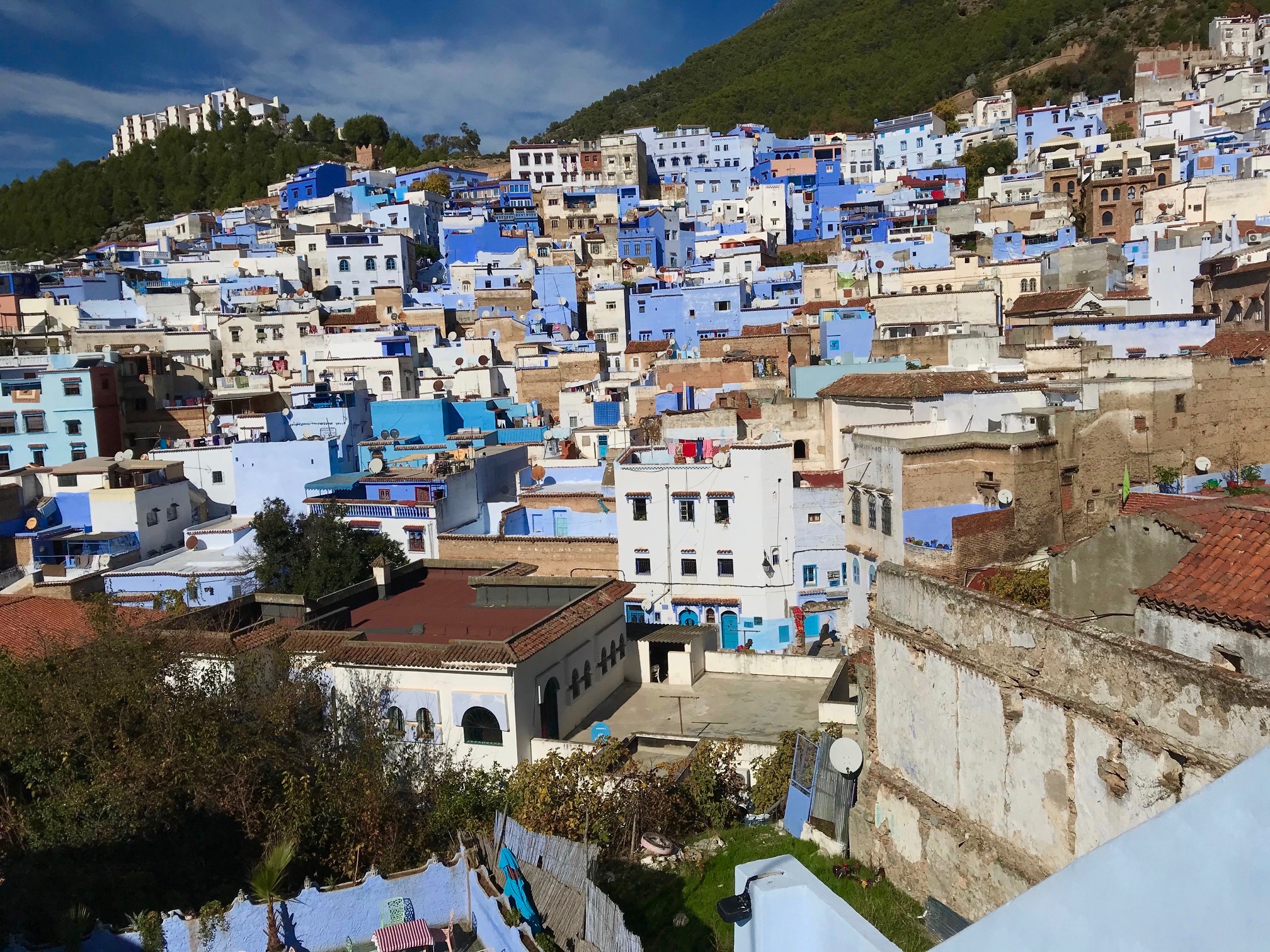
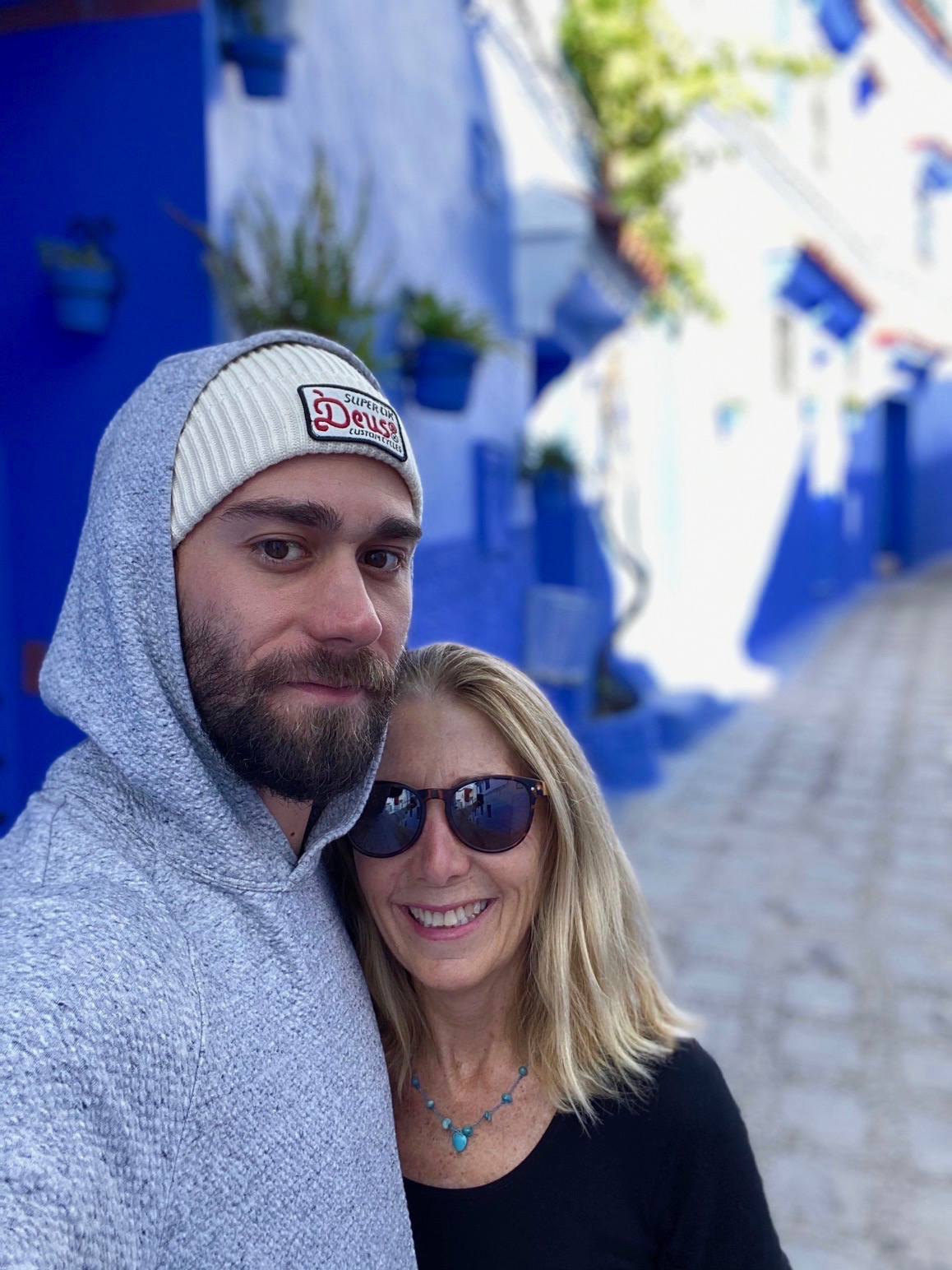
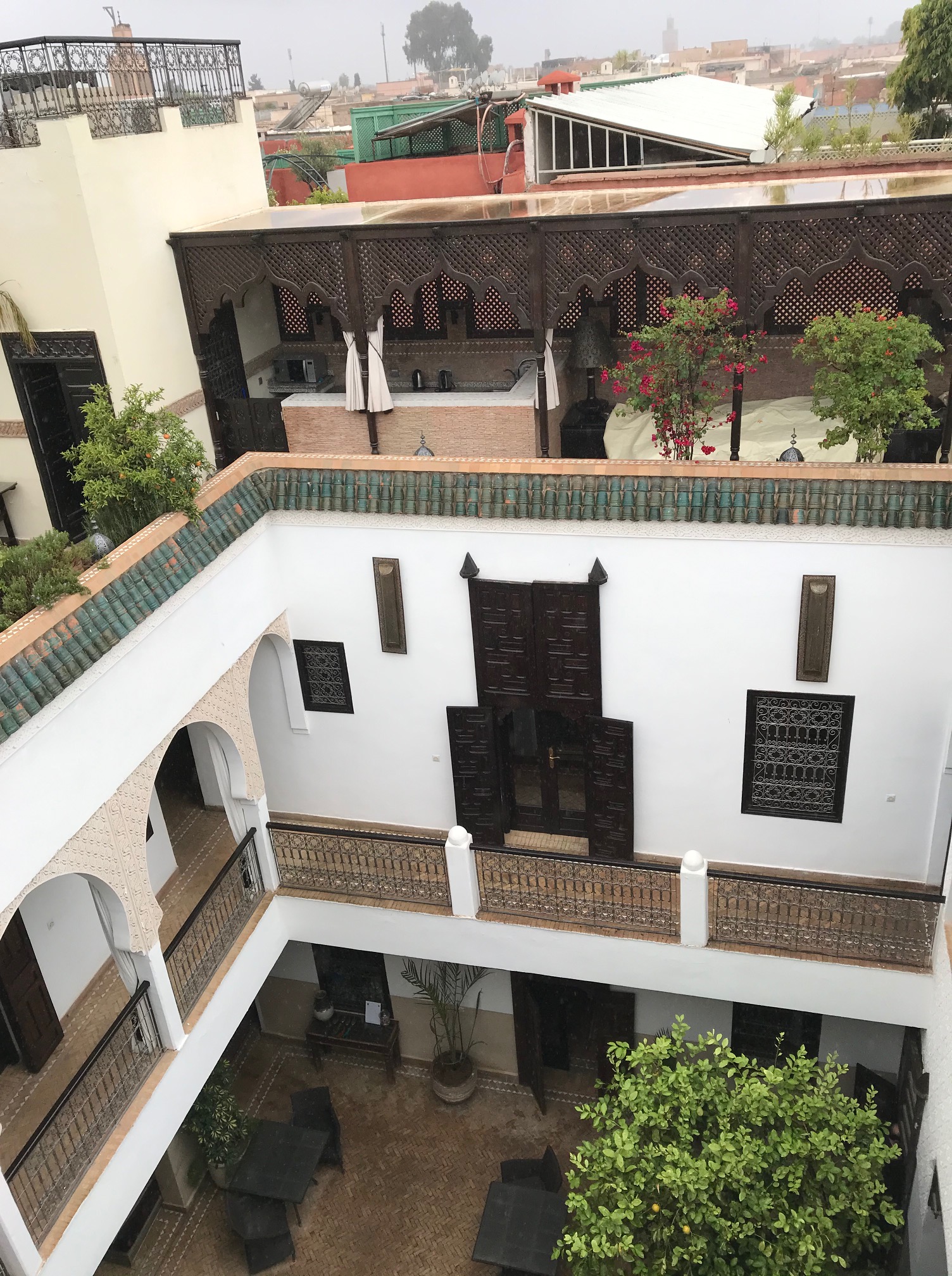
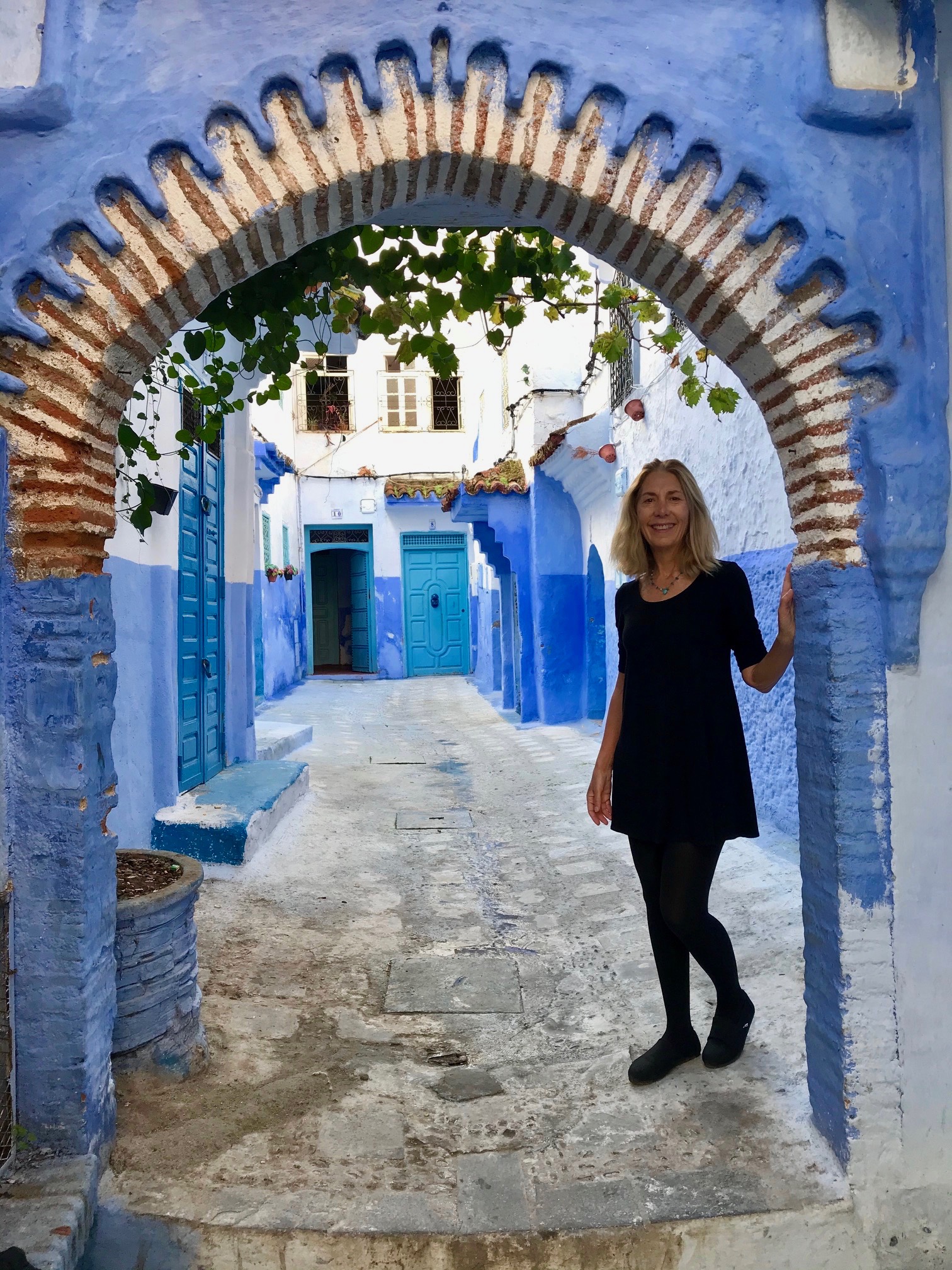 Wow! I felt like I was walking in a dream all day as we strolled through the medina (old town) of Chefchaouen, commonly called the blue city or blue pearl.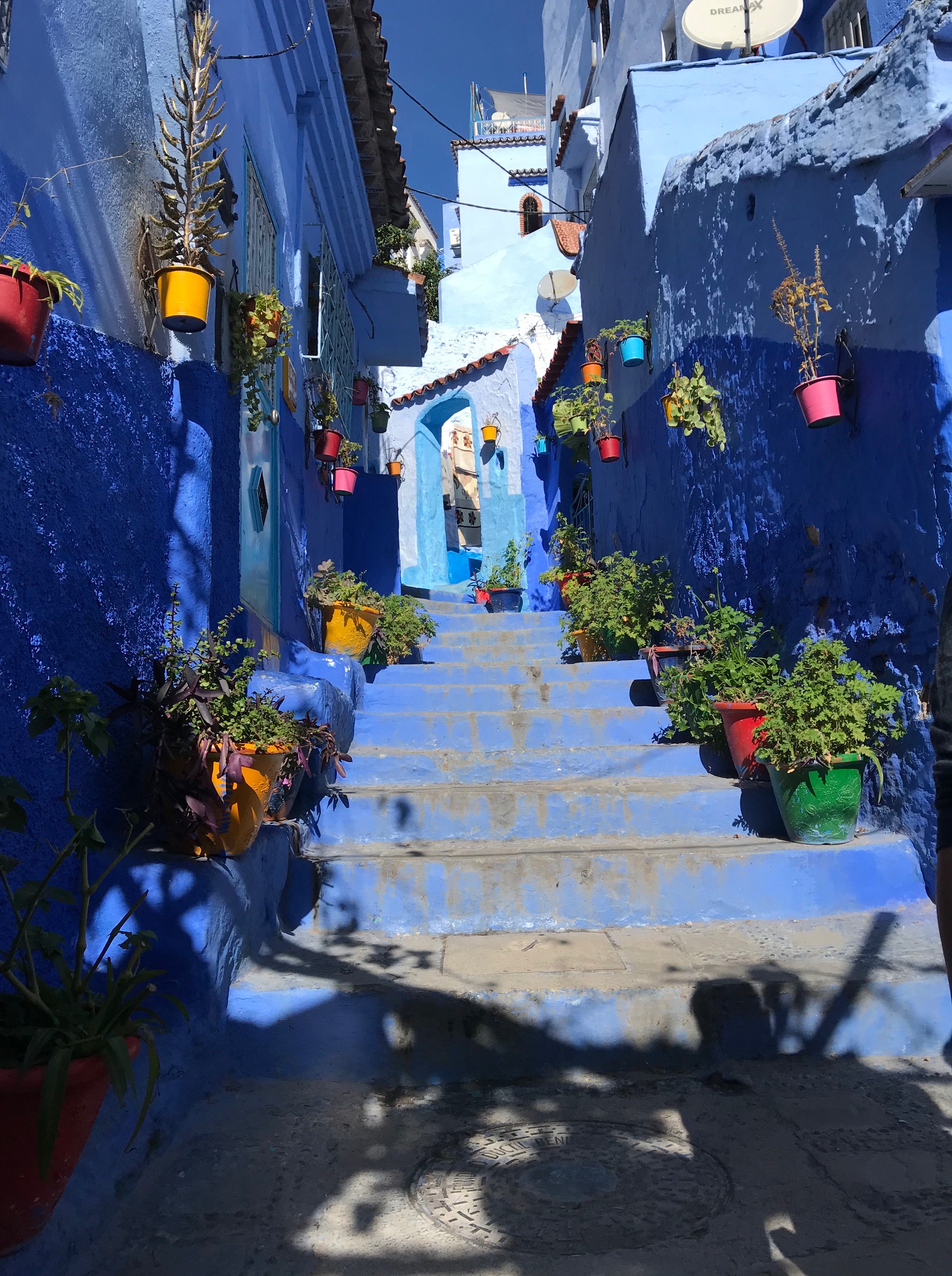
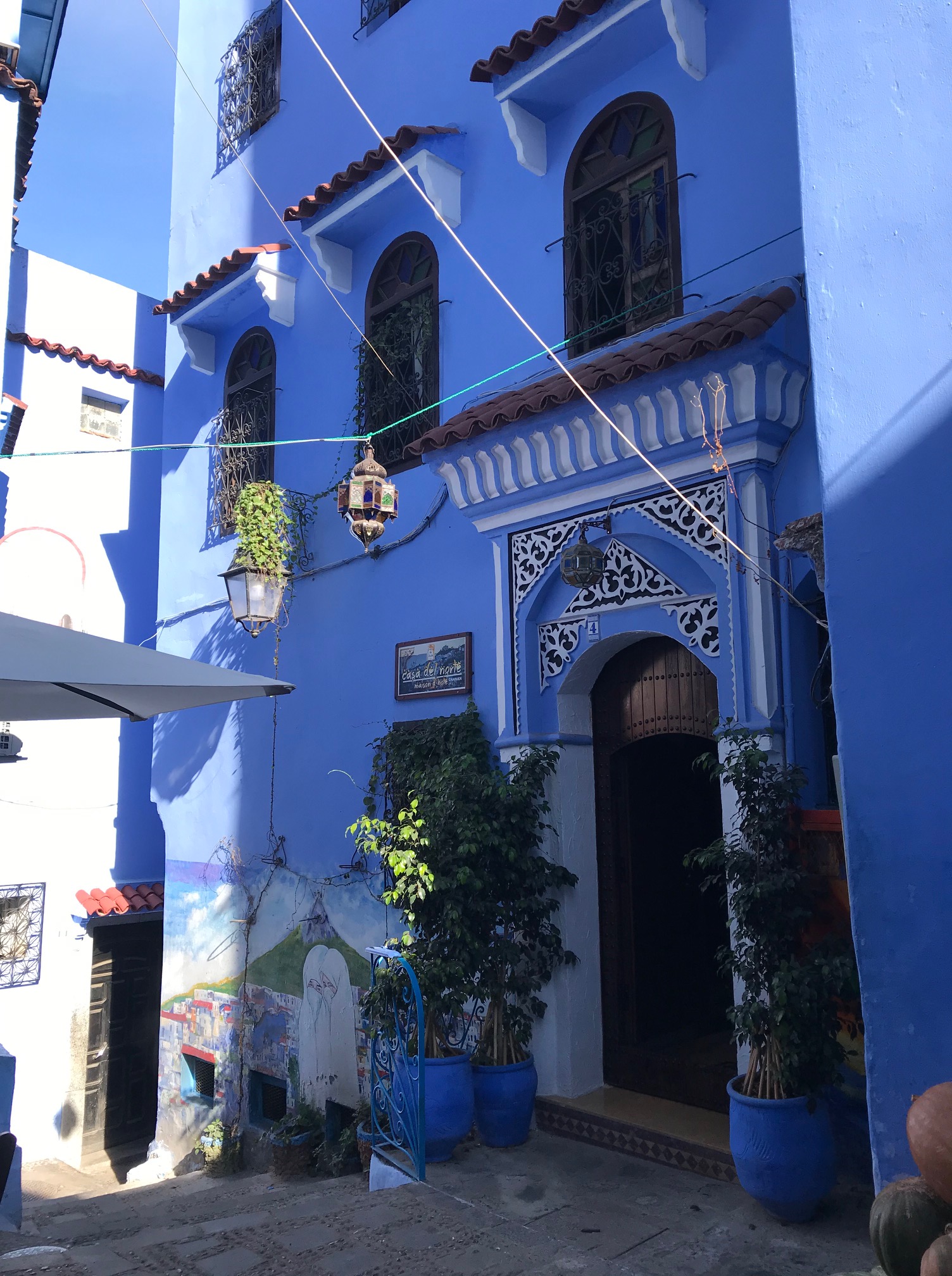
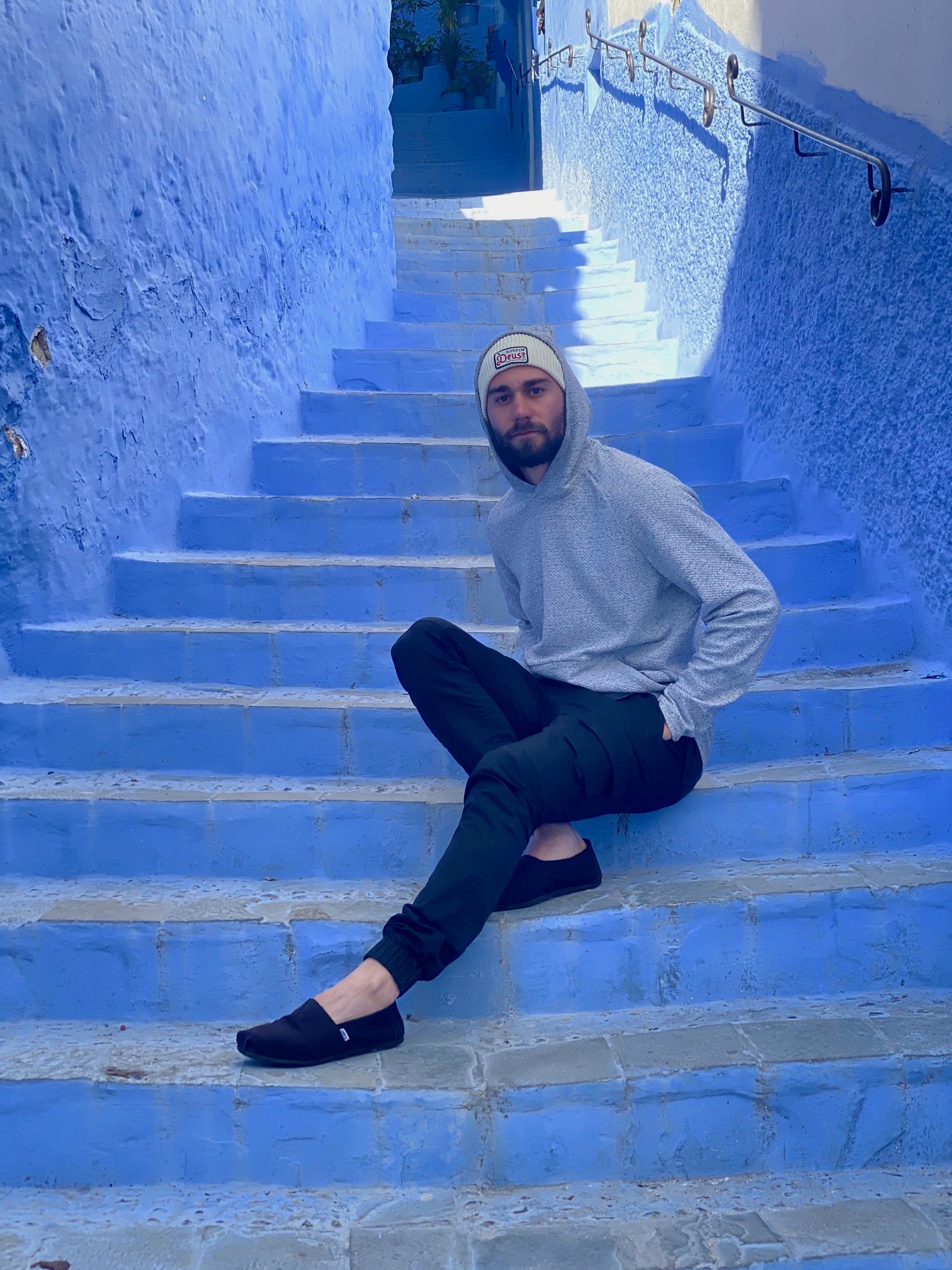
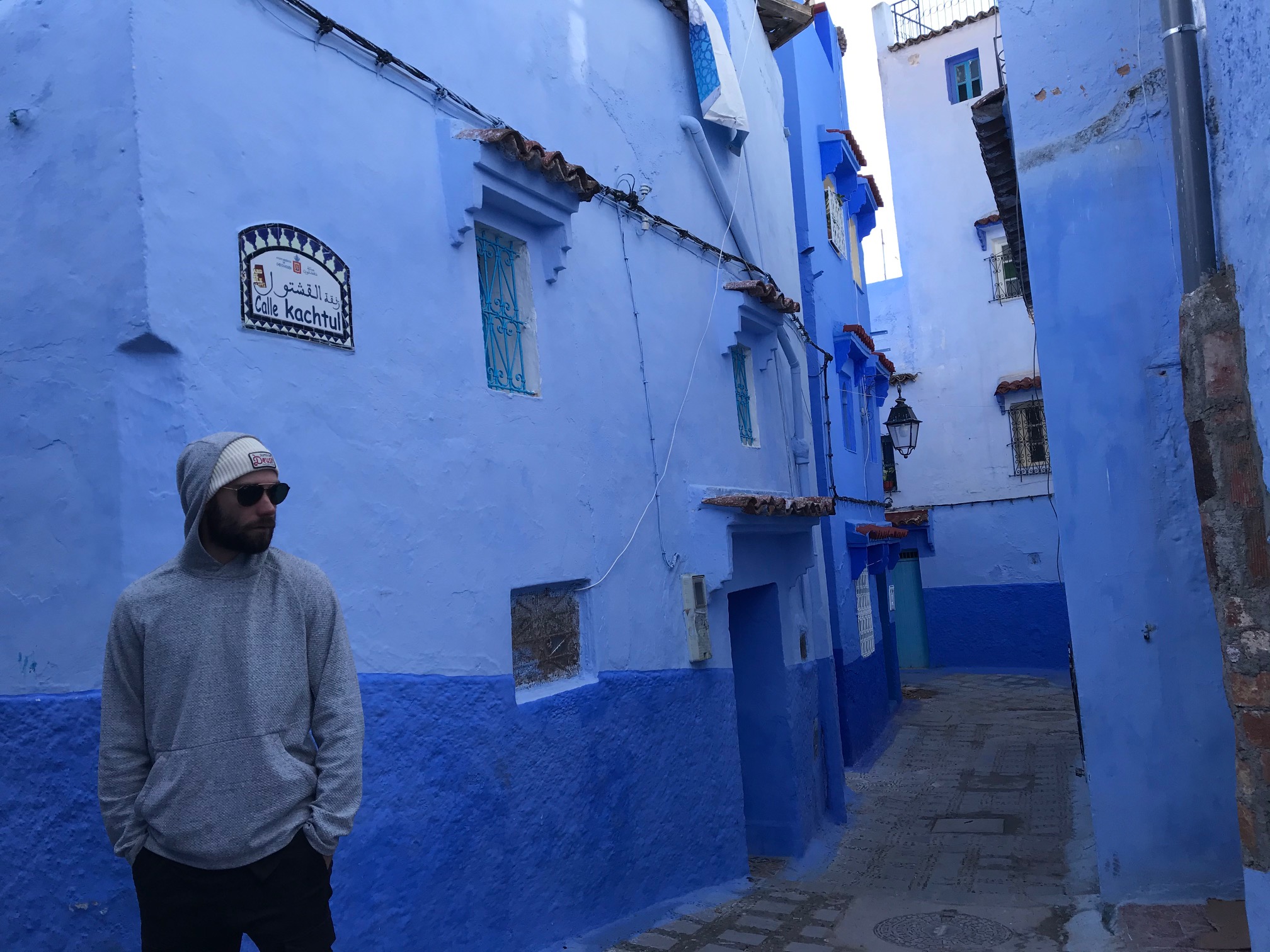
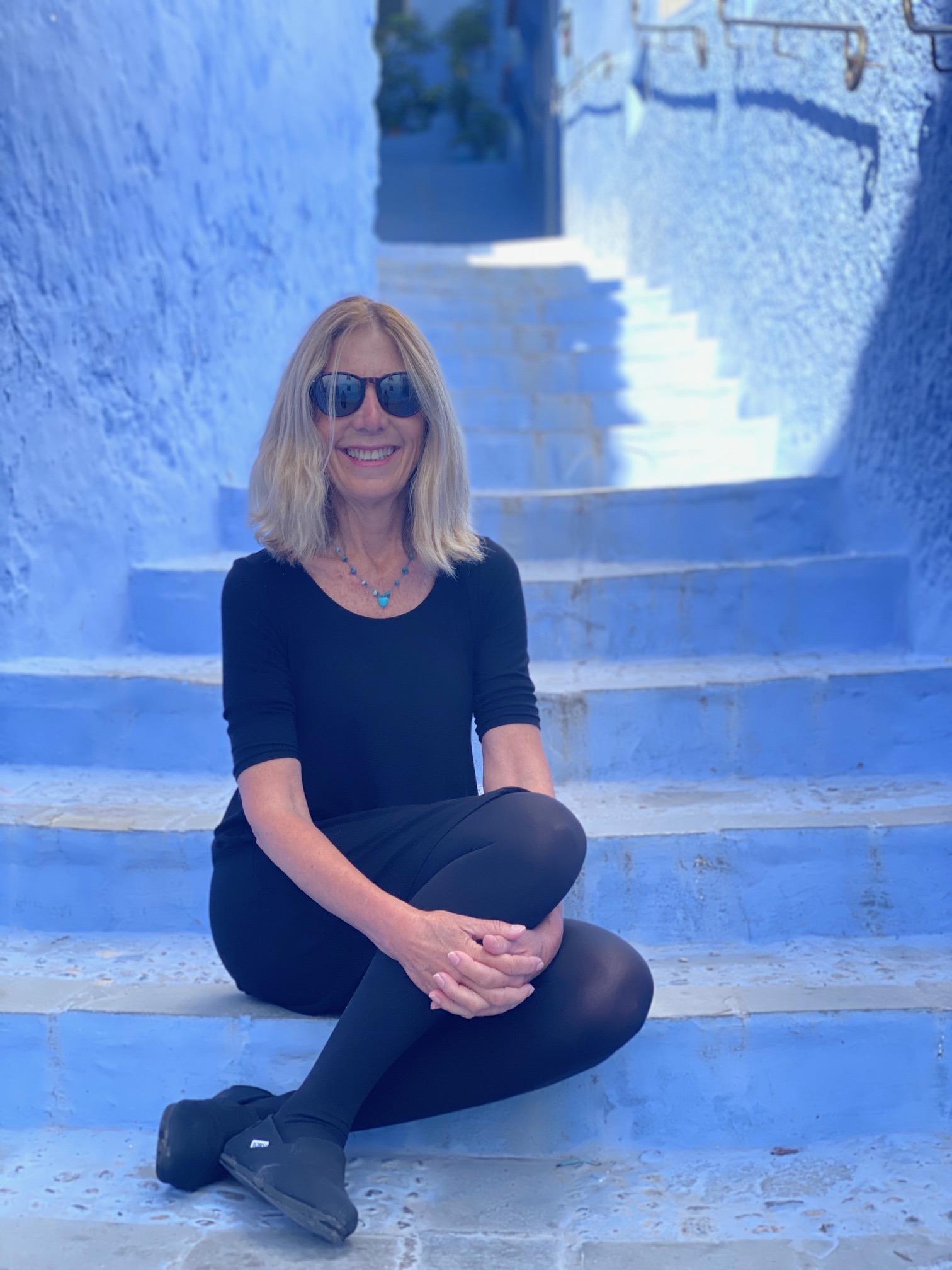 The various shades of blue all blend together perfectly with just the right amount of white and accent colors.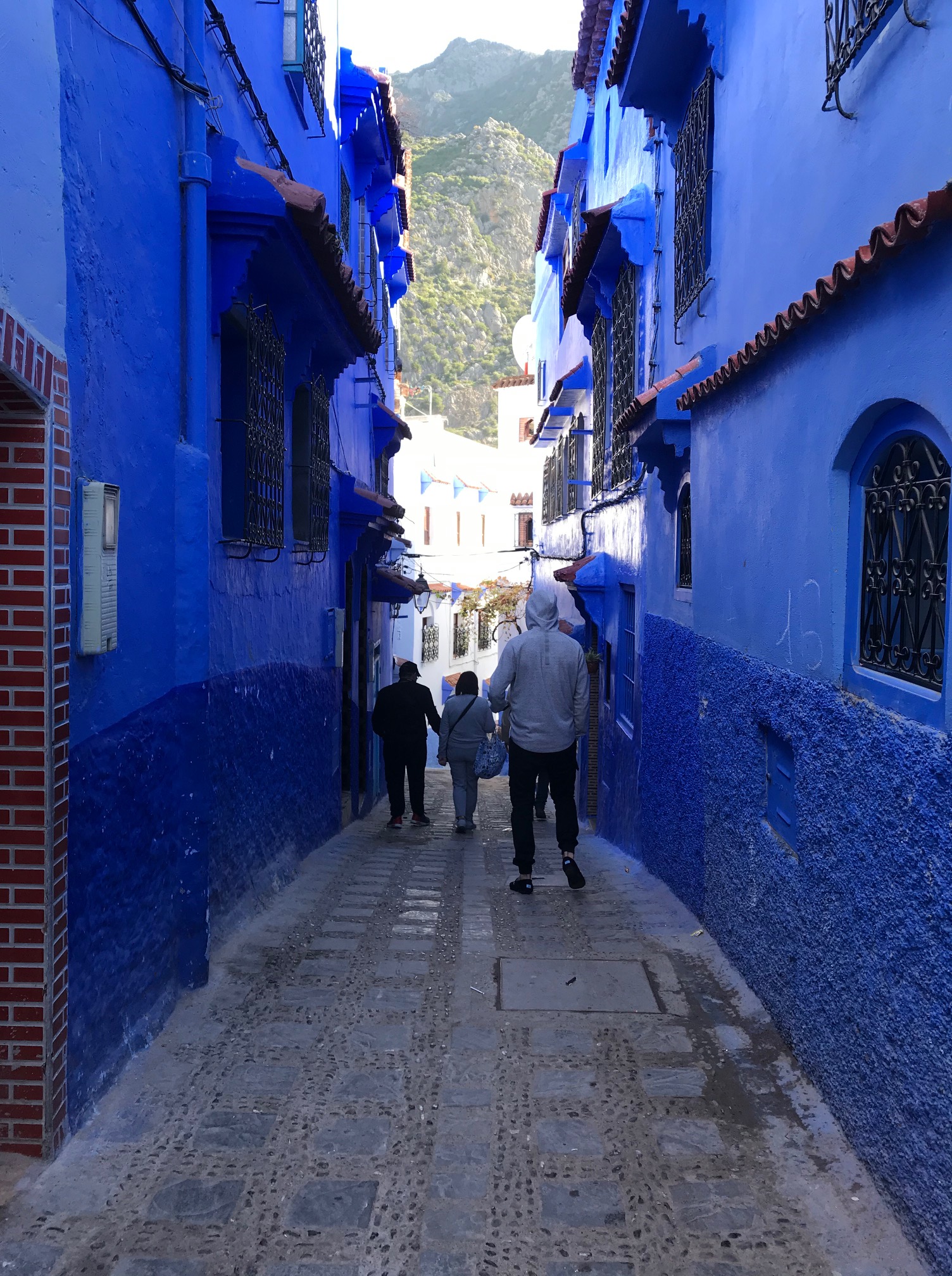
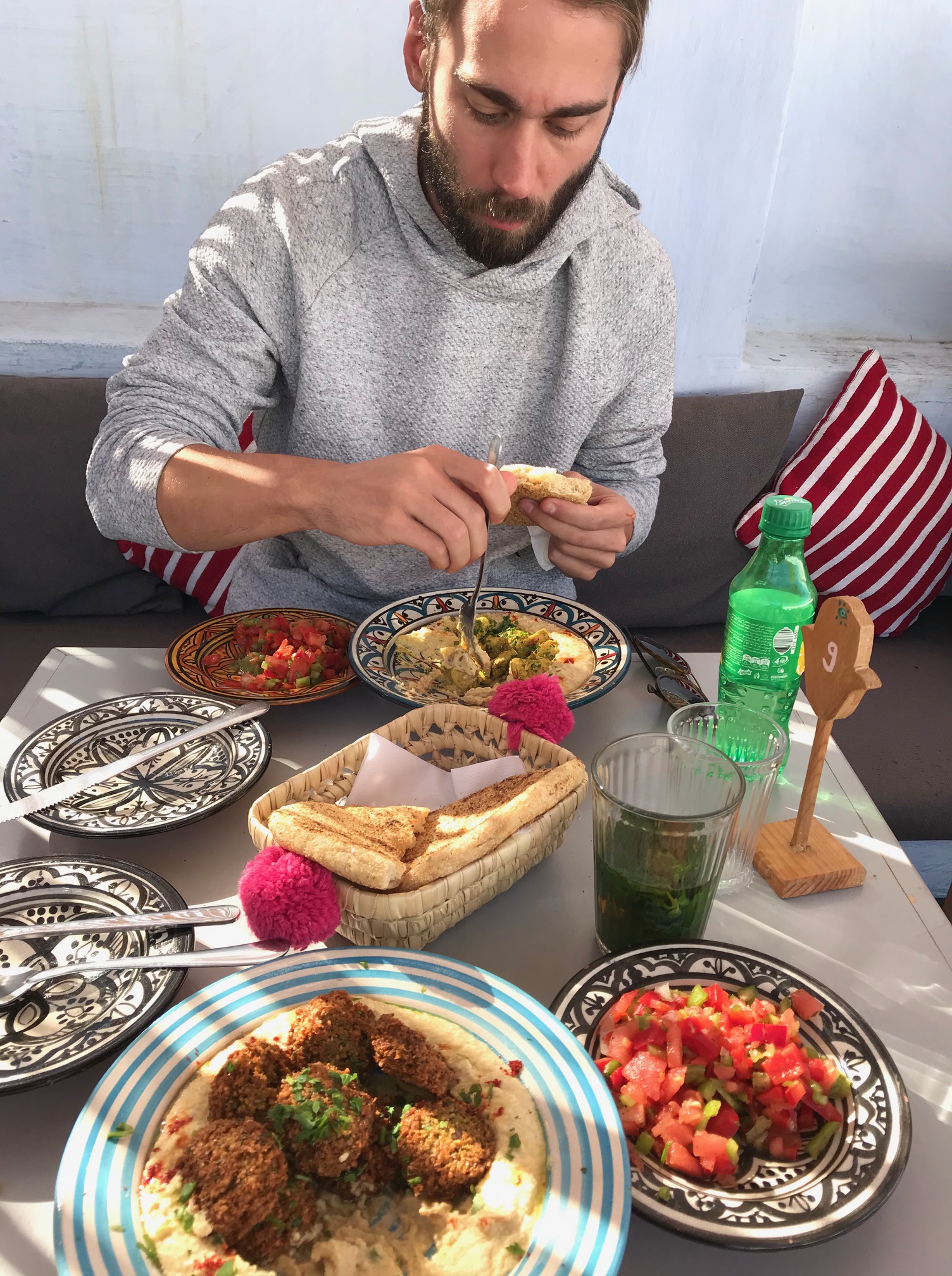
 The songs make Morocco sound so inviting. It’s been on my short list of places I want to visit for quite a while. Finally, my son, Daniel, and I made a plan and here we are! As I write this, I’m at a cafe on a hill overlooking the medina (old town) of Fez. It’s the 29th of November and cold and wet at home but here it’s about 75 degrees and sunny. I can’t tell you how glad I am to be here rather than in Black Friday madness back home.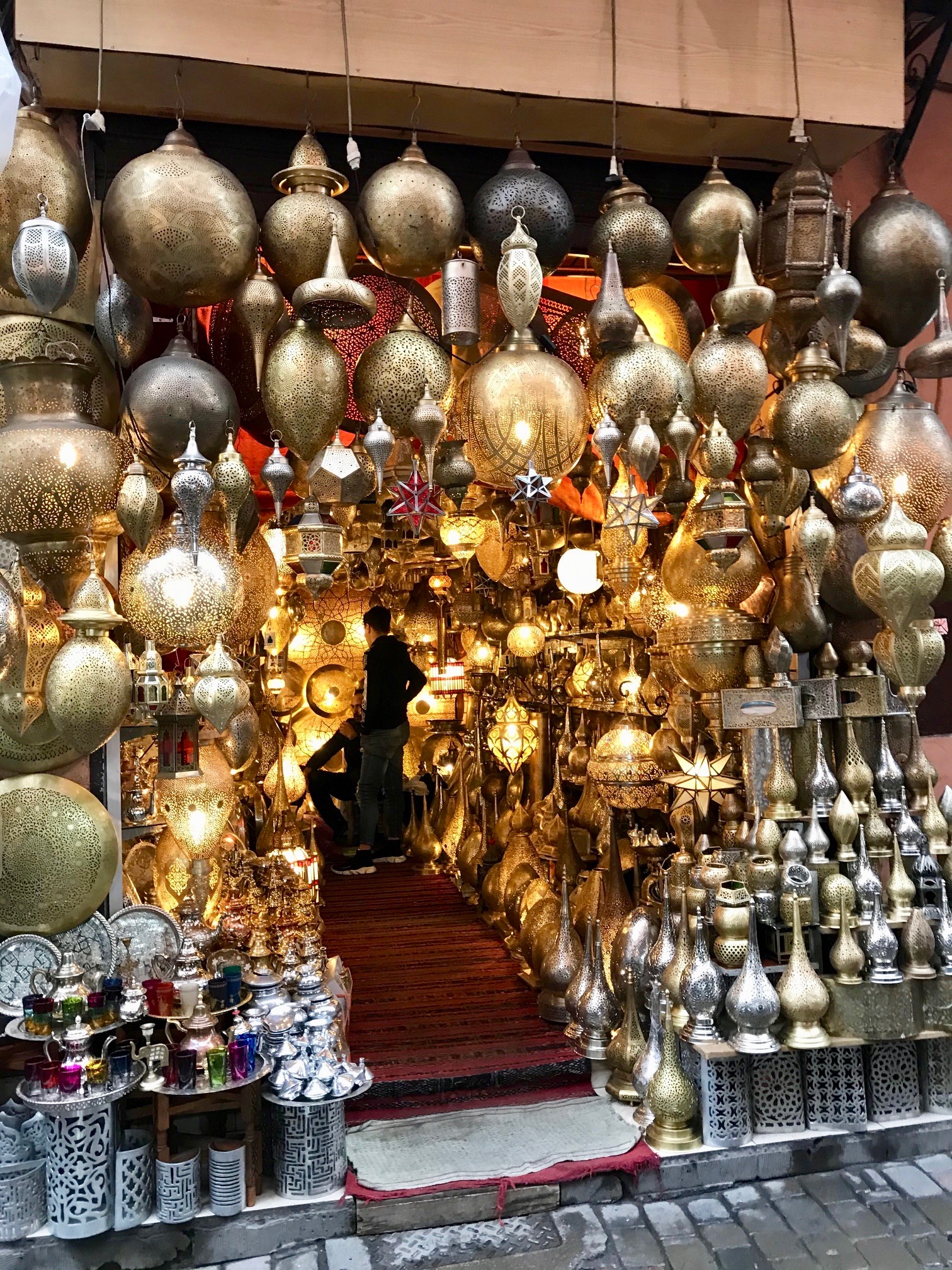
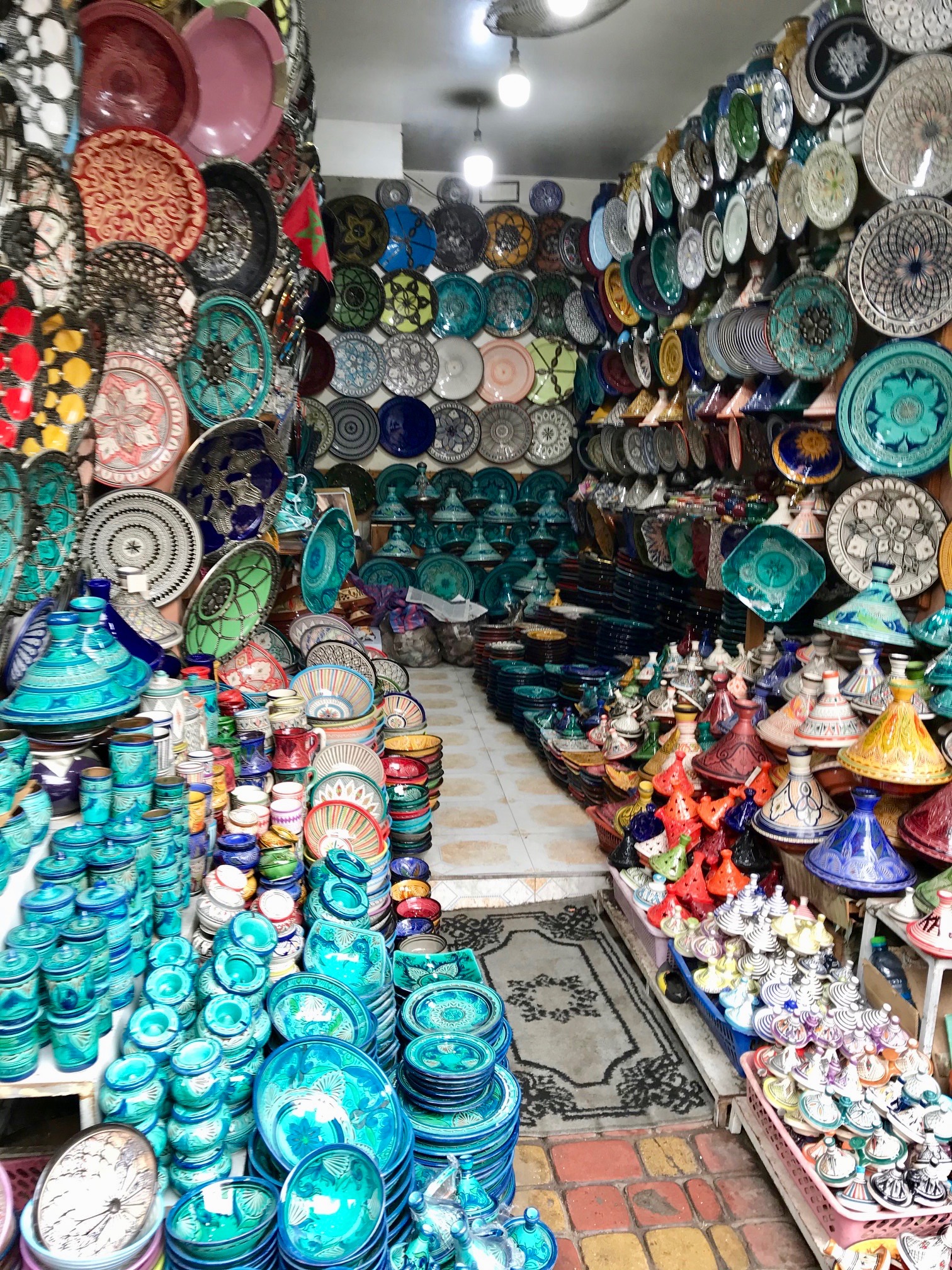
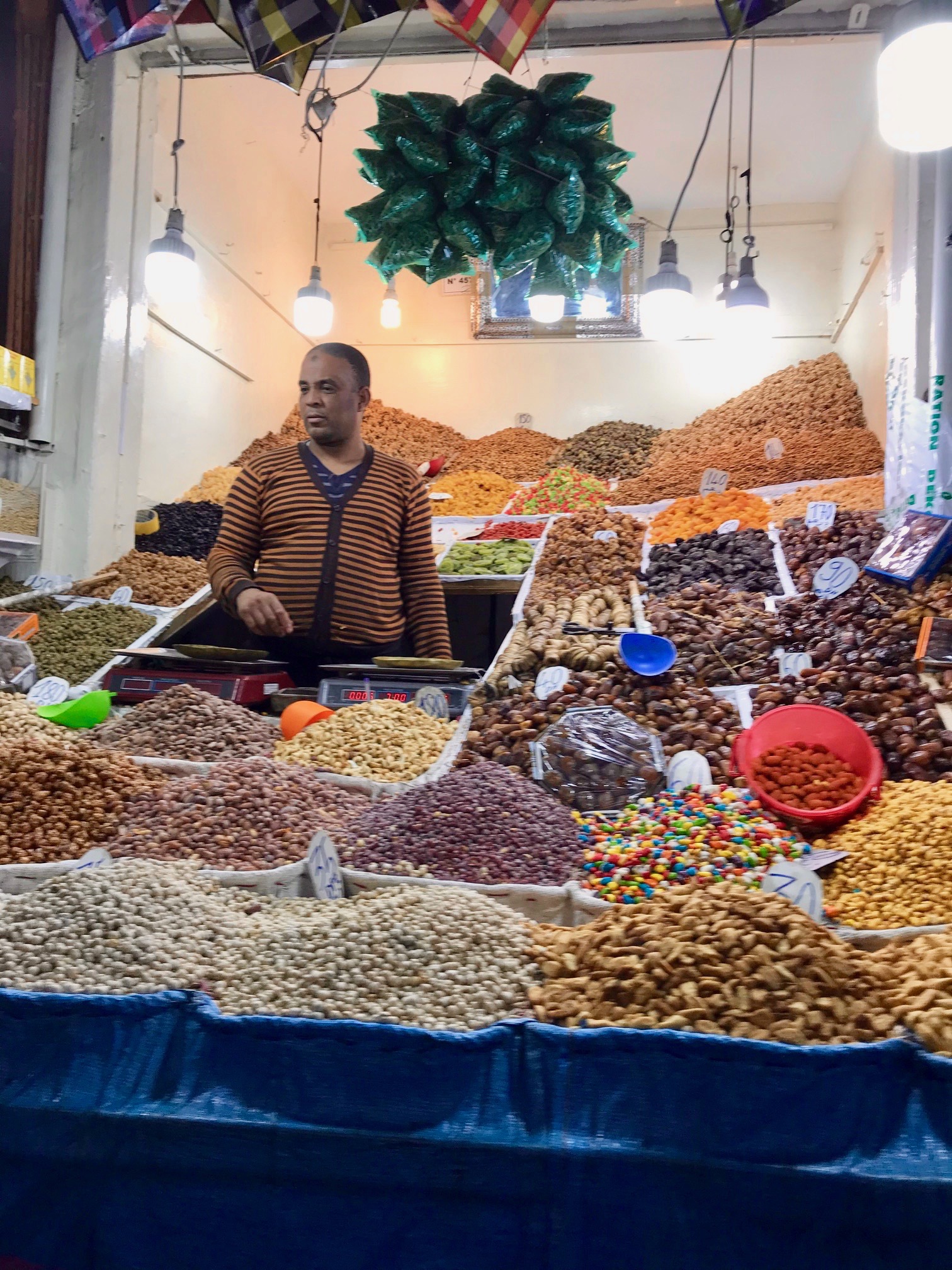
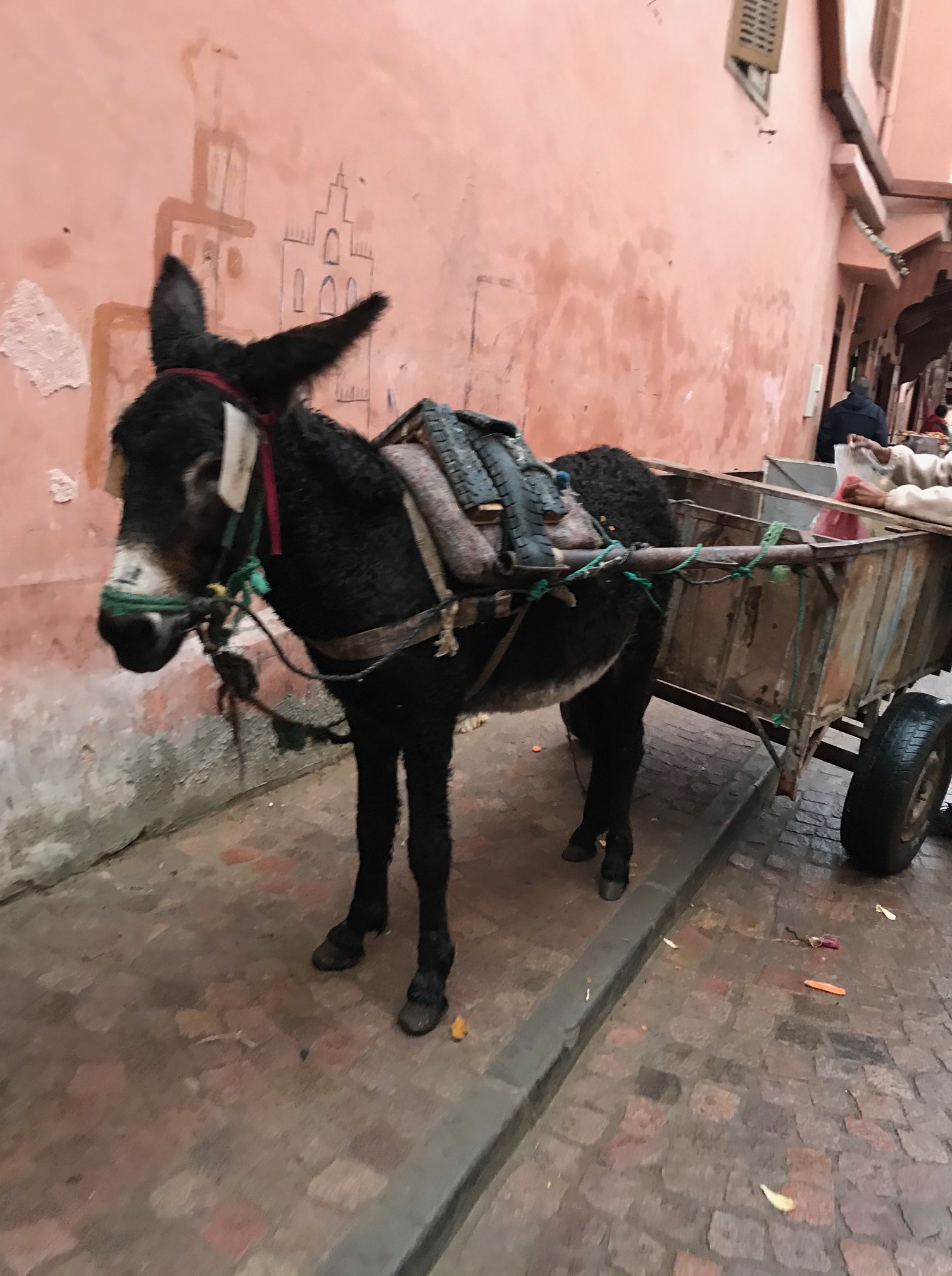
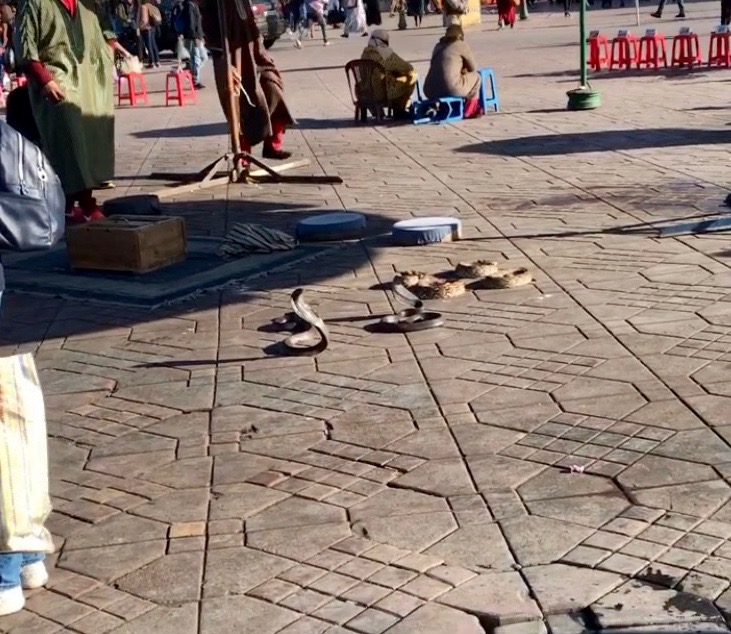
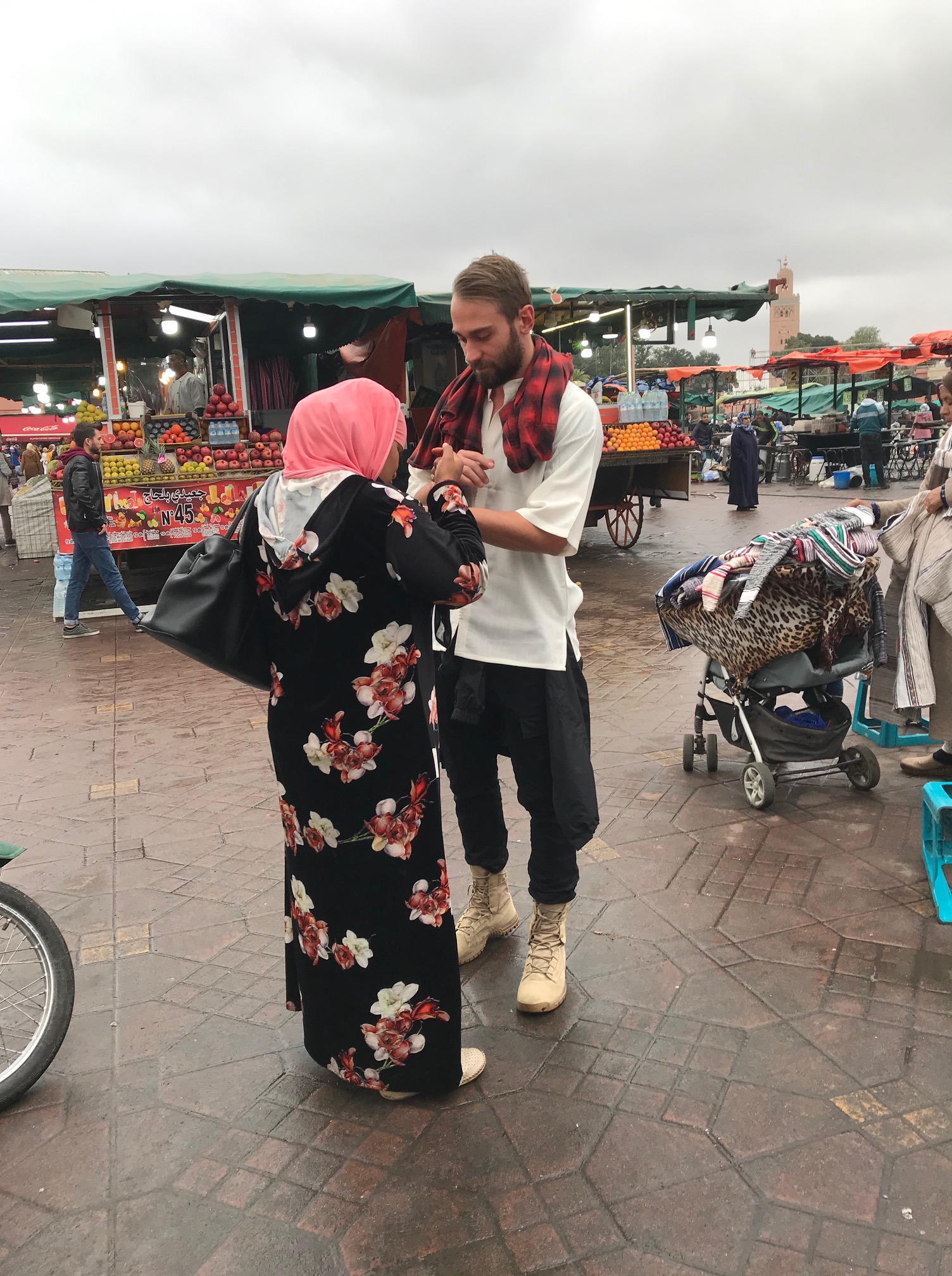
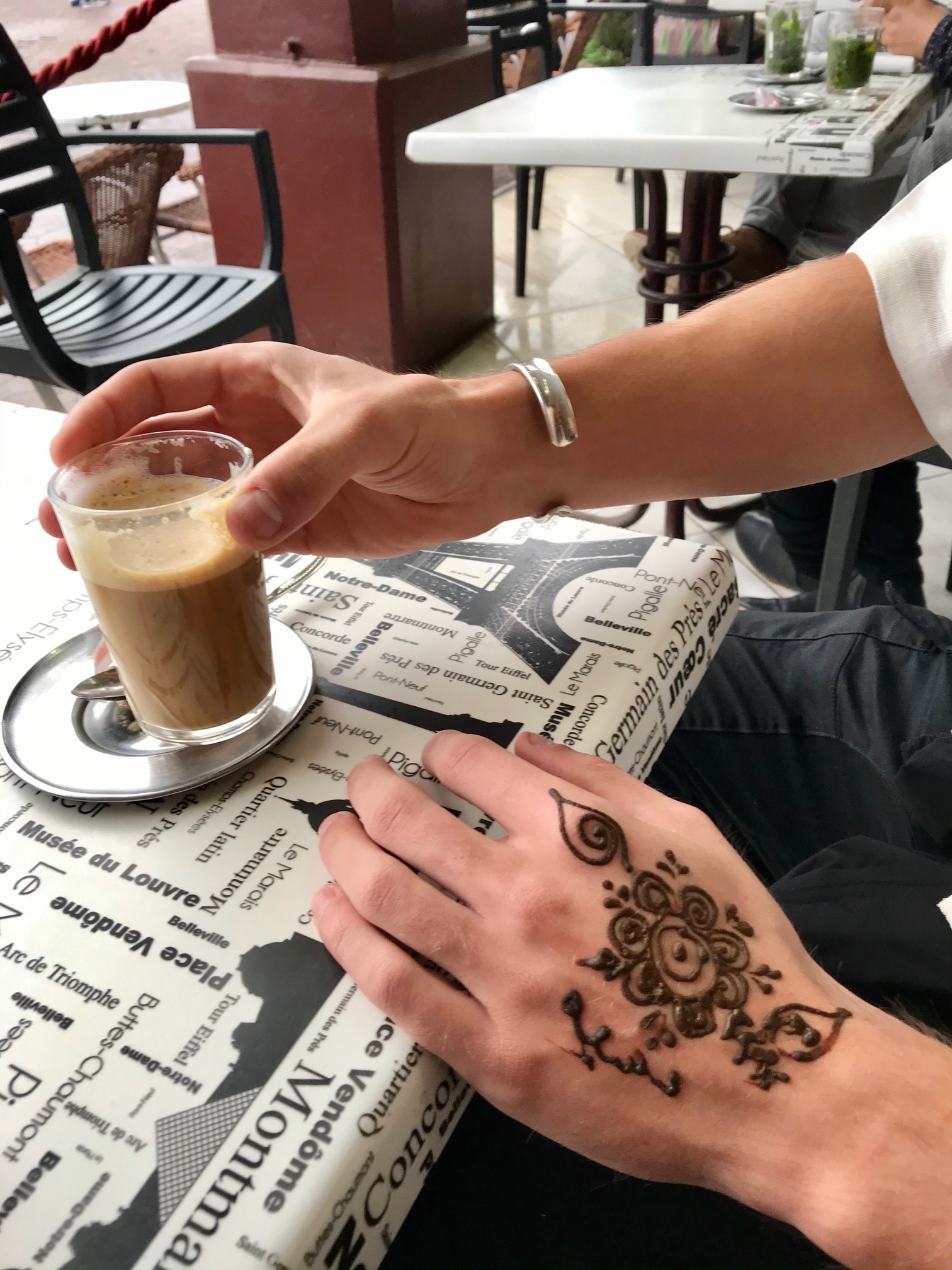
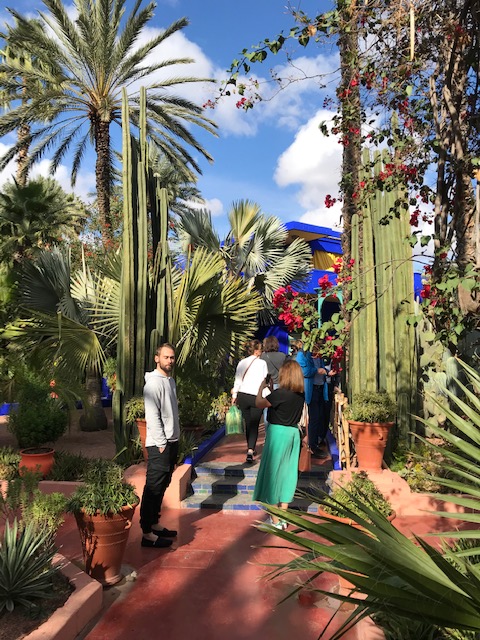
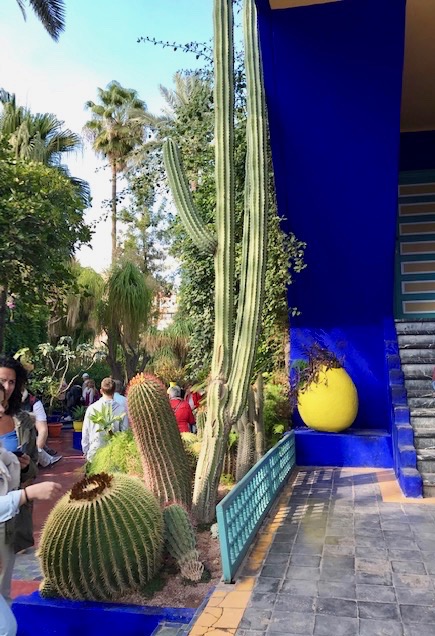
 After a drive into the Atlas Mountains and an overnight stay in Skoura, the next few days were spent in the Sahara Desert. We signed up with a company called “Desert Luxury Tours” and opted for 2 nights glamping in canvas tents with comfortable beds, tables with linens, and all the comforts of home. But that’s not the good part. Life at the camp revolves around nature — sunrise viewing at 7:30 AM, sunset viewing at 6:30 PM, campfire after dinner, then star gazing at 10:00 PM.
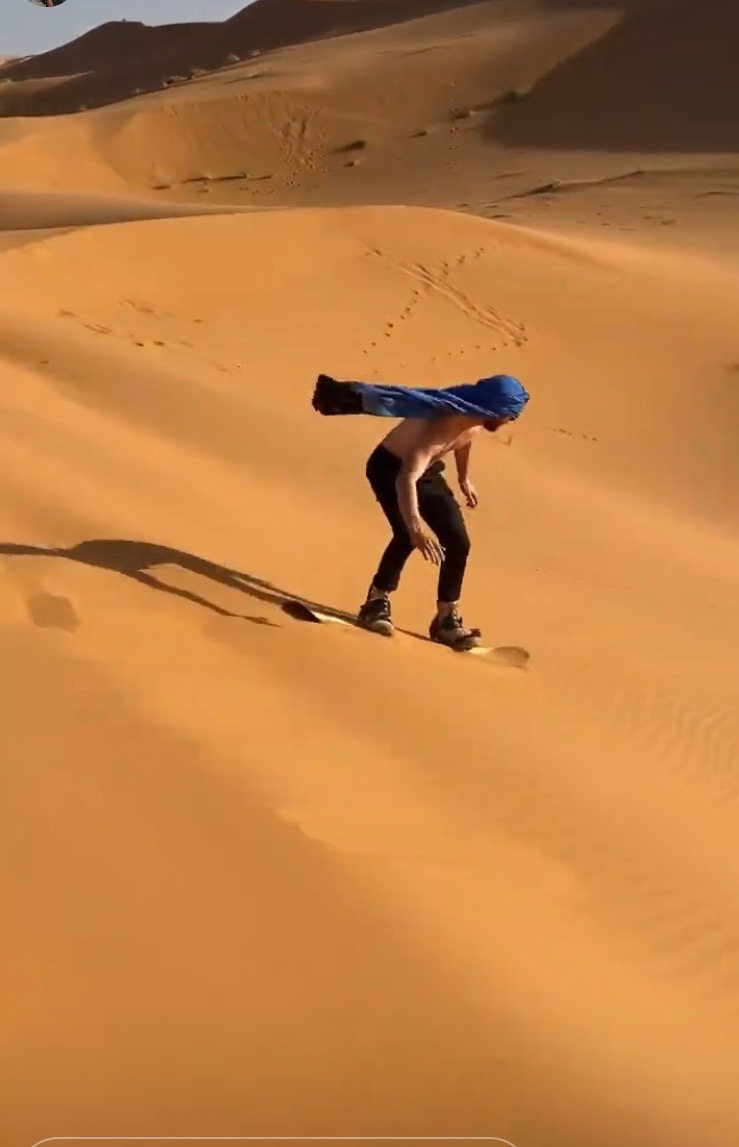
 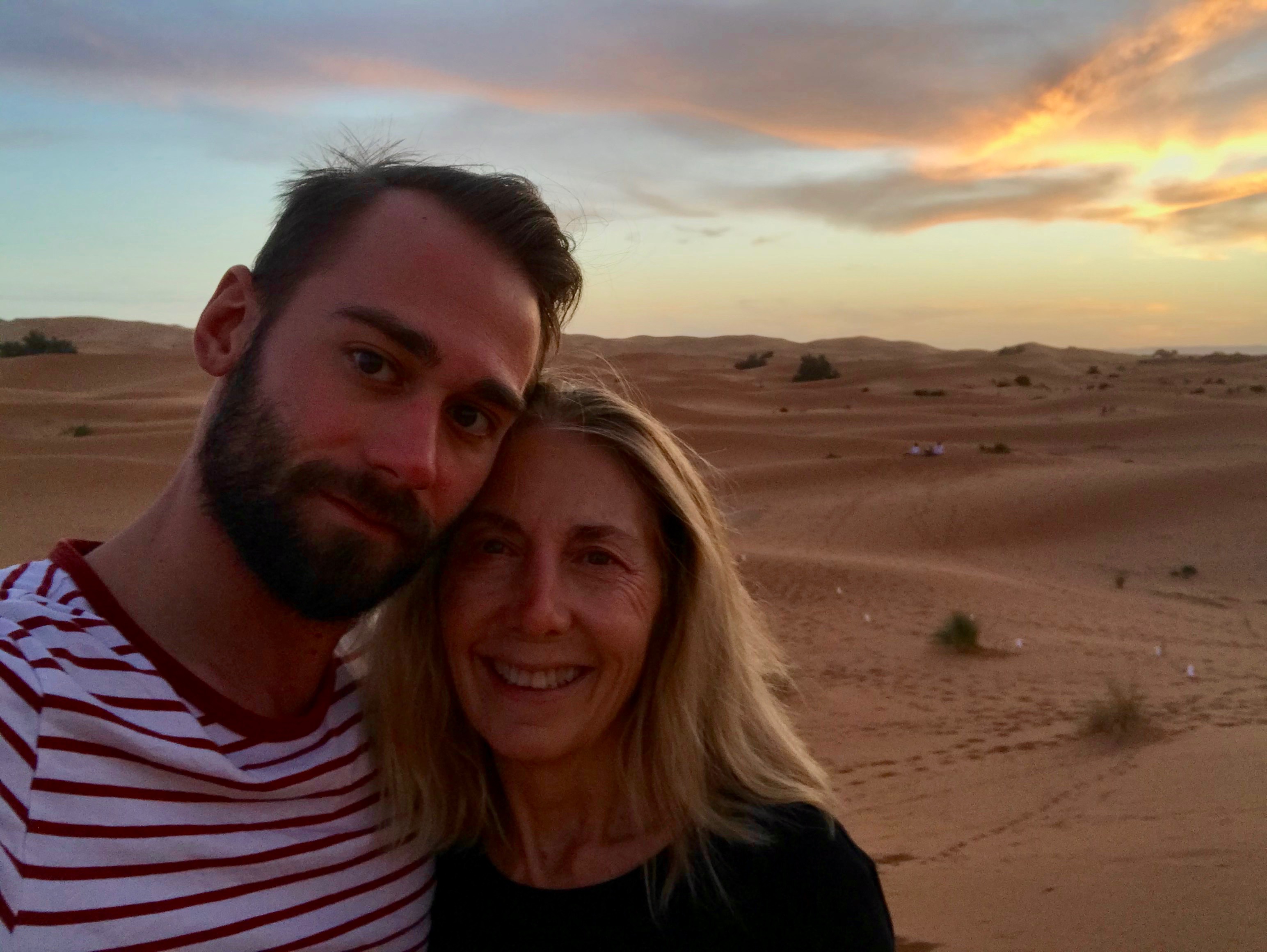 When the camp lights were turned off, the sky lit up like a planetarium! Then, as if on queue, a shooting star ignited and shot across the night sky! So many sand dunes everywhere called to Daniel to jump on a snowboard and head downhill. He said it was impossible to turn but also impossible to get hurt because the sand is so forgiving when you fall.
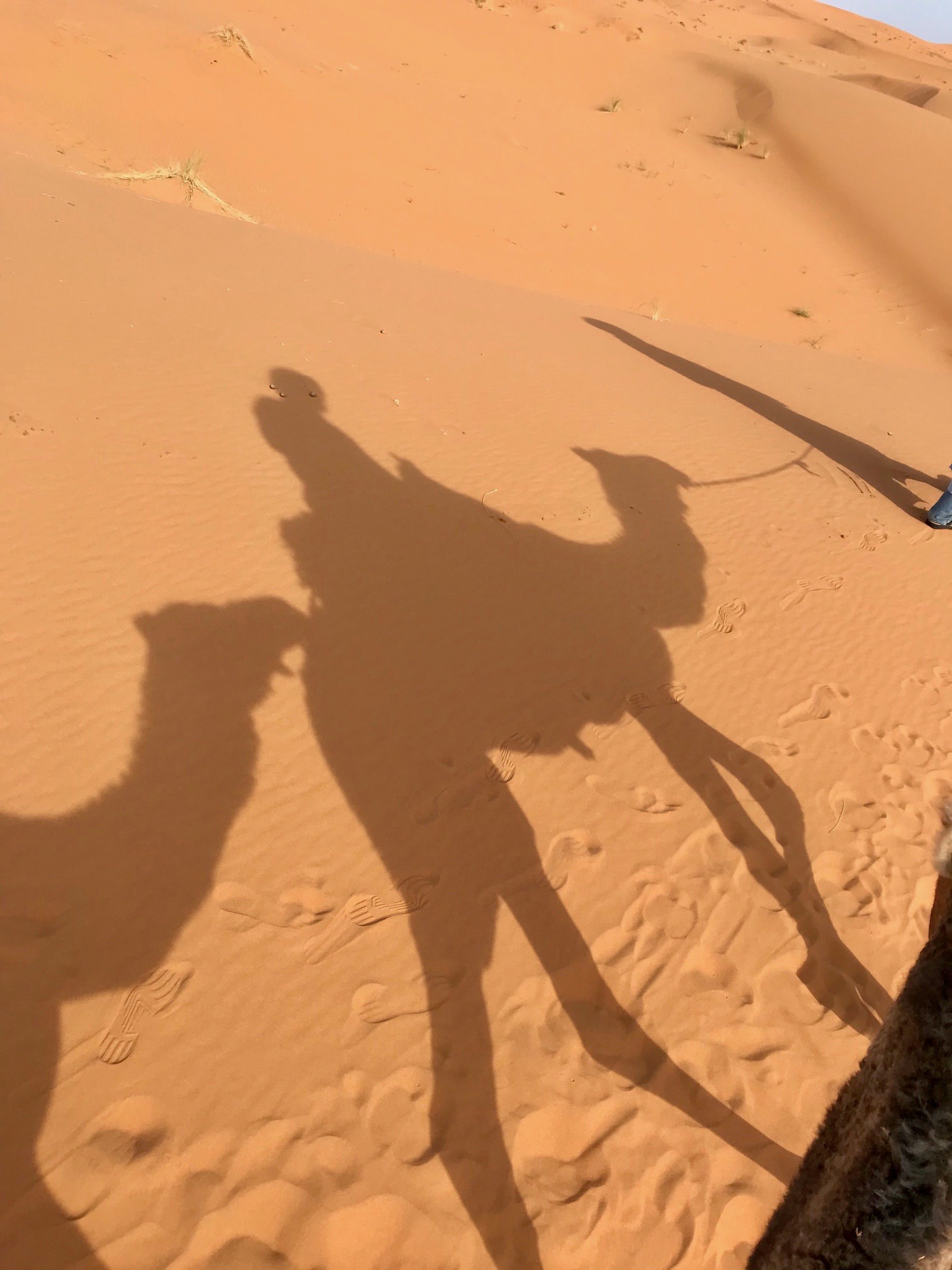
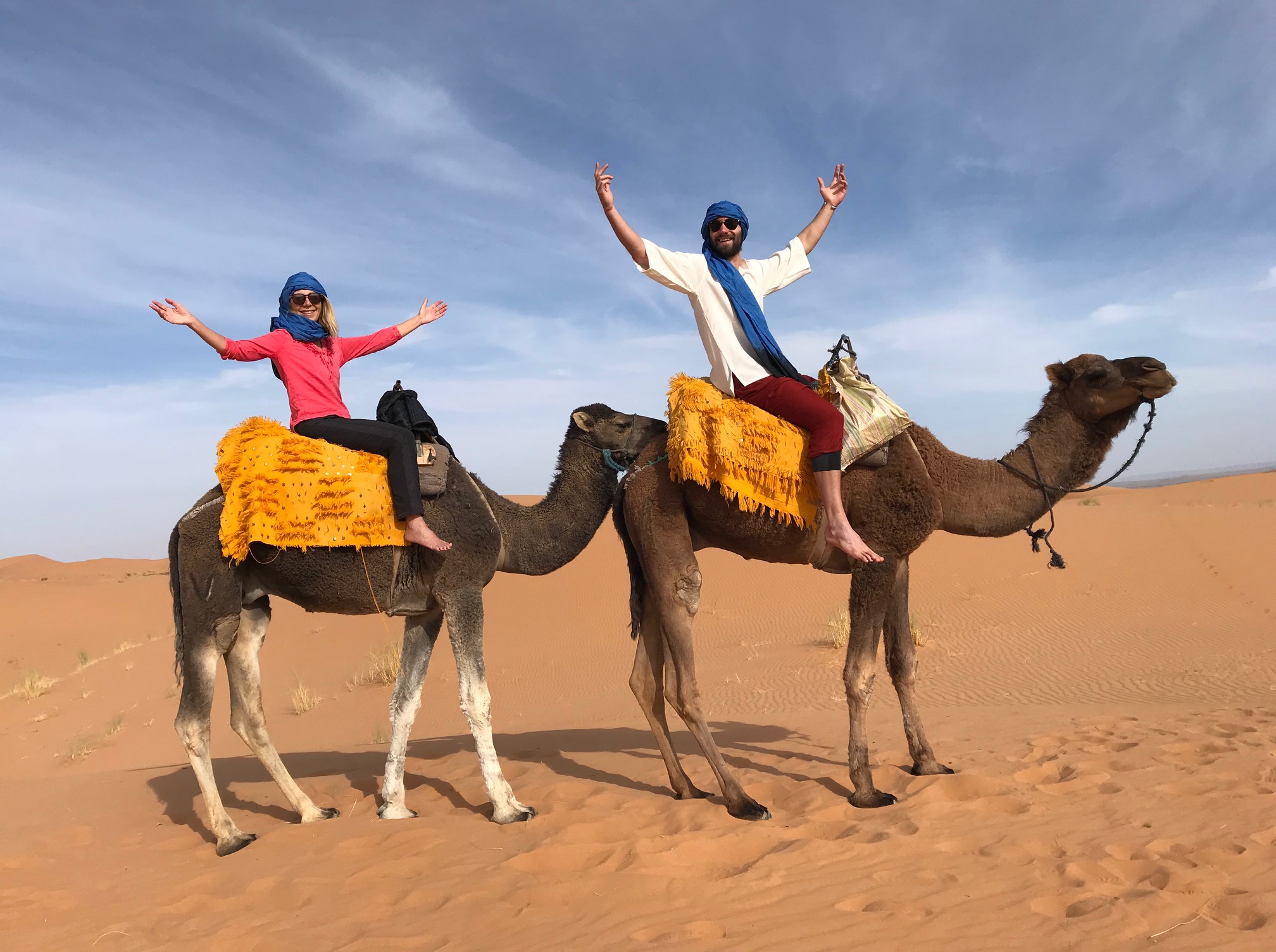
  One morning we rode camels over unspoiled desert sand hills for an hour, enjoyed nuts & raisins and hot tea made over a small open fire, walked around a while then slowly made our way back to camp.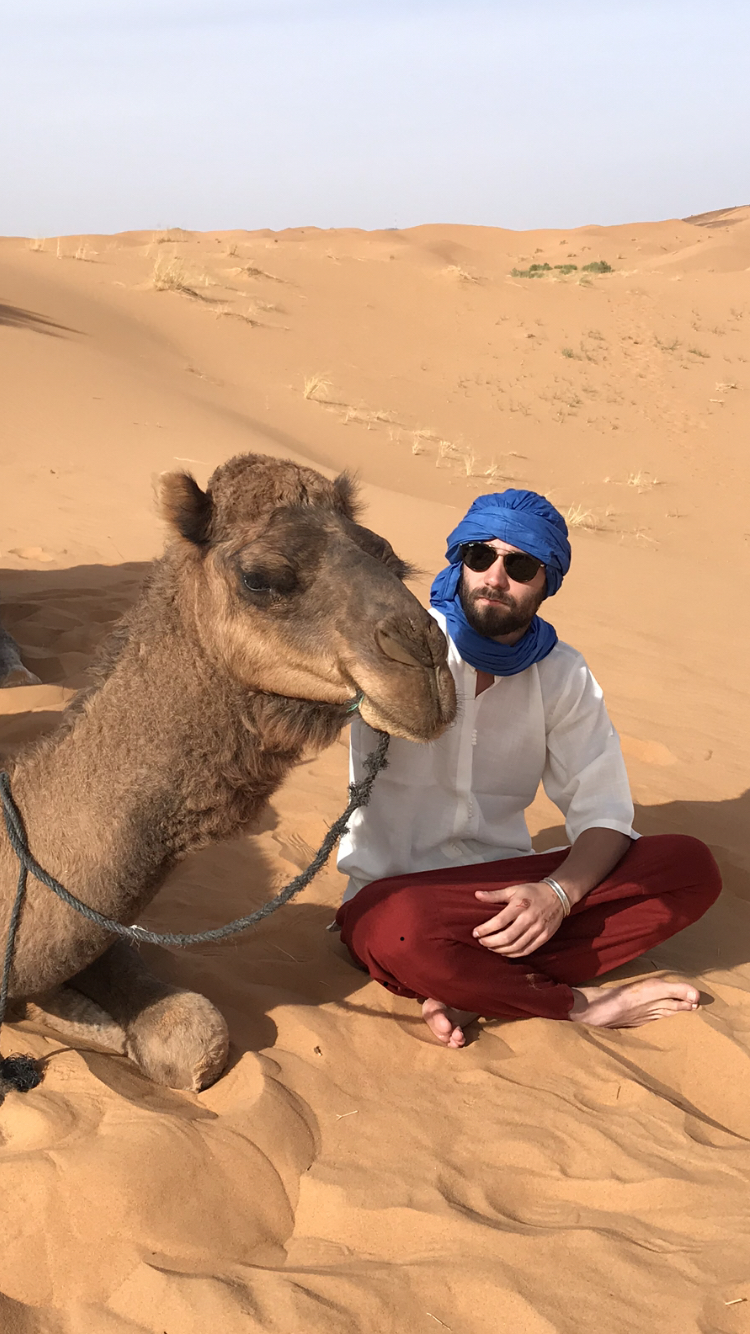
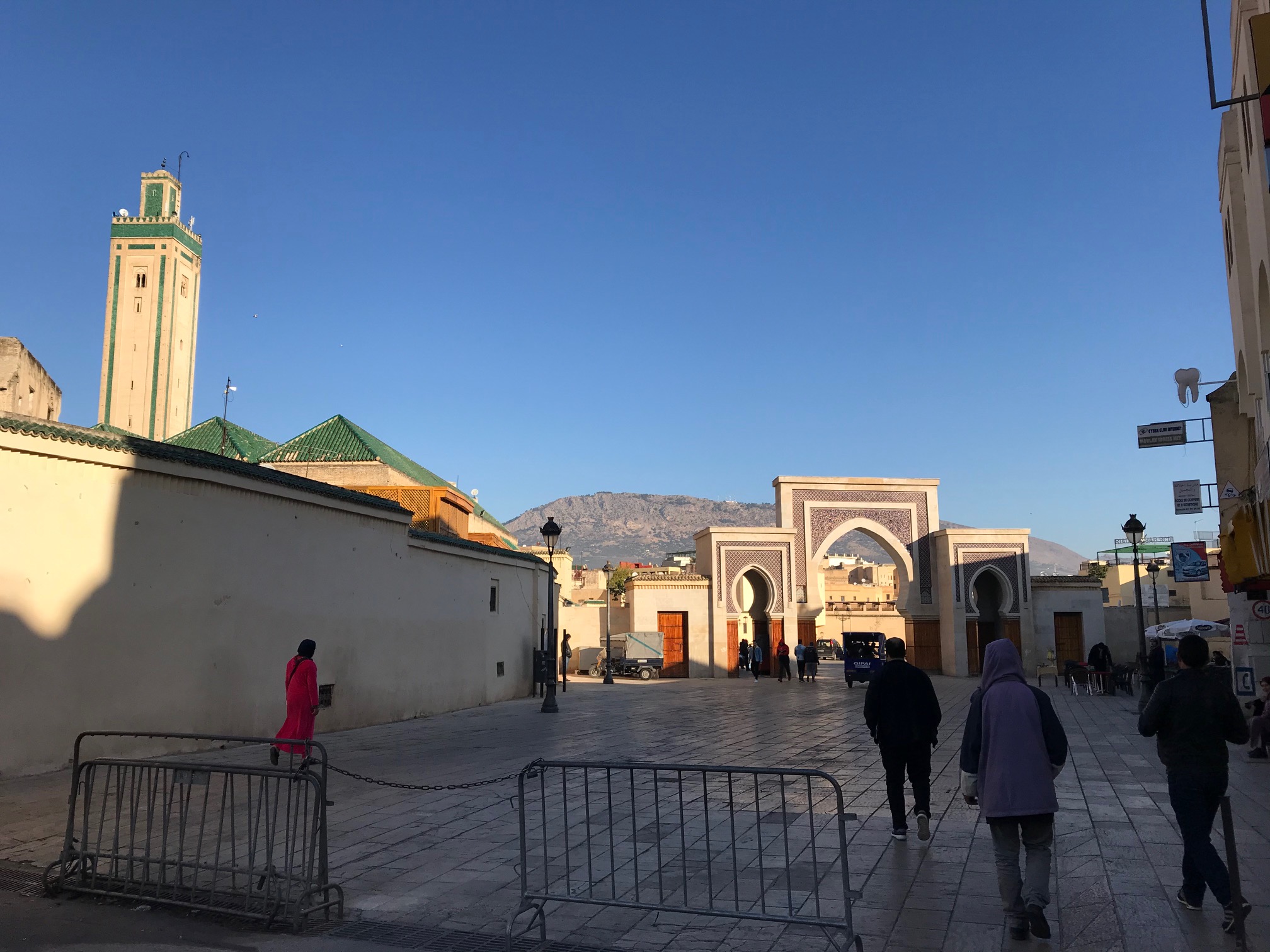 Wherever you are, five times a day, the call to prayer over loud speakers reminds you that 99% of the Moroccan population is Muslim. The streets/alleys in the medina are ridiculously narrow and dark. I’m told it’s dangerous, even for the locals, to go out in the medina after dark.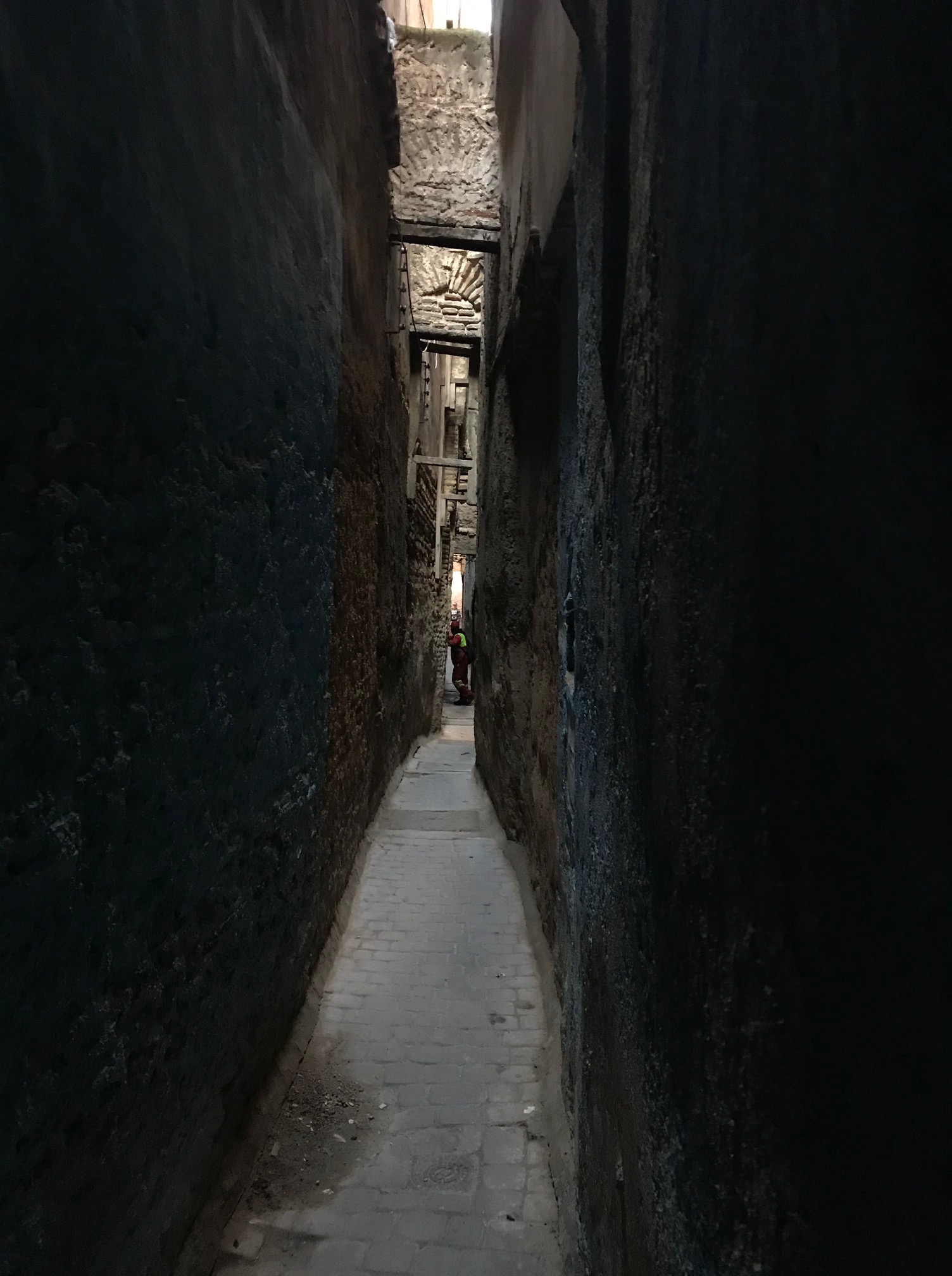
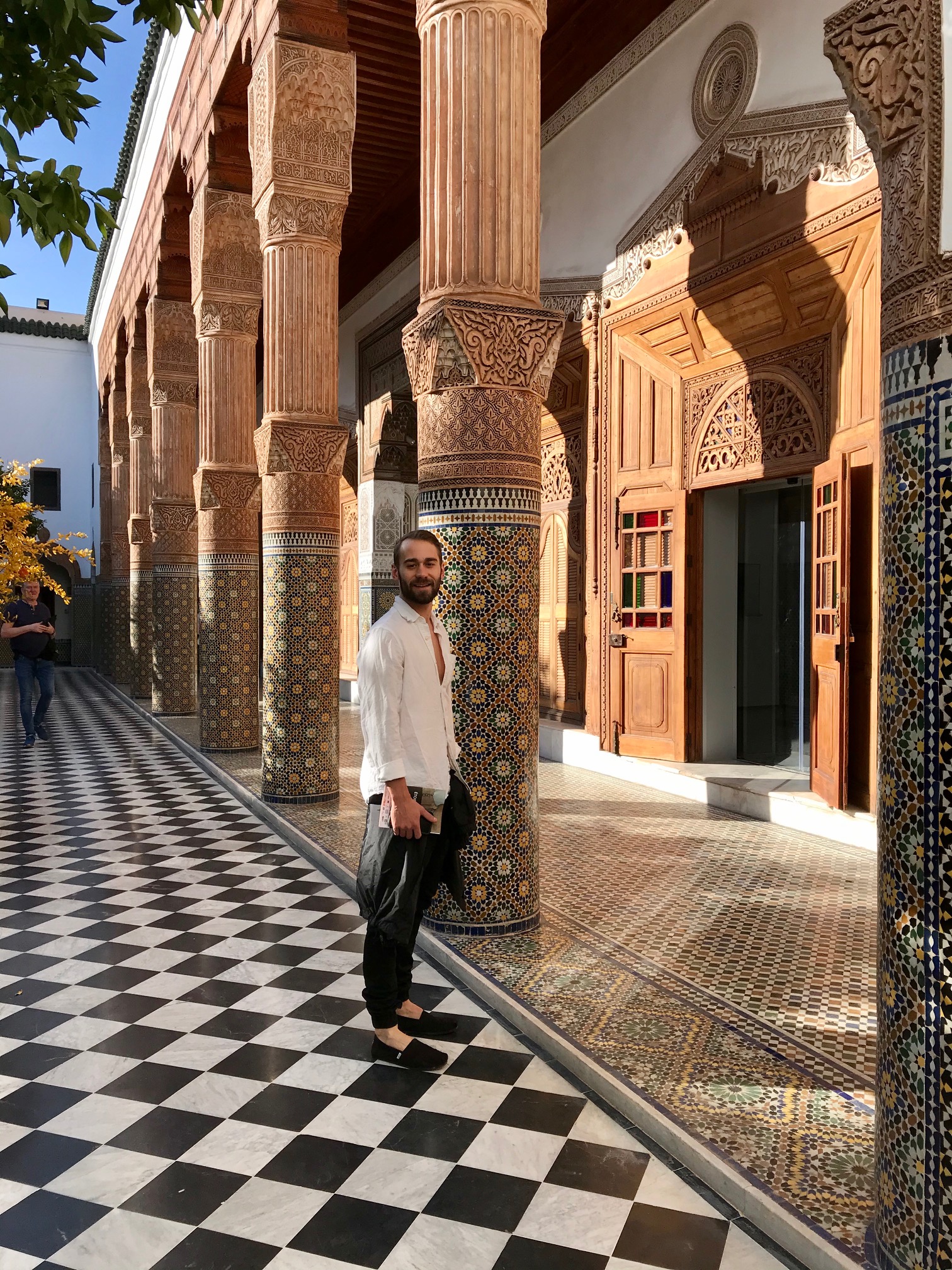
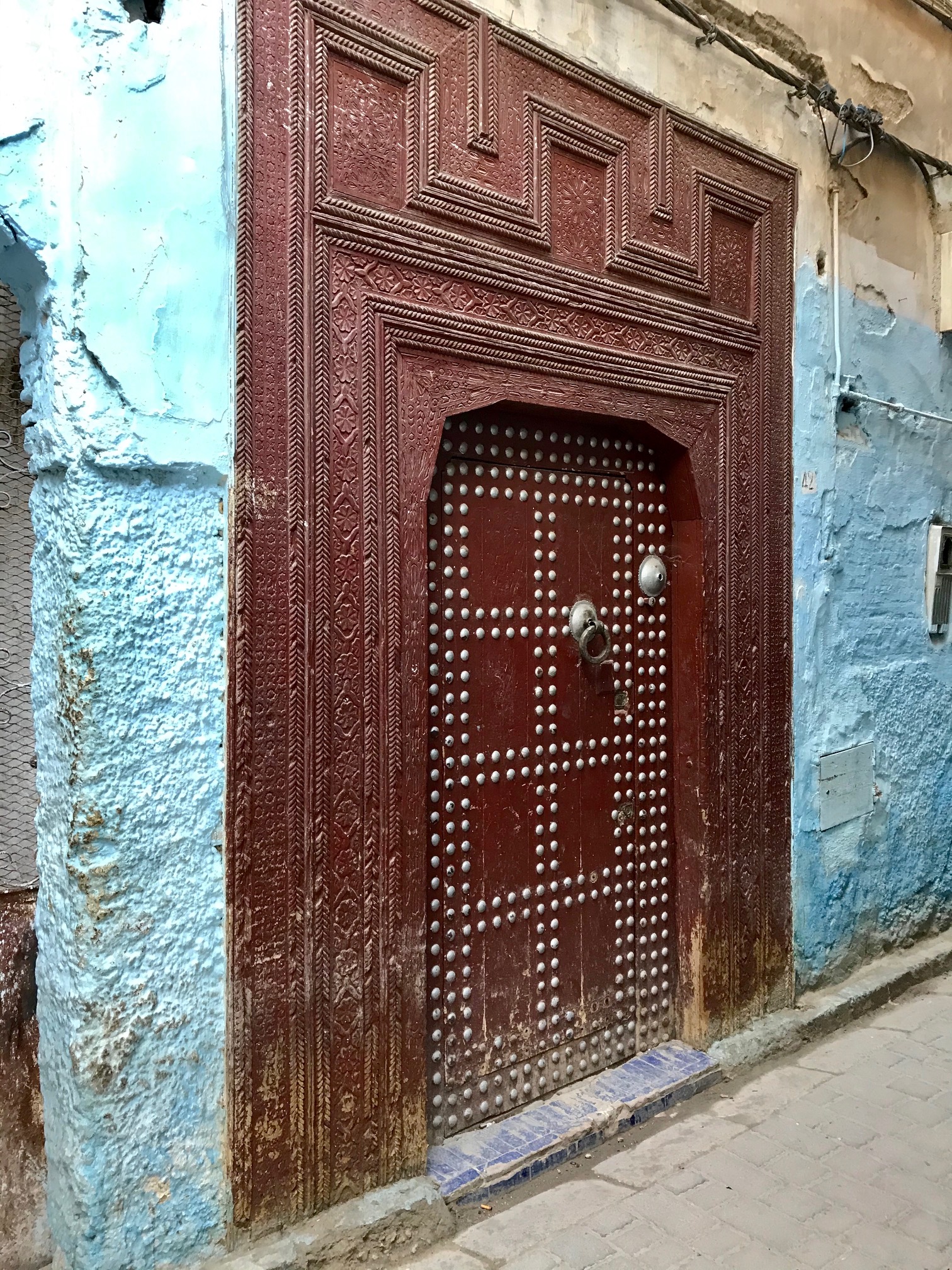 Many have a small door inside the larger door. The small door is used for people and the larger for horses and ceremonies. And many have two knockers–the smaller indicates a woman or father/husband/brother of the woman of the home is calling. The larger knocker lets the woman know that she should not open the door.
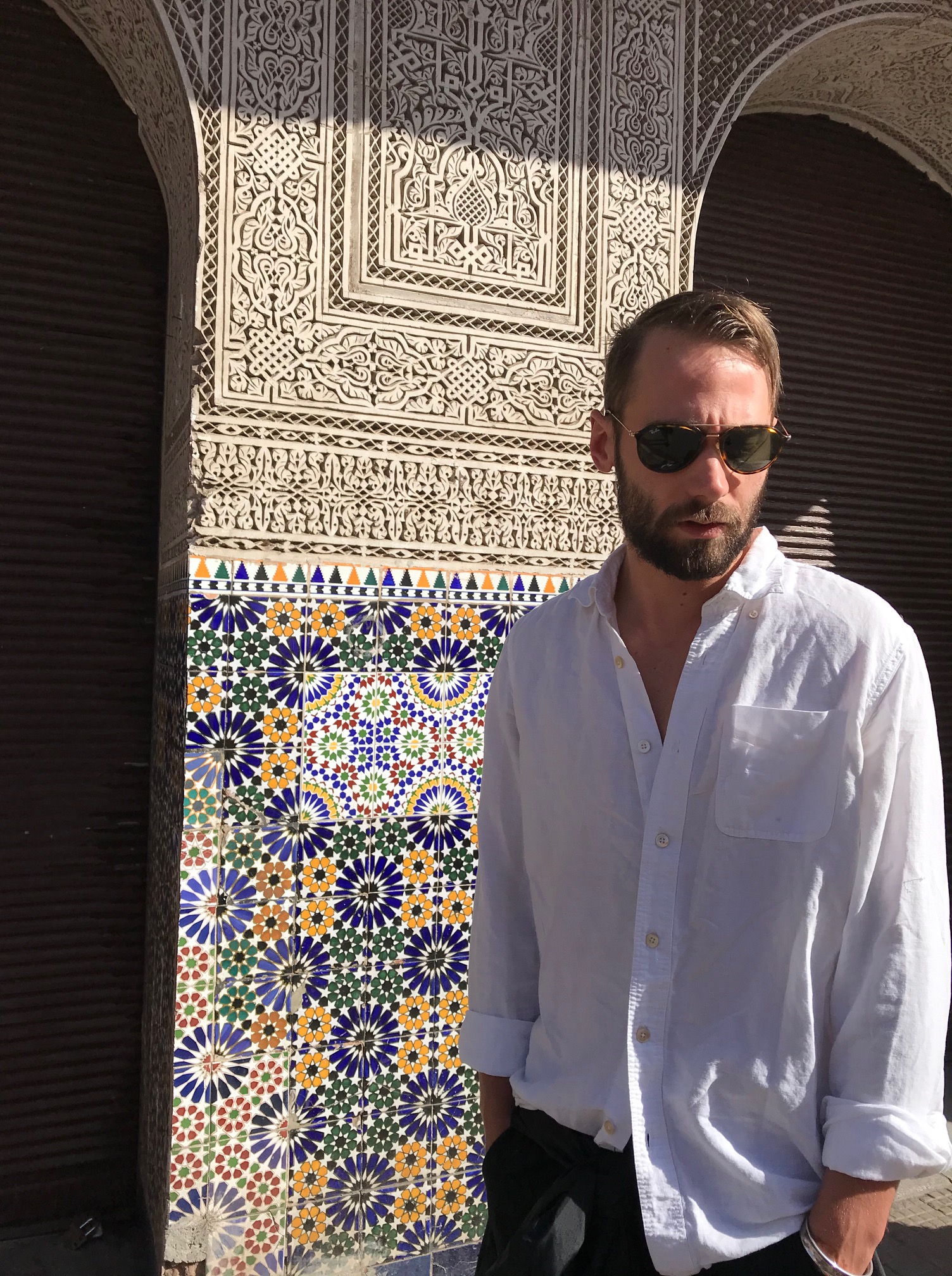
  The doors to the mosques, mausoleums, and church schools are decorated to excess.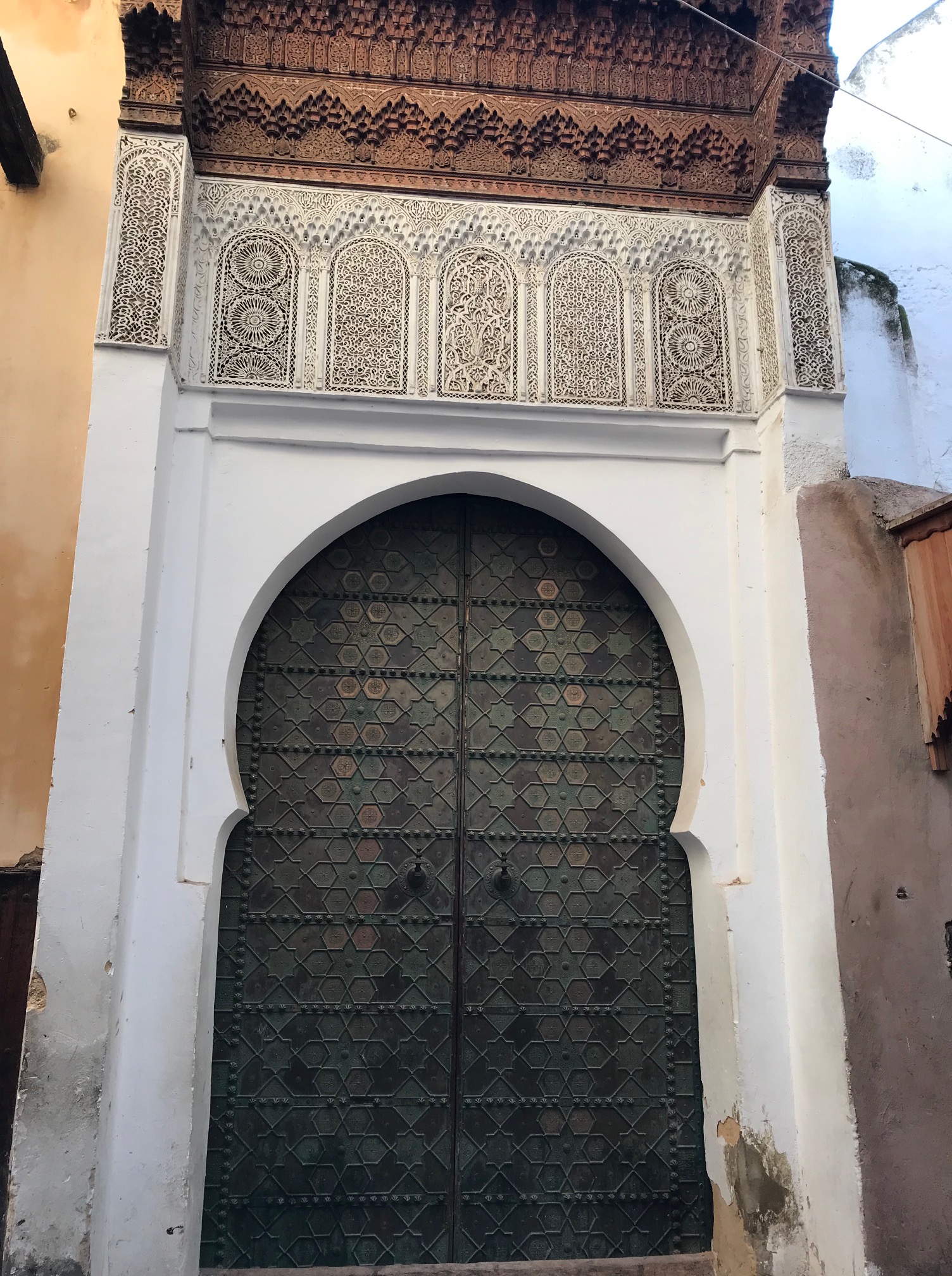
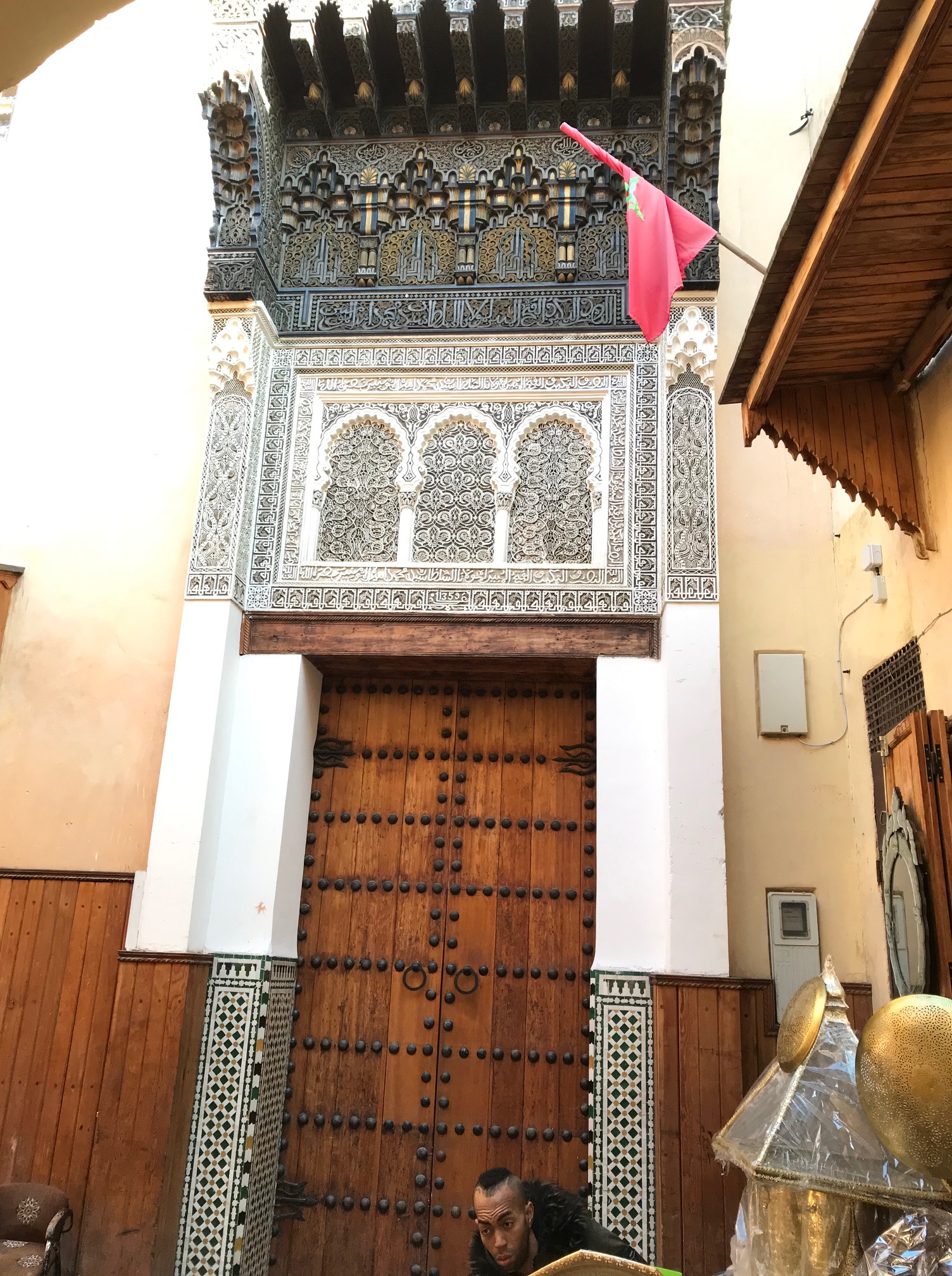 I wasn’t allowed to go into the mosques and holy places but I could stand at the door and look in.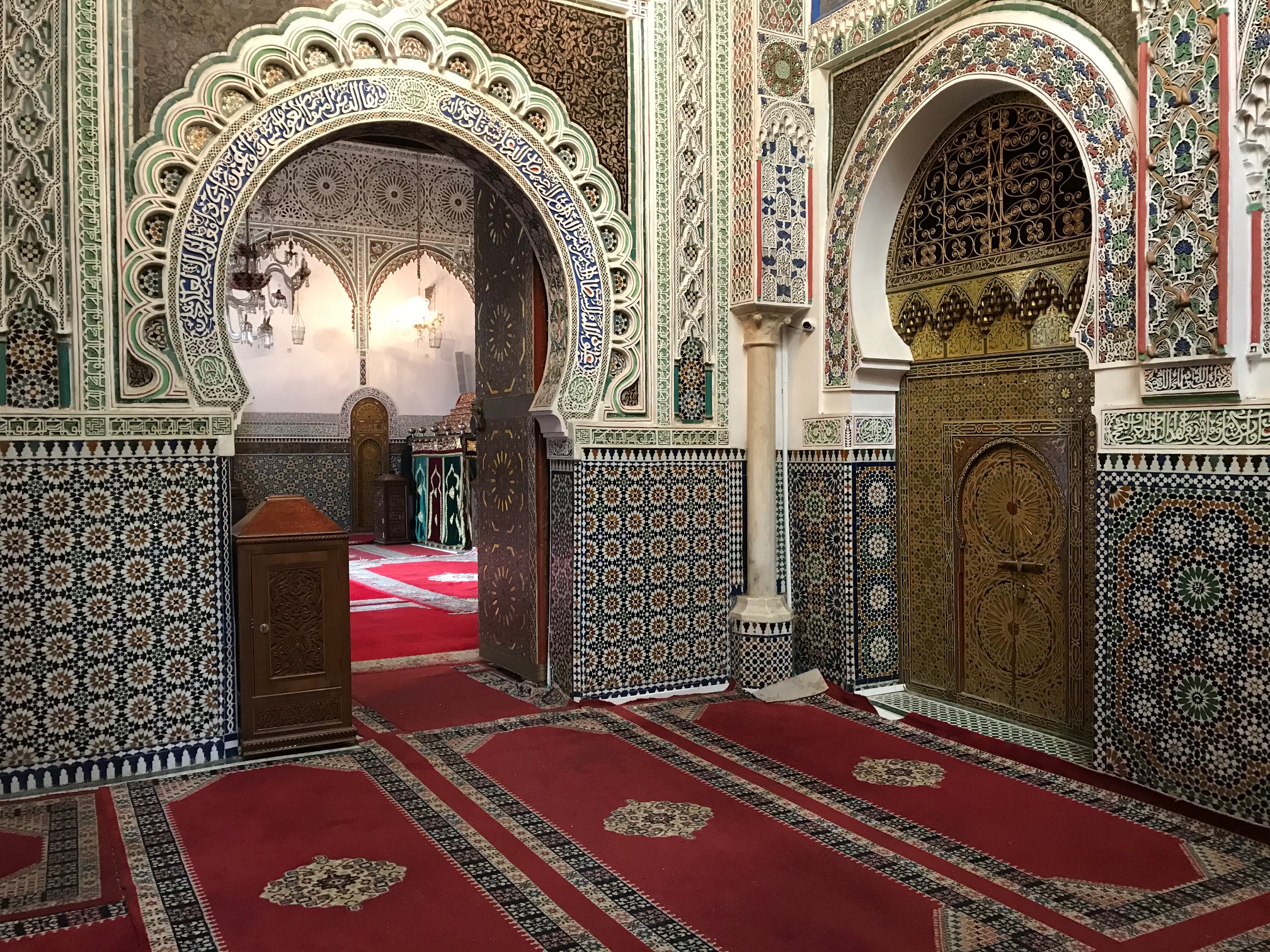
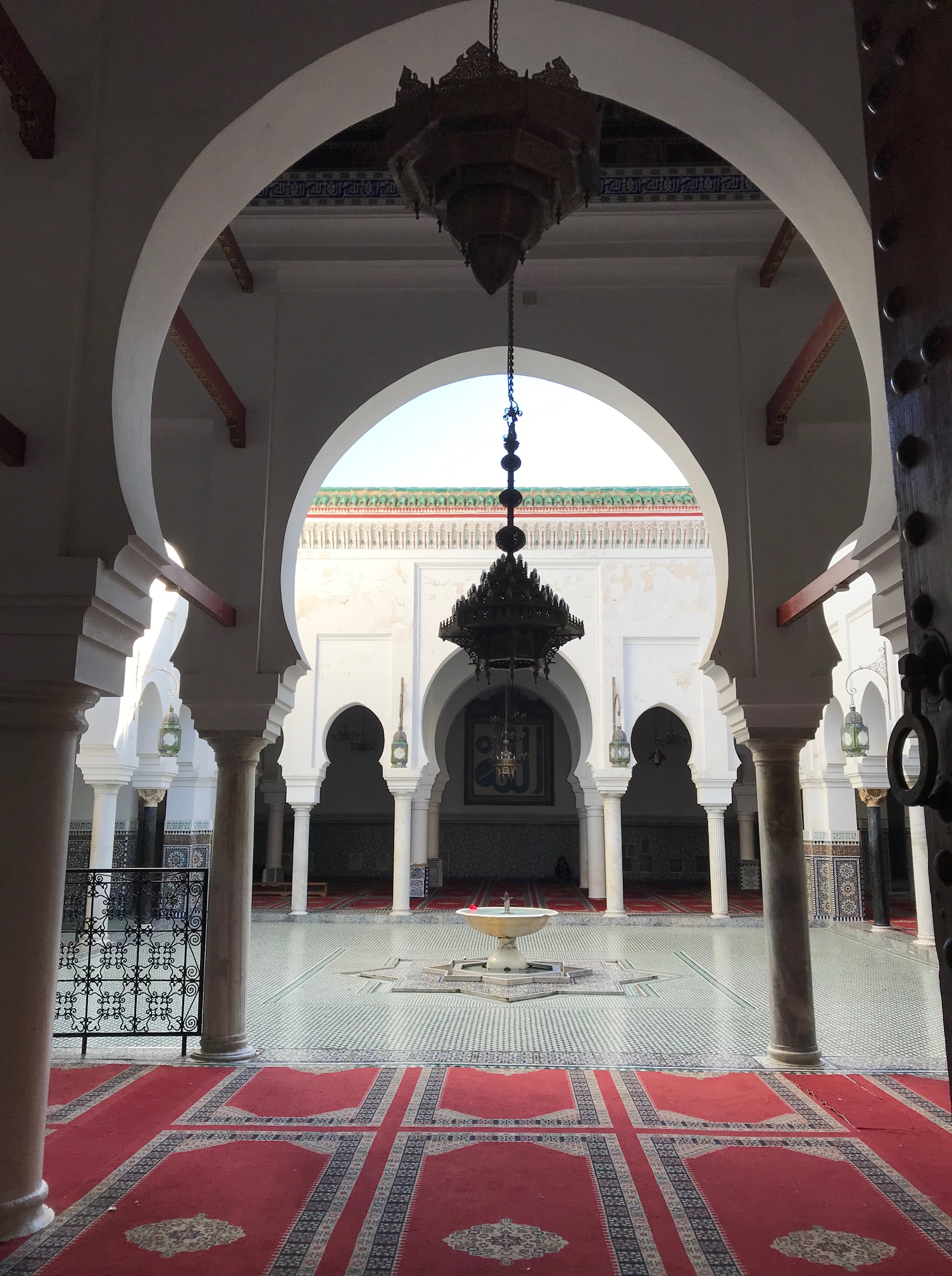 The Blue Gate is the main entrance from the West. No cars or vehicles are allowed inside the medina.
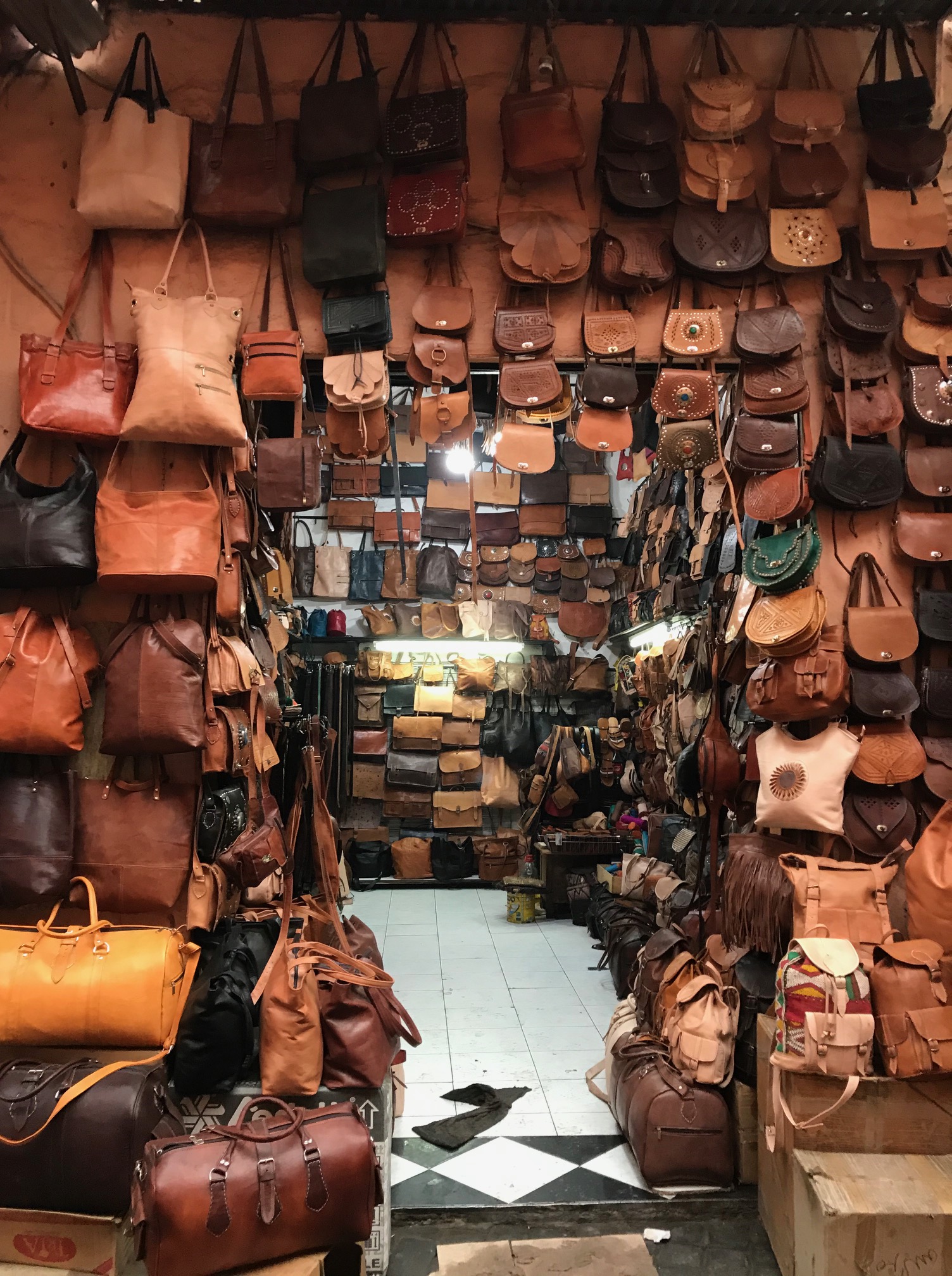
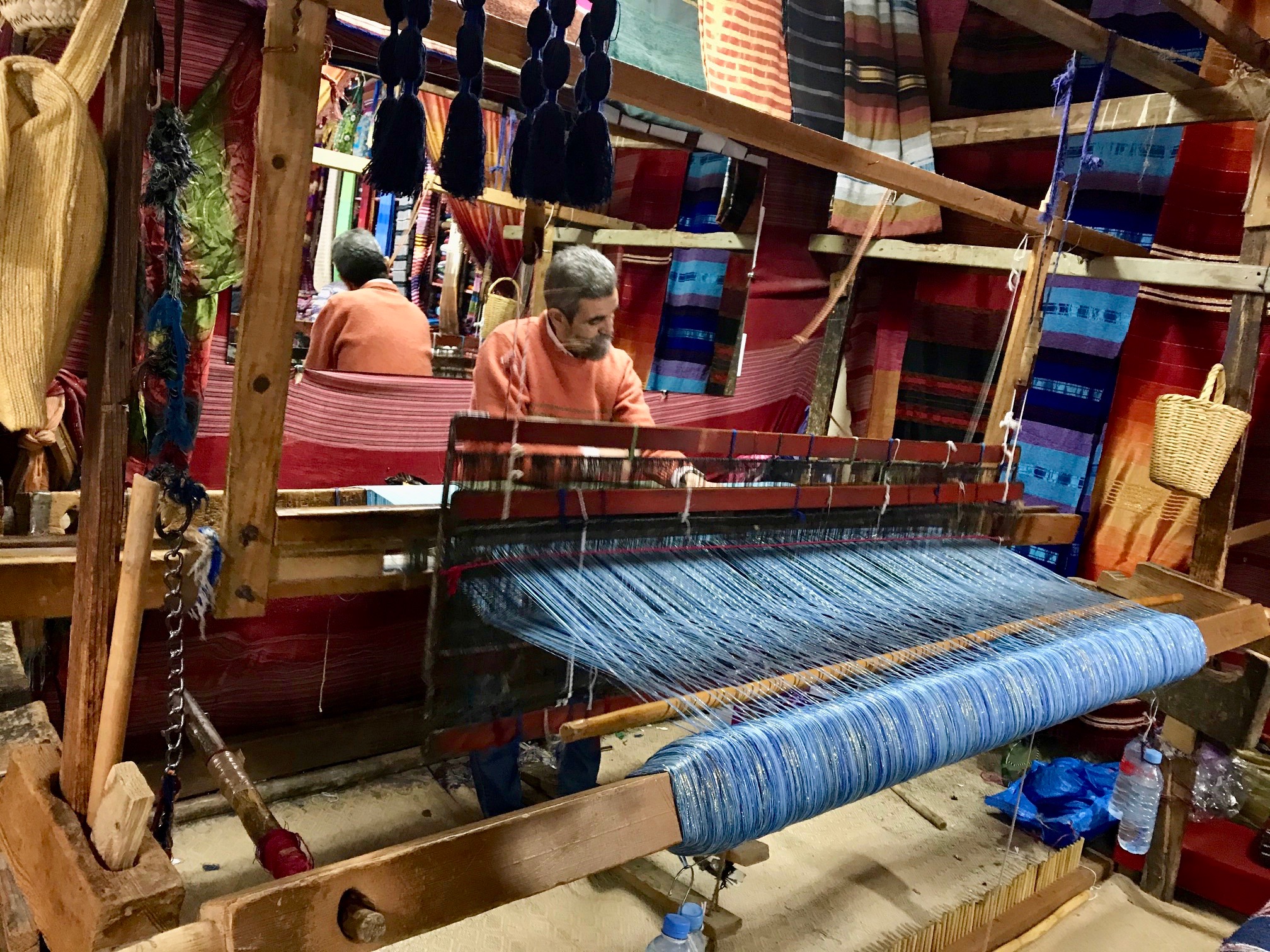
 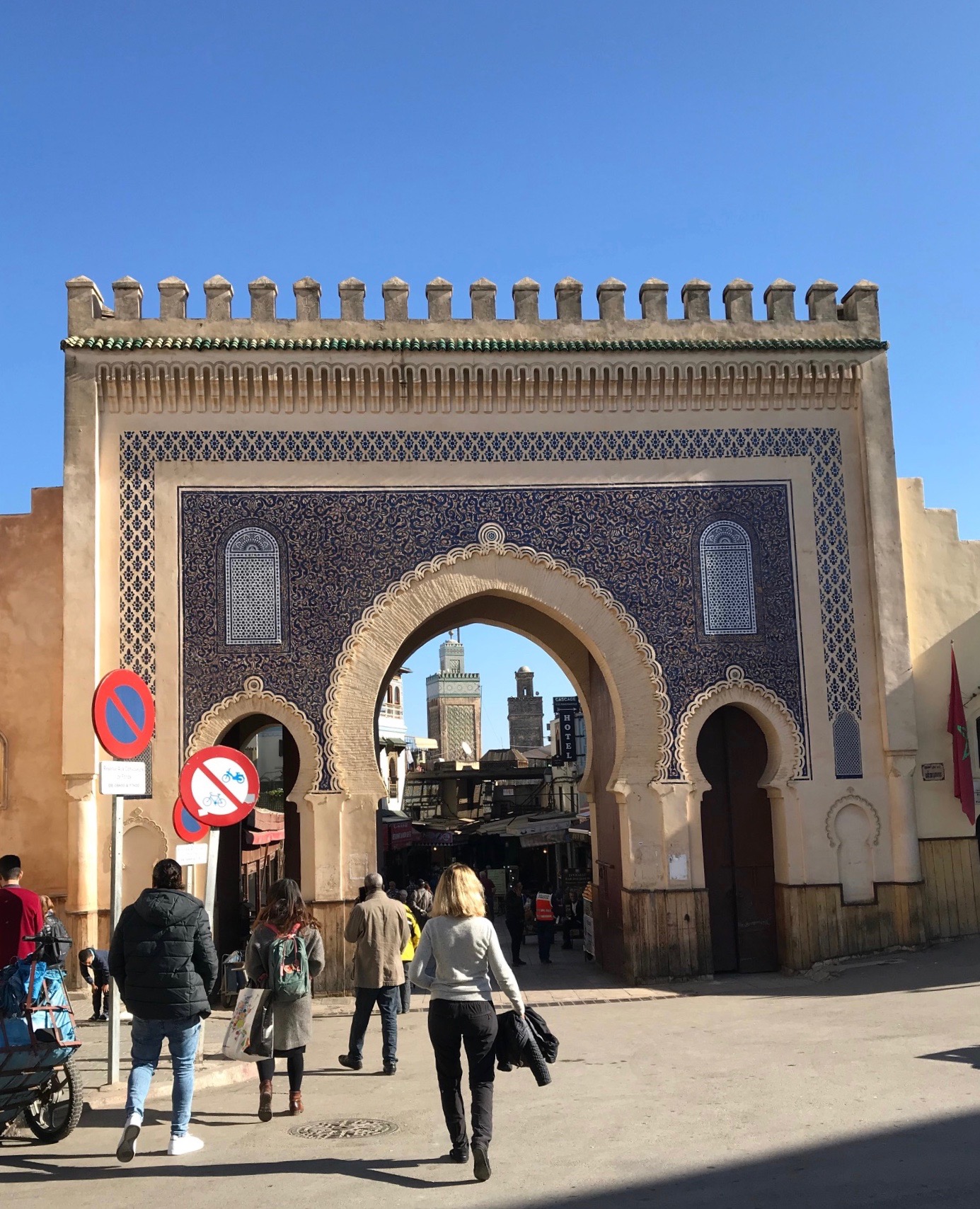 I get totally lost walking down the narrow streets but I noticed there are sections such as the spice street, the meat alley, and the fabric area. The beautiful fabrics are made from natural materials and natural dyes. The red dye in this picture is made with poppy flowers.
 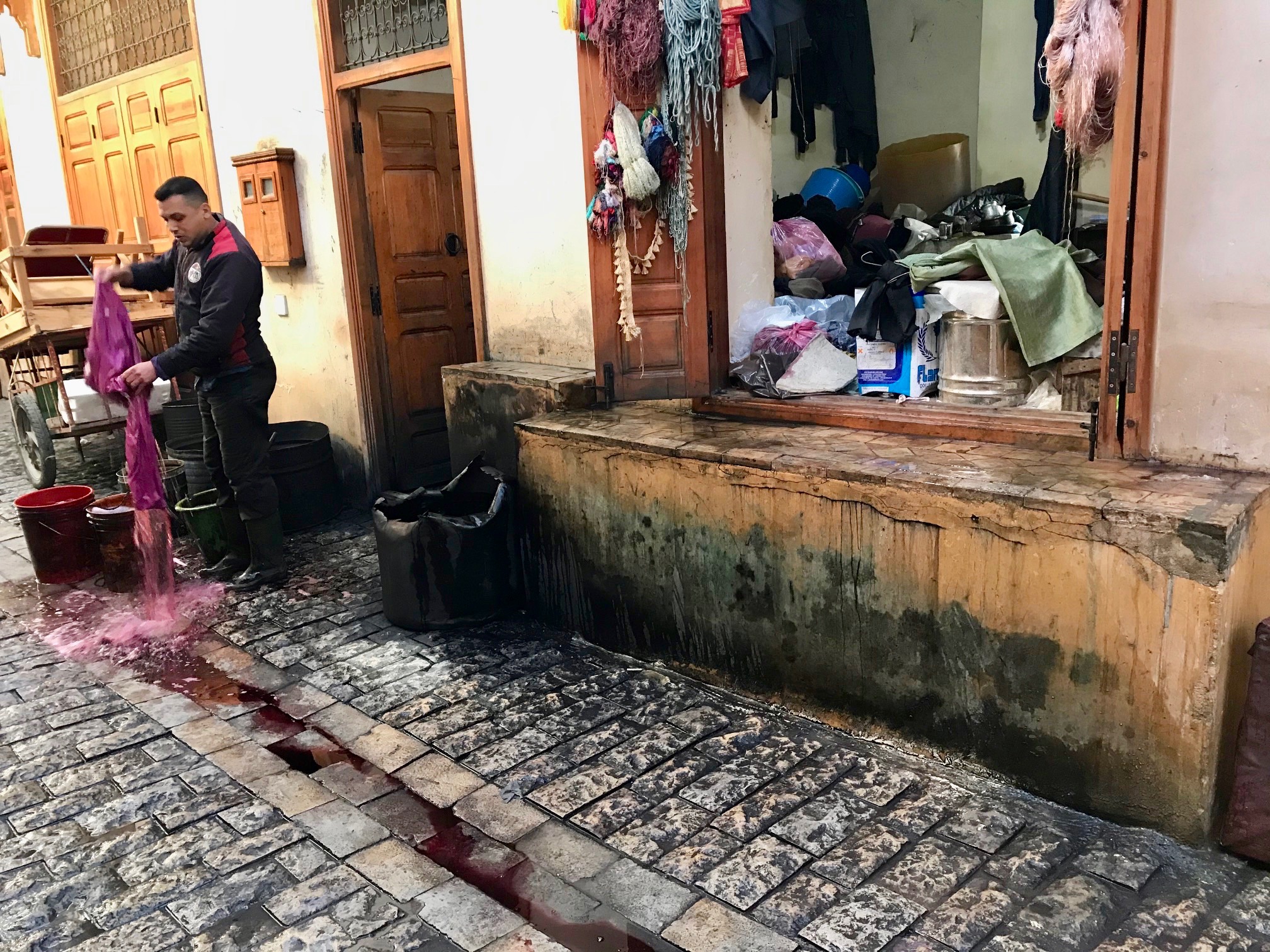 This man is weaving with a combination of wool, cotton and other natural fibers. Perhaps, it’s good that I have just a small backpack. Otherwise, I’d be tempted to buy way too much.
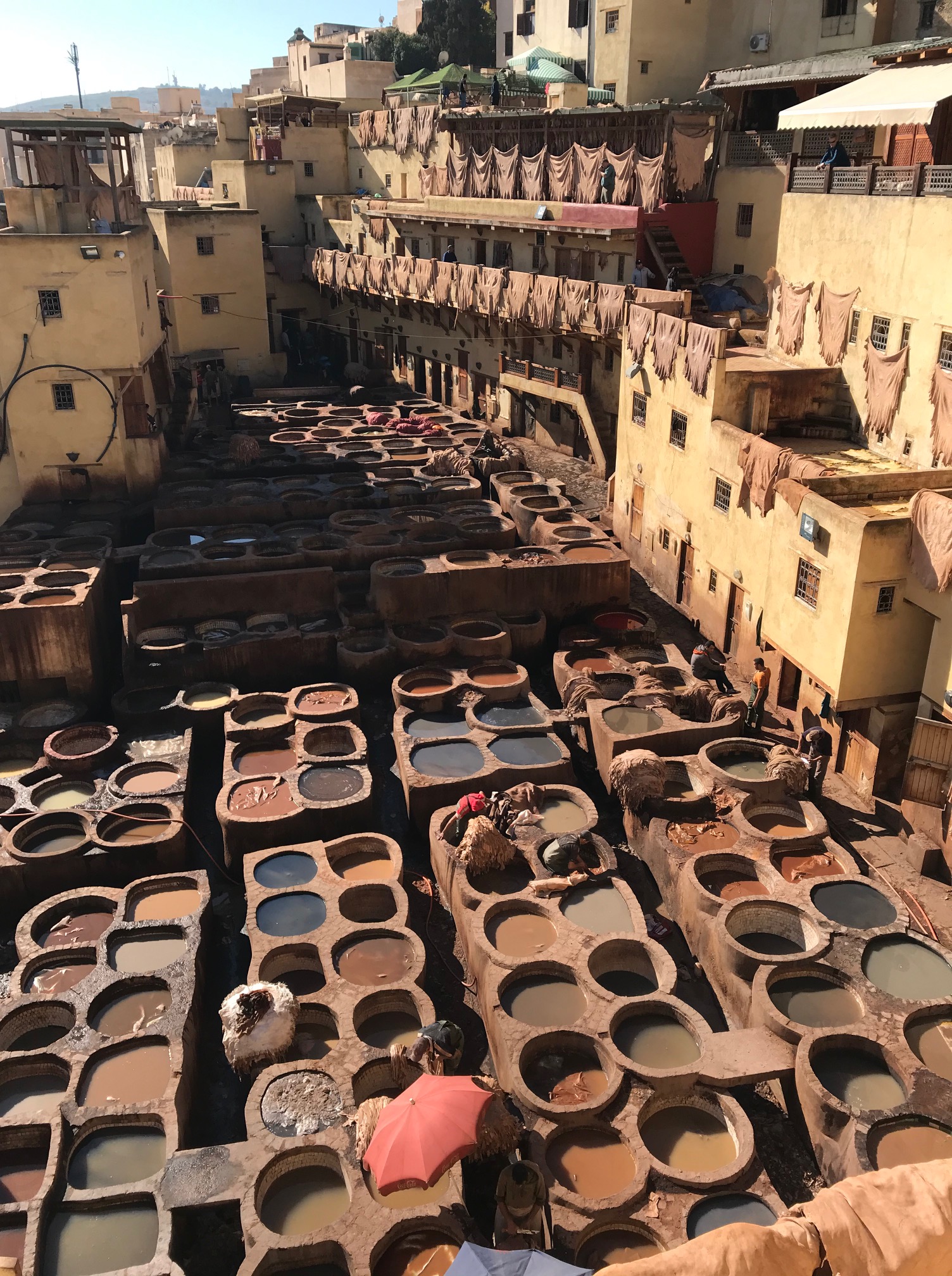
  The tannery is the biggest trade in the Fez souq. I was told there are about a hundred families who have operated it for many generations, passing down the ancient methods and using only natural dyes. The animal skins are from camels, cows, goats and sheep. We held mint leaves to our noses to mask the animal odor. All animals are killed in the halal method of one quick strike with a super-sharp knife to minimize the pain to the animal.
  Every dinner is delicious. The Moroccan spices (cumin, saffron, cayenne, cinnamon, turmeric, ginger, aniseed, and paprika) are so aromatic. Eating a vegetarian diet has not been difficult for me. Daniel enjoys the chicken and lamb.
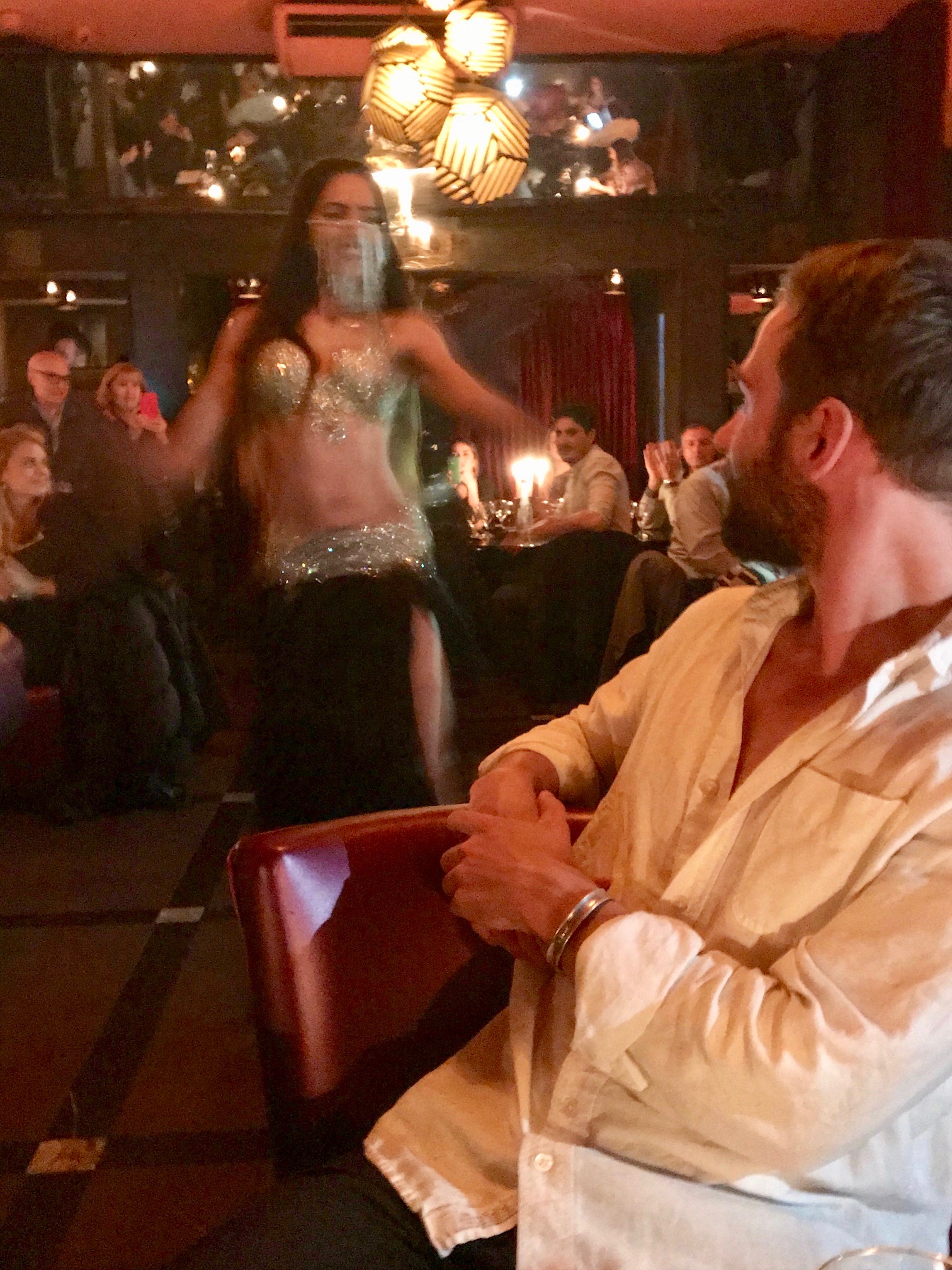
 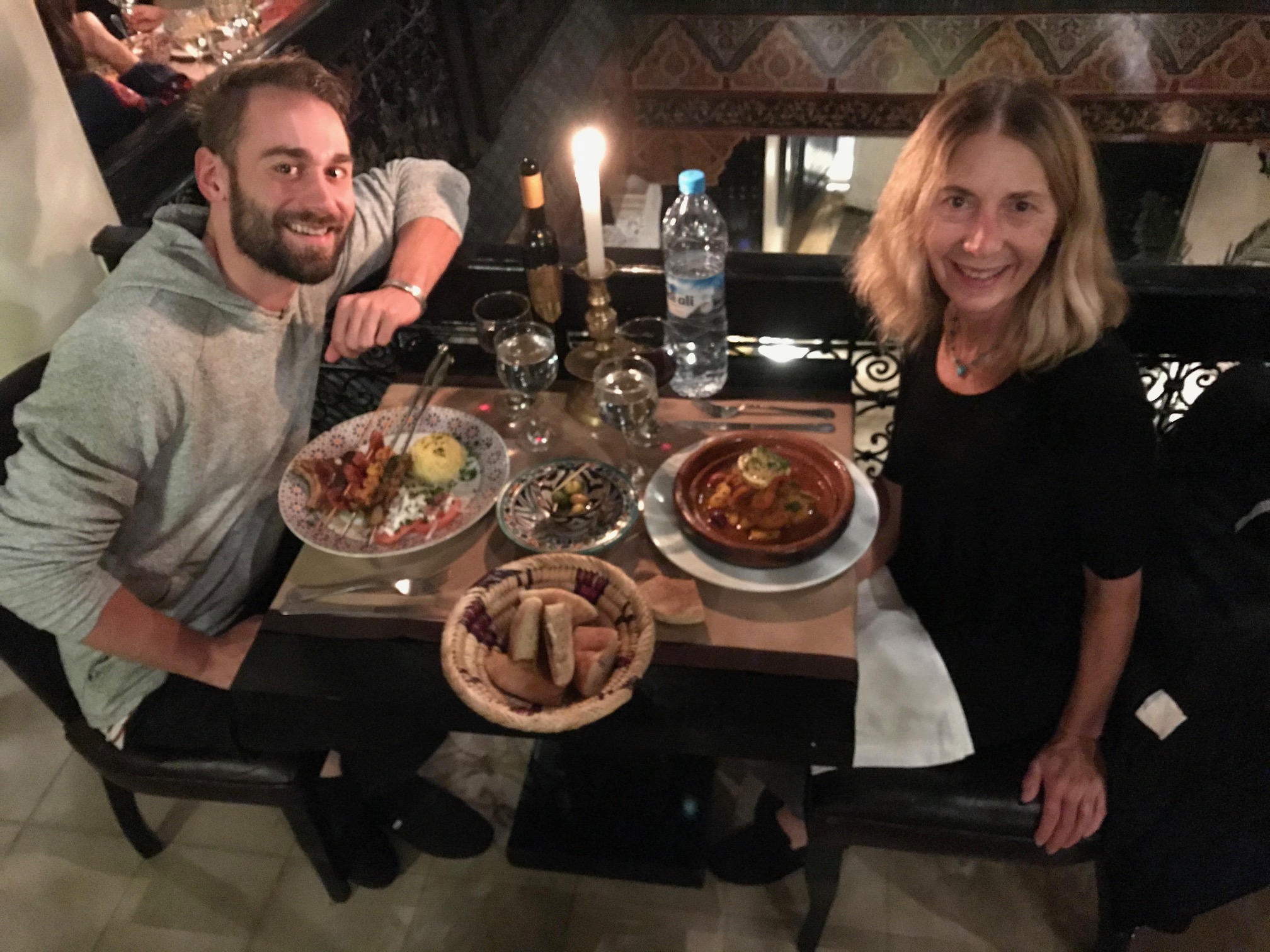 Dinner isn’t served until 7:30 PM or later. Live music and belly dancers generally show up at 10 PM.
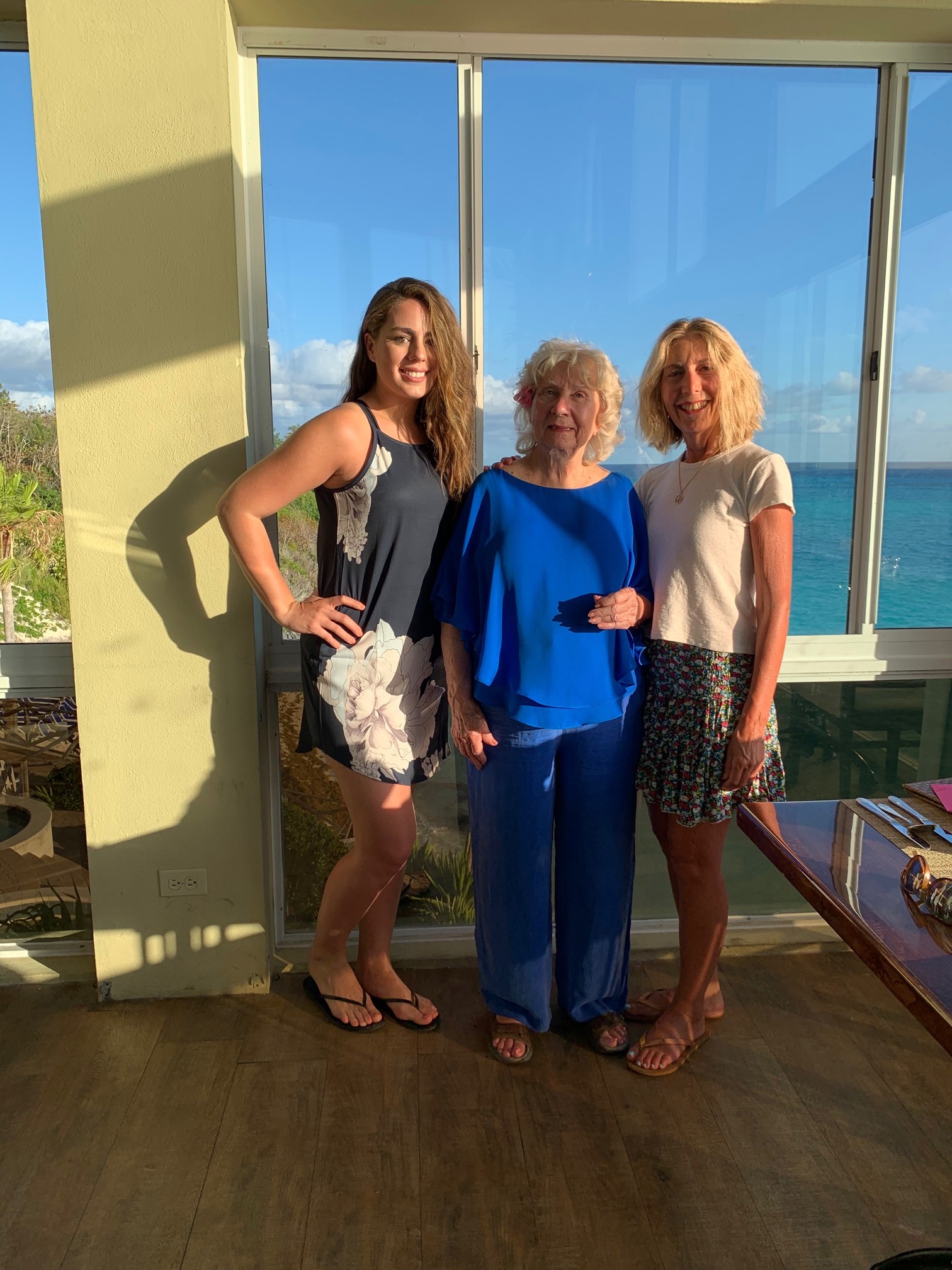 My mother (93), daughter (30) and I booked a Mother’s Day weekend in Bermuda. On approach to landing, my first impression was the many shades of blue – blue skies with puffy, white clouds fading into azure blue waters with white sand beaches.
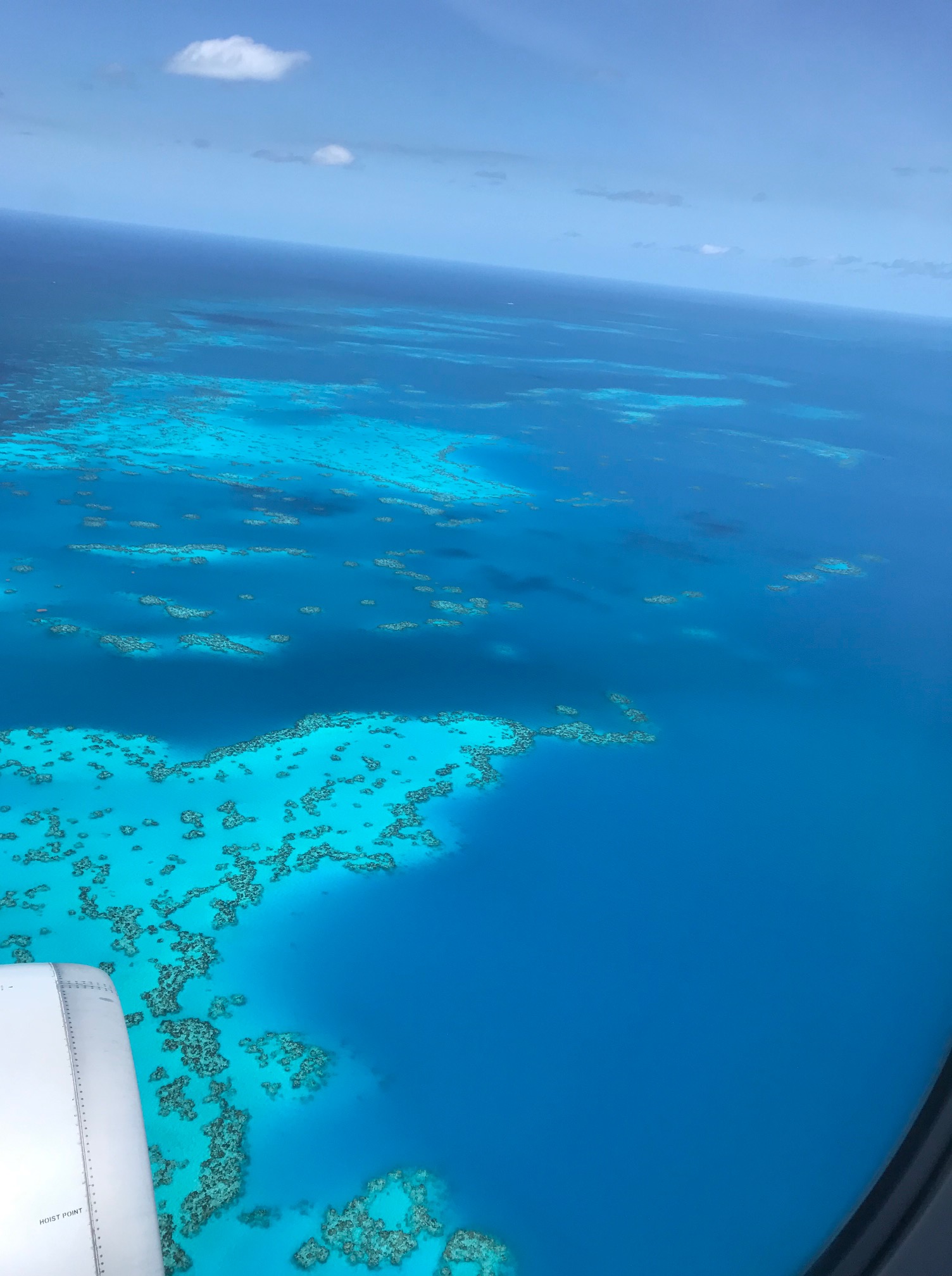 I truly don’t ever remember seeing water so clear and beautiful. The 21-mile long island is still under British rule and it’s a direct reflection of the UK; very different from nearby Caribbean islands. The airport is in St. George and our resort was at the extreme other end of the island. A 40-minute taxi ride at about $50 gave us a good overview of the architecture and landscape. We passed neat, well-maintained, pastel-colored homes and commercial buildings. Even the gardens had a British feel to them. There’s no question that this is a desirable location for wealthy people. It’s just a two-hour flight from NYC. We were told that Michael Douglas has a home here (his mother was a native of Bermuda) and former-NYC Mayor Bloomberg also has a home here. Our taxi driver told us it’s illegal to take pictures of others, whether famous or not, since it’s considered rude. Papparazzi are not allowed.
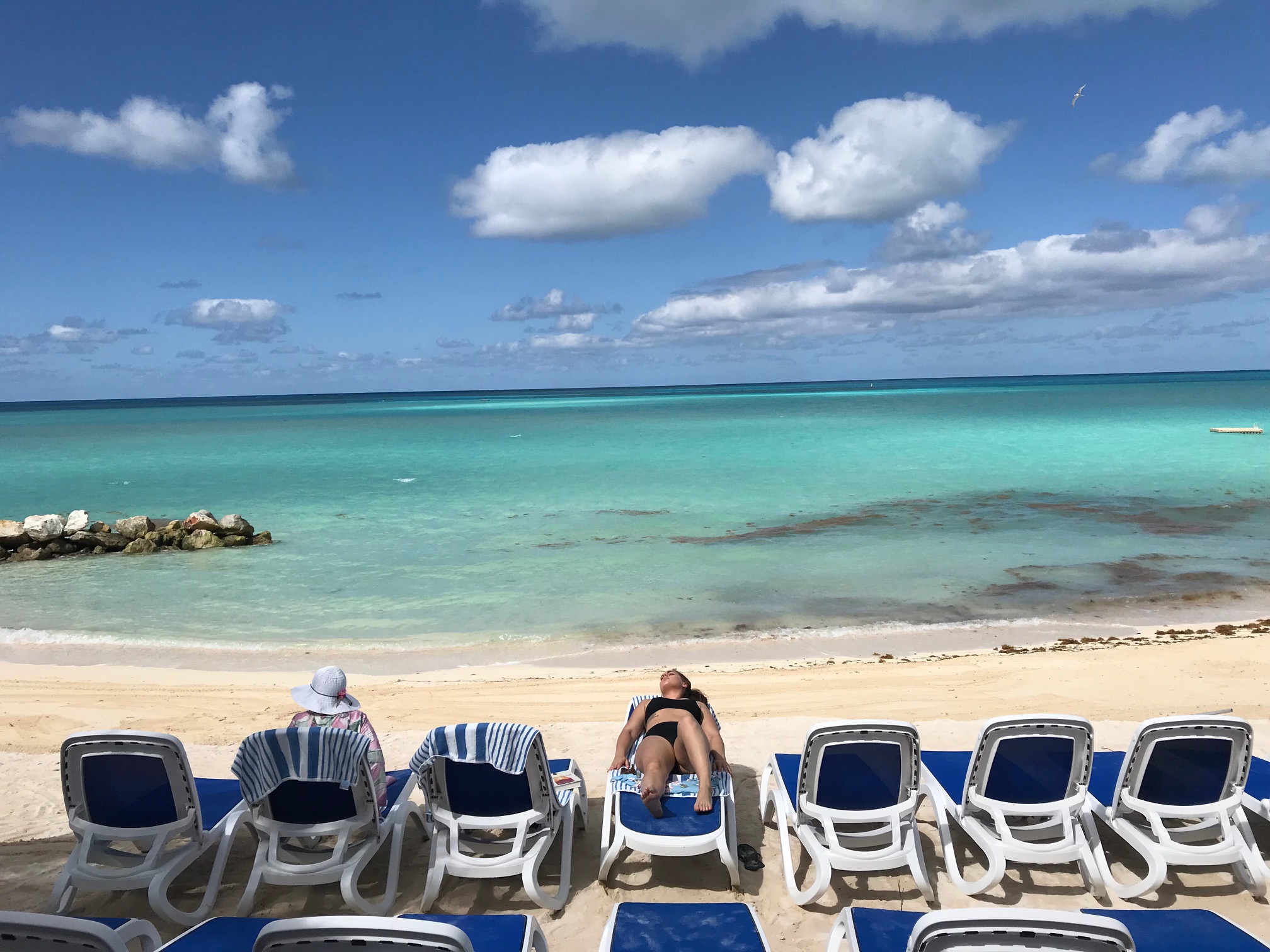 Meals were uniformly tasty, fresh, and pricey. Fresh fish, lobster and other seafood were prevalent. Birds flew in and out of the 30 ft tall restaurant and each evening we had a majestic view of the sunset. I was completely shocked one evening when, at the moment the sun disappeared below the horizon, I saw a green flash! Seriously! It was a shade darker than lime green and was explosive like fireworks.
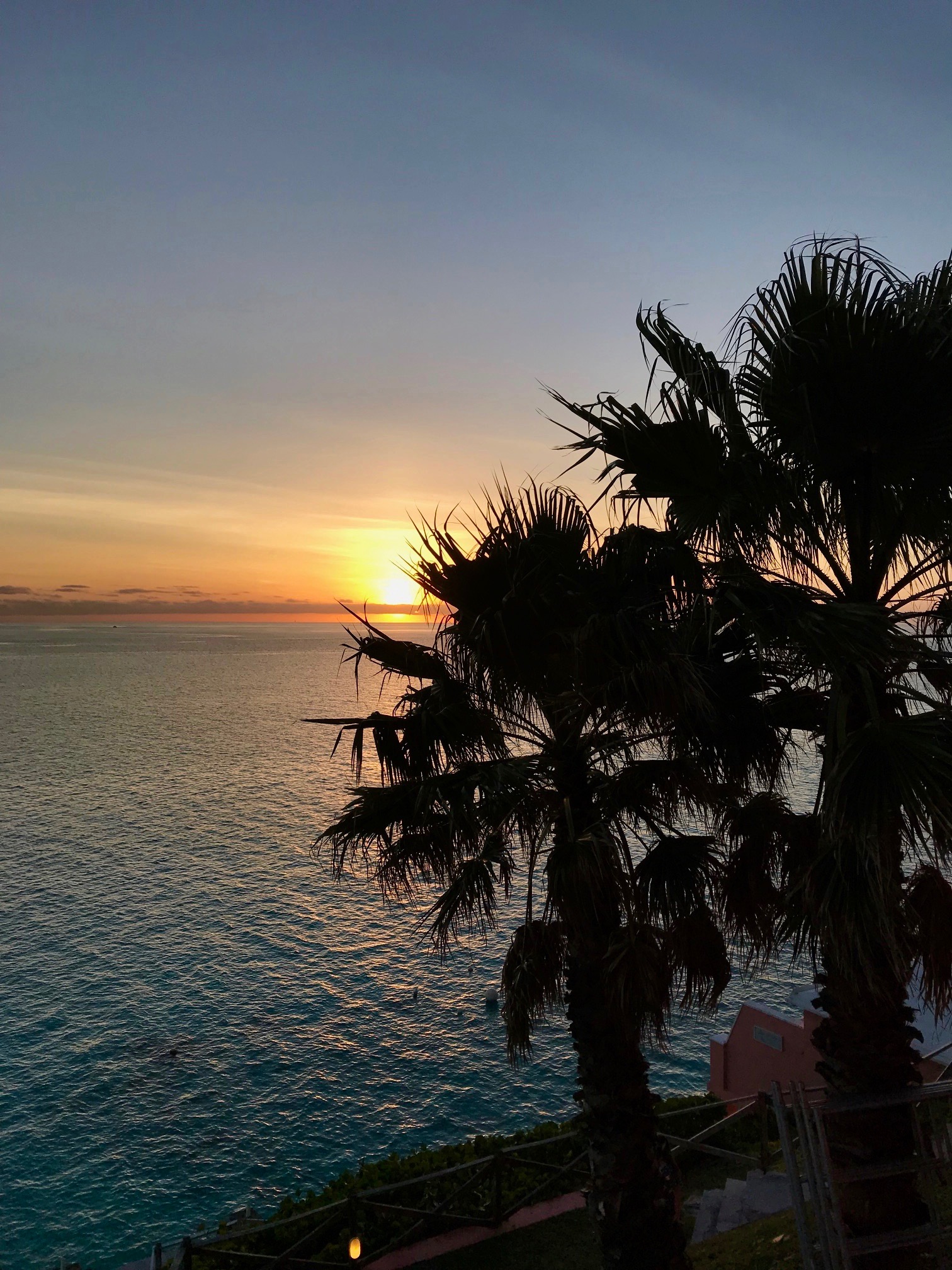 Never out of view of the ocean, every morning began with an excellent breakfast served by friendly staff. In fact, everyone we met on the island had such a positive, welcoming attitude. Either the locals understand the importance of tourism on their economy or they just have extremely nice personalities; perhaps, both.
 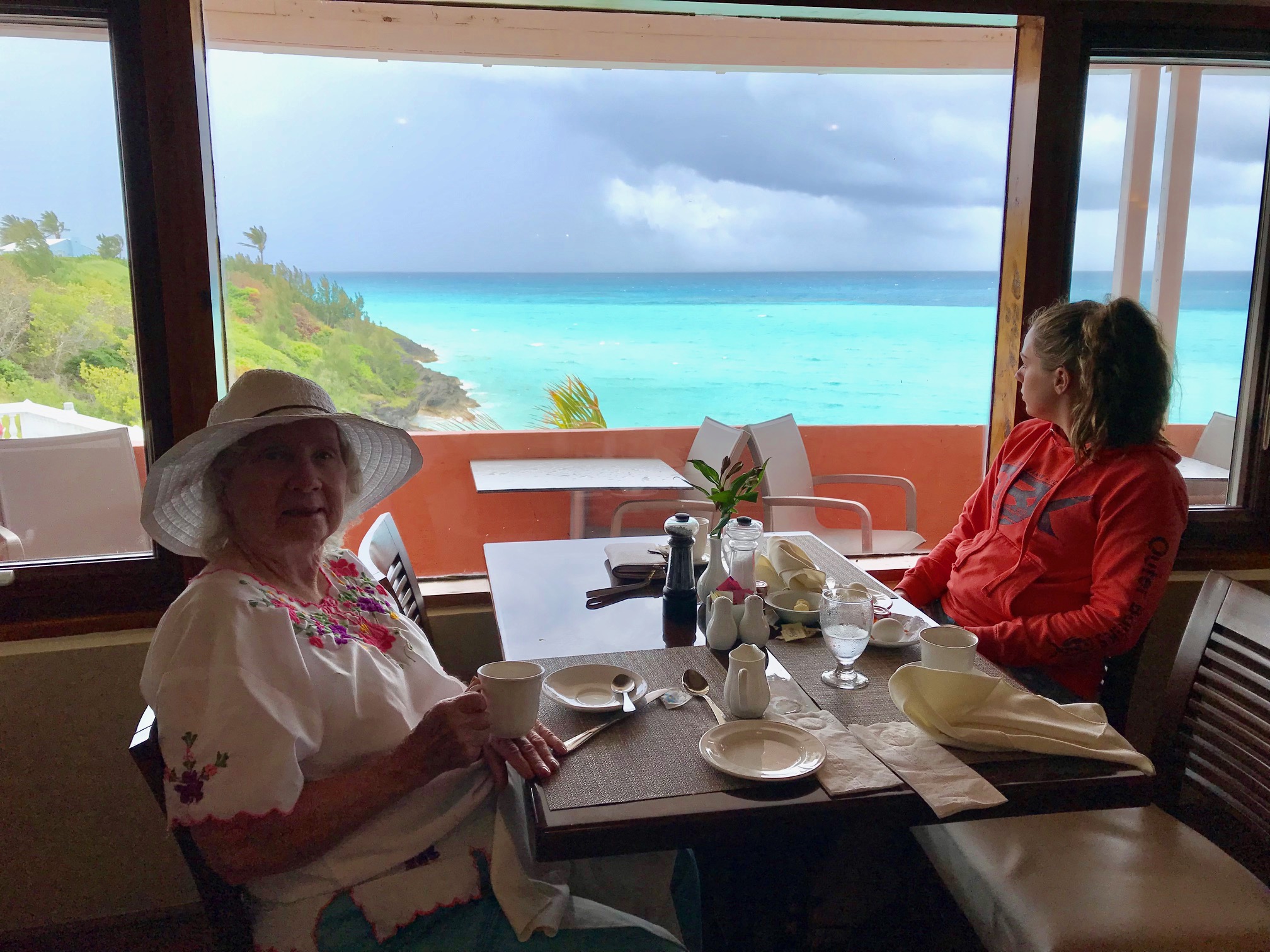 The beach, sunshine, relaxation, and shared time were our main interests but we took advantage of the one rainy day to ride the local bus to Hamilton (about $4 per person). Front Street was lined with cafes and small shops selling vacation attire, souvenirs, and Cuban cigars.
 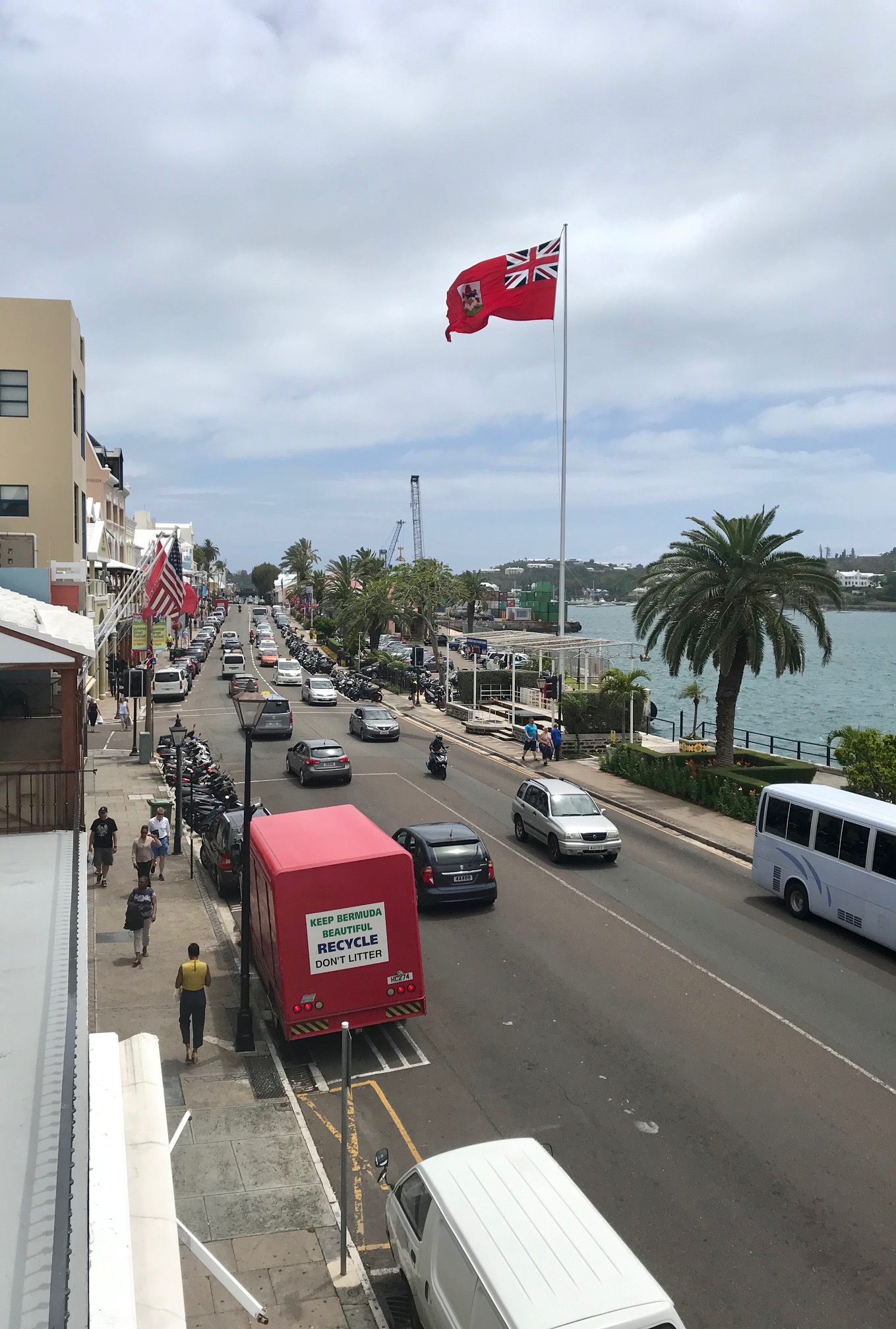 Nothing’s cheap. It seemed like most things cost double or triple what they would at home. Shopping is easy because the American dollar is accepted as equal, dollar for dollar, to the Bermudian currency. And, of course, English is the native language.
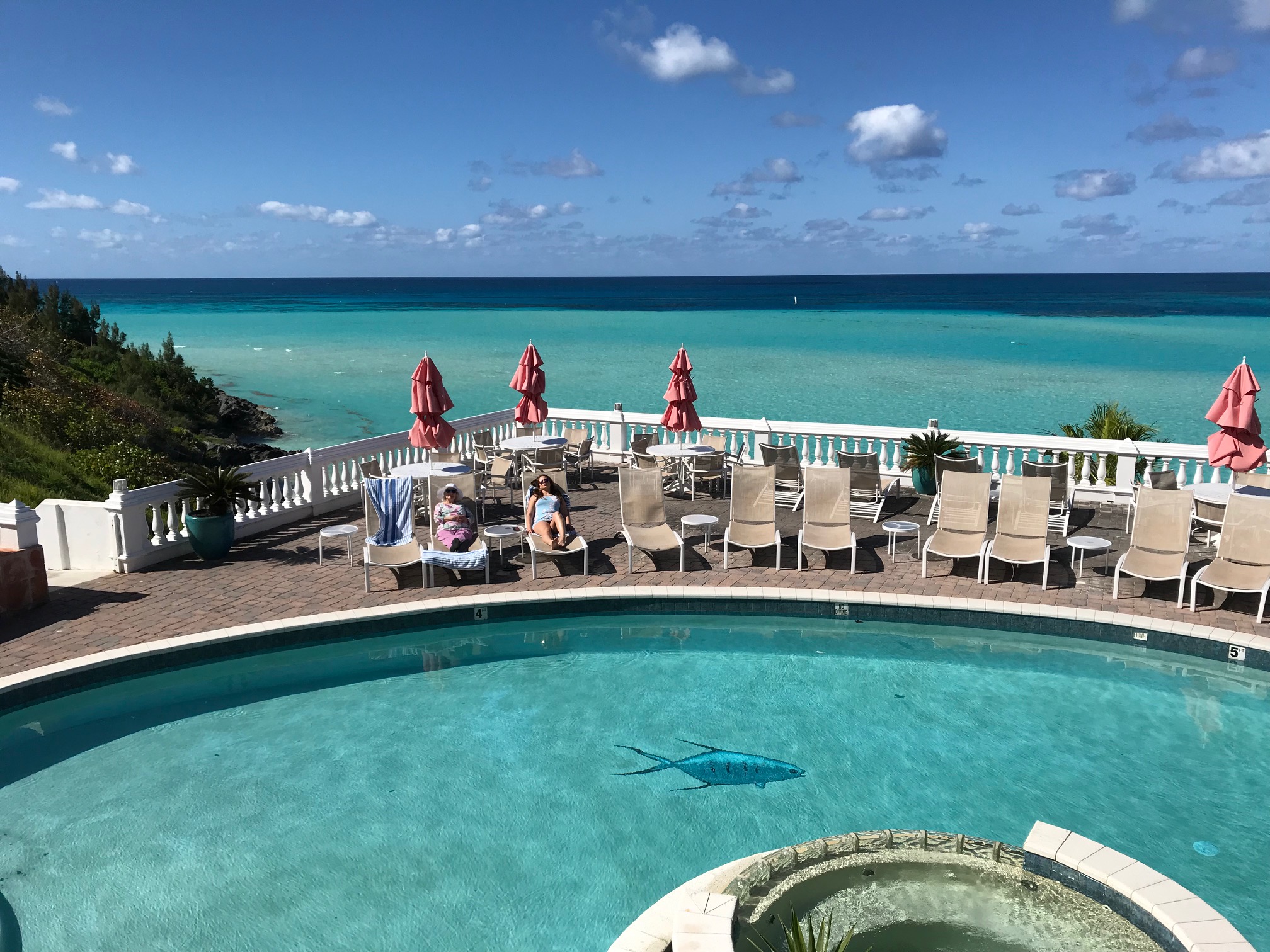 We noticed that there were a lot of pregnant women among the tourists. Apparently, this is a top spot for a “babymoon” because it has no Zika virus scare from germ-carrying mosquitos. Everyone with whom we spoke was a repeat visitor with many people saying they’ve been coming once a year for decades. Golfing seems to be one of the big attractions. Supposedly, Tiger Woods played at the PGA golf course next to our resort.
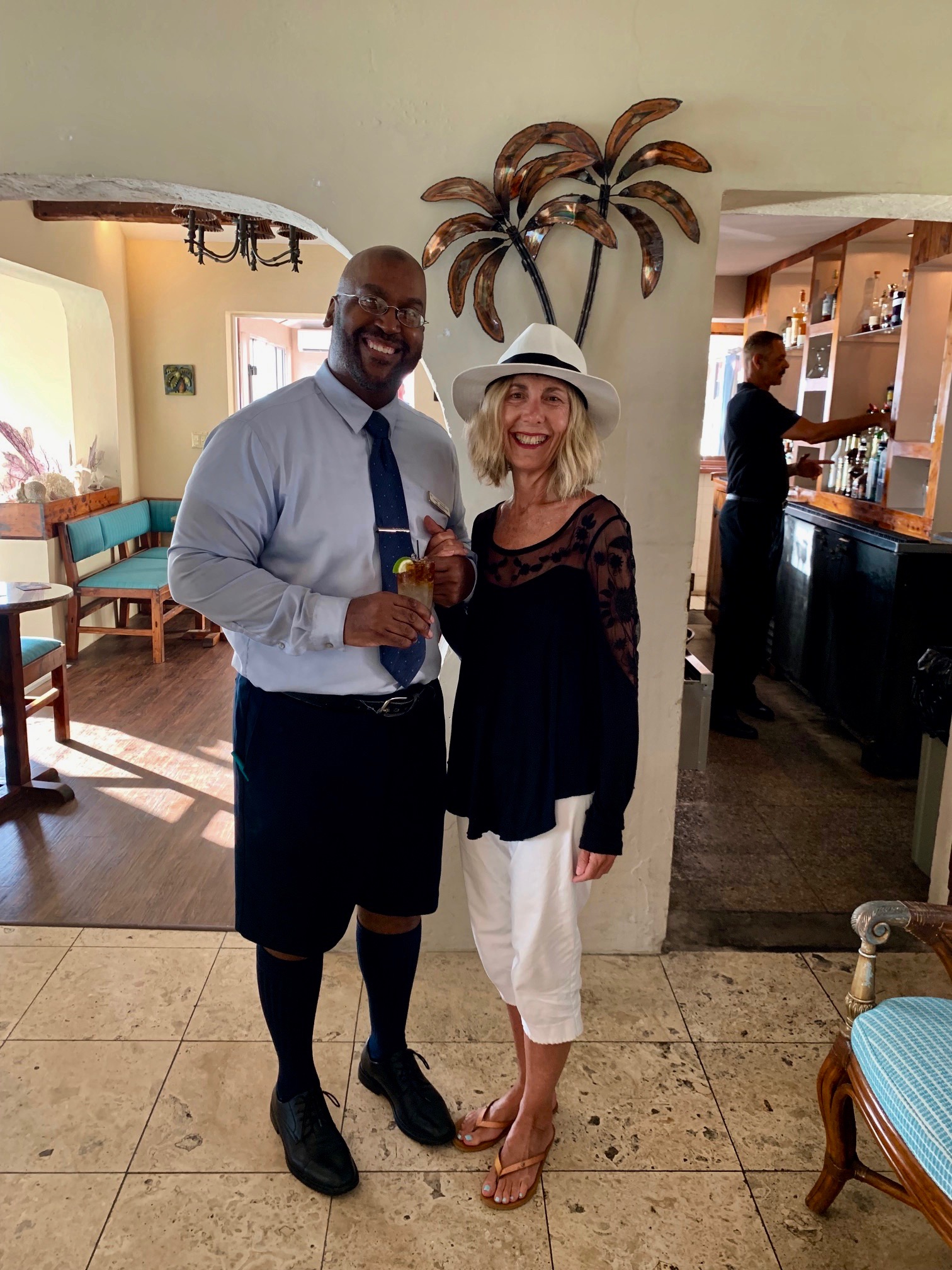 Alas, all good things must come to an end. I won’t soon forget how easily and quickly I can be on the beaches of Bermuda complete with the crystal blue water, white sand, and magical sunsets.
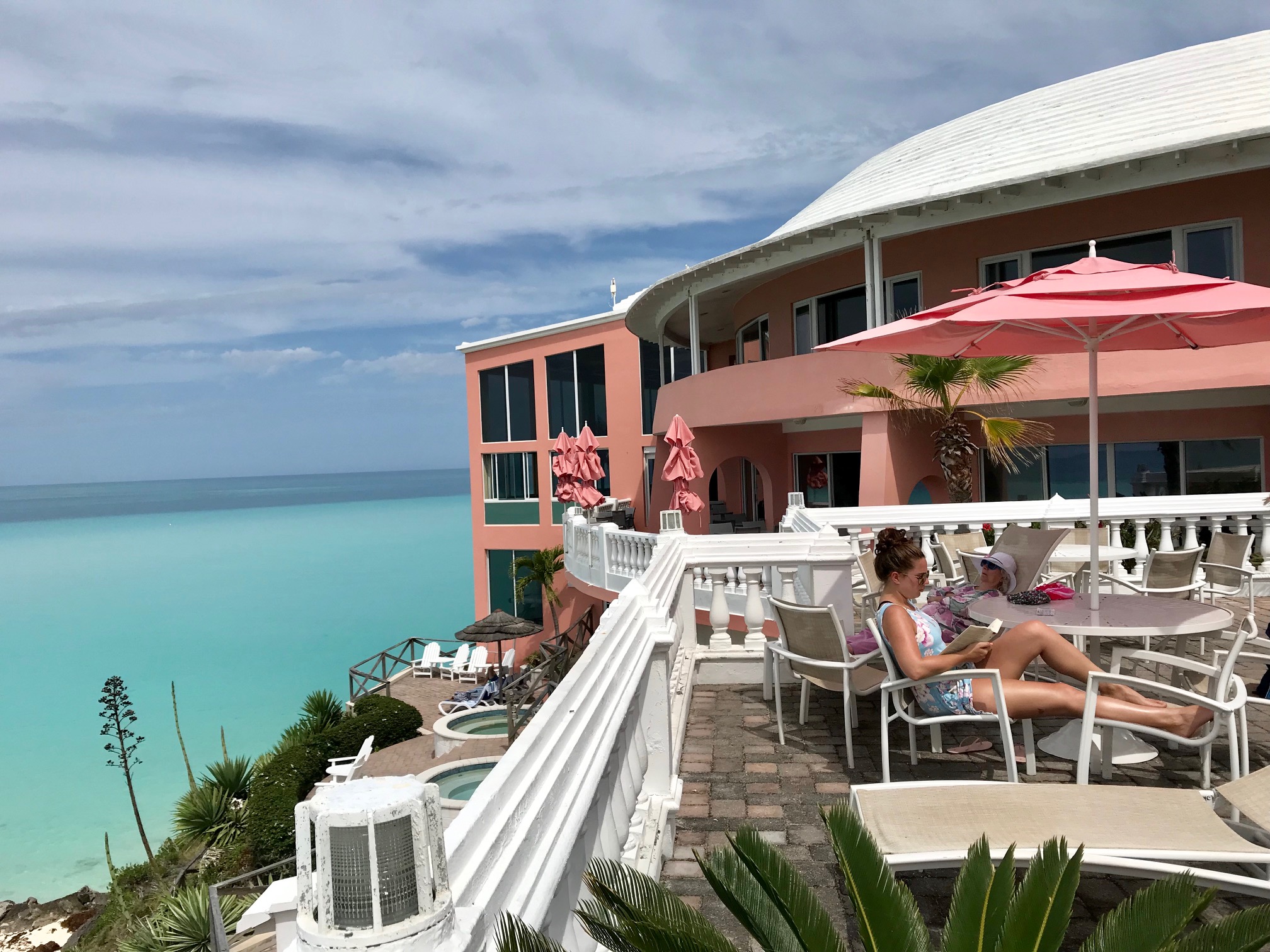 The weekend was marked with beauty–beautiful water, weather, people, and my beautiful mother and daughter.
 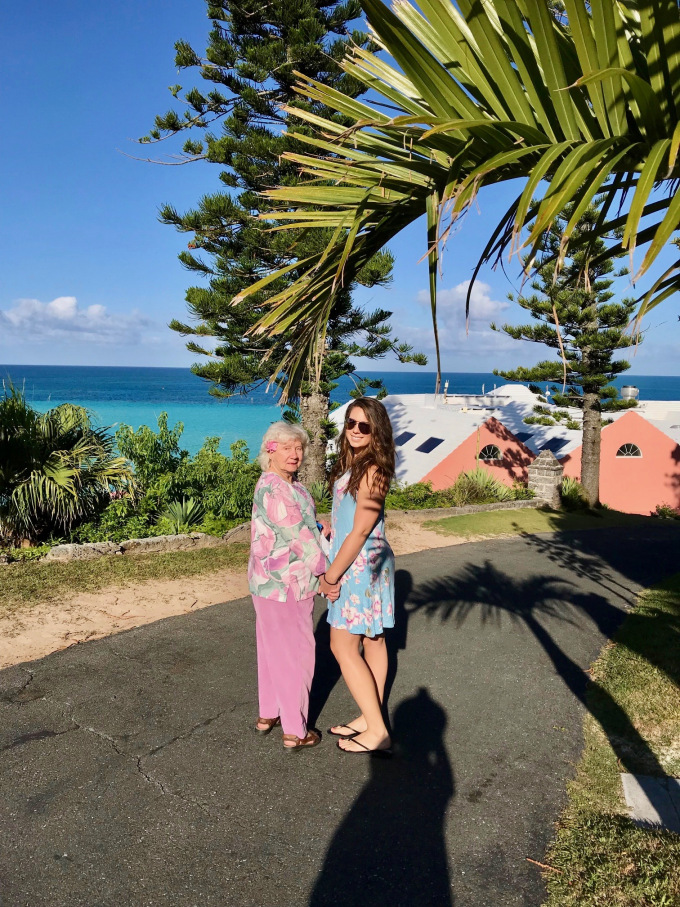 “All that I am, or hope to be, I owe to my angel mother.” Abraham Lincoln
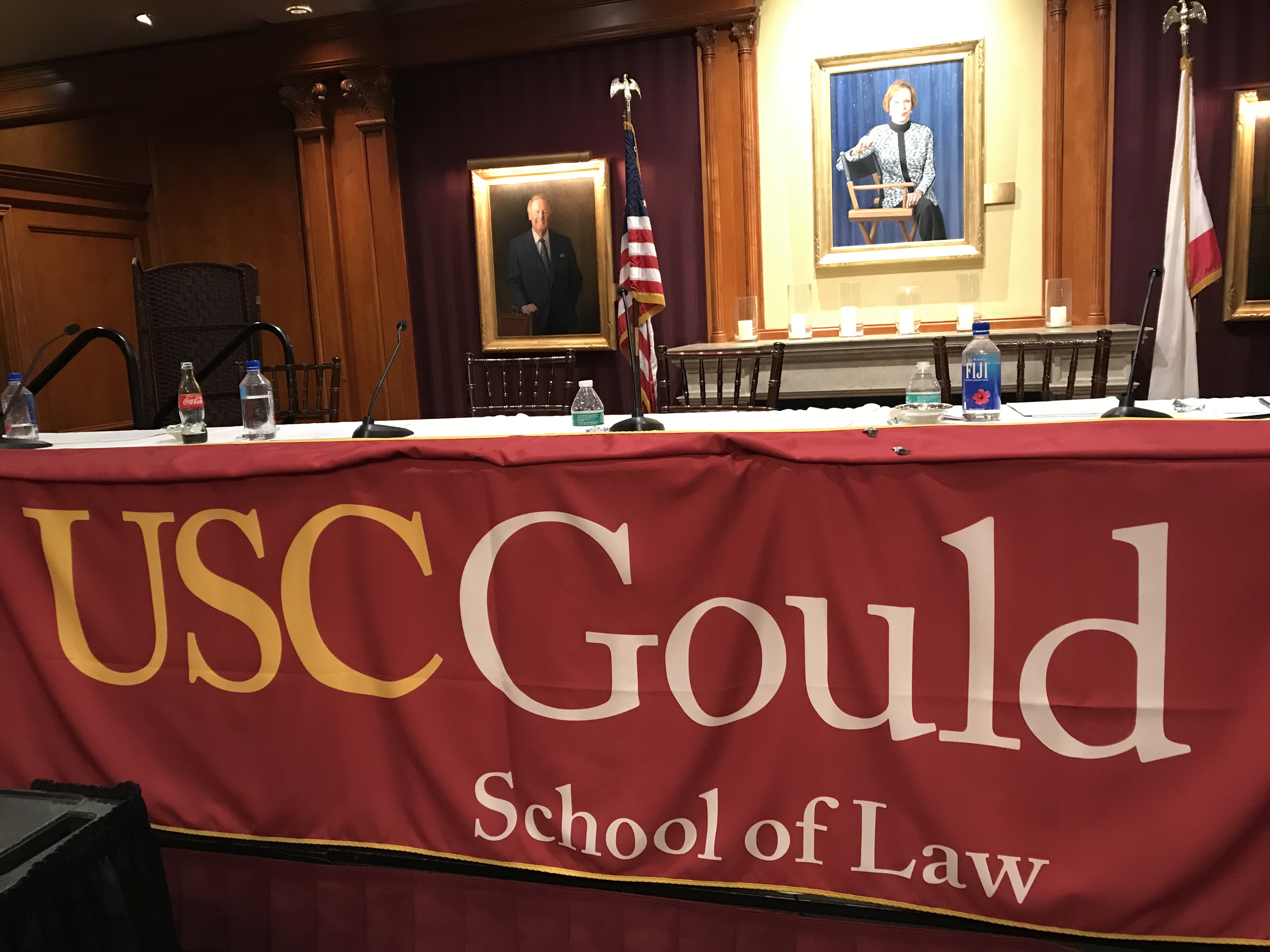 I was honored to accept an invitation to attend the University of Southern California (USC) Annual Real Estate Law and Business Forum as a guest of the USC Gould School of Law. My thought was to take in the conference and get ideas for the VA State Bar (VSB) annual real estate conferences. A side benefit was to meet the author of the text I use when teaching Real Estate Transactions at Regent University Law School. Happily, I experienced all of this and more.
 Rick Caruso, billionaire, Chair of the USC Board of Trustees, Pepperdine Law alumus, and CEO/founder of Caruso, an American real estate development company, was the keynote speaker.
 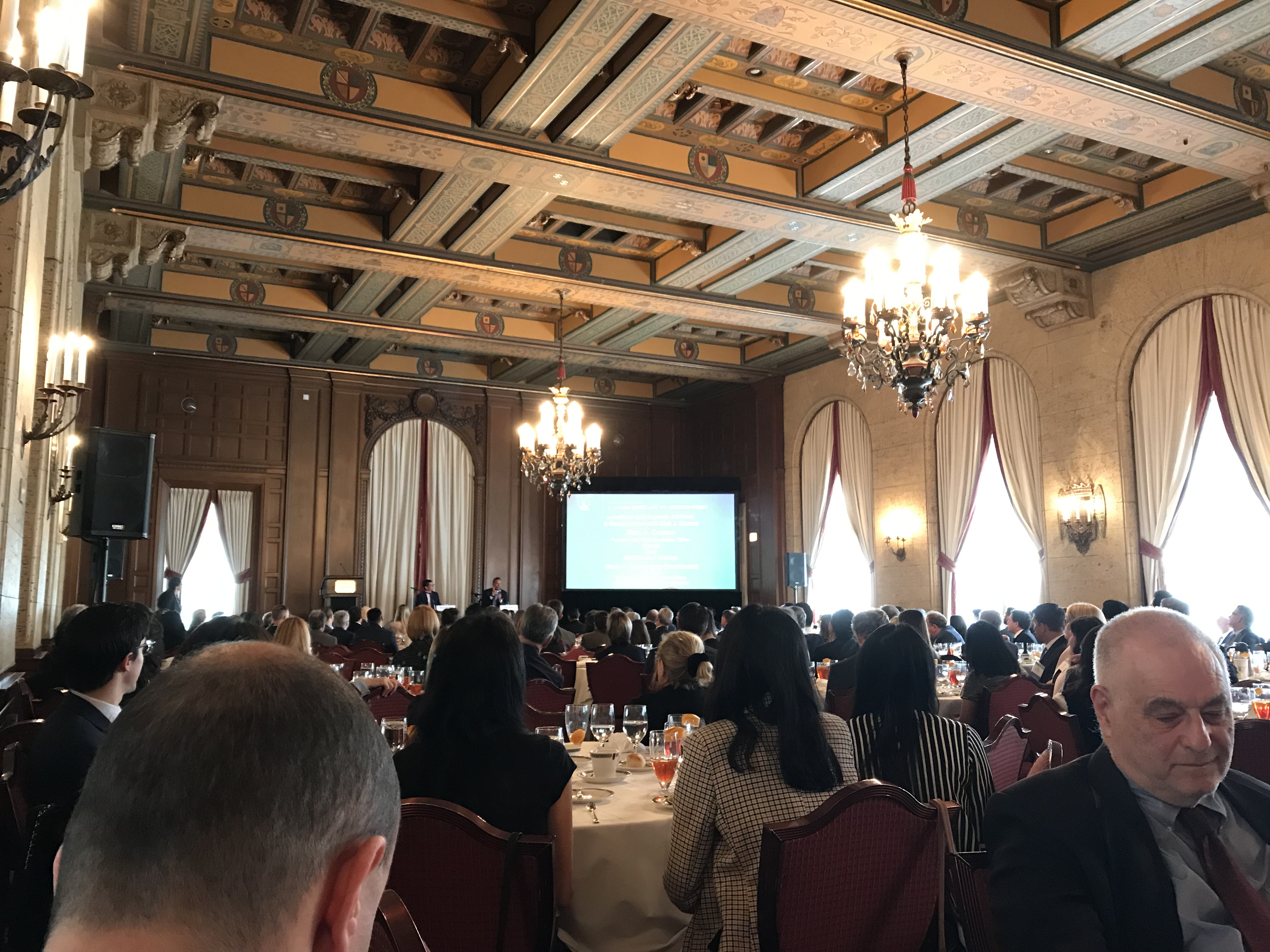 Listening to him talk about his experiences in mixed-use developments was fascinating. He highlighted the economic and aesthetic value of green space, trends in retail rentals, and trends in transportation that affect parking requirements. Some of the other important speakers addressed cannabis law sections, pro bono practice, 55+ housing trends, and commercially viable housing in high-dollar areas such as New York City. Virginia is well behind the curve in most of these areas but Northern Virginia is leading our state with the new Amazon complex. A fun fact is that the building plans had to be modified to remove all escalators because they aren’t dog-friendly.
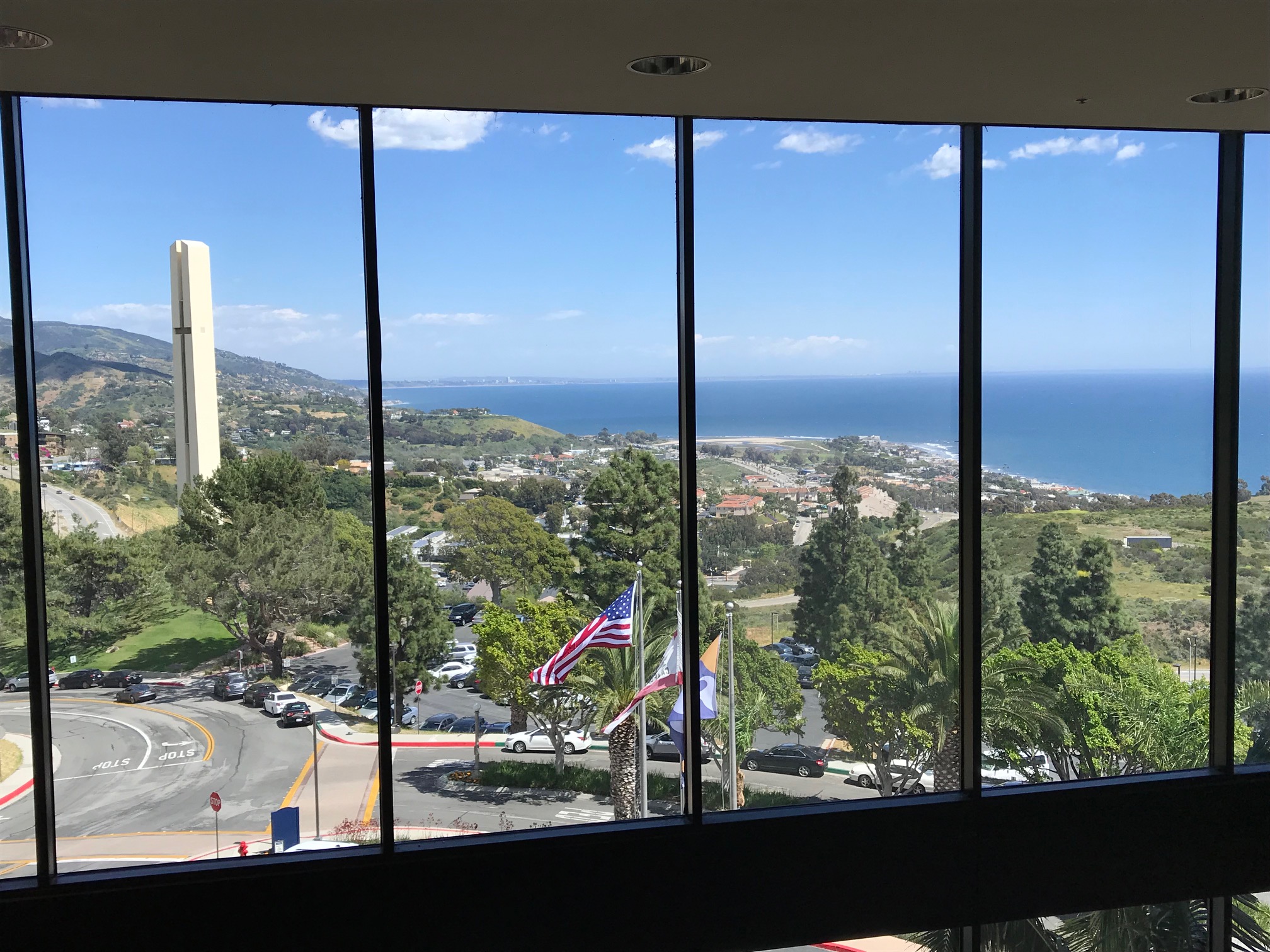 All along our drive, the hills were full of brightly-colored wildflowers!
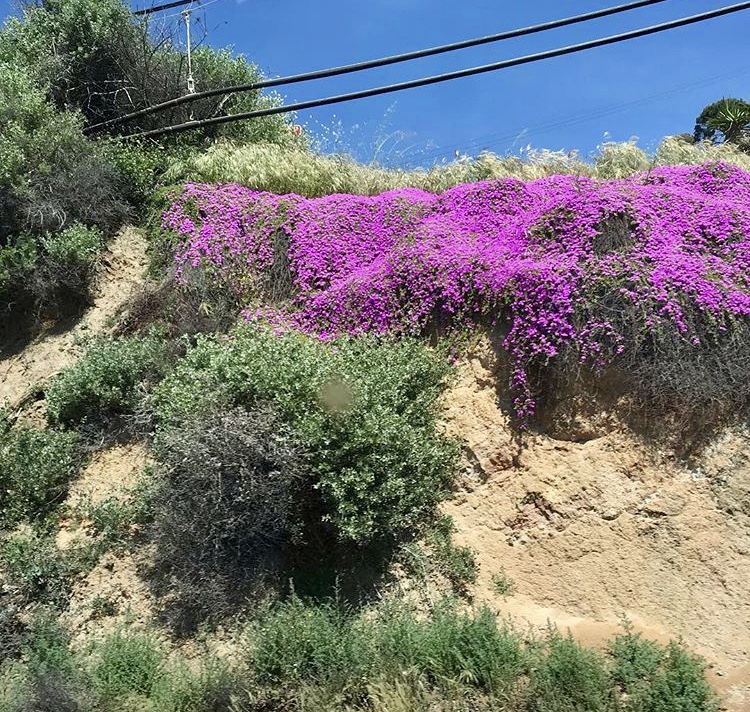 I’m told they’re extra-abundant this year due to the wildfires that scorched the earth a few months earlier.
 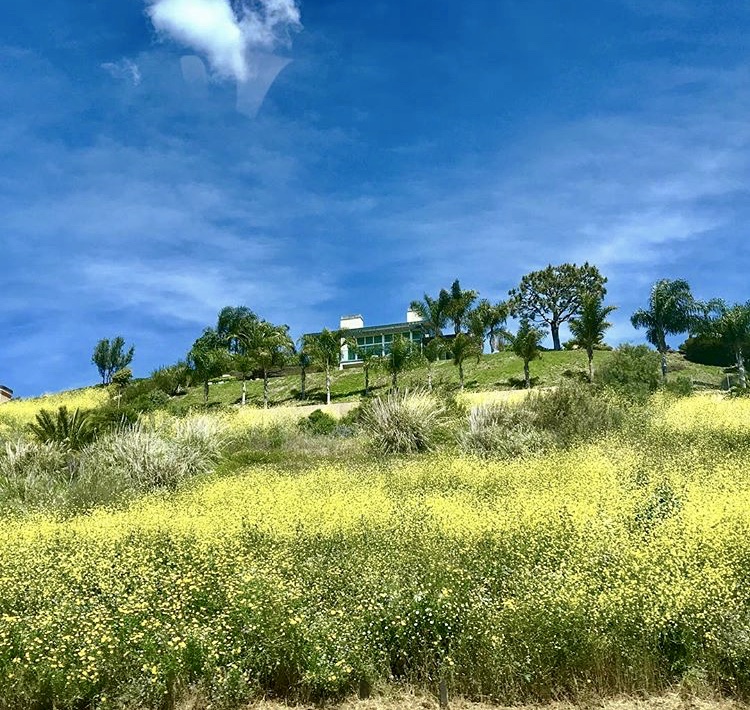 Next stop, Santa Barbara! No surprise, but Santa Barbara is a very stylish city with the ocean on the West and mountains in the East.
 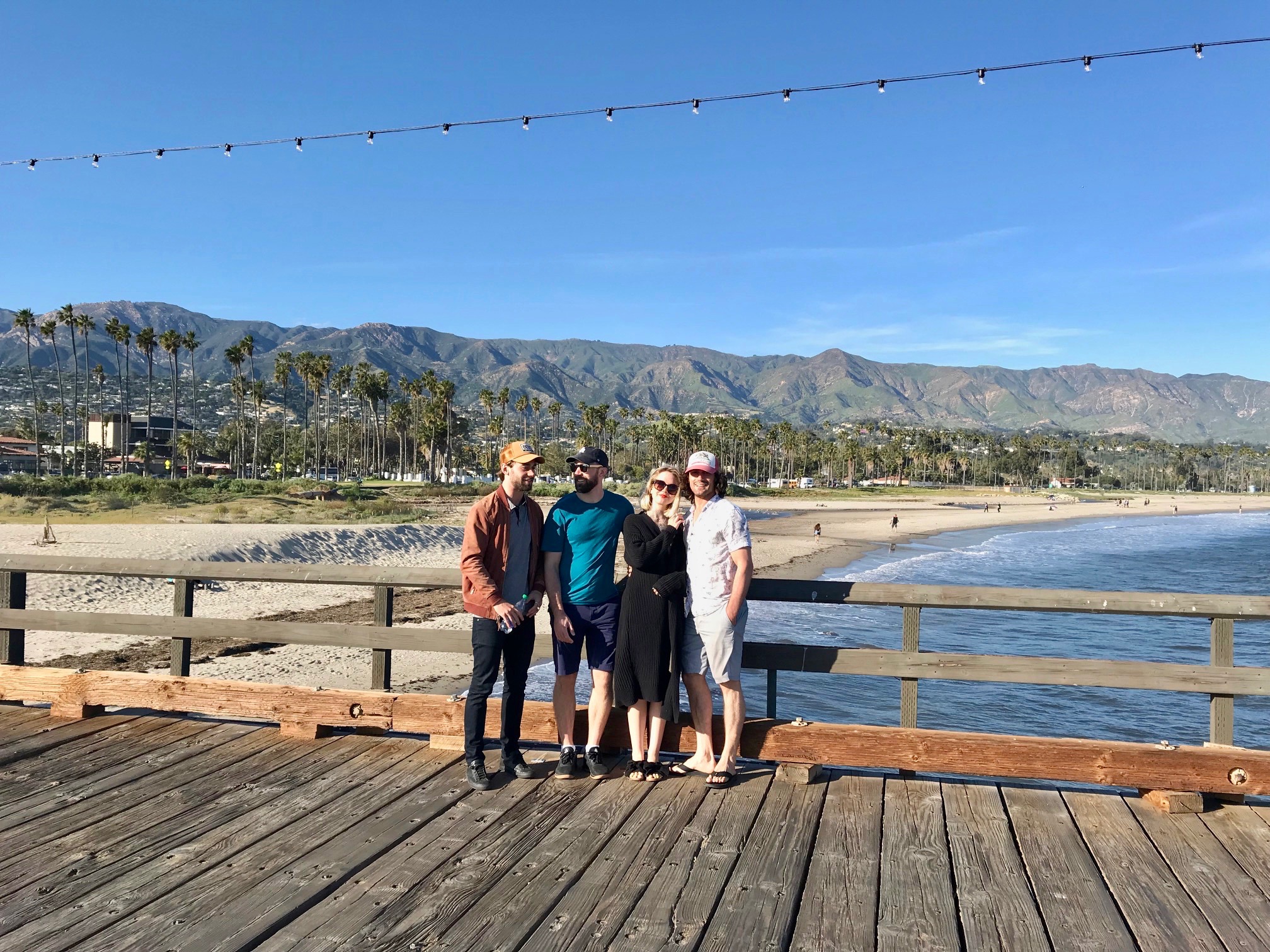 Honestly, it looks the way I expect a California town to look — full of beauty and money with lots of excellent restaurants and chic boutiques. Santa Barbara appears to be the home of the beautiful people, much more than Los Angeles with its pollution, congestion, and homelessness.
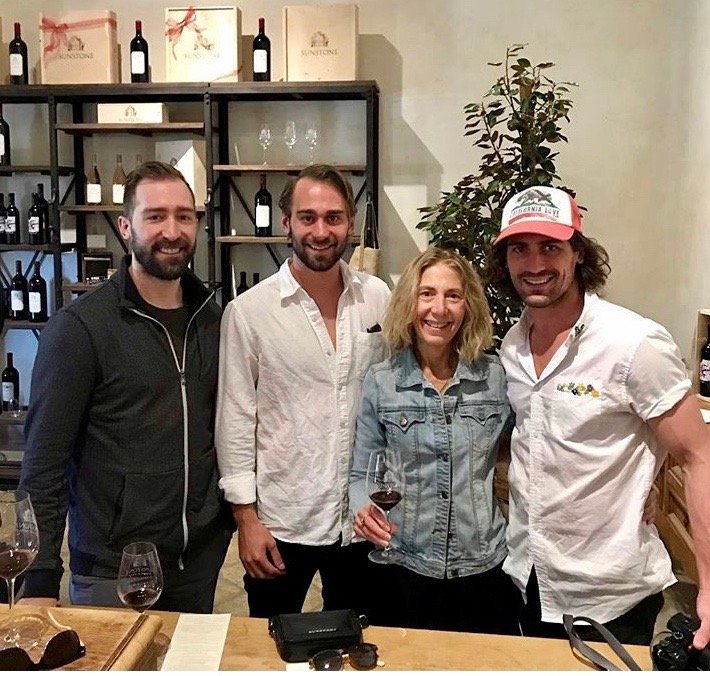
 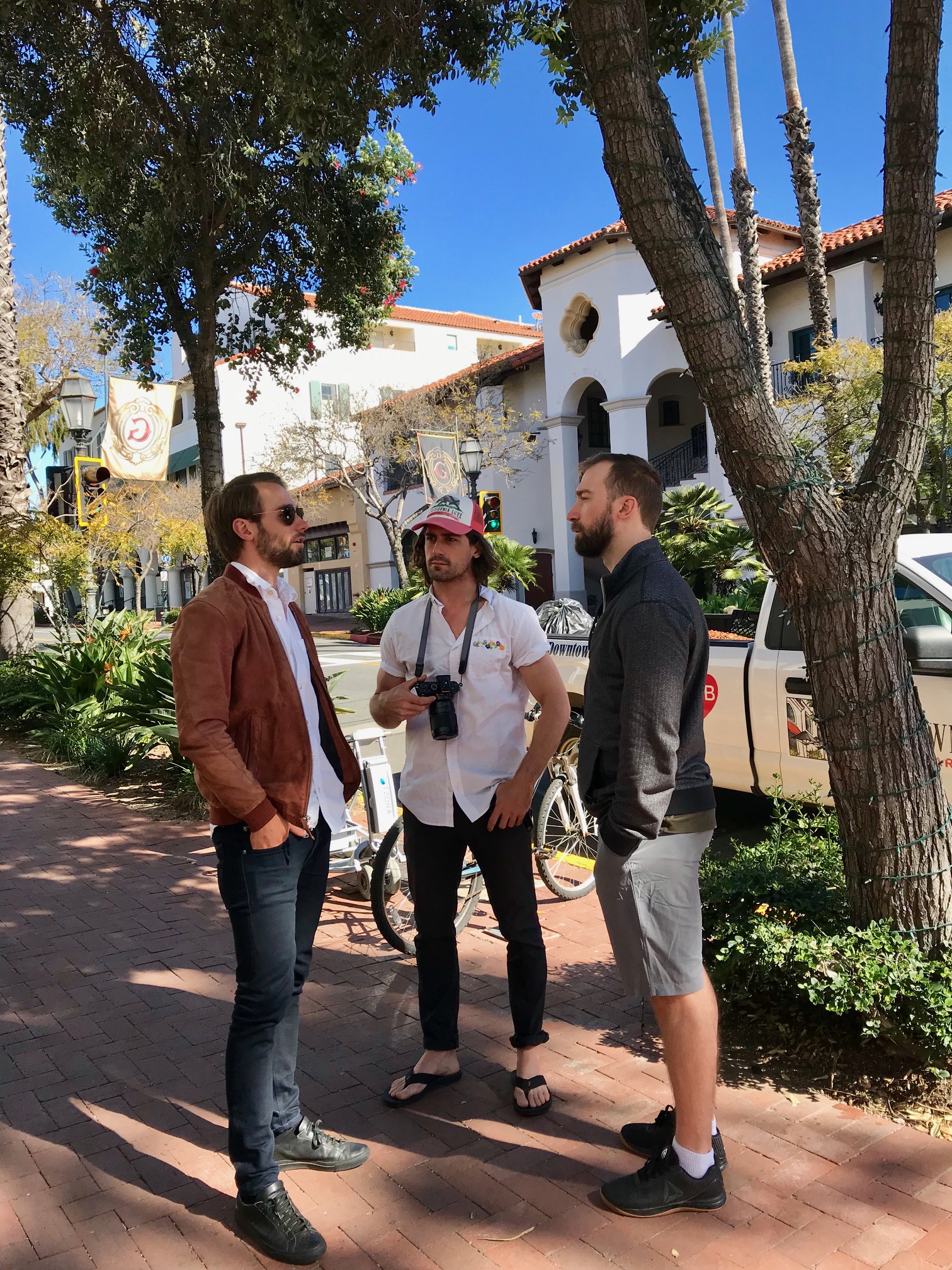 The next day, we hopped around small towns in the Ynez Valley. Our time limitation only allowed us to stop at two of the many wineries. I could have spent much longer here playing corn hole on the lawn and soaking up the natural beauty of the countryside.
 Next stop was the quaint town of Solvang. This is a funny, little town settled by Danish immigrants. It still holds much of the old culture. There were cafes and pastry shops galore but also a lot of other historic buildings.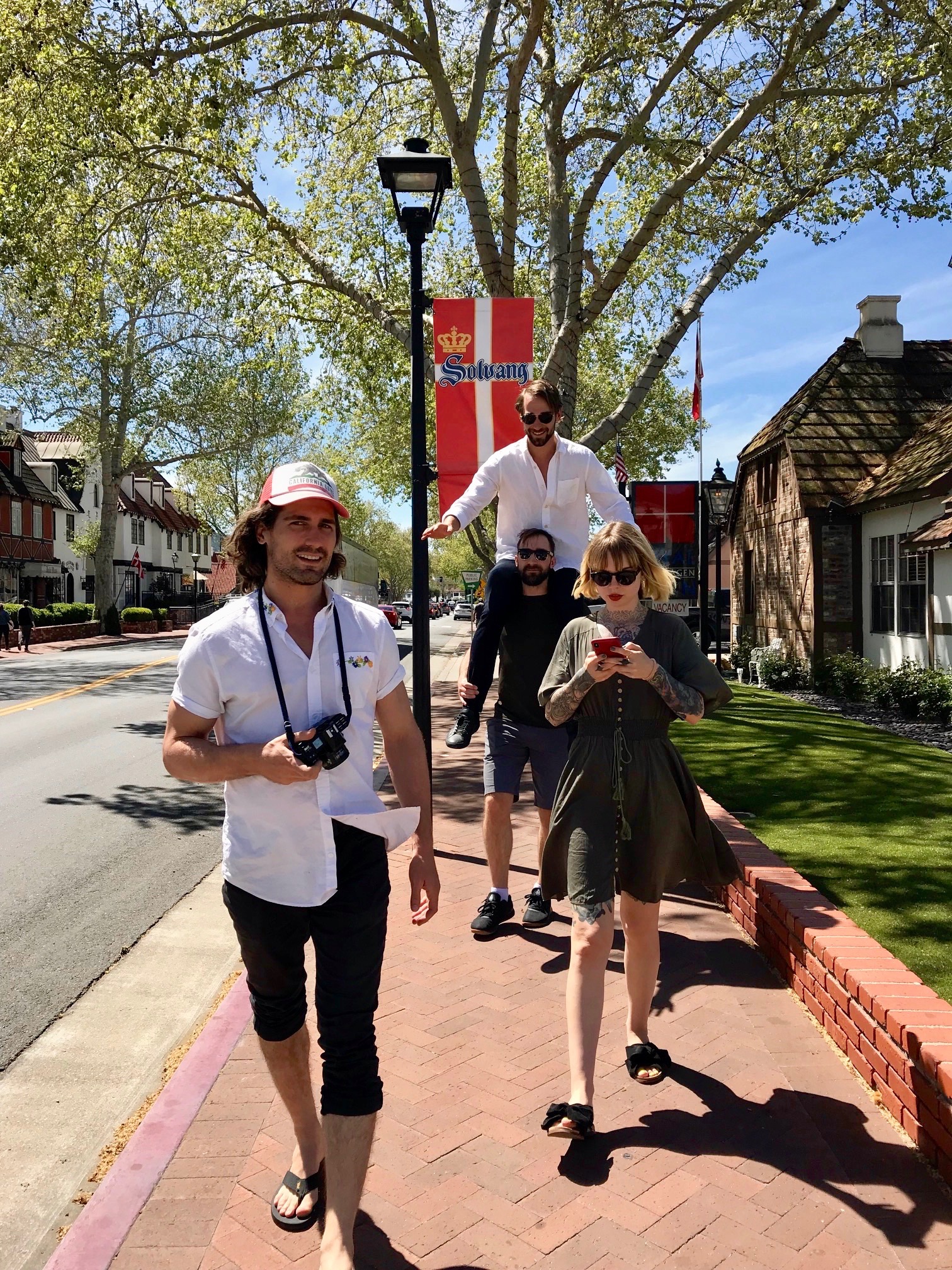

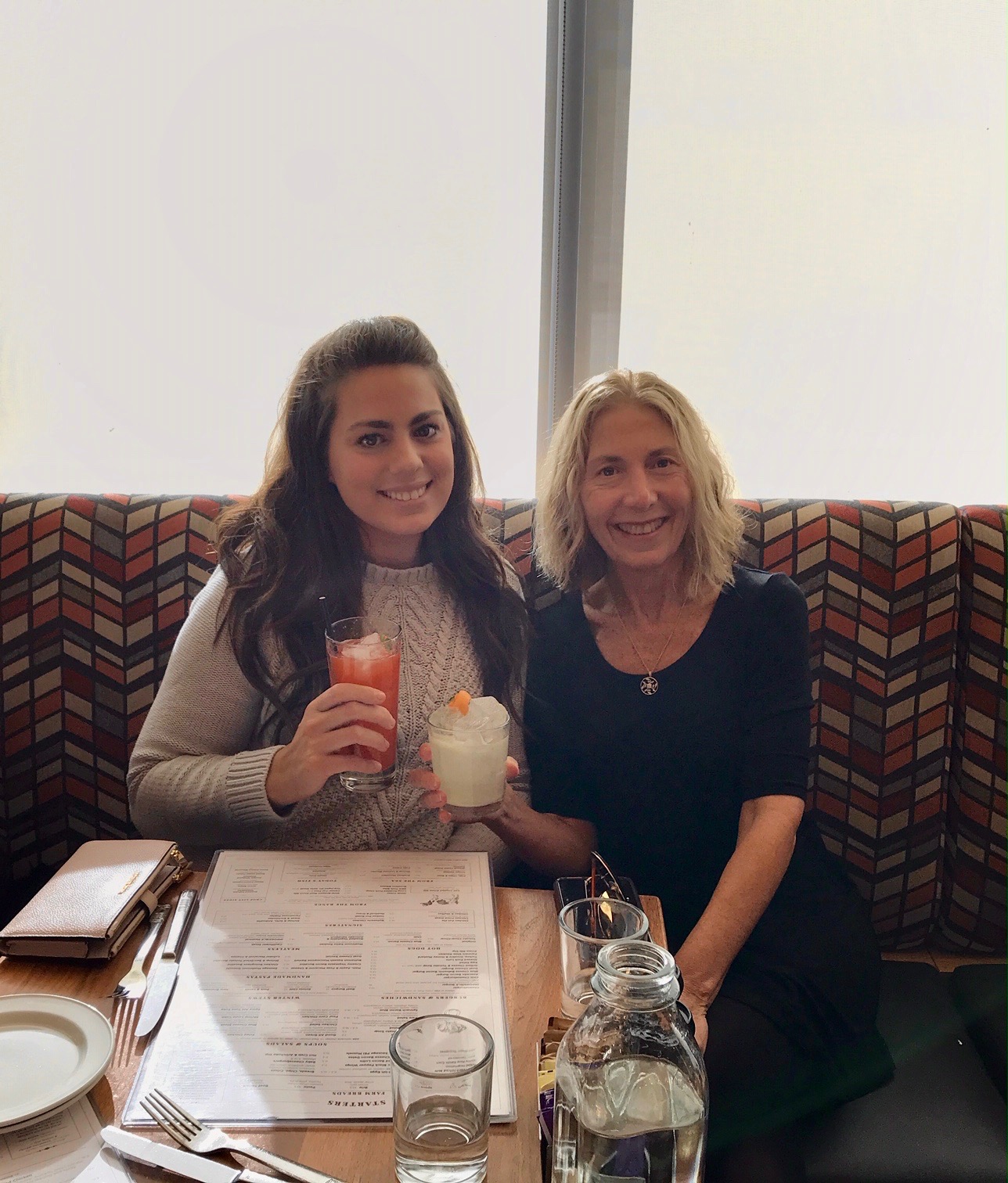
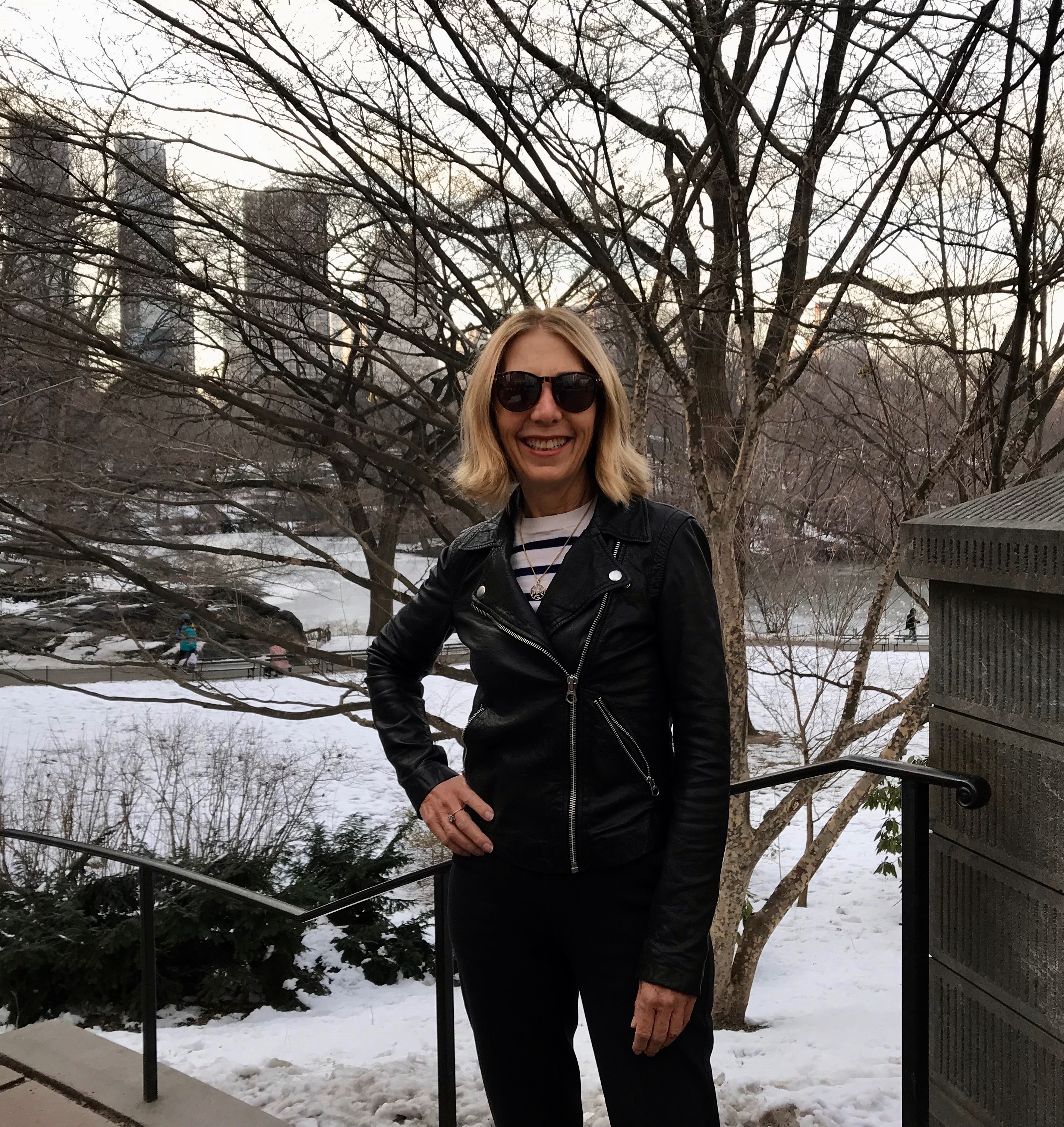
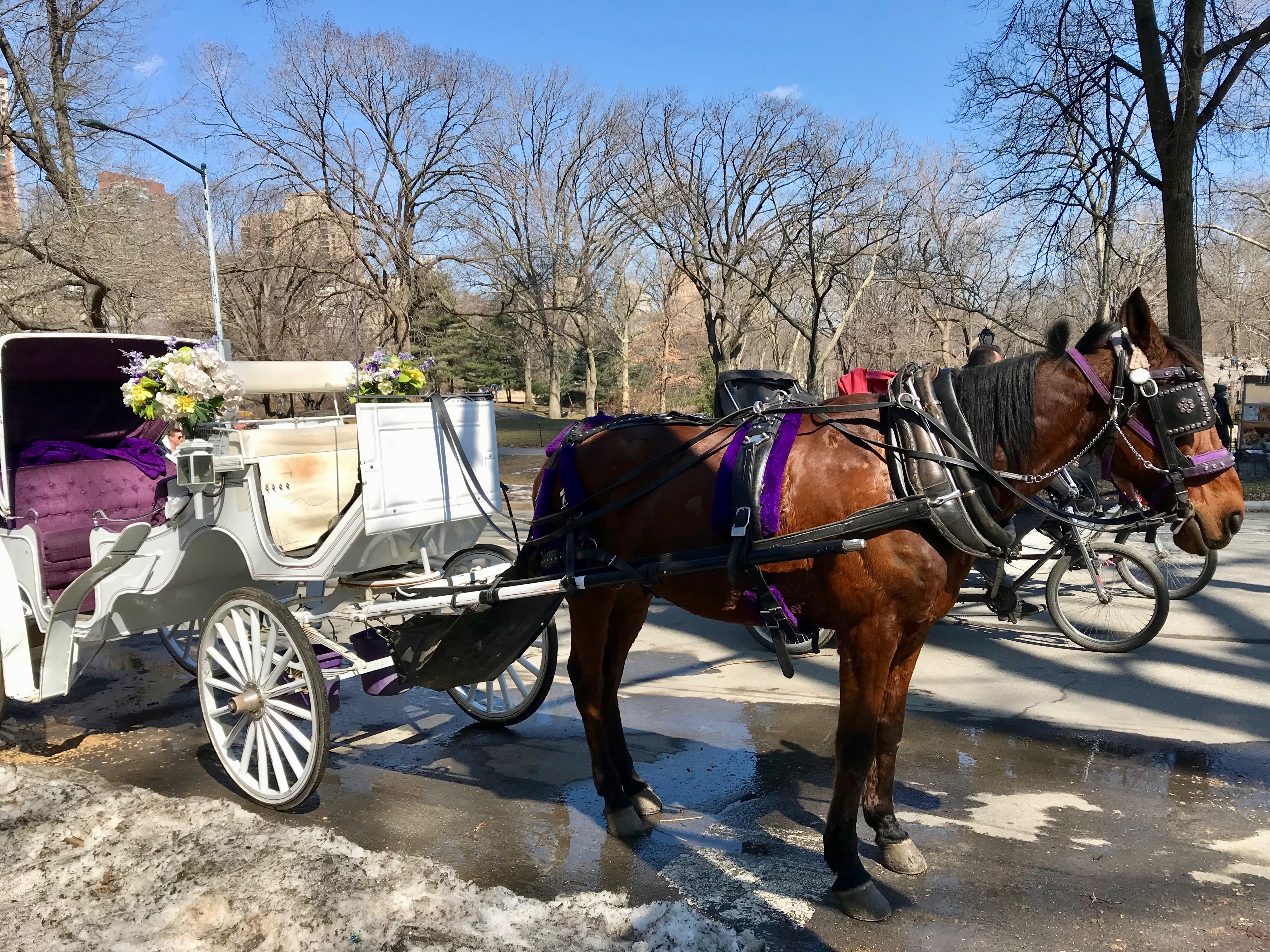
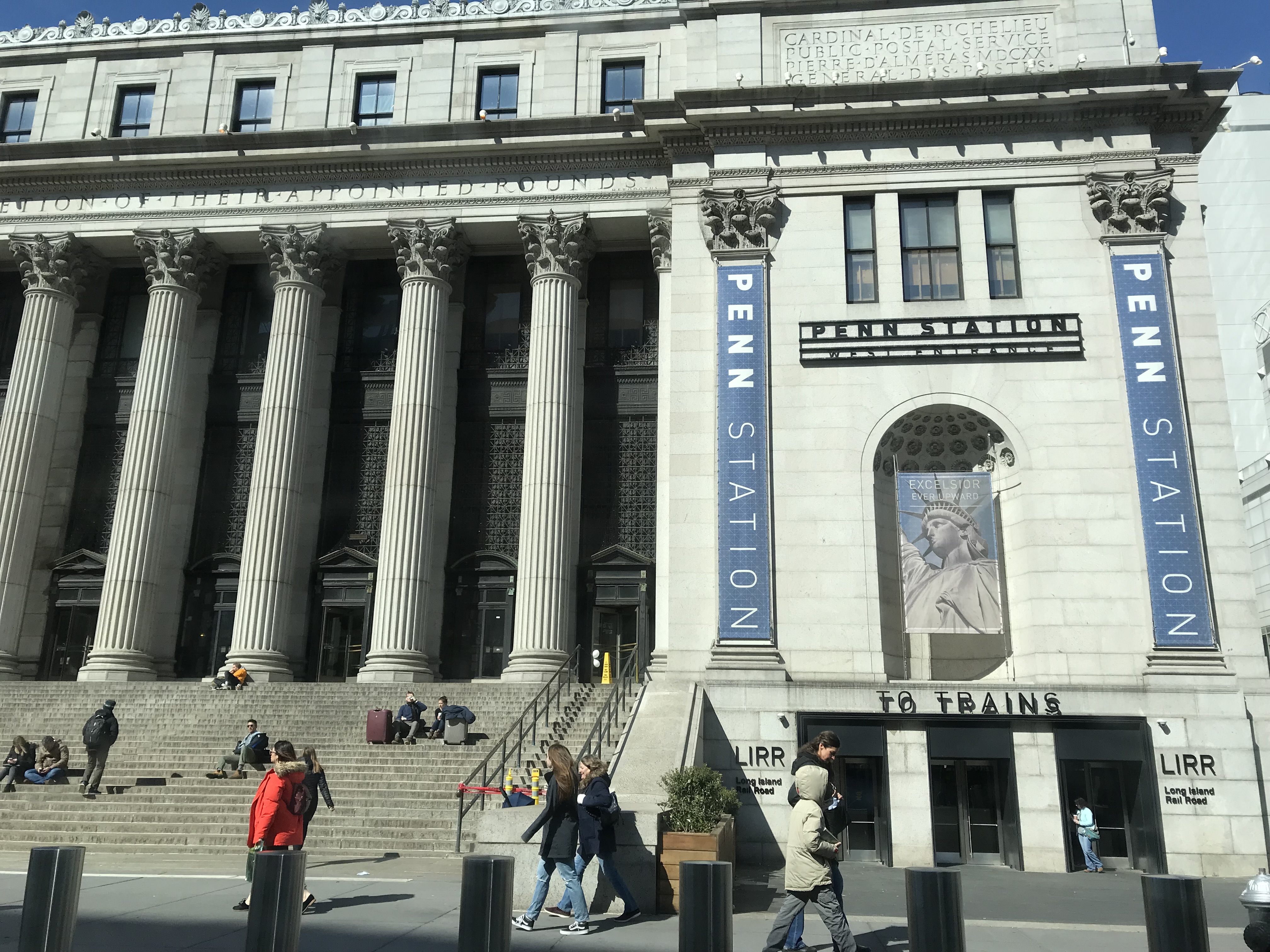 And, from Penn Station I took a cab to Central Park. Voila! I was in NYC for a weekend of friendship, love, and diversion … good things in the midst of bad.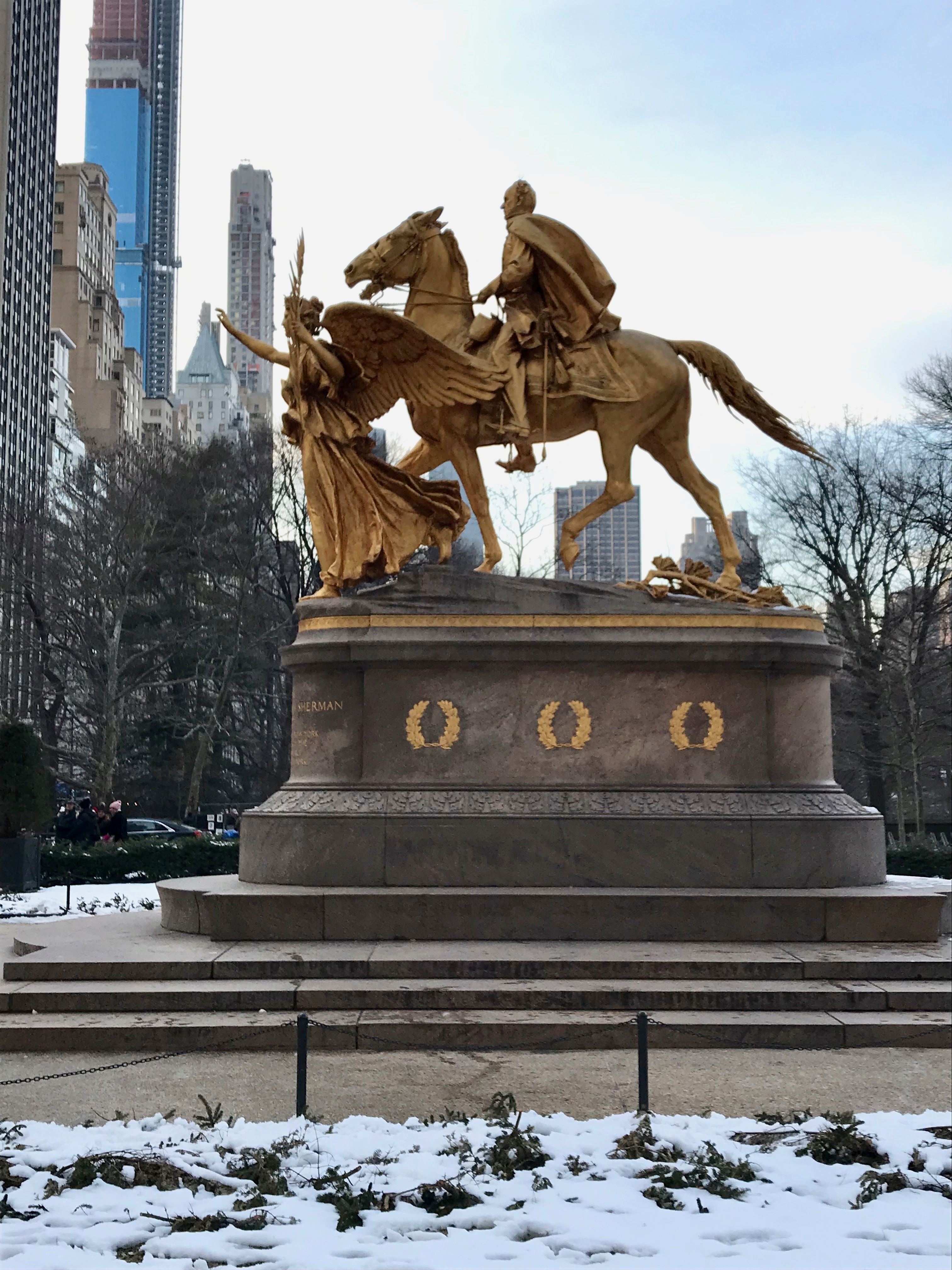
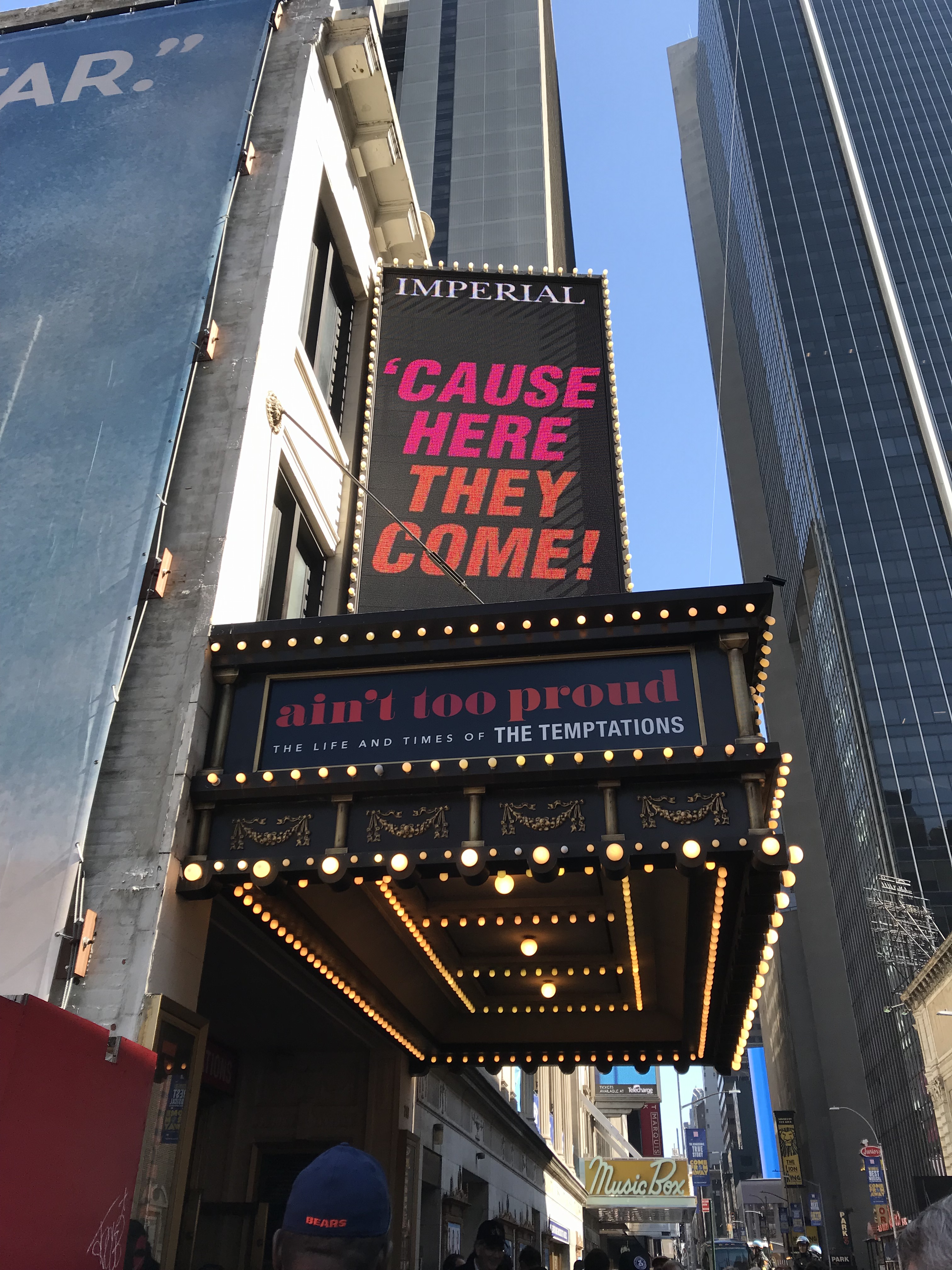
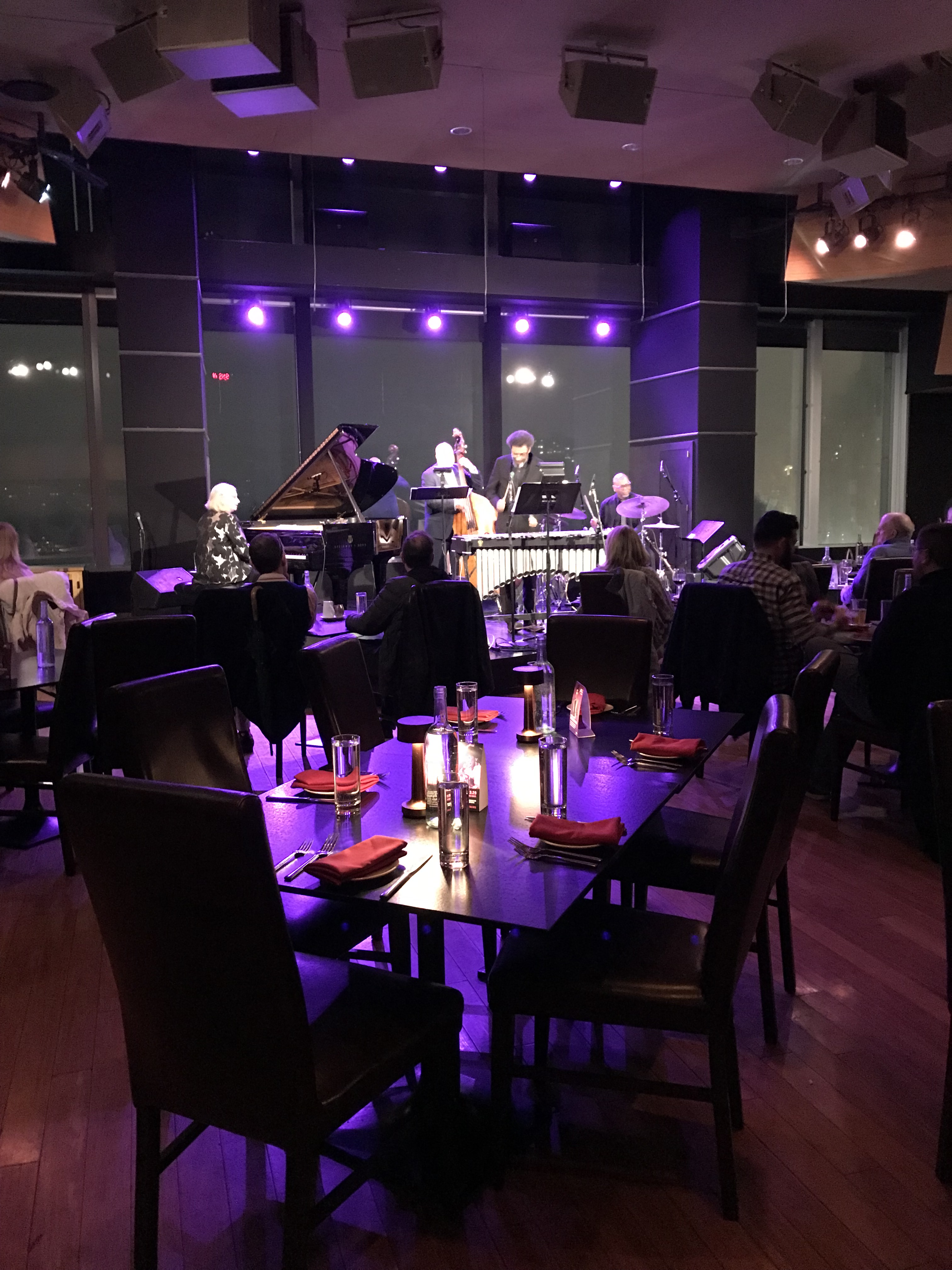
 The picture above is Columbus Circle at 8th Avenue, a couple blocks from my hotel. It’s full of great places including the Museum of Arts & Design with a lovely restaurant (Robert) on the 5th floor and the Time Warner Center with some upscale shops and a jazz club. This picture is a small corner of Robert where I enjoyed Sunday brunch with live music. The design of the room is delightful and the view of the park is even better. The menu, food, and service were characteristically excellent as I expect in NYC.
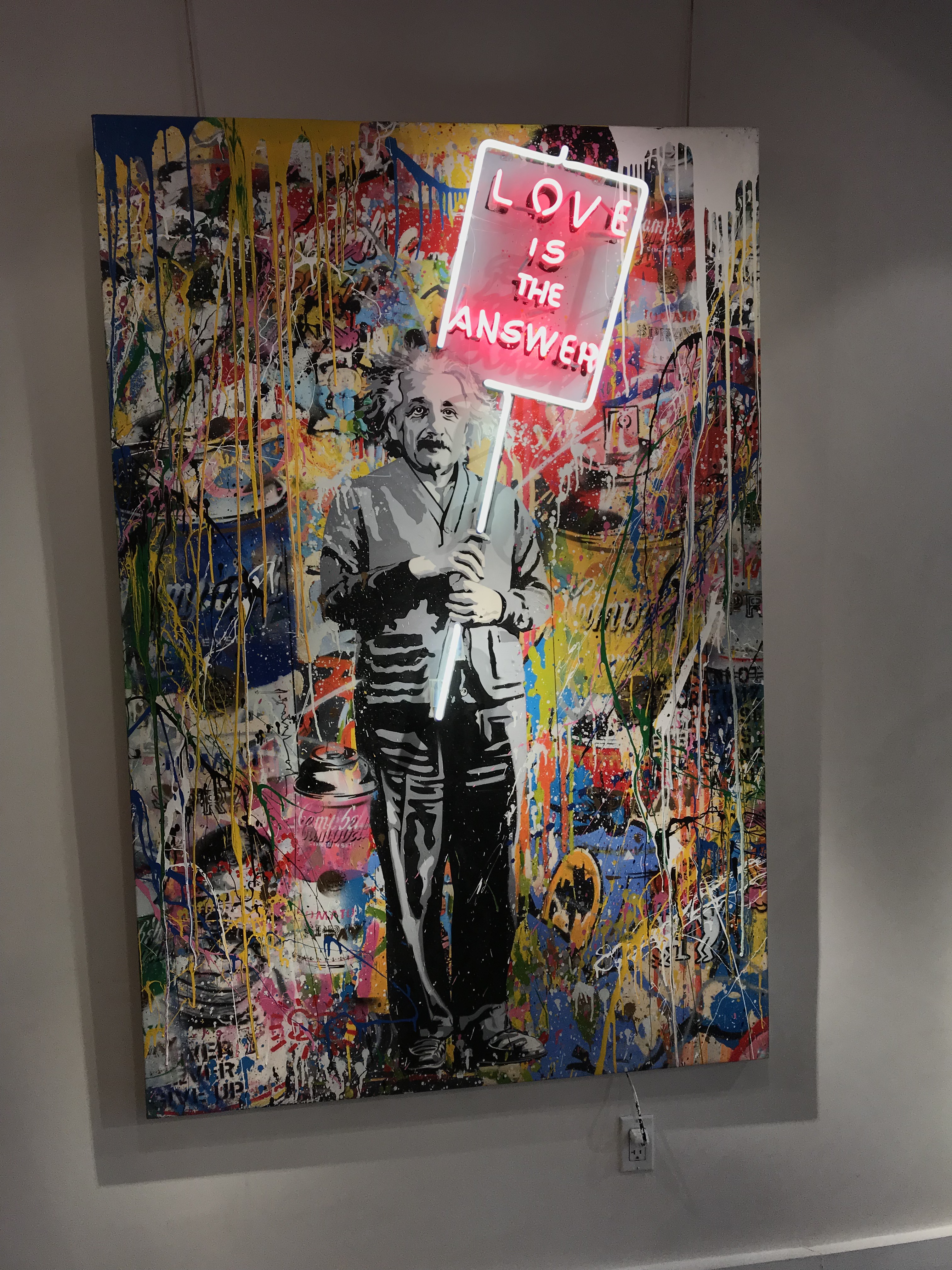
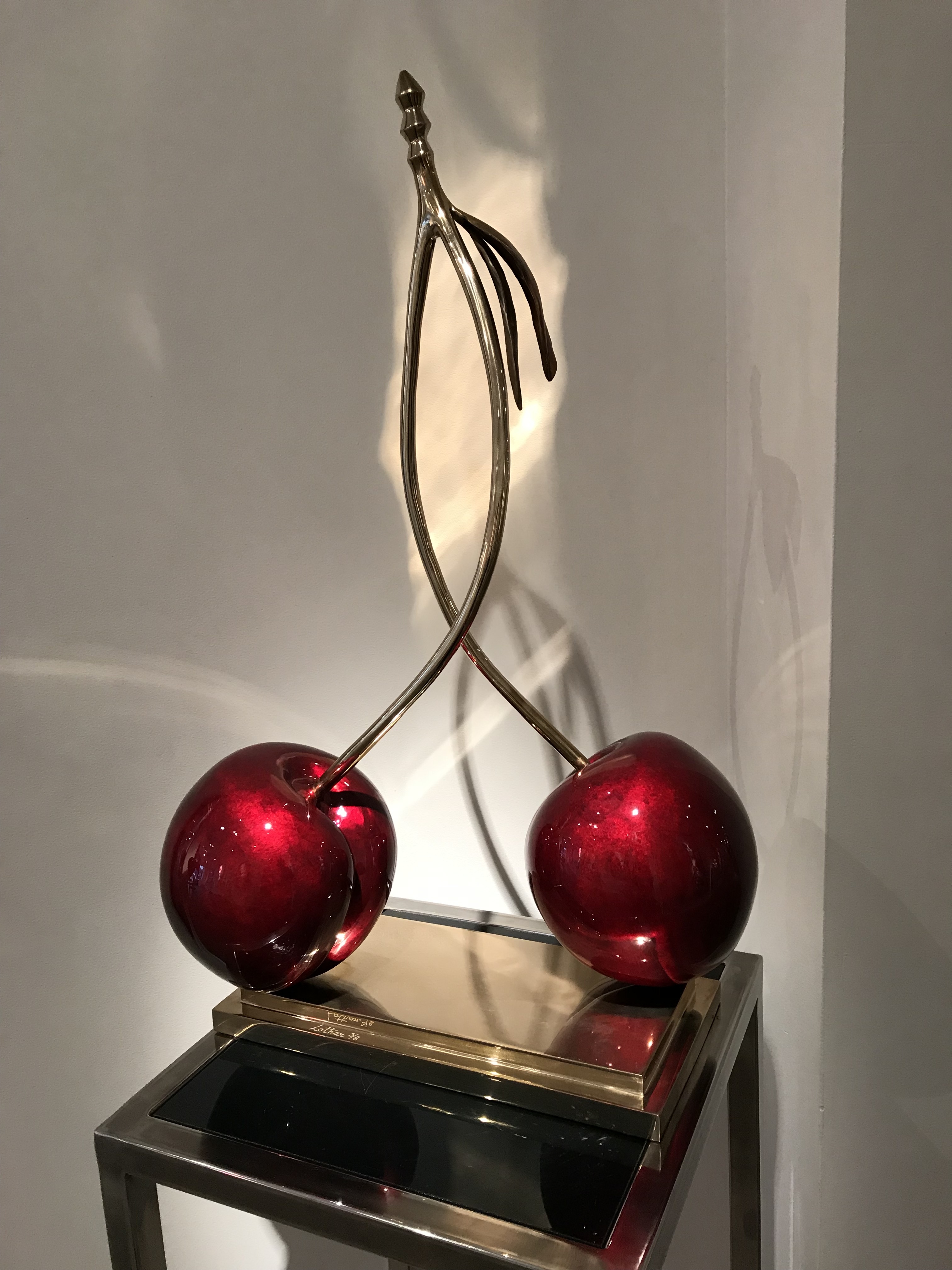
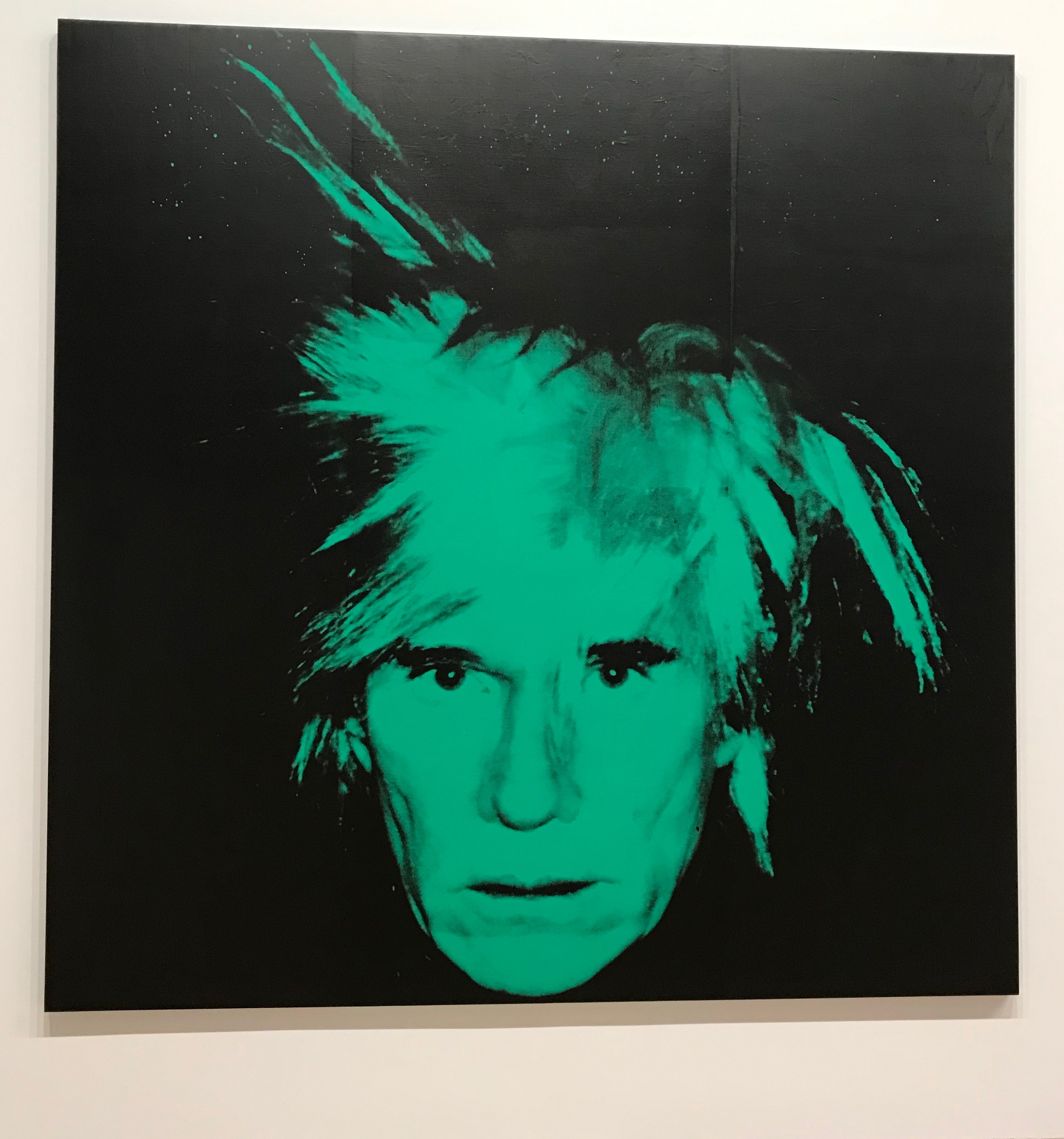
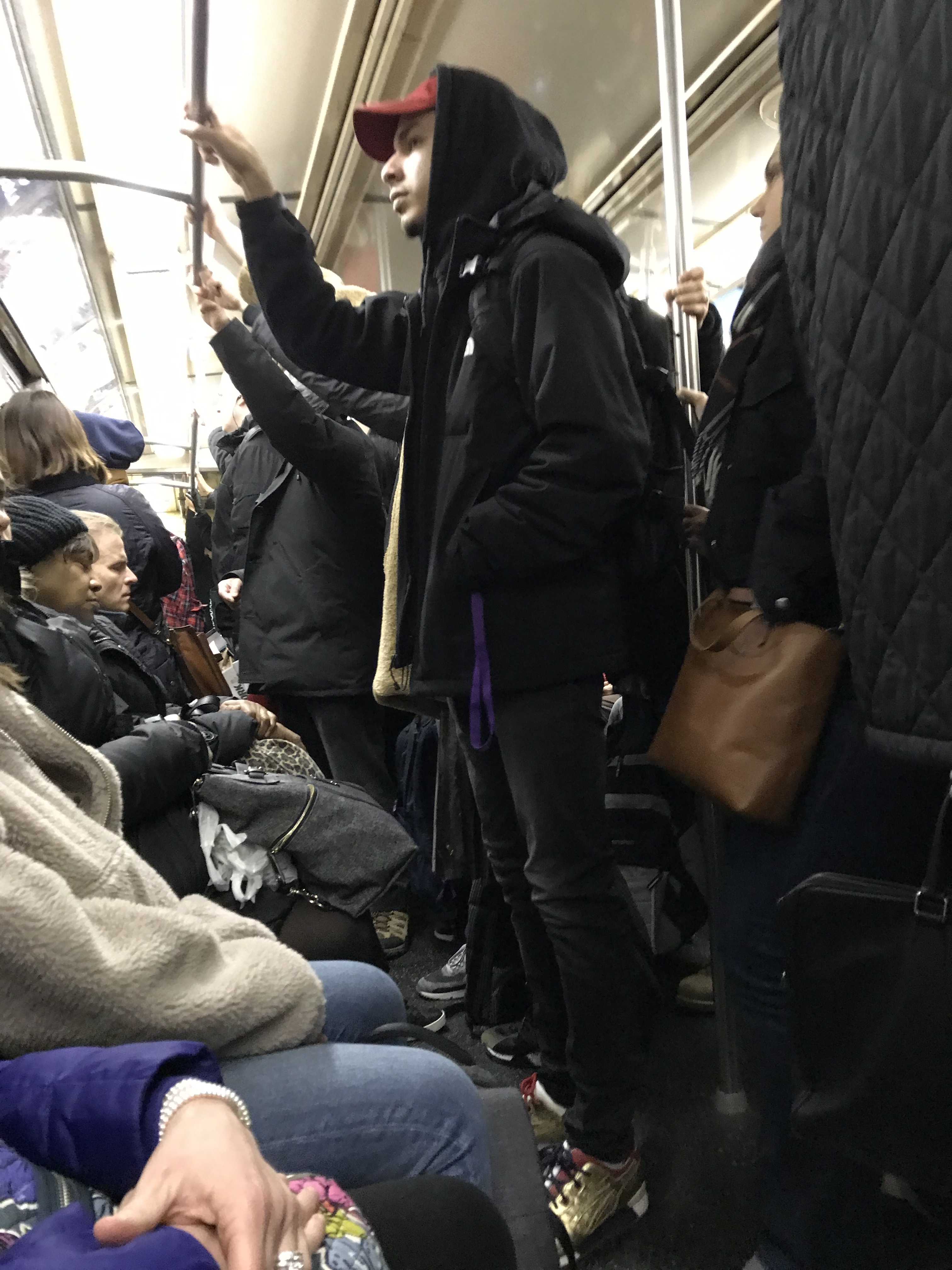 When it’s a clear day, the view from the top floor cafe/patio of the Whitney is gorgeous. It’s a tiny spec in this picture but looking out on the Hudson, you can see the Statue of Liberty.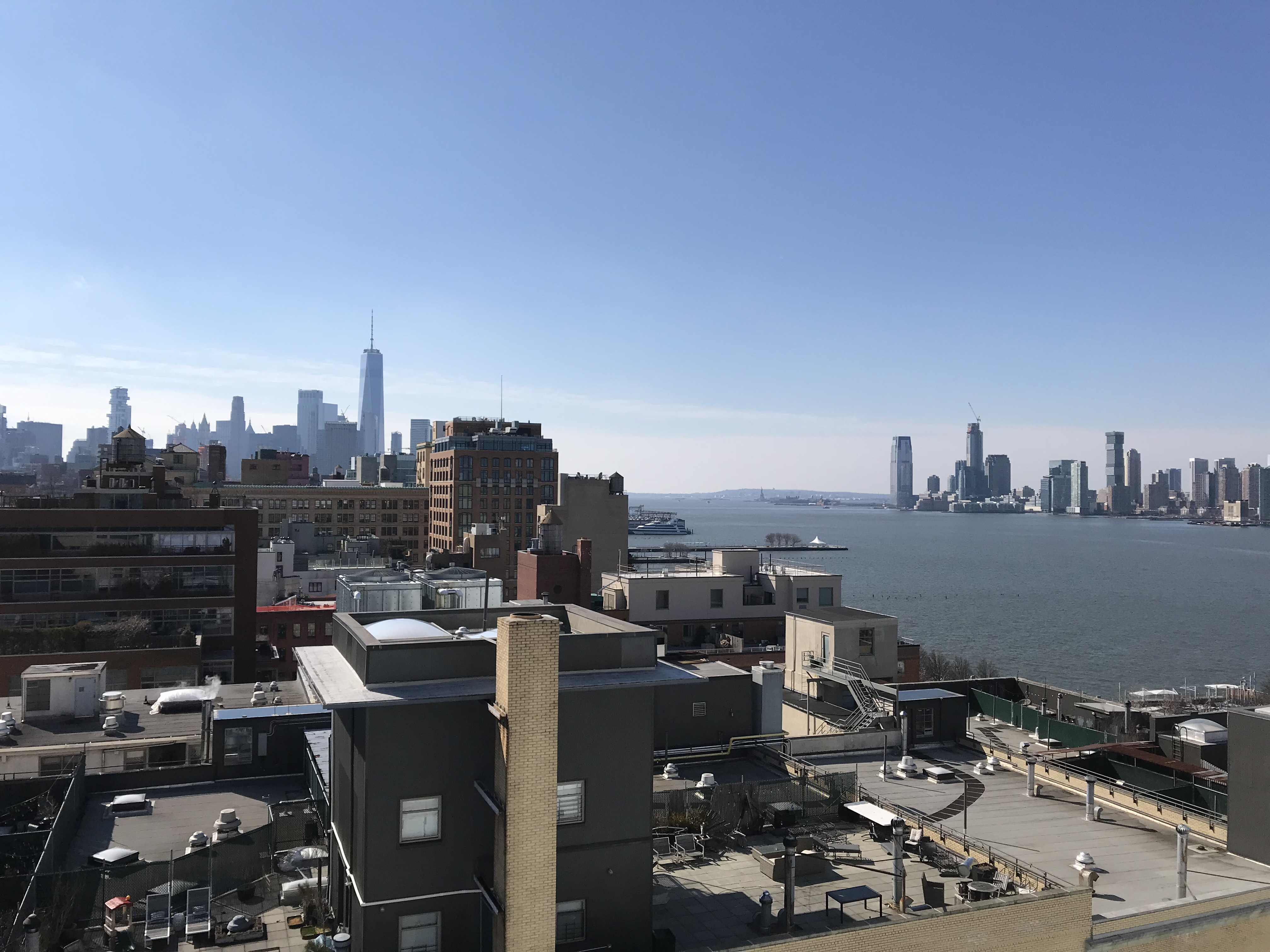
 It’s February and cold in Virginia so when I got an invitation to meet Naomi in Miami for her nephew’s wedding, I bought a cheap, non-stop ticket. It was too easy to contemplate for more than a moment.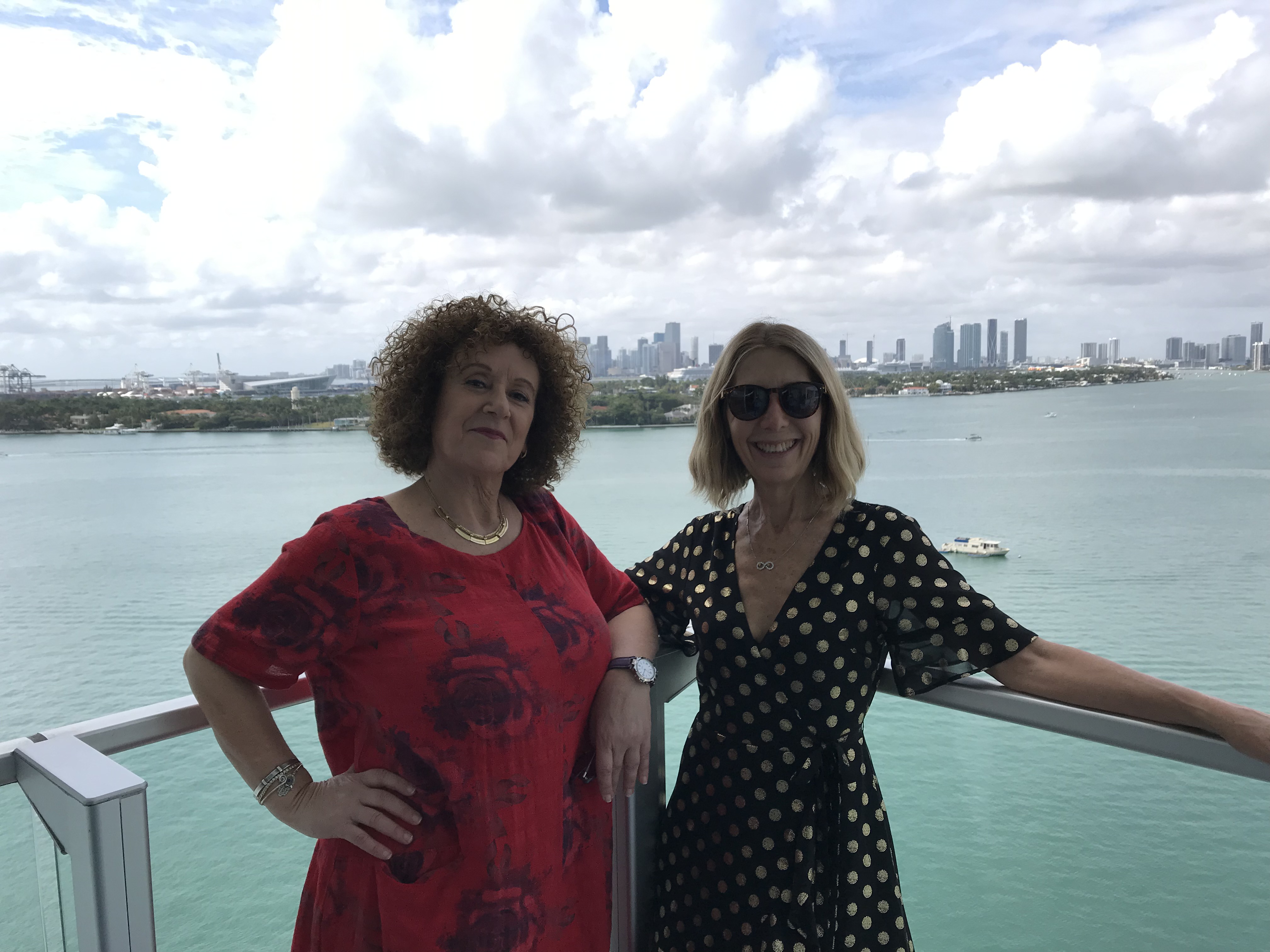
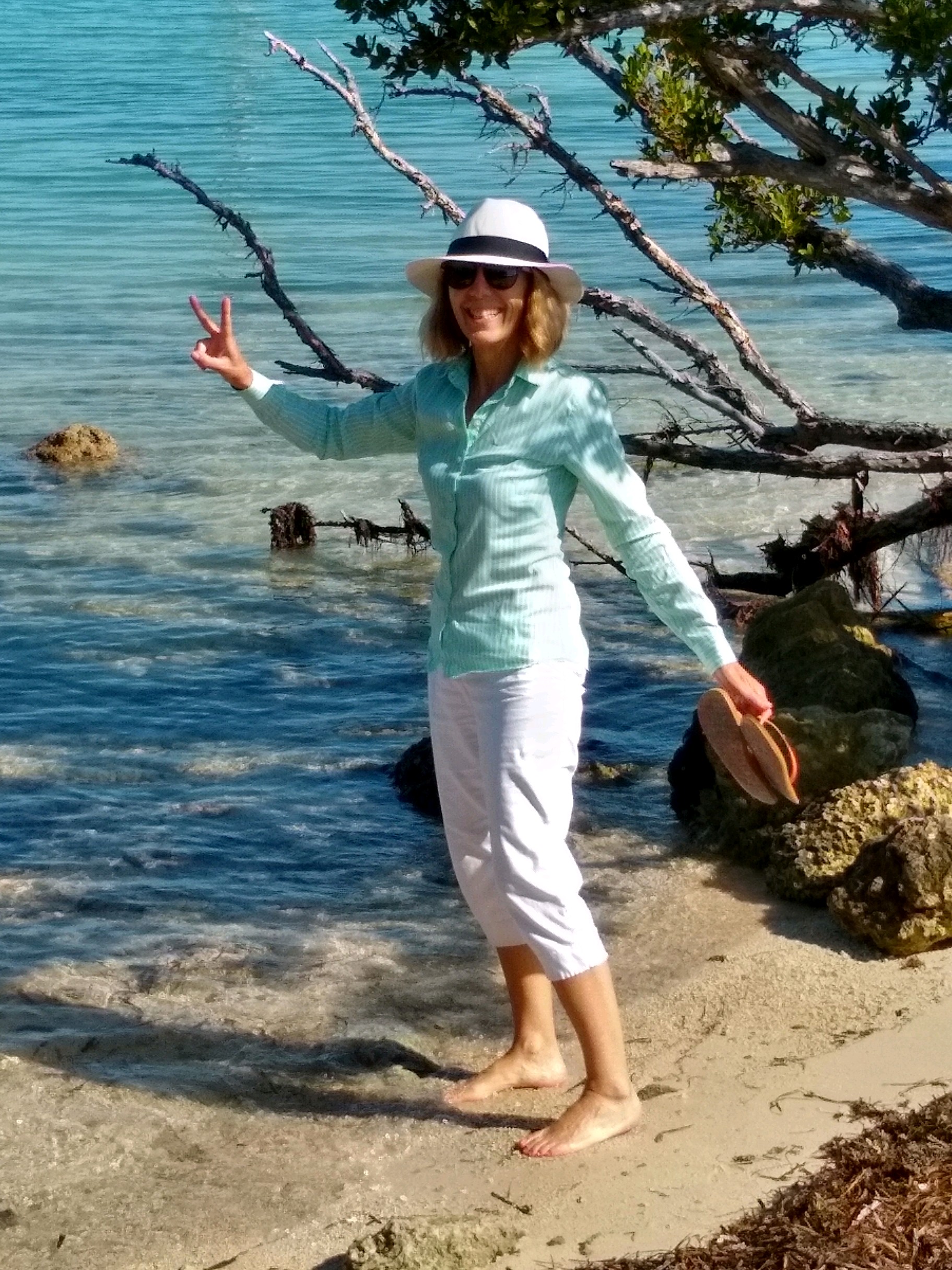
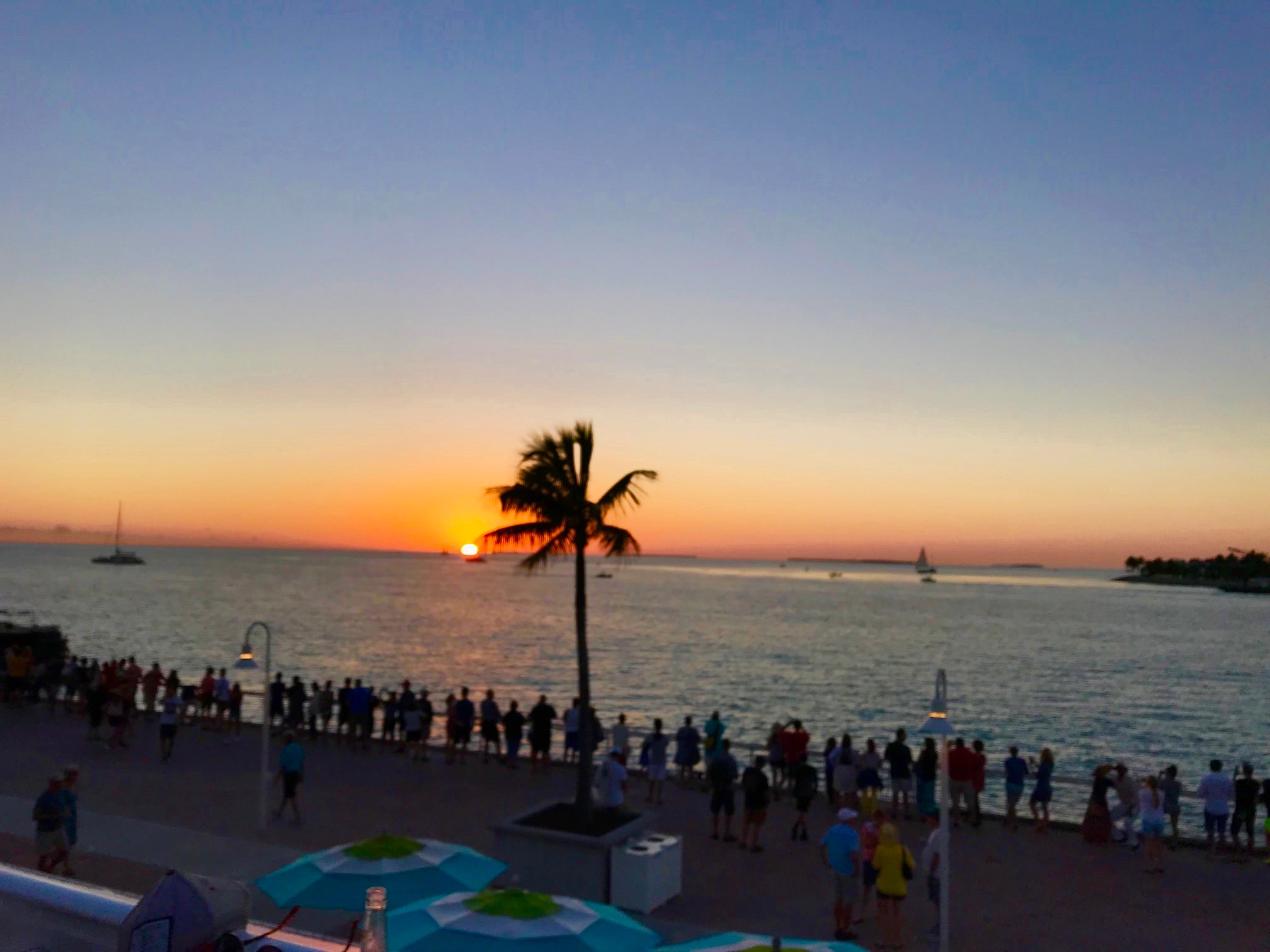 Every evening at sunset the square and waterfront are lined with people soaking up the natural beauty and looking for the (alleged) green flash. There were always a lot boats making sunset cruises but we preferred the square. At least, that’s what we said since no one offered to take us on their boat 🙂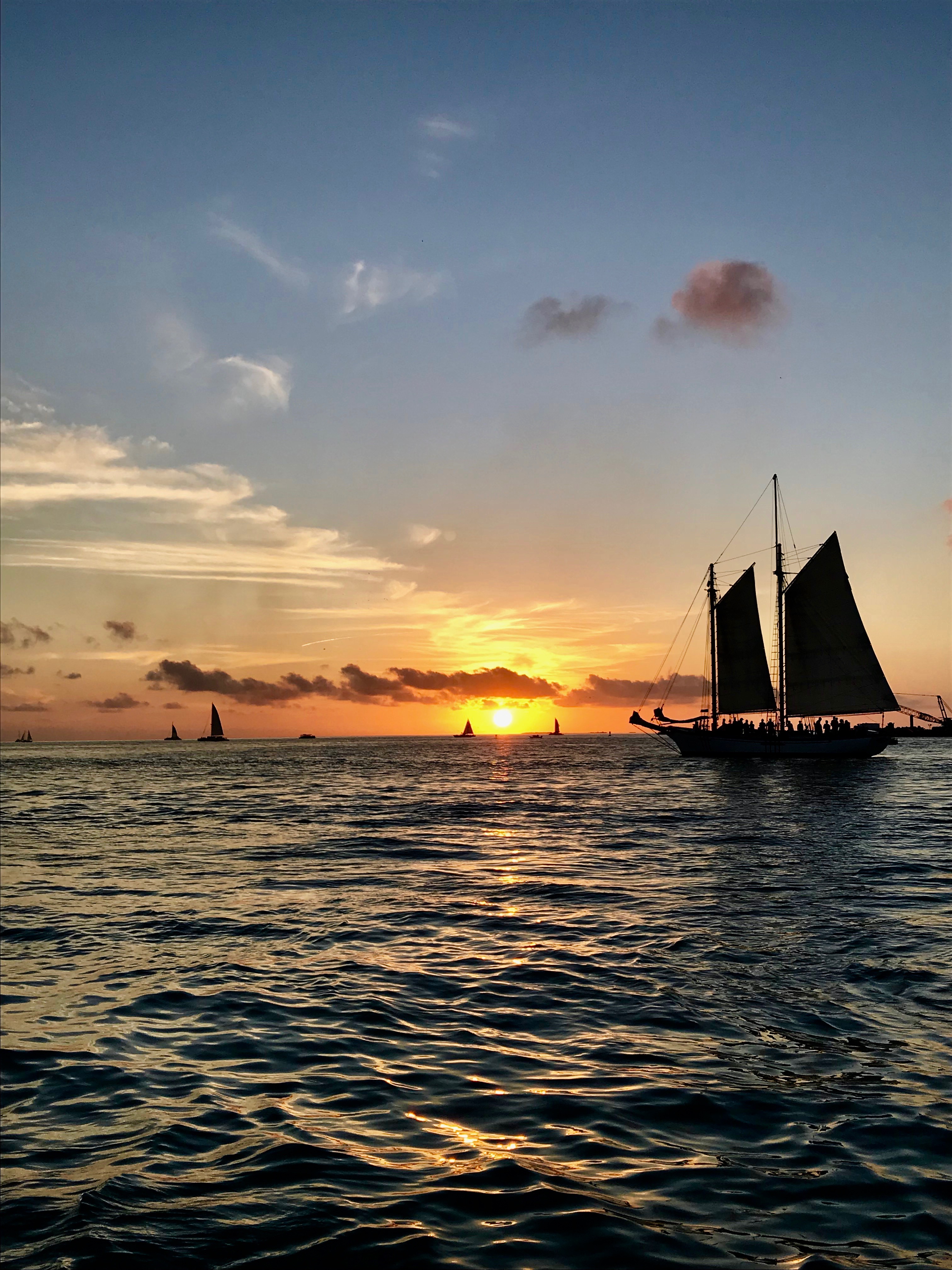
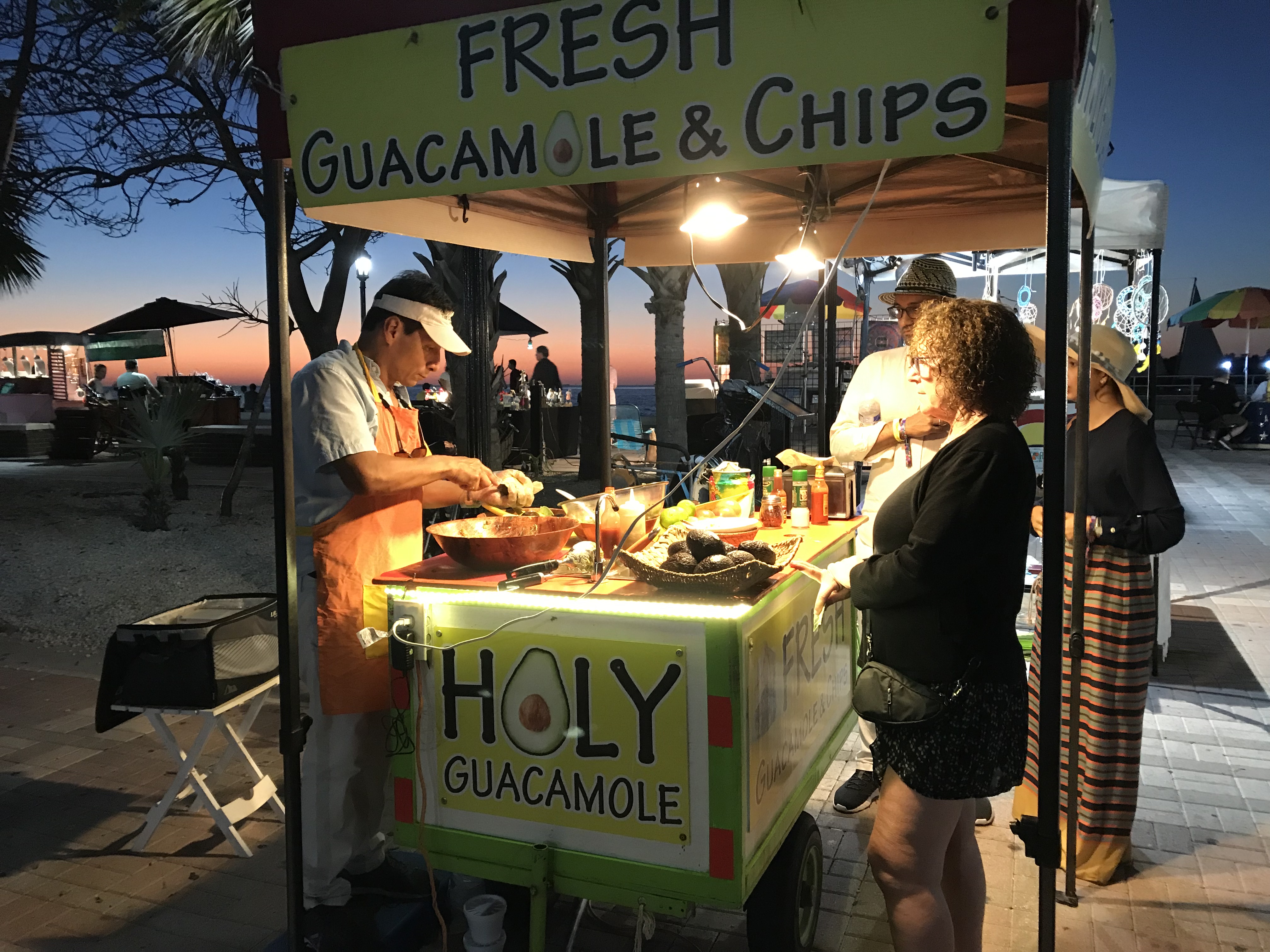
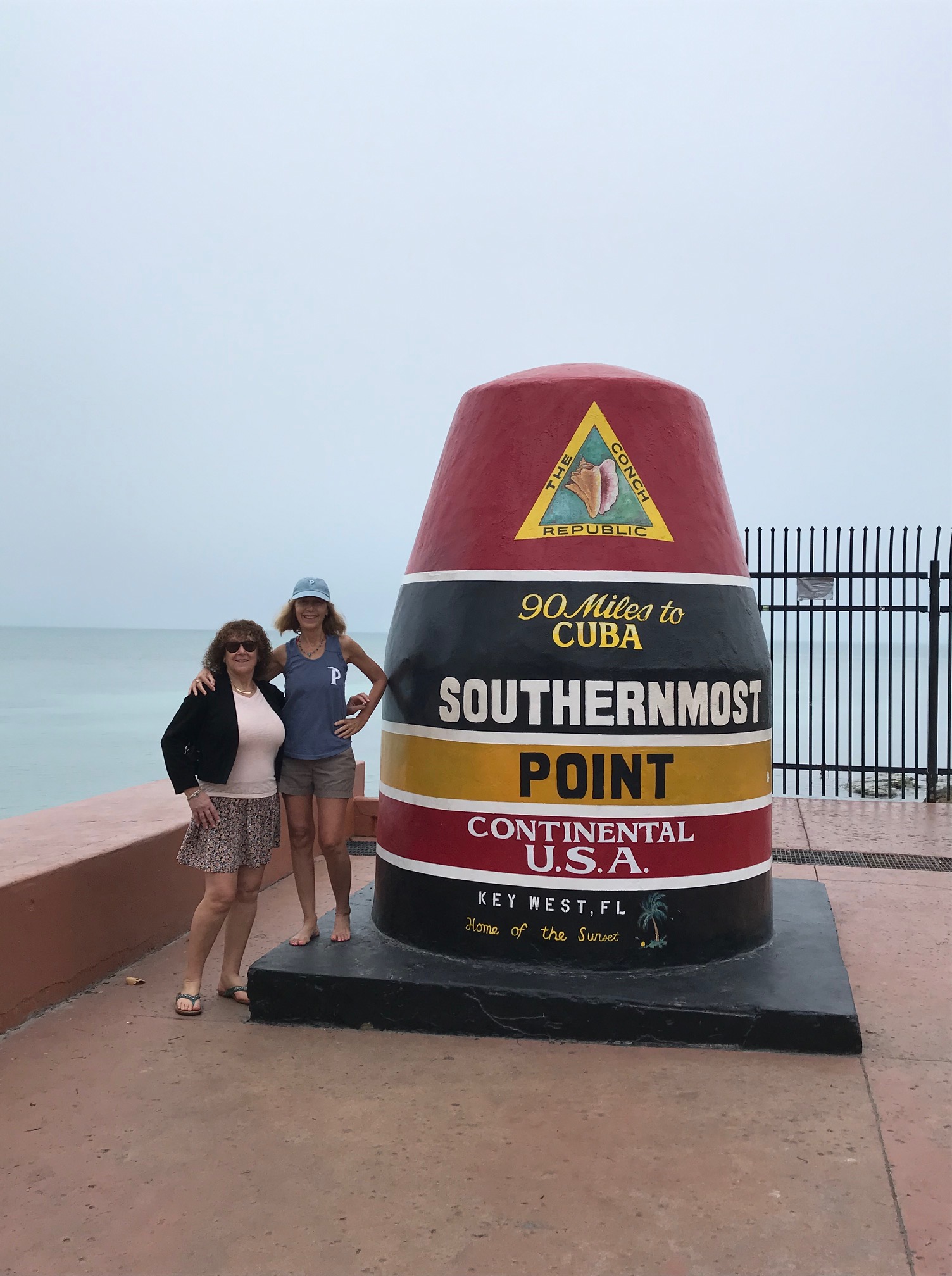
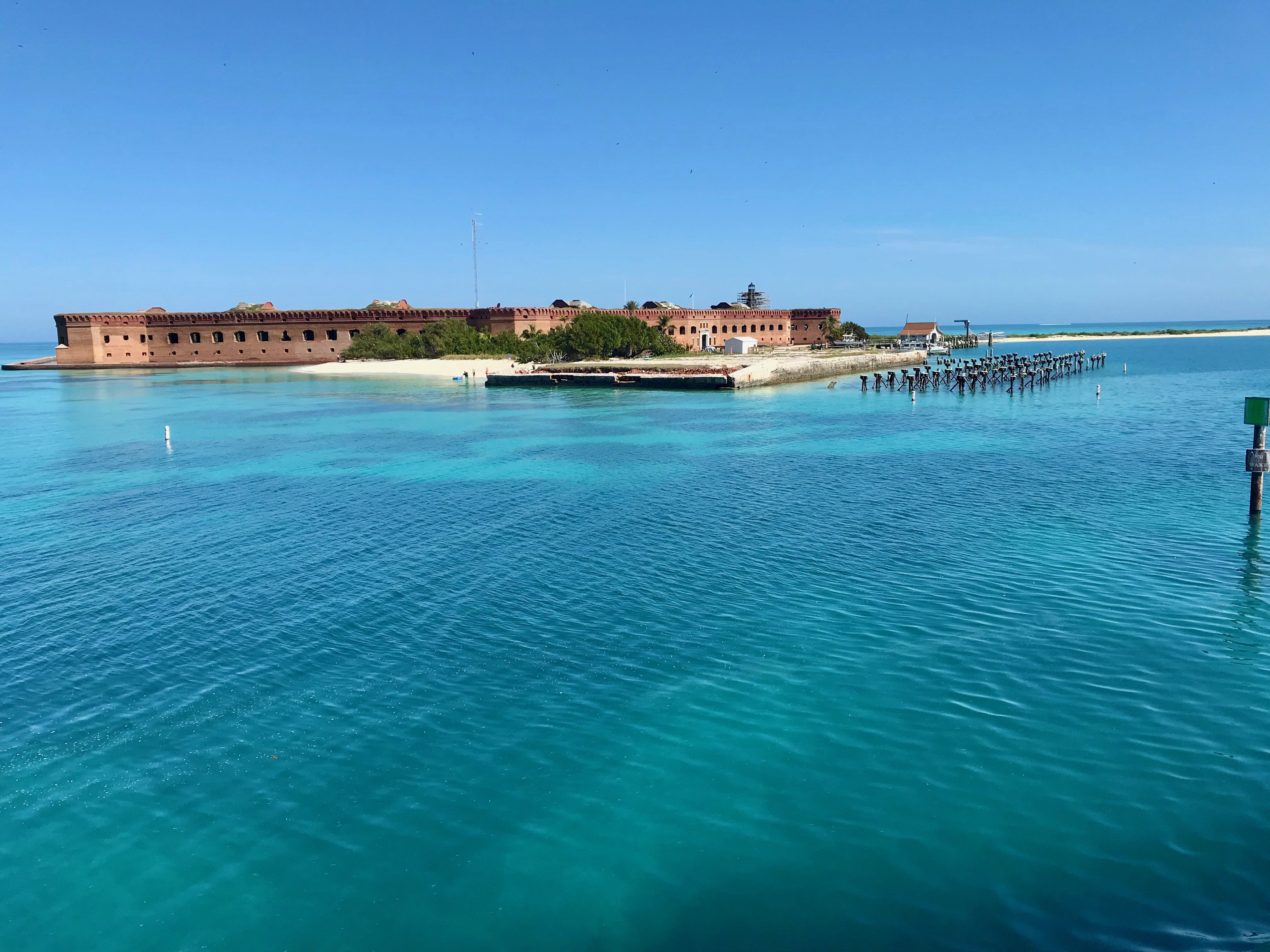
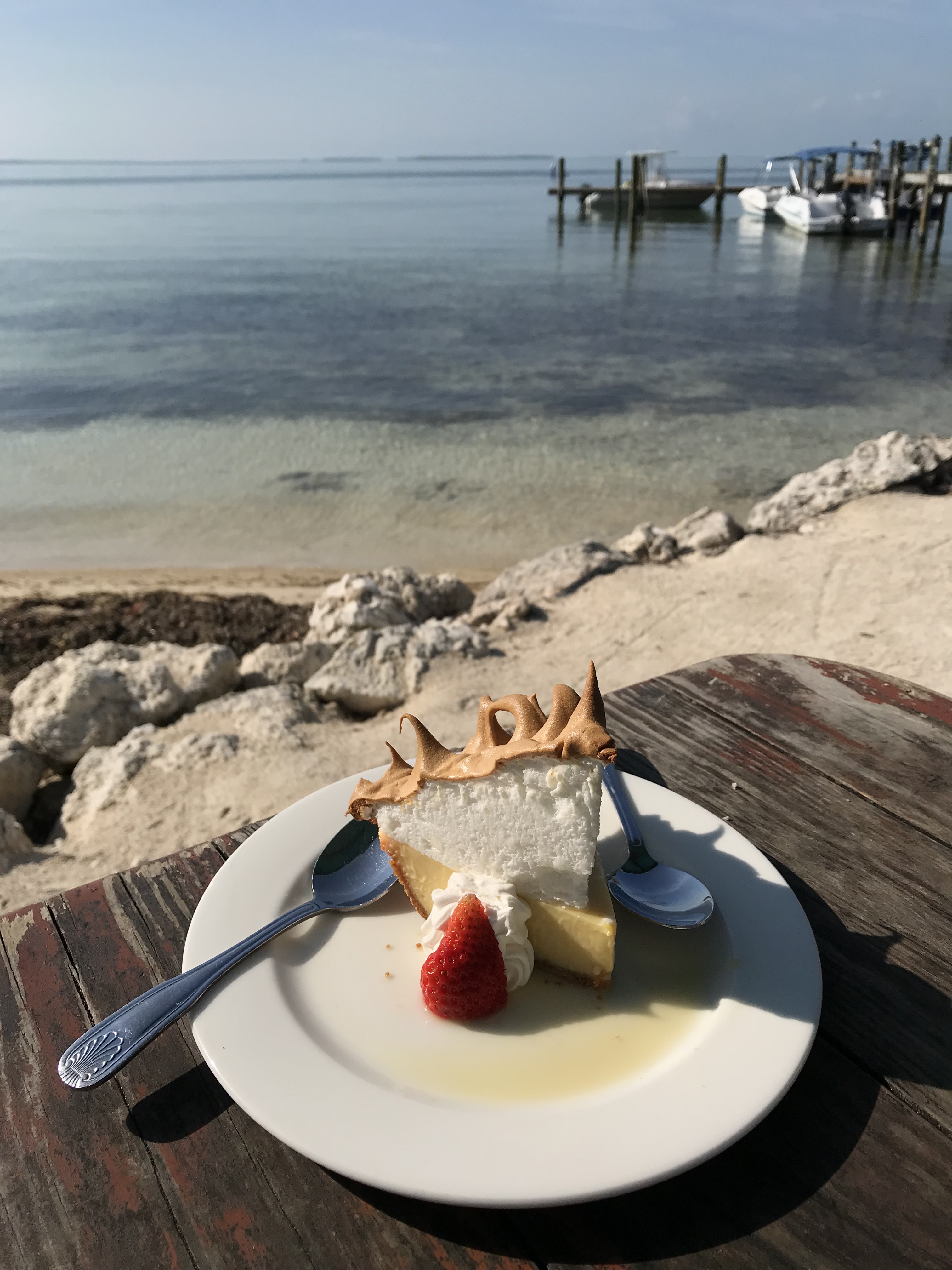
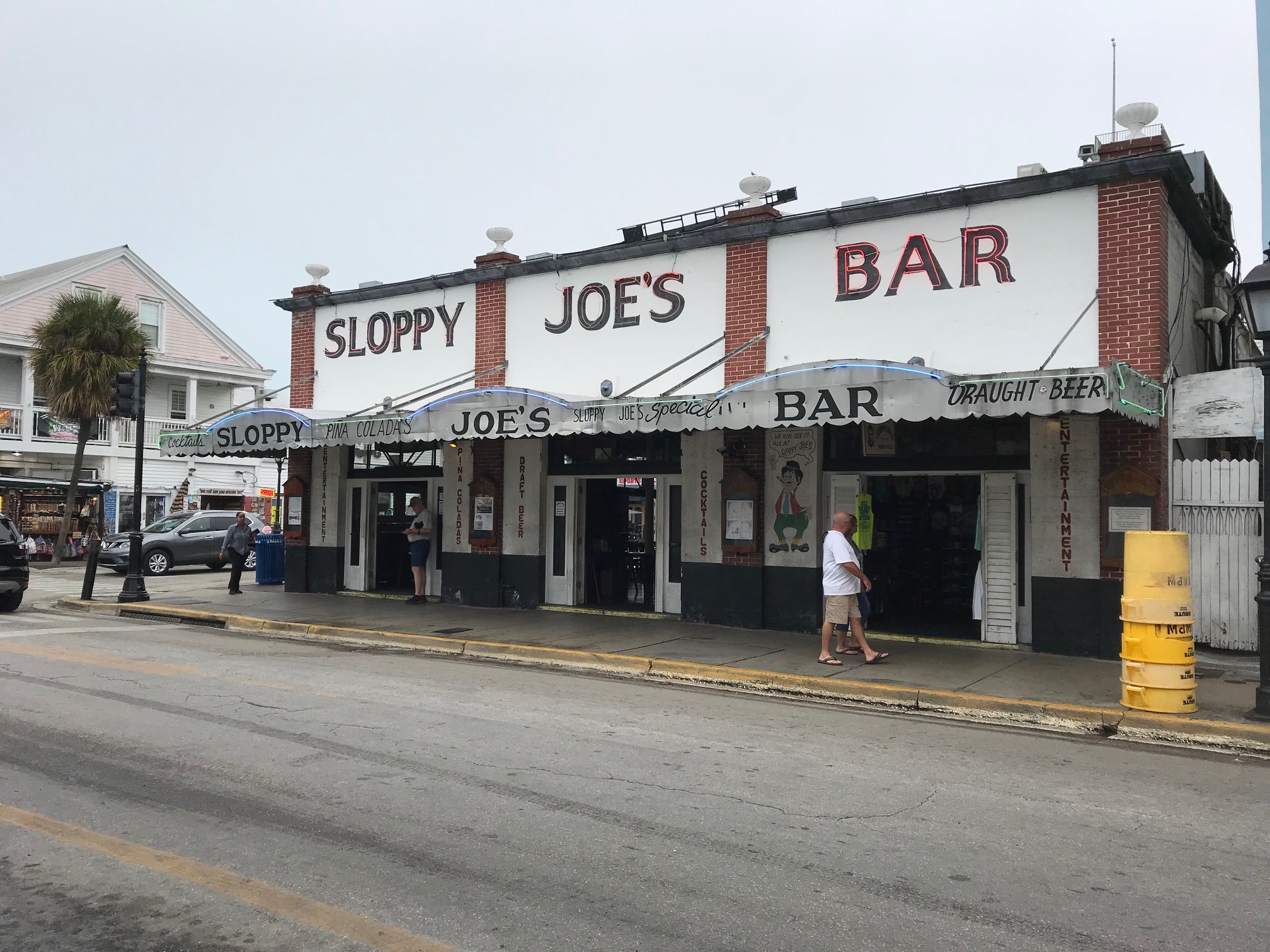 We enjoyed a lot of singing, dancing, and laughing. Everywhere we went we met cool people. The Jimmy Buffett vibe rules. I heard no words of anger or stress the entire time I was in the keys with one exception. I walked by a television over the poolside bar and saw my own governor apologizing for an old picture of him in blackface standing beside someone in a KKK robe. What a sharp contrast to the laid-back, peace & love atmosphere. I was not looking forward to returning to Virginia and the so-called “real world” of cold weather, ugly politics, and deadlines. Honestly, it was hard to leave Key West and head north but Ft. Lauderdale has its own charm and is very nice, albeit less relaxed, so I focused on the beauty of the moment and stayed away from televisions.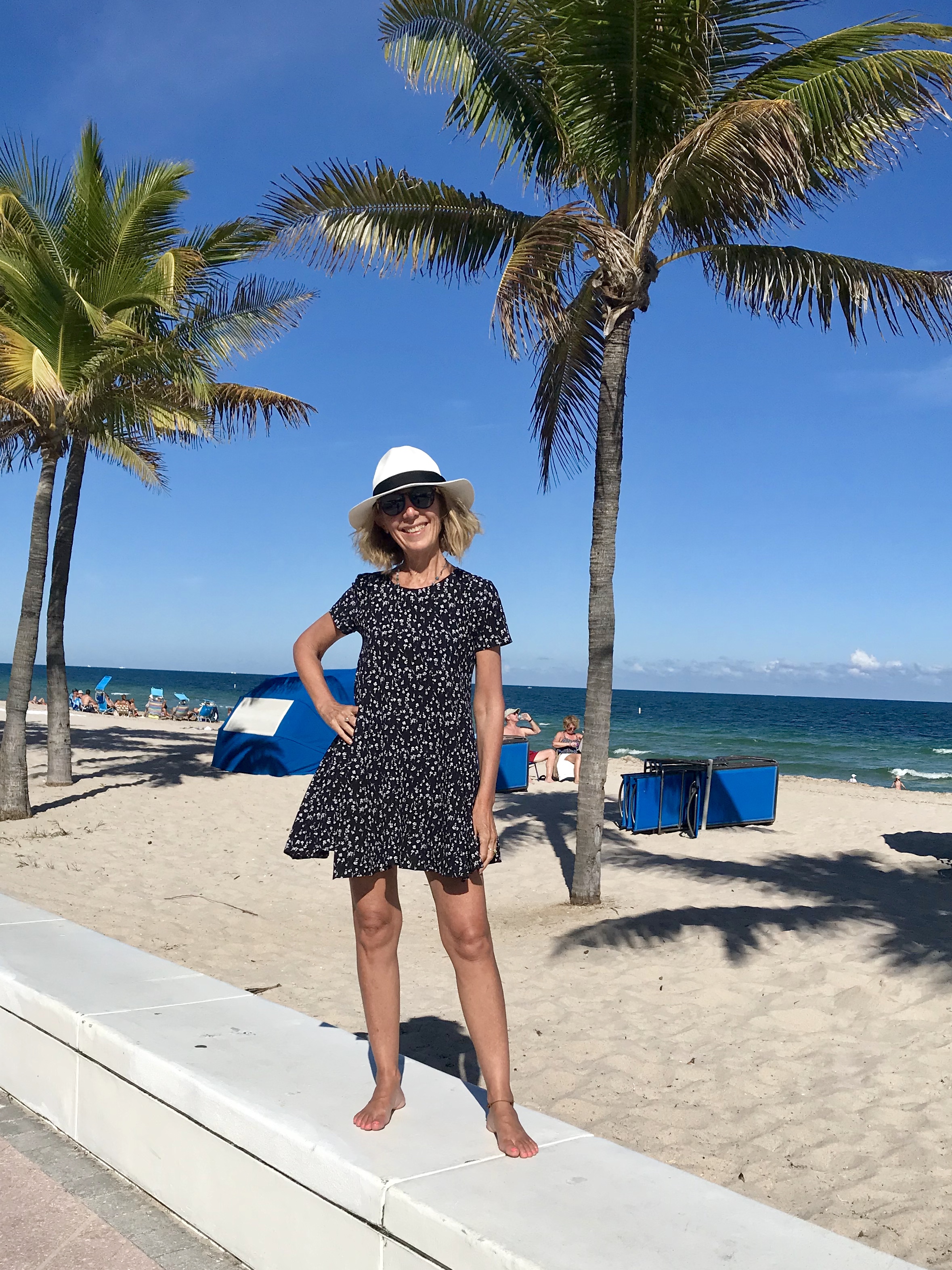
 Kathryn Byler, blog