Thursday 4/14/16
Upon arrival at Managua Airport we were met by Ana Akin and a driver from ORPHANetwork (Onet)(www.orphanetwork.org). We dropped our things at Le Chauteau then headed out to Orphanage El Canyon, one of the six orphanages that Onet supports. Approximately 30 children live at El Canyon full-time and 30 more come from the community for meals and to attend the private school adjacent to the orphanage.
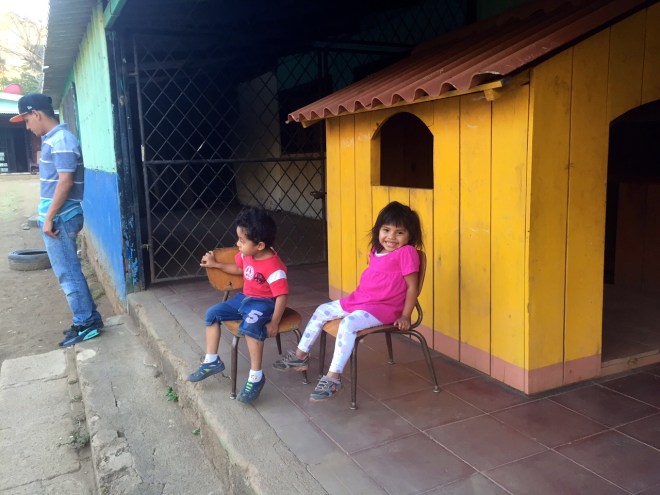
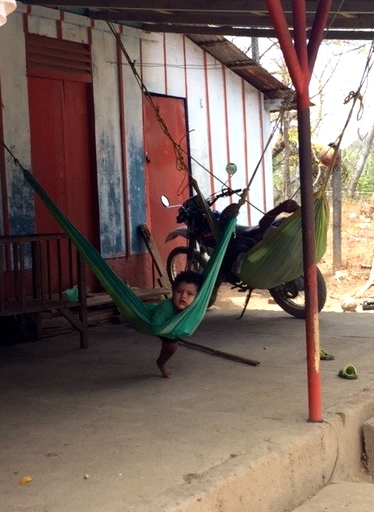
The children who live at the orphanage are from 2 to 17 years old. A very adorable 3-year old girl (picture above) and her little brother had arrived at the orphanage the preceding month. They seemed like typical children which I had trouble understanding given the circumstances. Two of the staff members are trained psychological counselors who work with the children daily.
When I questioned if the children are really orphans, I was told that some are orphans, some were abandoned, and some were removed from their homes by the government due to abuse or neglect. The government does not provide foster care, financial support or otherwise assist the children who are removed from their homes. Similarly, the government does not support the orphanages although it does regulate and inspect them. Recently, 25 orphanages were closed down due to financial improprieties or substandard conditions. There must be at least one adult per every 10 children at all times. A bright spot at the compound was the new computer lab that was provided by an American donor. This is in keeping with Onet’s goal of providing all children with basic English and computer skills.
Friday 4/15/16
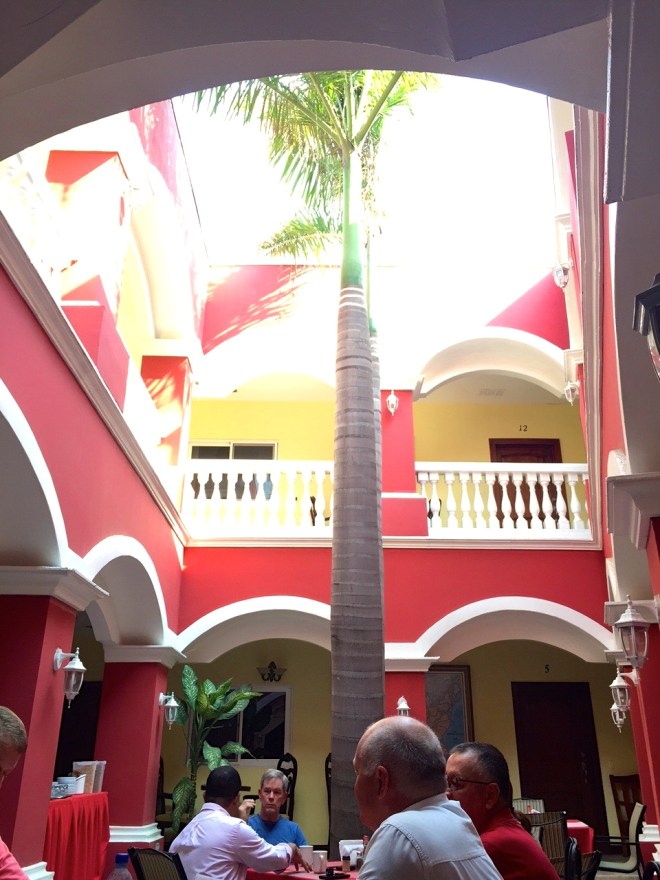
We started the day in the lovely hotel courtyard eating breakfast with Eddy Morales, Onet Country Director, Nicaragua, then a tour of Onet’s administrative offices. Eddy explained how the organization works through Local Church Initiatives (LCIs) to prevent vulnerable children from becoming orphans. These efforts include feeding programs for children. Each child receiving any benefit from Onet is registered by name, date of birth (or an educated guess), height and weight. The children are then measured for height and weight every three months to make sure they’re growing. All children receive deworming medications every six months.
A new effort in its early stage is an educational program for select children in the feeding program. Since the regular school ends at lunch time, children go to the church or other feeding station then stay for after-school education.
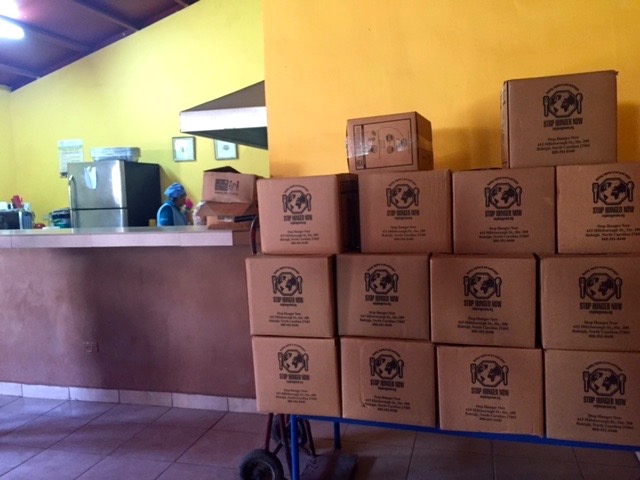
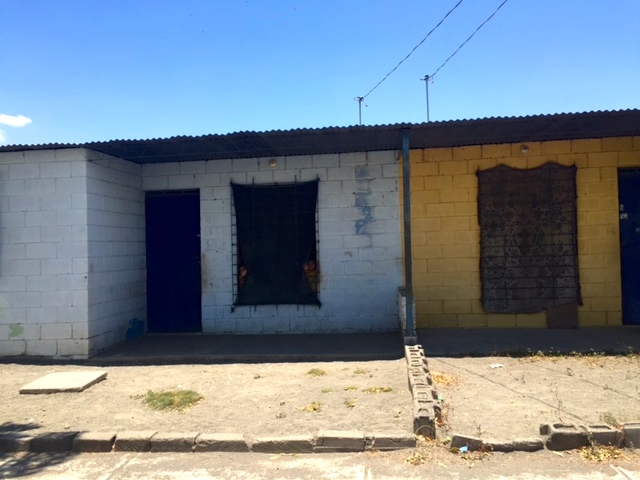
Our next stop was La Esperanza, a private school formerly located in the big dump. The dump was closed down when Spain donated money to level it. A recycling center was built in its place and employment was offered to the former inhabitants. Small concrete “homes” were provided to the displaced families. Onet supports La Esperanza as Phase 2 LCI by offering packaged food and financial resources.
Next stop was Verbo Sur, also an LCI Phase 2 program. Onet provides food that is prepared by church volunteers for a feeding program offering lunch 5 days per week at the church and 3 days per week by transport into the hills.
On this day, Pastsor Jairo delivered the food himself while we rode along. Each meal was registered as it was handed to the intended person according to the records.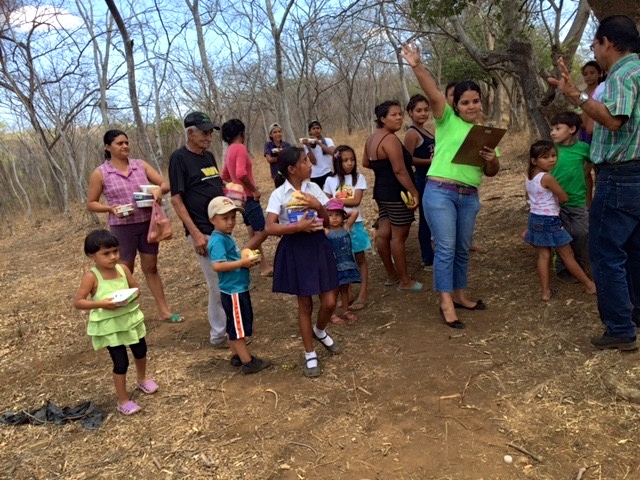
We had lunch back at the church with the volunteers, several of whom were family members of the pastor. The church also provides daycare so mothers can work. Those receiving childcare pay a small amount.
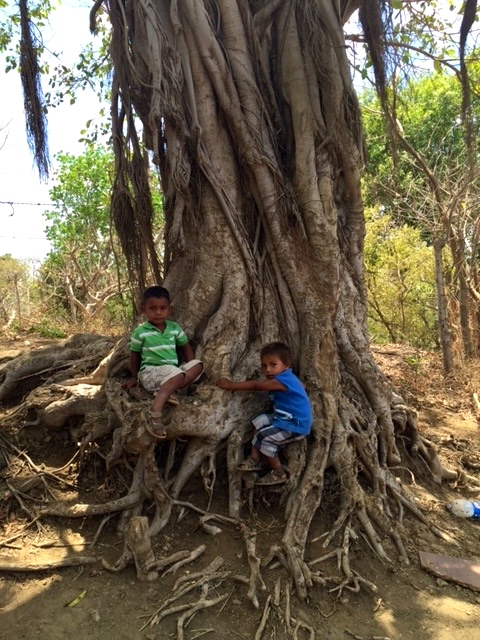
After lunch we drove to Nueva Vida, a community of 22,000+ people who are former refugees relocated after Hurricane Mitch in 1998. The government moved them from the coast to this location in what was supposed to be a temporary refugee camp but 18 years later, the community is still there. (Tour through Nueva Vida: https://www.youtube.com/watch?v=t2yfgk8c2ec&feature=youtu.be) Nueva Vida is located beside a dump where some of the locals search for materials that can be sold for recycling.
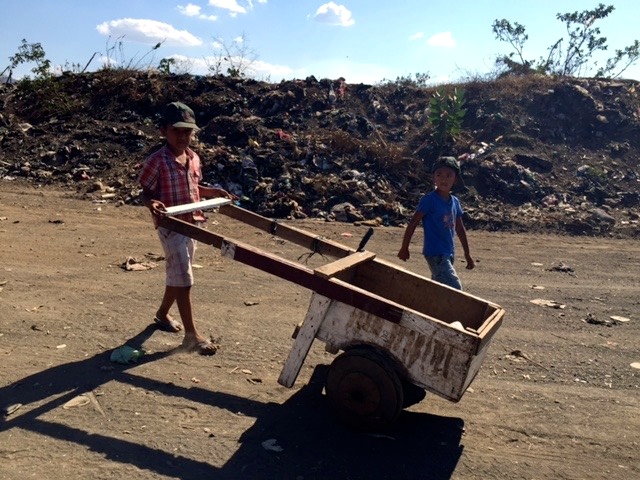
We were told that the Spanish government provided the water tank. There was no sewage system except for latrines (outhouses). Our guide through rows of homes was Pastor Belmis who leads one of 6 churches Onet supports in Nueva Vida. The homes were generally made of concrete or odd pieces of building materials with a piece of sheet metal for the roof. Looking inside, I could see pieces of carpeting, concrete or just dirt floors, occasional hammocks, chickens, dogs, and extended families of all ages. Seeing the living conditions, I understand why sexual violence, alcoholism, drug addiction and crime is so high. It’s also easy to understand the high rate of malnourishment, skin rashes, infections, and worms/parasites. All Onet operations in this community, including a small clinic staffed with a doctor, are funded by generous donors from Chicago, the Orsini family and the Pitzaferro family. (Tony Orsini’s Story: https://www.youtube.com/watch?v=WVAAMEIh27g&feature=youtu.be)

After the sobering tour of Nueve Vida, we picked up Mylvian Lopez, Onet’s transition director, and the students from Nueva Vida (one from Esperanza) who are being trained at a votec center to be certified welders. This is a pilot program of 10 students recommended by the pastors of the sponsored churches and selected by Onet as having the intellect, motivation and health necessary to succeed. The cost for the six-month program is $1,000 per student. There is a shortage of certified welders in Nicaragua and Onet believes there will be job offers for all students upon graduation. The students from Nueve Vida must ride the bus two hours each way to the votec center. Enjoying a pizza dinner with these students was nothing short of inspirational. They were happy and eager. It’s almost impossible to understand how young people with so little could be so well-mannered and so optimistic about their futures. If I hadn’t just seen the horrible conditions in which they live, I would have thought they were regular college kids hanging out, eating pizza and drinking cokes. The fact that they’re working so hard to break the chain of poverty and make a better future is a testament to their strength and character.

Onet has recently started a similar program to train welders on the east coast supported by a welding company in Virginia. (Welding Program in Puerto Cabezas: https://www.youtube.com/watch?v=OsuC-h2X3y0&feature=youtu.be)
Saturday 4/16/16
We set out to visit Orphanage Casa Bernabe in Vera Cruz, the first orphanage Onet supported. Although it was Saturday, the children were in an English class. We toured the facility then sat and talked with the director, his wife and a counselor about both the successes and challenges of raising children who have been abused, abandoned or orphaned. 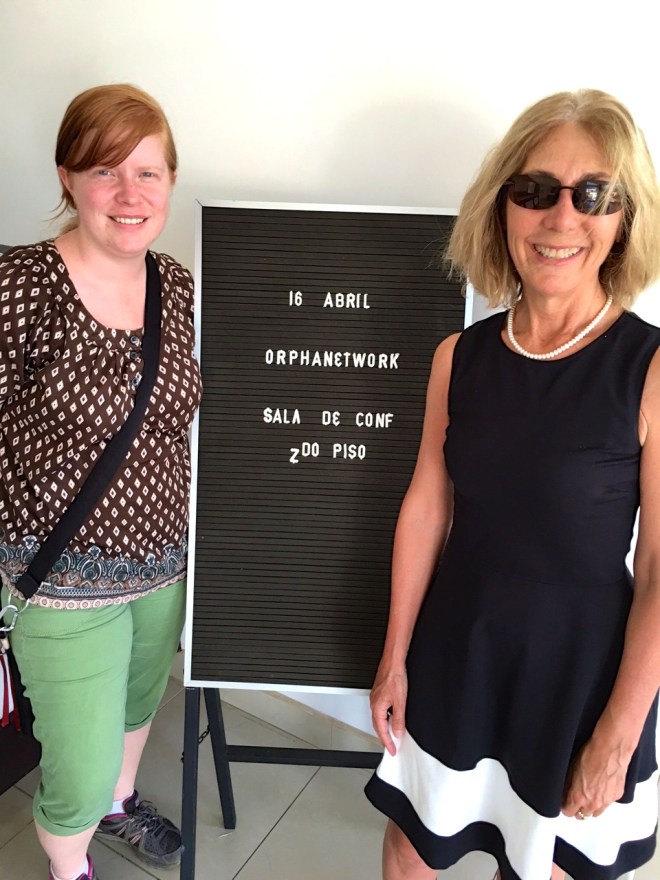
From 2:00 to 5:00 PM we were scheduled to conduct a seminar at the Brandt Hotel with transition students. The seminar touched on overcoming obstacles, communication skills, and goal setting.
There are approximately 60 young adults in the Onet transition program. The majority live with extended family. Mylvian has placed several students in internships with various firms, many of which have turned into compensated, full-time positions paving the way for more interns. The seminar was completely optional so I was impressed that 20 showed up on a Saturday afternoon. One of the students, Jennifer, 21 years old, was raised at Casa Bernabe, speaks English well and now lives with her alcoholic mother while she finishes a degree in International Relations. Jennifer served an internship with ORPHANetwork. Elijah, 18 years old, raised at El Canyon, said he has no family. He’s eager to attend college to study computer science and believes he has good test scores for acceptance. His English is good and he thinks he can work part-time at a call center while going to college. Elijah wants to continue with his band that is scheduled to perform at an upcoming Christian concert but doesn’t see music as a viable career choice. These goals were written in his journal from the seminar. He’s hopeful that Onet will continue to support him so he can reach his goals and make his dreams come true. College is free to those who qualify but it’s very competitive and not everyone who wants to attend is accepted.
During a dinner at a fast-food restaurant similar to KFC, the transition students were happy and appreciative for both the seminar and the dinner. The comaraderie among the students and the Onet staff was more proof that people everywhere are basically the same. In spite of the hardships they’ve had to overcome, the young adults were full of questions and laughter, ready to enter the work force and hopeful that someone will give them a chance. Thank you, Ana, Eddy, Dick, and all the fine people of ORPHANetwork who made this opportunity possible. There is no doubt that you work with your hearts, your minds and your hands to help those who have so little.
“They also will answer, ‘Lord, when did we see you hungry or thirsty or a stranger or needing clothes or sick or in prison, and did not help you?’
“He will reply, ‘Truly I tell you, whatever you did not do for one of the least of these, you did not do for me.’ Matthew 25: 44-45

 Kathryn Byler, blog